

Daily Vocabulary from International Newspapers and Publications
Expand Your Vocabulary with Wordpandit’s Global Vocabulary Hub
At Wordpandit, we are committed to helping you develop a truly global vocabulary by drawing from some of the most respected international publications. This section is designed to keep you ahead of the curve by introducing you to words that define global conversations and trends.
The Power of Global Sources
To help you think and communicate on a global scale, we curate vocabulary from renowned international sources, such as:
- The New York Times
- The Washington Post
- BBC
- The Guardian
- The Economist
- Scientific American
- Psychology Today
- And many more...
Stay Global, Stay Competitive
Our daily updates from international publications ensure you are consistently exposed to new words that reflect global news and developments, making sure your vocabulary is not only current but also globally relevant.
Enhance Your Global Perspective
Whether you’re preparing for international exams, aiming to excel in global business communication, or want to enhance your language skills for personal growth, Wordpandit offers the resources you need to thrive in a global context.
Effective Learning, Global Reach
Our learning methodology combines global examples, memory aids, and interactive activities, allowing you to internalize new words effectively and apply them in real-world scenarios.
Begin Your Global Vocabulary Journey Now!

Why Choose Wordpandit?
Practical Learning: Focus on words you'll actually encounter in real-world reading, enhancing your comprehension and communication skills.
Diverse Content: From current affairs to scientific breakthroughs, our varied sources expose you to vocabulary across multiple domains.
Effortless Integration: Make Wordpandit a part of your daily routine. Just a few minutes each day can significantly boost your lexicon over time.
Your Path to Vocabulary Mastery
- Visit our Daily Vocabulary section regularly
- Explore new words and their usage in context
- Practice incorporating these words into your own writing and speech
- Track your progress as your vocabulary expands
Start Your Journey Today
Embark on your vocabulary enhancement journey with Wordpandit. By consistently engaging with our daily posts, you'll build a robust vocabulary that serves you well in academic, professional, and personal contexts.
Remember, a word a day keeps linguistic limitations at bay. Make Wordpandit your daily companion in the quest for vocabulary excellence!
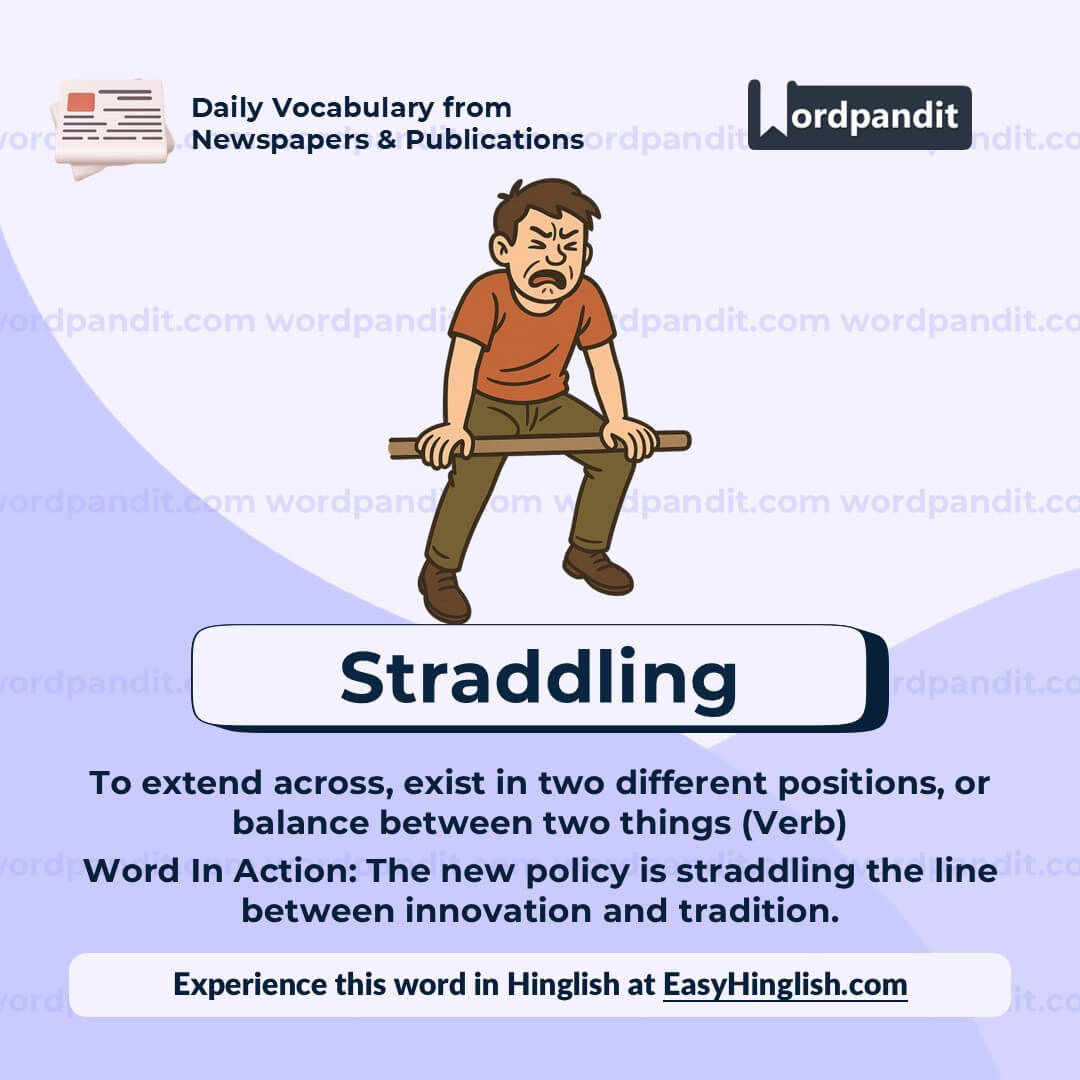
WORD-1: Straddling
Context:
"With a general election now on the horizon, MPs are starting to talk about the prospect of strikes straddling two administrations." - Guardian
Explanatory Paragraph:
The word straddling means extending across or appearing in two different positions, situations, or time periods at once. It often suggests being caught between two options, trying to balance opposing sides, or spanning across two distinct points. In the context of politics, it can mean an event or issue stretching across different governments or timeframes.
Meaning: To extend across, exist in two different positions, or balance between two things (Verb)
Pronunciation: STRAD-ling
Difficulty Level: ⭐⭐⭐ Intermediate
Etymology: Derived from the verb "straddle," which comes from Middle English "stradlen," related to "stride," meaning to stand or move with the legs apart.
Prashant Sir's Notes:
Think of "straddling" as being on both sides at once—like sitting on a horse with legs across it, or balancing between two time zones or decisions. It's about occupying two positions simultaneously.
Synonyms & Antonyms:
Synonyms: spanning, bridging, balancing, overlapping
Antonyms: separating, dividing, isolating
Usage Examples:
- The new highway project is straddling two states, benefiting residents on both sides.
- She felt like she was straddling two careers, unable to commit fully to either.
- The company is straddling the line between traditional retail and online sales.
- The festival dates ended up straddling the summer and autumn seasons.
Cultural Reference:
"Straddling two worlds is a common theme in immigrant literature, where characters balance their heritage with a new culture." - Commentary on multicultural identity
Think About It:
Is straddling two positions a strength because it allows flexibility, or a weakness because it prevents commitment?
Quick Activity:
Write two sentences using "straddling" — one about time (e.g., two years, two eras) and one about physical space (e.g., a bridge, a border).
Memory Tip:
Picture yourself straddling a horse with one leg on each side — that image helps remember the idea of being across two things at once.
Real-World Application:
In business, "straddling" is often used when a company operates in two markets at once. In politics, it refers to issues or decisions spanning multiple governments or timeframes.
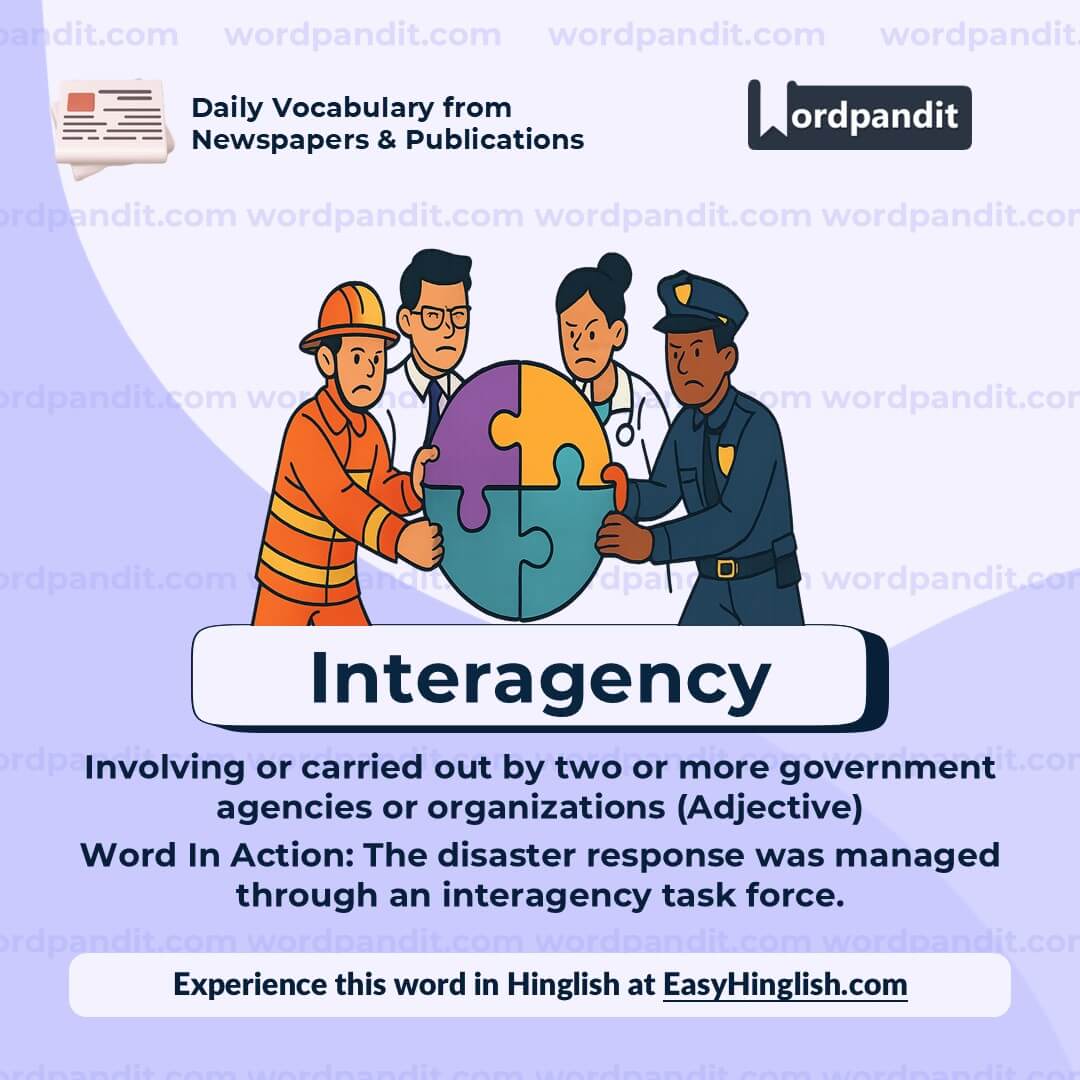
WORD-2: Interagency
Context:
"The District also approved more than $11 million to support the office of deputy mayor for public safety and justice, which will 'develop and lead interagency public safety initiatives that improve the quality of life in the District.'" - Washington Post
Explanatory Paragraph:
The word interagency describes something that involves or is carried out by more than one government agency or department. It emphasizes cooperation, coordination, and shared responsibilities among different official bodies to achieve a common goal, especially in areas like safety, security, and policy-making.
Meaning: Involving or carried out by two or more government agencies or organizations (Adjective)
Pronunciation: in-ter-AY-jun-see
Difficulty Level: ⭐⭐ Basic–Intermediate
Etymology: Formed from the prefix "inter-" (between, among) + "agency" (an administrative unit, office, or organization). First used commonly in U.S. governmental and bureaucratic contexts in the 20th century.
Prashant Sir's Notes:
Think of "interagency" as a bridge word: "inter" = between, "agency" = departments. Together, it points to cooperation between departments. Whenever multiple offices or organizations work together on a project, it is interagency.
Synonyms & Antonyms:
Synonyms: joint, collaborative, cooperative, cross-agency
Antonyms: independent, unilateral, isolated
Usage Examples:
- The disaster response plan required an interagency effort to provide food, shelter, and medical aid.
- The interagency task force was set up to tackle cybercrime across multiple jurisdictions.
- Improving transportation in the city will demand interagency collaboration between urban planning and environmental boards.
- The report highlighted the success of interagency cooperation in reducing smuggling at the border.
Cultural Reference:
"Interagency task forces" are a well-known feature of U.S. government operations, especially in law enforcement (e.g., FBI, DEA, and local police working together on drug or terrorism cases).
Think About It:
Does interagency cooperation always lead to efficiency, or can too many agencies working together create confusion and slow progress?
Quick Activity:
List three situations (real or imagined) where interagency coordination would be essential — for example, disaster relief, cybersecurity, or education reform.
Memory Tip:
Break the word: inter = between, agency = departments. So, "between agencies" → interagency.
Real-World Application:
In governance, the word "interagency" is commonly used when multiple departments — such as police, fire services, health, or environment — must collaborate to solve problems that cannot be handled by a single unit alone.
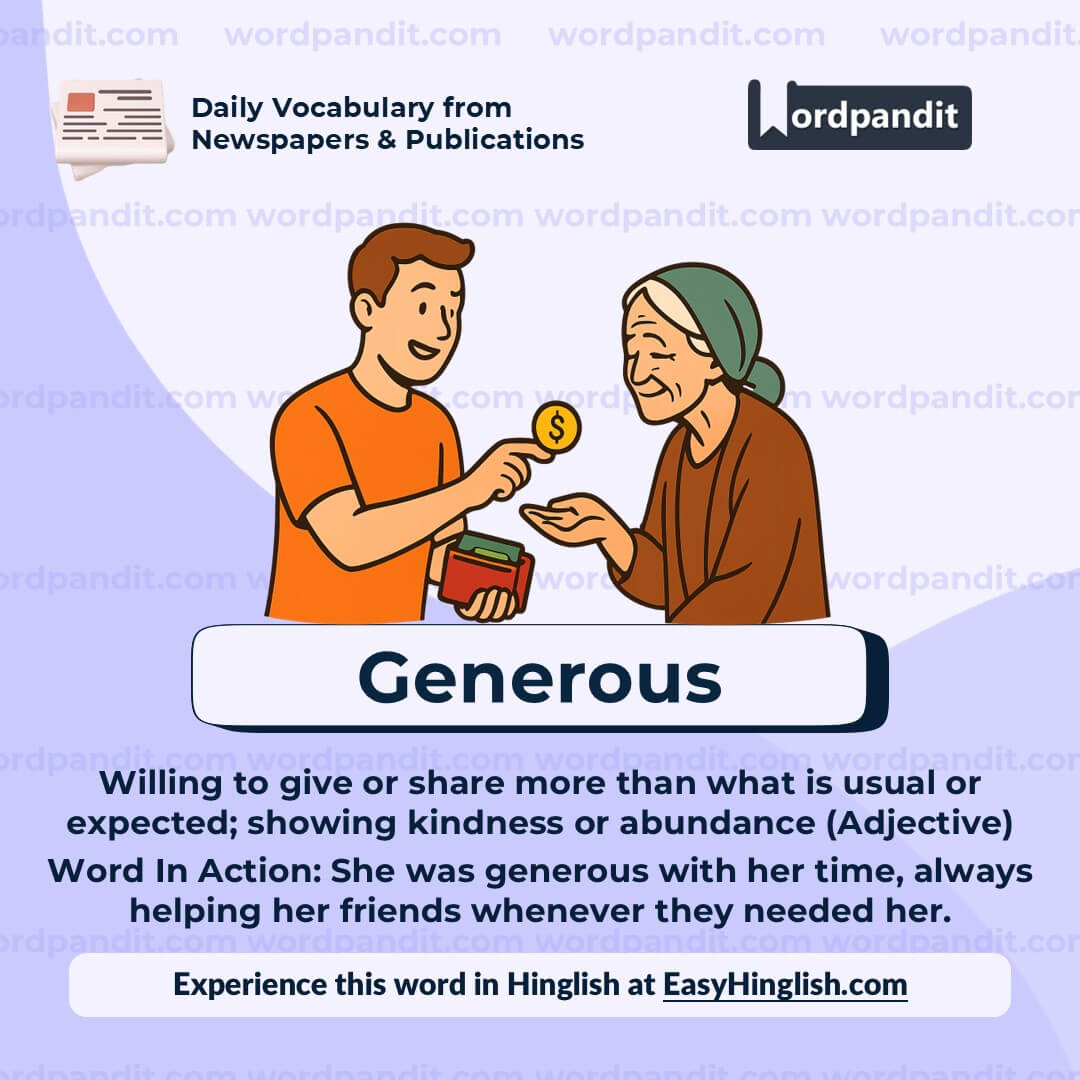
WORD-3: Generous
Context:
"Meanwhile shadow health secretary Wes Streeting is giving little sign that Labour would be more generous and must know that if he does, junior doctors will only be encouraged to wait this government out, with painful consequences for patients." - Guardian
Explanatory Paragraph:
The word generous describes someone who is willing to give more than what is expected, whether in terms of money, resources, time, or kindness. It suggests an open-handed or large-hearted approach. In political or economic contexts, being "generous" often refers to offering more benefits, concessions, or resources than might normally be provided.
Meaning: Willing to give or share more than what is usual or expected; showing kindness or abundance (Adjective)
Pronunciation: JEN-er-us
Difficulty Level: ⭐⭐ Basic
Etymology: From Latin "generosus" (noble, of noble birth), later evolving to mean noble in spirit, open-handed, and liberal in giving.
Prashant Sir's Notes:
Remember, being generous is not only about giving money — it can also mean giving time, effort, forgiveness, or understanding. Think of it as having a "big heart."
Synonyms & Antonyms:
Synonyms: charitable, liberal, kind, open-handed, benevolent
Antonyms: selfish, stingy, miserly, mean, tight-fisted
Usage Examples:
- She was generous with her time, always ready to help her colleagues after work.
- The organization received a generous donation that funded its new library.
- He gave a generous interpretation of the rule, favoring flexibility over rigidity.
- The teacher was generous in giving praise to students for their creativity.
Cultural Reference:
In many cultures, generosity is considered a virtue — for instance, in Indian philosophy, "daan" (giving) is seen as one of the highest moral duties.
Think About It:
Can generosity ever become harmful — for example, when it encourages dependency or is exploited by others?
Quick Activity:
Write one sentence showing "generous" in a financial context and another showing it in an emotional or personal context.
Memory Tip:
Link "generous" with "genie" — a genie gives freely without expecting much in return. That image can help you remember the meaning.
Real-World Application:
In everyday life, generosity shows up in donations, volunteering, and simple acts like helping a friend. In politics and economics, a "generous" offer or policy usually means more benefits or concessions than expected.
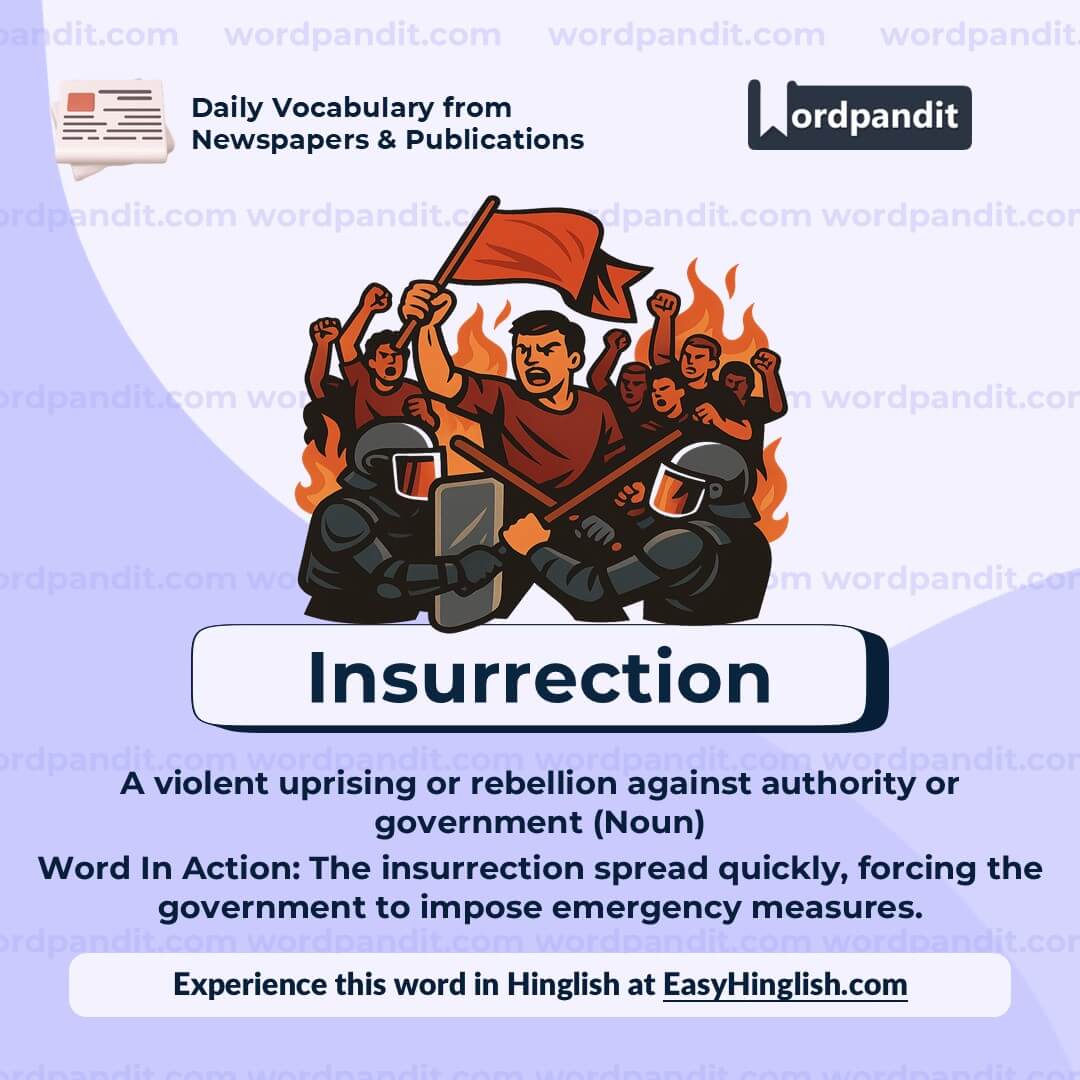
WORD-4: Insurrection
Context:
"A Post-University of Maryland poll published this week shows a sizable share of Americans accept lies about the 2020 election and the insurrection that followed on Jan. 6, 2021." - Washington Post
Explanatory Paragraph:
The word insurrection refers to an organized uprising or violent attempt by a group of people to overthrow authority or resist established government control. It usually involves open rebellion and can take the form of riots, armed resistance, or coordinated defiance against authority. The term is often used in political and legal discussions when people challenge the legitimacy of government power.
Meaning: A violent uprising or rebellion against authority or government (Noun)
Pronunciation: in-suh-REK-shun
Difficulty Level: ⭐⭐⭐ Intermediate–Advanced
Etymology: From Latin "insurrectio," meaning "a rising up," derived from "insurgere" (to rise up against). Closely related to "insurgent."
Prashant Sir's Notes:
Think of "insurrection" as people "rising up" against the system. It’s stronger than a protest — it usually implies force, violence, or rebellion against authority.
Synonyms & Antonyms:
Synonyms: rebellion, revolt, uprising, mutiny, insurgency
Antonyms: obedience, submission, compliance, peace
Usage Examples:
- The government declared martial law after the insurrection spread across several cities.
- The insurrection was fueled by frustration over corruption and economic hardship.
- History books detail the insurrection as a turning point in the nation’s politics.
- The court charged several leaders with organizing and participating in the insurrection.
Cultural Reference:
The term "insurrection" gained global attention in reference to the January 6, 2021, storming of the U.S. Capitol, which has been described in political and legal debates as an insurrection against democratic processes.
Think About It:
At what point does a protest, which is a democratic right, cross the line and become an insurrection against the state?
Quick Activity:
Write two sentences: one using "insurrection" in a historical context (e.g., the French Revolution) and one in a fictional or creative scenario.
Memory Tip:
Break it down: "in-" (against) + "surrection" (similar to "resurrection" = rising). So, "insurrection" = rising up against authority.
Real-World Application:
The word is frequently used in legal, historical, and political contexts to describe attempts to violently challenge authority, whether in ancient revolts, colonial rebellions, or modern political crises.
WORD-5: Endangered
Context:
"His reckless words endangered my family and everyone at the Capitol that day.” - Washington Post
Explanatory Paragraph:
The word endangered means put at risk of harm, danger, or loss. It can apply to people, situations, or even species. In daily use, it often refers to someone or something being threatened with harm. In environmental contexts, "endangered" is used to describe species that are at risk of extinction.
Meaning: Exposed to danger or risk; threatened with harm or extinction (Adjective/Verb)
Pronunciation: en-DAYN-jerd
Difficulty Level: ⭐⭐ Basic–Intermediate
Etymology: From the prefix "en-" (to cause to be) + "danger" (risk, peril), meaning "to put in danger."
Prashant Sir's Notes:
Whenever you see "endangered," think "put in danger." Simple! It can be about a reckless act endangering lives, or about animals endangered because of human activity.
Synonyms & Antonyms:
Synonyms: threatened, at risk, unsafe, vulnerable, imperiled
Antonyms: safe, secure, protected, sheltered
Usage Examples:
- Driving under the influence endangered not only his life but also the lives of others on the road.
- The oil spill endangered marine species in the coastal region.
- Her decision to hike alone in the storm endangered her safety.
- The tiger is an endangered species, with only a few thousand left in the wild.
Cultural Reference:
The phrase "endangered species" is widely recognized due to global conservation campaigns aimed at protecting animals like pandas, rhinos, and sea turtles from extinction.
Think About It:
Is it possible that labeling species as "endangered" sometimes creates more awareness and protection, or could it also make people feel it’s too late to save them?
Quick Activity:
Write one sentence using "endangered" to describe a person’s safety, and another to describe an animal or plant species.
Memory Tip:
Connect "endangered" with the word "danger." If something is endangered, it is literally "in danger."
Real-World Application:
In everyday conversation, "endangered" can describe risky actions or threats to people’s safety. In environmental science and law, it is a formal category used to identify species at risk of extinction, leading to conservation efforts worldwide.


