

Daily Vocabulary from International Newspapers and Publications
Expand Your Vocabulary with Wordpandit’s Global Vocabulary Hub
At Wordpandit, we are committed to helping you develop a truly global vocabulary by drawing from some of the most respected international publications. This section is designed to keep you ahead of the curve by introducing you to words that define global conversations and trends.
The Power of Global Sources
To help you think and communicate on a global scale, we curate vocabulary from renowned international sources, such as:
- The New York Times
- The Washington Post
- BBC
- The Guardian
- The Economist
- Scientific American
- Psychology Today
- And many more...
Stay Global, Stay Competitive
Our daily updates from international publications ensure you are consistently exposed to new words that reflect global news and developments, making sure your vocabulary is not only current but also globally relevant.
Enhance Your Global Perspective
Whether you’re preparing for international exams, aiming to excel in global business communication, or want to enhance your language skills for personal growth, Wordpandit offers the resources you need to thrive in a global context.
Effective Learning, Global Reach
Our learning methodology combines global examples, memory aids, and interactive activities, allowing you to internalize new words effectively and apply them in real-world scenarios.
Begin Your Global Vocabulary Journey Now!

Why Choose Wordpandit?
Practical Learning: Focus on words you'll actually encounter in real-world reading, enhancing your comprehension and communication skills.
Diverse Content: From current affairs to scientific breakthroughs, our varied sources expose you to vocabulary across multiple domains.
Effortless Integration: Make Wordpandit a part of your daily routine. Just a few minutes each day can significantly boost your lexicon over time.
Your Path to Vocabulary Mastery
- Visit our Daily Vocabulary section regularly
- Explore new words and their usage in context
- Practice incorporating these words into your own writing and speech
- Track your progress as your vocabulary expands
Start Your Journey Today
Embark on your vocabulary enhancement journey with Wordpandit. By consistently engaging with our daily posts, you'll build a robust vocabulary that serves you well in academic, professional, and personal contexts.
Remember, a word a day keeps linguistic limitations at bay. Make Wordpandit your daily companion in the quest for vocabulary excellence!
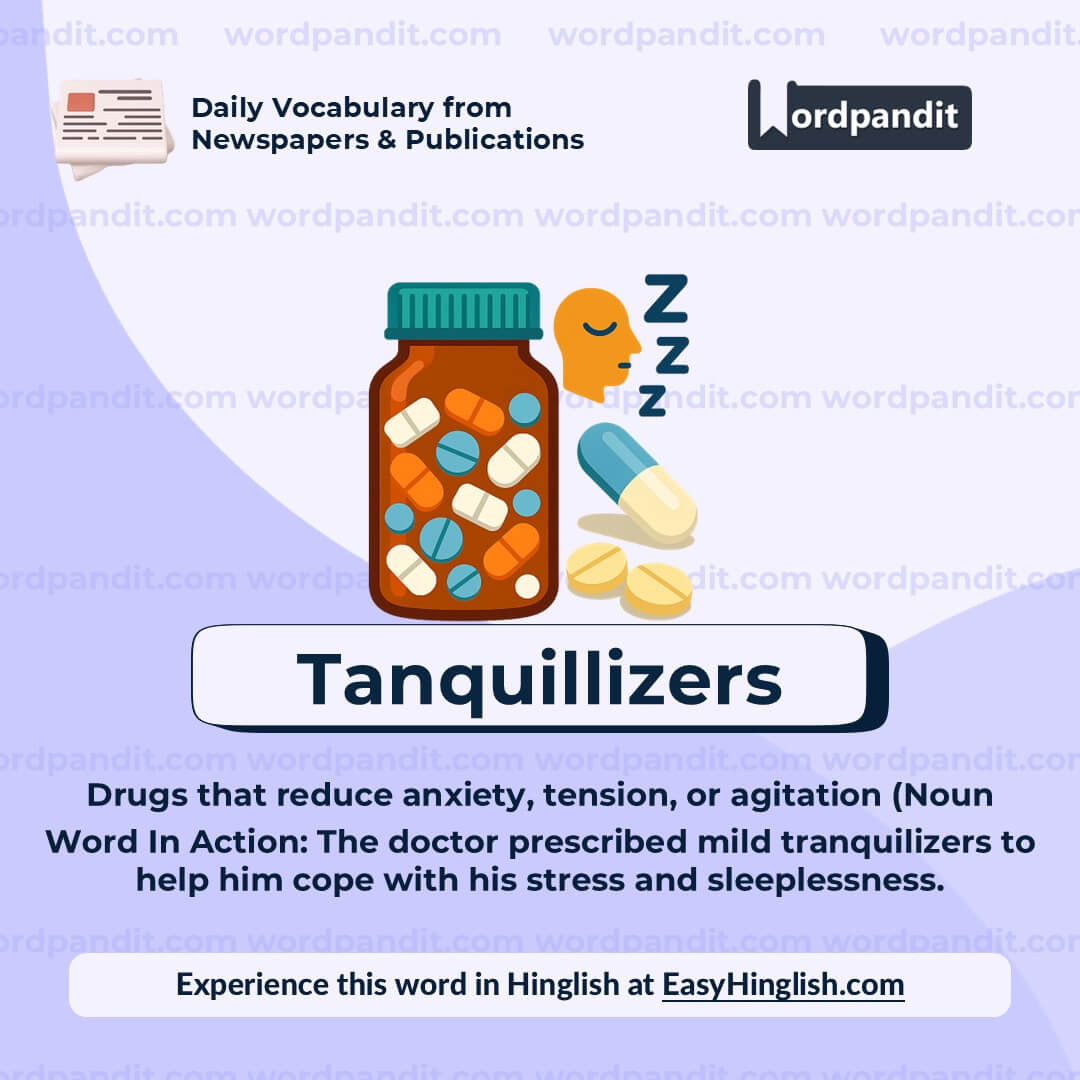
WORD-1: Tranquilizers
Sandarbh (Context):
"She was taking tranquilisers to cope with her life working for Epstein." - BBC
Vyakhya (Explanatory Paragraph):
Tranquilizers ka matlab hai 'aisi davaiyaan jo anxiety, tension ya ghabrahat ko kam karti hain aur nervous system ko shant karti hain.' Yeh word tab use hota hai jab prescription drugs ki baat ho jo stress, panic disorders, ya emotional distress manage karne mein help karti hain. Tranquilizers ko formal medical writing, news articles aur competitive exam passages mein use karte hain jab mental health, healthcare policy ya psychological wellbeing ke topics discuss ho rahe hon. CAT, GRE aur UPSC ke reading comprehension sections mein yeh word aksar medical aur social contexts mein dikhta hai.
Arth (Meaning): Dawaiyaan jo anxiety, tension ya ghabrahat ko kam karti hain (Noun)
Uccharan (Pronunciation): TRAN-kwuh-ly-zerz / ट्रैंक्विलाइज़र्स
Kathinai Star (Difficulty Level): ⭐⭐ Basic se Intermediate
Utpatti (Etymology): Tranquilizers Latin word 'tranquillus' se aaya hai jiska matlab hai 'shant ya quiet,' aur suffix '-izer' jodne se bana jo 'karne wala agent' indicate karta hai. Yeh term 1950s mein widely popular hua jab pharmaceutical companies ne aisi medicines develop ki jo specifically mind ko calm karein aur anxiety reduce karein, jisne mental health treatment ko revolutionize kar diya.
Prashant Sir Ke Tathya (Prashant Sir's Notes):
Bahut students tranquilizers ko sedatives se confuse karte hain—dono body ko calm karte hain, lekin tranquilizers aur sedatives mein farak yeh hai ki tranquilizers specifically anxiety target karte hain without necessarily neend laaye, jabki sedatives primarily drowsiness induce karte hain. UPSC aur GRE ke students ke liye, tranquilizers aksar healthcare policy, pharmaceutical regulation ya psychological case studies wale passages mein dikhta hai. Indian newspapers jaise The Hindu ya Indian Express mein aapko tranquilizers ka upyog prescription drug abuse, mental health awareness campaigns ya court cases ke context mein milega. RC passages mein jab mental healthcare system ya pharmaceutical ethics ki baat hoti hai, tab tranquilizers jaisa technical word samajhna zaroori hai.
Samanarthi & Vipritarthi (Synonyms & Antonyms):
Samanarthi (Synonyms): sedatives, calming agents, anti-anxiety medications, anxiolytics, depressants, relaxants, nerve pills, mood stabilizers, shant karne wali davaiyaan
Vipritarthi (Antonyms): stimulants, energizers, amphetamines, excitants, agitators, josh badhaane wali cheezein
Udaharan (Usage Examples):
- Mumbai ke hospital mein tranquilizers ki prescription ko strictly monitor kiya jata hai taaki patients mein addiction aur misuse na ho.
- Priya ke doctor ne usse mild tranquilizers prescribe kiye taaki woh CAT exam se pehle ki anxiety ko manage kar sake.
- Investigative report mein reveal hua ki Bengaluru ke bahut corporate employees workplace stress ki wajah se tranquilizers par dependent ho rahe hain.
- Delhi highway par traumatic accident ke baad, rescue workers ne severely distressed survivors ko calm karne ke liye tranquilizers diye.
Sanskritik Sandarbh (Cultural Reference):
"High-pressure work environments mein, log kabhi kabhi tranquilizers ka sahara lete hain apni stress ki root cause address karne ki bajaye." - Workplace mental health discussions mein common observation
Sochiye (Think About It):
India mein mental health ke liye tranquilizers use karne par abhi bhi stigma kyun hai, jabki physical ailments ke liye hum medicines easily accept kar lete hain?
Chhoti Kriya (Quick Activity):
Indian newspapers mein do recent articles dhoondhein jahan tranquilizers ka mention ho aur note karein ki context kya hai—medical treatment, drug abuse ya legal cases?
Yaad Karne Ka Tarika (Memory Tip):
'Tranquilizers' ko aise yaad rakhein: 'TRANQUIL-izers'—yeh aapko TRANQUIL (peaceful aur calm) banate hain. Imagine karo ek disturbed lake jo waves se bhari hui hai, aur usme aap ek calming pill drop karte ho—lake bilkul still aur tranquil ho jati hai. Yahi kaam tranquilizers aapke nervous system ke saath karte hain.
Vastavik Jeevan Me Upyog (Real-World Application):
Tranquilizers commonly medical journalism, healthcare policy documents aur legal reports mein use hota hai jab prescription drug regulation discuss ho raha ho. UPSC ya GRE ke competitive exam passages mein yeh word mental health systems, pharmaceutical ethics ya stress management ke case studies wale contexts mein appear karta hai. Tranquilizers CAT preparation ke liye samajhna isliye useful hai kyunki RC passages mein corporate wellness programs ya India ke healthcare infrastructure ke baare mein analysis aati hai jahan yeh term naturally aata hai.
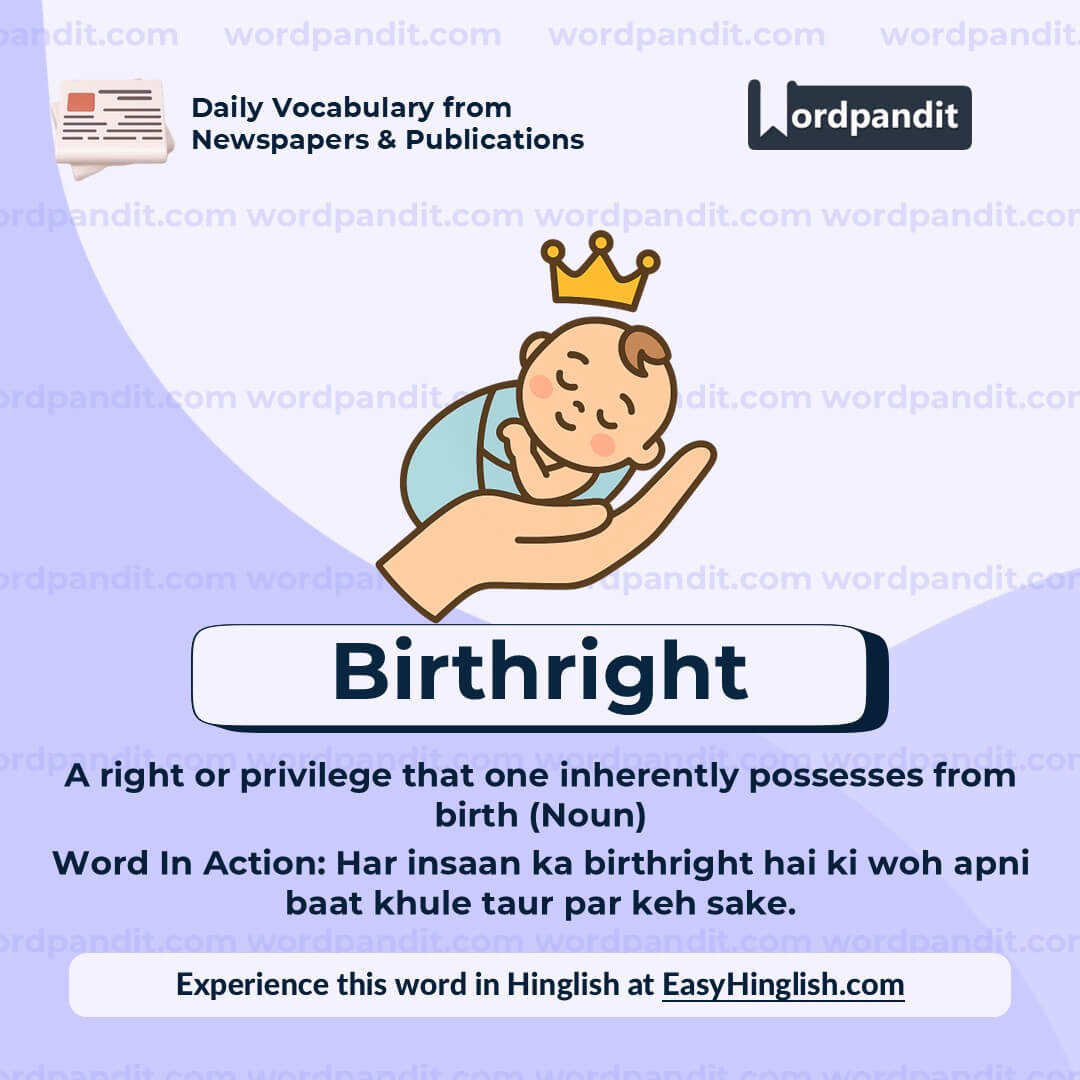
WORD-2: Birthright
Sandarbh (Context):
"As if he believed having sex with me was his birthright." - BBC
Vyakhya (Explanatory Paragraph):
Birthright ka matlab hai 'koi particular right, privilege ya possession jo kisi ko janm se hi mil jata hai.' Yeh word tab use hota hai jab koi cheez automatically deserve karne ki baat ho—sirf isliye kyunki woh kaun hai, unka family status kya hai, ya society mein unki position kya hai. Birthright ka upyog kab hota hai yeh samajhna zaroori hai kyunki yeh aksar entitlement ya inheritance ke implications carry karta hai. Formal writing, legal contexts, historical passages aur CAT, GRE, UPSC ke competitive exam questions mein birthright commonly dikhta hai jab rights, privileges aur social hierarchies discuss ho rahe hon.
Arth (Meaning): Koi right ya privilege jo janm se hi inherently mil jaye (Noun)
Uccharan (Pronunciation): BURTH-ryte / बर्थराइट
Kathinai Star (Difficulty Level): ⭐⭐⭐ Intermediate
Utpatti (Etymology): Birthright Middle English se aaya hai, jahan 'birth' aur 'right' combine hoke literally 'janm par mile right' ka meaning deta hai. Iska biblical origins hai, sabse famous story Esau ki hai jisne apna birthright apne bhai Jacob ko bech diya. Historically, yeh firstborn son ke special privileges ko refer karta tha inheritance laws mein, lekin evolve hoke ab yeh describe karta hai koi bhi privilege ya entitlement jo koi apne birth circumstances, social position ya identity ke basis par claim karta hai.
Prashant Sir Ke Tathya (Prashant Sir's Notes):
Bahut students birthright ko inheritance se confuse karte hain—dono related hain, lekin birthright aur inheritance mein farak yeh hai ki birthright intangible rights aur entitlements ko refer karta hai jo janm se milte hain, jabki inheritance specifically property ya assets ko mean karta hai jo pass down hote hain. CAT aur UPSC ke students ke liye, birthright aksar RC passages mein dikhta hai jab social justice, gender equality, caste systems aur constitutional rights discuss ho rahe hon. Indian English mein birthright ka sahi istemal kaise karein yeh dekhein: "education is every child's birthright" ya reservation policies aur Indian Constitution ke fundamental rights ke discussions mein. Jab exam passages mein yeh word aata hai, toh usually equality, privilege ya social hierarchies ki baatein hone wali hain—yeh aapka signal hai passage ki tone aur author's perspective samajhne ka.
Samanarthi & Vipritarthi (Synonyms & Antonyms):
Samanarthi (Synonyms): entitlement, inheritance, heritage, right, privilege, prerogative, due, patrimony, legacy, natural right, janamsiddh adhikaar
Vipritarthi (Antonyms): acquired right, earned privilege, forfeiture, disadvantage, deprivation, mehnat se kamaya hua haq
Udaharan (Usage Examples):
- Industrialist ke eldest bete ne assume kar liya ki company ka control uska birthright hai, aur usne apne younger siblings ki qualifications ko ignore kar diya.
- Education aur healthcare ko har Indian citizen ka birthright samajhna chahiye, na ki sirf ameer logon ke liye available privileges.
- Rohan ki birthright ki sense ne use office mein arrogant bana diya tha, kyunki woh believe karta tha ki family connections usse special treatment dilwane ke liye entitled banate hain.
- Activist ne argue kiya ki clean water aur sanitation tak access ek fundamental birthright hai jo government ko sabhi communities ke liye guarantee karni chahiye.
Sanskritik Sandarbh (Cultural Reference):
"Swaraj mera janmasiddh adhikaar hai aur main ise lekar rahunga!" - Bal Gangadhar Tilak ka famous declaration India ke independence movement ke dauran, jo self-governance ke inherent right ko emphasize karta hai.
Sochiye (Think About It):
Aaj ke modern India mein, kaun se rights truly birthrights hone chahiye—caste, religion, gender ya economic status ke bina—aur hum unhe kitni achhi tarah protect kar rahe hain?
Chhoti Kriya (Quick Activity):
Do sentences likhein: ek mein describe karein koi cheez jo just society mein birthright honi chahiye, aur doosre mein koi situation jahan kisi ne galat tarike se kuch apna birthright claim kiya ho.
Yaad Karne Ka Tarika (Memory Tip):
'Birthright' ko aise yaad rakhein: isko 'BIRTH + RIGHT' mein tod lo—imagine karo ek baby paida ho raha hai aur uske haath mein ek certificate hai jisme uske saare rights listed hain. Jaise Indian citizens ko Constitution se fundamental rights janm se milte hain, waise hi birthright kuch aisa hai jo aapko sirf paida hone se mil jata hai.
Vastavik Jeevan Me Upyog (Real-World Application):
Birthright commonly legal documents, constitutional discussions, social commentary aur editorial pieces mein use hota hai jab equality aur justice ke topics ho. GRE aur UPSC ke competitive exam passages mein yeh word human rights, gender discrimination, caste privilege ya historical inheritance systems wale contexts mein appear karta hai. CAT preparation ke liye birthright samajhna isliye useful hai kyunki passages mein social hierarchies, family businesses, corporate succession aur meritocracy versus inherited privilege ke debates analyze karne mein madad milti hai—yeh saari themes Indian society mein bahut relevant hain.

WORD-3: Glee
Sandarbh (Context):
"He took a certain glee in making people watch." - BBC
Vyakhya (Explanatory Paragraph):
Glee ka matlab hai 'bahut zyada khushi ya joy ki feeling, aksar triumph ya malicious pleasure ke sense ke saath.' Yeh word tab use hota hai jab kisi ki visible happiness ya satisfaction describe karni ho, khaas taur par jab woh kuch aisi cheez mein pleasure le rahe hon jo doosron ko uncomfortable lage. Glee kaise use karte hain yeh samajhna important hai kyunki yeh dono innocent joy aur darker satisfaction—jab kisi ko doosre ki discomfort mein maza aaye—dono describe kar sakta hai. Literature, news articles jahan reactions describe ho rahe hon, aur CAT, GRE, UPSC ke competitive exam passages mein glee commonly appear karta hai jab human emotions aur motivations explore ho rahe hon.
Arth (Meaning): Bahut zyada khushi ya joy, kabhi kabhi malicious satisfaction ke saath (Noun)
Uccharan (Pronunciation): GLEE / ग्ली
Kathinai Star (Difficulty Level): ⭐⭐ Basic se Intermediate
Utpatti (Etymology): Glee Old English word 'glēo' se aaya hai jiska matlab tha 'entertainment, music ya fun.' Originally, yeh musical entertainment aur mirth ko refer karta tha medieval times mein, aur khaas taur par glee clubs dwara perform kiye jaane wale songs se associated tha. Centuries mein, meaning narrow hoke specifically joy ki emotion par focus karne laga, aur kabhi kabhi schadenfreude ka hint carry karta hai—matlab doosron ki misfortune mein pleasure lena—jab certain contexts mein use ho.
Prashant Sir Ke Tathya (Prashant Sir's Notes):
Students aksar poochhte hain: glee aur happiness mein kya farak hai? Dono positive emotions describe karte hain, lekin glee specifically visible, aksar exuberant joy suggest karta hai jismein triumph ya mischief ka element hota hai, jabki happiness ek general contentment hai. GRE aur CAT ke students ke liye, glee aksar passages mein characters ke reactions describe karte waqt dikhta hai, particularly jab authors kisi ko inappropriate pleasure lene ka situation dikhana chahte hain. Indian English newspapers mein glee ka upyog political commentary mein hota hai—"opposition took glee in the government's embarrassment"—jo schadenfreude indicate karta hai. Exam RC passages mein jab aapko glee milta hai, toh dhyan do ki yeh innocent joy hai ya darker undertones hain, kyunki yeh aksar author ka character ke towards attitude reveal karta hai.
Samanarthi & Vipritarthi (Synonyms & Antonyms):
Samanarthi (Synonyms): delight, joy, elation, exuberance, jubilation, merriment, mirth, triumph, relish, schadenfreude (jab malicious ho), harsha, ullasa
Vipritarthi (Antonyms): sadness, sorrow, misery, gloom, melancholy, dejection, despair, udaasi, gham
Udaharan (Usage Examples):
- Mumbai mein heavy rains ki wajah se jab teacher ne unexpected holiday announce kari toh bachche glee ke saath chillaye.
- Rahul ke political rivals barely concealed glee ke saath dekhte rahe jab uska corruption scandal national media mein unfold hua.
- Cricket commentators apni glee chupa nahi paye jab India ne Pakistan ke khilaf final over mein winning runs score kiye.
- Priya ne difficult CAT mock test 99 percentile score ke saath successfully complete karne ke baad glee mein apne haath ragde.
Sanskritik Sandarbh (Cultural Reference):
"Rival team ko haarte dekh kar sabse composed cricket fan mein bhi glee aa hi jati hai." - India-Pakistan cricket matches ke dauran common sentiment, jahan partisan joy openly display hoti hai
Sochiye (Think About It):
Humans kabhi kabhi doosron ki failures ya misfortunes par glee kyun feel karte hain, aur kya yeh emotion kabhi justified hai ya hamesha morally problematic hai?
Chhoti Kriya (Quick Activity):
Glee use karke do sentences likhein—ek innocent joy dikhaye (jaise bachche khel rahe hon) aur doosra darker satisfaction dikhaye (jaise kisi ko rival ki failure mein maza aa raha ho).
Yaad Karne Ka Tarika (Memory Tip):
'Glee' ko aise yaad rakhein: imagine karo koi GLEE ke saath "Wheeeee!" bol raha hai jab woh playground slide se neeche slide kar raha hai—"GLEE" sound itself happy aur excited lagti hai. Ya phir koi Bollywood villain imagine karo jo glee mein apne haath ragar raha hai jab uski evil plan succeed ho rahi hai.
Vastavik Jeevan Me Upyog (Real-World Application):
Glee commonly literary analysis, psychological descriptions, news commentary aur novels mein character studies ke liye use hota hai. CAT aur GRE ke competitive exam passages mein yeh word tab appear karta hai jab authors emotional reactions describe karte hain, particularly character traits ya moral judgments reveal karne ke liye. UPSC aspirants ke liye glee samajhna exam preparation mein isliye helpful hai kyunki political commentary, rivalries ke baare mein editorial pieces aur literature aur social situations mein human emotions aur ethical behavior explore karne wale passages analyze karne mein madad milti hai.
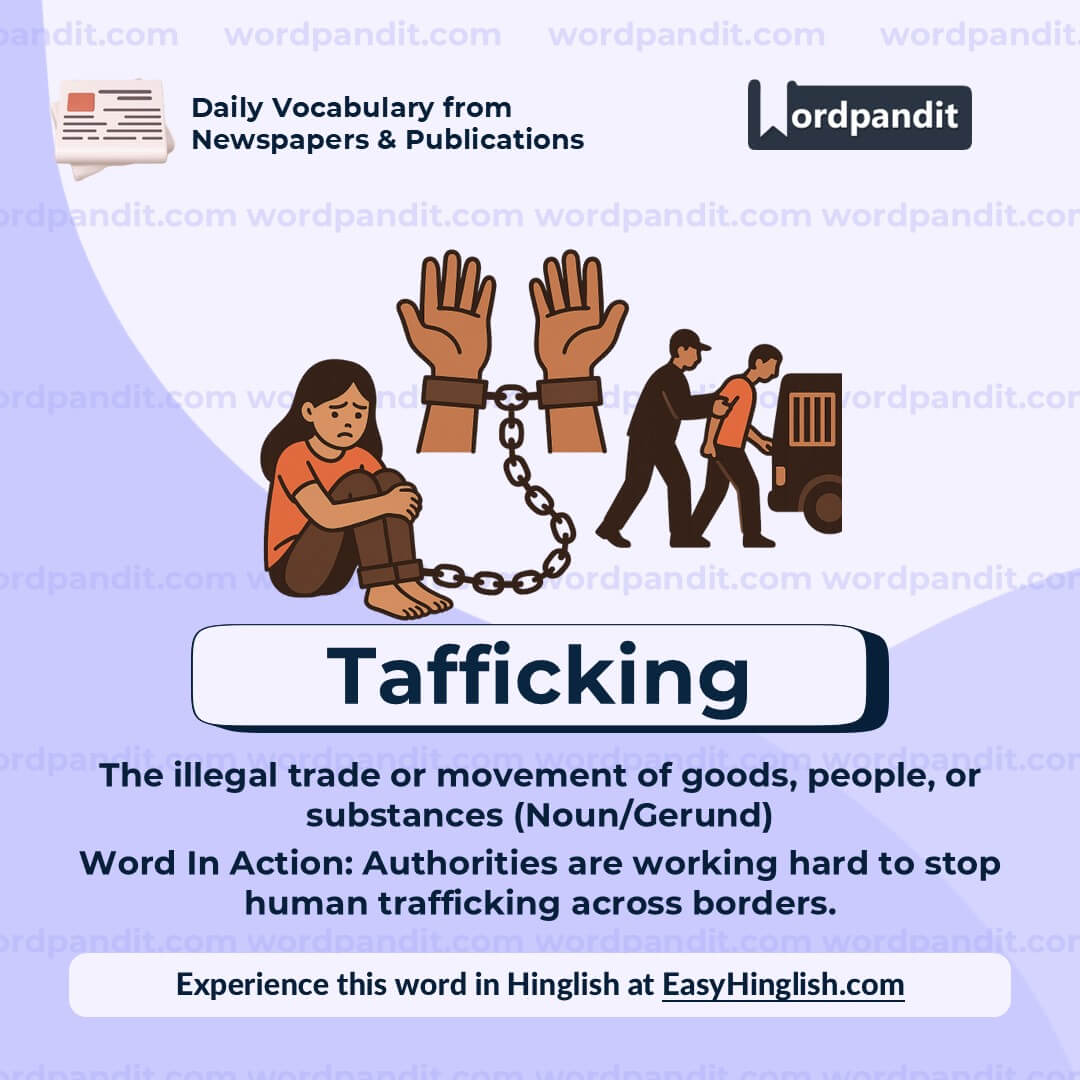
WORD-4: Trafficking
Sandarbh (Context):
"Ghislaine Maxwell was jailed on charges related to sex trafficking." - BBC
Vyakhya (Explanatory Paragraph):
Trafficking ka matlab hai 'goods, logon ya substances ki illegal trade aur transportation, khaas taur par exploitation ya criminal activity ke saath.' Yeh word tab use hota hai jab serious crimes ki baat ho jo prohibited items ke movement aur sale se related hon ya human beings ke exploitation se judi hon. Trafficking kaise use karte hain yeh samajhna zaroori hai kyunki yeh hamesha illegal activity imply karta hai—chahe drug trafficking ho, human trafficking ho ya wildlife trafficking. News reports mein crime ke baare mein, legal documents mein, aur CAT, GRE, UPSC ke competitive exam passages mein trafficking commonly appear karta hai jab law enforcement, social issues aur international crime discuss ho rahe hon.
Arth (Meaning): Goods, logon ya substances ki illegal trade ya movement (Noun/Gerund)
Uccharan (Pronunciation): TRAF-ik-ing / ट्रैफिकिंग
Kathinai Star (Difficulty Level): ⭐⭐⭐ Intermediate
Utpatti (Etymology): Trafficking word 'traffic' se aaya hai, jo Middle French 'trafique' se originate hua jiska matlab tha 'trade ya commerce.' Jabki 'traffic' initially legitimate trade refer karta tha, 16th century tak iska illicit commerce ka negative connotation ban gaya. '-ing' form 'trafficking' specifically ongoing criminal activity ko emphasize karta hai jismein prohibited goods trade hote hain ya logon ko exploit kiya jata hai. Yeh 20th century se legal aur journalistic contexts mein widely use hone laga, khaas taur par drugs aur human exploitation ke baare mein.
Prashant Sir Ke Tathya (Prashant Sir's Notes):
Bahut students trafficking ko smuggling se confuse karte hain—dono illegal hain, lekin trafficking aur smuggling mein farak crucial hai: trafficking specifically logon ke exploitation aur coercion ya ongoing criminal trade networks involve karta hai, jabki smuggling ka simple matlab hai goods ko borders ke across illegally transport karna. UPSC ke students ke liye, trafficking aksar passages mein dikhta hai jab women's rights, child protection, border security aur international crime ki baat ho. Indian newspapers jaise The Hindu mein aapko trafficking ka upyog aise sentences mein milega: "Bihar mein human trafficking rackets busted" ya "Indo-Myanmar border pe drug trafficking." Trafficking CAT aur GRE preparation ke liye isliye essential hai kyunki yeh serious social issue passages mein appear karta hai jahan authors exploitation, victimization aur law enforcement challenges discuss karte hain.
Samanarthi & Vipritarthi (Synonyms & Antonyms):
Samanarthi (Synonyms): illegal trade, smuggling (nuances ke saath), illicit commerce, contraband movement, exploitation trade, black market dealing, racketeering, ghair-kanooni vyaapar
Vipritarthi (Antonyms): legitimate trade, legal commerce, authorized transport, lawful business, ethical exchange, kanooni vyaapar
Udaharan (Usage Examples):
- Delhi police ne ek major human trafficking network uncover kiya jo rural Bihar ki young girls ko domestic servitude mein force kar raha tha.
- India-Pakistan border ke across drug trafficking recent years mein national security agencies ke liye serious concern ban gayi hai.
- Mumbai ke red-light districts mein kaam karne wale NGOs sex trafficking ke victims ko rescue karne aur unhe rehabilitation services provide karne par focus karte hain.
- Government ne wildlife trafficking ke khilaf comprehensive campaign launch kiya taaki tigers aur elephants jaise endangered species ko poachers se protect kiya ja sake.
Sanskritik Sandarbh (Cultural Reference):
"Trafficking in persons aaj kal ki slavery hai, jo victims ki dignity aur freedom cheen leti hai." - India bhar mein anti-trafficking awareness campaigns mein common refrain jo is crime ki gravity emphasize karta hai
Sochiye (Think About It):
India mein strict laws ke bawajood human trafficking kyun thrive karti rehti hai, aur kaun se societal factors certain communities ko traffickers ke liye zyada vulnerable banate hain?
Chhoti Kriya (Quick Activity):
India mein trafficking cases ke baare mein do recent news articles dhoondhein aur identify karein ki kis type ki trafficking discuss ho rahi hai—human, drug, wildlife ya organ trafficking.
Yaad Karne Ka Tarika (Memory Tip):
'Trafficking' ko aise yaad rakhein: isko 'TRAFFIC + KING' ki tarah socho—imagine karo ek criminal king jo goods ya logon ki illegal traffic (movement) control kar raha hai. Ya phir isko 'TRAP-FICKING' tod ke dekho—traffickers logon aur goods ko illegal trade mein TRAP karte hain, unki freedom 'ficking' (cheen) lete hain.
Vastavik Jeevan Me Upyog (Real-World Application):
Trafficking commonly crime journalism, legal documents, international law discussions aur social justice reports mein use hota hai. UPSC aur GRE ke competitive exam passages mein yeh word human rights violations, organized crime, border security aur social welfare policies wale contexts mein appear karta hai. CAT preparation ke liye trafficking samajhna isliye helpful hai kyunki yeh aapko law enforcement challenges, ethical business practices aur social problems ke baare mein passages analyze karne mein madad karta hai, particularly jab questions aapki ability test karte hain ki aap modern society mein criminal exploitation ki severity aur implications ko kitni achhi tarah grasp kar sakte hain.

WORD-5: Categorically
Sandarbh (Context):
"I can absolutely categorically tell you it never happened..." - BBC
Vyakhya (Explanatory Paragraph):
Categorically ka matlab hai 'ek aisi tarah se jo absolute, unambiguous aur bina kisi exceptions ya conditions ke ho.' Yeh word tab use hota hai jab koi emphatic, definitive statement dena chahta hai jo doubt ya interpretation ke liye koi room na chhode. Categorically kaise use karte hain yeh samajhna important hai kyunki yeh denials, confirmations ya declarations ko strengthen karta hai aur qualification ki saari possibility ko remove kar deta hai. Legal statements, formal denials, political speeches aur CAT, GRE, UPSC ke competitive exam passages mein categorically commonly appear karta hai jahan absolute certainty express karni zaroori ho.
Arth (Meaning): Ek absolute, unconditional aur unambiguous tarike se (Adverb)
Uccharan (Pronunciation): kat-uh-GOR-ik-lee / कैटगॉरिकली
Kathinai Star (Difficulty Level): ⭐⭐⭐ Intermediate
Utpatti (Etymology): Categorically Greek word 'kategorikos' se aaya hai, jiska matlab hai 'accusatory ya affirmative,' jo 'kategoria' (category ya statement) se derive hua. Latin 'categoricus' ke through yeh English mein late 16th century mein aaya. Originally philosophical aur logical contexts mein use hota tha un statements ko describe karne ke liye jo absolute the rather than conditional. Yeh evolve hoke 'without exception or qualification' mean karne laga. Yeh word complete certainty emphasize karta hai, isliye legal, political aur formal communication mein particularly powerful hai jahan unambiguous positions establish karni hoti hain.
Prashant Sir Ke Tathya (Prashant Sir's Notes):
Students aksar poochhte hain: categorically aur absolutely mein kya farak hai? Dono certainty emphasize karte hain, lekin categorically ka upyog specifically 'saare categories mein bina kisi exceptions ya conditions ke' mean karta hai, jabki absolutely simply 'completely' mean karta hai. CAT aur GRE ke students ke liye, categorically aksar RC passages mein dikhta hai jahan legal testimony, political denials ya scientific claims involve hon aur author kisi ko unequivocal statement dete hue dikhana chahta ho. Indian English newspapers mein aapko phrases milenge jaise "minister categorically denied the allegations" ya "court categorically rejected the petition"—yeh word choice zero ambiguity signal karta hai. UPSC preparation ke liye note karein ki categorically aksar 'denied,' 'rejected,' 'stated' ya 'refused' jaise words se pehle aata hai, jo emphatic declarations create karte hain jismein koi argument nahi ho sakta.
Samanarthi & Vipritarthi (Synonyms & Antonyms):
Samanarthi (Synonyms): absolutely, unequivocally, unconditionally, definitely, unambiguously, flatly, emphatically, utterly, completely, explicitly, saaf saaf, bilkul
Vipritarthi (Antonyms): conditionally, tentatively, ambiguously, partially, possibly, uncertainly, vaguely, shayad, thoda bahut
Udaharan (Usage Examples):
- Accused politician ne Delhi Press Club mein press conference ke dauran categorically deny kiya ki usne koi bribes accept kiye hain.
- Professor Sharma ne categorically state kiya ki prerequisites complete kiye bina students ko advanced course mein admit nahi kiya jayega.
- Supreme Court ne categorically rule kiya ki yeh practice Indian Constitution ke under guarantee kiye gaye fundamental rights ko violate karti hai.
- Jab Rajesh se scam mein uski involvement ke baare mein poocha gaya, toh usne categorically refuse kar diya ki woh apne lawyer ke bina koi bhi questions answer karega.
Sanskritik Sandarbh (Cultural Reference):
"India categorically rejects any interference in its internal matters." - Ministry of External Affairs dwara use ki jaane wali standard diplomatic language jab international criticism ka response diya jata hai, jo absolute rejection emphasize karti hai
Sochiye (Think About It):
Politicians aur public figures apni denials mein 'categorically' word itni frequently kyun use karte hain, aur kya iska use actually unke statements ko zyada believable bana deta hai?
Chhoti Kriya (Quick Activity):
Categorically use karke do sentences likhein—ek mein koi accusation ko categorically deny kare, aur doosre mein koi fact ya policy ko categorically confirm kare.
Yaad Karne Ka Tarika (Memory Tip):
'Categorically' ko aise yaad rakhein: isko 'CATEGORY + ICALLY' mein tod lo—imagine karo koi ek list par har single category check kar raha hai aur bol raha hai "No exceptions in ANY category!" Jab aap kuch categorically deny karte ho, toh aap use ALL categories mein deny kar rahe ho, zero room for doubt chhod ke. Socho ek cricket umpire categorically declare kar raha hai "NOT OUT!"—yeh final aur absolute hai.
Vastavik Jeevan Me Upyog (Real-World Application):
Categorically commonly legal proceedings, political statements, official denials, corporate communications aur diplomatic language mein use hota hai. CAT aur GRE ke competitive exam passages mein yeh word tab appear karta hai jab authors strong, unambiguous positions describe karte hain jo individuals ya institutions ne li hain. UPSC preparation ke liye categorically samajhna isliye helpful hai kyunki yeh aapko government policy statements, court judgments aur international relations wale passages analyze karne mein madad karta hai jahan absolute positions critical hoti hain. Yeh word readers ko signal karta hai ki statement mein koi middle ground ya qualification exist nahi karti.


