
📘 What’s Inside This CAT Misfit Sentence/Odd One Out Question Post?
📝 Authentic CAT Misfit Sentence/Odd One Out Question: Practice with a real CAT Para-jumble Question from a previous CAT exam.
✅ Detailed Question with Step-by-Step Solution: Each question is explained thoroughly for better understanding.
📚 Vocabulary Enhancement: Top 5 words explained from the paragraph
Misfit Sentence/Odd One Out Question
Question 25: Five jumbled up sentences, related to a topic, are given below. Four of them can be put together to form a coherent paragraph. Identify the odd one out and key in the number of the sentence as your Answer:
1. Talk was the most common way for enslaved men and women to subvert the rules of their bondage, to gain more agency than they were supposed to have.
2. Even in conditions of extreme violence and unfreedom, their words remained ubiquitous, ephemeral, irrepressible, and potentially transgressive.
3. Slaves came from societies in which oaths, orations, and invocations carried great potency, both between people and as a connection to the all-powerful spirit world.
4. Freedom of speech and the power to silence may have been preeminent markers of white liberty in Colonies, but at the same time, slavery depended on dialogue: slaves could never be completely muted.
5. Slave-owners obsessed over slave talk, though they could never control it, yet feared its power to bind and inspire—for, as everyone knew, oaths, whispers, and secret conversations bred conspiracy and revolt.
Solution with Explanation
Answer: 3
Detailed Explanation by Wordpandit:
The core theme running through Statements (1), (2), (4), and (5) revolves around the importance of speech and communication as tools of resistance and agency for enslaved people. These sentences collectively emphasize that, despite the oppressive and violent system of slavery, enslaved individuals retained a powerful form of expression through speech—whether through conversation, whispers, or secret meetings—which allowed them to subvert control and maintain social cohesion.
Statement (1) introduces this theme by stating that talk was the primary means by which enslaved men and women gained agency. Statement (2) builds on this by showing that speech was ever-present, transgressive, and resistant, even under harsh conditions. Statement (4) contrasts white liberty with slave speech, underlining that although slaves were denied freedoms, they could never be completely silenced. Statement (5) shows the impact of this resistance: slave-owners feared talk because it had the power to inspire and incite rebellion.
Statement (3), however, diverges from this theme. While it still discusses speech, it focuses instead on the cultural and spiritual context from which enslaved people came—describing the religious and ceremonial power of oratory. It introduces a new angle about the spiritual origins of speech rather than staying within the frame of political resistance and subversion in the context of slavery. This shift in focus makes it the odd one out.
Hence, Statement 3 is the sentence that does not align with the central narrative and is correctly identified as the odd one out.
Word-1: Agency

Context:
"Talk was the most common way for enslaved men and women to subvert the rules of their bondage, to gain more agency than they were supposed to have." - Source Unknown
Explanatory Paragraph:
“Agency” refers to the ability to make choices and act independently, especially in situations where power is limited or restricted. It is often used in social, political, and historical discussions to describe how individuals or groups assert control over their lives. In this context, enslaved people are said to gain “agency” through talk—that is, they used language, storytelling, or communication to reclaim a sense of autonomy and resist the structures of oppression that tried to silence or limit them.
Meaning: The capacity of individuals or groups to act independently and make their own choices (Noun)
Pronunciation: AY-jun-see
Difficulty Level: ⭐⭐⭐ Intermediate
Etymology: From Latin *agere* (to do, act) + *-entia* (a noun-forming suffix), evolving into Middle French *agencie* and English “agency.”
Prashant Sir's Notes:
In critical theory and history, “agency” doesn’t refer to a company or service, but to a person’s or group’s power to act, even in restrictive conditions. It’s about resistance, decision-making, and self-expression. Powerful word—especially in contexts of oppression or marginalization.
Synonyms & Antonyms:
Synonyms: autonomy, power, self-determination, control, independence
Antonyms: subjugation, dependence, oppression, passivity, powerlessness
Usage Examples:
- Even within strict boundaries, she found small ways to exercise her agency.
- The narrative gives female characters real agency, rather than reducing them to stereotypes.
- Political agency allows citizens to influence the decisions that affect their lives.
- Enslaved individuals often used religion, language, and song to assert their agency.
Cultural Reference:
In postcolonial studies and feminist theory, **agency** is a key concept—exploring how marginalized groups resist dominant power structures and assert their voices, even under systemic control.
Think About It:
What forms of agency do people have in systems where power seems completely unequal? Can resistance be quiet and still powerful?
Quick Activity:
Write one sentence about how a historical figure or group exercised agency in a time of oppression.
Memory Tip:
Think of an “agent” taking action. **Agency** = the power or freedom to act, even when the system says you can't.
Real-World Application:
“Agency” is widely used in education, sociology, literature, and activism to discuss how people assert control, make choices, or resist limitations—especially in marginalized communities or oppressive systems.
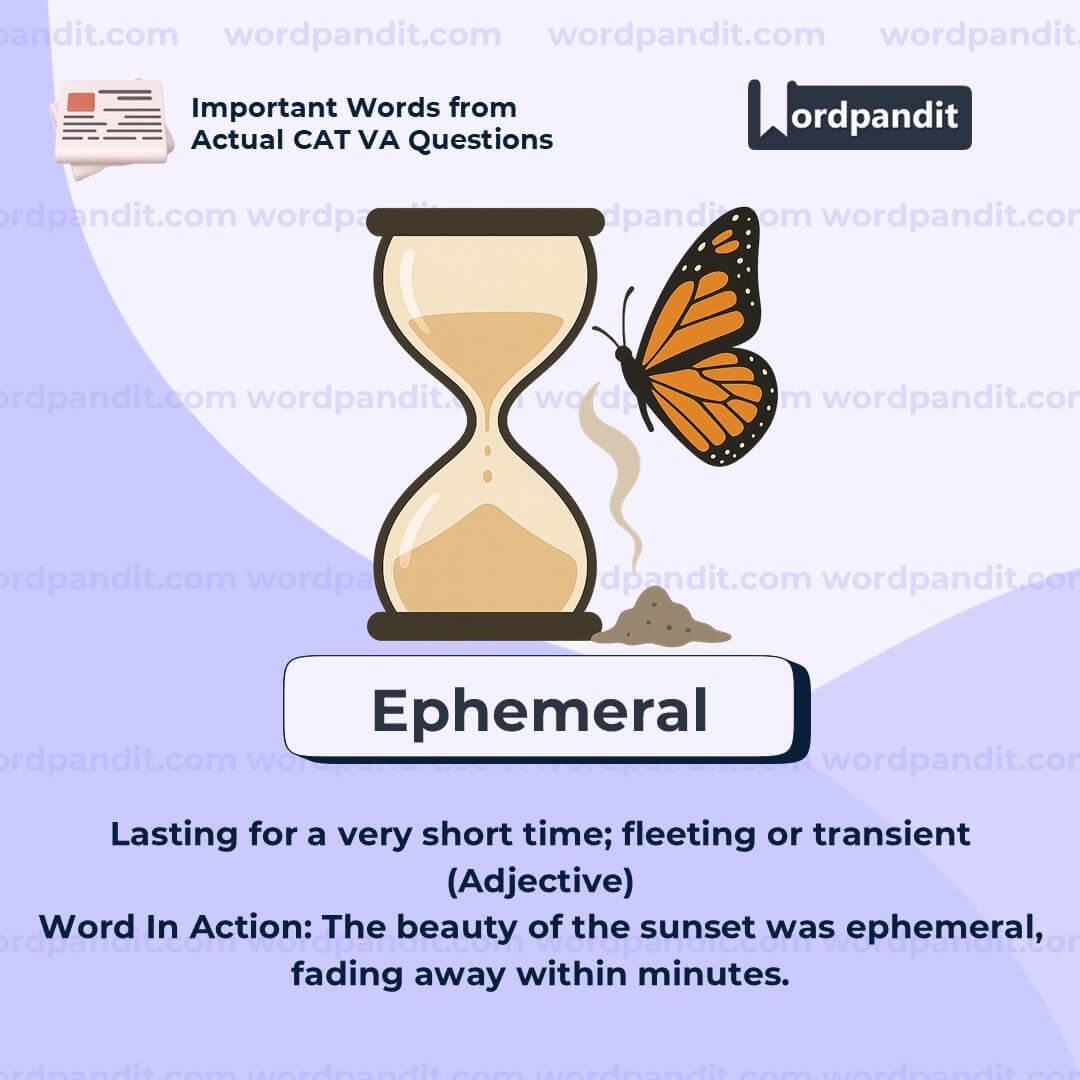
Word-2: Ephemeral
Context:
"Even in conditions of extreme violence and unfreedom, their words remained ubiquitous, ephemeral, irrepressible, and potentially transgressive." - Source Unknown
Explanatory Paragraph:
“Ephemeral” refers to something that lasts for a very short time—brief, fleeting, and momentary. In this context, the word highlights how the spoken words of enslaved individuals, though often short-lived and undocumented, were powerful. Their speech may not have been recorded or preserved, but it was meaningful in the moment—disruptive, liberating, and resistant to control. The use of “ephemeral” also suggests the fragile yet impactful nature of oral resistance in oppressive systems.
Meaning: Lasting for a very short time; fleeting or transient (Adjective)
Pronunciation: ih-FEM-er-uhl
Difficulty Level: ⭐⭐⭐ Intermediate
Etymology: From Greek *ephemeros* meaning “lasting only a day,” from *epi* (upon) + *hēmera* (day); originally used in medicine and natural science to describe short-lived conditions or insects.
Prashant Sir's Notes:
“Ephemeral” is one of those elegant words perfect for essays, poetry, and literary analysis. Use it when you want to describe something brief but beautiful or powerful—something that disappears quickly but leaves a mark.
Synonyms & Antonyms:
Synonyms: fleeting, temporary, transient, short-lived, momentary
Antonyms: lasting, enduring, permanent, eternal, long-term
Usage Examples:
- The beauty of a sunset is ephemeral—it fades within minutes.
- Fame in the digital age can be extremely ephemeral.
- Though their voices were ephemeral, they sparked long-lasting change.
- She collected ephemeral pieces of history—old tickets, postcards, and flyers.
Cultural Reference:
In Zen philosophy and traditional Japanese aesthetics, **ephemerality** is embraced through concepts like *mono no aware*—the awareness of the impermanence of things and the beauty found in their transience.
Think About It:
Can something fleeting still have lasting impact? How do we value things that are brief but meaningful?
Quick Activity:
List three things in life that are ephemeral but memorable. What makes them powerful despite their short duration?
Memory Tip:
“Ephemeral” sounds like “a film reel”—quick scenes that pass by but leave a strong impression.
Real-World Application:
“Ephemeral” is commonly used in literature, art, design, and technology (e.g., ephemeral content on social media) to describe things that are brief but impactful or expressive.
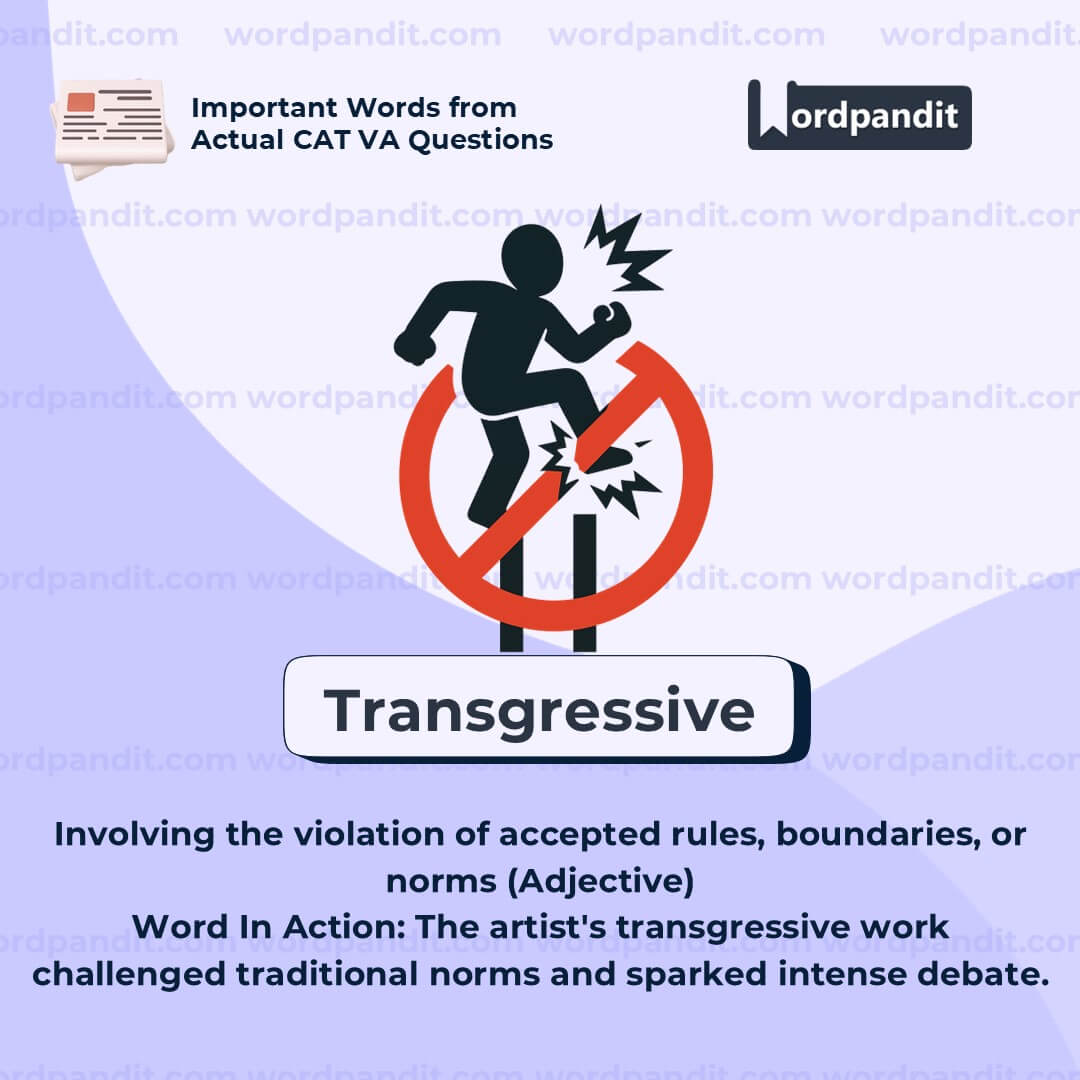
Word-3: Transgressive
Context:
"Even in conditions of extreme violence and unfreedom, their words remained ubiquitous, ephemeral, irrepressible, and potentially transgressive." - Source Unknown
Explanatory Paragraph:
“Transgressive” refers to behavior, speech, or actions that violate accepted rules, norms, or boundaries—whether social, moral, legal, or cultural. In this context, the word highlights how the spoken words of enslaved individuals, though fleeting and often unwritten, had the power to challenge the existing systems of power and control. These words were potentially **transgressive** because they defied the silence and submission expected of them, asserting humanity, resistance, and truth in environments designed to suppress them.
Meaning: Involving the violation of accepted rules, boundaries, or norms (Adjective)
Pronunciation: trans-GRES-iv
Difficulty Level: ⭐⭐⭐ Intermediate
Etymology: From Latin *transgredi* — *trans-* (across) + *gradi* (to step), meaning “to step across or go beyond limits.”
Prashant Sir's Notes:
Use “transgressive” to describe acts that cross established lines—especially in literature, social movements, or marginalized voices. It signals disruption, courage, and sometimes rebellion. Often used in critical theory, gender studies, and art critique.
Synonyms & Antonyms:
Synonyms: rebellious, defiant, subversive, provocative, nonconforming
Antonyms: obedient, compliant, lawful, conventional, conforming
Usage Examples:
- The artist’s transgressive work challenged traditional views on gender and identity.
- Her transgressive speech at the rally pushed back against centuries of oppression.
- Even a whispered song could be considered transgressive under slavery.
- He admired literature that explored the transgressive boundaries of society and self.
Cultural Reference:
In literature and film, **transgressive fiction** refers to works that explore taboo subjects and characters who defy societal norms—authors like Chuck Palahniuk and Jean Genet are famous for this genre.
Think About It:
When does being transgressive become necessary for justice or freedom, and when might it risk causing harm or chaos?
Quick Activity:
Write a sentence using “transgressive” to describe an act of defiance from a historical figure, activist, or fictional character.
Memory Tip:
“Transgressive” = “trans” (across) + “aggressive” → Think of boldly stepping across a line that others won’t dare to cross.
Real-World Application:
“Transgressive” is often used in critical discussions about protest, censorship, gender identity, art, and freedom of expression—highlighting acts that challenge the status quo.
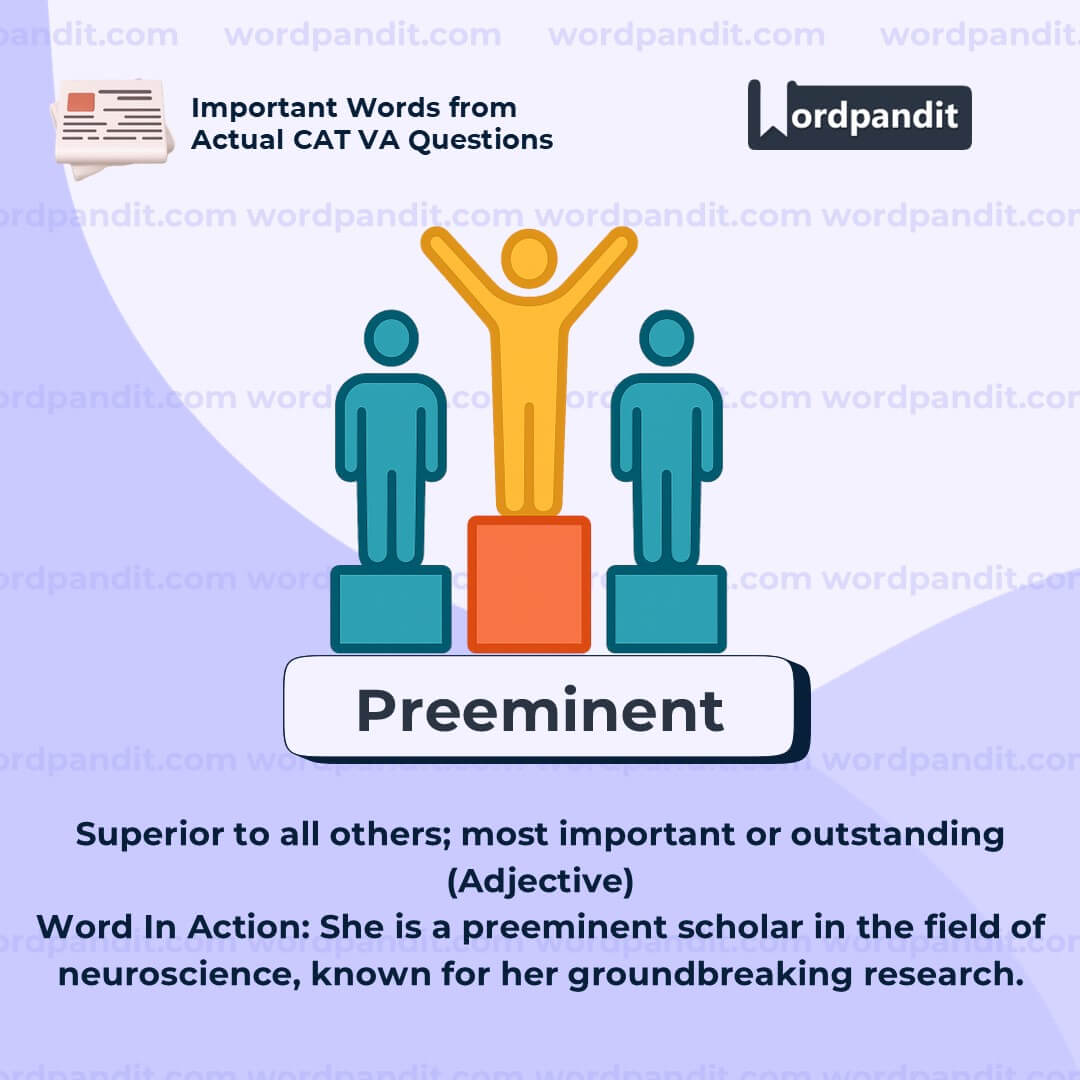
Word-4: Preeminent
Context:
"Freedom of speech and the power to silence may have been preeminent markers of white liberty in Colonies, but at the same time, slavery depended on dialogue: slaves could never be completely muted." - Source Unknown
Explanatory Paragraph:
“Preeminent” means surpassing all others in importance, status, or quality—being superior or most outstanding in a particular area. In the given context, **preeminent markers** refer to the most defining and dominant signs of liberty for white colonists, particularly the ability to speak freely and to suppress others. The term underscores how these freedoms were highly valued, yet simultaneously denied to enslaved individuals, revealing deep contradictions within colonial systems of power and speech.
Meaning: Superior to all others; most important or outstanding (Adjective)
Pronunciation: pree-EM-uh-nuhnt
Difficulty Level: ⭐⭐⭐ Intermediate
Etymology: From Latin *praeeminere* — *prae* (before) + *eminere* (to stand out), meaning “to project forward or rise above.”
Prashant Sir's Notes:
This is a high-register word—perfect for academic essays and formal writing. Use it when you want to emphasize exceptional importance or rank. Don’t confuse it with just “important”—**preeminent** implies being the **most** important or distinguished.
Synonyms & Antonyms:
Synonyms: foremost, leading, outstanding, superior, distinguished
Antonyms: inferior, ordinary, secondary, minor, undistinguished
Usage Examples:
- She is a preeminent scholar in the field of African American history.
- Freedom of speech was considered a preeminent value in colonial society.
- The institution quickly became a preeminent center for innovation.
- He held a preeminent position in the scientific community for decades.
Cultural Reference:
Throughout history, figures like Martin Luther King Jr. and Nelson Mandela are regarded as **preeminent** leaders in the global struggle for justice and human rights—respected not only for their accomplishments but also for their moral authority.
Think About It:
Can something be preeminent in one culture or system and completely overlooked in another? What determines “preeminence” in society?
Quick Activity:
Name one preeminent thinker, artist, or leader in any field and write one sentence explaining their significance.
Memory Tip:
“Preeminent” = “pre” (before others) + “eminent” (important) → Think of someone or something that **stands ahead** of the rest.
Real-World Application:
Use “preeminent” in formal discussions about leadership, influence, academic contributions, or cultural importance—it helps elevate the tone and precision of your argument.
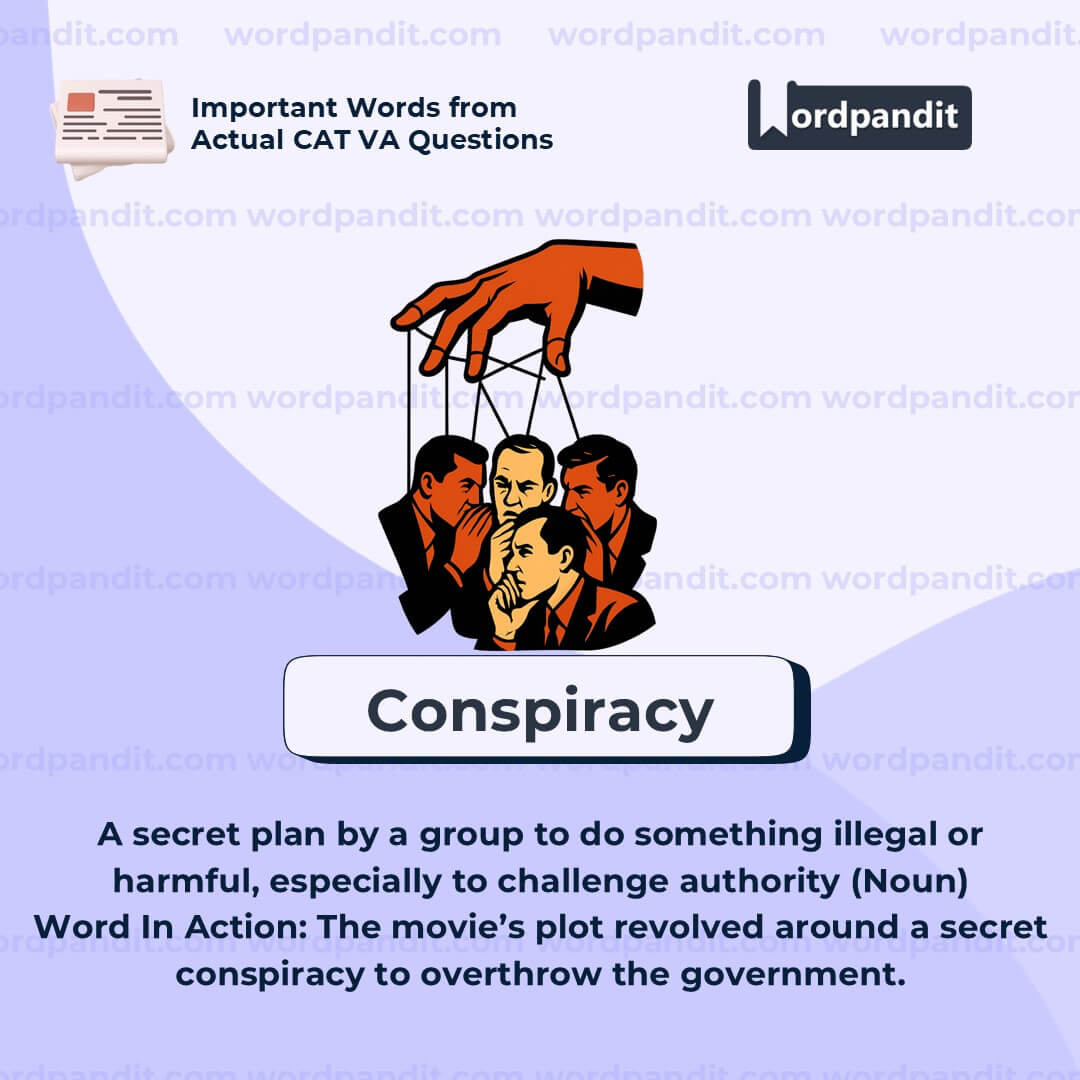
Word-5: Conspiracy
Context:
"Slave-owners obsessed over slave talk, though they could never control it, yet feared its power to bind and inspire—for, as everyone knew, oaths, whispers, and secret conversations bred conspiracy and revolt." - Source Unknown
Explanatory Paragraph:
“Conspiracy” refers to a secret plan made by two or more people to do something unlawful, harmful, or rebellious. It usually involves plotting behind the scenes, often in opposition to authority. In this context, enslaved people’s private conversations were viewed by slave-owners as dangerous not just because they were uncontrolled, but because they could potentially lead to organized resistance or **conspiracy**—a coordinated effort to challenge or overthrow systems of domination and oppression.
Meaning: A secret plan by a group to do something illegal or harmful, especially to challenge authority (Noun)
Pronunciation: kuhn-SPEER-uh-see
Difficulty Level: ⭐⭐ Beginner
Etymology: From Latin *conspirare*, meaning “to breathe together” — *con-* (together) + *spirare* (to breathe), indicating a shared secret intent.
Prashant Sir's Notes:
This word has a powerful historical and political charge. In literary and political texts, **conspiracy** often refers to both real and imagined fears of rebellion. Be careful with this word—it suggests intentional secrecy and rebellion, often with high stakes.
Synonyms & Antonyms:
Synonyms: plot, scheme, intrigue, secret plan, cabal
Antonyms: openness, transparency, honesty, public declaration
Usage Examples:
- The government claimed to have uncovered a conspiracy against national security.
- Slaveholders feared that even casual conversation could spark conspiracy and rebellion.
- The novel explores a conspiracy that spans decades and crosses continents.
- They were arrested for conspiracy to incite violence.
Cultural Reference:
Historically, slave uprisings—such as the 1800 **Gabriel’s Rebellion**—were viewed as dangerous conspiracies by slaveholders, who often responded with brutal crackdowns, even when plots were only rumored or imagined.
Think About It:
How do powerful systems use the fear of conspiracy to suppress even peaceful acts of resistance or communication?
Quick Activity:
Write one sentence using “conspiracy” in a historical, literary, or political context. Identify who was conspiring and why.
Memory Tip:
“Conspiracy” comes from *breathing together*—think of people huddled in secret, sharing whispered plans.
Real-World Application:
“Conspiracy” is a critical term in law, journalism, and history. It helps identify covert, often unlawful planning—but is also frequently misused in “conspiracy theories” that lack evidence but influence public belief and behavior.
