
📘 What’s Inside This CAT Para-jumble Question Post?
📝 Authentic CAT Para-jumble Question : Practice with a real CAT Para-jumble Question from a previous CAT exam.
✅ Detailed Question with Step-by-Step Solution: Each question is explained thoroughly for better understanding.
📚 Vocabulary Enhancement: Top 5 words explained from the paragraph
Para-jumble Sentences
Question 26: The four sentences (labelled 1, 2, 3, 4) below, when properly sequenced would yield a coherent paragraph. Decide on the proper sequencing of the order of the sentences and key in the sequence of the four numbers as your Answer:
1. Man has used poisons for assassination purposes ever since the dawn of civilization, against individual enemies but also occasionally against armies.
2. These dangers were soon recognized, and resulted in two international declarations—in 1874 in Brussels and in 1899 in The Hague— that prohibited the use of poisoned weapons.
3. The foundation of microbiology by Louis Pasteur and Robert Koch offered new prospects for those interested in biological weapons because it allowed agents to be chosen and designed on a rational basis.
4. Though treaties were all made in good faith, they contained no means of control, and so fail
Solution with Explanation
Correct Answer: 1324
Statement (1) provides the overarching context for the discussion, indicating that the use of poisons or similar agents has been a human practice dating back to the beginnings of civilization. This offers a broad historical perspective that sets the stage for the subsequent information.
Following this, Statement (3) builds upon it by elaborating how technological advancements have given enthusiasts in this area new tools and methods, enhancing their capabilities to deploy these toxic substances. This demonstrates the evolution of the practice over time, adapting to modern innovations.
In contrast, Statement (2) introduces a pivot in the narrative by focusing on the safety measures that have been instituted to counter the risks associated with the use of poisons. This statement showcases society's recognition of the potential dangers and the subsequent actions taken to mitigate them.
Lastly, Statement (4) concludes this chain of thought by revealing the inadequacies in the very safety measures discussed in Statement (2). It serves as a critical observation, pointing out the limitations and vulnerabilities that persist despite efforts to secure against the use of poison.
Therefore, when pieced together in the sequence of (1)-(3)-(2)-(4), these statements create a coherent narrative that moves from a general introduction of the topic to specific facets, including technological advancements, safety precautions, and their inherent flaws.
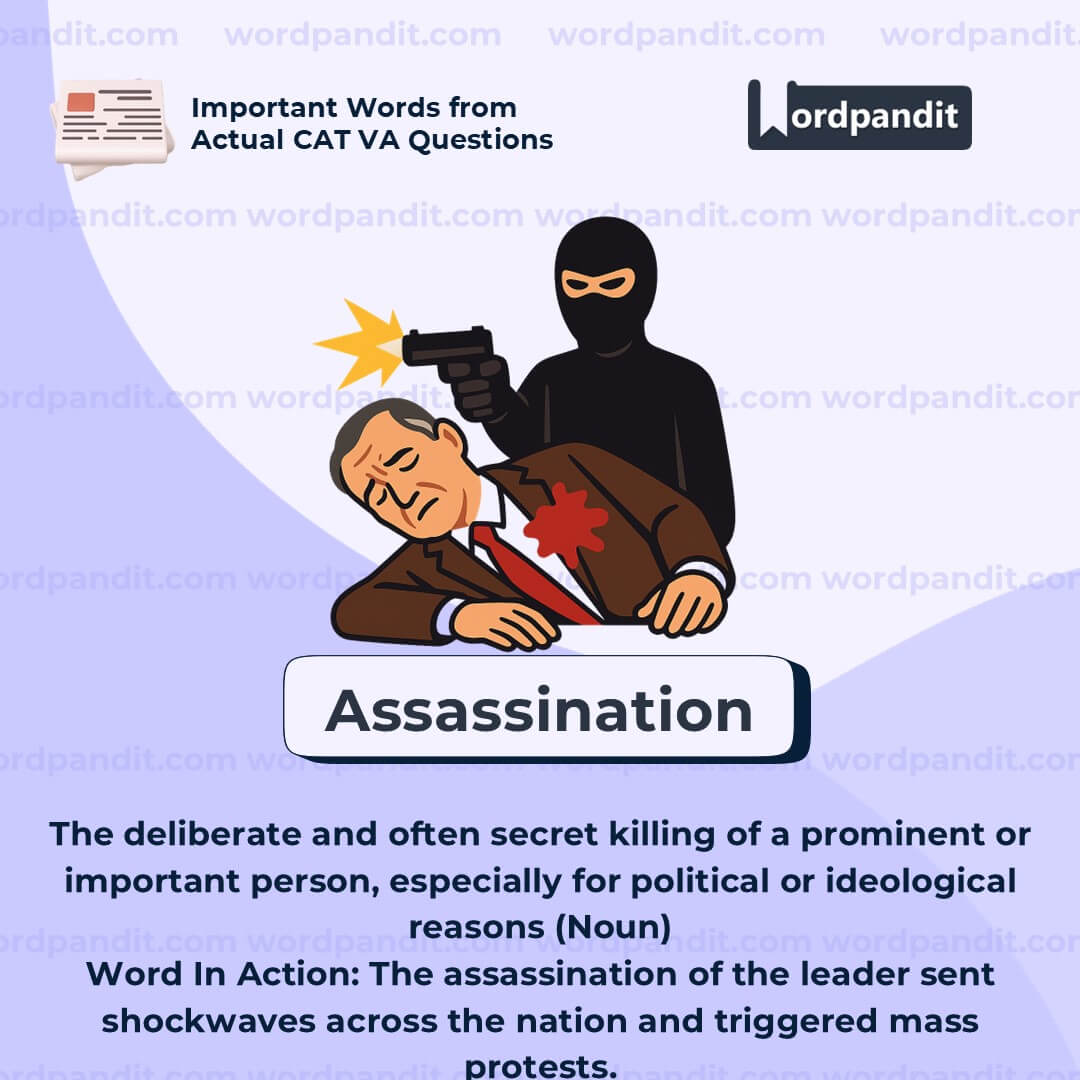
Word-1: Assassination
Context:
"Man has used poisons for assassination purposes ever since the dawn of civilization, against individual enemies but also occasionally against armies." - Source Unknown
Explanatory Paragraph:
“Assassination” refers to the deliberate and often secret killing of a prominent person, usually for political or ideological reasons. It is typically premeditated and carried out to disrupt leadership, create fear, or make a political statement. In this context, the word highlights how poison has long been a tool of stealth and strategy in **assassination**, used not only to eliminate high-profile targets but also sometimes to affect the outcome of military conflicts by targeting groups or leaders covertly.
Meaning: The deliberate and often secret killing of a prominent or important person, especially for political or ideological reasons (Noun)
Pronunciation: uh-SASS-uh-NAY-shun
Difficulty Level: ⭐⭐ Beginner
Etymology: From Arabic *ḥashshāshīn* (a sect known for political killings); entered Middle English through Old French *assassiner* in the 16th century.
Prashant Sir's Notes:
Be clear: **assassination** is more than just killing—it's political, targeted, and usually planned. It’s a term used in history, international relations, and media. Useful in analyzing power dynamics and covert operations.
Synonyms & Antonyms:
Synonyms: murder, execution, elimination, targeted killing, political killing
Antonyms: protection, rescue, pardon, safeguarding
Usage Examples:
- The assassination of Archduke Franz Ferdinand triggered World War I.
- Secret agencies have long studied poisons for use in covert assassinations.
- He was accused of plotting the assassination of a government official.
- Assassination is often used as a tool of political destabilization.
Cultural Reference:
The **assassination** of leaders like Abraham Lincoln, John F. Kennedy, and Martin Luther King Jr. had major historical consequences, often altering the political and social direction of a nation.
Think About It:
Does the targeted killing of a leader ever bring lasting change, or does it simply provoke more instability and conflict?
Quick Activity:
List two famous assassinations in world history. For each, briefly describe the motive and the outcome.
Memory Tip:
Think of “assassination” as an **attack on a symbol**—it’s not just about killing a person, but attempting to destroy what they represent.
Real-World Application:
The term is often used in discussions about terrorism, espionage, political science, and military ethics—especially in relation to state-sponsored operations or debates on targeted drone strikes.
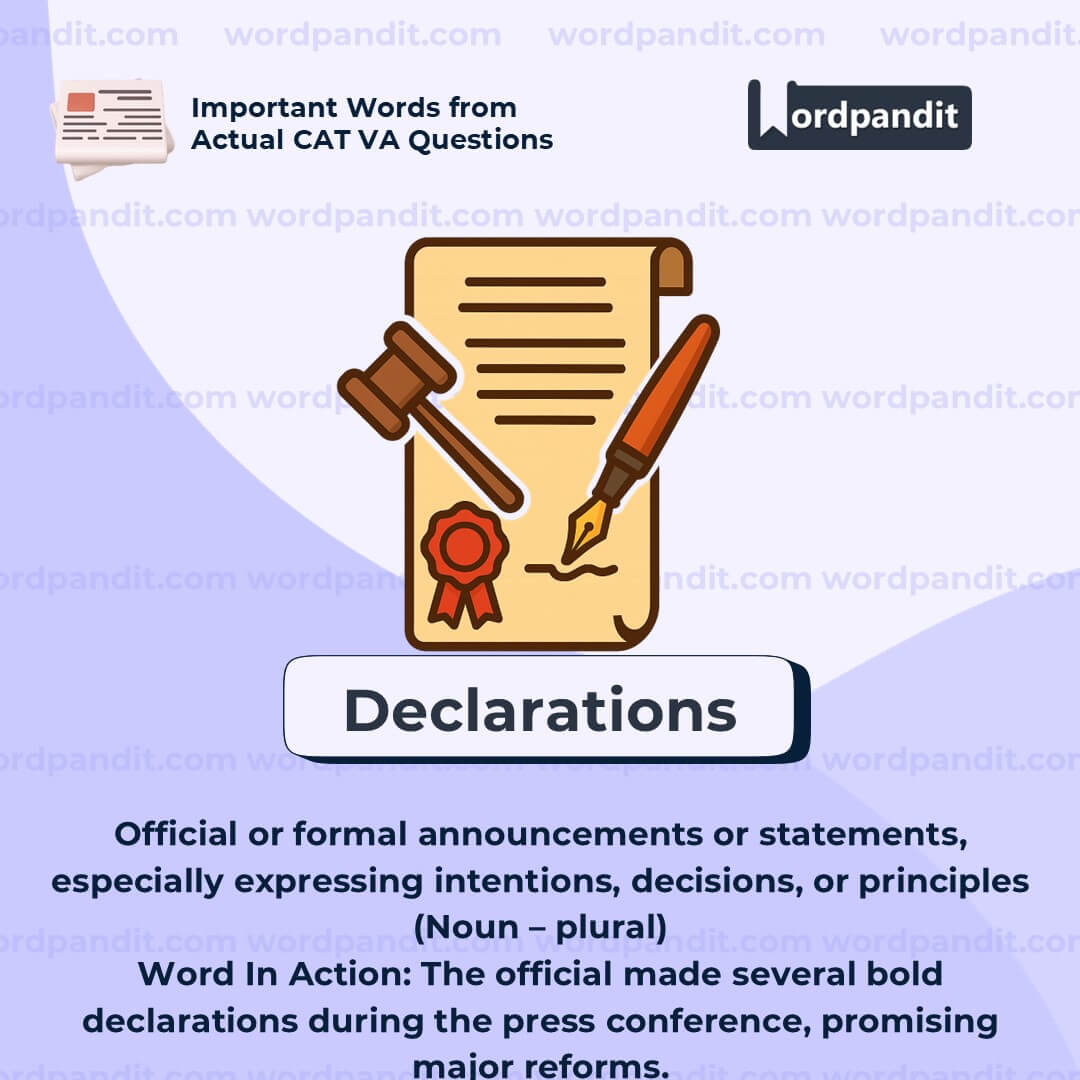
Word-2: Declarations
Context:
"These dangers were soon recognized, and resulted in two international declarations—in 1874 in Brussels and in 1899 in The Hague—that prohibited the use of poisoned weapons." - Source Unknown
Explanatory Paragraph:
“Declarations” are formal or official statements that announce a decision, position, or intention, often issued by governments, organizations, or international bodies. In this context, the word refers to two international agreements made in Brussels (1874) and The Hague (1899), which clearly and publicly stated that the use of poisoned weapons in warfare was prohibited. These declarations marked a growing awareness of humanitarian concerns in warfare and laid the foundation for modern international law.
Meaning: Official or formal announcements or statements, especially expressing intentions, decisions, or principles (Noun – plural)
Pronunciation: dek-luh-RAY-shunz
Difficulty Level: ⭐⭐ Beginner
Etymology: From Latin *declarare* meaning “to make clear,” from *de-* (thoroughly) + *clarare* (to make clear, from *clarus* = clear).
Prashant Sir's Notes:
In history, diplomacy, and law, **declarations** are turning points. They are often non-binding but symbolically powerful. Think of the **Declaration of Independence** or **UN declarations**—they express collective will or set ethical standards, even without strict enforcement.
Synonyms & Antonyms:
Synonyms: statements, announcements, proclamations, pronouncements, affirmations
Antonyms: silence, denial, concealment, retraction
Usage Examples:
- The peace treaty was accompanied by several declarations of disarmament.
- International declarations often guide moral standards even if they lack legal force.
- The court required a declaration of assets from both parties.
- Declarations from Brussels and The Hague sought to humanize warfare practices.
Cultural Reference:
Documents like the **Universal Declaration of Human Rights (1948)** and the **Declaration of the Rights of Man (1789)** have played a major role in shaping global legal and ethical norms.
Think About It:
Why do declarations matter even when they are not legally binding? Can symbolic commitments shape real-world behavior?
Quick Activity:
Write the name of one historical or international declaration. Briefly explain its purpose and impact.
Memory Tip:
Think of “declarations” as **clear clarifications**—they declare or make a position known to the world.
Real-World Application:
Declarations are used in diplomacy, law, public policy, and activism to set principles, signal intent, or establish collective consensus. They often inspire action, even before laws are passed.
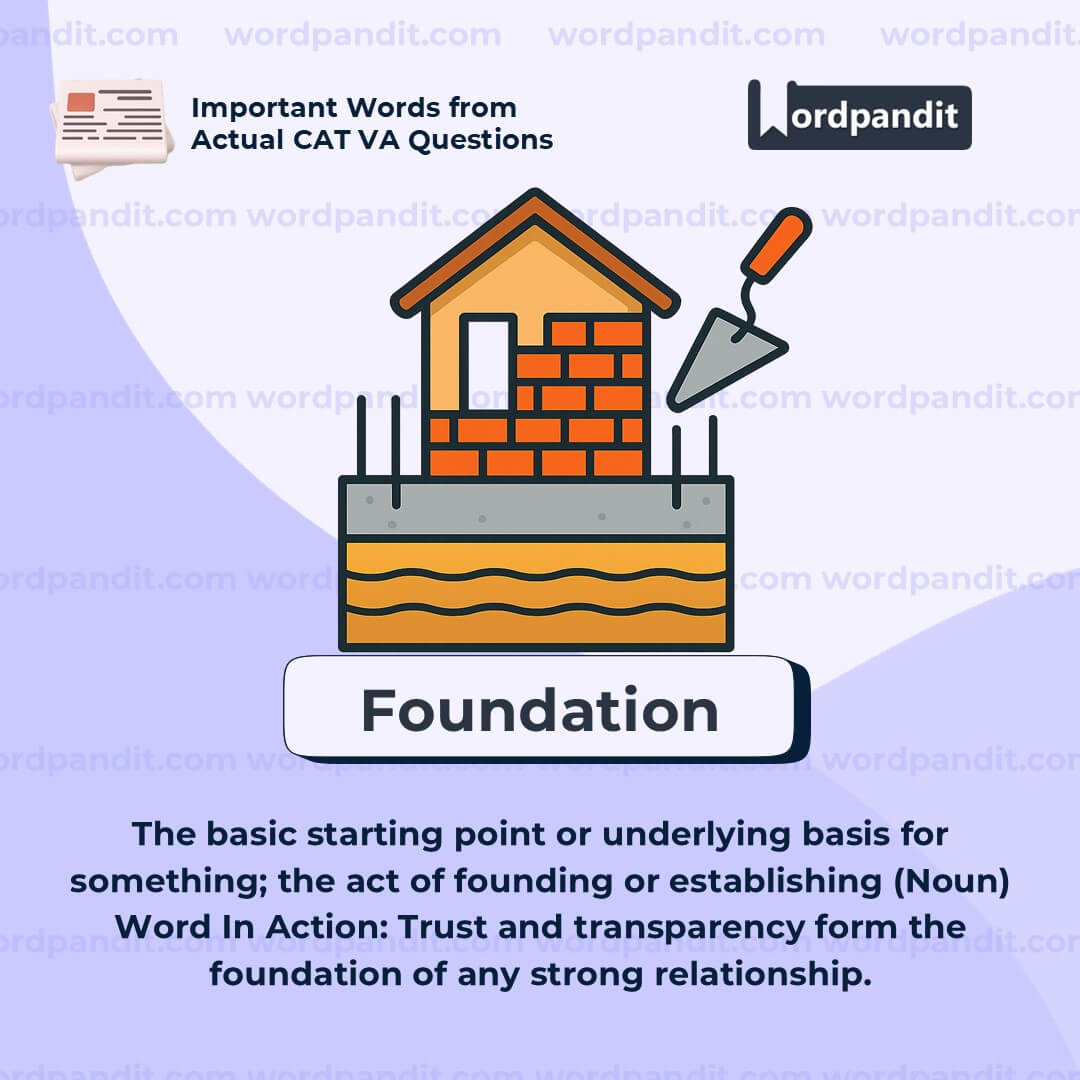
Word-3: Foundation
Context:
"The foundation of microbiology by Louis Pasteur and Robert Koch offered new prospects for those interested in biological weapons because it allowed agents to be chosen and designed on a rational basis." - Source Unknown
Explanatory Paragraph:
“Foundation” refers to the basis or groundwork of something, both literally and metaphorically. It can mean the physical base of a structure, or more abstractly, the starting point or essential principles on which an idea, discipline, or system is built. In this context, it refers to the **establishment** of the scientific field of microbiology by Louis Pasteur and Robert Koch. Their discoveries laid the **foundation**—the core understanding—that enabled others to explore, manipulate, and even misuse microorganisms, including for biological warfare.
Meaning: The basic starting point or underlying basis for something; the act of founding or establishing (Noun)
Pronunciation: fown-DAY-shun
Difficulty Level: ⭐⭐ Beginner
Etymology: From Latin *fundatio*, from *fundare* (to lay a base), from *fundus* (bottom, base).
Prashant Sir's Notes:
“Foundation” is a versatile word. In academics, it often refers to the **origin or basis of knowledge**. In everyday use, it can mean the base of a building or an organization. When writing, be specific: Are you referring to a conceptual base (like scientific theory), a physical one, or an institutional one?
Synonyms & Antonyms:
Synonyms: basis, groundwork, starting point, establishment, bedrock
Antonyms: collapse, ruin, dissolution, dismantling
Usage Examples:
- The foundation of democracy rests on free speech and equal rights.
- Pasteur’s discoveries laid the foundation for modern medical microbiology.
- The foundation of the building was made of reinforced concrete.
- Education is the foundation of a strong and informed society.
Cultural Reference:
The **Pasteur Institute**, founded in 1887, became a global foundation for microbiological research and vaccine development—shaping science, medicine, and public health policy worldwide.
Think About It:
What is the most important foundation a society must have—education, health, justice, or something else? Why?
Quick Activity:
Write a sentence describing the foundation of a subject or skill you are currently learning. What basic principles or knowledge does it rely on?
Memory Tip:
Think of a “foundation” like the **first stone** in a building or idea—it’s what everything else is built upon.
Real-World Application:
“Foundation” is used in architecture, education, law, and science to describe the base from which systems are built. In writing and analysis, it's important to identify the foundation of an argument or theory to understand its strength.
Word-4: Prospects

Context:
"The foundation of microbiology by Louis Pasteur and Robert Koch offered new prospects for those interested in biological weapons because it allowed agents to be chosen and designed on a rational basis." - Source Unknown
Explanatory Paragraph:
“Prospects” refers to the possibilities or chances for future success, development, or advancement. In the given context, the word is used to describe how the establishment of microbiology opened up new **opportunities or pathways** for those interested in applying scientific knowledge to biological weapons. These **prospects** included the potential to select and engineer microbial agents with a level of precision that was previously impossible—reflecting a dramatic shift in the scale and scope of biological warfare.
Meaning: Possibilities or expectations for future progress, success, or development (Noun – plural)
Pronunciation: PROS-pekts
Difficulty Level: ⭐⭐ Beginner
Etymology: From Latin *prospectus*, meaning “a view or outlook,” from *pro-* (forward) + *specere* (to look).
Prashant Sir's Notes:
“Prospects” is a future-focused word. It’s commonly used in academic, business, and scientific writing to describe emerging opportunities or likely outcomes. Always consider whether it refers to **positive expectations** or just potential—context matters!
Synonyms & Antonyms:
Synonyms: opportunities, possibilities, outlooks, expectations, chances
Antonyms: impossibilities, hopelessness, dead ends, setbacks
Usage Examples:
- The discovery of antibiotics created new prospects for treating infectious diseases.
- Graduates today face better career prospects in the technology sector.
- The scientist was excited by the prospects of using genetic engineering in agriculture.
- The foundation of microbiology opened up alarming prospects in the realm of biological warfare.
Cultural Reference:
In business and economics, **market prospects** often determine investment decisions—referring to the anticipated growth and profitability of an industry or company based on current trends.
Think About It:
Do prospects always have to be positive, or can they represent dangerous or ethically challenging opportunities, like in the case of biological weapons?
Quick Activity:
List two positive and two negative prospects that emerged from a major scientific or technological breakthrough. How were they addressed?
Memory Tip:
Think of “prospects” as your **view of the future**—what you can “see ahead” based on current progress or possibilities.
Real-World Application:
“Prospects” is used in academic research, career counseling, strategic planning, and innovation analysis to evaluate the likelihood and impact of future outcomes.
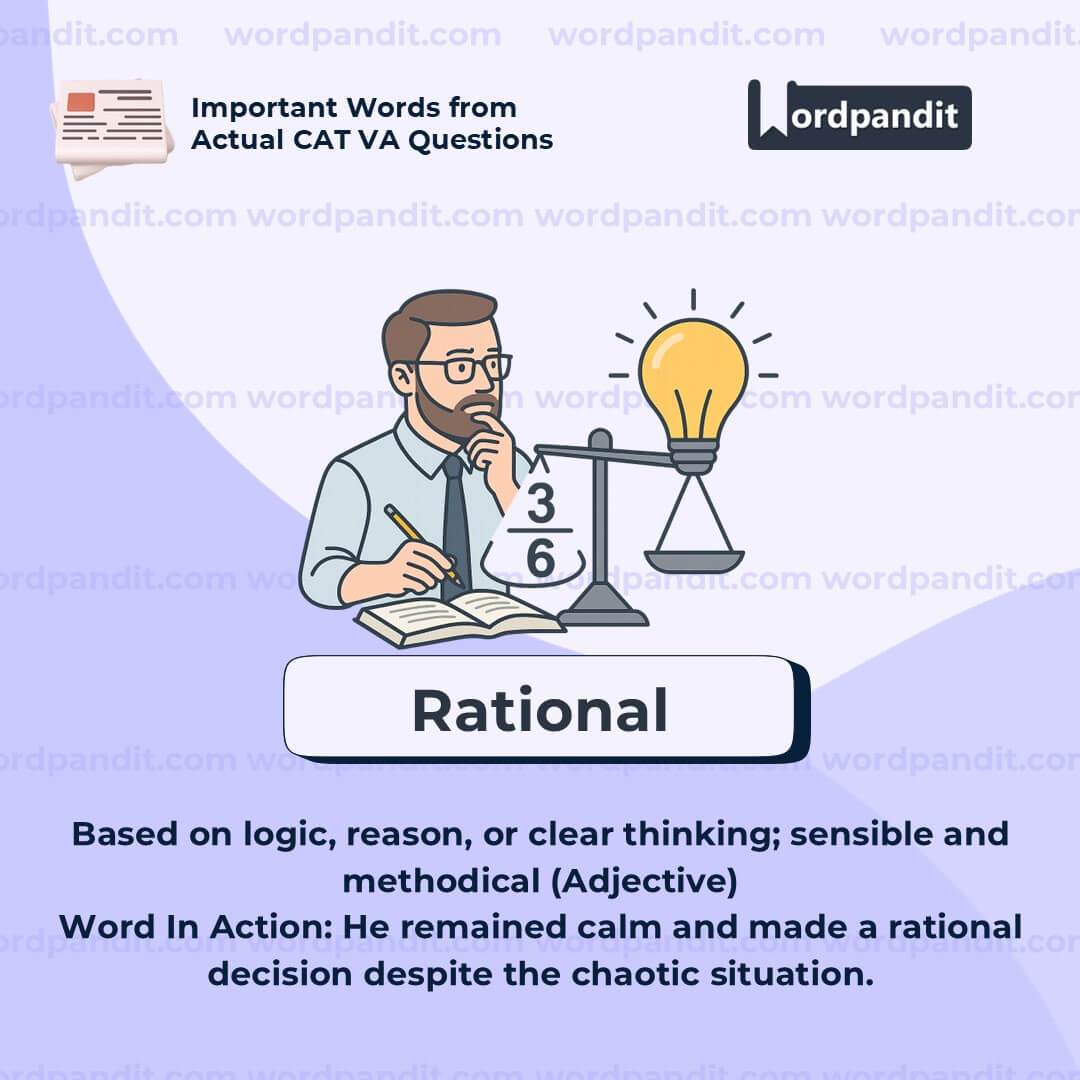
Word-5: Rational
Context:
"The foundation of microbiology by Louis Pasteur and Robert Koch offered new prospects for those interested in biological weapons because it allowed agents to be chosen and designed on a rational basis." - Source Unknown
Explanatory Paragraph:
“Rational” describes something based on reason, logic, or clear thinking rather than emotion, superstition, or guesswork. In the provided context, the term refers to the **scientific, calculated** selection and development of biological agents. Thanks to the work of Pasteur and Koch, what was once speculative became rational—guided by observable facts and tested principles. It marks a shift from randomness to intentional, knowledge-based design, especially in areas like medicine or, in this darker case, biological warfare.
Meaning: Based on logic, reason, or clear thinking; sensible and methodical (Adjective)
Pronunciation: RASH-uh-nuhl
Difficulty Level: ⭐⭐ Beginner
Etymology: From Latin *rationalis* (reasoning), from *ratio* (reason), related to *reri* (to reckon or think).
Prashant Sir's Notes:
“Rational” is a word that crops up often in debates—whether philosophical, ethical, or scientific. Use it when discussing decision-making, analysis, or structured systems. It often contrasts with emotional or impulsive behavior.
Synonyms & Antonyms:
Synonyms: logical, reasoned, calculated, analytical, sensible
Antonyms: irrational, emotional, illogical, impulsive, unreasonable
Usage Examples:
- He made a rational decision based on the data provided.
- Scientists seek rational explanations for natural phenomena.
- The approach to choosing biological agents became more rational with the rise of microbiology.
- It’s important to remain rational during a crisis, even when emotions run high.
Cultural Reference:
The **Age of Enlightenment** emphasized rational thought over superstition, helping lay the intellectual foundation for modern science, democracy, and secular governance.
Think About It:
Can all decisions be truly rational, or are emotion and bias always part of human thinking—even in science?
Quick Activity:
List two decisions you’ve made recently. Identify whether they were based on rational thinking or emotion. What was the outcome?
Memory Tip:
“Rational” sounds like “reason”—think of it as the **reason-able** way to decide or act.
Real-World Application:
In fields like science, law, economics, and engineering, rational thinking is essential for developing effective solutions, systems, and policies. It helps ensure decisions are based on facts, not fear or guesswork.
