
✨ Introduction
Mastering Reading Comprehension begins with mastering the words!
In this post, we dive deep into vocabulary taken directly from an actual CAT RC passage. Each word has been explained in a simple, easy-to-understand way, along with examples to help you grasp its usage in real contexts.
From words like "species" and "cognitive" to "subjection" and "paradise," strengthen your vocabulary one word at a time — and take your RC performance to the next level!
📚 What’s Inside This Vocabulary Post?
- 🔍 Words Sourced from an Actual CAT RC Passage: Directly pick up important vocabulary from real CAT exam material.
- 🧠 Meaningful Explanations: Understand the exact meaning and usage of each word in a simple, student-friendly way.
- ✍️ Context-Based Learning: Learn words with examples that reflect their actual usage in reading comprehension contexts.
- 🗂️ Quick Reference Format: Words are neatly listed with meanings, parts of speech, and example sentences for easy revision.
- 🚀 Boost Your RC and Verbal Ability Skills: Improve your understanding of tough passages by strengthening your vocabulary.
📝 Words Covered in This Article:
- Transmitted
- Orality
- Linguistic vulnerability
- Traditions
- Livelihoods
- Famine
- Vernacular
- Stigmatized
- Rebounded
- Monolingualism

WORD-1: Transmitted
Context:
"It’s easy to forget that most of the world’s languages are still transmitted orally with no widely established written form."
Explanatory Paragraph:
The word "transmitted" refers to the act of passing something from one person, place, or thing to another. In the given context, it specifically talks about how knowledge, culture, and language are passed down through spoken word rather than written texts. This highlights the oral traditions prevalent in many cultures across the world.
Meaning: Passed or spread from one person, place, or thing to another (Verb - past tense)
Pronunciation: trans-MIT-ted
Difficulty Level: ⭐⭐ Basic
Etymology: From Latin *transmittere*, meaning "send across or over," from *trans-* (across) + *mittere* (send).
Prashant Sir's Notes:
This word is very commonly used in both physical and metaphorical contexts—ideas, diseases, data, and language can all be "transmitted." Think of it as the bridge word that connects the sender and the receiver.
Synonyms & Antonyms:
Synonyms: convey, pass on, relay, broadcast, communicate
Antonyms: receive, withhold, suppress, retain
Usage Examples:
- The message was transmitted to all employees via email.
- Diseases can be transmitted through physical contact.
- Stories were traditionally transmitted from generation to generation orally.
- Data is transmitted over fiber-optic cables at incredible speeds.
Cultural Reference:
"Oral storytelling is one of the oldest ways knowledge has been transmitted across generations." - UNESCO Oral Traditions Program
Think About It:
In an age dominated by digital communication, what are we at risk of losing if we stop transmitting knowledge orally?
Quick Activity:
List three things (ideas, habits, traditions) that are transmitted in your family or culture orally and describe how.
Memory Tip:
Think of a “transmitter” that sends out radio signals — just like that, "transmitted" means something sent or passed on.
Real-World Application:
In healthcare, understanding how diseases are transmitted is crucial for controlling outbreaks. Similarly, in linguistics, analyzing how oral traditions transmit language can help in preserving endangered dialects.
WORD-2: Orality
Context:
"While speech communities are increasingly involved in projects to protect their languages – in print, on air and online – orality is fragile and contributes to linguistic vulnerability. But indigenous languages are about much more than unusual words and intriguing grammar."
Explanatory Paragraph:
"Orality" refers to the quality of being spoken or verbally communicated rather than written. In the context of language and culture, it highlights traditions, stories, and knowledge that are passed down through speech instead of being recorded in books or documents. This form of cultural transmission is essential but also vulnerable, especially in communities where oral traditions are the primary mode of preserving language and history.
Meaning: The preference for or practice of using spoken rather than written language (Noun)
Pronunciation: oh-RAL-ih-tee
Difficulty Level: ⭐⭐⭐ Intermediate
Etymology: From Latin *os, oris* meaning "mouth" → *oral* + suffix *-ity* indicating a state or condition.
Prashant Sir's Notes:
Orality is a critical concept in linguistics and anthropology. It reminds us that not all cultures rely on the written word — many preserve knowledge, ethics, and identity through generations of speech. Think of oral epics, folk tales, and community rituals. They may seem ephemeral, but they are deeply rooted.
Synonyms & Antonyms:
Synonyms: verbal communication, spoken tradition, speech-based expression
Antonyms: literacy, writing, text-based communication
Usage Examples:
- Orality is central to many African cultures where stories and history are passed down by word of mouth.
- The loss of orality can lead to the disappearance of traditional knowledge systems.
- In indigenous communities, orality often holds spiritual and communal significance.
- The shift from orality to literacy has changed how societies remember and record events.
Cultural Reference:
"In societies where literacy is rare, orality plays the role of a living archive, preserving collective memory." - Walter J. Ong, *Orality and Literacy*
Think About It:
Can a language truly be preserved if its oral traditions fade, even if its grammar and vocabulary are recorded?
Quick Activity:
Interview an elder in your family or community and record a short story or tradition they remember. Reflect on how orality played a role in its survival.
Memory Tip:
Remember: "Orality" is related to "oral" — both come from "mouth." If it’s spoken and not written, it’s orality!
Real-World Application:
In education and language preservation efforts, understanding orality helps in designing programs that respect indigenous methods of storytelling, teaching, and record-keeping without forcing written norms.
WORD-3: Linguistic Vulnerability
Context:
"While speech communities are increasingly involved in projects to protect their languages – in print, on air and online – orality is fragile and contributes to linguistic vulnerability. But indigenous languages are about much more than unusual words and intriguing grammar: They function as vehicles for the transmission of cultural traditions, environmental understandings and knowledge about medicinal plants, all at risk when elders die and livelihoods are disrupted."
Explanatory Paragraph:
"Linguistic vulnerability" refers to the susceptibility of a language to decline or extinction due to various threats such as lack of transmission, shrinking number of speakers, or external sociopolitical pressures. In the context of indigenous communities, this vulnerability is heightened by the fragile nature of orality — the primary mode of preserving and sharing language. When elder speakers pass away without passing on their knowledge, entire linguistic systems, along with the culture and knowledge they encode, can vanish.
Meaning: The state in which a language is at risk of being lost or becoming endangered due to weak transmission and external pressures (Noun Phrase)
Pronunciation: ling-GWIS-tik vun-luh-RUH-bil-uh-tee
Difficulty Level: ⭐⭐⭐⭐ Advanced
Etymology: "Linguistic" from Latin *lingua* meaning "language" + "vulnerability" from Latin *vulnerare* meaning "to wound."
Prashant Sir's Notes:
This term is often used in sociolinguistics and language preservation discourse. It reminds us that languages are living systems, and like ecosystems, they can be fragile. If not nurtured through daily use and transmission, they face extinction. The phrase highlights both the structural and emotional dimensions of language endangerment.
Synonyms & Antonyms:
Synonyms: language endangerment, linguistic fragility, communication decline
Antonyms: linguistic resilience, language revival, linguistic preservation
Usage Examples:
- Linguistic vulnerability increases when younger generations shift to dominant national languages.
- Projects focused on linguistic documentation help address linguistic vulnerability in tribal communities.
- The rise of digital storytelling is offering new hope to mitigate linguistic vulnerability.
- Linguistic vulnerability often mirrors the socio-economic struggles of marginalized groups.
Cultural Reference:
"According to UNESCO, nearly 40% of the world's 7,000 languages are in danger of disappearing — a stark reminder of the global crisis of linguistic vulnerability." - UNESCO Atlas of the World's Languages in Danger
Think About It:
How does the loss of a language affect the collective memory and identity of a community?
Quick Activity:
Choose an endangered language and research one cultural practice or ecological insight that may be lost if that language disappears. Share a brief summary of your findings.
Memory Tip:
Link the word “vulnerability” with “wound” — a wounded language is one at risk of dying. If it can’t heal (be revived or transmitted), it may vanish.
Real-World Application:
Understanding linguistic vulnerability is crucial in educational policy, cultural preservation, and social justice initiatives. It informs actions like creating community radio in native tongues, developing bilingual curricula, or funding language documentation projects.
WORD-4: Traditions
Context:
"Speakers of previously exclusively oral tongues are turning to the web as a virtual space for languages to live on. Internet technology offers powerful ways for oral traditions and cultural practices to survive, even thrive, among increasingly mobile communities."
Explanatory Paragraph:
"Traditions" refer to beliefs, customs, rituals, and practices that are passed down from one generation to the next, often orally or through shared communal behaviors. In the context of language and culture, traditions include storytelling, songs, dances, and ceremonies that carry a community's history, values, and identity. These traditions are often deeply tied to language, and preserving them helps keep languages alive and relevant in a changing world.
Meaning: Customs, beliefs, and practices handed down through generations (Noun – plural)
Pronunciation: truh-DISH-unz
Difficulty Level: ⭐⭐ Basic
Etymology: From Latin *traditio*, meaning "a handing over, delivery," from *tradere* – to deliver or hand over.
Prashant Sir's Notes:
Traditions are not just old-fashioned customs—they’re the carriers of meaning, memory, and identity. Whether it's a family recipe, a local festival, or a form of oral poetry, these practices help ground people in their roots, especially as the world becomes more mobile and digitally driven.
Synonyms & Antonyms:
Synonyms: customs, rituals, heritage, practices, lore
Antonyms: innovations, novelties, changes, breakaways
Usage Examples:
- Many festivals are rooted in age-old traditions passed down through generations.
- The village elders play a key role in preserving oral traditions.
- Some traditions are adapted over time to fit modern values and lifestyles.
- Language is deeply connected to traditions—it shapes and is shaped by them.
Cultural Reference:
"Tradition is not the worship of ashes, but the preservation of fire." – Gustav Mahler
Think About It:
In a rapidly globalizing world, how can we maintain meaningful traditions without becoming resistant to change?
Quick Activity:
Write down one tradition from your family or community. Then, explain why it matters to you and how it has been preserved or changed over time.
Memory Tip:
Think “traditions = trade of actions across generations.” It’s how culture gets traded through time.
Real-World Application:
Understanding traditions helps educators, linguists, and anthropologists engage more meaningfully with communities. Reviving traditions through digital platforms like podcasts, YouTube, or Instagram helps protect languages and cultures under threat.
WORD-5: Livelihoods
Context:
"They function as vehicles for the transmission of cultural traditions, environmental understandings and knowledge about medicinal plants, all at risk when elders die and livelihoods are disrupted."
Explanatory Paragraph:
"Livelihoods" refer to the means by which people sustain their lives—how they earn a living and meet their basic needs like food, shelter, and clothing. In many indigenous and traditional communities, livelihoods are closely tied to the environment and cultural practices such as farming, fishing, or craft-making. When these livelihoods are disrupted—due to economic, environmental, or social challenges—entire ways of life, including language and cultural transmission, can become endangered.
Meaning: Means of securing the necessities of life, typically through work or subsistence activities (Noun – plural)
Pronunciation: LYE-vlee-hoodz
Difficulty Level: ⭐⭐ Basic
Etymology: From Middle English *lyvelod*, originally meaning "means of living," from *livelode* (course of life) and related to "live" + "hood" (state or condition).
Prashant Sir's Notes:
The word “livelihoods” helps you zoom out from the abstract and think about real people. It's more than a job—it’s survival, identity, and continuity, especially in traditional communities where work and culture are intertwined.
Synonyms & Antonyms:
Synonyms: means of support, subsistence, employment, occupation, source of income
Antonyms: unemployment, idleness, dependence, destitution
Usage Examples:
- Climate change is threatening the livelihoods of coastal fishing communities.
- Many artisans depend on traditional crafts for their livelihoods.
- When livelihoods are disrupted, entire social structures can begin to collapse.
- Protecting indigenous livelihoods helps sustain both biodiversity and cultural heritage.
Cultural Reference:
"Livelihoods are not just about income. They are about dignity, identity, and a way of life." – UNDP Human Development Report
Think About It:
What happens to a language or a tradition when the livelihood that sustains it is no longer viable?
Quick Activity:
Make a list of three traditional livelihoods in your country. For each, identify the cultural knowledge or language that might be at risk if that livelihood disappears.
Memory Tip:
“Live” is at the heart of “livelihoods.” It’s what people need to live and keep living with dignity.
Real-World Application:
Policy-makers and NGOs often focus on sustainable livelihoods to empower vulnerable communities. Whether it’s promoting eco-tourism or reviving traditional agriculture, protecting livelihoods is key to safeguarding language, culture, and ecological knowledge.
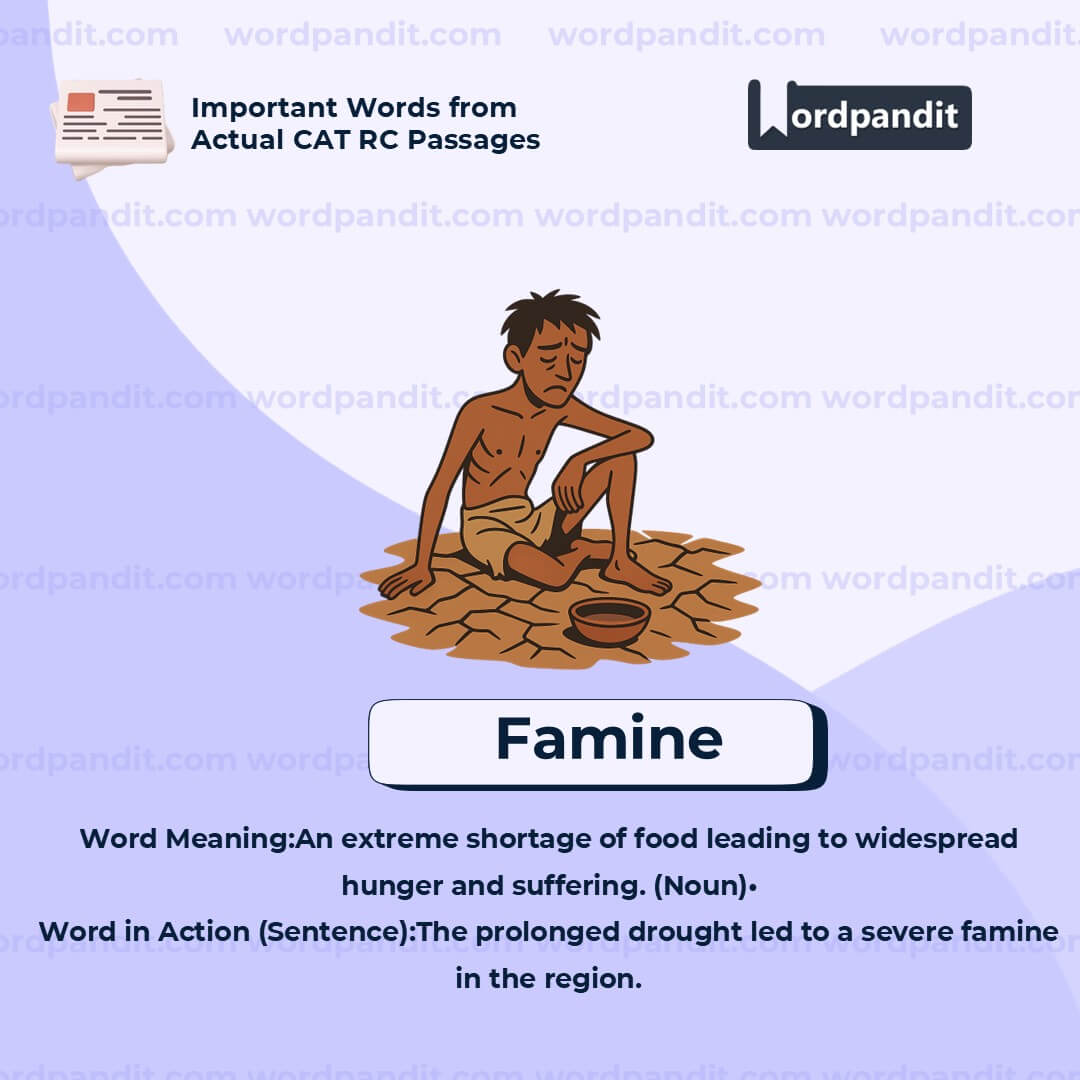
WORD-6: Famine
Context:
"Both push and pull factors lead to the decline of languages. Through war, famine and natural disasters, whole communities can be destroyed, taking their language with them to the grave, such as the indigenous populations of Tasmania who were wiped out by colonists."
Explanatory Paragraph:
“Famine” refers to a severe and widespread shortage of food, often caused by natural disasters, war, or economic collapse, leading to mass starvation and death. In historical and modern contexts, famines can devastate entire populations. In the passage, famine is seen as one of the catastrophic forces—alongside war and natural disasters—that not only claims human lives but also erases entire linguistic and cultural heritages when communities are wiped out.
Meaning: An extreme scarcity of food causing widespread hunger and death (Noun)
Pronunciation: FAM-in
Difficulty Level: ⭐⭐ Basic
Etymology: From Middle English *famin*, from Old French *famine*, from Latin *fames* meaning "hunger."
Prashant Sir's Notes:
Famine is not just a humanitarian crisis; it’s also a cultural and linguistic one. When communities are shattered by famine, they lose more than food—they lose the people who carry their stories, rituals, and language. The word is stark, heavy, and always tied to human suffering on multiple levels.
Synonyms & Antonyms:
Synonyms: starvation, food shortage, hunger crisis, malnutrition
Antonyms: abundance, plenty, nourishment, food security
Usage Examples:
- The famine in the region lasted for over a year, leading to mass migration and death.
- Historical famines often reshaped societies and languages by decimating populations.
- Relief organizations work to prevent famine through early warning systems and food aid.
- The Irish Potato Famine led to one of the largest emigrations in European history.
Cultural Reference:
"Famine is not caused by a lack of food but by a lack of justice." – Amartya Sen, Nobel laureate economist
Think About It:
How might the loss of a language during a famine further deepen the trauma and erasure experienced by a community?
Quick Activity:
Research a historical famine (e.g., the Great Chinese Famine or Ethiopian Famine) and write 3 lines on how it impacted local cultures or languages.
Memory Tip:
“Famine” sounds like “famished”—both relate to extreme hunger. Imagine a “famished” community facing “famine.”
Real-World Application:
Understanding famine helps policymakers and humanitarian groups develop better food security strategies. It's also crucial for linguists and anthropologists tracking cultural loss in disaster-struck areas where language may vanish alongside lives.
WORD-7: Vernacular
Context:
"More commonly, speakers live on but abandon their language in favor of another vernacular, a widespread process that linguists refer to as 'language shift' from which few languages are immune."
Explanatory Paragraph:
The word "vernacular" refers to the native language or dialect spoken by ordinary people in a particular region or country. It contrasts with formal, official, or literary language. In this context, it describes a shift where speakers abandon their traditional or ancestral language to adopt another, more dominant or socially accepted local language. This often happens due to social, economic, or political pressures and contributes to the gradual disappearance of minority languages.
Meaning: The native language or dialect spoken by the ordinary people in a specific region (Noun)
Pronunciation: vur-NAK-yuh-lur
Difficulty Level: ⭐⭐⭐ Intermediate
Etymology: From Latin *vernaculus* meaning "native, indigenous," from *verna* meaning "home-born slave" or "domestic."
Prashant Sir's Notes:
"Vernacular" is a powerful word in language studies. It reminds us that language isn’t just about formality or grammar—it’s about how real people live, speak, and think. The vernacular carries local identity, emotion, and shared experience. When people shift to a different vernacular, it often signals deeper cultural changes.
Synonyms & Antonyms:
Synonyms: native language, dialect, local tongue, everyday speech
Antonyms: formal language, standard language, literary language
Usage Examples:
- He wrote his novel in the vernacular to better connect with local readers.
- Many indigenous people switch from their native language to the dominant vernacular in urban settings.
- Religious texts were once only available in Latin, but later translated into vernacular languages.
- Language shift occurs when communities gradually stop using their ancestral tongue in favor of a new vernacular.
Cultural Reference:
"The use of vernacular languages in literature gave voice to the people and helped shape national identities." – From studies on Dante and Chaucer
Think About It:
When people give up their native tongue for another vernacular, what do they gain—and what might they lose?
Quick Activity:
Write down two vernacular expressions from your region. Translate them into standard language. What changes in tone or meaning?
Memory Tip:
“Vernacular” sounds like “verbal for the neighborhood”—it’s how people talk casually where they live.
Real-World Application:
In marketing, education, and public health, using the vernacular ensures better communication with target audiences. It helps in creating relatable and accessible messages that resonate with the local population.
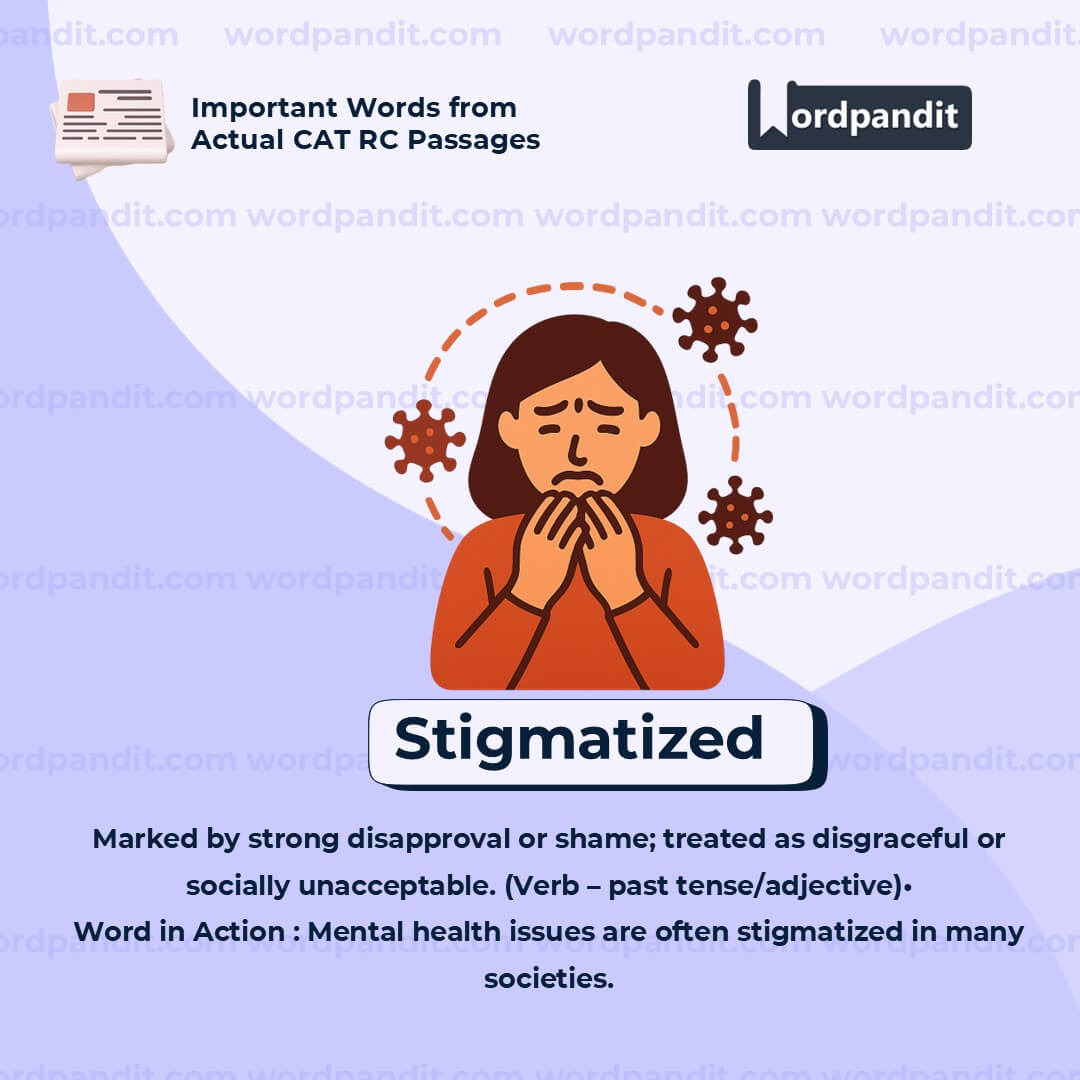
WORD-8: Stigmatized
Context:
"Welsh, long stigmatized and disparaged by the British state, has rebounded with vigor."
Explanatory Paragraph:
"Stigmatized" means being marked by society as shameful, inferior, or undesirable. In the given context, it refers to how the Welsh language was once viewed negatively and treated as inferior to English by the British government and broader society. When something is stigmatized—whether a language, behavior, or identity—it often faces social rejection, suppression, or mockery, leading to loss of pride and reduced use.
Meaning: Treated as disgraceful or socially unacceptable (Verb – past tense)
Pronunciation: STIG-muh-tyzd
Difficulty Level: ⭐⭐⭐ Intermediate
Etymology: From Greek *stizein* meaning "to mark or brand," leading to Latin *stigma* meaning "a mark of disgrace."
Prashant Sir's Notes:
Stigma is a powerful social tool—it can push people to hide who they are or what they speak. When a language is stigmatized, its speakers may feel shame or face discrimination. This has happened to many minority languages and dialects, including Welsh, which fortunately has seen a resurgence.
Synonyms & Antonyms:
Synonyms: shamed, discredited, condemned, ridiculed, belittled
Antonyms: praised, honored, respected, accepted, celebrated
Usage Examples:
- The dialect was stigmatized as uneducated, leading many to stop using it in public.
- Certain medical conditions were once heavily stigmatized, causing patients to suffer in silence.
- Welsh was stigmatized during the colonial era but is now taught proudly in schools.
- Language policies should aim to uplift rather than stigmatize linguistic diversity.
Cultural Reference:
"When you stigmatize a language, you stigmatize the people who speak it." – From UNESCO's Language Rights Campaign
Think About It:
Why do some societies stigmatize certain languages or dialects, and who benefits from this exclusion?
Quick Activity:
Identify a language, accent, or dialect in your country that has been stigmatized. Reflect on how public perception affects its use and survival.
Memory Tip:
Think of a “stigma” as a scar. If something is stigmatized, it’s been “scarred” by public judgment.
Real-World Application:
Understanding stigma is vital in education, health, and policy work. Challenging stigmatized views about language, illness, or identity helps build more inclusive societies where diversity is respected and preserved.
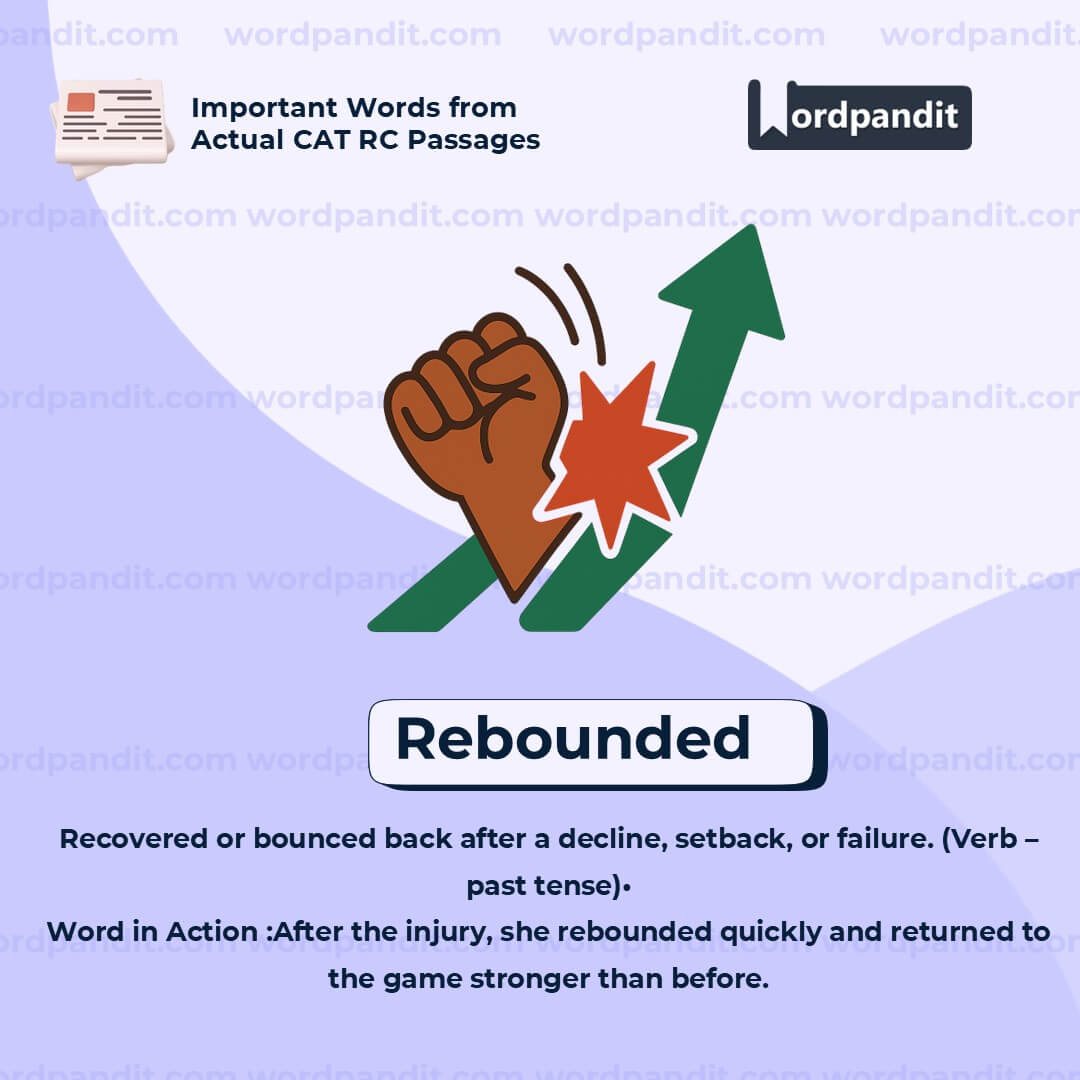
WORD-9: Rebounded
Context:
"Welsh, long stigmatized and disparaged by the British state, has rebounded with vigor."
Explanatory Paragraph:
"Rebounded" refers to the act of recovering or bouncing back after a period of decline, difficulty, or damage. In the context of the Welsh language, it means that despite years of suppression and negative perception, the language has experienced a powerful revival. This rebound represents resilience—where a language and its community fight back and reclaim their cultural and linguistic identity with renewed strength.
Meaning: Recovered or bounced back after a setback or decline (Verb – past tense)
Pronunciation: ree-BOUND-ed
Difficulty Level: ⭐⭐ Basic
Etymology: From Old French *rebondir*, meaning "to bounce back," from Latin *re-* (again) + *bullire* (to boil or bubble up)
Prashant Sir's Notes:
This word is about resilience. Whether you're talking about a person, a language, an economy, or even a sports team, “rebounded” signals that things got better after going wrong. It’s especially powerful in cultural contexts where something threatened manages to rise again with strength.
Synonyms & Antonyms:
Synonyms: recovered, bounced back, revived, resurged, returned
Antonyms: declined, deteriorated, collapsed, faltered, withered
Usage Examples:
- After years of decline, the local economy rebounded with new investments and businesses.
- The endangered language rebounded due to active community teaching and digital resources.
- She rebounded from the setback and emerged stronger than before.
- Following criticism, the artist's reputation rebounded after a successful new exhibition.
Cultural Reference:
"The Welsh language has rebounded, with school programs, media, and legislation helping to restore its rightful place in public life." – The Guardian, Language Revival Features
Think About It:
What factors make it possible for a language or culture to rebound after years of decline or suppression?
Quick Activity:
Write about a time when you personally “rebounded” from a setback. What helped you bounce back?
Memory Tip:
Think of a basketball “rebound”—the ball hits the rim and bounces back into play. Rebounded = bounced back from difficulty.
Real-World Application:
In language revitalization, seeing a minority language that has rebounded is a source of hope for other endangered tongues. It shows that with strong community effort and supportive policy, recovery is possible.
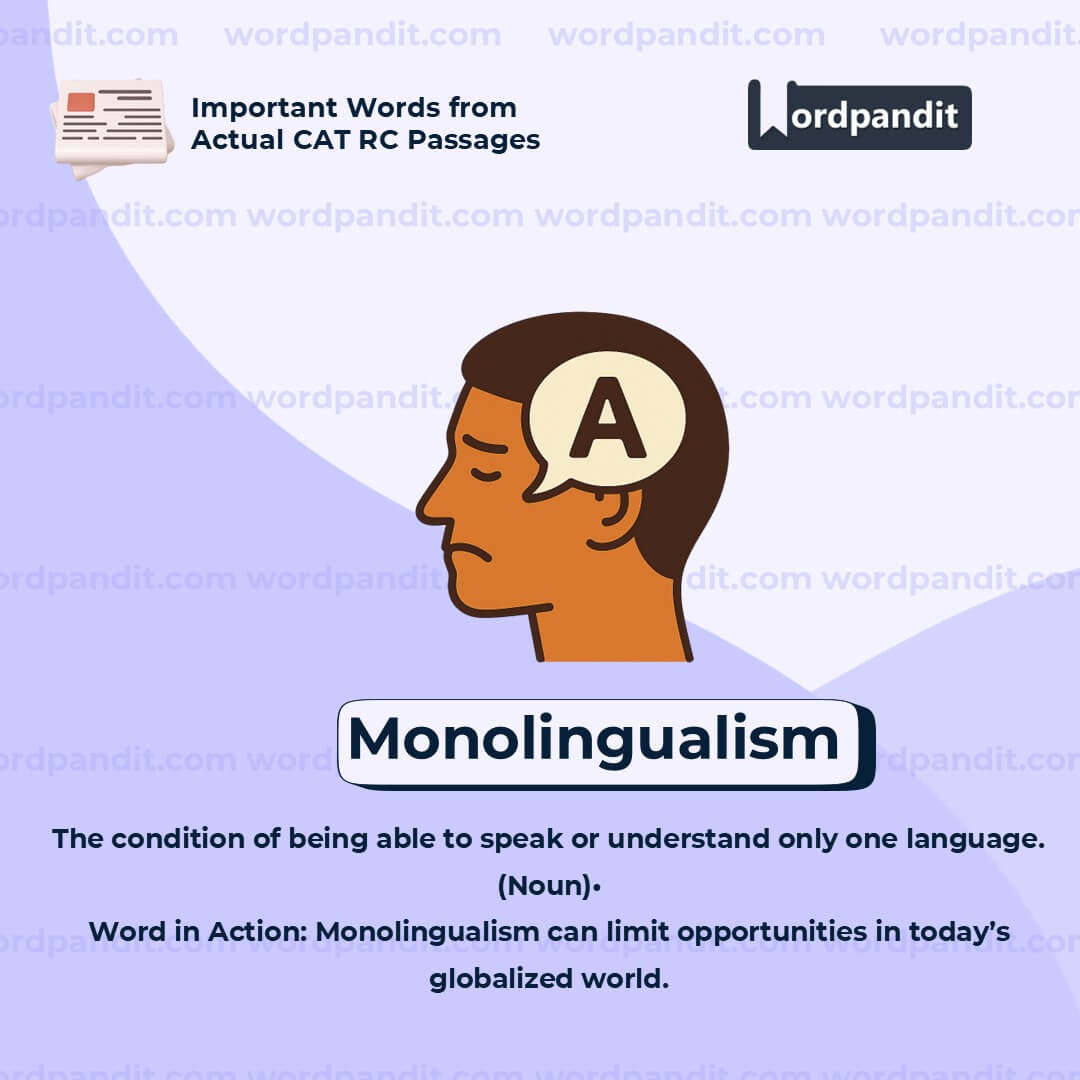
WORD-10: Monolingualism
Context:
"Across the largest economies that make up the G8, being monolingual is still often the norm, with multilingualism appearing unusual and even somewhat exotic."
Explanatory Paragraph:
"Monolingualism" refers to the condition or practice of using or knowing only one language. In this context, it highlights how in many major global economies like those in the G8, most people grow up speaking and using just one language—often their national or official language—while knowing multiple languages (multilingualism) is considered rare or exceptional. This word contrasts the global linguistic diversity with the more limited linguistic exposure common in economically powerful nations.
Meaning: The ability to speak or use only one language (Noun)
Pronunciation: mon-oh-LING-gwuh-lizm
Difficulty Level: ⭐⭐⭐ Intermediate
Etymology: From Greek *mono-* (one) + Latin *lingua* (language) + *-ism* (condition or practice)
Prashant Sir's Notes:
Monolingualism is not the global norm—multilingualism is. But in many powerful nations, people live their whole lives using only one language. This often limits cross-cultural understanding and can foster linguistic bias or resistance to learning new tongues.
Synonyms & Antonyms:
Synonyms: single-language use, unilingualism
Antonyms: multilingualism, bilingualism, polyglotism
Usage Examples:
- Monolingualism limits access to global literature, media, and perspectives.
- Some education systems inadvertently promote monolingualism by not supporting heritage languages.
- Despite global trends, monolingualism remains dominant in many Western countries.
- Monolingualism may seem normal, but in most of the world, multilingualism is actually the default.
Cultural Reference:
"The limits of my language mean the limits of my world." – Ludwig Wittgenstein, a philosophical critique of monolingualism
Think About It:
Is monolingualism a cultural limitation or a practical reality? How does it shape a society's worldview?
Quick Activity:
Make a list of five advantages of being multilingual over being monolingual. Which ones resonate most with you?
Memory Tip:
Break it down: *mono* (one) + *lingual* (language) = one language = monolingualism!
Real-World Application:
Understanding monolingualism is crucial in educational policy, especially in countries aiming to improve global competitiveness. Promoting multilingual education can broaden cultural horizons and enhance cognitive and professional skills.


