
📘 What’s Inside This CAT Para-jumble Question Post?
📝 Authentic CAT Para-jumble Question : Practice with a real CAT Para-jumble Question from a previous CAT exam.
✅ Detailed Question with Step-by-Step Solution: Each question is explained thoroughly for better understanding.
📚 Vocabulary Enhancement: Top 5 words explained from the paragraph
Para-jumble Sentences
Question 17: The four sentences (labelled 1, 2, 3 and 4) below, when properly sequenced would yield a coherent paragraph. Decide on the proper sequencing of the order of the sentences and key in the sequence of the four numbers as your answer:
1. Businesses find automation, such as robotic employees, a big asset in terms of productivity and efficiency.
2. But in recent years, robotics has had increasing impacts on unemployment, not just of manual labour, as computers are rapidly handling some white-collar and service-sector work.
3. For years politicians have promised workers that they would bring back their jobs by clamping down on trade, offshoring and immigration.
4. Economists, based on their research, say that the bigger threat to jobs now is not globalisation but automation.
Solution with Explanation
Correct Answer: 3412
Detailed Explanation by Wordpandit:
Upon first glance, the paragraph delves into the issue of unemployment stemming from automation. Commencing with sentence 3 offers a snapshot of the prevailing unemployment situation. While politicians typically pinpoint globalisation as the primary contributor to growing joblessness, sentence 4 introduces a deviation by suggesting that the narrative put forth by experts differs. According to them, automation, not globalisation, could be a pivotal factor intensifying the unemployment crisis. Sentences 1 and 2, when paired together, delve deeper into the nuances of how automation directly impacts job prospects, shedding light on its scale and nature. Thus, piecing the sentences together, the sequence that captures the essence most effectively is 3412.
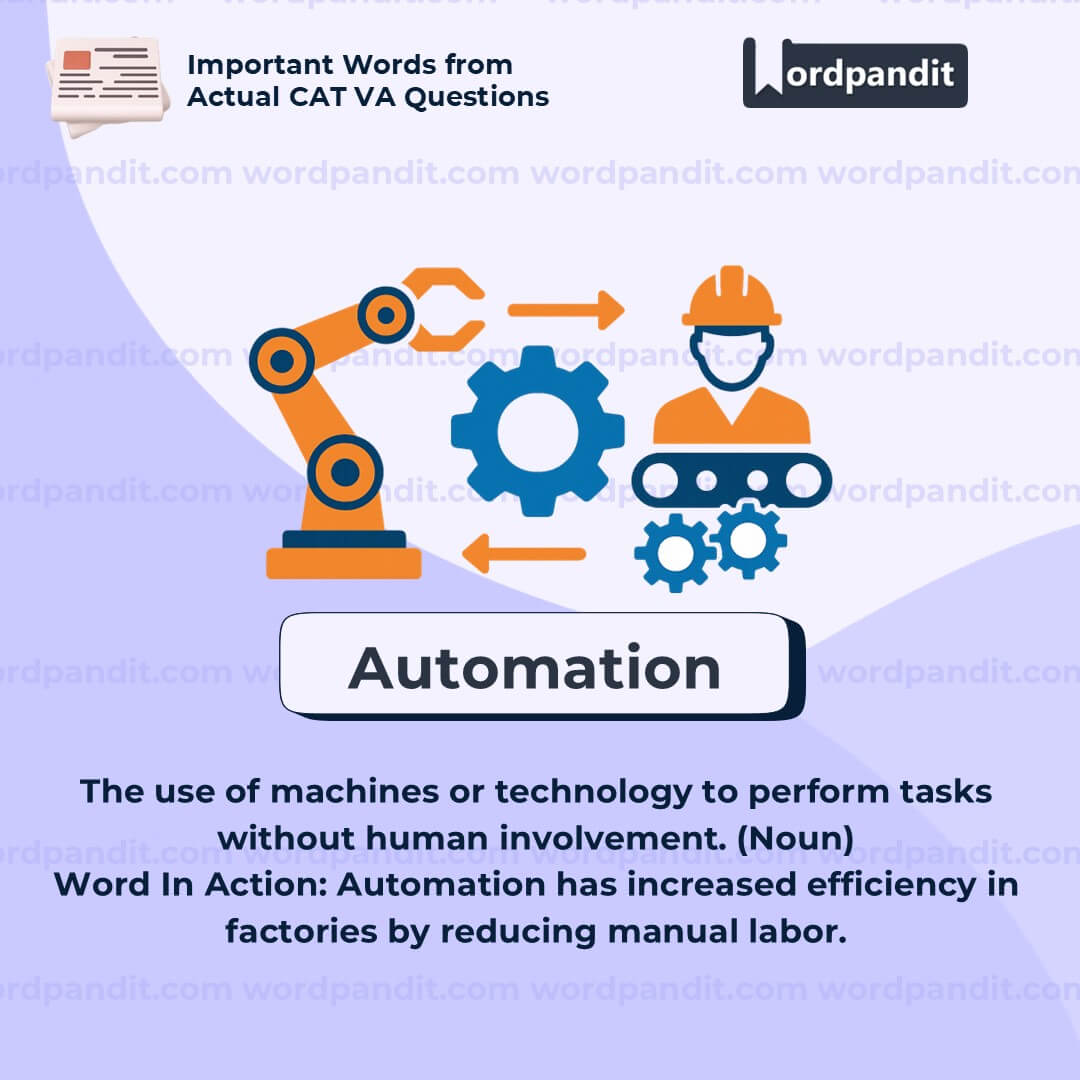
Word-1: Automation
Context:
"Businesses find automation, such as robotic employees, a big asset in terms of productivity and efficiency."
Explanatory Paragraph:
Automation refers to the use of machines, systems, or technology to perform tasks that would otherwise require human labor. It is widely employed in various industries to boost productivity, reduce costs, and improve accuracy. By relying on automated systems—from factory robots to software algorithms—businesses can streamline operations and focus human effort on more complex or creative challenges.
Meaning: The use of machines and technology to make processes operate automatically without human intervention (Noun)
Pronunciation: aw-tuh-MAY-shuhn
Difficulty Level: ⭐⭐ Beginner
Etymology: Derived from the Greek word "automatos" meaning "acting of itself"; modern usage began in the 1940s with industrial production processes.
Prashant Sir's Notes:
Automation is a crucial word in today’s world where machines and AI are transforming industries. It’s a foundational term in conversations around future jobs, industry trends, and workplace evolution. Understanding this word is essential for students, professionals, and general learners alike.
Synonyms & Antonyms:
Synonyms: mechanization, computerization, robotics, AI integration, systematization
Antonyms: manual work, human labor, handcrafting, non-mechanized process
Usage Examples:
- The company introduced automation to cut down on operational costs.
- Many fear that automation could replace a large portion of the workforce.
- Thanks to automation, routine tasks are now completed more efficiently.
- He studied engineering to specialize in automation and robotics.
Cultural Reference:
"Automation is going to cause unemployment, and we need to prepare for it." - Elon Musk
Think About It:
Can automation improve quality of life without threatening employment opportunities, or must we always trade one for the other?
Quick Activity:
List three daily tasks in your home or workplace that could be automated. Describe how automation might improve them.
Memory Tip:
Think of a robot saying, “I do it AUTOMatically!” – that’s **AUTOMATION** at work.
Real-World Application:
Automation is used in manufacturing lines, customer service chatbots, smart home devices, self-driving cars, and even content recommendation engines on streaming platforms.
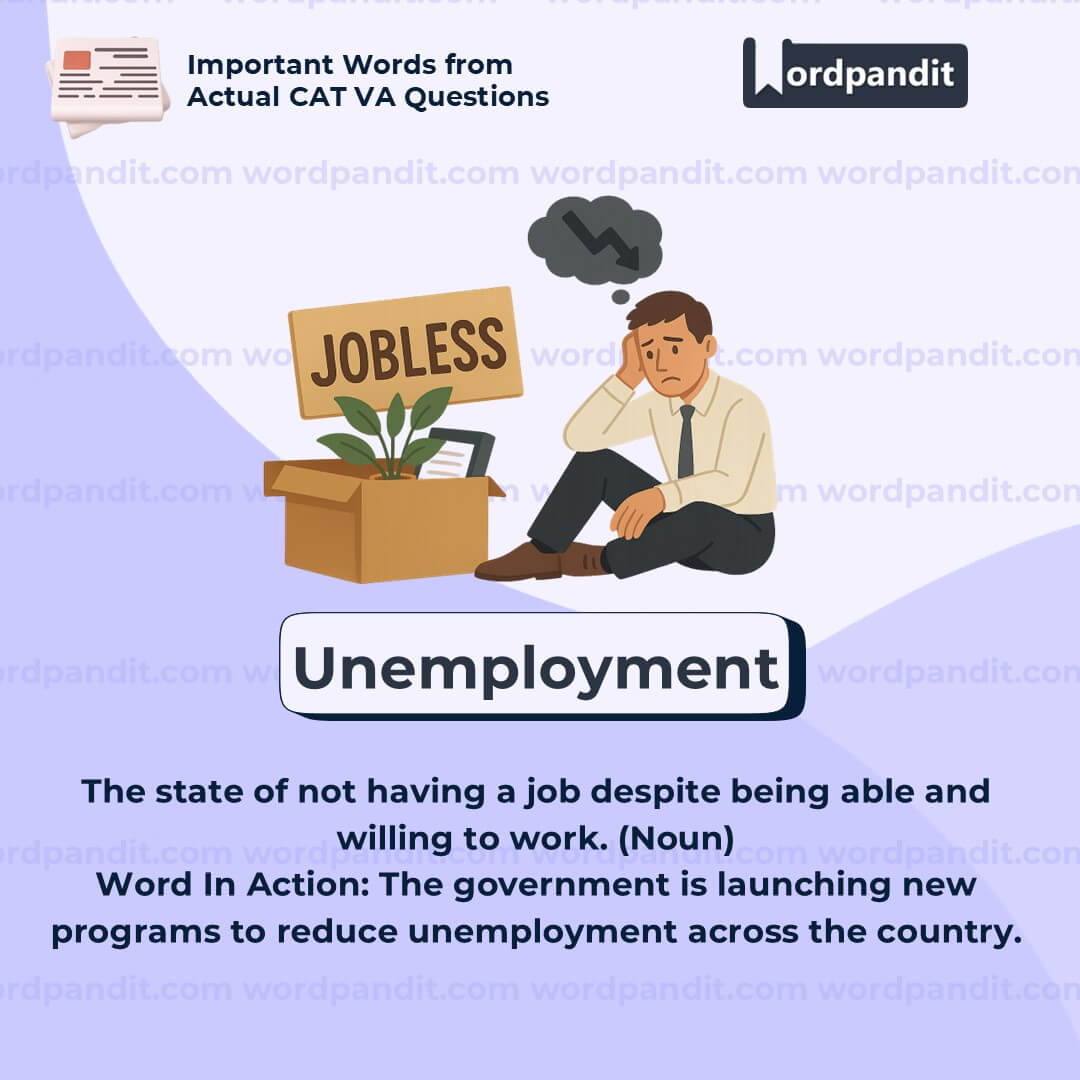
Word-2: Unemployment
Context:
"But in recent years, robotics has had increasing impacts on unemployment, not just of manual labour, as computers are rapidly handling some white-collar and service-sector work."
Explanatory Paragraph:
Unemployment refers to the situation in which individuals who are capable and willing to work cannot find jobs. It is often used as an indicator of the economic health of a country. In recent times, technological advances, especially in automation and artificial intelligence, have contributed to structural shifts in the job market—sometimes leading to job losses in certain sectors. While innovation creates new roles, it also displaces traditional jobs, intensifying the conversation around sustainable employment.
Meaning: The state of being without a paid job while actively looking for work (Noun)
Pronunciation: un-em-PLOY-ment
Difficulty Level: ⭐⭐ Beginner
Etymology: From French *chômage*, and Latin *implicare*, it evolved through the term "employ" which originally meant to use or occupy. "Unemployment" gained prominence in the 19th century with the rise of industrial economies.
Prashant Sir's Notes:
Unemployment is not just an economic term—it’s deeply connected with individual dignity and social stability. As technology advances, understanding this concept becomes crucial to discuss future employment policies and workforce planning.
Synonyms & Antonyms:
Synonyms: joblessness, redundancy, layoff, disemployment, idleness
Antonyms: employment, occupation, work, engagement, livelihood
Usage Examples:
- The pandemic caused a significant rise in global unemployment rates.
- Automation in factories has led to increased unemployment in manufacturing sectors.
- Governments often introduce policies to reduce youth unemployment.
- He faced unemployment after the company downsized its workforce.
Cultural Reference:
"An idle mind is the devil’s workshop—but often it’s unemployment that builds the workshop." – A modern twist on a classic proverb.
Think About It:
As automation grows, should society redefine what it means to be ‘employed’? Could universal basic income be a solution?
Quick Activity:
Interview a family member or friend about their first job. Ask them what unemployment meant to them during career transitions.
Memory Tip:
Break the word: “Un” (not) + “Employment” (work) = Not having work = Unemployment.
Real-World Application:
Unemployment data is tracked by governments and used by economists to inform decisions about interest rates, tax policies, and social welfare programs. It influences election campaigns and long-term strategic planning for nations.
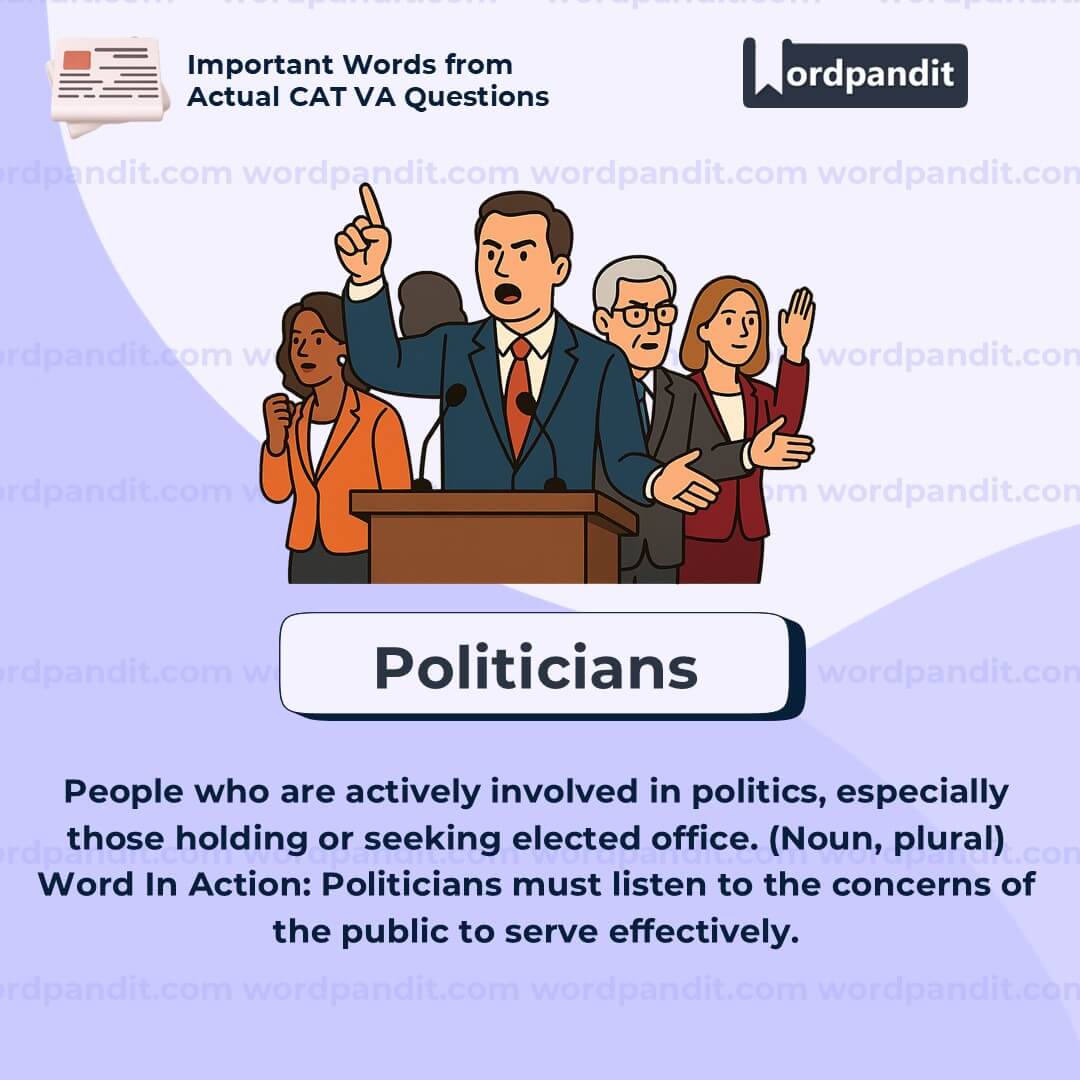
Word-3: Politicians
Context:
"For years politicians have promised workers that they would bring back their jobs by clamping down on trade, offshoring and immigration."
Explanatory Paragraph:
Politicians are individuals who are actively involved in politics, especially those who hold or seek public office in government. They are responsible for creating, debating, and implementing laws and policies that impact citizens' lives. While many enter politics with a genuine desire to serve the public, politicians are often viewed with skepticism due to broken promises or perceived self-interest. The term can carry both neutral and negative connotations, depending on the context.
Meaning: A person who is professionally involved in politics, especially as a holder of or a candidate for an elected office (Noun)
Pronunciation: puh-li-TIH-shunz
Difficulty Level: ⭐⭐ Beginner
Etymology: From French *politicien*, based on Latin *politicus* (of citizens or the state); the term has been used in English since the 16th century.
Prashant Sir's Notes:
This is one of the most commonly heard words in the news and public debates. While the role of politicians is essential in democracy, it's equally important to understand the responsibilities and powers they hold. Always analyze political language critically.
Synonyms & Antonyms:
Synonyms: lawmaker, statesperson, legislator, public servant, representative
Antonyms: civilian, non-partisan, outsider (in political context)
Usage Examples:
- Politicians debated the new environmental policy for hours before voting.
- Many citizens are frustrated with politicians who fail to keep their promises.
- Young people are increasingly stepping up as politicians in local councils.
- He worked as an advisor to several prominent politicians during his career.
Cultural Reference:
"In politics, nothing happens by accident. If it happens, you can bet it was planned that way." — Franklin D. Roosevelt
Think About It:
Do politicians today genuinely represent the people, or have they become more aligned with power and personal gain?
Quick Activity:
Name three politicians from your country and one policy or law they are known for supporting. Reflect on its impact.
Memory Tip:
Politicians make policies. Remember: **Poli**ticians → **Poli**cies → People in power.
Real-World Application:
Understanding who politicians are and how they operate helps citizens make informed voting choices, engage in public discourse, and hold elected leaders accountable.
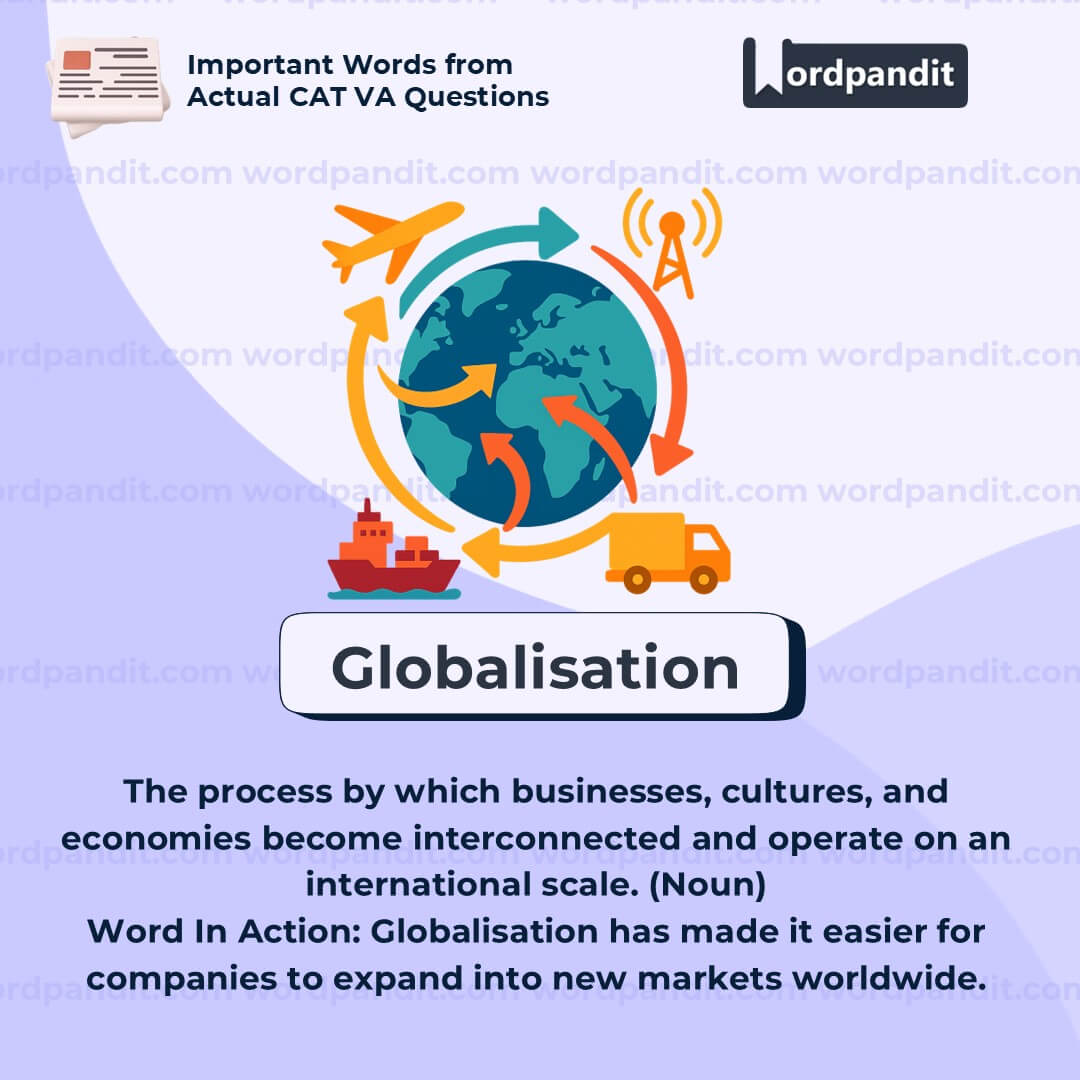
Word-4: Globalisation
Context:
"Economists, based on their research, say that the bigger threat to jobs now is not globalisation but automation."
Explanatory Paragraph:
Globalisation refers to the increasing interconnectedness of the world through the exchange of goods, services, information, culture, and people across borders. It has accelerated due to advancements in transportation, communication, and technology. While globalisation has opened up markets, boosted innovation, and allowed for cultural exchange, it has also sparked debates over job losses, inequality, and cultural erosion in certain regions. It is a powerful force shaping economies, societies, and politics worldwide.
Meaning: The process by which businesses or other organizations develop international influence or start operating on an international scale (Noun)
Pronunciation: glo-buh-lai-ZAY-shun
Difficulty Level: ⭐⭐⭐ Intermediate
Etymology: From the root word "global" (relating to the whole world) + "isation" (a process or result of making something a certain way); popularized in the late 20th century.
Prashant Sir's Notes:
This is a high-utility word in economics, sociology, and political science. It's vital to understand both the positive and negative sides of globalisation. Try to link the term with real-life scenarios—like global trade, outsourcing, or cultural exchange through social media.
Synonyms & Antonyms:
Synonyms: internationalisation, worldwide integration, interconnection, global outreach
Antonyms: isolationism, nationalism, protectionism, regionalism
Usage Examples:
- Globalisation has made products from around the world easily available in local markets.
- Critics argue that globalisation leads to job outsourcing and wage suppression.
- The internet is a powerful driver of cultural globalisation.
- Many companies expand through globalisation to tap into emerging markets.
Cultural Reference:
"Globalisation is not a monolithic force but an evolving set of consequences—some good, some bad, and some unintended." — John B. Larson
Think About It:
Has globalisation helped create a more equal world, or has it widened the gap between the rich and the poor?
Quick Activity:
Pick three items from your room and find out where they were made. Reflect on how globalisation made that possible.
Memory Tip:
Think: **Global** + **-isation** = the process of becoming global. Imagine the world as a giant market connected by invisible threads!
Real-World Application:
Globalisation affects everything from where your clothes are made to the types of food you eat and the job opportunities available in your country. It's central to understanding trade wars, immigration debates, and multinational corporations.
Word-5: Economists
Context:
"Economists, based on their research, say that the bigger threat to jobs now is not globalisation but automation."
Explanatory Paragraph:
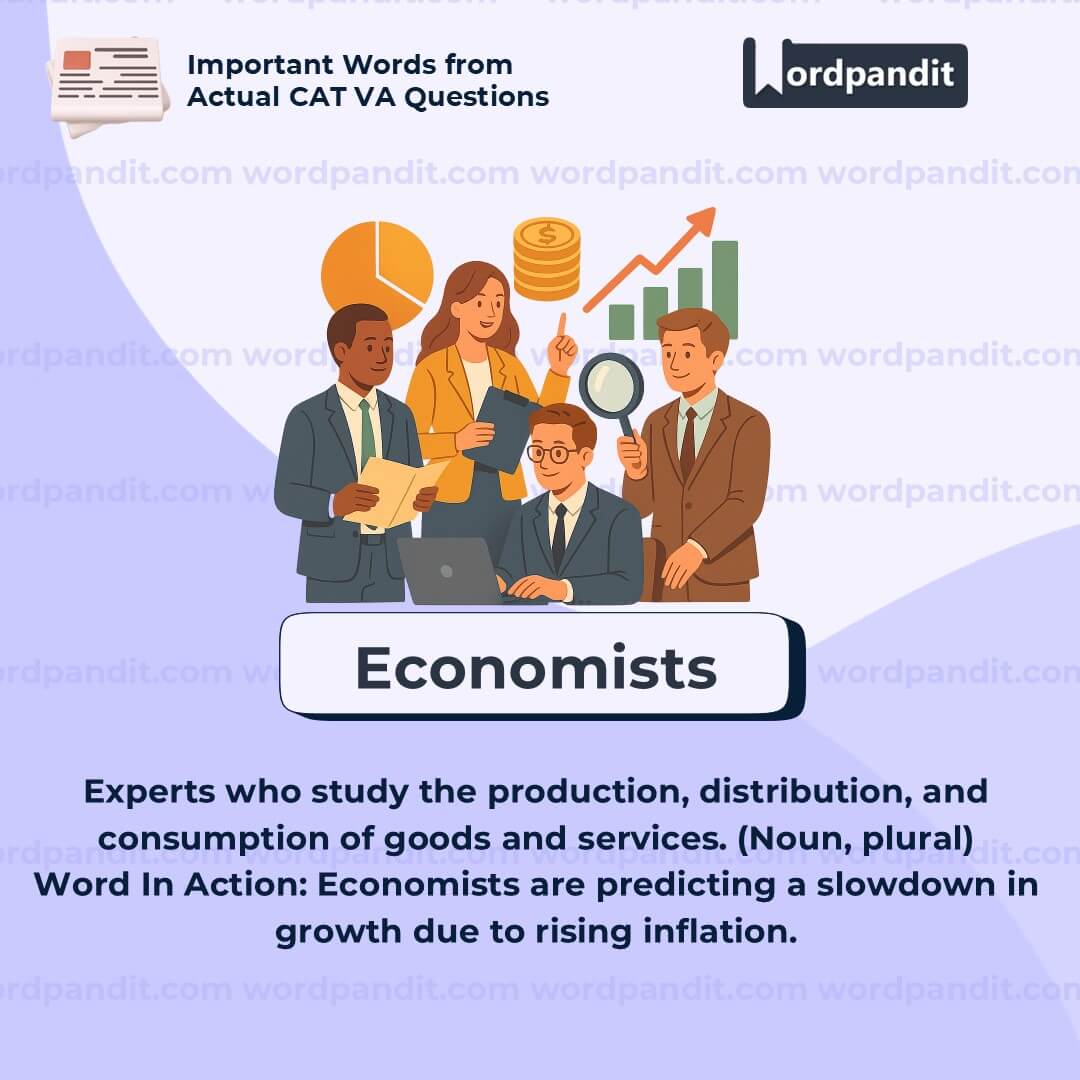
Economists are experts who study the economy and analyze data related to the production, distribution, and consumption of goods and services. Their work helps governments, businesses, and individuals make informed decisions about financial and resource management. Economists also forecast trends, evaluate policies, and research the impact of factors like inflation, unemployment, trade, and technological changes on economic health.
Meaning: A person who studies or has expertise in economics (Noun)
Pronunciation: ee-KON-uh-mists
Difficulty Level: ⭐⭐ Beginner
Etymology: From Greek *oikonomos* meaning "household manager" and *-ist* denoting a practitioner; developed into "economist" in the 18th century with the emergence of modern economics.
Prashant Sir's Notes:
Understanding who economists are is key when reading editorials or policy discussions. Their views shape public opinion, guide policymaking, and even influence financial markets. Whenever you read a major policy opinion or economic prediction, look for the economist behind it.
Synonyms & Antonyms:
Synonyms: financial analyst, economic advisor, market researcher, fiscal expert
Antonyms: layperson (in economics), non-specialist, amateur
Usage Examples:
- Economists warned that rising inflation could lead to a slowdown in consumer spending.
- Many economists support free trade as a path to economic growth.
- The government consulted economists before launching the stimulus package.
- Famous economists like John Maynard Keynes have shaped modern financial thinking.
Cultural Reference:
"The first lesson of economics is scarcity: There is never enough of anything to satisfy all those who want it." — Thomas Sowell
Think About It:
Should economists always be neutral and data-driven, or can they bring personal values into economic decisions and forecasts?
Quick Activity:
Search for an article or video featuring a well-known economist. Summarize their key argument in one sentence.
Memory Tip:
Think: **Eco**nomy + **-ist** = someone who studies or specializes in the economy — that’s an **Economist**!
Real-World Application:
Economists are essential in shaping fiscal policies, forecasting market trends, advising governments, and helping businesses make strategic decisions based on data and economic principles.
