
📘 What’s Inside This CAT Paragraph Summary Question Post?
📝 Authentic CAT Paragraph Summary QuestionPractice with a real CAT Paragraph Summary Question from a previous CAT exam.
✅ Detailed Question with Step-by-Step SolutionEach question is explained thoroughly for better understanding.
🔍 In-Depth Paragraph AnalysisGain insights through line-by-line and paragraph-wise analysis
📚 Vocabulary Enhancement: Top 5 words explained from the paragraph
Paragraph Summary Questions
Question 23: The passage given below is followed by four alternate summaries. Choose the option that best captures the essence of the passage.
Brazil’s growth rate has been low, yet most Brazilians say their financial situation has improved, and they expect it to get even better. This is because most incomes are rising fast, with higher minimum wages and very low unemployment. The result is falling inequality and a growing middle class — the result of economic stabilization, improved social security and universal primary education. But despite recent improvements the Brazilian economy is still painfully unequal, with poor Brazilians paying the biggest share of their income in taxes and getting the least back in government services.
A. Economic reforms have benefitted many Brazilians, but they are unaware of the impending problems from rising inequalities in their society.
B. Good economic indicators have masked the unfair taxation of the poor that is likely to destabilise the Brazilian economy in the next few years.
C. Most Brazilians feel they have benefitted from recent economic events, but the poor continue to be dealt unfairly by the state.
D. With rising incomes and falling unemployment, most Brazilians are being misled into thinking that their economy is doing well.
Solution with Explanation
Correct Answer: C
Detailed explanation by Wordpandit:Upon analyzing the paragraph, we can discern the following salient points:
1. While the Brazilian economy has shown signs of stagnation, a significant section of its population believes that there has been an improvement in their living conditions.
2. This perceived betterment can be attributed to a decrease in inequality and the provision of other vital services to the populace.
3. However, it's essential to note that, despite these advancements, stark economic disparities persist in the nation.
With this understanding, let's evaluate the given options:
A: This choice misinterprets the essence of the paragraph. The text doesn't imply that Brazilians are ignorant. Instead, it suggests that while a portion of the population has indeed witnessed improvements in their economic conditions, the broader economic landscape remains riddled with inequality.
B: The paragraph does not hint that positive economic indicators are deliberately manipulated or presented to distract from the pervasive economic inequality. Thus, this option introduces an element that isn't inherent to the original content.
C: This option accurately encompasses the three primary themes presented in the paragraph. It acknowledges the perceived improvements in the economy, identifies the reasons behind this perception, and importantly, it doesn't lose sight of the overarching issue of persistent inequality. Therefore, it offers the most faithful representation of the paragraph's main points.
D: This choice, akin to Option A, mischaracterizes the paragraph's intent. It's not that the people are misinformed or unaware; rather, a segment of the population has genuinely seen economic improvements, while others continue to grapple with inequality.
Given this detailed evaluation, Option C emerges as the most accurate reflection of the paragraph's core ideas.
Word 1: Inequality
Context:
"The result is falling inequality and a growing middle class — the result of economic stabilization, improved social security and universal primary education."
Explanatory Paragraph:
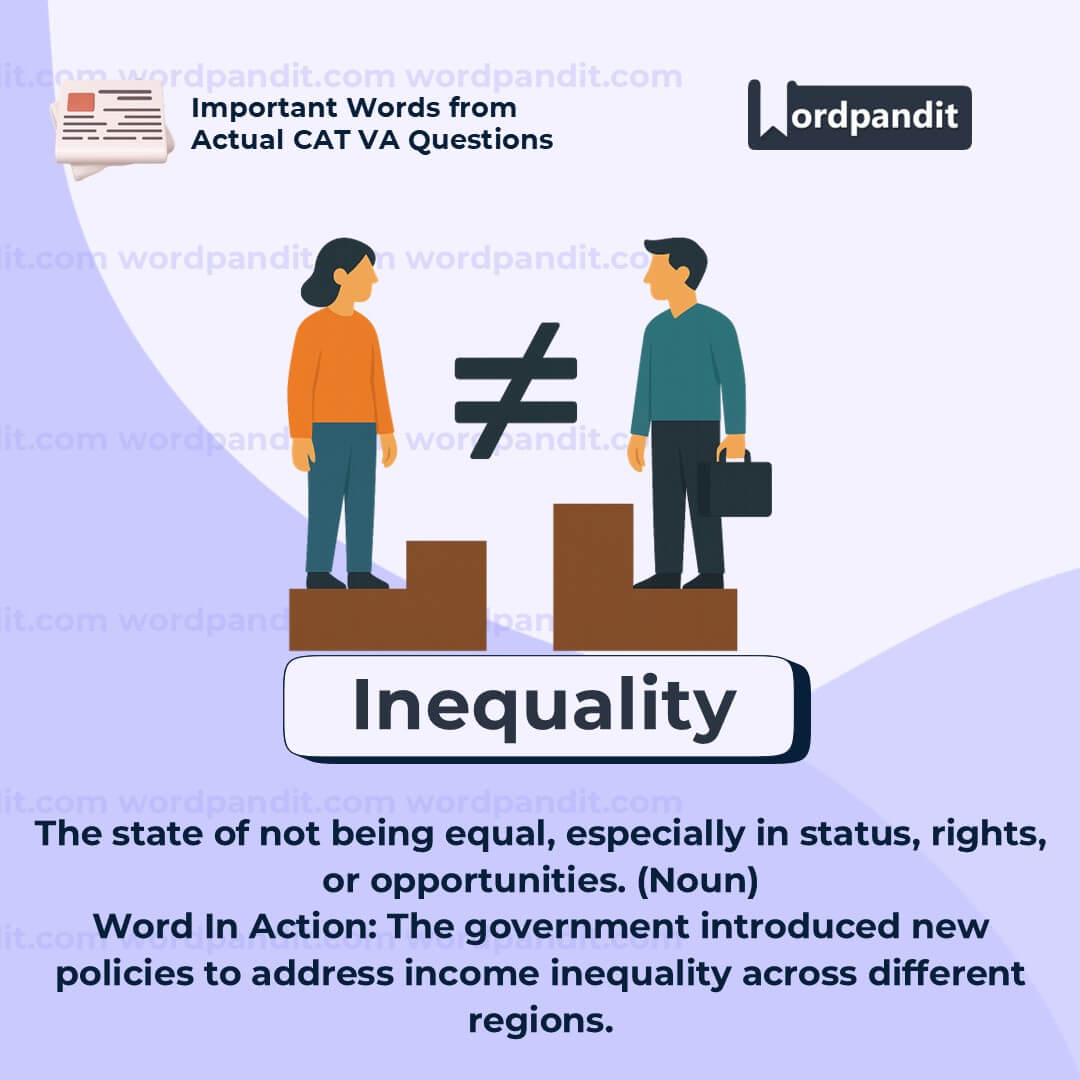
"Inequality" refers to an imbalance or uneven distribution of resources, opportunities, or rights among individuals or groups. It is most commonly used in discussions around income, wealth, education, healthcare, and social status. When inequality decreases, it means that the gap between different groups (rich and poor, educated and uneducated, etc.) is narrowing, leading to a more balanced and fair society.
Meaning: The state of not being equal, especially in status, rights, or opportunities (Noun)
Pronunciation: in-ee-KWAH-luh-tee
Difficulty Level: ⭐⭐ Basic
Etymology: From Latin *inaequalitas*, meaning “unevenness,” combining *in-* (not) + *aequalis* (equal).
Prashant Sir's Notes:
This word is central to debates in economics, politics, and ethics. Pay attention to the context: it could mean economic disparity, educational gaps, or unequal access to rights and services. The more we understand inequality, the better equipped we are to challenge it.
Synonyms & Antonyms:
Synonyms: disparity, imbalance, unfairness, injustice, disproportion
Antonyms: equality, fairness, balance, parity, justice
Usage Examples:
- Gender inequality in the workplace remains a global issue.
- The government introduced new policies to reduce income inequality.
- Educational inequality limits the opportunities available to underprivileged children.
- Activists are raising their voices against racial inequality in the justice system.
Cultural Reference:
"We must not only end poverty, but also reduce inequality and injustice." – United Nations Sustainable Development Goal 10
Think About It:
Can a society truly progress if it continues to tolerate inequality in some of its systems?
Quick Activity:
List three types of inequality (e.g., economic, educational, gender-based). For each, write one cause and one possible solution.
Memory Tip:
Break it down: “in-” (not) + “equality” = not equal. Simple and powerful.
Real-World Application:
Understanding inequality is crucial in policy-making, education, social activism, and business ethics. It helps leaders and citizens design fairer systems and more inclusive societies.
Word 2: Stabilization
Context:
"The result is falling inequality and a growing middle class — the result of economic stabilization, improved social security and universal primary education."
Explanatory Paragraph:
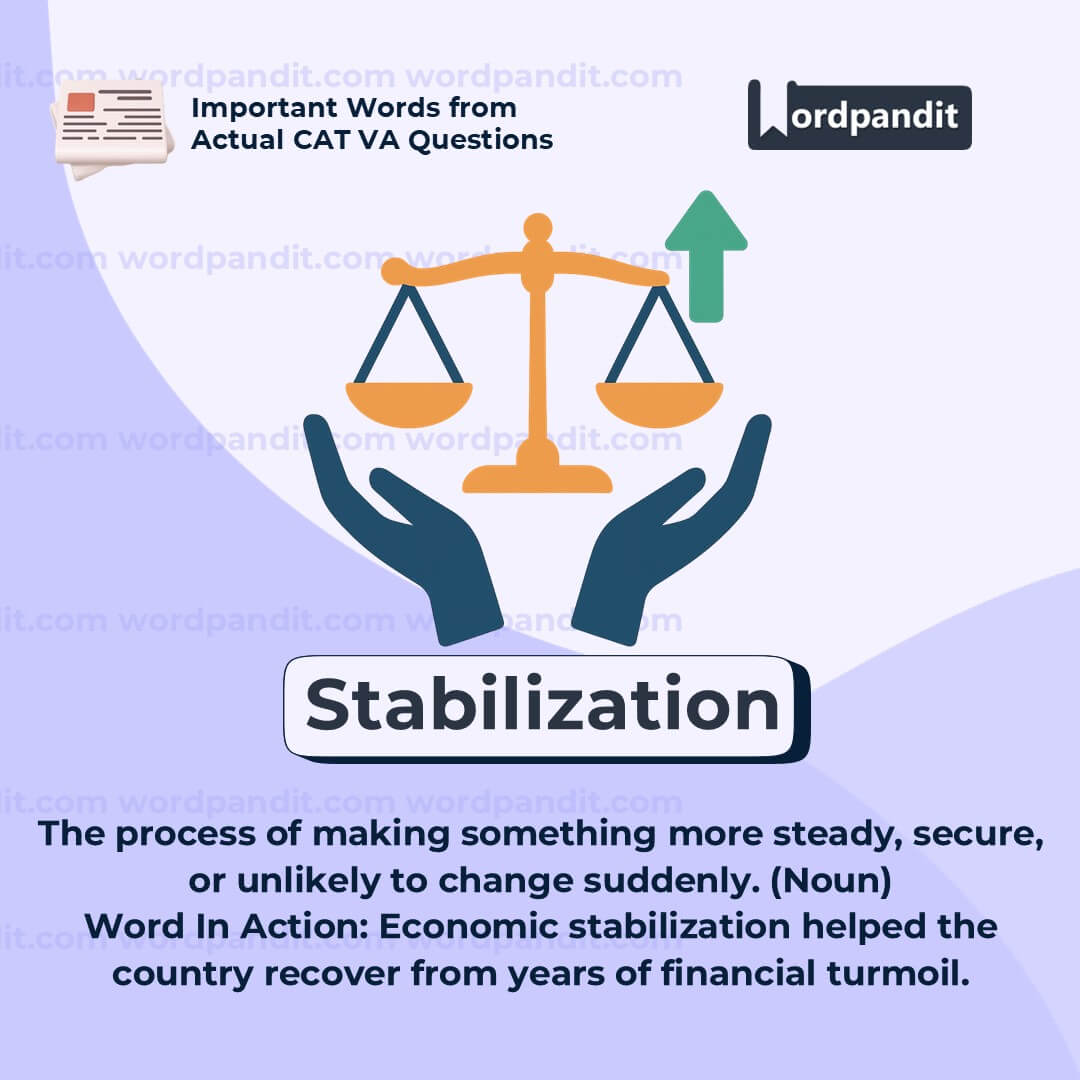
"Stabilization" refers to the process of making something steady, secure, or consistent—especially after a period of fluctuation or disorder. In economic terms, it usually involves measures taken by governments or institutions to control inflation, reduce volatility, promote growth, and create predictable financial conditions. Stabilization helps lay the foundation for long-term development and social progress.
Meaning: The act of making something more steady, secure, or consistent, especially in an economic or political context (Noun)
Pronunciation: stay-buh-luh-ZAY-shun
Difficulty Level: ⭐⭐⭐ Intermediate
Etymology: From the Latin *stabilis* (“firm, steadfast”) + English suffix *-ation*, meaning "the act or process of."
Prashant Sir's Notes:
This word often appears in discussions about the economy, climate, and even personal well-being. It signals movement from chaos to control. Remember that stabilization is a process—it’s not just about achieving balance, but maintaining it.
Synonyms & Antonyms:
Synonyms: balancing, control, regulation, normalization, security
Antonyms: disruption, instability, fluctuation, chaos, turbulence
Usage Examples:
- The central bank implemented policies aimed at the stabilization of the currency.
- Political stabilization is necessary before any economic reforms can succeed.
- The stabilization of food prices helped reduce public unrest.
- Climate stabilization will require international cooperation and strict emission controls.
Cultural Reference:
"Economic stabilization policies helped lift millions out of poverty in East Asia during the late 20th century." – World Bank Reports
Think About It:
Can true stabilization ever be permanent, or is it always a temporary phase before the next disruption?
Quick Activity:
Write two areas where stabilization is important (e.g., economy, personal health). For each, list one method used to achieve it.
Memory Tip:
Link “stabilization” with “stable” — when something is stable, it isn’t swinging or shaking. Stabilization is how you get it there.
Real-World Application:
Stabilization is vital in economics, politics, climate science, and even psychology. Whether managing inflation or emotional well-being, stabilization strategies help build resilience and predictability in systems.
Word 3: Universal

Context:
"The result is falling inequality and a growing middle class — the result of economic stabilization, improved social security and universal primary education."
Explanatory Paragraph:
"Universal" means applicable or available to all people, regardless of their background, status, or location. It often appears in discussions about rights, education, values, or healthcare, where the goal is to ensure equal access or understanding for everyone. In the context of "universal primary education," the term suggests that every child, regardless of where they are born, should have the right and opportunity to attend primary school.
Meaning: Relating to or affecting all people or things in the world or in a particular group; applicable everywhere (Adjective)
Pronunciation: yoo-nuh-VER-sul
Difficulty Level: ⭐⭐ Basic
Etymology: From Latin *universalis*, from *universus* ("whole, entire"), combining *uni-* (one) + *versus* (turned).
Prashant Sir's Notes:
“Universal” is a powerful word—it aims for inclusiveness. Whether it’s universal education, healthcare, or human rights, it represents ideals that are meant to benefit everyone, not just a select few. In vocabulary, always link it to the idea of “common to all.”
Synonyms & Antonyms:
Synonyms: global, widespread, all-encompassing, comprehensive, inclusive
Antonyms: limited, exclusive, restricted, selective, partial
Usage Examples:
- Universal access to clean water is a basic human right.
- The idea of universal human rights was formalized in the 1948 UN declaration.
- Universal healthcare is still a topic of debate in many countries.
- Universal primary education has improved literacy rates in developing nations.
Cultural Reference:
"Universal education is the key to unlocking a nation's potential." – UNESCO Global Education Report
Think About It:
Is it possible to create truly universal systems in a world so full of differences—in wealth, access, and geography?
Quick Activity:
List three concepts that are often described as “universal” (e.g., human rights, laws, values). For each, explain whether they are truly universal in practice.
Memory Tip:
Think of “universal” as covering the “universe”—something meant for everyone, everywhere.
Real-World Application:
“Universal” is key in education, law, healthcare, and ethics. Policymakers, educators, and activists use it to advocate for systems that leave no one behind, from universal basic income to universal vaccination campaigns.
Word 4: Taxation
Context:
". Good economic indicators have masked the unfair taxation of the poor that is likely to destabilise the Brazilian economy in the next few years."
Explanatory Paragraph:
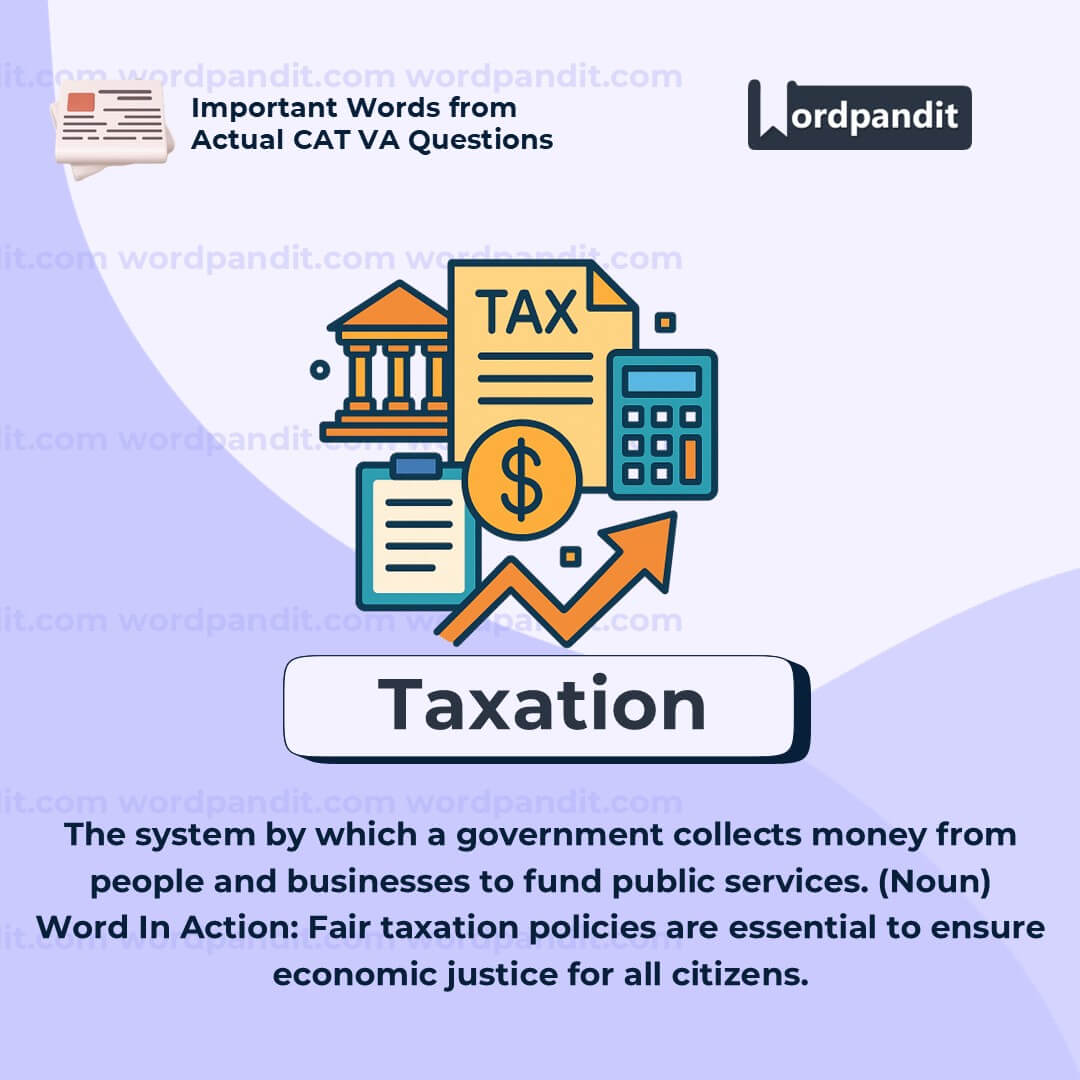
"Taxation" refers to the process by which a government collects money from its citizens and businesses to fund public services and infrastructure. This includes taxes on income, goods, property, and more. While taxation is essential for a functioning state, how taxes are distributed—who pays more and who pays less—can either promote fairness or deepen inequality. Unfair taxation systems often burden the poor disproportionately and can lead to social unrest and economic imbalance.
Meaning: The act or system of collecting money (taxes) from citizens or businesses by a government (Noun)
Pronunciation: tak-SAY-shun
Difficulty Level: ⭐⭐⭐ Intermediate
Etymology: From Latin *taxare*, meaning "to assess, estimate, or value" + English suffix *-ation*, indicating an action or process.
Prashant Sir's Notes:
“Taxation” is a technical but highly impactful word. It’s not just about money—it's about justice, governance, and policy. When learning this word, connect it with the larger idea of how societies fund progress and who bears the burden.
Synonyms & Antonyms:
Synonyms: levying, assessment, duty collection, revenue generation
Antonyms: exemption, subsidy, rebate, refund
Usage Examples:
- Progressive taxation ensures that the rich pay a higher percentage of their income.
- Excessive taxation can discourage small businesses from expanding.
- The country reformed its taxation policies to attract foreign investors.
- Unfair taxation of the poor often leads to economic instability and protest.
Cultural Reference:
"No taxation without representation" became a rallying cry during the American Revolution, reflecting public frustration over unfair tax systems.
Think About It:
Can taxation ever be truly fair, or will it always favor certain groups over others depending on who designs the system?
Quick Activity:
List three types of taxes (e.g., income tax, sales tax, property tax). For each, mention who bears the biggest burden—rich, middle class, or poor—and why.
Memory Tip:
Think of "taxation" as the “action of tax.” If “tax” is the fee, “taxation” is the entire process behind it.
Real-World Application:
Understanding taxation is crucial for citizens, economists, policymakers, and business owners. It affects everyday life—from salaries and product prices to healthcare and education funding.
Word 5: Benefitted
Context:
"Economic reforms have benefitted many Brazilians, but they are unaware of the impending problems from rising inequalities in their society."
Explanatory Paragraph:
"Benefitted" is the past tense and past participle form of the verb "benefit," which means to gain an advantage, profit, or improvement from something. When someone has benefitted, it means they have experienced something positive as a result of an action, event, or policy. In the context of economic reforms, people who have benefitted may have seen increased income, better services, or improved quality of life.
Meaning: Gained or received an advantage or improvement (Verb - past tense)
Pronunciation: BEN-uh-fit-tid
Difficulty Level: ⭐⭐ Basic
Etymology: From Latin *bene* ("well") + *facere* ("to do") → Old French *bienfait* → English *benefit* → *benefitted*
Prashant Sir's Notes:
Pay attention to the spelling! While "benefited" is commonly used in American English, "benefitted" with a double "t" is the British English spelling. The core idea remains: someone received something good or positive. Always ask: who is benefitting—and at whose expense?
Synonyms & Antonyms:
Synonyms: gained, profited, improved, advantaged, thrived
Antonyms: suffered, lost, declined, deteriorated, worsened
Usage Examples:
- Thousands of farmers benefitted from the new irrigation project.
- The company’s employees benefitted from the flexible work-from-home policy.
- Although many have benefitted from globalization, some communities were left behind.
- She greatly benefitted from the mentorship she received early in her career.
Cultural Reference:
"Many South Korean citizens benefitted from post-war economic reforms that transformed the country into a global powerhouse." – The Economist
Think About It:
When policies benefit one group more than others, how can we ensure fairness and balance in their outcomes?
Quick Activity:
Write two sentences: one describing how a group of people benefitted from a program or policy, and another describing a group that was left out or negatively affected.
Memory Tip:
Remember: to “benefit” means to “be fit” in a better way! "Benefitted" = you became better off because of something.
Real-World Application:
Understanding the word "benefitted" helps in evaluating who gains from social, economic, or political actions. It's essential in news analysis, policy debates, and ethical discussions about equity and justice.
