
📘 What’s Inside This CAT Para-jumble Question Post?
📝 Authentic CAT Para-jumble Question : Practice with a real CAT Para-jumble Question from a previous CAT exam.
✅ Detailed Question with Step-by-Step Solution: Each question is explained thoroughly for better understanding.
📚 Vocabulary Enhancement: Top 5 words explained from the paragraph
Para-jumble Sentences
Q.22 The four sentences (labelled 1, 2, 3 and 4) given below, when properly sequenced, would yield a coherent paragraph. Decide on the proper sequencing of the order of the sentences and key in the sequence of the four numbers as your answer.
1. Veena Sahajwalla, a materials scientist at the University of New South Wales, believes there is a new way of solving this problem.
2. Her vision is for automated drones and robots to pick out components, put them into a small furnace and smelt them at specific temperatures to extract the metals one by one before they are sent off to manufacturers for reuse.
3. E-waste contains huge quantities of valuable metals, ceramics and plastics that could be salvaged and recycled, although currently not enough of it is.
4. She plans to build microfactories that can tease apart the tangle of materials in mobile phones, computers and other e-waste.
Solution with Explanation
Correct Answer: 3142
Explanation:
The sentences discuss the issue of e-waste, the valuable materials it contains, and a potential solution proposed by Veena Sahajwalla. To construct a coherent paragraph, the sequence should introduce the problem, then describe the proposed solution.
- Sentence 3 serves as an effective opening sentence, introducing the problem of e-waste and highlighting the valuable materials it contains that are currently underutilized in recycling efforts.
- Sentence 1 follows naturally by introducing Veena Sahajwalla, a materials scientist with a potential solution to this problem, creating a logical transition from the problem to a possible approach.
- Sentence 4 then details Sahajwalla’s specific plan to create microfactories that can separate valuable components from e-waste.
- Sentence 2 concludes the paragraph by explaining her vision in more detail, describing how automated technology would extract metals for reuse, effectively closing the discussion on her solution.
The most coherent sequence for the paragraph is 3-1-4-2.
Word-1: Automated

Context:
"Her vision is for automated drones and robots to pick out components, put them into a small furnace and smelt them at specific temperatures to extract the metals one by one before they are sent off to manufacturers for reuse." - Source Unknown
Explanatory Paragraph:
The word "automated" refers to processes or systems that operate with minimal or no human intervention, typically controlled by machines, software, or programmed systems. In the context of technological advancement, automation enables faster, more efficient, and often safer execution of tasks that would otherwise require significant manual effort. Here, it describes the use of drones and robots programmed to perform the intricate work of sorting, processing, and recycling components with precision.
Meaning: Operated automatically with little or no human control (Adjective)
Pronunciation: aw-tuh-may-tid
Difficulty Level: ⭐⭐ Easy
Etymology: From Latin ‘automatus’ meaning ‘moving of itself’, adopted into English through automation + -ed suffix.
Prashant Sir's Notes:
The word "automated" is central to modern industries and often appears in technology-related texts. Think of it as a shortcut—machines doing what humans used to do, faster and more efficiently. This word shows up a lot in articles about AI, robotics, and factory innovations.
Synonyms & Antonyms:
Synonyms: mechanized, computerized, robotic, self-operating, programmed
Antonyms: manual, hand-operated, non-automated
Usage Examples:
- The factory uses automated machines to speed up production.
- Automated emails were sent to confirm all customer orders.
- She prefers automated checkout counters at the grocery store.
- The security system is fully automated and requires no human monitoring.
Cultural Reference:
"In the age of automation, the line between human labor and machine efficiency continues to blur." - Inspired by industrial revolution commentary
Think About It:
How will increasing automation in daily life change the role of human workers in the next decade?
Quick Activity:
List five places where you see automation in your everyday life. Try replacing "automated" with "manual" in those situations and note the difference.
Memory Tip:
Think of "auto" as “self” and "mated" like “matched” – something that operates by itself because it's already matched or programmed to do so.
Real-World Application:
Automated systems are widely used in manufacturing, healthcare (e.g., surgical robots), agriculture (e.g., automated irrigation), and homes (e.g., smart thermostats and vacuum cleaners).
Word-2: Smelt
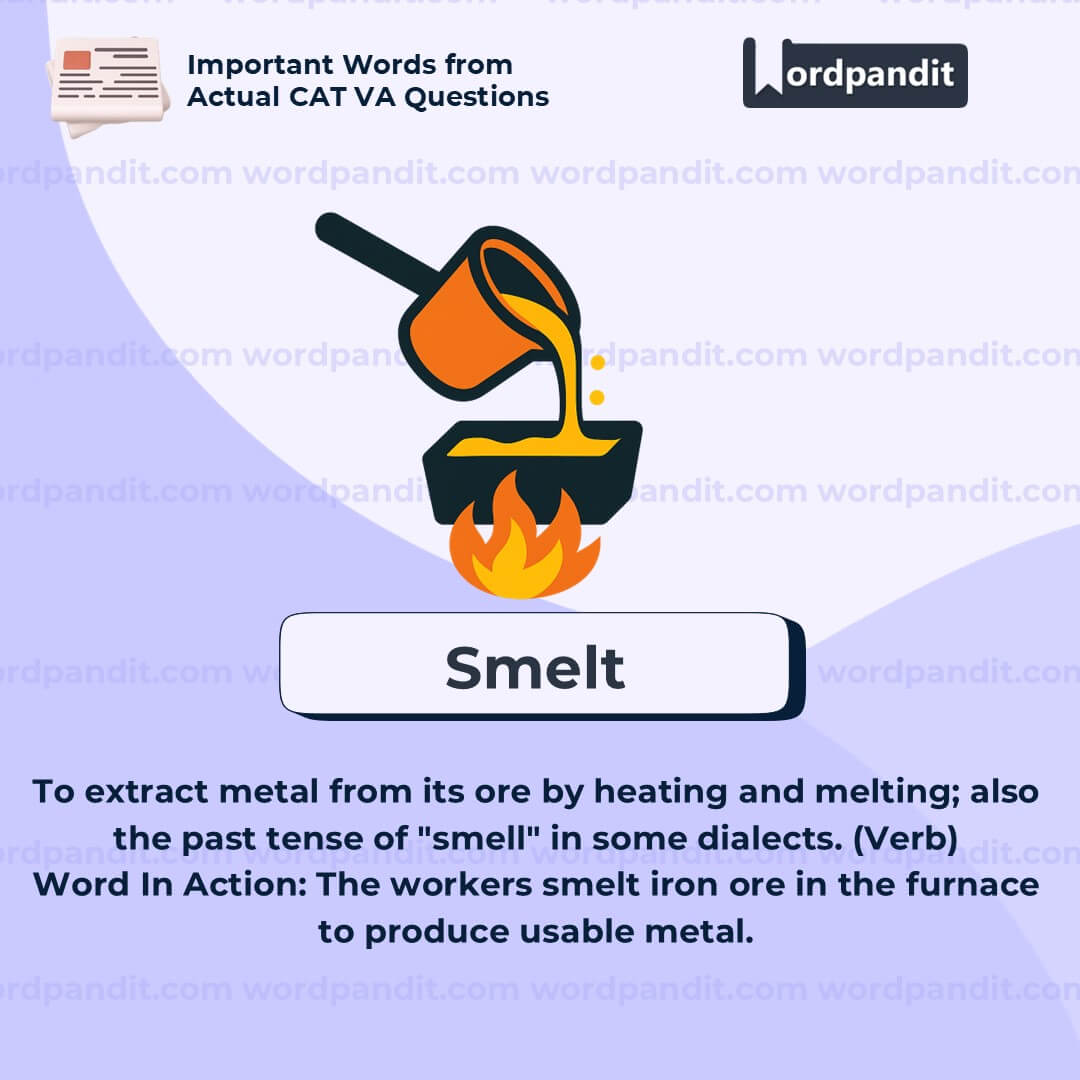
Context:
"Her vision is for automated drones and robots to pick out components, put them into a small furnace and smelt them at specific temperatures to extract the metals one by one before they are sent off to manufacturers for reuse." - Source Unknown
Explanatory Paragraph:
The word "smelt" refers to the process of extracting metal from its ore by using heat and a chemical reducing agent. In simpler terms, it's the technique of melting down raw materials—usually containing metal and impurities—to isolate and collect the pure metal. In the given context, smelting is part of a futuristic recycling system where robots manage the process of separating metals from discarded components, allowing them to be reused in manufacturing.
Meaning: To extract metal from its ore by heating and melting (Verb)
Pronunciation: smelt
Difficulty Level: ⭐⭐⭐ Intermediate
Etymology: From Old English *smeltan*, meaning "to melt or fuse," related to Old High German *smelzan* ("to melt").
Prashant Sir's Notes:
Don't confuse this "smelt" with the small fish of the same name! In industrial or technological contexts, "smelt" is always about metals and heat. Think of it as the bridge between raw ore and shiny new metal products.
Synonyms & Antonyms:
Synonyms: extract, refine, fuse, melt down
Antonyms: solidify, cool, harden (in the context of reversing the melting process)
Usage Examples:
- The factory was built to smelt iron ore into usable metal.
- They used ancient techniques to smelt copper with charcoal.
- Recycling centers now smelt electronic waste to recover precious metals.
- Gold can be smelted from crushed rock using high heat and chemicals.
Cultural Reference:
"The discovery of how to smelt bronze marked the beginning of a technological leap in human history." - Reference to the Bronze Age
Think About It:
How might modern smelting technologies reduce environmental damage compared to traditional methods?
Quick Activity:
Write a short paragraph imagining you are a robot in a recycling plant. Describe the process of smelting in your own words.
Memory Tip:
Smelt = "SMELl + mELT" → Imagine the smell of hot metal as it melts in a furnace to extract something valuable!
Real-World Application:
Smelting is essential in metallurgy, allowing us to recycle metals from scrap, extract raw materials from mining, and produce metals used in cars, electronics, construction, and more.
Word-3: Extract
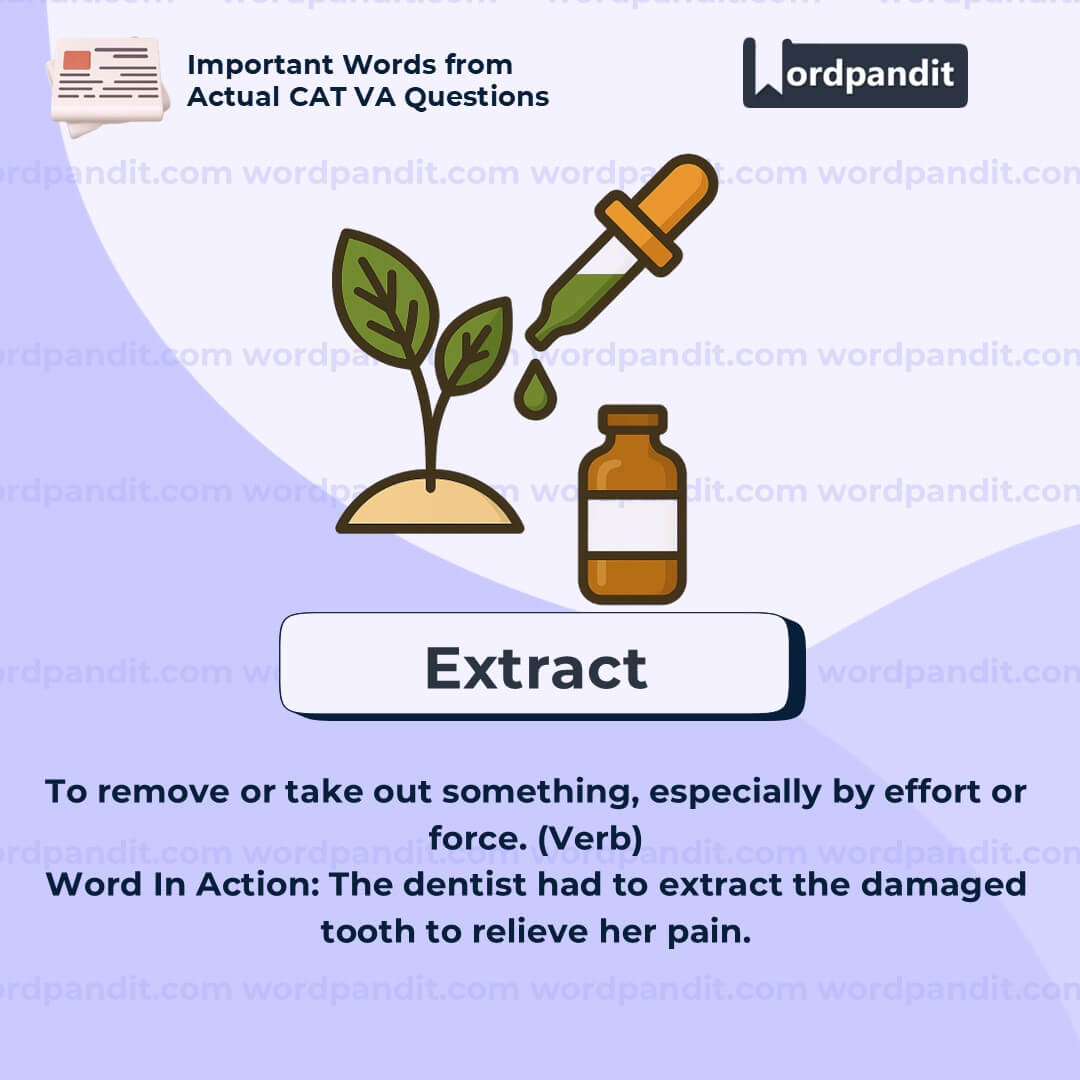
Context:
"Her vision is for automated drones and robots to pick out components, put them into a small furnace and smelt them at specific temperatures to extract the metals one by one before they are sent off to manufacturers for reuse." - Source Unknown
Explanatory Paragraph:
The verb "extract" means to carefully remove or take something out, especially using effort or skill. In scientific and industrial contexts, it's often used to describe the act of isolating or pulling out a substance from a mixture or compound. In the given sentence, "extract" refers to the process of separating metals from melted materials—part of a highly automated recycling process. It emphasizes both precision and purpose in obtaining something valuable from a larger whole.
Meaning: To remove or take out, especially by effort or force (Verb)
Pronunciation: ex-tract
Difficulty Level: ⭐⭐ Easy
Etymology: From Latin *extrahere*, from *ex-* (out) + *trahere* (to pull or draw)
Prashant Sir's Notes:
"Extract" is a powerful action verb frequently used in both literal and metaphorical contexts. Whether it's a dentist extracting a tooth, a journalist extracting a confession, or a scientist extracting a chemical compound, the core idea is always pulling something out from something else.
Synonyms & Antonyms:
Synonyms: remove, pull out, draw out, obtain, isolate
Antonyms: insert, embed, inject, implant
Usage Examples:
- The dentist had to extract the damaged molar.
- Researchers extract DNA from samples to analyze genetic information.
- They used a special tool to extract the key from the locked drawer.
- The journalist worked hard to extract the truth from the official.
Cultural Reference:
"He could extract sunshine from a cucumber." – A humorous line by Charles Dickens in *Nicholas Nickleby*, symbolizing optimism and ingenuity.
Think About It:
In what ways do we "extract" value or meaning from everyday experiences?
Quick Activity:
Think of five different contexts (e.g., cooking, science, technology, journalism, dentistry) and write a sentence using "extract" in each.
Memory Tip:
Break it down: “ex” = out, “tract” = pull → "pull out" → to extract!
Real-World Application:
"Extract" is commonly used in fields like medicine (to extract a tumor), mining (to extract gold), software (data extraction), and even cooking (vanilla extract from beans).
Word-4: Salvaged
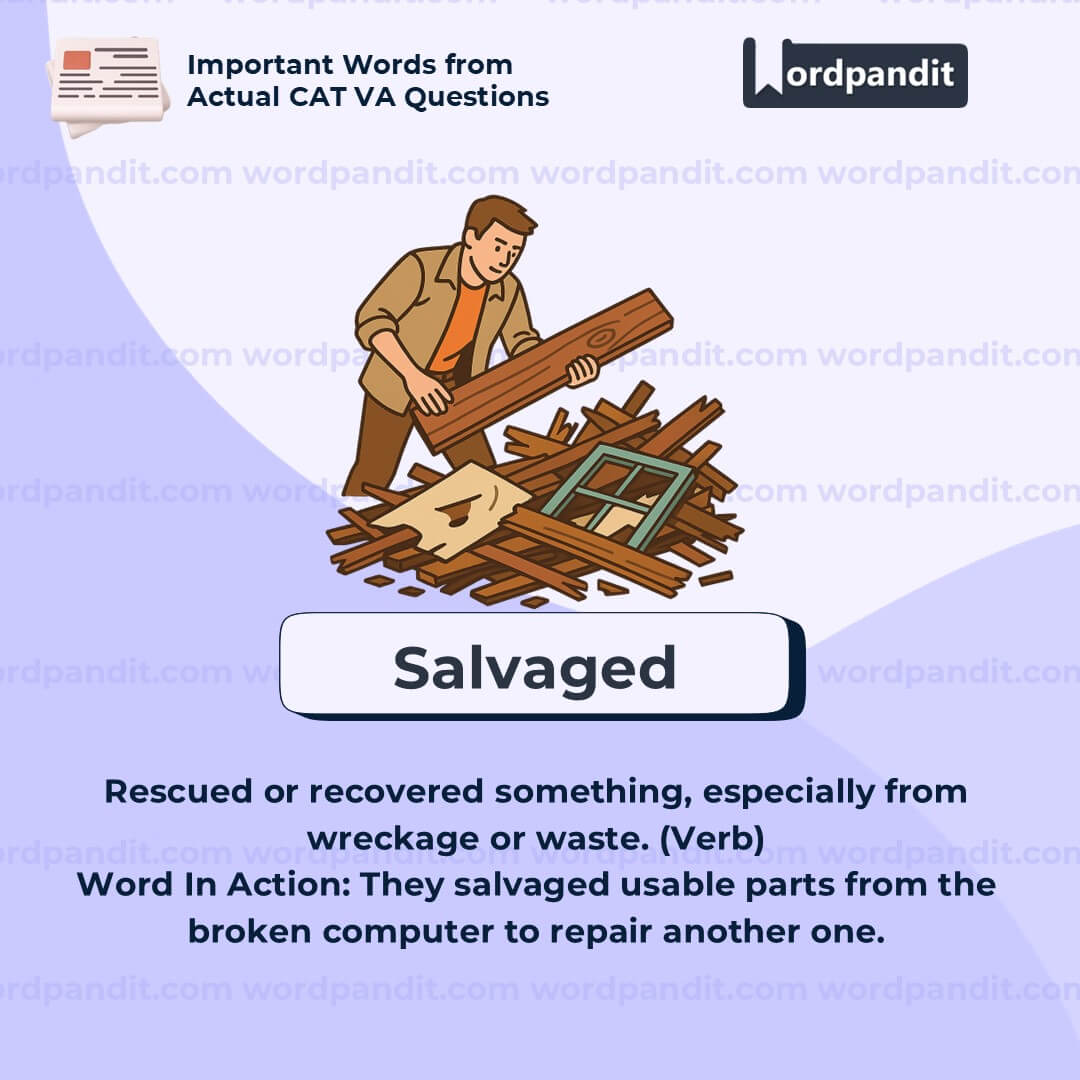
Context:
"E-waste contains huge quantities of valuable metals, ceramics and plastics that could be salvaged and recycled, although currently not enough of it is." - Source Unknown
Explanatory Paragraph:
"Salvaged" refers to the act of recovering or rescuing materials, items, or objects that might otherwise be discarded or lost. In the environmental and industrial context, it particularly points to the recovery of valuable components from waste. In the sentence, "salvaged" describes the potential of retrieving reusable metals, ceramics, and plastics from electronic waste (e-waste) instead of letting them go to landfill. This process is key to sustainability and reducing the strain on natural resources.
Meaning: Rescued, recovered, or saved, especially from waste or destruction (Verb - past tense)
Pronunciation: sal-vijd
Difficulty Level: ⭐⭐⭐ Intermediate
Etymology: From Latin *salvare* (to save), through Old French *salver*, entering English in the 17th century related to shipwreck recovery.
Prashant Sir's Notes:
We often think of "salvage" as recovering something from a shipwreck or disaster, but in today's eco-conscious world, it's just as likely to be about saving resources from trash. This word is useful in both literal and metaphorical ways—think of salvaging a broken friendship or a failed project, too.
Synonyms & Antonyms:
Synonyms: recovered, rescued, reclaimed, retrieved, saved
Antonyms: discarded, destroyed, lost, abandoned
Usage Examples:
- Only a few items from the flooded house could be salvaged.
- The technicians salvaged usable parts from the old computers.
- Efforts were made to salvage the damaged files from the corrupted drive.
- She salvaged her reputation with a powerful apology and sincere actions.
Cultural Reference:
"In *WALL-E*, the robot salvages parts and treasures from a world overrun by waste, reminding us of the value in what we throw away." - Pixar Film
Think About It:
How can the idea of salvaging be applied beyond physical materials—can we salvage ideas, relationships, or time?
Quick Activity:
Look around your room and list 3 items you no longer use. How could you salvage or repurpose each of them?
Memory Tip:
Salvaged sounds like "saved"—just remember, to salvage is to save something valuable from being wasted or lost.
Real-World Application:
Salvaging is critical in industries like automotive repair (reusing parts), disaster recovery (rescuing materials), and e-waste management (retrieving valuable metals), supporting both economic and environmental sustainability.
Word-5: Microfactories
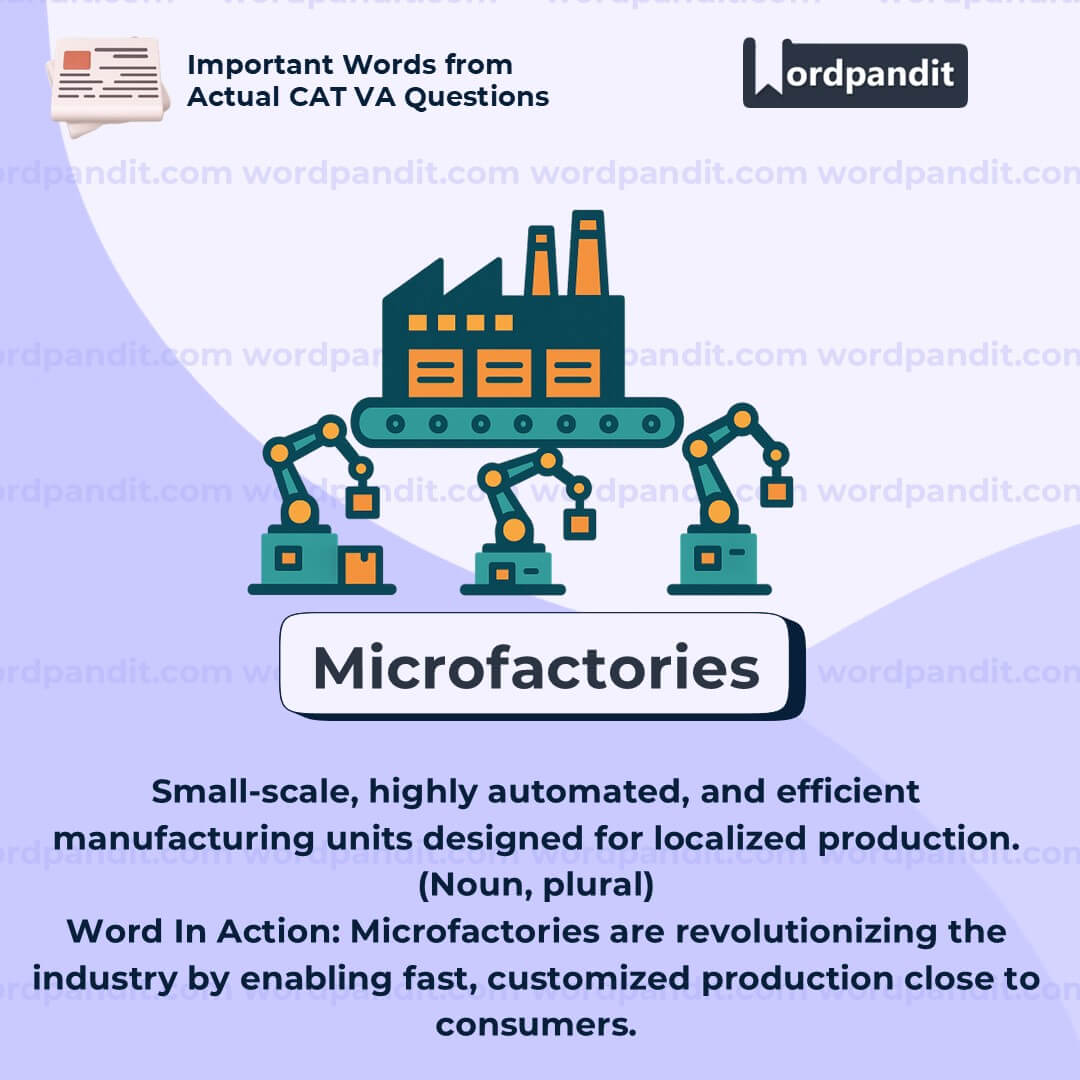
Context:
"She plans to build microfactories that can tease apart the tangle of materials in mobile phones, computers and other e-waste." - Source Unknown
Explanatory Paragraph:
"Microfactories" are compact, highly specialized manufacturing units that perform the functions of a traditional factory on a much smaller scale. Designed to be efficient and often automated, these facilities can be set up close to where raw materials or waste are generated, reducing transportation needs and supporting localized production. In the context provided, microfactories are envisioned as small-scale recycling hubs capable of disassembling complex electronics and recovering valuable components efficiently.
Meaning: Small, specialized manufacturing facilities designed for localized or modular production (Noun)
Pronunciation: my-kroh-fak-tuh-reez
Difficulty Level: ⭐⭐⭐ Intermediate
Etymology: Blend of "micro" (small) and "factory" (a place where things are manufactured); a modern term popularized with advances in automation and sustainability.
Prashant Sir's Notes:
Think of a microfactory as a “factory in a box.” It’s like comparing a laptop to a supercomputer—same functions, smaller footprint. The word is especially relevant in discussions about decentralizing manufacturing, sustainable development, and the future of smart cities.
Synonyms & Antonyms:
Synonyms: compact factory, mini plant, modular unit, local production unit
Antonyms: megafactory, large-scale plant, centralized facility
Usage Examples:
- The university is developing microfactories to help students prototype devices rapidly.
- Microfactories are revolutionizing how rural areas can access manufacturing technologies.
- The start-up launched a microfactory that recycles plastic into 3D printer filament.
- Unlike traditional plants, microfactories can adapt quickly to produce different products.
Cultural Reference:
"Microfactories represent the democratization of manufacturing—bringing power back to communities and individuals." - Inspired by futurist trends in industrial design
Think About It:
Could microfactories change the global economy by making countries less dependent on centralized manufacturing giants?
Quick Activity:
Imagine you are setting up a microfactory. Choose a product to make and list three benefits of using a microfactory model instead of a large-scale factory.
Memory Tip:
“Micro” means small, and “factory” is a place where things are made—so a microfactory is a small place that manufactures big ideas.
Real-World Application:
Microfactories are being used to recycle e-waste, 3D-print prosthetics, produce local food packaging, and even assemble electric vehicle parts—all with a smaller environmental footprint.
