📘 What’s Inside This CAT Paragraph Summary Question Post?
📝 Authentic CAT Paragraph Summary QuestionPractice with a real CAT Paragraph Summary Question from a previous CAT exam.
✅ Detailed Question with Step-by-Step SolutionEach question is explained thoroughly for better understanding.
🔍 In-Depth Paragraph AnalysisGain insights through line-by-line and paragraph-wise analysis
📚 Vocabulary Enhancement: Top 5 words explained from the paragraph
Paragraph Summary Questions
Q.23 The passage given below is followed by four alternate summaries. Choose the option that best captures the essence of the passage.
Gradually, life for the island’s birds is improving. Antarctic prions and white-headed petrels, which also nest in burrows, had managed to cling on in some sites while pests were on the island. Their numbers are now increasing. “It’s fantastic and so exciting,” Shaw says. As birds return to breed, they also poo. This adds nutrients to the soil, which in turn helps the plants to grow back stronger. Tall plants then help burrowing birds hide from predatory skuas. “It’s this wonderful feedback loop,” Shaw says. Today, the “pretty paddock” that Houghton first experienced has been transformed. “The tussock is over your head, and you’re dodging all these penguin tunnels,” she says. The orchids and tiny herb that had been protected by fencing have started turning up all over the place.
1. There is an increasing number of predatory birds and plants on the island despite the presence of pests which is a positive development.
2. Flowering plants, herbs and birds are now being protected on this wonderful Antarctic island.
3. In the absence of pests, life on the island is now protected, and there has been a revival of a variety of birds and plants.
4. There is a huge positive transformation of the ecosystem of the island when brought under environmental protection.
Solution with Explanation
Answer: 3
Explanation:
The passage describes the positive ecological changes on an island following the removal of pests, allowing bird populations and plant life to recover and thrive, resulting in a feedback loop that further supports the ecosystem.
- Option 1 misinterprets the passage by implying that pests are still present and causing an increase in predatory birds and plants, which contradicts the passage’s message.
- Option 2 inaccurately narrows the focus to protection efforts without mentioning the broader ecosystem recovery.
- Option 3 captures the essence well, highlighting the absence of pests and the subsequent revival of birds and plants on the island.
- Option 4 generalizes the information, mentioning environmental protection without directly connecting it to the removal of pests, making it less precise.
Therefore, Option 3 best captures the essence of the passage.
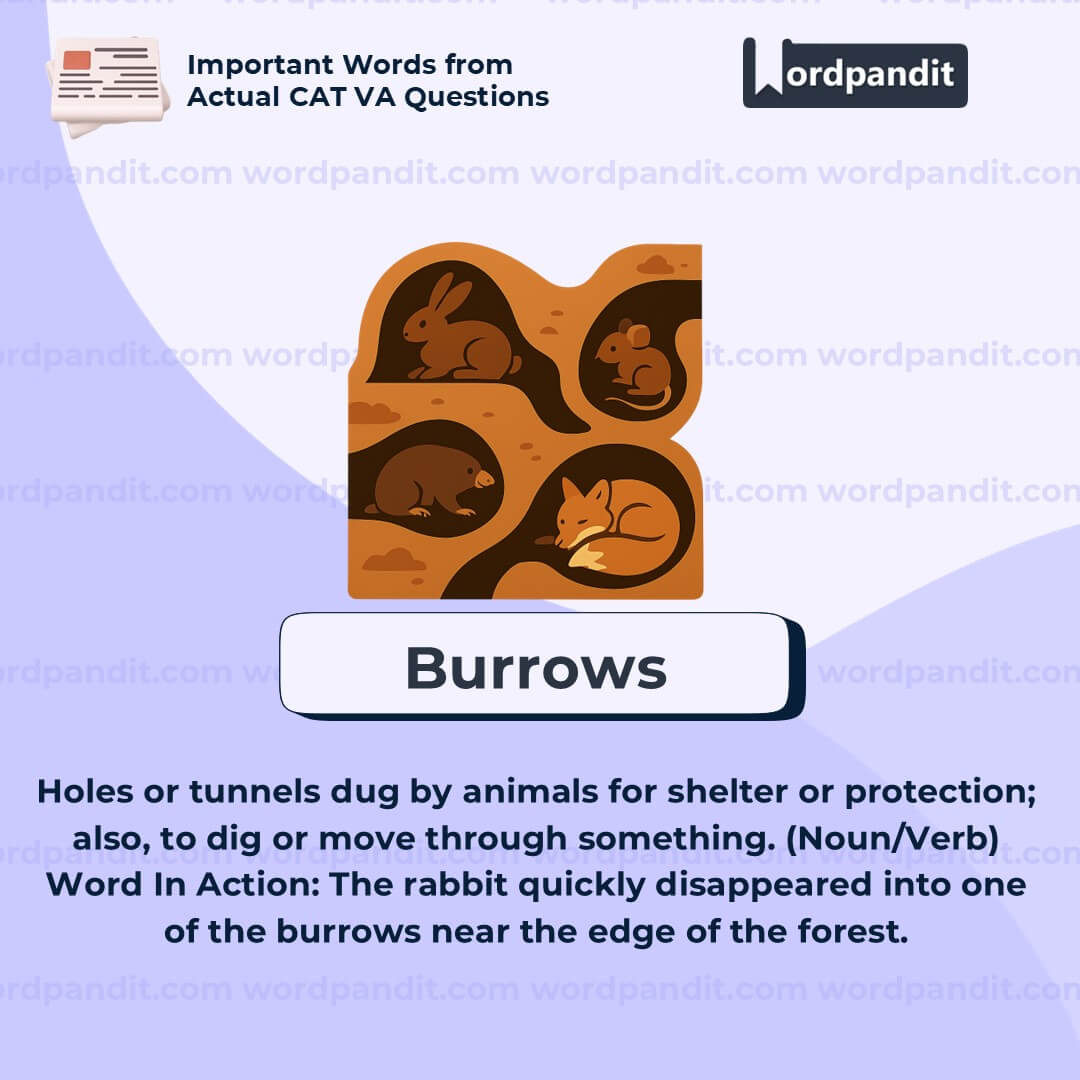
Word 1: Burrows
Context:
"Gradually, life for the island’s birds is improving. Antarctic prions and white-headed petrels, which also nest in burrows, had managed to cling on in some sites while pests were on the island." - Nature Magazine
Explanatory Paragraph:
"Burrows" are small tunnels or holes dug into the ground, usually by animals seeking shelter, safety, or a nesting site. These structures provide a safe space hidden from predators and harsh weather. In the context of birds, such as the Antarctic prions and petrels mentioned, burrows offer secure nesting locations, especially in isolated or pest-affected environments.
Meaning: A hole or tunnel dug by a small animal, especially one used as a dwelling. (Noun)
Pronunciation: BUR-ohz
Difficulty Level: ⭐⭐ Basic
Etymology: From Middle English “borow” or “burw,” meaning refuge or hiding place; related to Old English “burh” (fortress or shelter).
Prashant Sir's Notes:
Think of "burrows" as homes for creatures like rabbits, foxes, or even birds that don't nest in trees. It’s a word tied to survival and shelter in the natural world. Visually picture a rabbit diving into a burrow—that’s the image that should come to mind.
Synonyms & Antonyms:
Synonyms: tunnel, hole, lair, den, warren
Antonyms: mound, hill, surface, open space
Usage Examples:
- The fox disappeared into its burrow as the hunters approached.
- Desert rodents often dig elaborate burrows to escape the scorching heat.
- Researchers discovered penguins nesting in shallow burrows under the rocks.
- Children watched as the rabbit darted into a burrow in the garden.
Cultural Reference:
"Down the rabbit-hole" in *Alice’s Adventures in Wonderland* begins with Alice literally falling into a burrow, symbolizing a descent into a fantastical world. - Lewis Carroll
Think About It:
What does the instinct to build or seek a burrow say about how animals—and even humans—respond to fear or uncertainty?
Quick Activity:
List three animals that live in burrows and describe one reason why burrowing is essential for each.
Memory Tip:
Think of "burrow" as "borrowed space" underground—animals 'borrow' a part of the earth to make a home.
Real-World Application:
Understanding the role of burrows helps ecologists and conservationists protect endangered species that depend on specific habitats for nesting and survival, such as seabirds or burrowing owls.
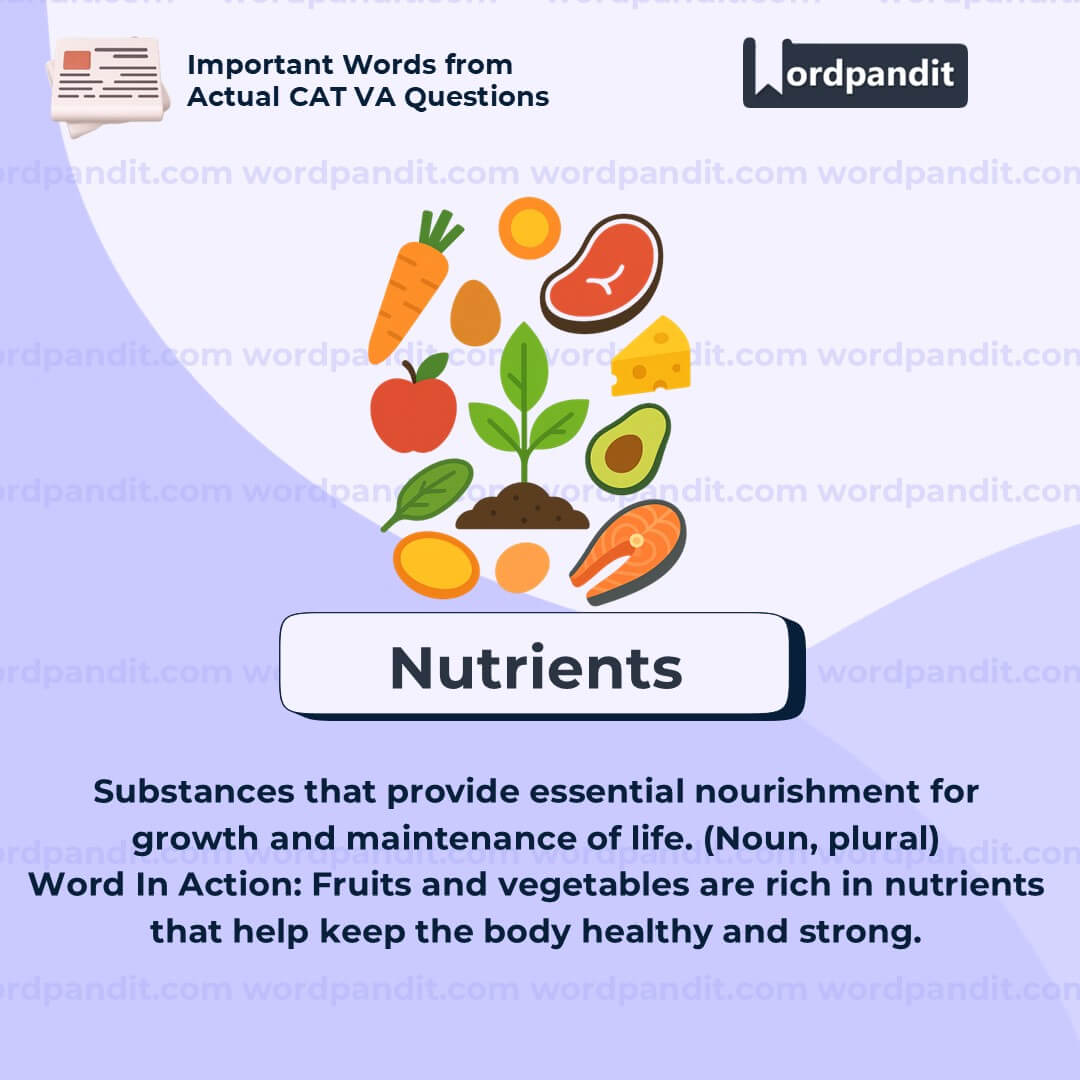
Word 2: Nutrients
Context:
"This adds nutrients to the soil, which in turn helps the plants to grow back stronger. Tall plants then help burrowing birds hide from predatory skuas." - Nature Magazine
Explanatory Paragraph:
"Nutrients" are substances that living organisms need to survive and grow. For plants, nutrients are typically found in the soil and absorbed through roots. These include essential elements like nitrogen, phosphorus, and potassium. In the context of the sentence, added nutrients improve soil quality, allowing plants to thrive and contribute to the larger ecosystem by offering protection to wildlife.
Meaning: Substances that provide nourishment essential for growth and the maintenance of life. (Noun)
Pronunciation: NOO-tree-uhnts
Difficulty Level: ⭐⭐ Basic
Etymology: From Latin “nutrire,” meaning to nourish or feed.
Prashant Sir's Notes:
Think of nutrients as the “fuel” living things need. Whether it’s a plant drawing nutrients from the soil or a person getting nutrients from food, the concept remains the same—nourishment for survival and development. Always tie this word to growth and sustenance.
Synonyms & Antonyms:
Synonyms: nourishment, sustenance, minerals, vitamins, feed
Antonyms: toxins, waste, pollutants
Usage Examples:
- Plants absorb nutrients from the soil to grow healthy and strong.
- Fruits and vegetables are packed with essential nutrients.
- Farmers add compost to enrich the soil with natural nutrients.
- Without adequate nutrients, children may suffer from developmental delays.
Cultural Reference:
"Let food be thy medicine and medicine be thy food." – Hippocrates, emphasizing the importance of nutrients in healing and health.
Think About It:
How would human life change if access to nutrient-rich food became scarce?
Quick Activity:
Pick any three food items from your last meal. Identify one nutrient each provides and explain its role in the body.
Memory Tip:
“Nutrients” contains “nutri”—think of “nutrition” or “nurture”—both linked to feeding and care.
Real-World Application:
In agriculture, understanding soil nutrients helps farmers grow better crops. In human health, reading food labels for nutrients helps people make informed dietary choices.
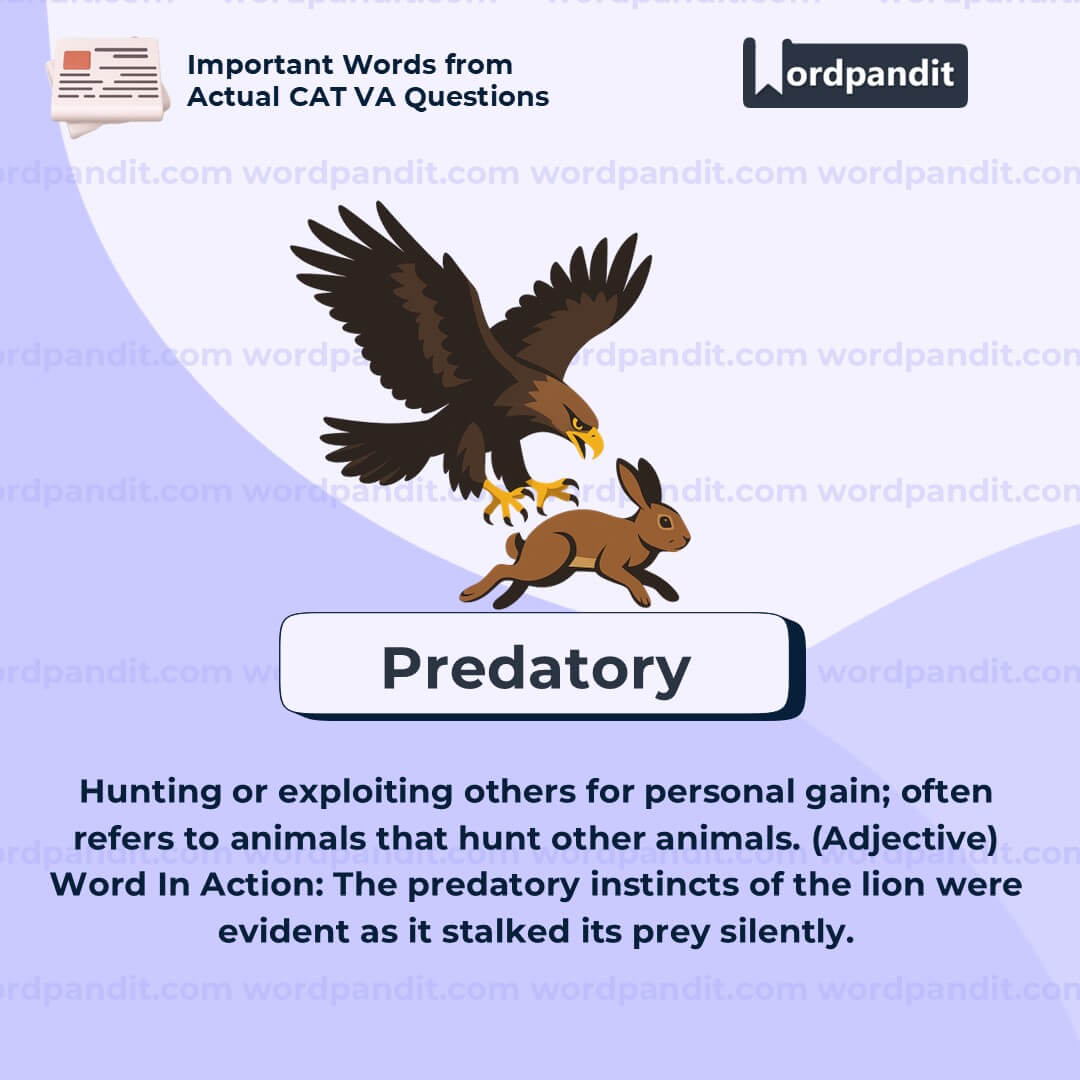
Word 3: Predatory
Context:
"This adds nutrients to the soil, which in turn helps the plants to grow back stronger. Tall plants then help burrowing birds hide from predatory skuas." - Nature Magazine
Explanatory Paragraph:
The word "predatory" describes animals or behaviors that involve hunting and feeding on other animals. In the sentence, “predatory skuas” refers to aggressive birds that hunt smaller birds or animals for food. More broadly, "predatory" can also describe behavior in humans that exploits or harms others for personal gain, such as in business or social relationships.
Meaning: Seeking to exploit or harm others, especially for food or personal gain. (Adjective)
Pronunciation: PRED-uh-tor-ee
Difficulty Level: ⭐⭐⭐ Intermediate
Etymology: From Latin “praedatorius,” from “praedari” meaning to plunder or rob.
Prashant Sir's Notes:
Always visualize a predator when you encounter this word—think of a lion, eagle, or even a shark. But don't forget the metaphorical meaning: “predatory” is often used for people who take advantage of others. So the word can shift from wildlife to boardrooms or relationships!
Synonyms & Antonyms:
Synonyms: hunting, aggressive, exploitative, ravenous, rapacious
Antonyms: protective, harmless, nurturing, preyed upon
Usage Examples:
- The jungle is full of predatory animals like tigers and leopards.
- Online safety measures are crucial to protect children from predatory behavior.
- Skilled hunters, the hawks exhibit classic predatory instincts.
- The company was accused of engaging in predatory pricing to drive out competitors.
Cultural Reference:
In the movie *Predator* (1987), the alien creature is a literal “predatory” force, hunting humans with deadly precision—turning the idea of a hunter into a horror figure.
Think About It:
How do we draw the line between assertive ambition and predatory behavior in society?
Quick Activity:
List two animals and two human behaviors that can be described as predatory. Explain why each fits the term.
Memory Tip:
“Predatory” sounds like “predator”—think of a lion lurking in the grass or a shark circling its prey. This mental image cements the meaning!
Real-World Application:
The term "predatory" is often used in law, ethics, and journalism to describe unfair or dangerous actions—like predatory loans or predatory behavior online—alerting us to potential threats in modern society.
Word 4: Feedback

Context:
"It’s this wonderful feedback loop,” Shaw says. Today, the “pretty paddock” that Houghton first experienced has been transformed. - Nature Magazine
Explanatory Paragraph:
"Feedback" refers to a response or reaction to an action, process, or performance that can be used for improvement or adjustment. In the sentence, “feedback loop” describes a process where the outcomes influence future actions—like improved plant growth leading to better soil quality, which then further supports plant growth. Feedback is a vital concept in systems, communication, and learning, both in nature and in human contexts.
Meaning: Information or reactions about a process, product, or behavior that is used as a basis for improvement or adjustment. (Noun)
Pronunciation: FEED-back
Difficulty Level: ⭐⭐ Basic
Etymology: Originated in the early 20th century in engineering, from “feed” + “back,” literally meaning to loop output back into a system.
Prashant Sir's Notes:
“Feedback” is one of those words with broad utility—it’s as relevant in ecosystems as it is in classrooms or offices. Always remember: good feedback loops help growth; bad ones reinforce mistakes. Understand it both as a scientific term and a life principle.
Synonyms & Antonyms:
Synonyms: response, reaction, input, comment, evaluation
Antonyms: silence, neglect, indifference, disregard
Usage Examples:
- She gave me useful feedback on my essay, which helped me improve it significantly.
- In ecosystems, feedback loops help regulate balance and maintain stability.
- Constructive feedback is essential in the workplace to boost performance.
- He was nervous about receiving feedback after his first presentation.
Cultural Reference:
In cybernetics and systems theory, “feedback loops” were popularized by Norbert Wiener to describe how systems self-regulate—laying the groundwork for robotics, biology, and communication models.
Think About It:
How do you personally respond to feedback? Does it motivate you, or discourage you?
Quick Activity:
Ask someone for feedback on a recent task you completed—note whether it was positive, negative, or constructive, and write down one improvement you can make.
Memory Tip:
Imagine “feeding” information “back” into a system—this visual helps you remember that feedback returns to improve what came before.
Real-World Application:
Feedback is crucial in education, customer service, and performance reviews. It helps individuals and organizations grow, adapt, and evolve based on real-world input.
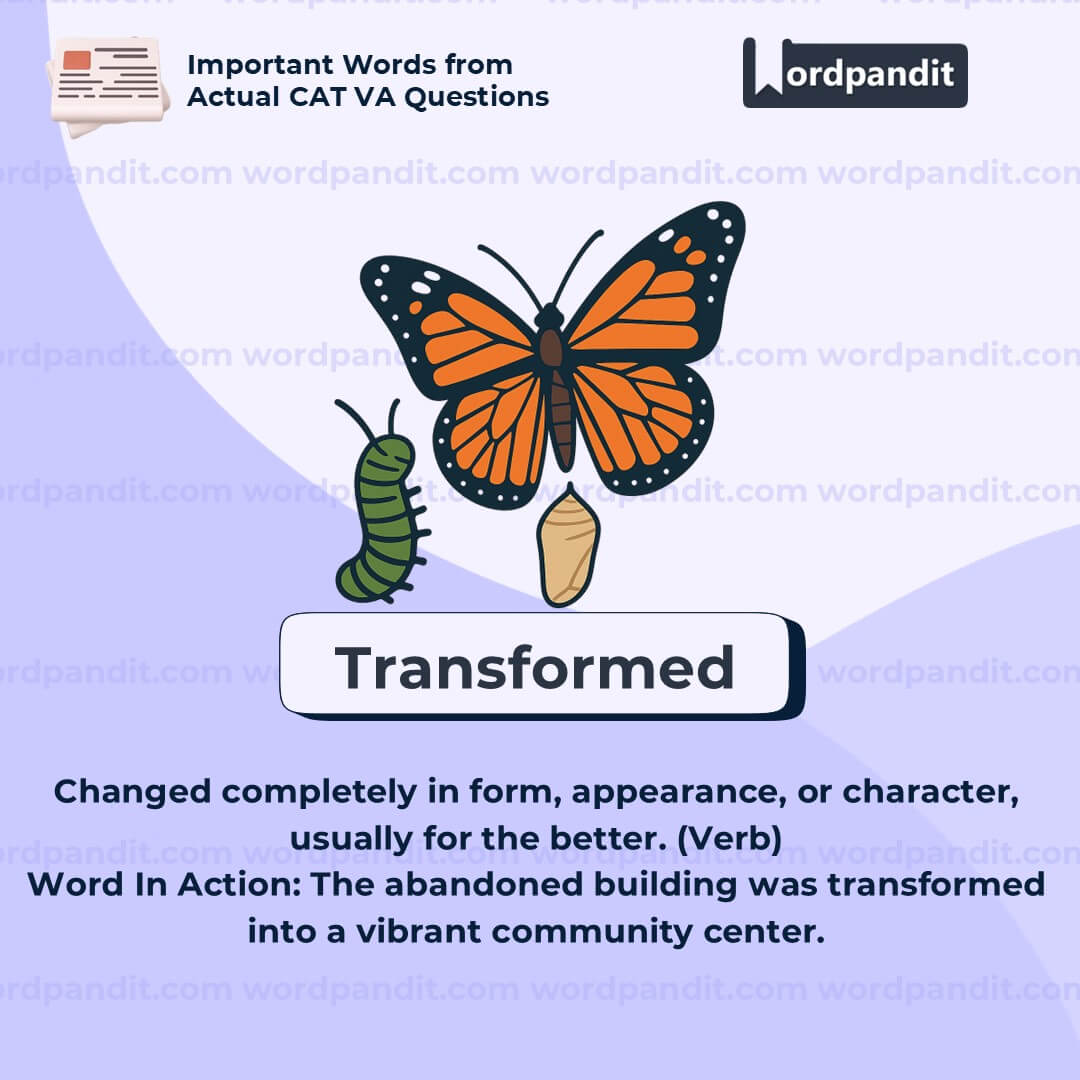
Word 5: Transformed
Context:
"It’s this wonderful feedback loop,” Shaw says. Today, the “pretty paddock” that Houghton first experienced has been transformed." - Nature Magazine
Explanatory Paragraph:
"Transformed" refers to a significant or dramatic change in form, appearance, condition, or character. In the given sentence, the “pretty paddock” has changed notably—likely in its ecosystem, appearance, or ecological function—due to the restoration efforts mentioned earlier. The word often carries a positive or impactful connotation and can be applied to people, places, systems, or ideas that undergo meaningful change.
Meaning: Changed completely in form, appearance, or character. (Verb – past tense)
Pronunciation: trans-FORMD
Difficulty Level: ⭐⭐ Basic
Etymology: From Latin “transformare,” where “trans” means “across” and “formare” means “to form” — literally “to change form.”
Prashant Sir's Notes:
This is a high-utility word—perfect for describing change. Think of before-and-after scenarios: a caterpillar becomes a butterfly; a dry land becomes fertile again. Whenever something is completely altered, “transformed” is the go-to word.
Synonyms & Antonyms:
Synonyms: changed, altered, converted, revamped, revolutionized
Antonyms: preserved, maintained, unchanged, stagnant
Usage Examples:
- The barren land was transformed into a lush green meadow.
- Her attitude transformed after reading the inspiring book.
- Technology has transformed how we communicate and learn.
- The company was completely transformed under new leadership.
Cultural Reference:
In the *Transformers* movie series, robots “transform” into vehicles and back—symbolizing drastic physical change and adaptability in action-packed form.
Think About It:
Can transformation be reversed, or is it always a one-way process?
Quick Activity:
Write down one personal experience where you felt transformed—physically, mentally, or emotionally. What caused the change?
Memory Tip:
Break the word into “trans” (across/change) + “form” (shape). Transformation = a change across forms or states.
Real-World Application:
Urban planners, educators, and healthcare professionals use the concept of transformation to describe how systems, cities, or lives improve through innovation and intervention.