
📘 What’s Inside This CAT Para-Completion Question Post?
📝 Authentic CAT Para-Completion Question:Practice with a real CAT Para-Completion Question from a previous CAT exam.
✅ Detailed Question with Step-by-Step Solution:Each question is explained thoroughly for better understanding.
🔍 In-Depth Paragraph Analysis:Gain insights through line-by-line and paragraph-wise analysis
📚 Vocabulary Enhancement: Top 5 words explained from the paragraph
Para-Completion Questions
Q.18 There is a sentence that is missing in the paragraph below. Look at the paragraph and decide where (option 1, 2, 3, or 4) the following sentence would best fit.
Sentence: Many have had to leave their homes behind, with more than 1.3 million people being displaced due to the drought.
Passage:
Somalia has been dealing with an enormous humanitarian catastrophe, driven by the longest and most severe drought the country has experienced in at least 40 years. ___(1)___. Five consecutive rainy seasons have failed, causing more than 8 million people - almost half of the country’s population – to experience acute food insecurity. ___(2)___. More than 43,000 people are believed to have lost their lives, with half of the lives lost likely being children under five. The damage the drought has caused is far-reaching. ___(3)___. Farmers have lost all their agricultural income, while pastoralists have lost more than 3 million livestock, impoverishing entire communities, and leaving them on the brink of famine. ___(4)___. Some, like the pastoralists, may never be able to go back as their livelihoods have been irreversibly wiped out.
A. Option 4
B. Option 2
C. Option 3
D. Option 1
Solution with Explanation
Correct Answer: A Detailed explanation by Wordpandit:
To determine the best placement for the missing sentence, we need to look for a point in the paragraph where the idea of displacement can act as a bridge between the broader impacts of the drought and the more personal, long-term consequences faced by individuals.Blank 4 is the most appropriate place for the sentence because the preceding line describes widespread economic ruin—farmers and pastoralists losing their livelihoods. The sentence about displacement adds a natural next step in the narrative: after losing everything, many had to abandon their homes. This logically leads into the following sentence, which zooms in on a subset of those displaced—pastoralists—who may never return due to irreversible loss. The flow from "many" to "some" builds a clear narrative progression from general hardship to specific, long-term impact.
Option-wise Analysis
- Option 1: Incorrect. The sentence about displacement would interrupt the smooth transition from the general description of the drought to its immediate effect on food insecurity.
- Option 2: Incorrect. This spot is better suited for continuing the statistic-based discussion on mortality. Inserting the sentence here would break that logical flow.
- Option 3: Incorrect. The passage at this point is focused on economic and livelihood damage. Adding a displacement fact here would slightly derail the progression of ideas.
- Option 4: Correct. This is where the paragraph shifts from material losses to personal consequences—displacement and irreversible lifestyle changes. The sentence about 1.3 million displaced people works as a natural and necessary connector.
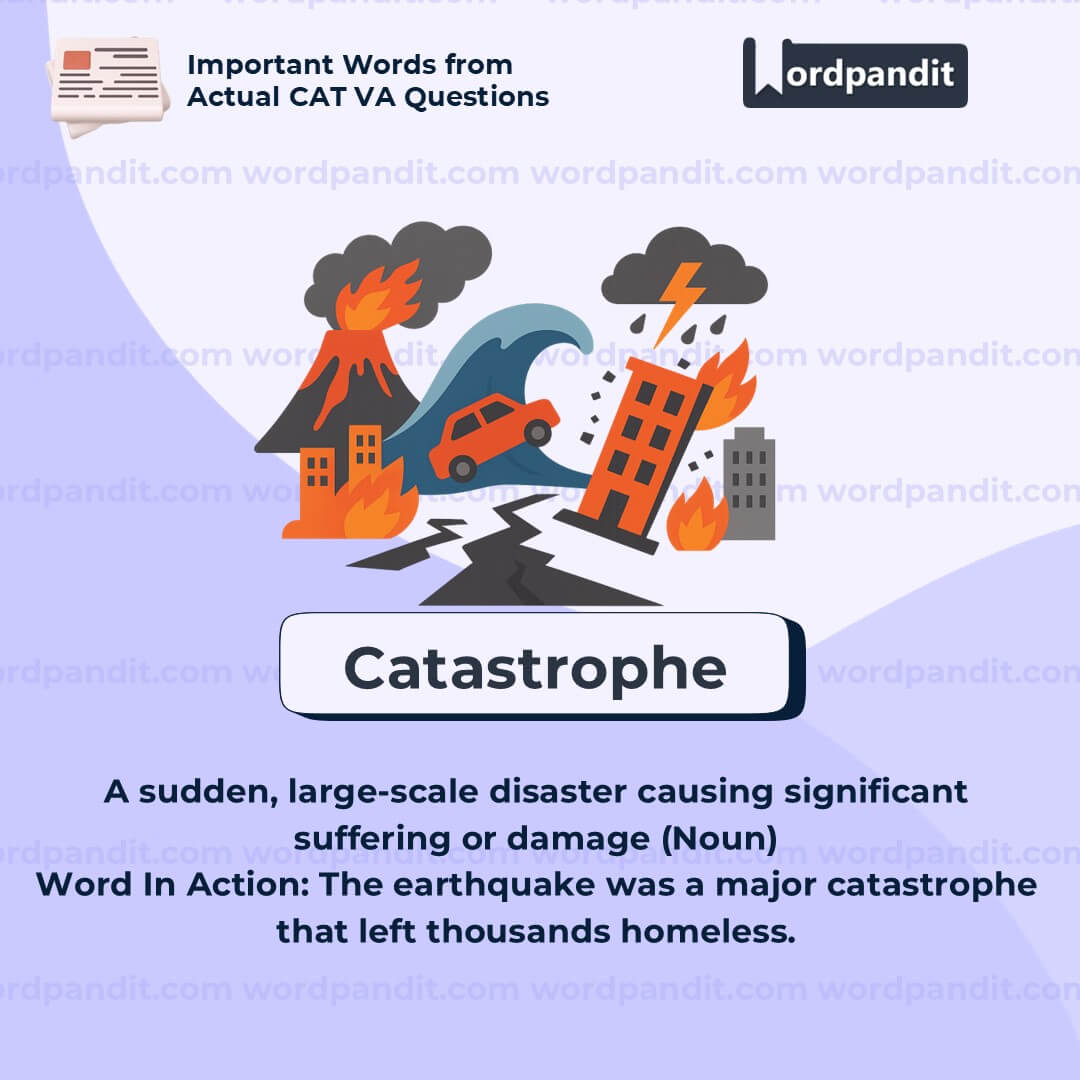
Word 1: Catastrophe
Context:
"Somalia has been dealing with an enormous humanitarian catastrophe, driven by the longest and most severe drought the country has experienced in at least 40 years." - Source Unknown
Explanatory Paragraph:
"Catastrophe" refers to a sudden and widespread disaster that causes immense suffering or destruction. It can be natural, like a flood or earthquake, or human-made, such as war or economic collapse. In this context, Somalia’s drought is described as a humanitarian catastrophe because it affects countless lives—destroying crops, causing famine, and displacing families. The word emphasizes the scale and urgency of the crisis, underlining the need for immediate response and long-term solutions.
Meaning: A sudden, large-scale disaster causing significant suffering or damage (Noun)
Pronunciation: kuh-TAS-truh-fee
Difficulty Level: ⭐⭐⭐ Intermediate
Etymology: From Greek *katastrophē*, meaning "an overturning" or "sudden end," from *kata-* (down) + *strephein* (to turn).
Prashant Sir's Notes:
"Catastrophe" is more than a disaster—it’s a total breakdown. When you use this word, you're signaling that something has gone terribly wrong on a massive scale. It's often used in humanitarian, environmental, or global contexts.
Synonyms & Antonyms:
Synonyms: disaster, calamity, crisis, tragedy, debacle
Antonyms: blessing, success, miracle, relief, salvation
Usage Examples:
- The earthquake turned the city into a scene of utter catastrophe.
- The collapse of the dam was an environmental catastrophe that poisoned local water supplies.
- Many fear that climate change will lead to global catastrophes if left unchecked.
- The famine in Somalia is a humanitarian catastrophe requiring urgent international aid.
Cultural Reference:
In 1986, the Chernobyl nuclear disaster was a global catastrophe, highlighting the dangers of poorly managed technology and prompting international reform in nuclear safety standards.
Think About It:
What makes a crisis a catastrophe? Is it the scale of destruction, the number of people affected, or the lack of response?
Quick Activity:
Write down three recent events (natural or man-made) that you think qualify as catastrophes. Explain why each fits the definition.
Memory Tip:
Think of “catastrophe” as a total collapse—like a “cat” that’s been thrown off balance and “strophes” (turns) the world upside down.
Real-World Application:
"Catastrophe" is commonly used in news reports, humanitarian appeals, climate discourse, and risk management. It highlights the urgency of situations that demand coordinated, large-scale responses to prevent widespread harm.
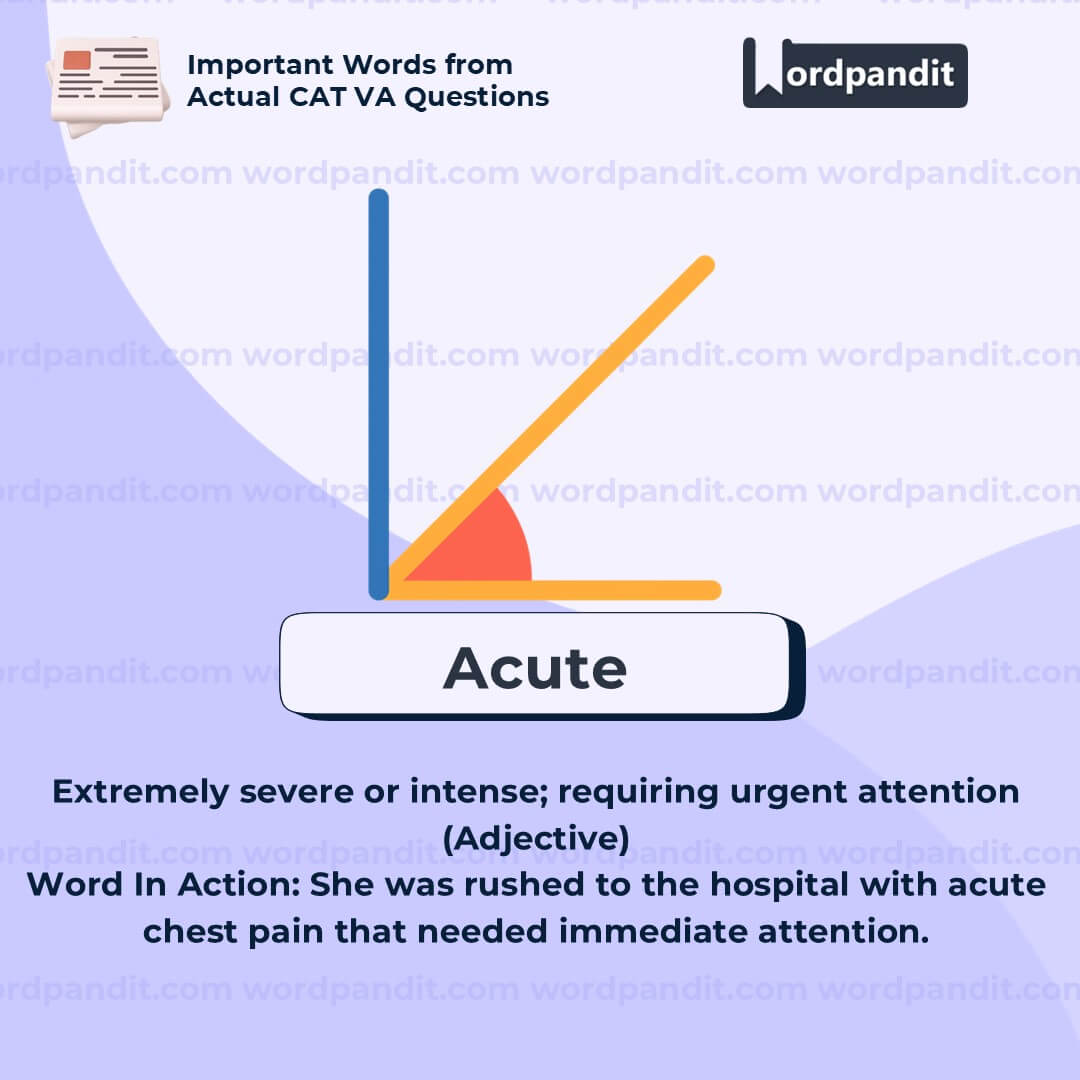
Word 2: Acute
Context:
"Five consecutive rainy seasons have failed, causing more than 8 million people – almost half of the country’s population – to experience acute food insecurity." - Source Unknown
Explanatory Paragraph:
"Acute" refers to a situation or condition that is severe and intense in nature, often appearing suddenly and demanding immediate attention. It can describe physical pain, emotional distress, or social issues like poverty or hunger. In the context provided, "acute food insecurity" means that a large number of people in Somalia are suffering from an extreme shortage of food that threatens their survival and health, emphasizing the urgency and seriousness of the crisis.
Meaning: Extremely severe or intense; requiring urgent attention (Adjective)
Pronunciation: uh-KYOOT
Difficulty Level: ⭐⭐ Easy
Etymology: From Latin *acutus* meaning "sharp," from *acuere* (to sharpen).
Prashant Sir's Notes:
“Acute” is a high-alert word. It signals sharpness and urgency—whether you're talking about an illness, a shortage, or a crisis. It's commonly used in healthcare, economics, and disaster reporting.
Synonyms & Antonyms:
Synonyms: severe, intense, critical, dire, urgent
Antonyms: mild, chronic, moderate, gradual, manageable
Usage Examples:
- The patient was rushed to the ER with acute abdominal pain.
- The region is facing an acute shortage of clean drinking water.
- The government declared a state of emergency due to acute famine conditions.
- Her acute awareness of social issues makes her an effective activist.
Cultural Reference:
In global health, terms like “acute malnutrition” or “acute respiratory syndrome” are used to describe life-threatening conditions that demand immediate medical or humanitarian intervention—such as during the Ebola or COVID-19 outbreaks.
Think About It:
What’s the difference between an acute crisis and a chronic one? Why might one get more public attention than the other?
Quick Activity:
List three current global issues that you think are “acute” in nature. Briefly explain what makes each one urgent or severe.
Memory Tip:
Think of “acute” as a sharp needle—it strikes quickly and hurts instantly. That’s what an acute situation feels like: sudden and painful.
Real-World Application:
"Acute" is used in medicine (acute illness), economics (acute inflation), and humanitarian aid (acute hunger). Recognizing an acute problem means knowing when immediate action is needed to prevent long-term damage or loss of life.
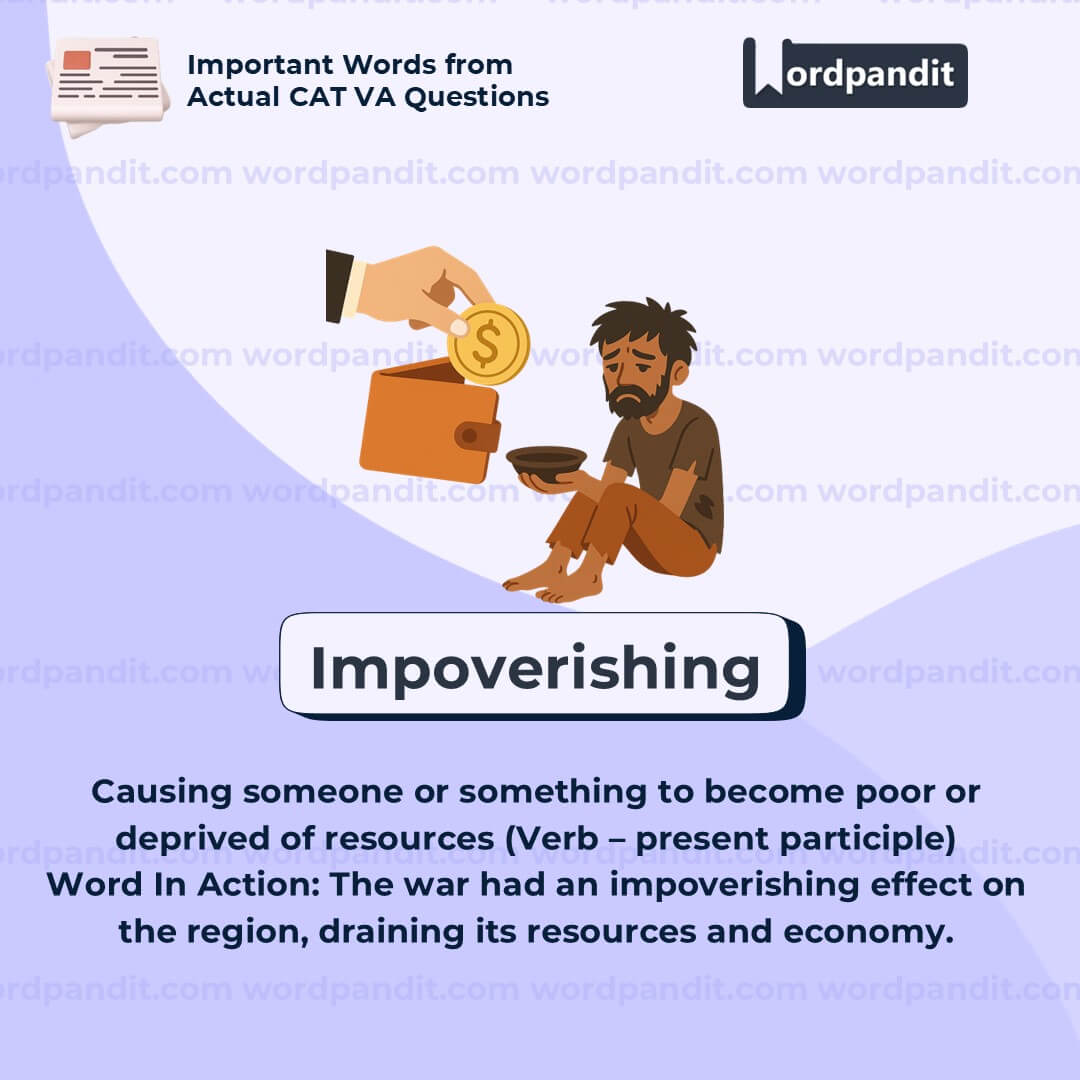
Word 3: Impoverishing
Context:
"Farmers have lost all their agricultural income, while pastoralists have lost more than 3 million livestock, impoverishing entire communities, and leaving them on the brink of famine." - Source Unknown
Explanatory Paragraph:
"Impoverishing" refers to the act of making someone or something poor—whether economically, socially, or emotionally. In the context of Somalia’s crisis, it describes how the loss of crops and livestock has stripped communities of their resources and means of survival. This word emphasizes not just individual suffering, but widespread, systemic economic collapse that forces families and communities into deeper levels of poverty and insecurity.
Meaning: Causing someone or something to become poor or deprived of resources (Verb – present participle)
Pronunciation: im-POV-er-ish-ing
Difficulty Level: ⭐⭐⭐ Intermediate
Etymology: From Old French *empovriss-* (to make poor), from Latin *pauper* (poor).
Prashant Sir's Notes:
“Impoverishing” is not just about lack of money. It’s about loss—of livelihood, security, dignity, and hope. It's a powerful word for describing long-term harm caused by disasters, injustice, or policy failure.
Synonyms & Antonyms:
Synonyms: bankrupting, draining, weakening, depriving, depleting
Antonyms: enriching, empowering, sustaining, strengthening
Usage Examples:
- Years of drought have been impoverishing the region’s once-thriving farming communities.
- Corruption and conflict are impoverishing the nation’s people, despite abundant natural resources.
- War has a way of impoverishing both the economy and the spirit of a society.
- The global recession had an impoverishing effect on small businesses everywhere.
Cultural Reference:
Many global NGOs, such as Oxfam and the World Bank, use the term “impoverishing shocks” to describe events—like illness, drought, or war—that push individuals or entire populations into sudden and deep poverty.
Think About It:
What are some actions—by governments, individuals, or systems—that can be unintentionally impoverishing? Can poverty be reversed once it's entrenched?
Quick Activity:
Write two short sentences: one describing an impoverishing event caused by nature, and another caused by human action.
Memory Tip:
“Impoverishing” comes from “poor.” Think of it as something that makes you or a community poor—economically or otherwise.
Real-World Application:
"Impoverishing" is commonly used in economic policy, humanitarian reports, and development studies to describe how crises—such as pandemics, war, and climate change—strip communities of wealth, security, and opportunity.
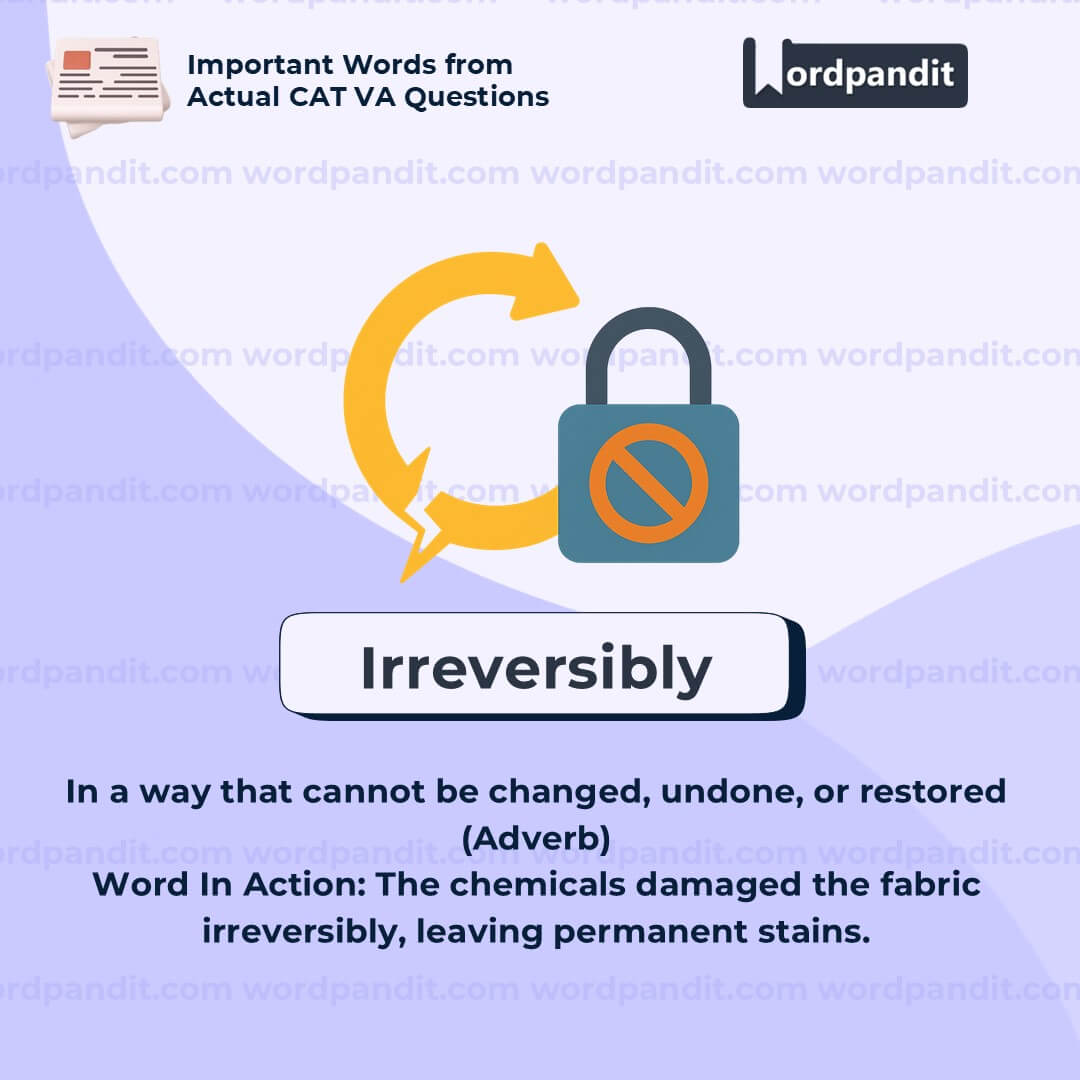
Word 4: Irreversibly
Context:
"Some, like the pastoralists, may never be able to go back as their livelihoods have been irreversibly wiped out." - Source Unknown
Explanatory Paragraph:
"Irreversibly" means in a way that cannot be undone or changed back to a previous state. It signals a permanent transformation, usually with serious or tragic consequences. In the given context, it describes the total loss of livelihood—particularly for pastoralists—who have lost their animals and way of life due to drought and may never recover. The word underscores the finality of the damage, making it clear that returning to the past state is no longer an option.
Meaning: In a way that cannot be changed, undone, or restored (Adverb)
Pronunciation: ih-ree-VUR-suh-blee
Difficulty Level: ⭐⭐⭐ Intermediate
Etymology: From Latin *irreversibilis*, from *in-* (not) + *revertere* (to turn back).
Prashant Sir's Notes:
“Irreversibly” is a heavy word. It tells you that there’s no going back. When something is lost irreversibly—whether it's a forest, a culture, or a livelihood—the change is final. It’s often used in climate science, history, and personal loss.
Synonyms & Antonyms:
Synonyms: permanently, unchangeably, irreparably, irrevocably, eternally
Antonyms: temporarily, reversibly, repairably, correctably
Usage Examples:
- The glacier has melted irreversibly due to rising global temperatures.
- The fire damaged the museum’s collection irreversibly.
- Her decision to leave the country changed their relationship irreversibly.
- For many displaced families, the loss of land and income is irreversibly devastating.
Cultural Reference:
Climate change scientists often warn of “irreversibly crossing thresholds”—such as ice sheet collapse or rainforest dieback—which would permanently alter the Earth’s ecosystems and weather patterns.
Think About It:
What makes something truly irreversible? Is it about physical loss, emotional closure, or societal neglect?
Quick Activity:
List two personal experiences or global events you think are irreversible. Write one sentence about the impact of each.
Memory Tip:
Break it down: *ir-* (not) + *reversible* = not able to be reversed. Picture a one-way street with a “no U-turn” sign—that’s “irreversibly.”
Real-World Application:
"Irreversibly" is used in journalism, science, economics, and even law to stress outcomes that can’t be undone—like species extinction, deforestation, or wrongful convictions. It helps mark the point where prevention gives way to loss.
Word 5: Livelihoods
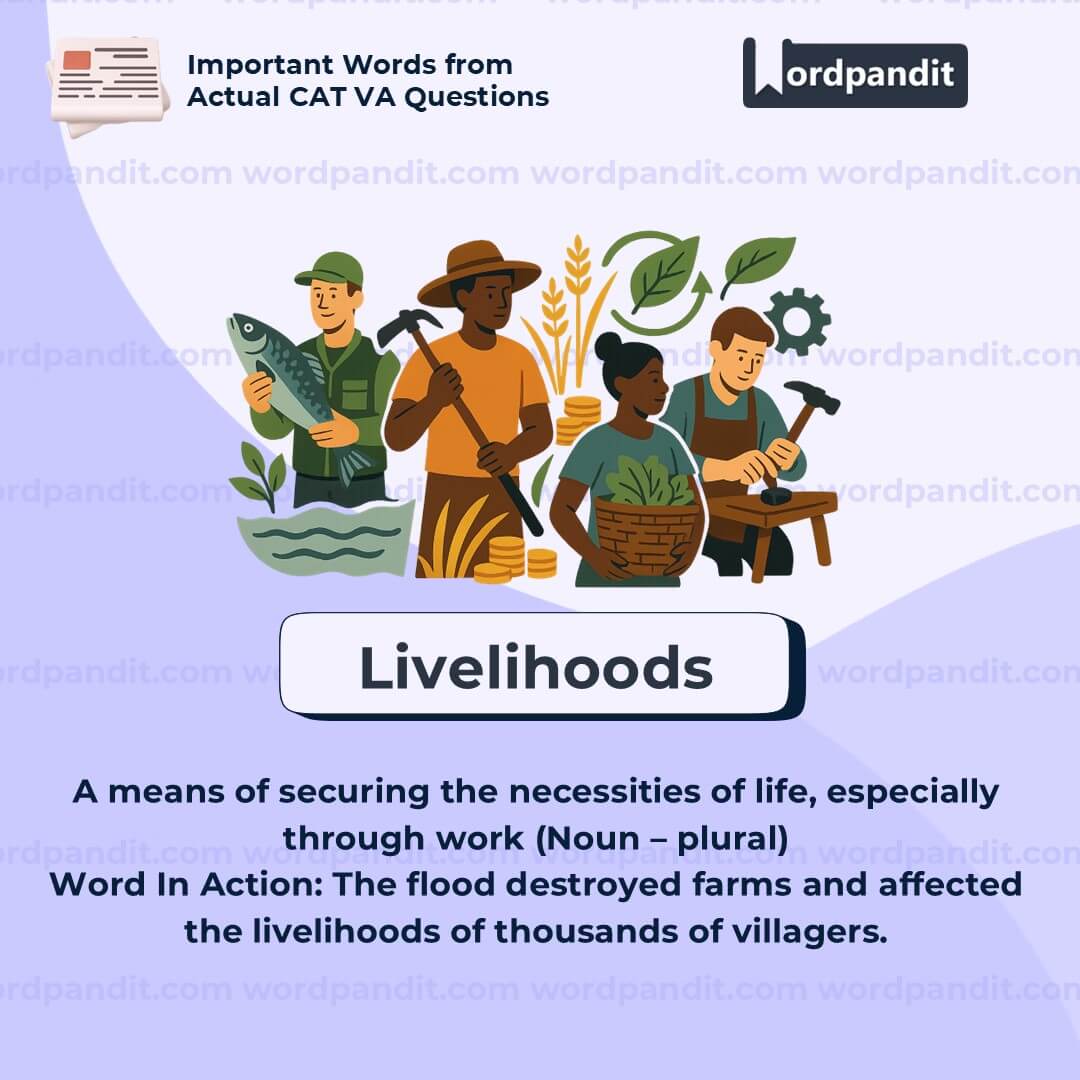
Context:
"Some, like the pastoralists, may never be able to go back as their livelihoods have been irreversibly wiped out." - Source Unknown
Explanatory Paragraph:
"Livelihoods" refer to the means by which individuals or communities secure the necessities of life—most commonly through work, trade, or the use of resources. It includes jobs, farming, fishing, herding, or any other activity that sustains a person’s basic needs. In the context above, the word highlights how the loss of animals for pastoralists in Somalia has destroyed their ability to survive economically. Without their livestock, they’ve lost not just income but also identity, stability, and food security.
Meaning: A means of securing the necessities of life, especially through work (Noun – plural)
Pronunciation: LIEV-lee-hoodz
Difficulty Level: ⭐⭐ Easy
Etymology: From Old English *līflād* meaning "course of life," later shifting to mean "means of living."
Prashant Sir's Notes:
“Livelihoods” are more than jobs—they represent a person's ability to provide, live with dignity, and build a future. When we talk about development, disaster relief, or inequality, protecting livelihoods is always at the center.
Synonyms & Antonyms:
Synonyms: income, employment, work, subsistence, occupation
Antonyms: unemployment, poverty, dependency, destitution
Usage Examples:
- The storm destroyed farms and fishing boats, threatening thousands of livelihoods.
- Access to microloans can help women rebuild their livelihoods after a crisis.
- Mining provides livelihoods for many, but can also harm the environment.
- Climate change is endangering the livelihoods of coastal communities around the world.
Cultural Reference:
Many international development programs, such as those led by the United Nations and World Food Programme, focus on “livelihood resilience”—helping vulnerable communities maintain and restore livelihoods after disasters, conflict, or displacement.
Think About It:
What happens to a person or community when a livelihood is lost? Can humanitarian aid replace it, or is something deeper—like dignity or tradition—also lost?
Quick Activity:
List three types of livelihoods common in rural areas and three in urban areas. How do they differ in terms of vulnerability and sustainability?
Memory Tip:
“Livelihood” includes the word “live”—think of it as what helps you live your life with security and dignity.
Real-World Application:
"Livelihoods" are central to conversations about global poverty, disaster response, and sustainable development. NGOs and governments often design programs to protect or restore livelihoods in fragile communities after droughts, wars, or pandemics.
