

Daily Vocabulary from Indian Newspapers and Publications
Welcome to Wordpandit’s Indian Vocabulary Hub
At Wordpandit, we understand the importance of staying rooted in the local context while expanding your language skills. This section focuses on enriching your vocabulary with words and phrases drawn from India’s leading newspapers and publications, ensuring you're learning vocabulary that is practical, relevant, and uniquely Indian.
Why Indian Sources Matter
We believe that the best way to master any language is by immersing yourself in local content. That’s why we carefully curate vocabulary from top Indian publications, including:
- The Hindu
- The Times of India
- The Economic Times
- Hindustan Times
- Live Mint
- The Indian Express
- And many others...
Stay Updated, Stay Relevant
With daily updates from Indian news sources, you’ll be consistently learning words that reflect the trends and shifts in Indian society and culture. Our focus is to provide vocabulary that enhances your understanding of the language in an Indian context.
How Wordpandit Supports Your Goals
Whether you’re preparing for exams, aiming to improve your professional communication, or simply want to stay connected with the latest Indian vocabulary, Wordpandit is here to guide you every step of the way.
Learn with a Practical Approach
Our interactive learning methodology includes real-world examples, engaging activities, and context-specific usage to ensure that every word becomes part of your active vocabulary.
Dive into Indian Vocabulary Today!

Why Choose Wordpandit?
Practical Learning: Focus on words you'll actually encounter in real-world reading, enhancing your comprehension and communication skills.
Diverse Content: From current affairs to scientific breakthroughs, our varied sources expose you to vocabulary across multiple domains.
Effortless Integration: Make Wordpandit a part of your daily routine. Just a few minutes each day can significantly boost your lexicon over time.
Your Path to Vocabulary Mastery
- Visit our Daily Vocabulary section regularly
- Explore new words and their usage in context
- Practice incorporating these words into your own writing and speech
- Track your progress as your vocabulary expands
Start Your Journey Today
Embark on your vocabulary enhancement journey with Wordpandit. By consistently engaging with our daily posts, you'll build a robust vocabulary that serves you well in academic, professional, and personal contexts.
Remember, a word a day keeps linguistic limitations at bay. Make Wordpandit your daily companion in the quest for vocabulary excellence!
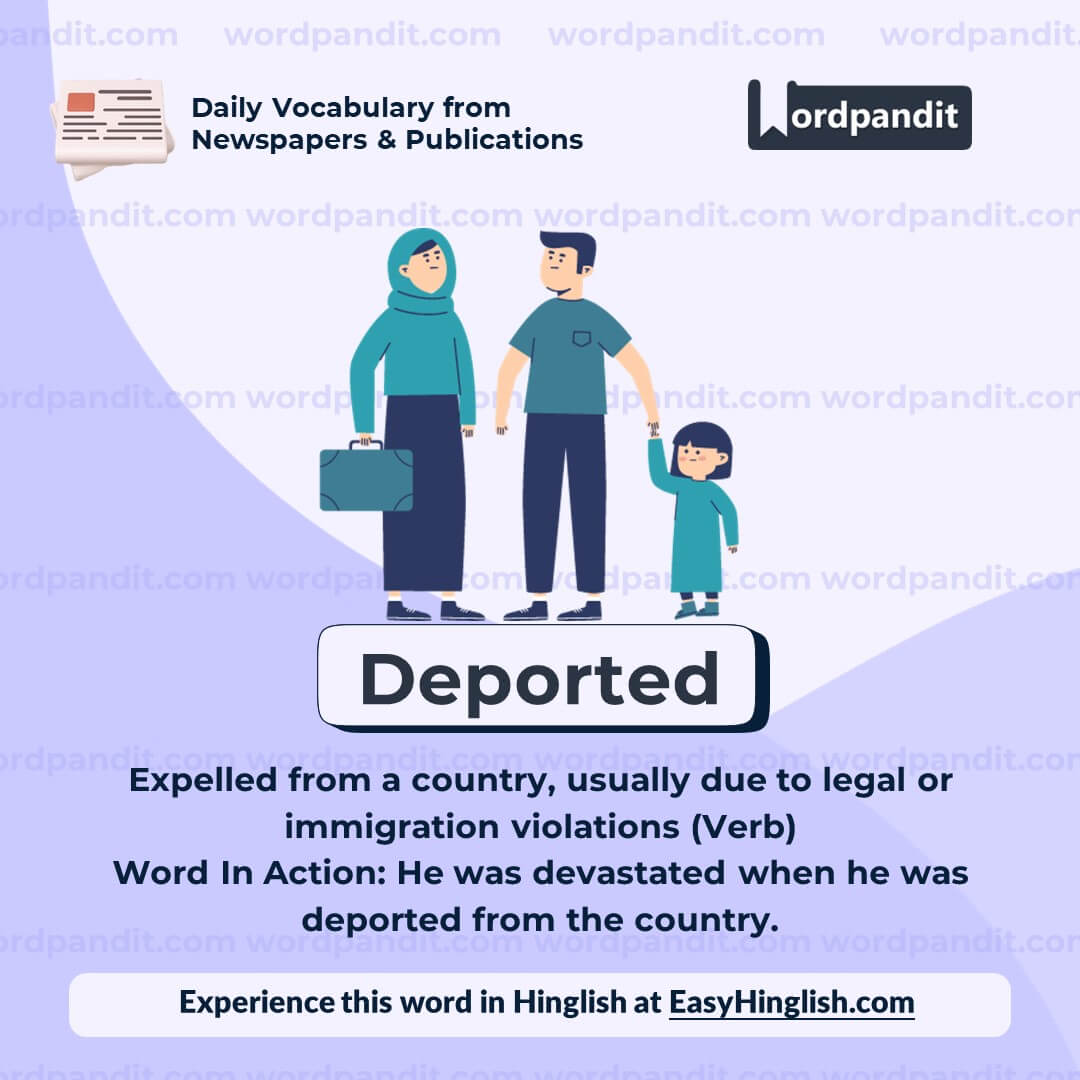
WORD-1: Deported
Context:
"That means from 2009 until February 2025, a total of 17,921 Indians have been deported by America." - The Wire
Explanatory Paragraph:
The word "deported" refers to the act of officially removing someone from a country, typically for legal reasons such as visa violations, illegal entry, or criminal activity. When someone is deported, they are forced to return to their country of origin. This action is carried out by the authorities and often involves legal proceedings. In the context above, it means that these Indian individuals were sent back to India from the United States by legal enforcement agencies.
Meaning: To expel a foreigner from a country, typically for legal or immigration reasons (Verb)
Pronunciation: dih-PORT-ed
Difficulty Level: ⭐⭐ Beginner
Etymology: From Latin 'deportare', meaning 'to carry away'; later adopted into Middle French and then English in the 16th century.
Prashant Sir's Notes:
The word "deported" is a formal term often used in legal or immigration contexts. It typically involves government intervention. It is important not to confuse it with "exile", which has a more voluntary or historical/punitive tone. Focus on how the word is used passively: "He was deported," not "He deported himself."
Synonyms & Antonyms:
Synonyms: expel, extradite, banish, repatriate, evict
Antonyms: admit, welcome, accept, naturalize
Usage Examples:
- The undocumented worker was deported after a court hearing.
- Many refugees fear being deported back to dangerous conditions.
- She was mistakenly deported despite having legal residency.
- After overstaying his visa, he was deported to his home country.
Cultural Reference:
"Deportation is not a punishment; it's the enforcement of immigration law." – Often quoted in legal and political discussions on immigration policy.
Think About It:
Should governments prioritize humanitarian concerns over strict immigration enforcement when considering deportation cases?
Quick Activity:
Use the word "deported" in a sentence that involves a country of your choice and describe the reason behind the deportation.
Memory Tip:
Think of “deported” as “de” (away) + “ported” (from port), like being sent away from a country’s port or border.
Real-World Application:
"Deported" is commonly used in news articles, immigration discussions, legal documents, and debates about national security and human rights. Understanding it helps you grasp global migration and political issues more clearly.
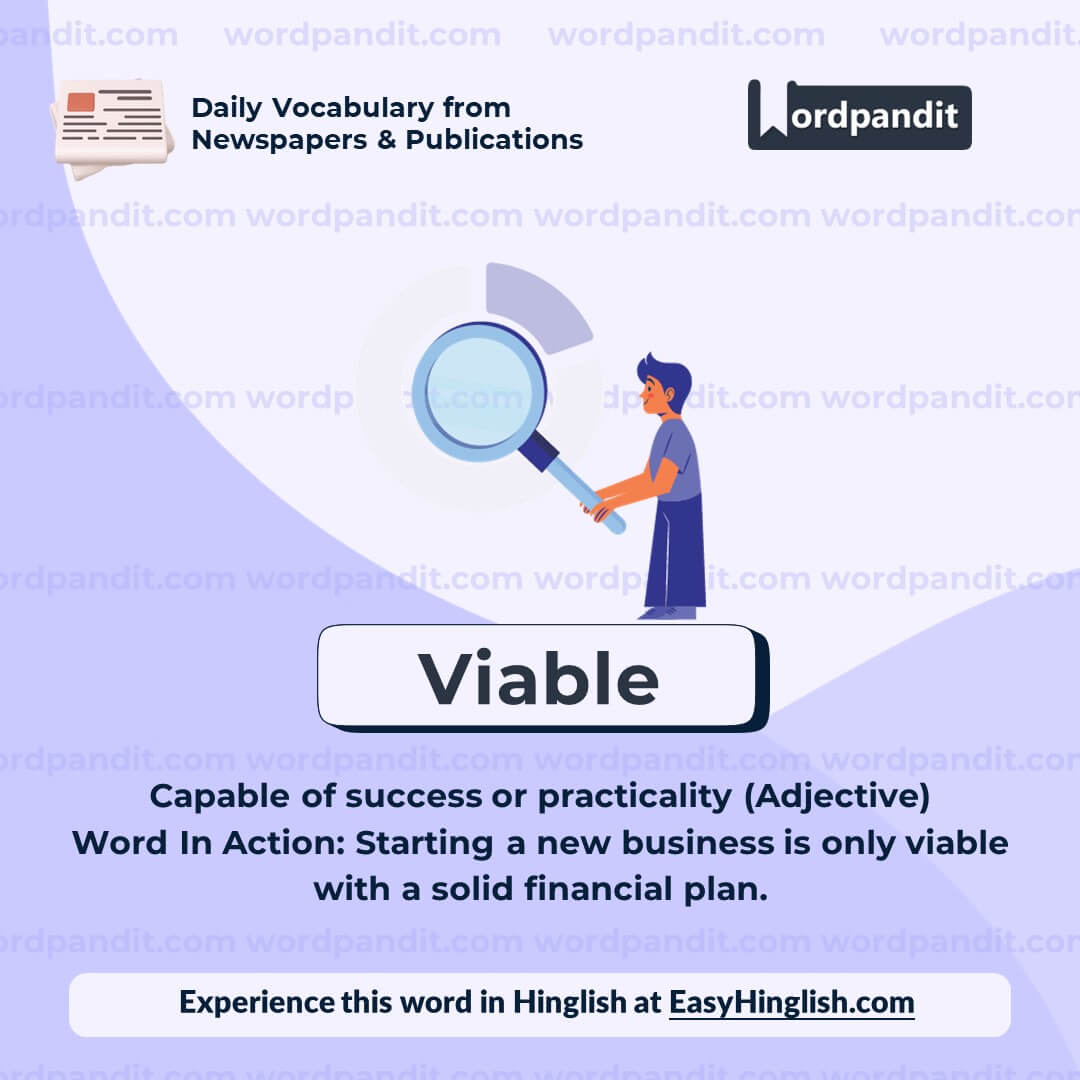
WORD-2: Viable
Context:
"The team is evaluating whether this new product concept is viable in the market." - The Wire
Explanatory Paragraph:
The word "viable" describes something that is capable of working successfully or being effective in real-world conditions. It is often used when discussing ideas, plans, strategies, or products, especially in business or science. In the context above, the company is trying to determine if their new product idea can actually succeed in the marketplace — if it's realistic, profitable, and practical enough to move forward with.
Meaning: Capable of working successfully or being effective (Adjective)
Pronunciation: VY-uh-buhl
Difficulty Level: ⭐⭐ Beginner
Etymology: From French 'viable', from 'vie' meaning 'life', based on Latin 'vita' — life. Originally used in medical contexts before broadening in meaning.
Prashant Sir's Notes:
"Viable" is a go-to word in business, start-ups, and project planning. It often answers the question: “Can this work?” Think of it as a polite, smart word for saying something is practical and possible. Make it a regular part of your professional vocabulary.
Synonyms & Antonyms:
Synonyms: feasible, practical, workable, achievable, doable
Antonyms: unfeasible, impractical, unrealistic, impossible
Usage Examples:
- The startup struggled to find a viable business model.
- This proposal seems viable based on current resources and budget.
- Scientists are exploring whether life is viable on other planets.
- Without sufficient funding, the project may no longer be viable.
Cultural Reference:
"A viable alternative to fossil fuels is no longer a dream — it's a necessity." — Frequently cited in environmental policy discussions and green technology debates.
Think About It:
How do we determine whether an idea or solution is truly viable — and who gets to decide?
Quick Activity:
Think of a personal goal or project you're working on. Write one sentence explaining why it is or isn't viable right now.
Memory Tip:
Link “viable” to “vital” or “life” — if something is viable, it’s alive with possibility; it can live, thrive, or succeed.
Real-World Application:
"Viable" is often used in business meetings, startup pitches, research papers, and political discussions. It’s a useful word for expressing whether something is realistically achievable or worth pursuing.
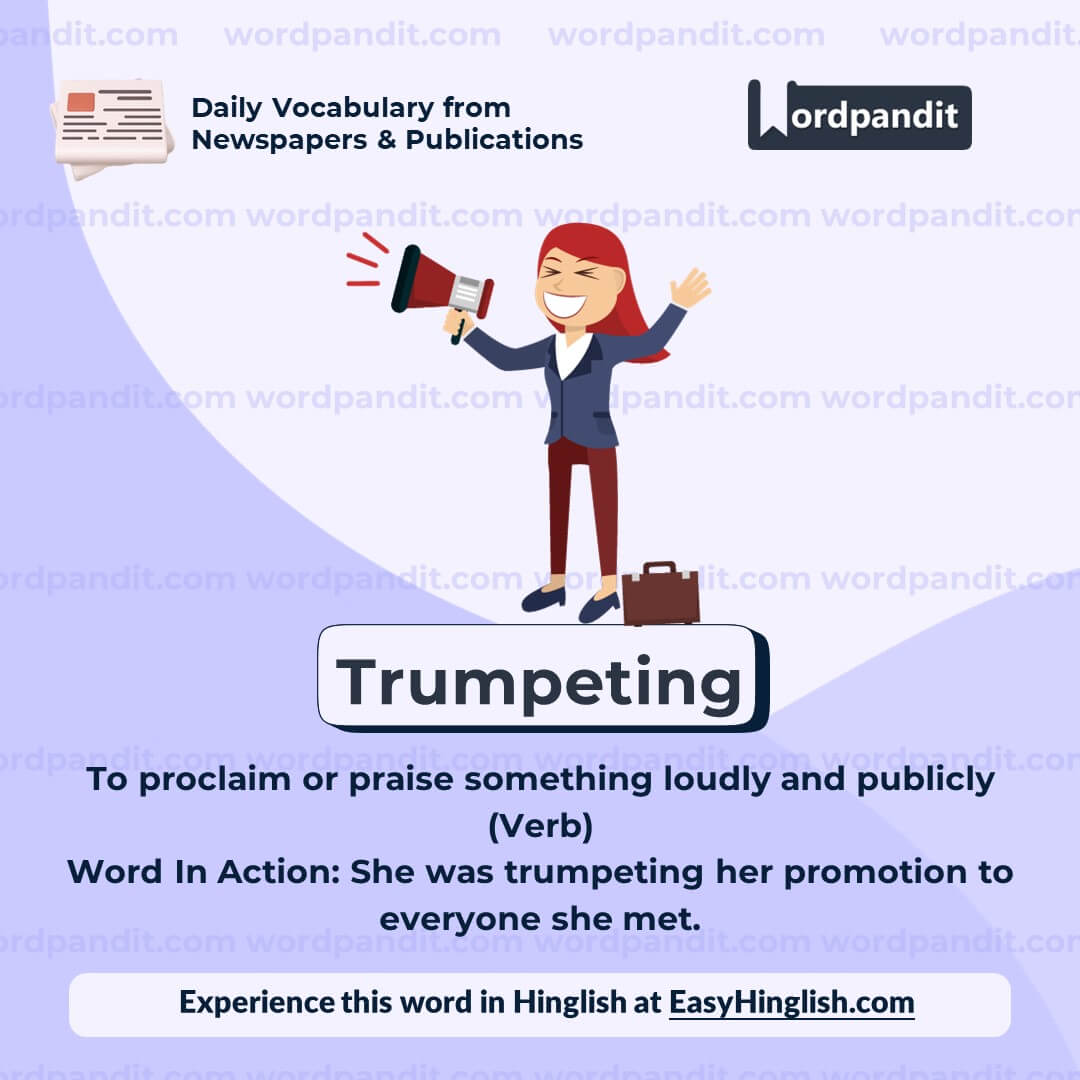
WORD-3: Trumpeting
Context:
"The BJP ridiculed the first for its ‘policy paralysis’, while trumpeting the second as the harbinger of the nation’s Amritkaal (age of the divine elixir/nectar) thanks to the leadership of the Vishwaguru (torch bearer of the world), Narendra Modi." - The Wire
Explanatory Paragraph:
The word "trumpeting" is used metaphorically here to mean loudly and proudly proclaiming or announcing something, especially achievements or beliefs. Just like a trumpet makes a bold, attention-grabbing sound, when someone is "trumpeting" an idea or a success, they are broadcasting it with enthusiasm, often for public or political impact. In the context above, the BJP is energetically promoting or showcasing the achievements of the current government under Narendra Modi.
Meaning: To proclaim or announce something loudly and publicly, often with pride (Verb - present participle)
Pronunciation: TRUM-puh-ting
Difficulty Level: ⭐⭐⭐ Intermediate
Etymology: Derived from the noun “trumpet” (a musical instrument), the verb form evolved in the 14th century, drawing on the idea of loud and noticeable sound for public attention.
Prashant Sir's Notes:
"Trumpeting" is often used with a slightly critical tone — it suggests someone is loudly praising or announcing something, perhaps more for show than substance. It’s useful in political or promotional contexts. Keep an eye out for whether it's being used neutrally or sarcastically.
Synonyms & Antonyms:
Synonyms: proclaim, announce, broadcast, promote, tout
Antonyms: conceal, suppress, withhold, downplay
Usage Examples:
- The government is trumpeting its economic reforms ahead of the elections.
- She kept trumpeting her accomplishments at every meeting.
- The company is trumpeting its latest innovation as a game-changer.
- They trumpeted the new policy as a victory for transparency.
Cultural Reference:
“Trumpeting success” is a phrase often used in political campaigns and advertising to highlight achievements, sometimes exaggeratedly. It's frequently seen in headlines during election seasons or product launches.
Think About It:
When does “trumpeting” achievements become self-promotion — and where should we draw the line between confidence and arrogance?
Quick Activity:
Write a two-line promotional message for a product, using the word “trumpeting” to describe how it is being marketed.
Memory Tip:
Picture someone blowing a trumpet to get everyone’s attention — they’re trumpeting news or success. Think of “trumpeting” as making noise for recognition.
Real-World Application:
"Trumpeting" is common in media, politics, marketing, and even personal branding — anytime someone wants to loudly and publicly share their success or message.
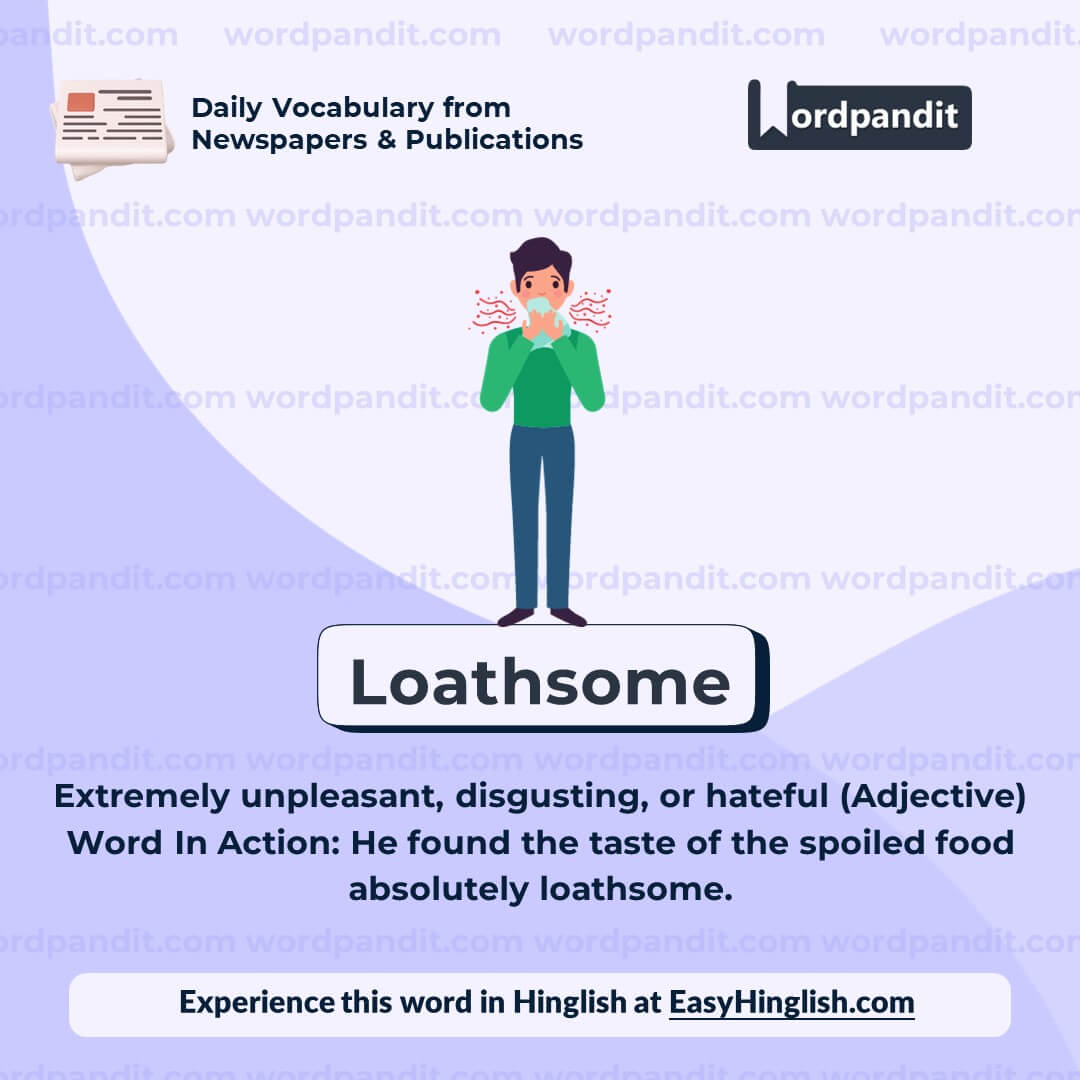
WORD-4: Loathsome
Context:
"It is particularly humiliating when Trump mentions them with his loathsome body language." - The Wire
Explanatory Paragraph:
"Loathsome" is a strong adjective used to describe something or someone that causes intense dislike, disgust, or hatred. It conveys a moral or emotional repulsion, often implying that the person or behavior is offensive or deeply unpleasant. In the sentence above, the author is criticizing Donald Trump’s body language, suggesting that it’s so offensive or distasteful that it evokes disgust or humiliation in others.
Meaning: Causing hatred or disgust; repulsive (Adjective)
Pronunciation: LOHTH-sum
Difficulty Level: ⭐⭐⭐ Intermediate
Etymology: From Middle English 'lothsum', based on 'loath' (meaning unwilling or reluctant) + '-some' (a suffix meaning “characterized by”); dating back to the 14th century.
Prashant Sir's Notes:
"Loathsome" is a powerful, emotionally charged word. Use it with care — it's not a casual insult but one that implies deep disgust or moral condemnation. It's great for essays or critiques when describing truly objectionable behaviors, ideologies, or actions.
Synonyms & Antonyms:
Synonyms: disgusting, repulsive, revolting, abhorrent, vile
Antonyms: admirable, pleasant, delightful, lovable
Usage Examples:
- The villain’s loathsome actions shocked the entire courtroom.
- She gave him a loathsome glare after the cruel comment.
- Corruption in politics is often seen as a loathsome betrayal of public trust.
- The film portrayed a loathsome character who lacked any redeeming qualities.
Cultural Reference:
In J.K. Rowling's *Harry Potter* series, characters like Voldemort are frequently described in loathsome terms, both in appearance and action, symbolizing moral corruption and evil.
Think About It:
What behaviors or qualities do you personally find loathsome — and how does society shape our sense of moral disgust?
Quick Activity:
List three things (actions, attitudes, or habits) you find loathsome, and write one sentence using the word “loathsome” to describe one of them.
Memory Tip:
Think of "loathe" (to hate deeply) + “-some” (full of) — something loathsome is full of hatefulness or disgust. Imagine something so awful, you loathe even looking at it.
Real-World Application:
"Loathsome" is used in journalism, literature, and commentary to strongly criticize people, policies, or events. It adds emotional weight to an argument or description, particularly in opinion pieces or debates.
WORD-5: Grotesque
Context:
"As such, Modi’s personalised diplomacy, conducted at the cost of India’s well-groomed institutionalised diplomacy, runs the risk of faltering in the face of Donald Trump, an even more grotesque version of Narendra Modi." - The Wire
Explanatory Paragraph:
The word "grotesque" is used to describe something that is extremely distorted, absurd, or unnatural, often in a way that provokes shock, discomfort, or ridicule. It can refer to physical appearance, behavior, or situations that seem exaggerated or hideously out of proportion. In the context above, the author is making a sharp political critique, suggesting that Trump’s persona or actions are even more exaggerated, unsettling, or distorted versions of those seen in Modi, using "grotesque" to emphasize extremity and imbalance in leadership style or image.
Meaning: Distorted and unnatural in shape or character; bizarre and often repulsive or absurd (Adjective)
Pronunciation: groh-TESK
Difficulty Level: ⭐⭐⭐ Intermediate
Etymology: From French ‘grotesque’, which originated from Italian ‘grottesca’, referring to strange or fantastical cave (grotto) paintings discovered in ancient Roman ruins.
Prashant Sir's Notes:
"Grotesque" is a vivid and potent word often used in literature, art, and criticism. It suggests a mix of the ridiculous and the horrifying. When applied to people or politics, it intensifies critique and signals something is unnaturally twisted or excessive. Use it when describing something that’s shockingly out of the norm — not just weird, but disturbing or absurd.
Synonyms & Antonyms:
Synonyms: bizarre, distorted, monstrous, absurd, hideous
Antonyms: normal, graceful, elegant, natural, attractive
Usage Examples:
- The sculpture was intentionally grotesque, meant to challenge viewers' comfort zones.
- He wore a grotesque mask for Halloween that frightened the children.
- The corruption scandal revealed grotesque abuses of power.
- The comedian’s portrayal of the politician was so exaggerated, it bordered on grotesque satire.
Cultural Reference:
In Gothic literature, characters like Frankenstein’s monster are often described as grotesque — not just physically deformed but emotionally complex and socially misunderstood, blurring the line between horror and humanity.
Think About It:
What does it say about society when grotesque behavior becomes normalized or even admired in public figures?
Quick Activity:
Draw or describe in words a “grotesque” creature or situation — use vivid language to capture what makes it bizarre or unsettling.
Memory Tip:
Think of “grotesque” as something so exaggerated or twisted that it makes you say “gross!” — the “gro” in grotesque can help you remember that feeling of discomfort or distortion.
Real-World Application:
"Grotesque" is often used in social criticism, art reviews, political commentary, and literary analysis to describe anything unnaturally exaggerated or morally disturbing. It helps express deep disapproval or shock in a creative yet pointed way.
WORD-5: Grotesque
Context:
"As such, Modi’s personalised diplomacy, conducted at the cost of India’s well-groomed institutionalised diplomacy, runs the risk of faltering in the face of Donald Trump, an even more grotesque version of Narendra Modi." - The Wire
Explanatory Paragraph:
The word "grotesque" describes something that is distorted, bizarre, or absurdly exaggerated, often to the point of being shocking or repulsive. It is frequently used to describe physical appearances, behaviors, or ideas that seem unnatural or disturbingly odd. In literature and art, "grotesque" can also refer to a mix of the fantastical and the horrifying.
Meaning: Distorted, absurd, or repulsively exaggerated (Adjective)
Pronunciation: groh-TESK
Difficulty Level: ⭐⭐⭐ Intermediate
Etymology: From the Italian "grottesca," meaning "of a cave" or "grotto," originally used to describe bizarre or unnatural art found in ancient Roman ruins.
Synonyms & Antonyms:
Synonyms: Bizarre, Distorted, Monstrous, Hideous, Absurd
Antonyms: Normal, Beautiful, Elegant, Harmonious, Pleasant
Usage Examples:
- The horror movie featured grotesque creatures with deformed faces and twisted limbs.
- His grotesque sense of humor made many people uncomfortable.
- The dictator's grotesque display of power shocked the international community.
- The artist's paintings often feature grotesque depictions of human emotions and fears.
Cultural Reference:
"The works of Gothic literature, such as Mary Shelley's Frankenstein and Edgar Allan Poe’s stories, often feature grotesque characters and eerie settings that provoke both horror and fascination." - Literary Journal
Think About It:
Why do grotesque characters and themes often appear in horror and satire? What effect do they have on the audience?
Quick Activity:
Write a short description of a grotesque character in a story or movie. Use vivid details to highlight their exaggerated features or behaviors.
Memory Tip:
Think of "grotesque" as something so exaggerated or bizarre that it almost seems like a twisted, unnatural piece of art.
Real-World Application:
The word "grotesque" is frequently used in literature, art, and political commentary to describe bizarre, exaggerated, or disturbing elements. Recognizing its use helps in understanding satire, criticism, and creative expression.


