

Daily Vocabulary from Indian Newspapers and Publications
Welcome to Wordpandit’s Indian Vocabulary Hub
At Wordpandit, we understand the importance of staying rooted in the local context while expanding your language skills. This section focuses on enriching your vocabulary with words and phrases drawn from India’s leading newspapers and publications, ensuring you're learning vocabulary that is practical, relevant, and uniquely Indian.
Why Indian Sources Matter
We believe that the best way to master any language is by immersing yourself in local content. That’s why we carefully curate vocabulary from top Indian publications, including:
- The Hindu
- The Times of India
- The Economic Times
- Hindustan Times
- Live Mint
- The Indian Express
- And many others...
Stay Updated, Stay Relevant
With daily updates from Indian news sources, you’ll be consistently learning words that reflect the trends and shifts in Indian society and culture. Our focus is to provide vocabulary that enhances your understanding of the language in an Indian context.
How Wordpandit Supports Your Goals
Whether you’re preparing for exams, aiming to improve your professional communication, or simply want to stay connected with the latest Indian vocabulary, Wordpandit is here to guide you every step of the way.
Learn with a Practical Approach
Our interactive learning methodology includes real-world examples, engaging activities, and context-specific usage to ensure that every word becomes part of your active vocabulary.
Dive into Indian Vocabulary Today!

Why Choose Wordpandit?
Practical Learning: Focus on words you'll actually encounter in real-world reading, enhancing your comprehension and communication skills.
Diverse Content: From current affairs to scientific breakthroughs, our varied sources expose you to vocabulary across multiple domains.
Effortless Integration: Make Wordpandit a part of your daily routine. Just a few minutes each day can significantly boost your lexicon over time.
Your Path to Vocabulary Mastery
- Visit our Daily Vocabulary section regularly
- Explore new words and their usage in context
- Practice incorporating these words into your own writing and speech
- Track your progress as your vocabulary expands
Start Your Journey Today
Embark on your vocabulary enhancement journey with Wordpandit. By consistently engaging with our daily posts, you'll build a robust vocabulary that serves you well in academic, professional, and personal contexts.
Remember, a word a day keeps linguistic limitations at bay. Make Wordpandit your daily companion in the quest for vocabulary excellence!

WORD-1: Radiant
Context:
"Her striking amber eyes and radiant smile earned her the nickname 'Mona Lisa', drawing widespread attention online." - Telegraph India
Explanatory Paragraph:
The word radiant is often used to describe something that glows with light, energy, or emotion. In the given context, it refers to the woman’s smile being so bright and joyful that it captures people’s attention, much like the famous and enigmatic smile of the Mona Lisa. Radiant can describe not only physical brightness but also a person’s happiness or positive aura.
Meaning: Bright, shining, or glowing with joy and energy (Adjective)
Pronunciation: RAY-dee-uhnt
Difficulty Level: ⭐⭐ Beginner
Etymology: From Latin radiantem (present participle of radiare), meaning "to shine" or "emit rays"
Prashant Sir's Notes:
Radiant is a word you can associate with light and emotion. Think of someone glowing with happiness or the sun shining brightly. It's frequently used to describe faces, smiles, skin, and light sources. A "radiant bride" is a common phrase!
Synonyms & Antonyms:
Synonyms: glowing, beaming, luminous, shining, bright
Antonyms: dull, gloomy, lackluster, somber
Usage Examples:
- Her radiant complexion made her stand out in the crowd.
- He gave her a radiant smile that melted her heart.
- The sun looked especially radiant as it set over the hills.
- She felt radiant with pride after receiving the award.
Cultural Reference:
"You are radiant with grace," a line often quoted in romantic literature and classic films to depict beauty shining from within. - Adapted from Victorian novels
Think About It:
Can someone be radiant even in sadness? What kind of energy or light might they emit in such a state?
Quick Activity:
List three people or things you would describe as "radiant" and explain why.
Memory Tip:
Think of "radiant" like "rays" — anything that shines or glows sends out rays of light or happiness!
Real-World Application:
"Radiant" is commonly used in fashion writing, wedding speeches, skincare ads, and photography descriptions to describe beauty and glow.
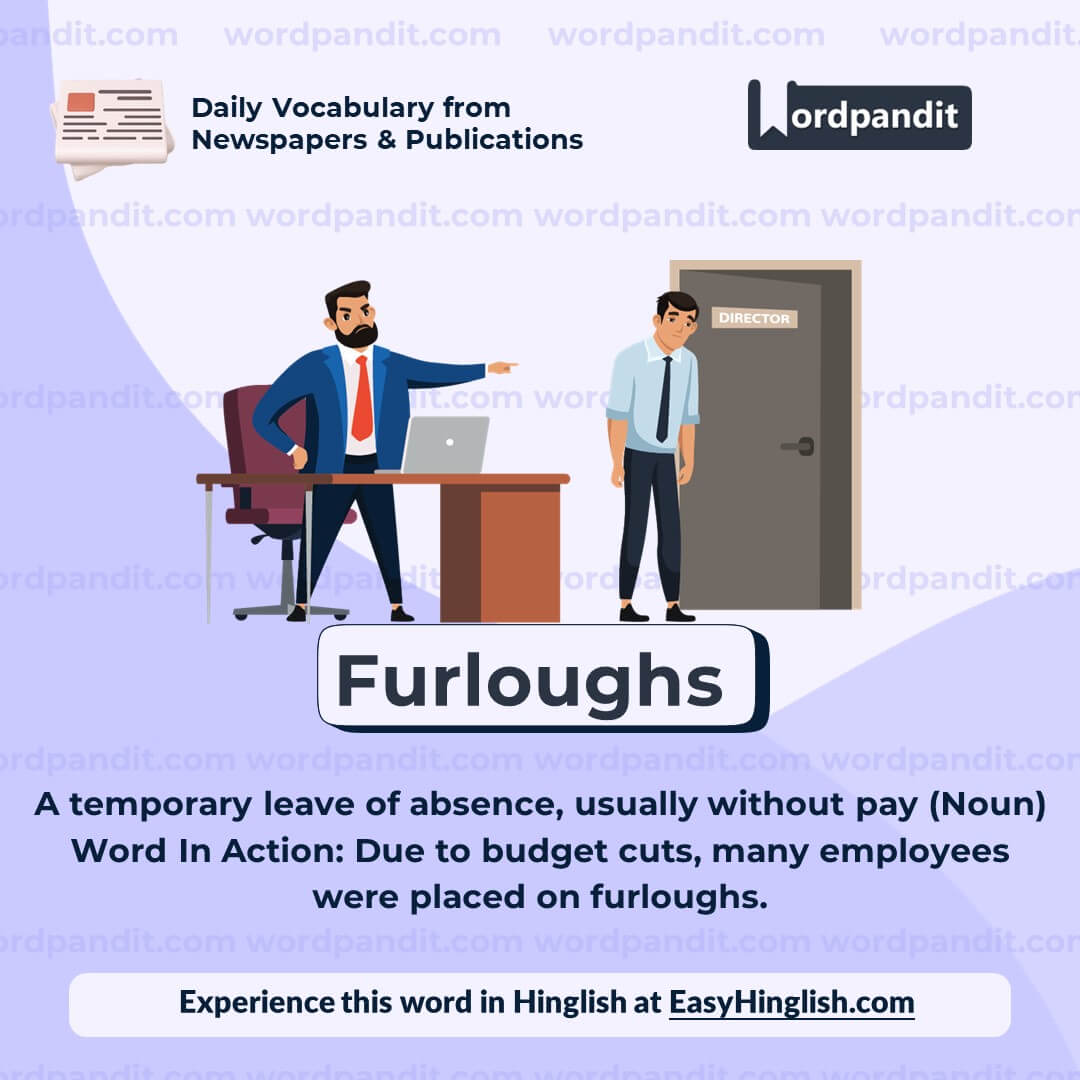
WORD-2: Furloughs
Context:
"Four days later, Peter Marocco — a returning political appointee from Trump’s first term — drafted a tougher than expected interpretation of that order, a move that shut down thousands of programs around the world and forced furloughs and layoffs." - New Indian Express
Explanatory Paragraph:
The word furloughs refers to temporary unpaid leaves of absence from work, usually imposed by employers during financial difficulties or shutdowns. Unlike layoffs, furloughs do not usually mean a permanent termination — employees may return once the situation improves. In the context given, the term highlights how decisions at the top led to widespread disruption in programs and forced employees to temporarily stop working without pay.
Meaning: Temporary leave of absence from work, typically without pay (Noun)
Pronunciation: FUR-loh
Difficulty Level: ⭐⭐⭐ Intermediate
Etymology: From Dutch verlof, meaning "permission" or "leave", which entered English via military usage in the 17th century
Prashant Sir's Notes:
Furlough is a word that came into the public spotlight during times like the COVID-19 pandemic, where many workers were not fired but temporarily relieved of their duties. Always remember: furlough ≠ fired; it's more like a "pause" in employment, often involuntary.
Synonyms & Antonyms:
Synonyms: leave, layoff, break, sabbatical (in some contexts)
Antonyms: employment, reinstatement, work resumption
Usage Examples:
- The company announced furloughs for over 2,000 employees due to budget cuts.
- Many workers were furloughed during the pandemic but returned once operations resumed.
- The furlough period was stressful, as there was no guarantee of return.
- Furloughs are often used as a short-term cost-saving measure by organizations.
Cultural Reference:
"Furlough" became a household term in 2020 during the global COVID-19 pandemic, as millions of workers across industries were temporarily sent home without pay. - Global HR Digest
Think About It:
Is a furlough truly better than a layoff, or does the uncertainty it creates make it equally damaging?
Quick Activity:
Write one sentence using the word "furlough" as a noun and one as a verb.
Memory Tip:
Think of “furlough” as “fur-low”—when work is low or slow, you're temporarily out. “Fur-low = work slow.”
Real-World Application:
Understanding furloughs is important for anyone entering the workforce or involved in HR, especially during economic downturns, crises, or restructuring periods.
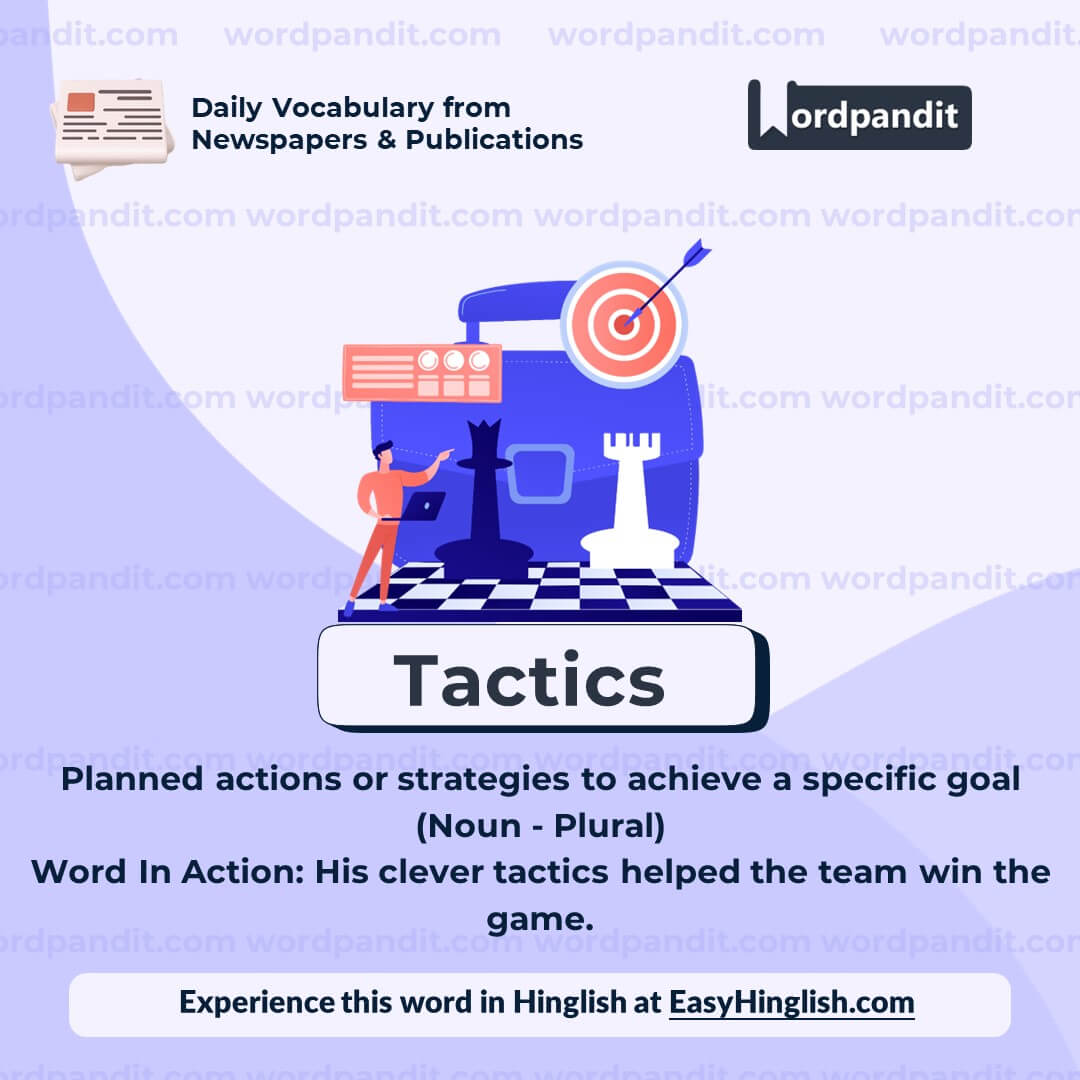
WORD-3: Tactics
Context:
"When Congress refused, the Trump administration used freezes and other tactics to cut the flow of funds already appropriated by Congress for the foreign programs." - New Indian Express
Explanatory Paragraph:
The word tactics refers to specific actions or strategies carefully planned and executed to achieve a goal, especially in situations that require maneuvering or negotiation. In the context given, it describes the deliberate methods—like budget freezes—used by the administration to limit or control the flow of money, despite opposition. Tactics are often short-term moves that support a larger goal or strategy.
Meaning: Planned actions or strategies used to achieve a specific goal, often in politics, war, or business (Noun, plural)
Pronunciation: TAK-tiks
Difficulty Level: ⭐⭐ Beginner
Etymology: From Greek taktikos, meaning "fit for arranging or maneuvering", from tassein, "to arrange"
Prashant Sir's Notes:
Think of tactics as the small steps or moves you take to win a game, complete a task, or gain an advantage. In exams, you use different tactics like attempting easy questions first. Tactics are flexible, short-term, and situational—different from long-term "strategy."
Synonyms & Antonyms:
Synonyms: maneuvers, methods, approaches, strategies, plans
Antonyms: inaction, spontaneity, disorganization
Usage Examples:
- The coach devised new tactics to outsmart the opposing team.
- Marketing tactics like limited-time offers can boost sales quickly.
- His debate tactics included emotional appeals and sharp comebacks.
- The military operation was successful due to precise tactics and coordination.
Cultural Reference:
"Sun Tzu's *The Art of War* is a classic manual of military tactics and strategy still studied in business and politics today." - Global Strategy Review
Think About It:
Can unethical tactics ever be justified if the end result benefits the majority?
Quick Activity:
List two tactics you use when preparing for an exam or completing a major project. Explain how they help you.
Memory Tip:
Think of "tactics" like "tick-tick"—small ticking moves that help you reach your goal, step by step.
Real-World Application:
The concept of tactics is crucial in fields such as sports, business, politics, and negotiation—anywhere short-term decisions affect long-term outcomes.
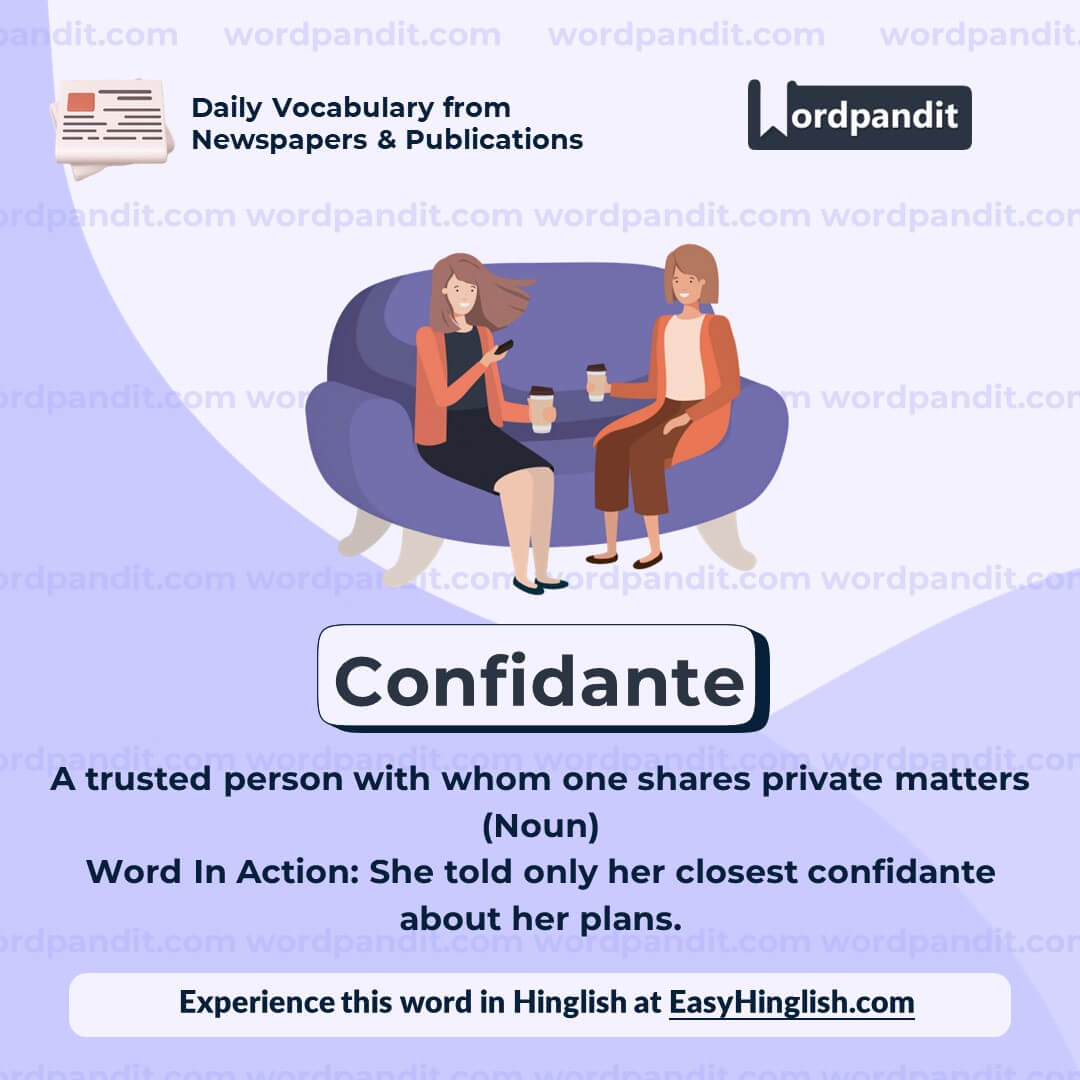
WORD-4: Confidante
Context:
"In the case of Sharma, it had emerged that he was the architect’s confidante in the tapes and paid a heavy price for the friendship." - The Wire
Explanatory Paragraph:
The word confidante refers to a trusted person with whom one shares private or sensitive matters. Typically, a confidante is someone you feel safe confiding in—whether it’s about secrets, feelings, or personal struggles. In the given context, Sharma is described as the architect's confidante, meaning he was someone the architect trusted deeply. However, that closeness ultimately came at a cost, possibly due to secrets being exposed.
Meaning: A person with whom one shares a secret or private matter, trusting them not to repeat it to others (Noun)
Pronunciation: KON-fi-dant
Difficulty Level: ⭐⭐⭐ Intermediate
Etymology: From French confidante, feminine form of confidant, from Latin confidens, meaning “trusting” or “having faith in”
Prashant Sir's Notes:
This word is about emotional trust. A confidante is not just any friend—it’s someone you rely on for emotional safety. It can be used for both men and women, though “confidant” is usually masculine and “confidante” feminine, but the forms are often used interchangeably in modern English.
Synonyms & Antonyms:
Synonyms: trusted friend, advisor, companion, counselor, intimate
Antonyms: stranger, enemy, rival, outsider
Usage Examples:
- She became his closest confidante during the most difficult phase of his life.
- A good therapist often serves as a professional confidante.
- The queen had a private confidante who knew every royal secret.
- He regretted trusting a false confidante who later betrayed him.
Cultural Reference:
In many classic novels, like Jane Austen’s Pride and Prejudice, characters often rely on a confidante to reveal their inner thoughts and advance the plot.
Think About It:
Would you rather have many friends or one true confidante? Why do we often hesitate to share our deepest thoughts, even with those we trust?
Quick Activity:
Write a short paragraph (3-4 lines) describing someone who has been a confidante in your life—or imagine one if you haven't had one.
Memory Tip:
“Confidante” contains “confide”—so think: the one I confide in = my confidante.
Real-World Application:
Understanding the role of a confidante is important in personal relationships, counseling, and leadership—where trust is the foundation of communication and growth.
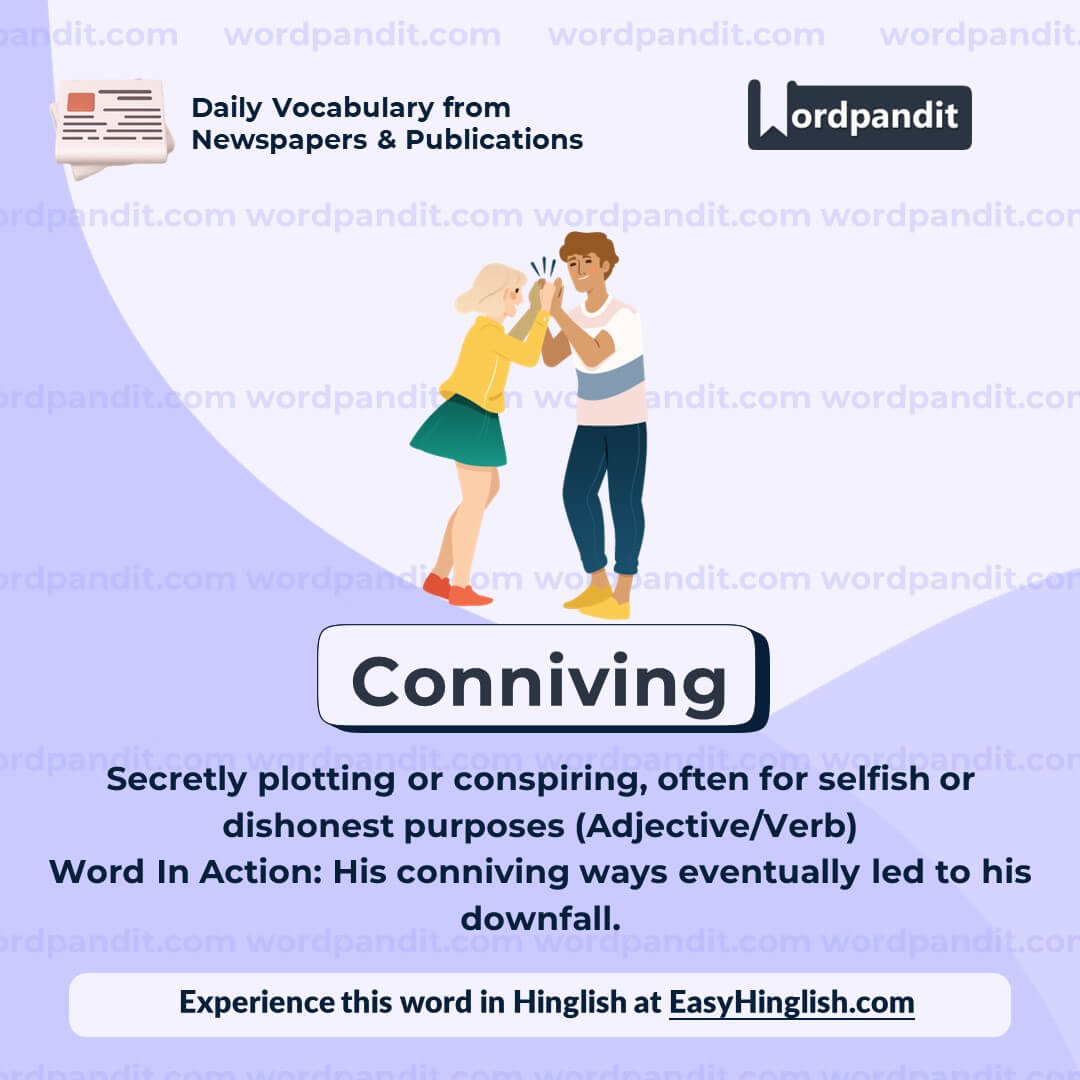
WORD-5: Conniving
Context:
"But,” he said, “the major disappointment is with the civil servants who are conniving in this with the powers that be.” - The Wire
Explanatory Paragraph:
The word conniving describes someone who is secretly cooperating in wrongdoing or scheming with others to achieve a dishonest or harmful goal. In the provided context, civil servants are accused of being complicit—actively or passively—in unethical actions taken by those in power. Conniving involves silent approval or clever plotting, often with a sense of betrayal or moral compromise.
Meaning: Secretly helping or cooperating in dishonest or harmful plans (Adjective/Verb - present participle)
Pronunciation: kuh-NAI-ving
Difficulty Level: ⭐⭐⭐ Intermediate
Etymology: From Latin conivere, meaning "to close the eyes"—implying pretending not to see wrongdoing
Prashant Sir's Notes:
Conniving people aren’t always doing the dirty work themselves—but they allow it to happen and often benefit from it. Think of the “silent partners” in corruption or people who turn a blind eye to injustice. It’s a strong word—use it carefully, especially in formal writing or speeches.
Synonyms & Antonyms:
Synonyms: scheming, colluding, plotting, conspiring, manipulative
Antonyms: honest, innocent, sincere, uninvolved
Usage Examples:
- She was accused of conniving with company executives to hide financial fraud.
- The conniving villain in the movie always stayed one step ahead of the hero.
- His conniving nature made it hard for anyone to fully trust him.
- Officials were suspected of conniving with developers to bypass zoning laws.
Cultural Reference:
In Shakespeare’s plays, characters like Iago from Othello are classic examples of conniving figures—manipulative, calculating, and dangerous.
Think About It:
Is remaining silent in the face of wrongdoing the same as conniving? Where do we draw the ethical line?
Quick Activity:
Write a short scenario (2-3 lines) where someone is conniving with others for personal gain. Use the word “conniving” naturally in the description.
Memory Tip:
“Conniving” sounds like “con + knife” — think of someone secretly holding a knife behind their back, pretending to be friendly.
Real-World Application:
The word “conniving” is useful in discussions of politics, corporate ethics, media analysis, and even fiction writing when describing secretive or shady collaborations.


