

Daily Vocabulary from Indian Newspapers and Publications
Welcome to Wordpandit’s Indian Vocabulary Hub
At Wordpandit, we understand the importance of staying rooted in the local context while expanding your language skills. This section focuses on enriching your vocabulary with words and phrases drawn from India’s leading newspapers and publications, ensuring you're learning vocabulary that is practical, relevant, and uniquely Indian.
Why Indian Sources Matter
We believe that the best way to master any language is by immersing yourself in local content. That’s why we carefully curate vocabulary from top Indian publications, including:
- The Hindu
- The Times of India
- The Economic Times
- Hindustan Times
- Live Mint
- The Indian Express
- And many others...
Stay Updated, Stay Relevant
With daily updates from Indian news sources, you’ll be consistently learning words that reflect the trends and shifts in Indian society and culture. Our focus is to provide vocabulary that enhances your understanding of the language in an Indian context.
How Wordpandit Supports Your Goals
Whether you’re preparing for exams, aiming to improve your professional communication, or simply want to stay connected with the latest Indian vocabulary, Wordpandit is here to guide you every step of the way.
Learn with a Practical Approach
Our interactive learning methodology includes real-world examples, engaging activities, and context-specific usage to ensure that every word becomes part of your active vocabulary.
Dive into Indian Vocabulary Today!
Why Choose Wordpandit?
Practical Learning: Focus on words you'll actually encounter in real-world reading, enhancing your comprehension and communication skills.
Diverse Content: From current affairs to scientific breakthroughs, our varied sources expose you to vocabulary across multiple domains.
Effortless Integration: Make Wordpandit a part of your daily routine. Just a few minutes each day can significantly boost your lexicon over time.
Your Path to Vocabulary Mastery
- Visit our Daily Vocabulary section regularly
- Explore new words and their usage in context
- Practice incorporating these words into your own writing and speech
- Track your progress as your vocabulary expands
Start Your Journey Today
Embark on your vocabulary enhancement journey with Wordpandit. By consistently engaging with our daily posts, you'll build a robust vocabulary that serves you well in academic, professional, and personal contexts.
Remember, a word a day keeps linguistic limitations at bay. Make Wordpandit your daily companion in the quest for vocabulary excellence!
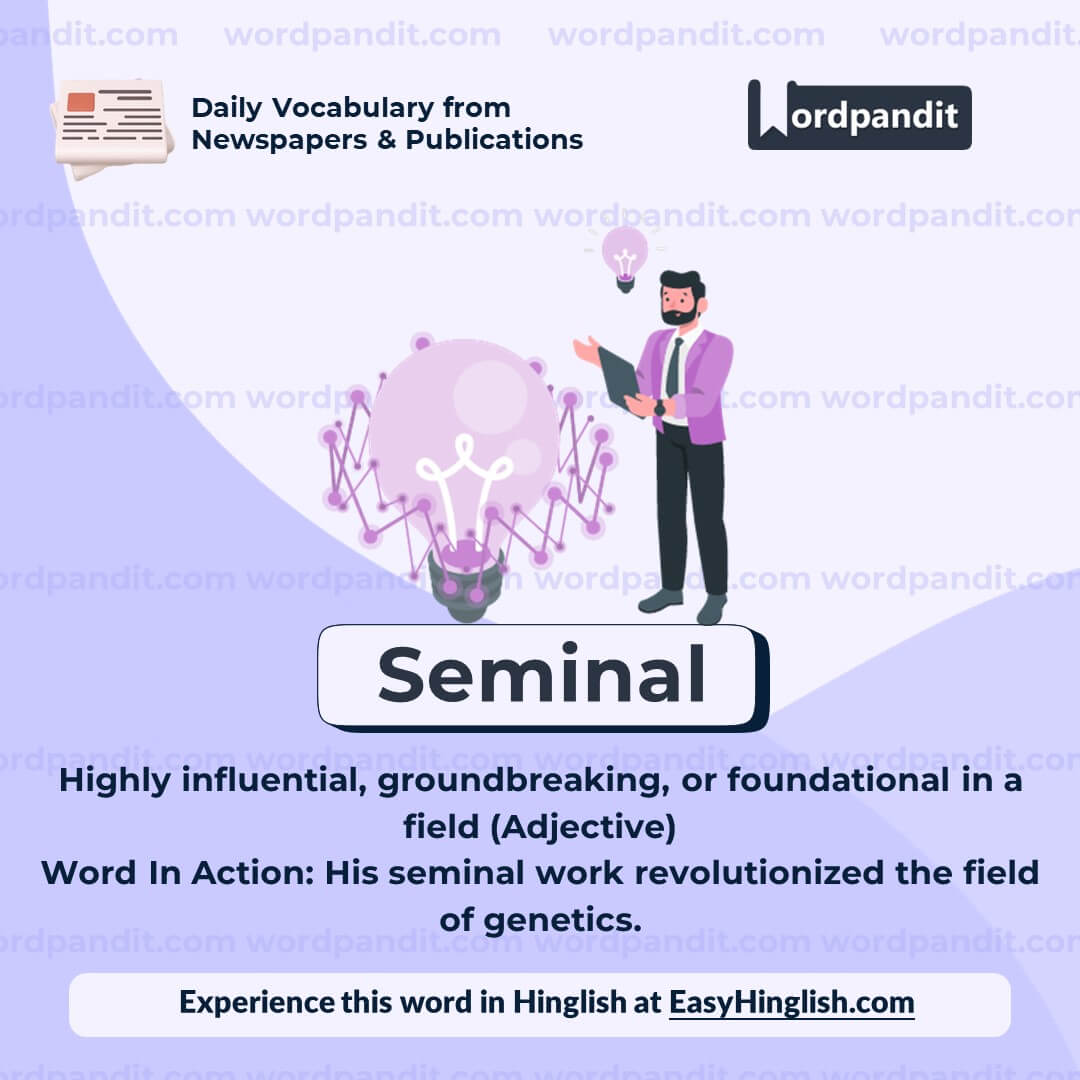
WORD-1: Seminal
Context:
"Conferred the Padma Shri, his legacy includes his seminal translation of a 17th century Latin classic into English and subsequently Malayalam, besides mentoring multiple generations of students." - The Indian Express
Explanatory Paragraph:
The word "seminal" is used to describe something that is original, highly influential, and foundational in nature. It refers to a work, idea, or event that strongly influences later developments or thinking in a particular field. In the context above, the translation mentioned is termed "seminal" because it played a crucial role in shaping future scholarship and literary efforts in multiple languages.
Meaning: Highly original and influential; forming the basis for future development (Adjective)
Pronunciation: SEM-uh-nuhl
Difficulty Level: ⭐⭐⭐ Intermediate
Etymology: Derived from Latin *semin-, semen* meaning "seed", indicating the beginning or origin of something impactful.
Prashant Sir's Notes:
Think of "seminal" as planting the seed of an idea — something that may not be widely recognized immediately, but its impact grows over time. Often used in academic, artistic, and scientific discussions to acknowledge pioneering work.
Synonyms & Antonyms:
Synonyms: Influential, groundbreaking, pioneering, formative, foundational
Antonyms: Uninspiring, derivative, inconsequential, unoriginal
Usage Examples:
- Her seminal research on climate change has shaped environmental policy worldwide.
- The director's seminal film redefined independent cinema in the 1990s.
- Einstein’s theory of relativity is considered a seminal contribution to modern physics.
- The book was a seminal text in feminist theory, laying the groundwork for future discourse.
Cultural Reference:
"The Beatles’ album 'Sgt. Pepper’s Lonely Hearts Club Band' is widely considered a seminal work in the history of modern music." - Music Historians' Review
Think About It:
Can you think of a book, film, or idea that was once overlooked but later recognized as seminal? What made it influential in hindsight?
Quick Activity:
List three works (books, movies, songs, or scientific theories) you consider seminal. Briefly explain how each has influenced its field or your personal perspective.
Memory Tip:
Think of "seminal" as something that "seeds" future thought — *S* for seed, *S* for seminal. It starts something big!
Real-World Application:
The term "seminal" is commonly used in academic writing, film criticism, art reviews, and historical analysis to credit early work that significantly influenced subsequent developments.
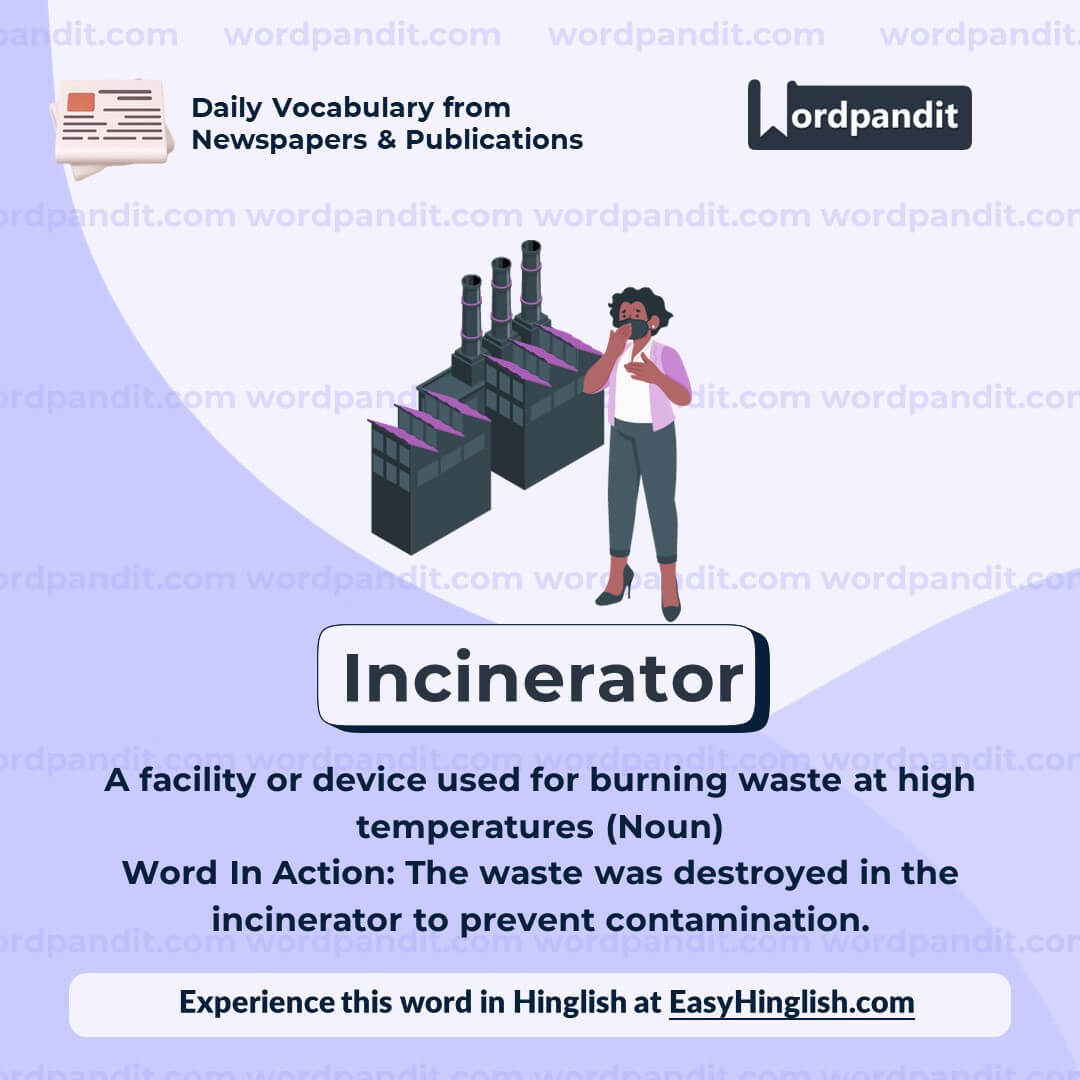
WORD-2: Incinerator
Context:
"On Wednesday, around 337 tonnes of toxic waste was taken from the Union Carbide plant to an incinerator facility around 230km (143 miles) away after a court last month set a four-week deadline for it to be disposed of." - The Wire
Explanatory Paragraph:
An "incinerator" is a specialized facility or device used to burn waste materials at high temperatures until they are reduced to ash, gas, or heat. It is often used for disposing of hazardous or medical waste that cannot be dumped in landfills. In the context above, an incinerator was used to safely dispose of toxic waste from a chemical plant, underlining its importance in environmental safety and legal compliance.
Meaning: A machine or facility for burning waste materials at high temperatures until they are completely destroyed (Noun)
Pronunciation: in-SIN-uh-ray-tur
Difficulty Level: ⭐⭐ Basic
Etymology: From Latin *incinerare*, meaning "to reduce to ashes" (*in-* = into + *cinis* = ashes)
Prashant Sir's Notes:
Think of an incinerator as a high-powered furnace specifically designed to destroy waste, especially toxic or dangerous substances. It’s a critical part of modern waste management, especially for hazardous materials.
Synonyms & Antonyms:
Synonyms: Furnace, cremator, burner, waste-disposal unit
Antonyms: Landfill, compost pit, recycler
Usage Examples:
- The hospital uses a high-temperature incinerator to dispose of biohazardous materials.
- Old documents were destroyed in the office incinerator to maintain confidentiality.
- Many cities rely on incinerators to manage growing amounts of non-recyclable waste.
- Environmentalists debate the pros and cons of using incinerators due to air pollution concerns.
Cultural Reference:
"In many dystopian films, incinerators are symbolic of totalitarian control, used to erase evidence or history — as seen in movies like *Fahrenheit 451*." - Pop Culture Analysis Journal
Think About It:
Are incinerators a sustainable solution to waste management, or do they simply shift the problem from land to air?
Quick Activity:
Make a list of items that should be incinerated rather than recycled or buried. Explain why incineration is the best option for each.
Memory Tip:
Remember “cin” in “incinerator” sounds like “sin” — think: “It’s a sin to pollute, so burn the waste cleanly in an incinerator.”
Real-World Application:
Incinerators are widely used in hospitals, chemical plants, and municipal waste facilities to safely dispose of hazardous and non-recyclable waste, reducing volume and preventing contamination.
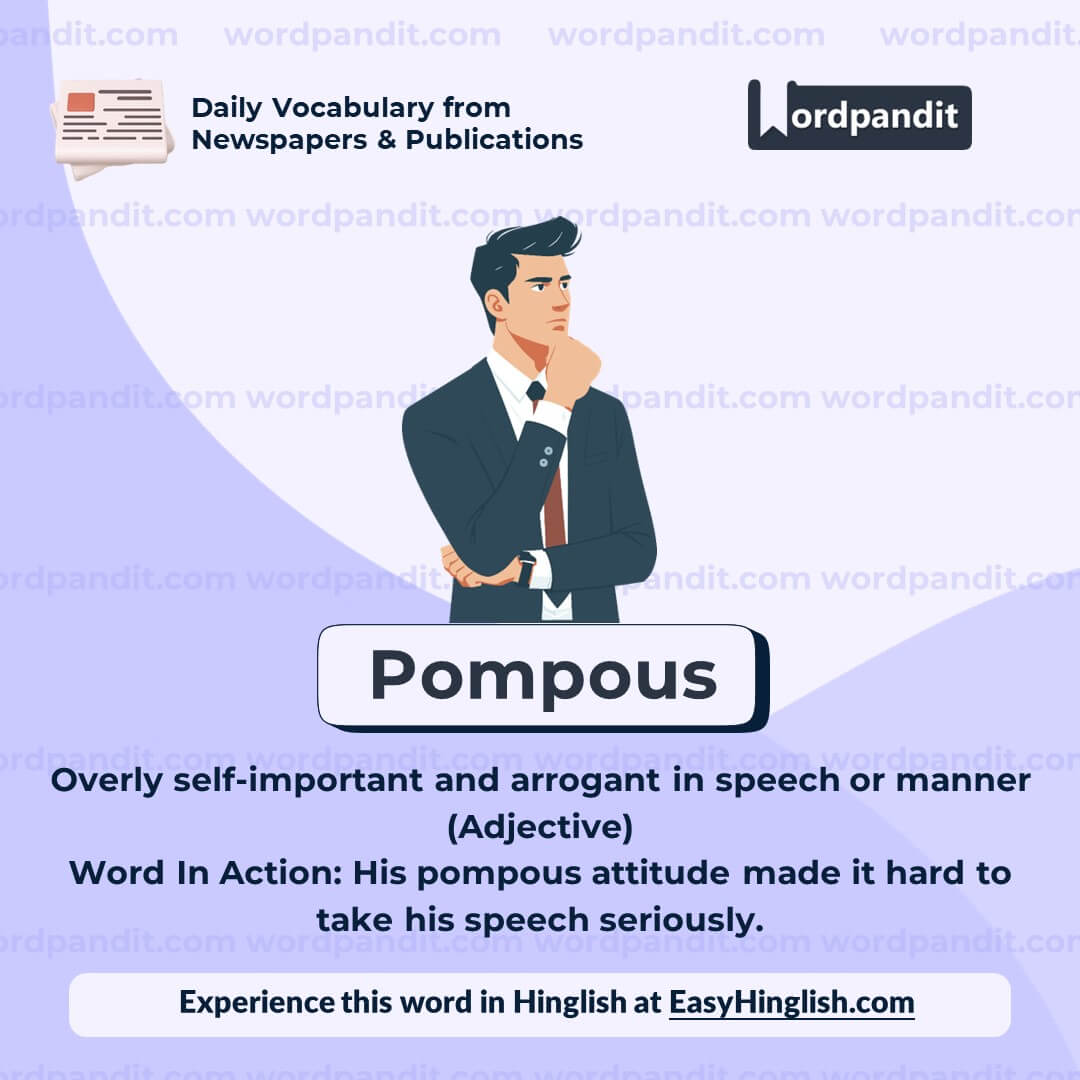
WORD-3: Pompous
Context:
"The purpose of political cartoons is to prick pomposity and cut those who rule over us – or aspire to – down to size. India, the US and the UK all have rich traditions of cartooning and caricatures." - The Wire
Explanatory Paragraph:
The word "pompous" refers to someone who behaves in a self-important, arrogant, or pretentious way, often displaying exaggerated dignity or seriousness. Political cartoons often target such attitudes to reveal the gap between image and reality. In the context above, cartoons "prick pomposity" by mocking inflated egos, reminding leaders (and aspirants) that they’re not above criticism or satire.
Meaning: Arrogantly grand, self-important, or pretentious (Adjective)
Pronunciation: POM-puhs
Difficulty Level: ⭐⭐ Basic
Etymology: From Old French *pompeux*, from Latin *pomposus*, meaning "stately or splendid", from *pompa* (procession or pomp)
Prashant Sir's Notes:
Think of someone who walks into a room as if they own the world — talking down to others, using big words unnecessarily, and acting like they’re always right. That’s classic "pompous" behavior. Political satire thrives on deflating such attitudes.
Synonyms & Antonyms:
Synonyms: Arrogant, self-important, pretentious, haughty, grandiose
Antonyms: Humble, modest, unassuming, down-to-earth
Usage Examples:
- He gave a pompous speech full of complicated words and little real meaning.
- Despite his fame, the actor was never pompous and treated everyone with respect.
- Her pompous attitude made it difficult for colleagues to work with her.
- The professor’s pompous tone discouraged students from asking questions.
Cultural Reference:
"David Brent, the character from the UK version of *The Office*, is a satirical example of a pompous boss — always trying to appear wise and cool, yet constantly exposing his own flaws." - British TV Commentary
Think About It:
Why do you think society is often drawn to mocking pompous individuals through satire, especially in art and media?
Quick Activity:
Write two short dialogues: one showing a pompous speaker and one showing a humble one. Compare how the tone affects the listener’s response.
Memory Tip:
Think: “Pompous people puff themselves up.” The 'pom' in "pompous" sounds like a balloon inflating — full of hot air!
Real-World Application:
"Pompous" is often used to critique leaders, officials, or public figures who come across as overly self-important. Recognizing such traits can help us evaluate authenticity and humility in communication.
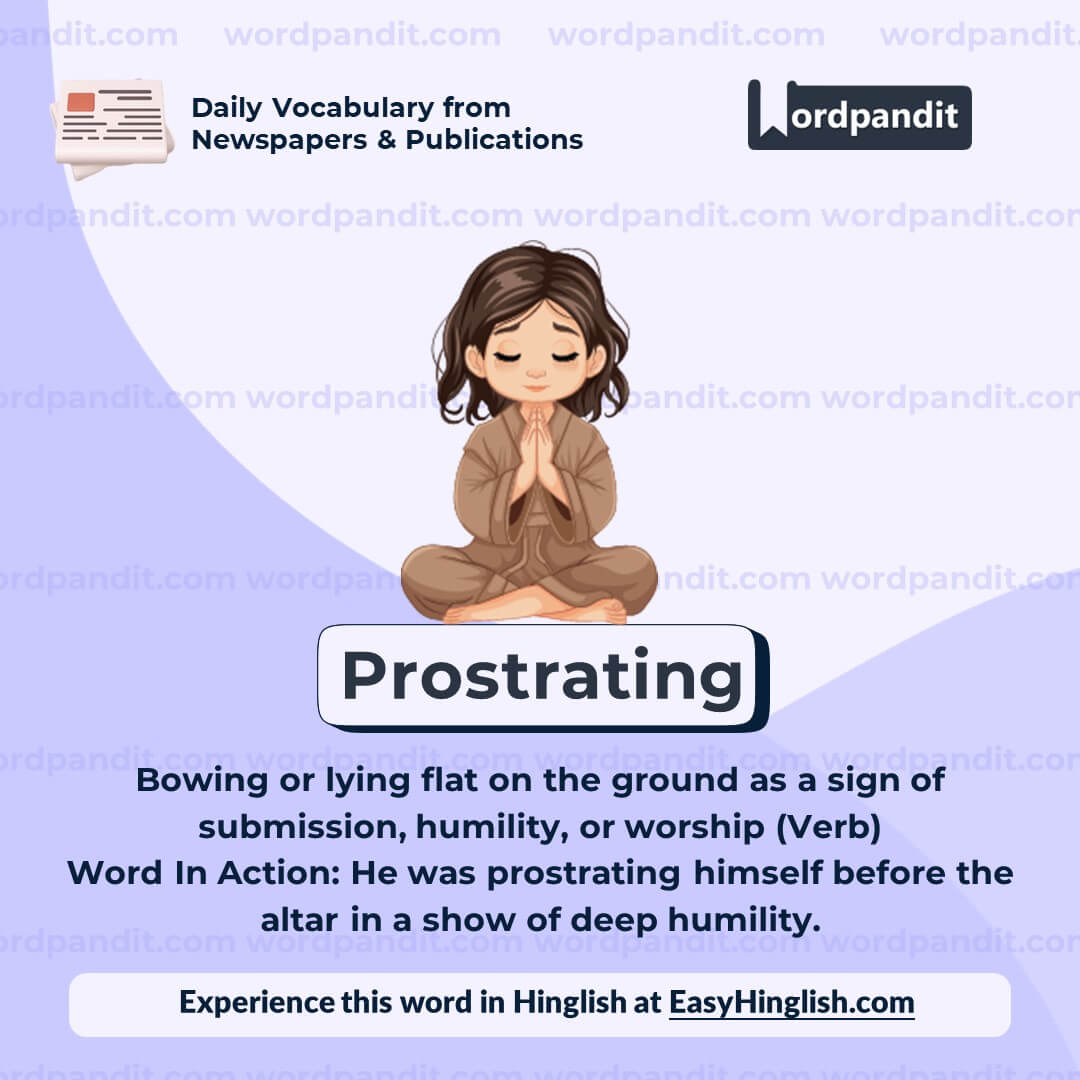
WORD-4: Prostrating
Context:
"And Mickey Mouse, the corporate mascot of Disney (which now controls ABC and other TV networks), is depicted prostrating himself at the feet of the new leader." - The Wire
Explanatory Paragraph:
The word "prostrating" refers to the act of lying face down on the ground in submission, worship, or total surrender. It can be literal — physically bowing down — or metaphorical, implying excessive obedience, humility, or subservience. In the context above, Mickey Mouse is shown metaphorically prostrating himself before the new leader, symbolizing blind obedience or the surrender of independent voice to power.
Meaning: Lying flat in submission or worship; acting in complete subservience (Verb – present participle)
Pronunciation: PRAWS-tray-ting
Difficulty Level: ⭐⭐⭐ Intermediate
Etymology: From Latin *prostratus*, past participle of *prosternere*, meaning “to throw down” or “lay flat.”
Prashant Sir's Notes:
"Prostrating" is often used to describe deep reverence or submission — whether in a religious, political, or symbolic context. If someone is 'prostrating themselves,' it often implies an act of surrender, sometimes even at the cost of dignity or independence.
Synonyms & Antonyms:
Synonyms: Bowing, submitting, surrendering, groveling, kowtowing
Antonyms: Resisting, standing tall, defying, asserting
Usage Examples:
- The soldiers were seen prostrating before the sacred monument in respect.
- He kept prostrating himself in front of his superiors to win their favor.
- The devotee was prostrating during the temple ritual, overwhelmed by emotion.
- Instead of questioning authority, the media was accused of prostrating before political power.
Cultural Reference:
"In traditional Islamic prayer, worshippers prostrate themselves in sujood, touching their foreheads to the ground — a powerful expression of submission and devotion." - Religious Practices Journal
Think About It:
When does humility cross the line into unhealthy submission? Is there a cost to constantly 'prostrating' oneself before authority?
Quick Activity:
Write two short sentences: one where "prostrating" is used literally (e.g., in a religious context), and one where it is used metaphorically (e.g., in a corporate or political scenario).
Memory Tip:
Think “prostrating = pressing yourself to the ground” — both start with “pro” and involve lowering yourself completely.
Real-World Application:
"Prostrating" is used in religious contexts to express reverence, but it also appears in political and media commentary to criticize unquestioning obedience or submission to power.
WORD-5: Caricatures
Context:
"The purpose of political cartoons is to prick pomposity and cut those who rule over us – or aspire to – down to size. India, the US and the UK all have rich traditions of cartooning and caricatures." - The Wire
Explanatory Paragraph:
“Caricatures” are exaggerated representations of people, typically used in art and satire. They highlight certain features—like a large nose, big ears, or an inflated ego—to make a point, often humorously or critically. In political cartoons, caricatures serve to poke fun at authority, deflate self-importance, and offer sharp visual commentary. They may not be realistic, but they are often more truthful than a photograph in what they reveal about character or behavior.
Meaning: Exaggerated depictions of people or things, often for comic or critical effect (Noun – plural)
Pronunciation: KAIR-ih-kuh-churz
Difficulty Level: ⭐⭐ Basic
Etymology: From Italian *caricatura*, from *caricare* meaning “to load or exaggerate” — literally, to overload with features
Prashant Sir's Notes:
Caricatures aren’t just about big noses or wild hair — they’re a powerful artistic tool to expose truth through exaggeration. Political and social caricatures help people see the flaws or absurdities in power structures or public personalities.
Synonyms & Antonyms:
Synonyms: Satire, parody, cartoon, lampoon, mockery
Antonyms: Realism, portrait, accurate depiction
Usage Examples:
- The artist's caricatures of politicians were both hilarious and biting.
- Street caricatures often exaggerate tourists' smiles and sunglasses for fun.
- The film reduced the character to a caricature of a villain, lacking depth.
- Caricatures are an important part of free speech in democratic societies.
Cultural Reference:
"Renowned British artist James Gillray is considered the father of political caricature, known for his bold illustrations mocking 18th-century rulers and society." - British Museum Archives
Think About It:
Why do exaggerated images sometimes feel more truthful than realistic ones? Can caricatures change public perception of a leader or celebrity?
Quick Activity:
Choose a well-known public figure and describe how you would draw their caricature — what features would you exaggerate, and why?
Memory Tip:
Think “caricature = carry a feature too far.” When an artist ‘carries’ a facial feature to the extreme, you get a caricature!
Real-World Application:
Caricatures are widely used in newspapers, magazines, TV shows, and social media to provide satire, critique public figures, and engage audiences visually in political and social commentary.


