

Daily Vocabulary from Indian Newspapers and Publications
Welcome to Wordpandit’s Indian Vocabulary Hub
At Wordpandit, we understand the importance of staying rooted in the local context while expanding your language skills. This section focuses on enriching your vocabulary with words and phrases drawn from India’s leading newspapers and publications, ensuring you're learning vocabulary that is practical, relevant, and uniquely Indian.
Why Indian Sources Matter
We believe that the best way to master any language is by immersing yourself in local content. That’s why we carefully curate vocabulary from top Indian publications, including:
- The Hindu
- The Times of India
- The Economic Times
- Hindustan Times
- Live Mint
- The Indian Express
- And many others...
Stay Updated, Stay Relevant
With daily updates from Indian news sources, you’ll be consistently learning words that reflect the trends and shifts in Indian society and culture. Our focus is to provide vocabulary that enhances your understanding of the language in an Indian context.
How Wordpandit Supports Your Goals
Whether you’re preparing for exams, aiming to improve your professional communication, or simply want to stay connected with the latest Indian vocabulary, Wordpandit is here to guide you every step of the way.
Learn with a Practical Approach
Our interactive learning methodology includes real-world examples, engaging activities, and context-specific usage to ensure that every word becomes part of your active vocabulary.
Dive into Indian Vocabulary Today!
Why Choose Wordpandit?
Practical Learning: Focus on words you'll actually encounter in real-world reading, enhancing your comprehension and communication skills.
Diverse Content: From current affairs to scientific breakthroughs, our varied sources expose you to vocabulary across multiple domains.
Effortless Integration: Make Wordpandit a part of your daily routine. Just a few minutes each day can significantly boost your lexicon over time.
Your Path to Vocabulary Mastery
- Visit our Daily Vocabulary section regularly
- Explore new words and their usage in context
- Practice incorporating these words into your own writing and speech
- Track your progress as your vocabulary expands
Start Your Journey Today
Embark on your vocabulary enhancement journey with Wordpandit. By consistently engaging with our daily posts, you'll build a robust vocabulary that serves you well in academic, professional, and personal contexts.
Remember, a word a day keeps linguistic limitations at bay. Make Wordpandit your daily companion in the quest for vocabulary excellence!
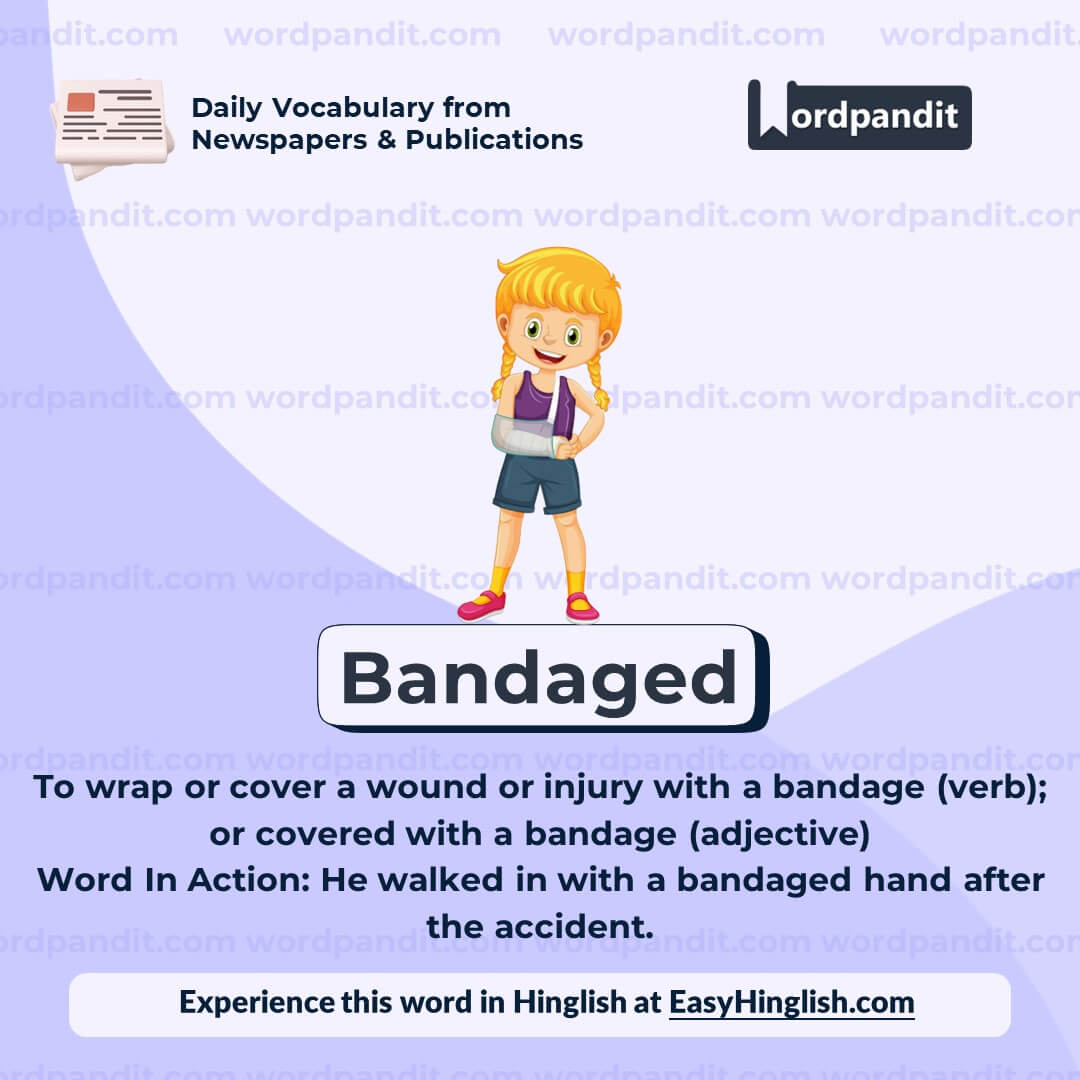
WORD-1: Bandaged
Context:
"The injured hiker was quickly bandaged by the rescue team before being airlifted to the hospital." - National Geographic
Explanatory Paragraph:
"Bandaged" refers to the action or result of covering a wound or injury with a strip of material, typically to protect it or stop bleeding. It's commonly used in medical and first aid scenarios. When someone is "bandaged," it implies care has been given to a physical injury, whether minor or serious. The word can also be used metaphorically in some contexts to describe emotional healing or concealment.
Meaning: Covered or wrapped with a bandage (verb – past tense of "bandage"; also used as adjective)
Pronunciation: BAN-dijd
Difficulty Level: ⭐ Beginner
Etymology: From the French word "bandage", derived from "bander" meaning "to bind", from Old French "bande" meaning "strip" or "band".
Prashant Sir's Notes:
Think of this word whenever you see a wounded person or a first-aid scene. It instantly conveys healing, protection, and care. It’s both a practical and symbolic term—great to understand for both literal and metaphorical use.
Synonyms & Antonyms:
Synonyms: wrapped, dressed, covered, bound
Antonyms: exposed, uncovered, untreated
Usage Examples:
- The nurse gently bandaged the child’s scraped knee.
- He arrived at school with a bandaged hand after a minor accident in the kitchen.
- Despite her bandaged foot, she insisted on finishing the walk.
- The emotional wounds he carried were never truly bandaged.
Cultural Reference:
"Even the mightiest warriors come home bandaged and bruised — it's part of the fight." - Anonymous quote often used in motivational content.
Think About It:
Can emotional pain be “bandaged” the same way as physical wounds? How might this metaphor affect how we talk about healing?
Quick Activity:
Write a short paragraph where someone uses "bandaged" both literally and metaphorically in the same story.
Memory Tip:
Think of a BAND-AID — it BANDs together a wound. "Bandaged" = BAND + AGED (past) — a wound that has been wrapped.
Real-World Application:
“Bandaged” is often heard in emergency services, hospitals, sports injuries, and even emotional healing narratives. Knowing this word helps you understand both health-related conversations and deeper figurative expressions in literature or film.
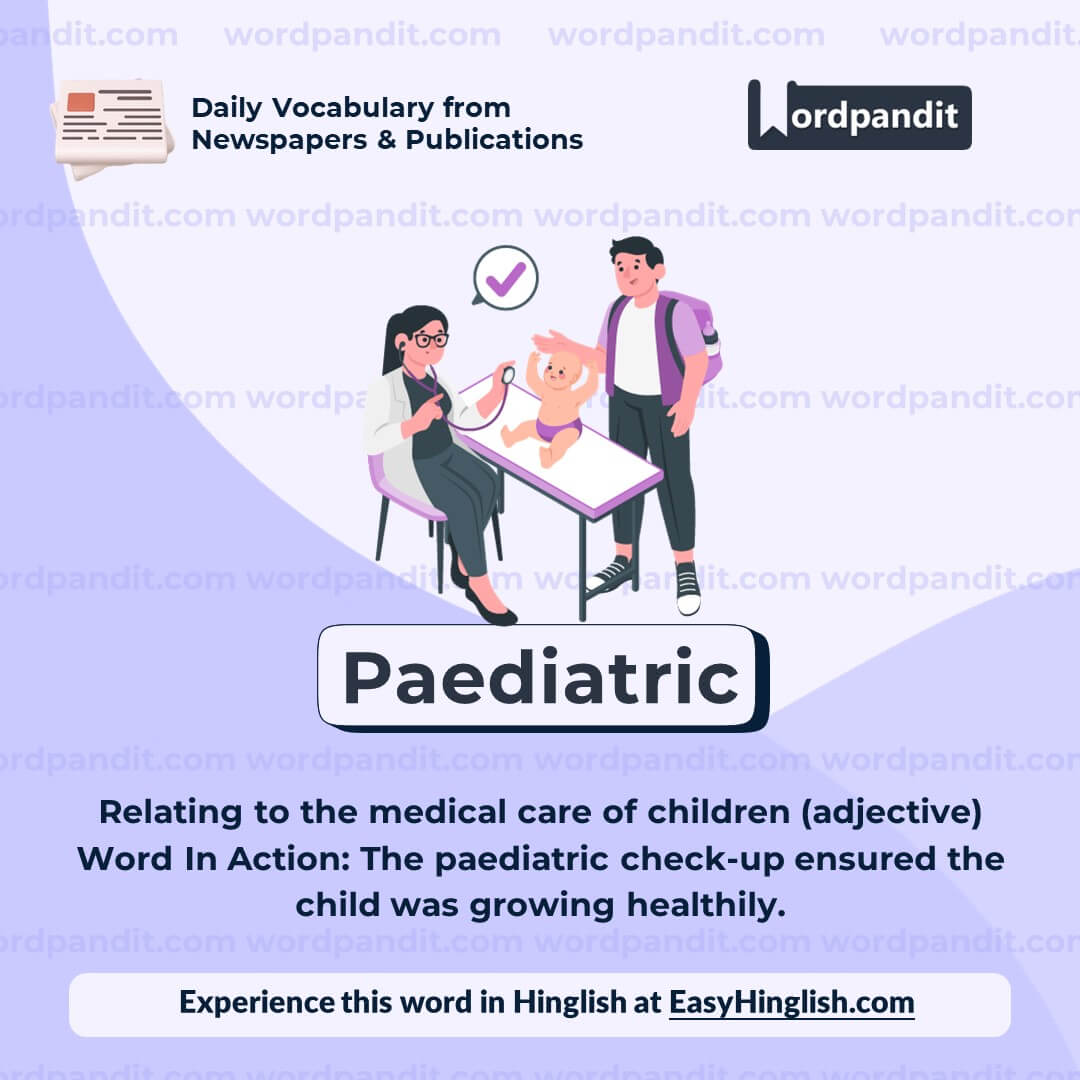
WORD-2: Paediatric
Context:
"The hospital recently opened a new paediatric wing to provide specialized care for children with chronic illnesses." - BBC Health
Explanatory Paragraph:
"Paediatric" refers to anything related to the medical care and treatment of infants, children, and adolescents. It’s the British spelling of the more commonly seen American variant “pediatric.” A paediatrician is a doctor who specializes in treating children. The term is often used in hospital departments, health services, and research that specifically addresses child health and development.
Meaning: Relating to the medical care of children (Adjective)
Pronunciation: pee-dee-AT-rik
Difficulty Level: ⭐⭐ Intermediate
Etymology: From Greek "pais" meaning "child" + "iatros" meaning "doctor"; the spelling "paediatric" is used in British English, while "pediatric" is the American variant.
Prashant Sir's Notes:
Always remember that “paediatric” is the British English spelling. If you're reading UK-based content or preparing for exams like IELTS, use this form. It’s a word that opens up discussions on child development, health systems, and specialized medicine.
Synonyms & Antonyms:
Synonyms: child-related, child-health, juvenile-medical
Antonyms: geriatric, adult-care, general medicine
Usage Examples:
- The paediatric clinic operates seven days a week to accommodate working parents.
- She completed her residency in paediatric medicine last year.
- The vaccine has been approved for paediatric use in children aged five and above.
- He aspires to become a paediatrician and serve in rural communities.
Cultural Reference:
"In paediatrics, you treat not just the child, but the whole family." - Dr. Benjamin Spock, famed American paediatrician and author.
Think About It:
Why do you think medicine for children is considered so different from adult medicine that it needs a whole separate field like paediatrics?
Quick Activity:
Make a two-column list comparing the differences between “paediatric” care and “geriatric” care. Use specific examples.
Memory Tip:
Break it down: "Pae" (child) + "diatric" (doctor). Think of “paediatrics” as the doctor’s care lane *just* for kids.
Real-World Application:
“Paediatric” is essential vocabulary in healthcare settings, medical studies, and public health discussions. Whether you're studying medicine, reading about child health, or interpreting clinical documents, this term will appear frequently—especially in the UK, Australia, and other Commonwealth countries.
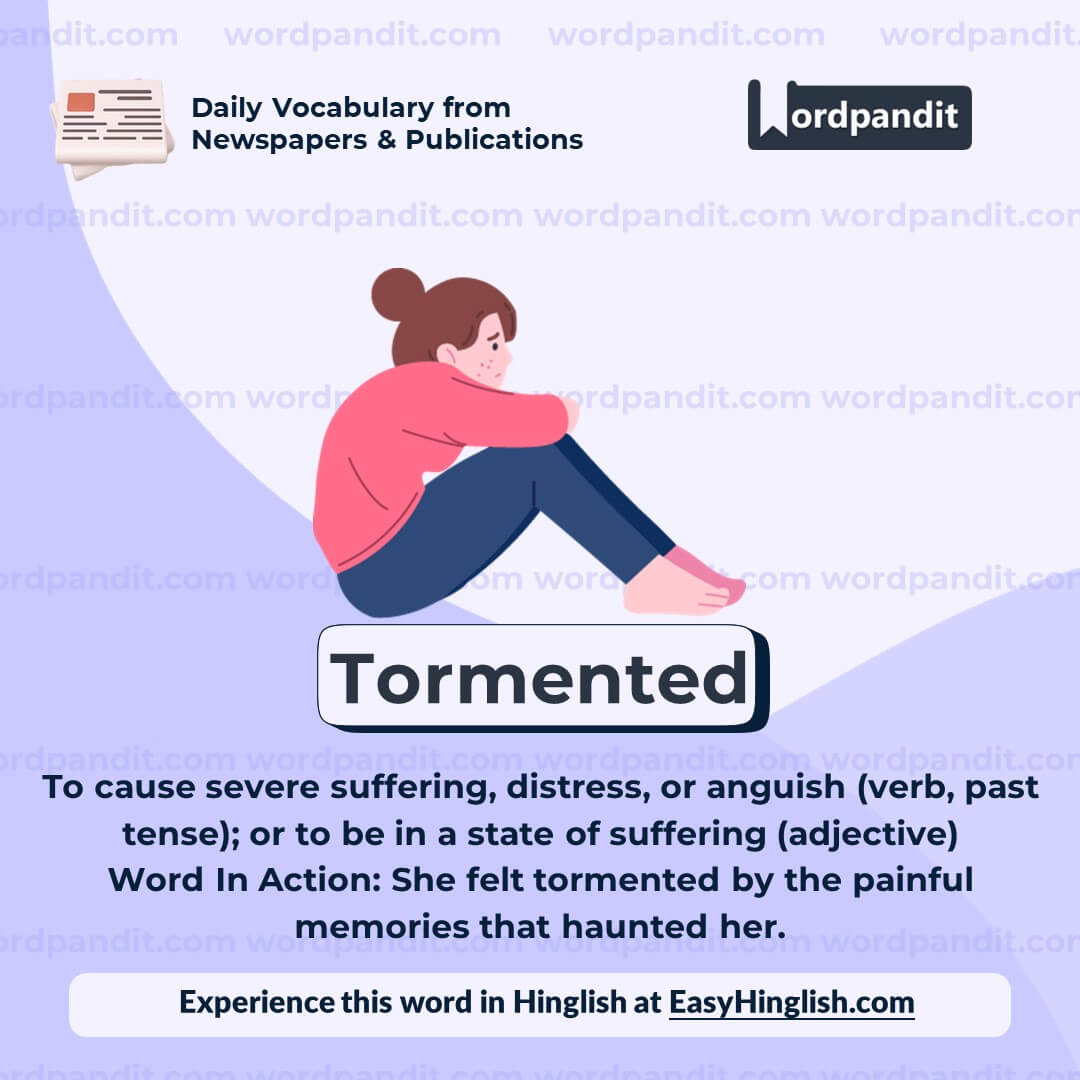
WORD-3: Tormented
Context:
"Even after years had passed, he remained tormented by memories of the war." – The Guardian
Explanatory Paragraph:
"Tormented" describes a state of great mental or physical suffering. It often refers to someone being deeply troubled by pain, guilt, fear, or anguish. The word can be used for emotional struggles, such as regrets or traumatic experiences, and also for physical pain or torture. It carries a heavy, emotional tone and evokes sympathy for the person suffering.
Meaning: Experiencing intense suffering or anguish, especially over a period of time (Adjective or Verb – past tense of "torment")
Pronunciation: TOR-men-tid
Difficulty Level: ⭐⭐⭐ Intermediate
Etymology: From Latin "tormentum" meaning "twisting, torture device", from "torquere" meaning "to twist". Entered English in the 14th century via Old French.
Prashant Sir's Notes:
This is a powerful word—loaded with emotion. Use “tormented” to describe characters or people weighed down by inner demons, trauma, or persistent pain. It’s commonly found in literature, war stories, and psychological narratives.
Synonyms & Antonyms:
Synonyms: tortured, agonized, haunted, distressed, plagued
Antonyms: comforted, soothed, peaceful, relieved, calm
Usage Examples:
- She was tormented by the thought that she had let her friend down.
- The ghost of his past mistakes tormented him every night.
- Tormented souls are a common theme in gothic literature.
- He looked tormented, his eyes revealing years of hidden suffering.
Cultural Reference:
"I am a deeply tormented man... and I have paid a high price for my music." – Ludwig van Beethoven (attributed). His struggles with deafness and isolation often made him a symbol of inner torment in classical music history.
Think About It:
Can being "tormented" sometimes lead to creative or personal breakthroughs? Why do so many artists and thinkers seem to struggle internally?
Quick Activity:
Write a 3-line diary entry from the perspective of someone feeling tormented. Focus on emotion rather than events.
Memory Tip:
Think of “torment” as a mental “tornado” – both are intense, swirling forces that disturb peace. "Tormented" = caught in a storm of pain.
Real-World Application:
“Tormented” is commonly used in literature, psychology, films, and even news reporting—especially when discussing trauma, grief, or emotional hardship. Understanding this word helps you grasp deeper emotional contexts in stories and real-life situations.
WORD-4: Defied
Context:
"She defied all odds to become the first woman in her village to attend university." – The Times of India
Explanatory Paragraph:
"Defied" means to openly resist or challenge something, especially authority, expectations, or norms. When someone defies a rule, a person, or even a situation, they are standing firm in opposition, usually with courage. It often suggests boldness, resilience, and determination. The word is frequently used in contexts of rebellion, innovation, or personal triumph.
Meaning: Resisted or challenged boldly; refused to obey (Verb – past tense of "defy")
Pronunciation: dih-FYED
Difficulty Level: ⭐⭐ Intermediate
Etymology: From Middle English "defien", from Old French "desfier", meaning "to challenge", from Latin "dis-" (away) + "fidus" (faithful).
Prashant Sir's Notes:
“Defied” is a strong, action-driven word. It’s about standing your ground even when it’s risky or unpopular. Use it to describe rebels, rule-breakers, innovators—or anyone who shows courage in the face of resistance.
Synonyms & Antonyms:
Synonyms: resisted, opposed, challenged, rebelled, confronted
Antonyms: obeyed, complied, yielded, followed, submitted
Usage Examples:
- The protesters defied the curfew and continued their march peacefully.
- He defied his critics by launching a successful business from scratch.
- The artwork defied conventional norms of beauty and symmetry.
- Despite the storm warning, the sailors defied the sea and set sail.
Cultural Reference:
"Rosa Parks defied segregation laws by refusing to give up her seat, sparking a movement that changed history." – U.S. Civil Rights Archives
Think About It:
Is defiance always a sign of bravery, or can it sometimes be reckless? What determines whether it's courageous or foolish?
Quick Activity:
Write a sentence using “defied” where the subject is not a person but an object (e.g., “The bridge defied gravity...”).
Memory Tip:
“Defied” sounds like “deny + fight”—think of someone denying control and fighting back against it.
Real-World Application:
“Defied” is a word often used in journalism, motivational stories, history, and literature to highlight courage and challenge. It’s especially useful when discussing social change, innovation, or any act of standing up against opposition.
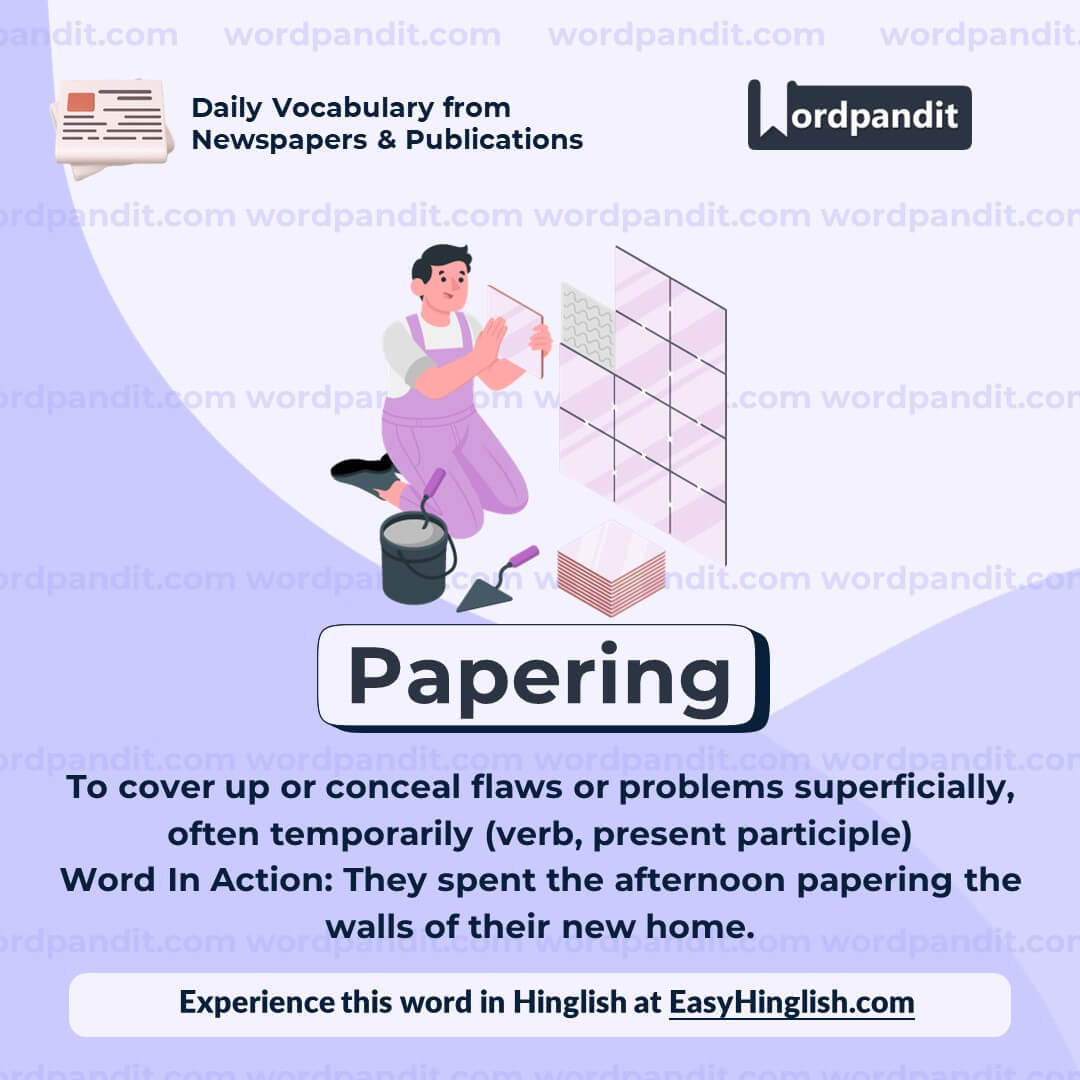
WORD-5: Papering
Context:
"The government is accused of merely papering over the real economic issues with short-term relief measures." – The Economist
Explanatory Paragraph:
"Papering" usually refers to covering something with paper, such as wallpapering a wall. However, in figurative usage—like in politics or media—it often means to cover up or hide problems instead of solving them. When someone is "papering over" an issue, they are superficially concealing it rather than addressing the root cause. It's a subtle but powerful word that hints at avoidance or temporary fixes.
Meaning: Covering or concealing something, often superficially (Verb – present participle of "paper")
Pronunciation: PAY-per-ing
Difficulty Level: ⭐⭐ Intermediate
Etymology: From Old French "papier" and Latin "papyrus", originally meaning writing material. Its figurative sense of "papering over a problem" developed in the 20th century.
Prashant Sir's Notes:
Pay attention to context! “Papering” can be literal (as in decorating a wall) or metaphorical (as in hiding issues). In exams or reading comprehension, the figurative meaning often appears in political or critical writing.
Synonyms & Antonyms:
Synonyms: covering, masking, concealing, disguising, glossing over
Antonyms: exposing, revealing, uncovering, addressing
Usage Examples:
- They spent the weekend papering the living room with vintage wallpaper.
- The minister was criticized for papering over deep-rooted corruption within the department.
- Her smile was just papering over the stress she felt inside.
- The company attempted to paper over the bad financial report with flashy PR announcements.
Cultural Reference:
“Papering over the cracks” is a British idiom that means to hide problems instead of fixing them. It's often used in political debates and media analysis to describe shallow solutions.
Think About It:
Why do people or organizations choose to "paper over" issues instead of solving them? What are the long-term consequences of this approach?
Quick Activity:
Write two short sentences: one using “papering” in a literal sense, and one in a figurative sense.
Memory Tip:
Imagine literally taping paper over a crack in a wall—it hides the problem but doesn’t fix it. That’s what “papering over” means metaphorically.
Real-World Application:
“Papering” is useful in conversations about politics, media, psychology, and even workplace communication—any situation where superficial solutions might be mistaken for real change.


