

Daily Vocabulary from Indian Newspapers and Publications
Welcome to Wordpandit’s Indian Vocabulary Hub
At Wordpandit, we understand the importance of staying rooted in the local context while expanding your language skills. This section focuses on enriching your vocabulary with words and phrases drawn from India’s leading newspapers and publications, ensuring you're learning vocabulary that is practical, relevant, and uniquely Indian.
Why Indian Sources Matter
We believe that the best way to master any language is by immersing yourself in local content. That’s why we carefully curate vocabulary from top Indian publications, including:
- The Hindu
- The Times of India
- The Economic Times
- Hindustan Times
- Live Mint
- The Indian Express
- And many others...
Stay Updated, Stay Relevant
With daily updates from Indian news sources, you’ll be consistently learning words that reflect the trends and shifts in Indian society and culture. Our focus is to provide vocabulary that enhances your understanding of the language in an Indian context.
How Wordpandit Supports Your Goals
Whether you’re preparing for exams, aiming to improve your professional communication, or simply want to stay connected with the latest Indian vocabulary, Wordpandit is here to guide you every step of the way.
Learn with a Practical Approach
Our interactive learning methodology includes real-world examples, engaging activities, and context-specific usage to ensure that every word becomes part of your active vocabulary.
Dive into Indian Vocabulary Today!
Why Choose Wordpandit?
Practical Learning: Focus on words you'll actually encounter in real-world reading, enhancing your comprehension and communication skills.
Diverse Content: From current affairs to scientific breakthroughs, our varied sources expose you to vocabulary across multiple domains.
Effortless Integration: Make Wordpandit a part of your daily routine. Just a few minutes each day can significantly boost your lexicon over time.
Your Path to Vocabulary Mastery
- Visit our Daily Vocabulary section regularly
- Explore new words and their usage in context
- Practice incorporating these words into your own writing and speech
- Track your progress as your vocabulary expands
Start Your Journey Today
Embark on your vocabulary enhancement journey with Wordpandit. By consistently engaging with our daily posts, you'll build a robust vocabulary that serves you well in academic, professional, and personal contexts.
Remember, a word a day keeps linguistic limitations at bay. Make Wordpandit your daily companion in the quest for vocabulary excellence!
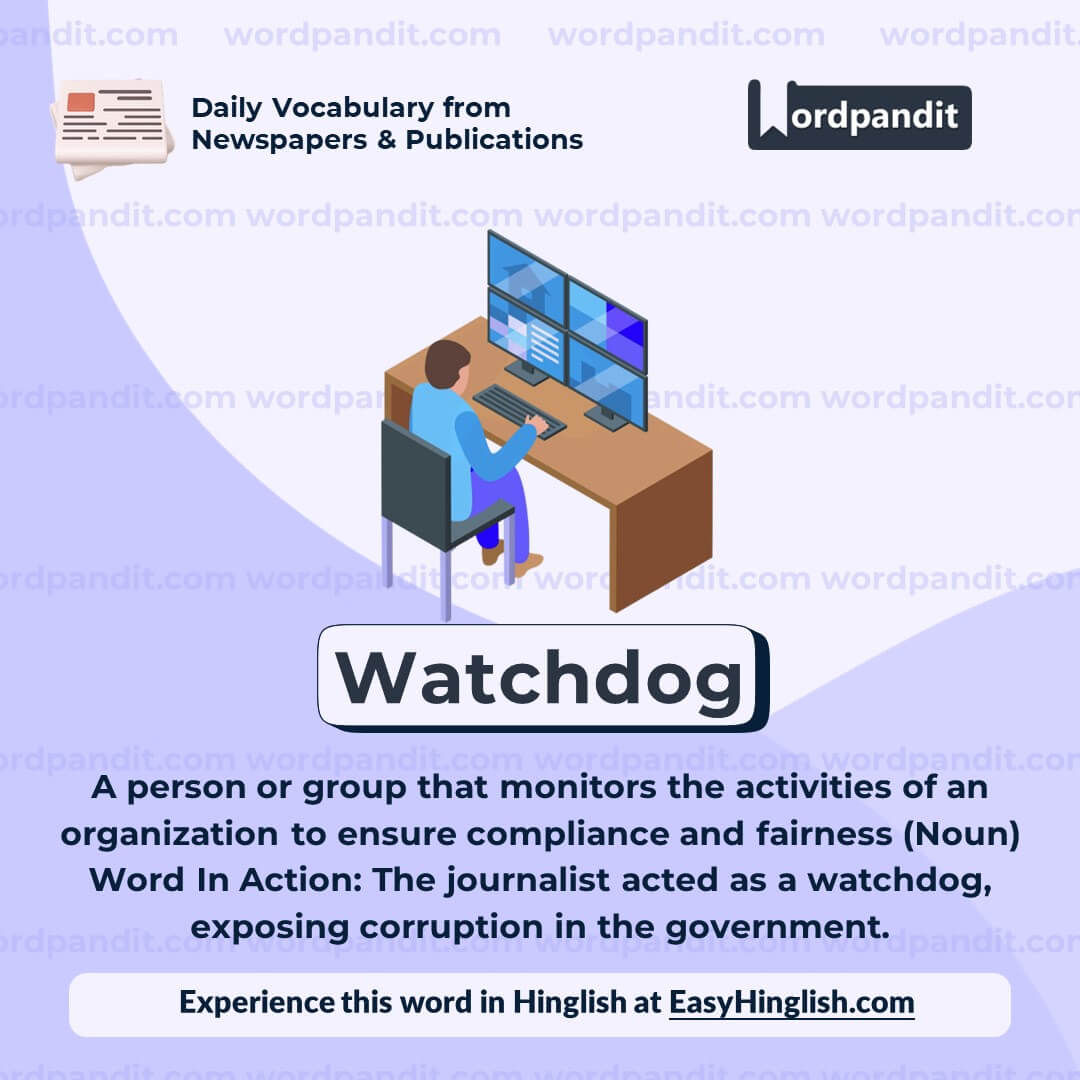
WORD-1: Watchdog
Context:
"The financial watchdog issued new regulations to increase transparency in the banking sector." - Financial Times
Explanatory Paragraph:
The word "watchdog" is often used to describe an individual or organization that closely monitors the activities of others—especially those in positions of power or influence—to ensure ethical conduct, legality, and fairness. It serves as a metaphor for a guard dog that keeps watch and sounds the alarm when something suspicious happens. Commonly, it refers to regulatory bodies, journalists, or public interest groups that work to protect the public from abuse or wrongdoing.
Meaning: A person or organization that monitors and oversees activities to ensure ethical behavior or compliance with rules (Noun)
Pronunciation: wawch-dawg
Difficulty Level: ⭐⭐ Basic
Etymology: Derived from the literal use of a dog that watches over property; figurative use dates back to the 17th century in political and social contexts.
Prashant Sir's Notes:
Think of a "watchdog" as a guardian that keeps an eye on powerful systems—like governments, corporations, or media. It raises red flags when things go wrong. Essential word for understanding checks and balances in society.
Synonyms & Antonyms:
Synonyms: monitor, regulator, overseer, inspector, guardian
Antonyms: offender, violator, conspirator, instigator
Usage Examples:
- The consumer watchdog warned companies against deceptive advertising practices.
- An independent watchdog group uncovered the misuse of public funds.
- Environmental watchdogs are pushing for stricter emissions standards.
- As a political watchdog, the journalist exposed corruption at the highest levels of government.
Cultural Reference:
"Journalism is a watchdog, not a lapdog." – Often cited in media ethics discussions, this phrase highlights the importance of independent reporting in holding power accountable.
Think About It:
Can a watchdog ever become too powerful or biased itself? Who watches the watchdog?
Quick Activity:
List three real-world organizations or individuals you consider to be watchdogs. Briefly describe what they monitor.
Memory Tip:
Imagine a literal dog standing guard at the gate, barking when something goes wrong. A watchdog alerts us to trouble in systems we can't constantly observe ourselves.
Real-World Application:
In real life, watchdogs are vital in sectors like finance, environment, healthcare, and media. For example, the SEC (Securities and Exchange Commission) acts as a watchdog over the stock market to prevent fraud and insider trading.

WORD-2: Intimidation
Context:
"Several employees reported feeling a sense of intimidation after the manager's harsh public criticism." - The Guardian
Explanatory Paragraph:
“Intimidation” refers to the act of making someone feel frightened, nervous, or less confident—often to manipulate or control their actions. It is commonly used in social, political, and professional settings where someone uses threats, aggression, or a show of power to influence others. Intimidation can be verbal or non-verbal and is generally seen as a negative or coercive tactic.
Meaning: The act of frightening or overawing someone, especially to make them do what one wants (Noun)
Pronunciation: in-tim-i-day-shun
Difficulty Level: ⭐⭐⭐ Intermediate
Etymology: From Latin “intimidare” meaning "to make timid or fearful," derived from “timidus” (timid, fearful).
Prashant Sir's Notes:
This word often appears in discussions about bullying, politics, and legal matters. Always associate it with pressure, fear, and control. If you feel someone is trying to silence or pressure you unfairly, that’s intimidation.
Synonyms & Antonyms:
Synonyms: coercion, bullying, threats, pressure, browbeating
Antonyms: encouragement, reassurance, support, confidence-building
Usage Examples:
- The witness refused to testify due to fear of intimidation from the accused.
- Online harassment is a modern form of digital intimidation.
- Teachers should create a learning environment free of intimidation.
- He used intimidation tactics to silence his critics during the campaign.
Cultural Reference:
"Intimidation is the weapon of the weak." – Mahatma Gandhi emphasized that true strength lies in peaceful persuasion, not fear-mongering.
Think About It:
Why do people resort to intimidation instead of honest communication or negotiation?
Quick Activity:
Write down a recent example from the news or your own life where intimidation played a role. Was it successful or counterproductive?
Memory Tip:
Break it down: “in + timid + ation” – think of making someone timid or fearful. That’s what intimidation does.
Real-World Application:
Understanding intimidation is essential in workplaces, schools, and legal settings. HR departments often have policies against intimidation to ensure a respectful and safe work environment.
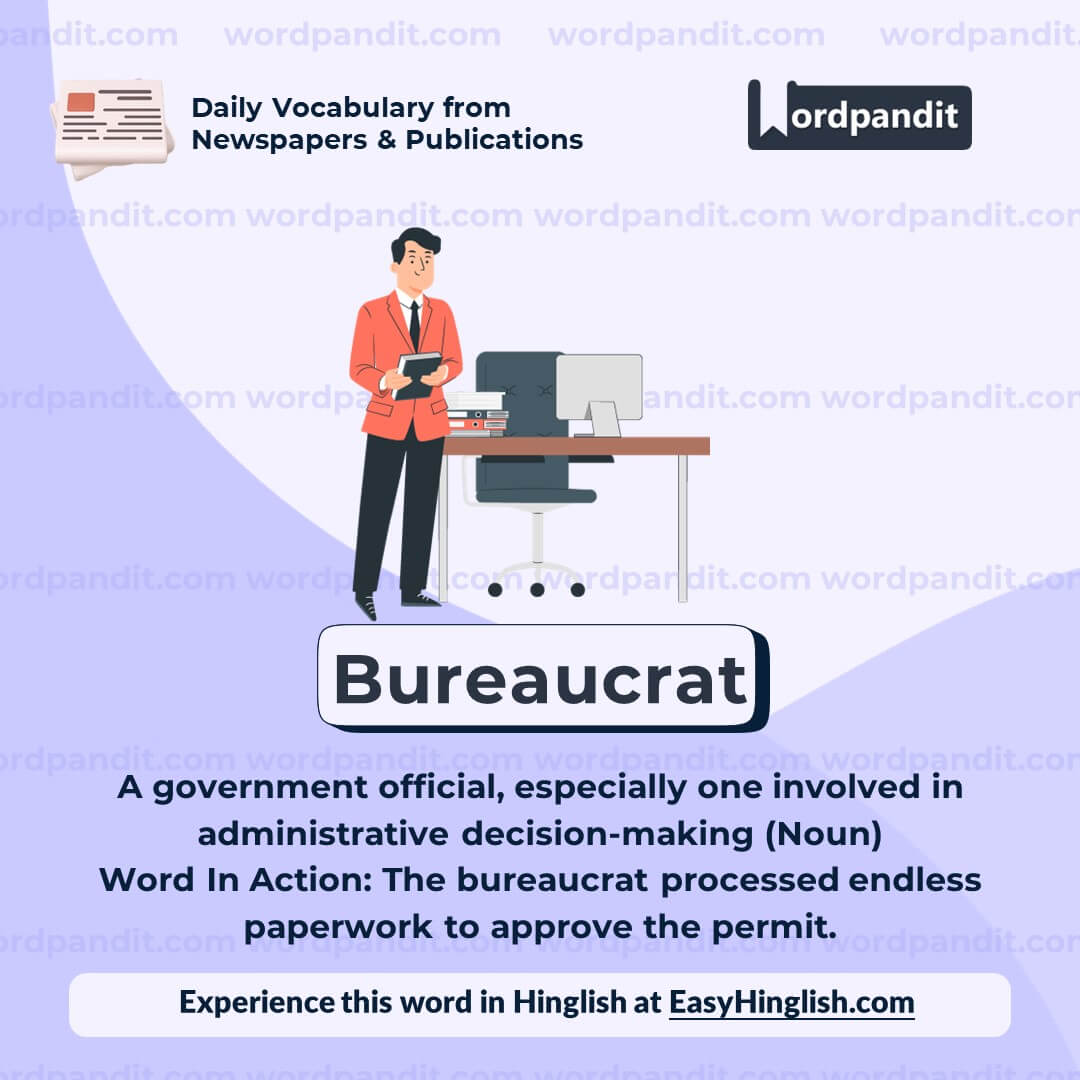
WORD-3: Bureaucrat
Context:
"The new policy was delayed for months due to disagreements among bureaucrats in different departments." - BBC News
Explanatory Paragraph:
A “bureaucrat” is an official who works in a government or administrative office, typically responsible for implementing rules and procedures. While bureaucrats are essential to running systems efficiently, the term is sometimes used negatively to imply someone who is overly focused on rules, red tape, and formalities instead of practical outcomes. They are often seen as decision-makers behind the scenes, operating within complex systems of governance or administration.
Meaning: An official in a government or administrative department, especially one perceived as adhering strictly to rules and procedures (Noun)
Pronunciation: byur-oh-krat
Difficulty Level: ⭐⭐⭐ Intermediate
Etymology: From French "bureaucrate," combining "bureau" (desk/office) and the Greek suffix "-kratēs" (ruler, power holder).
Prashant Sir's Notes:
Think of a bureaucrat as someone sitting behind a desk pushing papers and following procedures—whether in a government office, school administration, or large company. It’s not just a job role, but often a mindset: rules over results.
Synonyms & Antonyms:
Synonyms: administrator, official, functionary, civil servant, pencil-pusher
Antonyms: entrepreneur, reformer, innovator, outsider
Usage Examples:
- The bureaucrat insisted that all forms be submitted in triplicate before approval.
- As a senior bureaucrat, she played a key role in shaping public health policies.
- Many citizens feel frustrated by how long it takes bureaucrats to process paperwork.
- The reforms aim to reduce red tape and give bureaucrats more flexibility in decision-making.
Cultural Reference:
In George Orwell’s novel *1984*, faceless bureaucrats symbolize the dehumanizing and controlling power of totalitarian regimes, showing the darker side of unchecked administrative systems.
Think About It:
Are bureaucrats simply following the system, or do they hold the power to shape how that system works?
Quick Activity:
Name one bureaucratic process you've experienced (e.g., applying for a passport or driver’s license). Was it efficient or frustrating? Why?
Memory Tip:
Think of "bureau" (desk/office) and "-crat" (ruler). A bureaucrat is someone who “rules from a desk”—an official following rules.
Real-World Application:
Bureaucrats are essential in government functioning—processing documents, allocating resources, and enforcing laws. However, excessive bureaucracy can slow progress, which is why reforms often aim to balance order and flexibility.
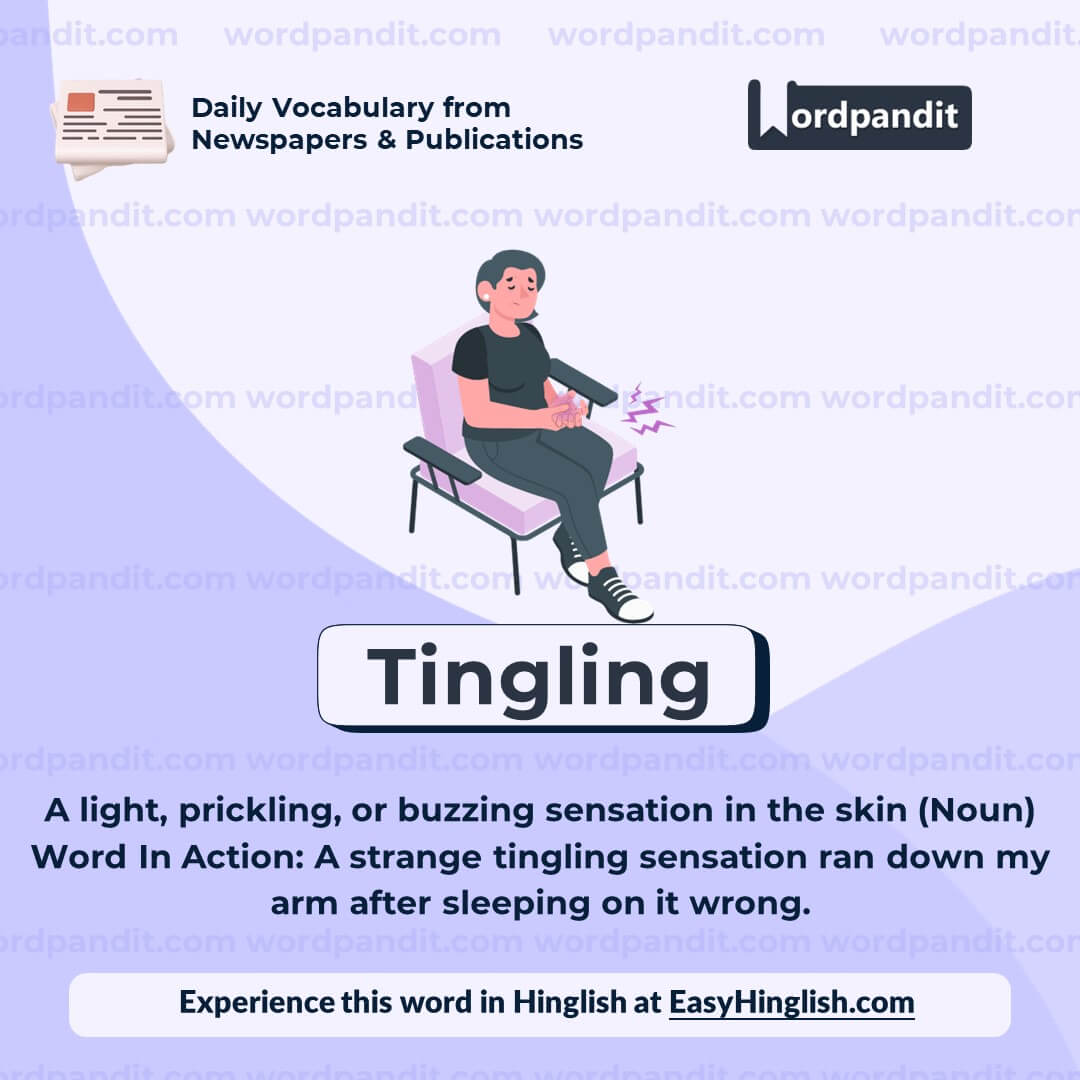
WORD-4: Tingling
Context:
"As the music swelled, a strange tingling spread through her arms, a mix of excitement and nervous anticipation." - The Atlantic
Explanatory Paragraph:
“Tingling” describes a light, prickly sensation that you might feel on your skin—similar to pins and needles. It often happens when a part of your body "falls asleep," but it can also be a response to emotions like excitement, fear, or awe. Tingling is both a physical and emotional response and is commonly used in both medical and literary contexts to describe subtle sensations.
Meaning: A slight stinging or prickling sensation, often felt in the skin or as an emotional reaction (Noun/Adjective)
Pronunciation: ting-ling
Difficulty Level: ⭐ Basic
Etymology: From Middle English “tingelen,” meaning to tingle or prick lightly; possibly imitative of a light ringing or stinging sound.
Prashant Sir's Notes:
Associate “tingling” with a mix of physical and emotional reactions—think of that tiny electric-like buzz when you get excited or afraid. It’s a vivid sensory word that brings writing to life.
Synonyms & Antonyms:
Synonyms: prickling, stinging, buzzing, thrilling, vibrating
Antonyms: numbness, dullness, calmness
Usage Examples:
- She felt a tingling in her fingertips after sitting in the same position for too long.
- The audience experienced a tingling excitement as the performer stepped on stage.
- Cold air brushed his neck, sending a tingling shiver down his spine.
- His speech left me with a tingling sense of inspiration.
Cultural Reference:
In many superhero stories, characters like Spider-Man describe a “tingling” sensation—such as the famous “spidey-sense”—to indicate danger, blending physical sensation with intuition.
Think About It:
Why do certain emotions like excitement or fear trigger physical sensations like tingling?
Quick Activity:
Recall a time when you felt a tingling sensation—was it caused by emotion, temperature, or physical pressure? Write 1–2 sentences describing it.
Memory Tip:
“Tingling” sounds like a tiny bell ringing inside you—just like the little buzz you feel on your skin or spine when emotions run high.
Real-World Application:
Doctors often ask patients about tingling to diagnose nerve issues, while writers use it to describe emotional or sensory experiences—making it useful in both medicine and storytelling.
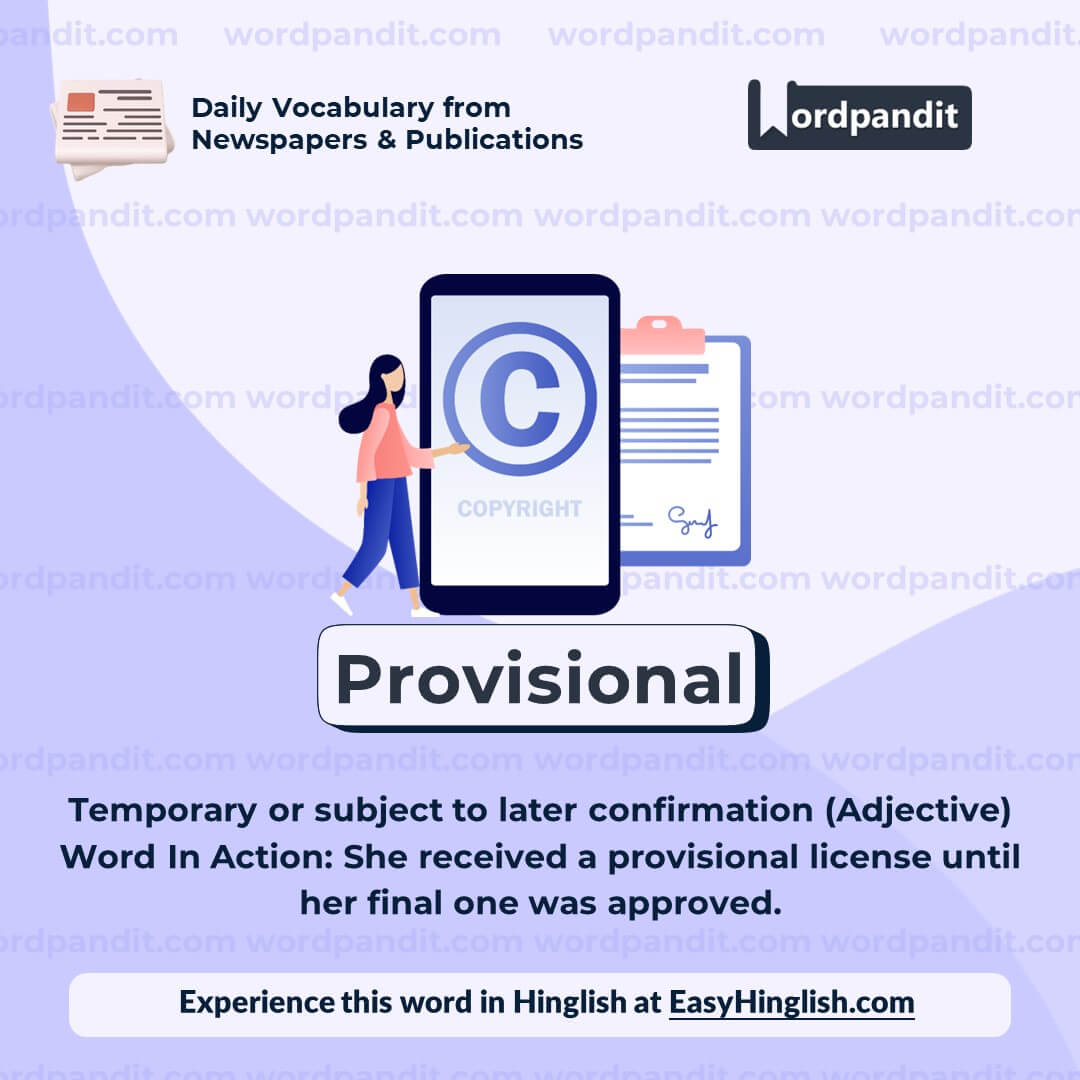
WORD-5: Provisional
Context:
"The committee approved a provisional budget for the next quarter until the final numbers are confirmed." - Reuters
Explanatory Paragraph:
The word “provisional” refers to something that is temporary or conditional—put in place for the time being until something more permanent is established. It’s often used in formal contexts such as law, government, or business, where decisions, agreements, or statuses are made “for now,” subject to change. The key idea behind the word is flexibility and the possibility of revision or finalization later.
Meaning: Arranged or existing for the present, possibly to be changed later (Adjective)
Pronunciation: pro-vizh-uh-nuhl
Difficulty Level: ⭐⭐⭐ Intermediate
Etymology: From Latin “provisio” meaning “a foreseeing, provision,” related to providing for something ahead of time.
Prashant Sir's Notes:
Think of “provisional” as a placeholder—it’s not the final decision, but a step toward it. It’s a word often used in decision-making, especially when things are still uncertain or evolving.
Synonyms & Antonyms:
Synonyms: temporary, interim, conditional, tentative, makeshift
Antonyms: permanent, final, confirmed, definite
Usage Examples:
- The doctor gave her a provisional diagnosis while awaiting the test results.
- The provisional agreement allowed trade to resume between the two countries.
- He was offered a provisional license until he passed the final driving exam.
- A provisional schedule was shared with the team, subject to change.
Cultural Reference:
The Provisional Government of Russia in 1917 was a temporary authority established after the abdication of Tsar Nicholas II, showing how provisional bodies can play critical roles during transitional periods in history.
Think About It:
Is a provisional decision a sign of caution, flexibility, or indecision? Can it be all three depending on the context?
Quick Activity:
Think of a recent plan or decision in your life that was provisional. What made it temporary? What changed later?
Memory Tip:
“Provisional” sounds like “provision”—you make a provision or a temporary arrangement just in case, until something final is decided.
Real-World Application:
Provisional policies, licenses, or agreements are common in workplaces, education, and governance. For example, a university may issue provisional admission while awaiting final exam results.


