

Daily Vocabulary from Indian Newspapers and Publications
Welcome to Wordpandit’s Indian Vocabulary Hub
At Wordpandit, we understand the importance of staying rooted in the local context while expanding your language skills. This section focuses on enriching your vocabulary with words and phrases drawn from India’s leading newspapers and publications, ensuring you're learning vocabulary that is practical, relevant, and uniquely Indian.
Why Indian Sources Matter
We believe that the best way to master any language is by immersing yourself in local content. That’s why we carefully curate vocabulary from top Indian publications, including:
- The Hindu
- The Times of India
- The Economic Times
- Hindustan Times
- Live Mint
- The Indian Express
- And many others...
Stay Updated, Stay Relevant
With daily updates from Indian news sources, you’ll be consistently learning words that reflect the trends and shifts in Indian society and culture. Our focus is to provide vocabulary that enhances your understanding of the language in an Indian context.
How Wordpandit Supports Your Goals
Whether you’re preparing for exams, aiming to improve your professional communication, or simply want to stay connected with the latest Indian vocabulary, Wordpandit is here to guide you every step of the way.
Learn with a Practical Approach
Our interactive learning methodology includes real-world examples, engaging activities, and context-specific usage to ensure that every word becomes part of your active vocabulary.
Dive into Indian Vocabulary Today!
Why Choose Wordpandit?
Practical Learning: Focus on words you'll actually encounter in real-world reading, enhancing your comprehension and communication skills.
Diverse Content: From current affairs to scientific breakthroughs, our varied sources expose you to vocabulary across multiple domains.
Effortless Integration: Make Wordpandit a part of your daily routine. Just a few minutes each day can significantly boost your lexicon over time.
Your Path to Vocabulary Mastery
- Visit our Daily Vocabulary section regularly
- Explore new words and their usage in context
- Practice incorporating these words into your own writing and speech
- Track your progress as your vocabulary expands
Start Your Journey Today
Embark on your vocabulary enhancement journey with Wordpandit. By consistently engaging with our daily posts, you'll build a robust vocabulary that serves you well in academic, professional, and personal contexts.
Remember, a word a day keeps linguistic limitations at bay. Make Wordpandit your daily companion in the quest for vocabulary excellence!

WORD-1: Beget
Sandarbh (Context):
"Violence only begets more violence, creating a cycle that is hard to break." - The Atlantic
Vyakhya (Explanatory Paragraph):
“Beget” ka matlab hota hai kisi cheez ka kaaran banna ya usko janam dena. Jaise kisi negative emotion jaise gussa, resentment ko beget kar sakta hai. Yeh shabd thoda formal ya purana lag sakta hai, lekin aaj bhi kaafi useful hai jab hum kisi event ke consequence ko describe karte hain. Jaise ek choti si kindness kisi bade trust ko beget kar sakti hai.
Arth (Meaning): Kisi cheez ka kaaran banna; janm dena (verb)
Uccharan (Pronunciation): bih-GET
Kathinai Star (Difficulty Level): ⭐⭐⭐
Utpatti (Etymology): Old English “begietan” se aaya hai, jiska matlab tha "paana ya acquire karna", later Middle English aur Old Norse ke influence se iska matlab "janm dena" ho gaya.
Prashant Sir Ke Tathya (Prashant Sir's Notes):
Beget ek important academic aur literary word hai. Jab bhi koi cheez kisi aur cheez ko trigger karti hai, uss chain ko “beget” se sochna start karo. Yeh cause-effect samajhne mein help karega.
Samanarthi & Vipritarthi (Synonyms & Antonyms):
Samanarthi (Synonyms): generate, cause, produce, induce, engender, create
Vipritarthi (Antonyms): halt, prevent, suppress, stop
Udaharan (Usage Examples):
- Darr aksar suspicion aur hostility ko beget karta hai.
- Woh naye rules ne sirf aur unrest ko begot kiya.
- Kindness se kindness beget hoti hai, jaise ripple effect.
- Accha art aksar deep thinking aur emotions ko beget karta hai.
Sanskritik Sandarbh (Cultural Reference):
"Jo insaan jaise beej boyega, waise hi fal payega." — Galatians 6:7, jo kai baar literature mein beget ke concept ko explain karta hai. - The Bible
Sochiye (Think About It):
Kya ek choti si action waqai mein life-changing events ko beget kar sakti hai? Aapne kahaniyon ya history mein aisa kab dekha hai?
Chhoti Kriya (Quick Activity):
Tin abstract ideas likho — jaise trust, fear, creativity — aur likho kaunsi ek cheez unhe beget kar sakti hai.
Yaad Karne Ka Tarika (Memory Tip):
“Beget” ko yaad rakho as “Begin to get” — matlab ek cheez start ho rahi hai jo doosri cheez ko get karne wali hai.
Vastavik Jeevan Me Upyog (Real-World Application):
“Beget” ka use aap tab kar sakte ho jab aap kisi issue ke consequence ya result ko describe kar rahe ho — jaise poverty ka crime ko beget karna, ya technology ka progress beget karna.
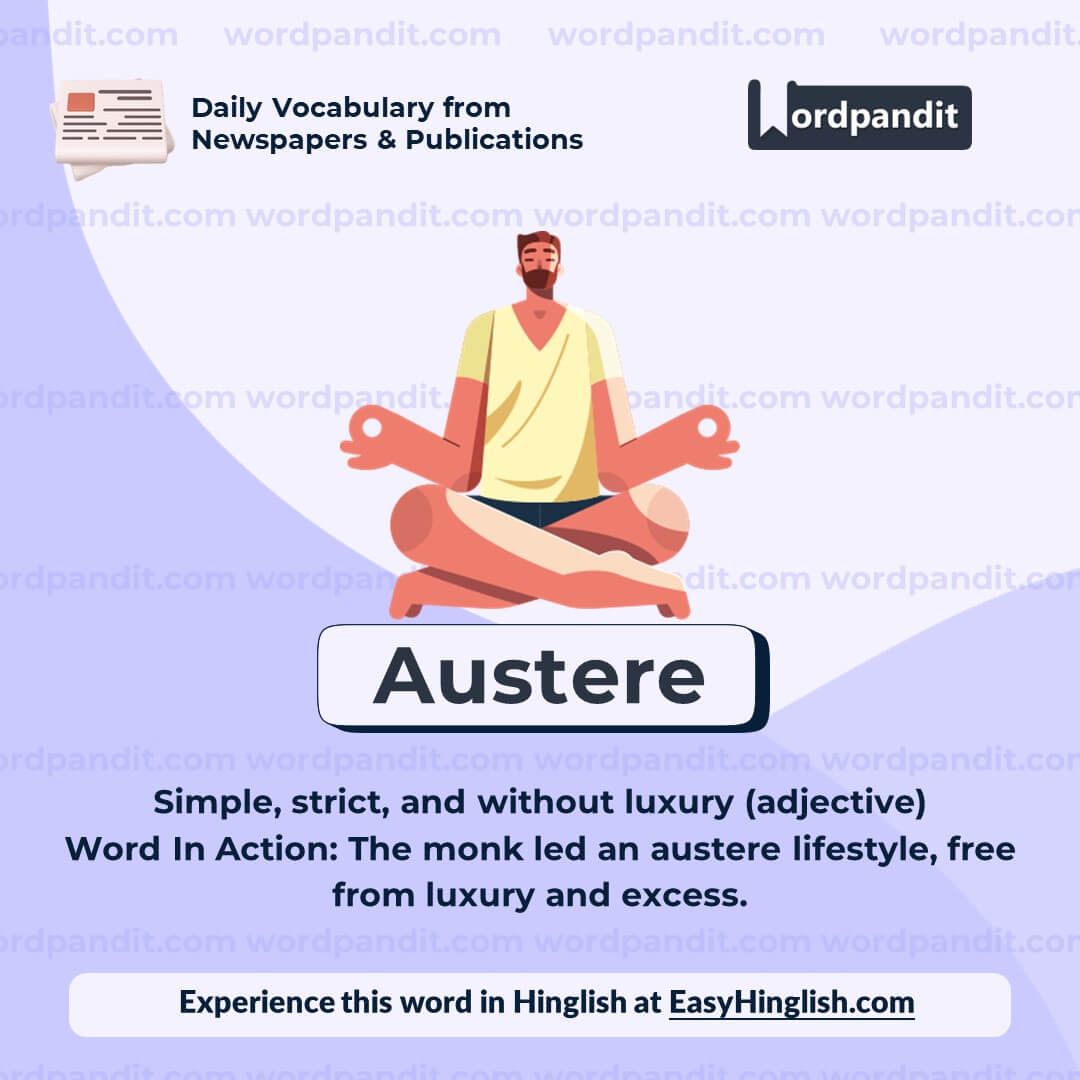
WORD-2: Austere
Sandarbh (Context):
"The room was austere, with bare walls, a simple wooden bed, and no decoration whatsoever." - The Guardian
Vyakhya (Explanatory Paragraph):
“Austere” ka matlab hota hai bahut hi simple, strict ya bina kisi decoration ke. Yeh shabd un logon, jagahon ya styles ke liye use hota hai jo minimal hote hain – matlab unnecessary cheezon se door. Jaise ek sadhu ya monk ka lifestyle austere hota hai – bina luxuries ke. Waise hi ek austere room mein fancy décor nahi hota, sab kuch basic hota hai. Is word mein thoda discipline aur seriousness ka feel bhi hota hai.
Arth (Meaning): Bahut zyada strict ya simple, bina kisi shringar ke (adjective)
Uccharan (Pronunciation): aw-STEER
Kathinai Star (Difficulty Level): ⭐⭐⭐⭐
Utpatti (Etymology): Latin “austerus” aur Greek “austēros” se aaya hai, jiska matlab hota hai harsh ya kathor.
Prashant Sir Ke Tathya (Prashant Sir's Notes):
“Austere” ko “lavish” ke opposite ke roop mein yaad rakho. Jab bhi tum minimalist ya monk jaise lifestyle ke baare mein socho, toh “austere” yaad karo. Literature mein yeh word simplicity ke saath emotional distance ya coldness bhi dikhata hai.
Samanarthi & Vipritarthi (Synonyms & Antonyms):
Samanarthi (Synonyms): strict, severe, plain, harsh, spartan, restrained
Vipritarthi (Antonyms): luxurious, indulgent, elaborate, ornate, lenient
Udaharan (Usage Examples):
- Sadhu ek austere life jeete hain, jahaan koi material possessions nahi hote.
- Uska austere tone sunte hi sab chup ho gaye.
- Architect ne austere design chuna—clean lines aur empty spaces ke saath.
- Austerity measures ke chalte government ko social programs cut karne pad gaye.
Sanskritik Sandarbh (Cultural Reference):
2008 financial crisis ke baad “austerity” ek global buzzword ban gaya, jab kai European countries ne debt kam karne ke liye austere economic policies adopt ki. - BBC News
Sochiye (Think About It):
Kya ek austere lifestyle clarity aur shanti laa sakta hai, ya yeh life ke joys ko kam kar deta hai? Balance kahan hai?
Chhoti Kriya (Quick Activity):
Apne room ya desk ko dekho. Aise teen items identify karo jo hattakar aap uss jagah ko zyada “austere” bana sakte ho. Kyun?
Yaad Karne Ka Tarika (Memory Tip):
Socho “austere” = “stern” + “bare” — matlab strict aur bilkul simple, bina frills ke.
Vastavik Jeevan Me Upyog (Real-World Application):
Professional life mein, ek austere look ya tone discipline aur seriousness dikhata hai — especially formal writing, interviews, ya negotiations mein. Design field mein yeh minimalist aesthetic dikhane ke liye use hota hai.
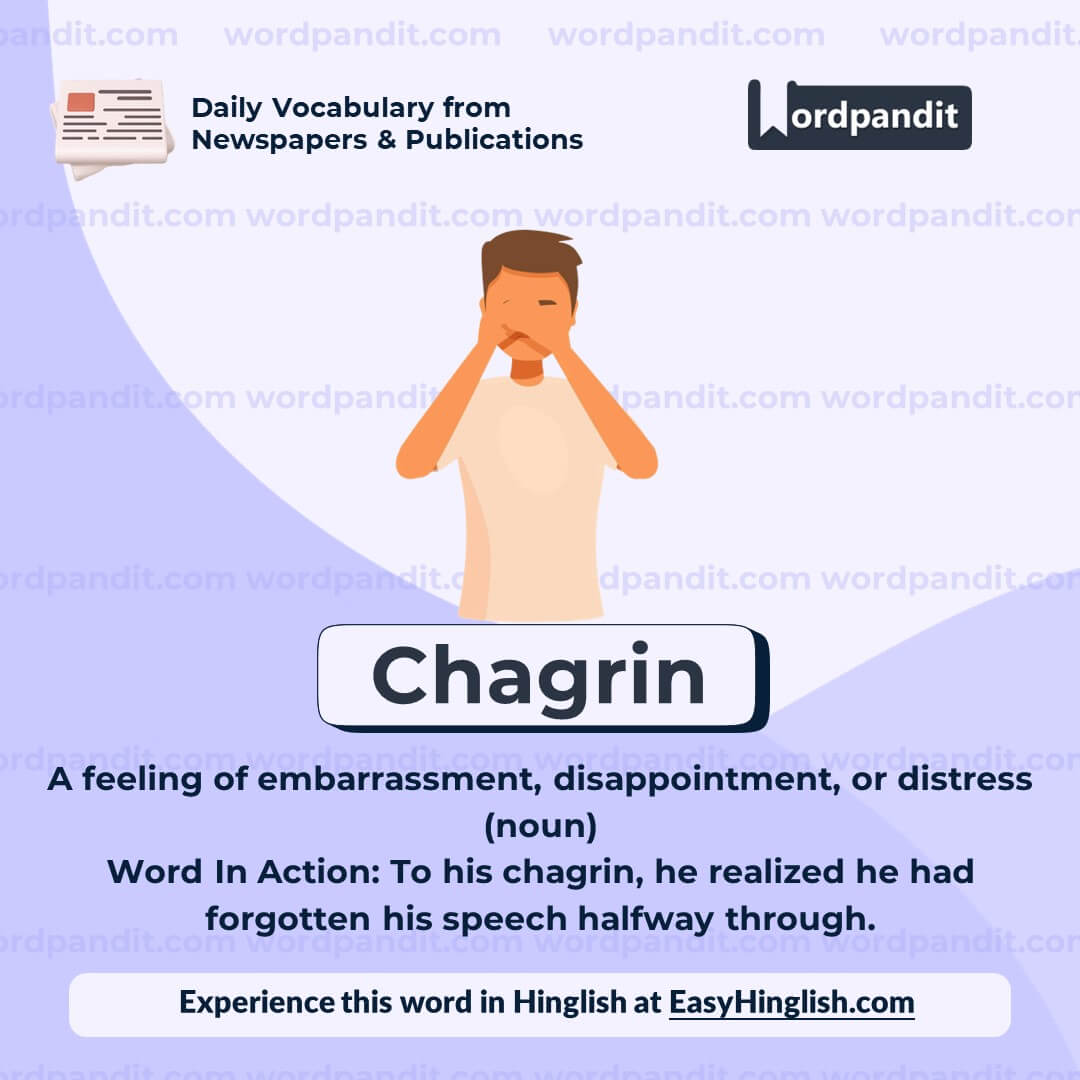
WORD-3: Chagrin
Sandarbh (Context):
"Much to his chagrin, his idea was rejected without consideration." - The Washington Post
Vyakhya (Explanatory Paragraph):
“Chagrin” ka matlab hota hai jab kisi wajah se embarrassment, disappointment ya thoda insult feel hota hai—especially jab humari expectation ya pride hurt hoti hai. Jaise tumne koi idea propose kiya ho aur bina soche use reject kar diya gaya ho, toh jo irritation aur embarrassment hota hai—that’s chagrin. Yeh emotion thoda sophisticated hai, sirf sad nahi hota, balki ego hurt hone ka bhi mix hota hai.
Arth (Meaning): Apmaan ya asafalta se paida hua distress ya embarrassment ka feeling (noun)
Uccharan (Pronunciation): shuh-GRIN
Kathinai Star (Difficulty Level): ⭐⭐⭐
Utpatti (Etymology): French “chagrin” se aaya hai jiska matlab sorrow ya grief hota hai; Turkish origin ka ek word bhi ho sakta hai jiska arth rough skin tha—symbolizing discomfort.
Prashant Sir Ke Tathya (Prashant Sir's Notes):
Chagrin ko yaad rakho ek refined emotional discomfort ke roop mein—jab embarrassment aur ego ka combination hota hai. Iska use especially tab hota hai jab social ya professional situation mein disappointment ho.
Samanarthi & Vipritarthi (Synonyms & Antonyms):
Samanarthi (Synonyms): embarrassment, humiliation, disappointment, dismay, vexation
Vipritarthi (Antonyms): delight, satisfaction, pride, pleasure
Udaharan (Usage Examples):
- Uski chagrin ki baat thi ki promotion kisi inexperienced insaan ko mil gaya.
- Public mistake ke baad usne awkward smile ke saath apna chagrin chhupane ki koshish ki.
- Mere liye chagrin ki baat thi ki presentation ke baad audience ne koi response nahi diya.
- Jab uske assumptions galat sabit hue, toh woh chagrin se bhar gayi.
Sanskritik Sandarbh (Cultural Reference):
Jane Austen ki *Pride and Prejudice* mein Mr. Darcy apni pride aur emotions ke beech internal chagrin feel karta hai—yeh classic emotional struggle ka example hai. - Literary Analysis
Sochiye (Think About It):
Kya chagrin ek helpful emotion hai jo humein better banata hai, ya sirf ego ka disguise hai?
Chhoti Kriya (Quick Activity):
Ek aisi situation yaad karo jab aapko embarrassment ya disappointment hua tha. Uske baare mein “chagrin” use karke ek sentence banao.
Yaad Karne Ka Tarika (Memory Tip):
Socho “grin” (muskaan) ka opposite—jab grin chali jaye failure ki wajah se. Cha(grin) = grin jo chala gaya embarrassment ke chakkar mein.
Vastavik Jeevan Me Upyog (Real-World Application):
“Chagrin” ka use aap kar sakte ho jab kisi emotional reaction ko sophistically express karna ho—chahe woh personal disappointment ho ya professional feedback dena ho.
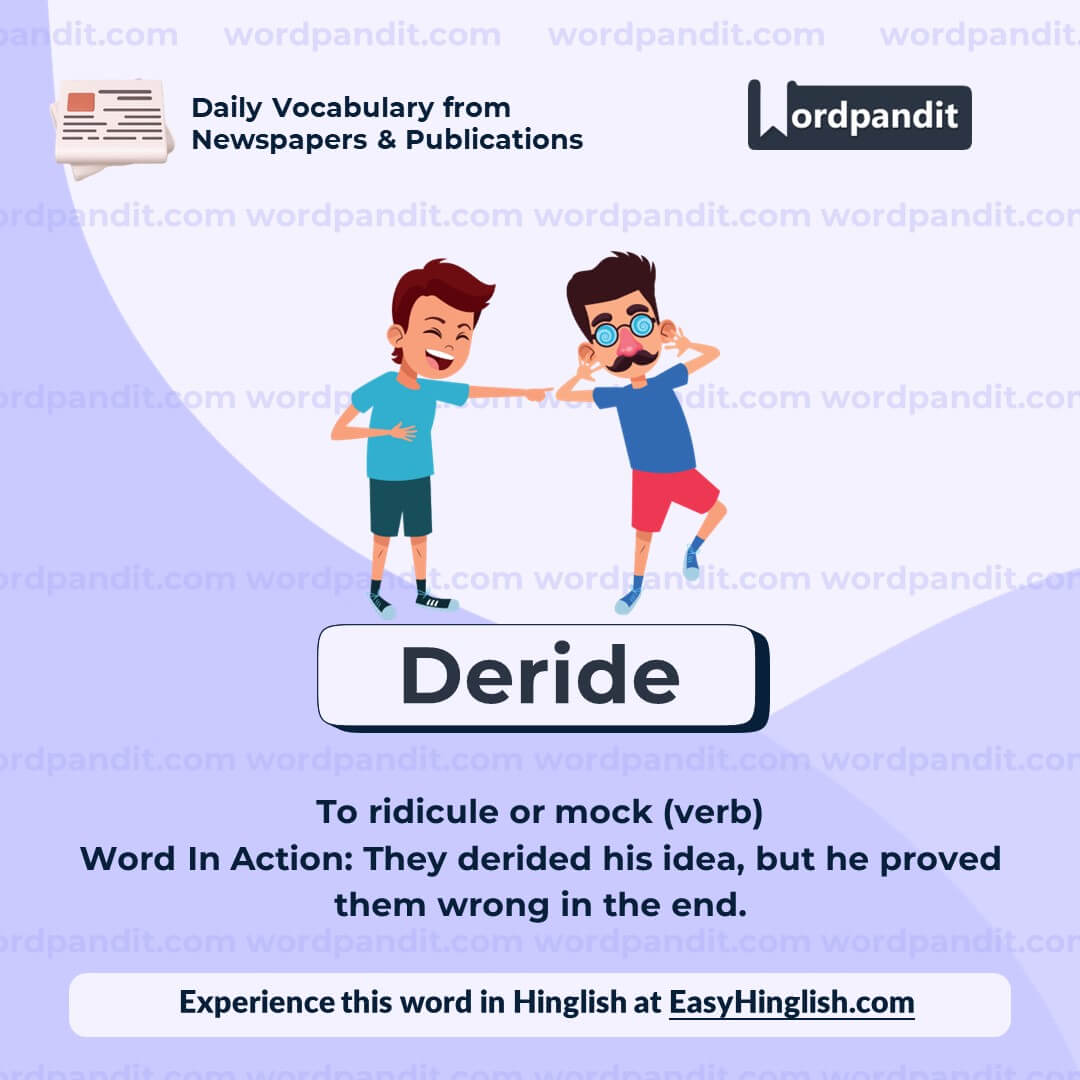
WORD-4: Deride
Sandarbh (Context):
"Critics were quick to deride the proposal, calling it naive and unrealistic." - The New York Times
Vyakhya (Explanatory Paragraph):
“Deride” ka matlab hota hai kisi ko mazak uda kar, sarcastically ya disrespectfully neecha dikhana. Jab koi kisi ke idea ya personality ko serious tareeke se criticize nahi karta, balki uska mazak udaata hai ya usse lightly leta hai, tab hum "deride" ka use karte hain. Yeh word emotions ko hurt karne wala hota hai, aur often mocking ya trolling situations mein sunne ko milta hai.
Arth (Meaning): Kisi ka mazak udaana ya usse mock karna (verb)
Uccharan (Pronunciation): dih-RIDE
Kathinai Star (Difficulty Level): ⭐⭐⭐
Utpatti (Etymology): Latin “deridere” se aaya hai, jiska matlab hota hai “laugh at”—“de-” (down) + “ridere” (to laugh)
Prashant Sir Ke Tathya (Prashant Sir's Notes):
“Deride” ka matlab hota hai kisi ki baat ko sneering tareeke se reject karna. Isme sirf disagreement nahi hota—balki sarcasm aur disrespect hota hai. Trolling, satire, ya online bullying jaise situations mein yeh word kaafi relevant hai.
Samanarthi & Vipritarthi (Synonyms & Antonyms):
Samanarthi (Synonyms): mock, ridicule, scorn, sneer, jeer, taunt
Vipritarthi (Antonyms): praise, compliment, respect, admire, endorse
Udaharan (Usage Examples):
- Logon ne uske optimism ka mazak uda diya, kehkar ki woh reality se kaafi door hai.
- Satirical cartoon ne politician ke contradictory statements ka deride kiya.
- Usse bura laga jab classmates ne uska science project deride kiya.
- Internet trolls public figures ko choti-choti baaton par deride karte rehte hain.
Sanskritik Sandarbh (Cultural Reference):
Comedians jaise Jon Stewart aur Trevor Noah apne satire shows mein politics aur social absurdities ko deride karte hain. - The Daily Show
Sochiye (Think About It):
Kya derision kabhi sahi ho sakta hai, ya yeh hamesha boundary cross karta hai from healthy critique to cruelty?
Chhoti Kriya (Quick Activity):
Ek short dialogue likho jisme ek character doosre ke idea ko deride karta hai. Fir usi ko constructive criticism mein convert karo.
Yaad Karne Ka Tarika (Memory Tip):
“de-RIDE” ko yaad rakho jaise kisi ko ride karte hue neecha dikhana—yaani uski baaton ka mazak udaana.
Vastavik Jeevan Me Upyog (Real-World Application):
Debates, media ya leadership settings mein, yeh samajhna important hai ki kisi ki tone derisive hai ya constructive—emotional intelligence aur conflict resolution ke liye yeh kaafi helpful hota hai.
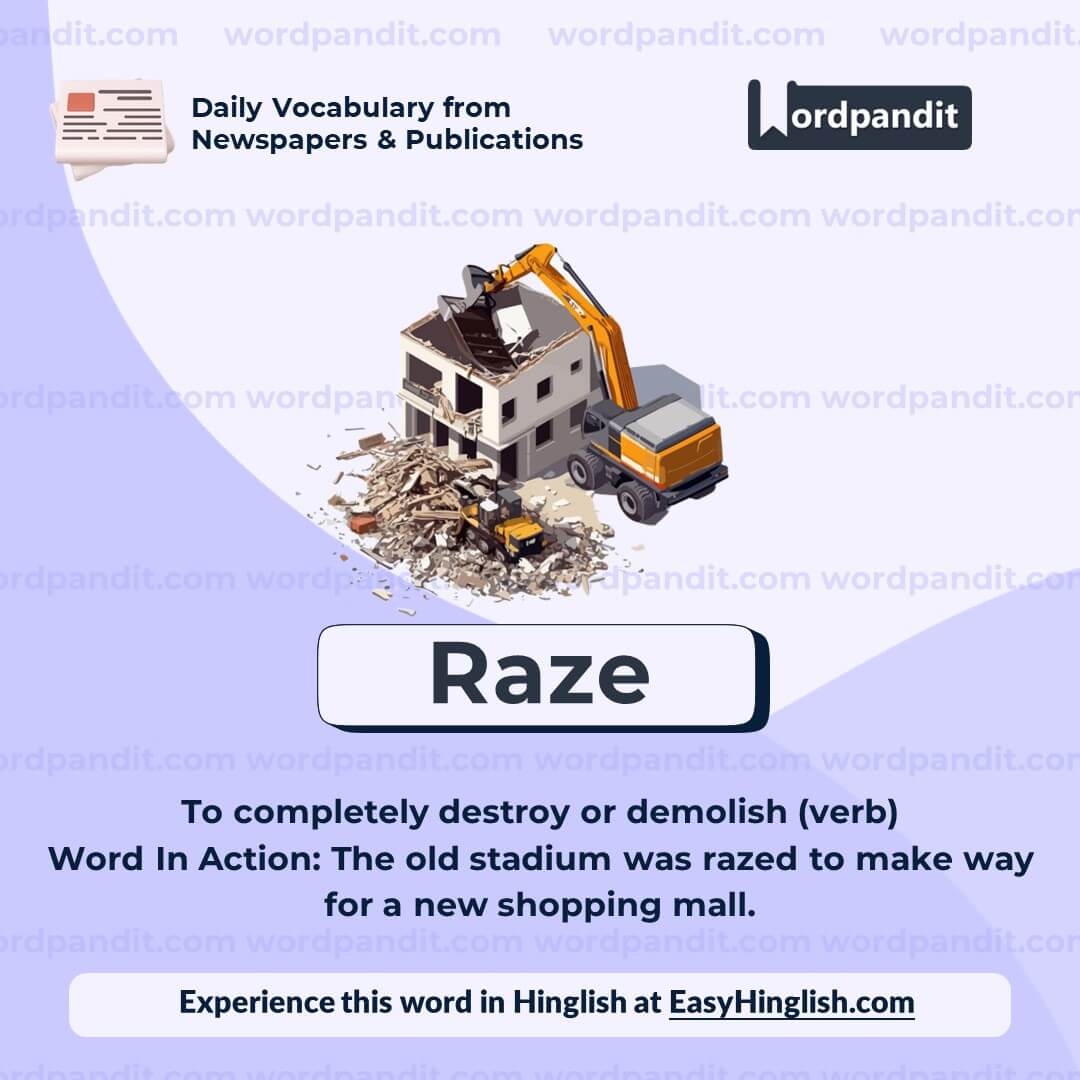
WORD-5: Raze
Sandarbh (Context):
"The city council voted to raze the abandoned building to make room for a new community park." - NPR
Vyakhya (Explanatory Paragraph):
“Raze” ka matlab hota hai kisi building ya structure ko poori tarah se gira dena—bilkul zameen tak saaf kar dena. Jab koi jagah raze hoti hai, toh waha kuch bhi bacha nahi hota. Iska use aksar construction, war, ya natural disaster ke context mein hota hai. Dhyaan rahe, yeh “raise” se alag hai—raise ka matlab hota hai upar uthana, jabki “raze” ka matlab hota hai poori tarah se mitana.
Arth (Meaning): Kisi cheez ko zameen tak poori tarah se gira dena ya mita dena (verb)
Uccharan (Pronunciation): rayz
Kathinai Star (Difficulty Level): ⭐⭐⭐
Utpatti (Etymology): Middle English “rasen” se aaya hai, jo Old French “raser” se nikla hai—iska matlab hota hai “scrape ya shave” — yaani kuch bhi nahi chhodna.
Prashant Sir Ke Tathya (Prashant Sir's Notes):
“Raze” aur “raise” ko confuse mat karo! Raze = erase ya destroy. Jab bhi poora tod dena ya system ko reset karna ho, tab is word ka use hota hai. Physical ya metaphorical dono sense mein useful hai.
Samanarthi & Vipritarthi (Synonyms & Antonyms):
Samanarthi (Synonyms): demolish, destroy, flatten, obliterate, level, tear down
Vipritarthi (Antonyms): build, construct, erect, raise, restore
Udaharan (Usage Examples):
- Hurricane ne kai coastal towns ko raze kar diya, sirf mलबaa bacha.
- Woh purana stadium raze karke ek modern complex banane wale hain.
- Army ne ancient city ko raze kar diya taaki apni power dikhaye.
- Fire ke baad building itni unsafe ho gayi thi ki usse raze karna pada.
Sanskritik Sandarbh (Cultural Reference):
1945 mein World War II ke dauraan, Dresden (Germany) ka bada hissa Allied bombing se raze ho gaya tha—yeh ek controversial aur heartbreaking moment tha. - Smithsonian Magazine
Sochiye (Think About It):
Kya naye cheezon ke liye purani cheezon ko raze karna zaroori hota hai? Iska cultural ya emotional loss kya ho sakta hai?
Chhoti Kriya (Quick Activity):
Ek purani building ki photo dhoondo (online ya aas-paas), aur likho agar woh raze ho gayi toh logon ko kaisa feel hoga?
Yaad Karne Ka Tarika (Memory Tip):
“Raze” = “Erase” — dono ka matlab hai kuch poori tarah mita dena. Sirf ek letter ka difference hai, feeling same hai!
Vastavik Jeevan Me Upyog (Real-World Application):
“Raze” ka use urban planning, history, ya natural disaster ke context mein hota hai. Metaphorically bhi iska use hota hai jaise “razing old systems” taaki naye reforms aa sakein.


