

Daily Vocabulary from Indian Newspapers and Publications
Welcome to Wordpandit’s Indian Vocabulary Hub
At Wordpandit, we understand the importance of staying rooted in the local context while expanding your language skills. This section focuses on enriching your vocabulary with words and phrases drawn from India’s leading newspapers and publications, ensuring you're learning vocabulary that is practical, relevant, and uniquely Indian.
Why Indian Sources Matter
We believe that the best way to master any language is by immersing yourself in local content. That’s why we carefully curate vocabulary from top Indian publications, including:
- The Hindu
- The Times of India
- The Economic Times
- Hindustan Times
- Live Mint
- The Indian Express
- And many others...
Stay Updated, Stay Relevant
With daily updates from Indian news sources, you’ll be consistently learning words that reflect the trends and shifts in Indian society and culture. Our focus is to provide vocabulary that enhances your understanding of the language in an Indian context.
How Wordpandit Supports Your Goals
Whether you’re preparing for exams, aiming to improve your professional communication, or simply want to stay connected with the latest Indian vocabulary, Wordpandit is here to guide you every step of the way.
Learn with a Practical Approach
Our interactive learning methodology includes real-world examples, engaging activities, and context-specific usage to ensure that every word becomes part of your active vocabulary.
Dive into Indian Vocabulary Today!

Why Choose Wordpandit?
Practical Learning: Focus on words you'll actually encounter in real-world reading, enhancing your comprehension and communication skills.
Diverse Content: From current affairs to scientific breakthroughs, our varied sources expose you to vocabulary across multiple domains.
Effortless Integration: Make Wordpandit a part of your daily routine. Just a few minutes each day can significantly boost your lexicon over time.
Your Path to Vocabulary Mastery
- Visit our Daily Vocabulary section regularly
- Explore new words and their usage in context
- Practice incorporating these words into your own writing and speech
- Track your progress as your vocabulary expands
Start Your Journey Today
Embark on your vocabulary enhancement journey with Wordpandit. By consistently engaging with our daily posts, you'll build a robust vocabulary that serves you well in academic, professional, and personal contexts.
Remember, a word a day keeps linguistic limitations at bay. Make Wordpandit your daily companion in the quest for vocabulary excellence!
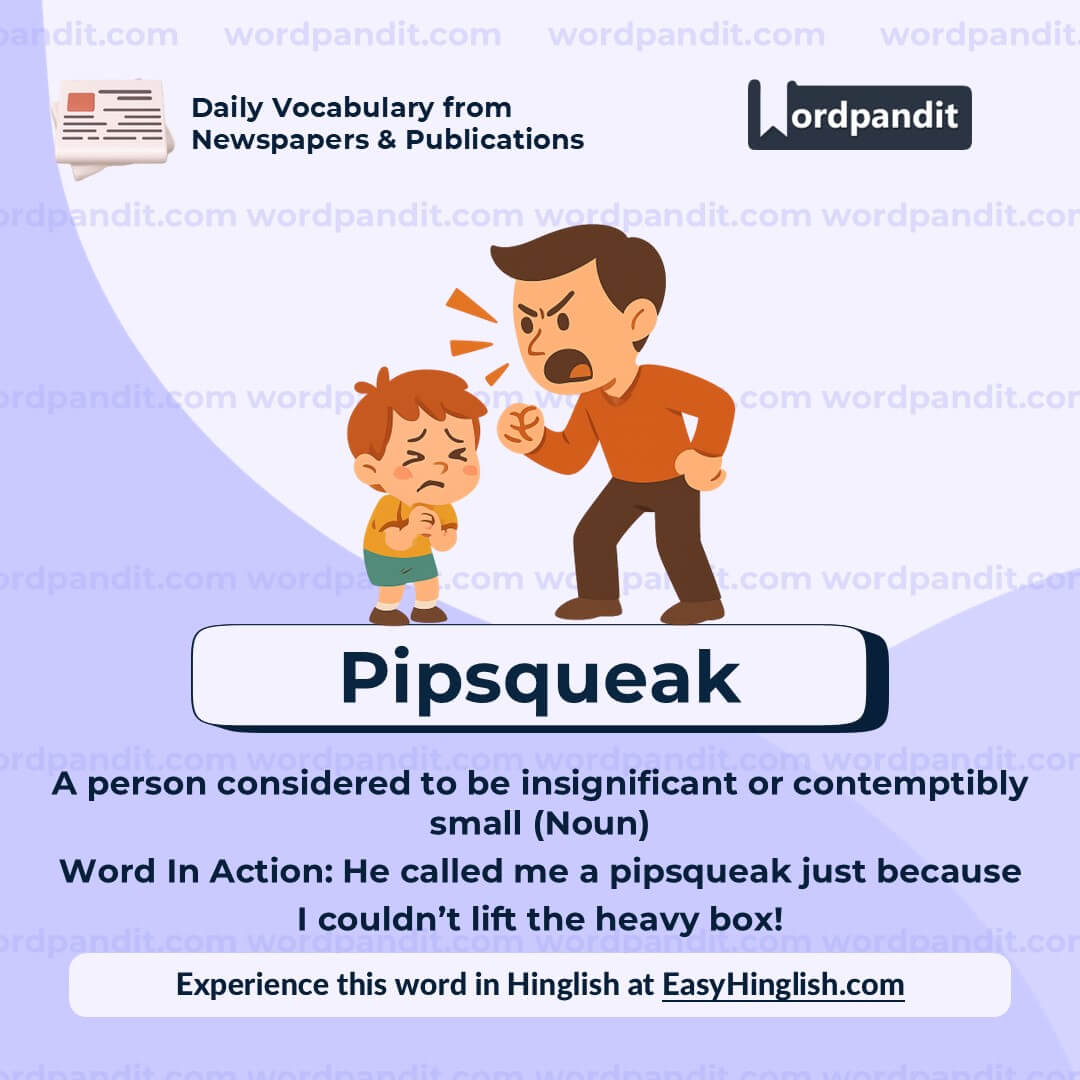
WORD-1: Pipsqueak
Context:
"The rise of these uncles and aunties has been coterminous with the rise of the smartphone and WhatsApp. They are experts in couching their language of hate in ‘reasonable’ tone and idiom." - The Wire
Explanatory Paragraph:
"Pipsqueak" is a humorous or slightly dismissive word used to describe someone who is considered unimportant, small, or weak—either physically, socially, or intellectually. It's often used to belittle someone who tries to assert authority or make a strong impression, but lacks the power or stature to back it up.
Meaning: A person considered to be insignificant or contemptibly small (Noun)
Pronunciation: PIP-skweek
Difficulty Level: ⭐⭐ Beginner
Etymology: First recorded in the early 20th century, possibly imitative of a high-pitched squeak, combining “pip” (a small thing) and “squeak” (a tiny noise), to mockingly describe something or someone small and ineffectual.
Prashant Sir's Notes:
“Pipsqueak” is a perfect example of a word used to ridicule someone who lacks influence or strength but tries to act important. Watch for its tone—humorous or sarcastic depending on usage. Often used in political or social commentary.
Synonyms & Antonyms:
Synonyms: nobody, lightweight, runt, squirt, nonentity
Antonyms: bigwig, heavyweight, VIP, powerhouse
Usage Examples:
- The new intern tried to boss everyone around, but most saw him as a mere pipsqueak.
- In the debate, the mayor dismissed his opponent as a political pipsqueak with no real experience.
- Don't let that pipsqueak get under your skin—he’s just trying to provoke you.
- They underestimated her, thinking she was just a pipsqueak, but she ended up leading the entire project.
Cultural Reference:
"You're a pipsqueak in a world of giants!" – A common insult trope in movies where a smaller or weaker character is mocked by a villain or bully.
Think About It:
Why do people sometimes use belittling terms like “pipsqueak” to undermine others? What does this reveal about power dynamics in communication?
Quick Activity:
Write a short dialogue between two characters where one refers to the other as a "pipsqueak"—then rewrite it replacing "pipsqueak" with a neutral term. Observe the difference in tone.
Memory Tip:
Think of a tiny squeaky toy making a weak sound—"pip-squeak"—that’s someone small trying to sound big!
Real-World Application:
"Pipsqueak" is often used in political commentary or casual speech to mock someone’s influence or strength, especially when they overestimate themselves.
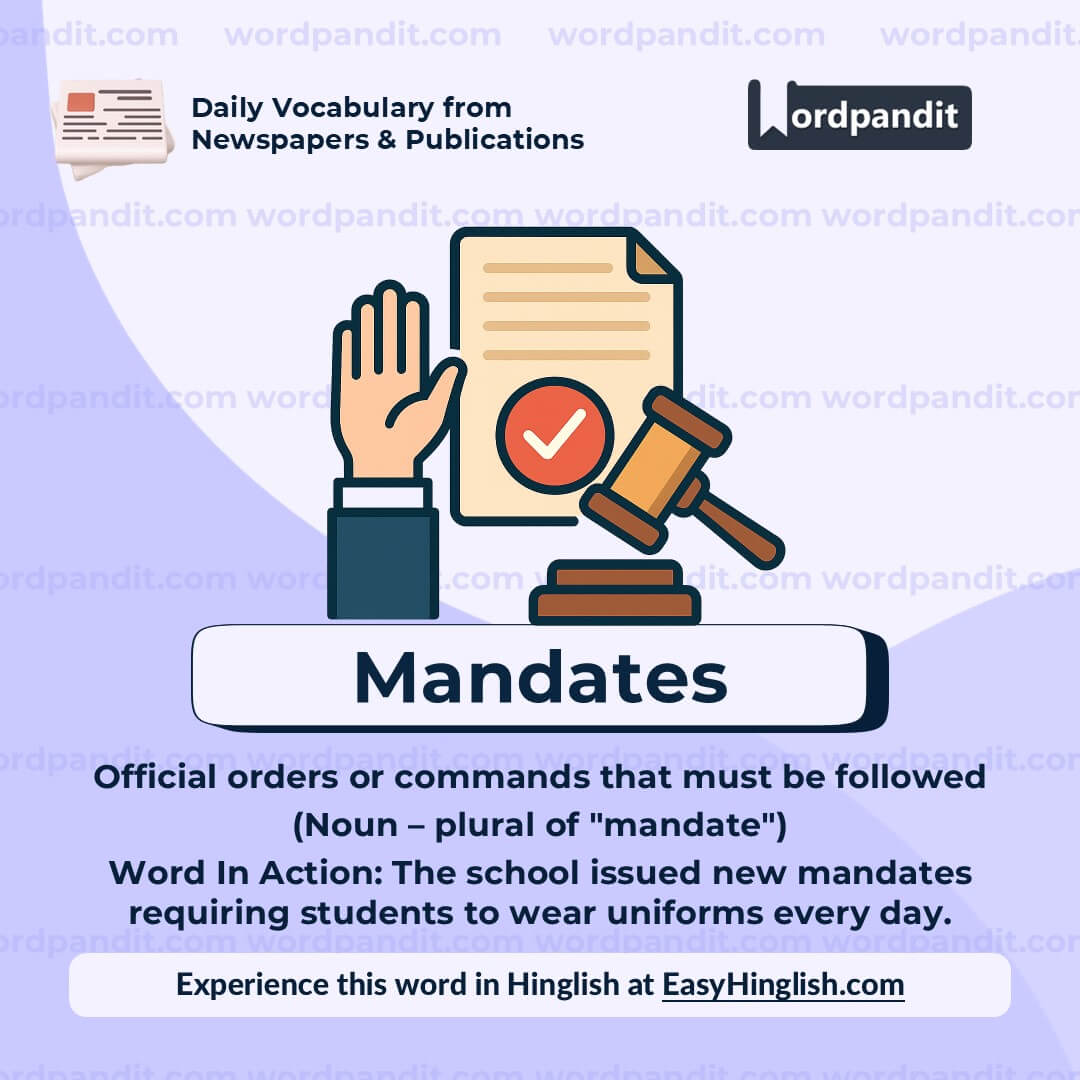
WORD-2: Mandates
Context:
"The Indian government is under immense pressure to take important decisions like grounding fleets, enacting new safety mandates, and engaging in intense political rhetoric." - The Telegraph online
Explanatory Paragraph:
“Mandates” refer to authoritative commands, orders, or requirements issued by a higher authority, often a government or official body. These are not suggestions—they are binding rules or policies that must be followed. In the context of safety mandates, for example, these would be official safety rules that organizations are legally required to implement and enforce.
Meaning: Official orders or commands that must be followed (Noun – plural of "mandate")
Pronunciation: MAN-daits
Difficulty Level: ⭐⭐⭐ Intermediate
Etymology: From Latin *mandatum* meaning "command, order", derived from *mandare* — "to order or to commit to one's charge".
Prashant Sir's Notes:
Mandates are formal and often legal orders. Don't confuse them with "requests" or "guidelines". When a government issues a mandate, compliance is usually compulsory. They're commonly seen in contexts like health, safety, and education policies.
Synonyms & Antonyms:
Synonyms: directives, decrees, orders, regulations, instructions
Antonyms: suggestions, proposals, recommendations, options
Usage Examples:
- The government introduced new environmental mandates to reduce carbon emissions.
- Many companies struggled to comply with health mandates during the pandemic.
- Safety mandates in the aviation sector were strengthened after the recent incidents.
- Teachers protested the new educational mandates imposed without consultation.
Cultural Reference:
During the COVID-19 pandemic, mask and vaccine mandates became highly controversial, symbolizing the tension between public health policy and personal freedom across many countries.
Think About It:
When does a mandate protect public interest, and when might it cross the line into infringing on individual freedoms?
Quick Activity:
Make a list of three recent government mandates you’ve heard about in the news. What was their purpose, and who did they affect?
Memory Tip:
Think of "man" + "date"—like a man (authority) setting a date (deadline) you must follow. That’s a mandate: a deadline you can’t ignore.
Real-World Application:
Understanding mandates is essential in fields like law, business, education, and public policy, where compliance with regulations is critical for operations and safety.
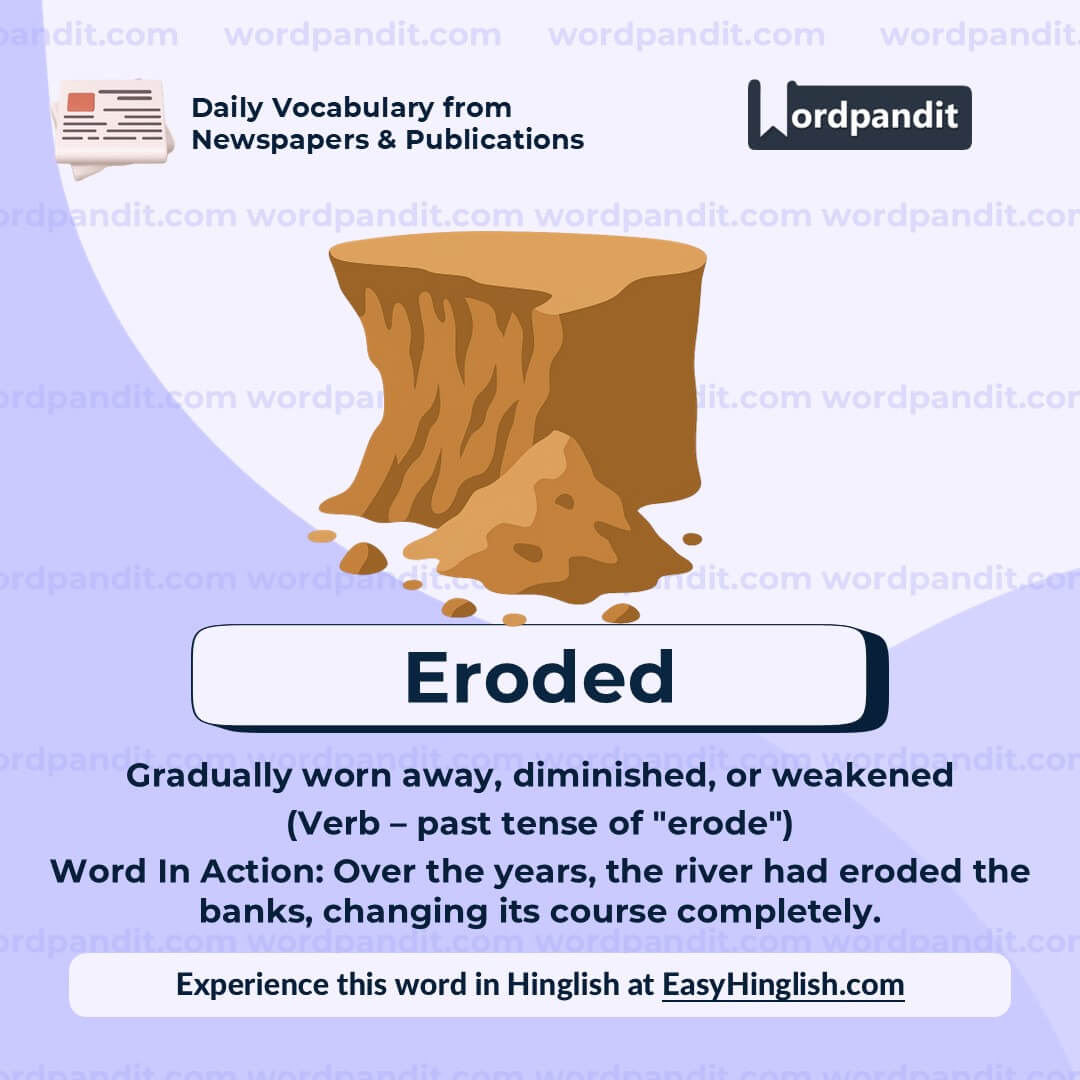
WORD-3: Eroded
Context:
"Ultimately, public trust in aviation safety and the integrity of regulatory bodies is either eroded or painstakingly bolstered. The aviation industry stands at a critical juncture, compelled to learn, adapt and reinforce the sanctity of safe flights." - The Telegraph online
Explanatory Paragraph:
“Eroded” refers to the gradual weakening, wearing away, or destruction of something over time. While it originally describes the physical wearing down of materials like soil or rock, it is commonly used in abstract contexts—such as when trust, confidence, or values diminish slowly due to neglect, repeated failure, or external pressure. In the given context, it signifies the loss of public trust in aviation safety systems.
Meaning: Gradually worn away, diminished, or weakened (Verb – past tense of "erode")
Pronunciation: ih-ROH-did
Difficulty Level: ⭐⭐ Beginner
Etymology: From Latin *erodere*, meaning "to gnaw away", from *e-* (away) + *rodere* (to gnaw).
Prashant Sir's Notes:
"Eroded" is a powerful metaphor for gradual decline—not just physical, but also moral, institutional, or emotional. Look for it in discussions about trust, relationships, credibility, and institutions. When something is eroded, the change is slow but serious.
Synonyms & Antonyms:
Synonyms: weakened, diminished, worn away, undermined, corroded
Antonyms: strengthened, reinforced, fortified, bolstered, preserved
Usage Examples:
- Years of corruption eroded the public's faith in the justice system.
- The coastline has been steadily eroded by harsh ocean waves.
- Repeated failures eroded her confidence in her abilities.
- Trust between the two nations eroded after a series of diplomatic conflicts.
Cultural Reference:
In many dystopian novels like *1984* by George Orwell, the concept of eroded truth and memory plays a central role in depicting authoritarian control and manipulation of facts over time.
Think About It:
Can trust, once eroded, ever be fully rebuilt? What factors influence whether erosion is permanent or reversible?
Quick Activity:
List three intangible things that can be “eroded” (e.g., trust, morale, freedom). Then write a sentence for each using “eroded”.
Memory Tip:
Imagine water slowly washing away rock. Just like that, "eroded" means something important is being worn down over time—even if we don’t see it happening right away.
Real-World Application:
“Eroded” is frequently used in news, politics, environmental studies, and psychology to describe the decline of systems, institutions, or relationships. Understanding this word helps interpret deeper societal issues beyond the surface.
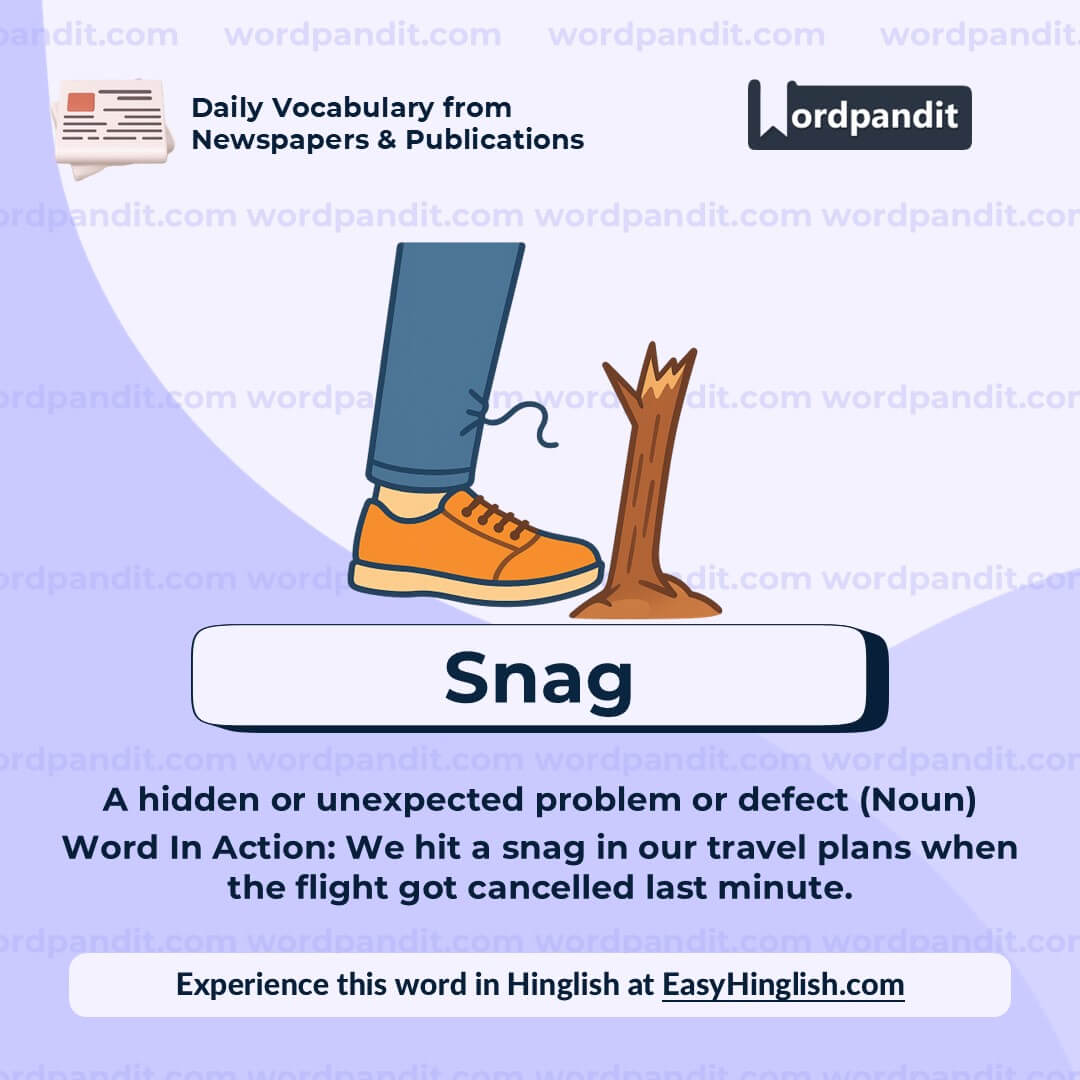
WORD-4: Snag
Context:
"It is shocking that a technical snag was detected in the Air India plane which crashed and it was grounded some six months ago. Was the snag rectified? A probe should be ordered to determine the reason for the crash." - The Telegraph online
Explanatory Paragraph:
A “snag” refers to an unexpected problem or difficulty that interrupts progress or causes concern. While it can mean a small tear or catch in physical objects like fabric, in modern usage—especially in technical or operational settings—a snag usually means a malfunction, defect, or sudden obstacle. In the aviation context, a “technical snag” is a mechanical or system fault that needs to be resolved before the aircraft is deemed safe.
Meaning: A hidden or unexpected problem or defect (Noun)
Pronunciation: snag
Difficulty Level: ⭐⭐ Beginner
Etymology: Likely of Scandinavian origin; related to Norwegian *snagg*, meaning "pointed object"—later evolving to refer to a small but catching problem.
Prashant Sir's Notes:
“Snag” is commonly used in informal English to refer to small but critical issues, especially in machinery, software, or plans. Watch for phrases like “technical snag” or “hit a snag”—they signal hidden complications. It's a word that combines brevity with impact.
Synonyms & Antonyms:
Synonyms: glitch, hitch, defect, problem, flaw, malfunction
Antonyms: solution, fix, clearance, resolution, success
Usage Examples:
- The launch of the app was delayed due to a last-minute technical snag.
- They hit a snag in negotiations when neither party would compromise.
- Her sweater snagged on a nail as she walked past the wooden fence.
- A small snag in the engine system forced the pilot to delay takeoff.
Cultural Reference:
The phrase “hit a snag” is often used in TV and film plotlines when characters encounter unexpected hurdles, adding tension or delaying success—e.g., in *The Office* or *Breaking Bad*.
Think About It:
Why do seemingly small "snags" often lead to major consequences, especially in complex systems like aviation or technology?
Quick Activity:
Think of a time you experienced a "snag" in your day—describe the situation in 2 lines and how you resolved it.
Memory Tip:
Imagine a thread on your shirt catching on a nail—SNAG! A small catch that causes a bigger problem. That’s the idea of a “snag.”
Real-World Application:
In industries like aviation, IT, and project management, identifying and resolving snags quickly is critical to avoid failures, delays, or disasters. It's a key concept in troubleshooting.
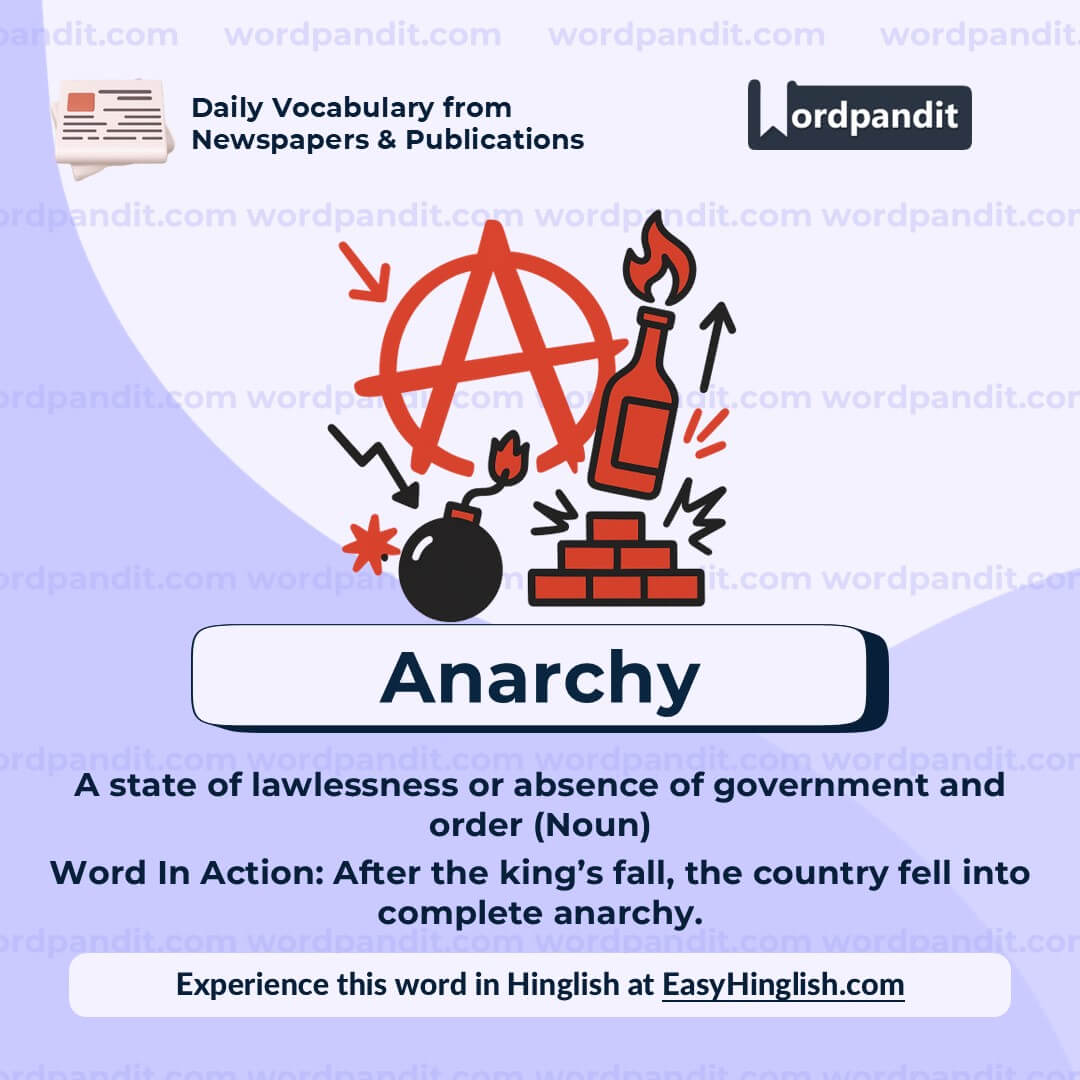
WORD-5: Anarchy
Context:
"The term 'anarchy' comes from the ancient Greek word anarchos, which means 'without authority'." - Aeon
Explanatory Paragraph:
“Anarchy” refers to a state of society without government, law, or authority—often leading to disorder or chaos. While many people associate it with violence and confusion, some political thinkers use “anarchy” more neutrally to describe a society free of imposed rule. The term can range from describing total breakdowns of order to philosophical movements advocating decentralized and voluntary organization.
Meaning: A state of lawlessness or absence of government and order (Noun)
Pronunciation: AN-ar-kee
Difficulty Level: ⭐⭐⭐ Intermediate
Etymology: From Greek *anarkhia*, from *an-* (without) + *arkhos* (ruler) — literally meaning "without a ruler".
Prashant Sir's Notes:
Don’t always equate “anarchy” with chaos—it also refers to a political philosophy that advocates self-governed societies based on voluntary institutions. However, in media and popular usage, it's commonly used to describe complete disorder or breakdown of law and order.
Synonyms & Antonyms:
Synonyms: lawlessness, disorder, chaos, turmoil, mayhem
Antonyms: order, government, control, stability, authority
Usage Examples:
- After the collapse of the central government, the region descended into anarchy.
- Some protest groups are wrongly accused of promoting anarchy when they seek reform.
- The movie portrayed a dystopian world of total anarchy where no rules existed.
- Philosophical anarchy is not about violence but about decentralizing power.
Cultural Reference:
In pop culture, the series *Sons of Anarchy* explores themes of rebellion, loyalty, and outlaw justice within a motorcycle gang—reflecting both literal and metaphorical interpretations of anarchy.
Think About It:
Is anarchy always negative, or can a society function without centralized authority? What would that look like in reality?
Quick Activity:
Imagine a city with no government, police, or rules. Write three things that might happen in such a scenario—both good and bad.
Memory Tip:
“An-” means without, and “-archy” relates to rule (as in monarchy, hierarchy). So, “anarchy” = without rule or authority.
Real-World Application:
The term “anarchy” is widely used in political discussions, social movements, and international relations to describe power vacuums, state collapse, or ideologies that challenge government authority.


