

Daily Vocabulary from Indian Newspapers and Publications
Welcome to Wordpandit’s Indian Vocabulary Hub
At Wordpandit, we understand the importance of staying rooted in the local context while expanding your language skills. This section focuses on enriching your vocabulary with words and phrases drawn from India’s leading newspapers and publications, ensuring you're learning vocabulary that is practical, relevant, and uniquely Indian.
Why Indian Sources Matter
We believe that the best way to master any language is by immersing yourself in local content. That’s why we carefully curate vocabulary from top Indian publications, including:
- The Hindu
- The Times of India
- The Economic Times
- Hindustan Times
- Live Mint
- The Indian Express
- And many others...
Stay Updated, Stay Relevant
With daily updates from Indian news sources, you’ll be consistently learning words that reflect the trends and shifts in Indian society and culture. Our focus is to provide vocabulary that enhances your understanding of the language in an Indian context.
How Wordpandit Supports Your Goals
Whether you’re preparing for exams, aiming to improve your professional communication, or simply want to stay connected with the latest Indian vocabulary, Wordpandit is here to guide you every step of the way.
Learn with a Practical Approach
Our interactive learning methodology includes real-world examples, engaging activities, and context-specific usage to ensure that every word becomes part of your active vocabulary.
Dive into Indian Vocabulary Today!

Why Choose Wordpandit?
Practical Learning: Focus on words you'll actually encounter in real-world reading, enhancing your comprehension and communication skills.
Diverse Content: From current affairs to scientific breakthroughs, our varied sources expose you to vocabulary across multiple domains.
Effortless Integration: Make Wordpandit a part of your daily routine. Just a few minutes each day can significantly boost your lexicon over time.
Your Path to Vocabulary Mastery
- Visit our Daily Vocabulary section regularly
- Explore new words and their usage in context
- Practice incorporating these words into your own writing and speech
- Track your progress as your vocabulary expands
Start Your Journey Today
Embark on your vocabulary enhancement journey with Wordpandit. By consistently engaging with our daily posts, you'll build a robust vocabulary that serves you well in academic, professional, and personal contexts.
Remember, a word a day keeps linguistic limitations at bay. Make Wordpandit your daily companion in the quest for vocabulary excellence!
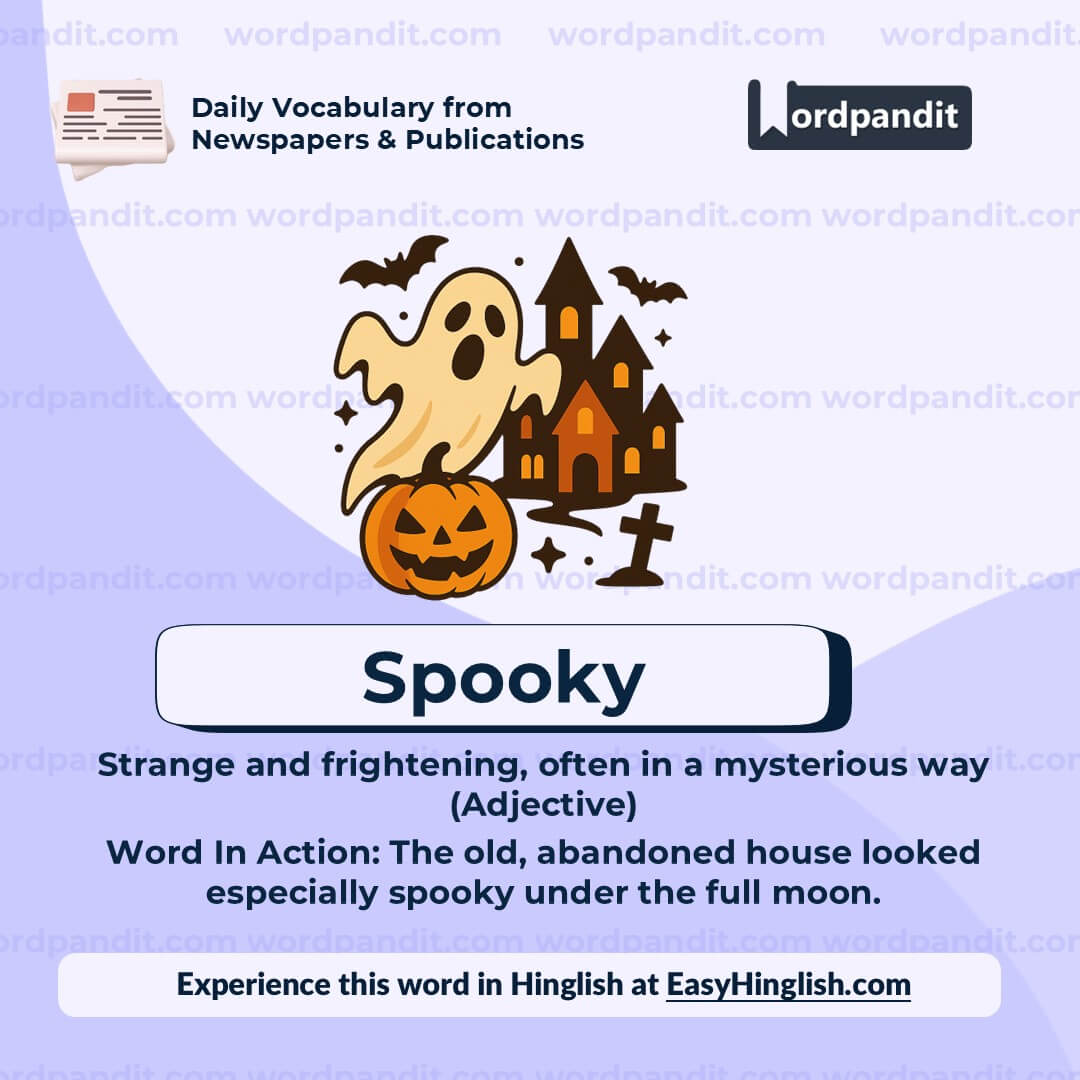
WORD-1: Spooky
Context:
"It’s spooky. Weird. Invasive. Has it happened to you? There you are chatting with friends and family about a specific subject and your mobile phone begins to show half a dozen ads for similar products. From holiday resorts to magical meds, airlines to real estate, you are under an audiovisual assault." - The Times of India
Explanatory Paragraph:
“Spooky” is used to describe something that causes a feeling of fear, unease, or creepiness, often in a mysterious or unexplainable way. In the quoted context, it conveys the unsettling feeling people get when digital devices seem to “listen in” on their conversations and respond with eerily relevant advertisements. It's not outright frightening, but it certainly makes you feel watched or disturbed.
Meaning: Strange and frightening, often in a mysterious way (Adjective)
Pronunciation: SPOO-kee
Difficulty Level: ⭐⭐ Basic
Etymology: Derived from “spook,” a word of Dutch origin meaning ghost or spirit, + the suffix “-y” for adjective formation.
Prashant Sir's Notes:
“Spooky” is one of those informal yet expressive words. It’s perfect for describing things that are unnerving but not terrifying—more like eerie coincidences or ghostly vibes rather than true horror.
Synonyms & Antonyms:
Synonyms: eerie, creepy, unsettling, strange, uncanny
Antonyms: comforting, normal, familiar, reassuring
Usage Examples:
- The old mansion had a spooky atmosphere, especially at night.
- It’s spooky how our phones seem to “know” what we’re talking about.
- The forest was quiet—too quiet. It felt downright spooky.
- She loves watching spooky movies around Halloween.
Cultural Reference:
“Spooky Season” is a popular term for the Halloween period in Western culture, marked by costumes, horror films, and ghost stories. - Pop Culture
Think About It:
Why do we sometimes enjoy spooky things—like ghost stories or eerie shows—even though they make us uncomfortable?
Quick Activity:
Make a list of five things that you’ve found spooky in the past year—news stories, digital experiences, or strange coincidences.
Memory Tip:
“Spooky” sounds like “boo!”—an easy reminder of things that startle or creep us out in a mild, ghostly way.
Real-World Application:
“Spooky” is commonly used in casual conversations, literature, movies, and tech articles when describing unsettling yet not terrifying experiences—especially those involving privacy concerns, AI behavior, or eerie coincidences.
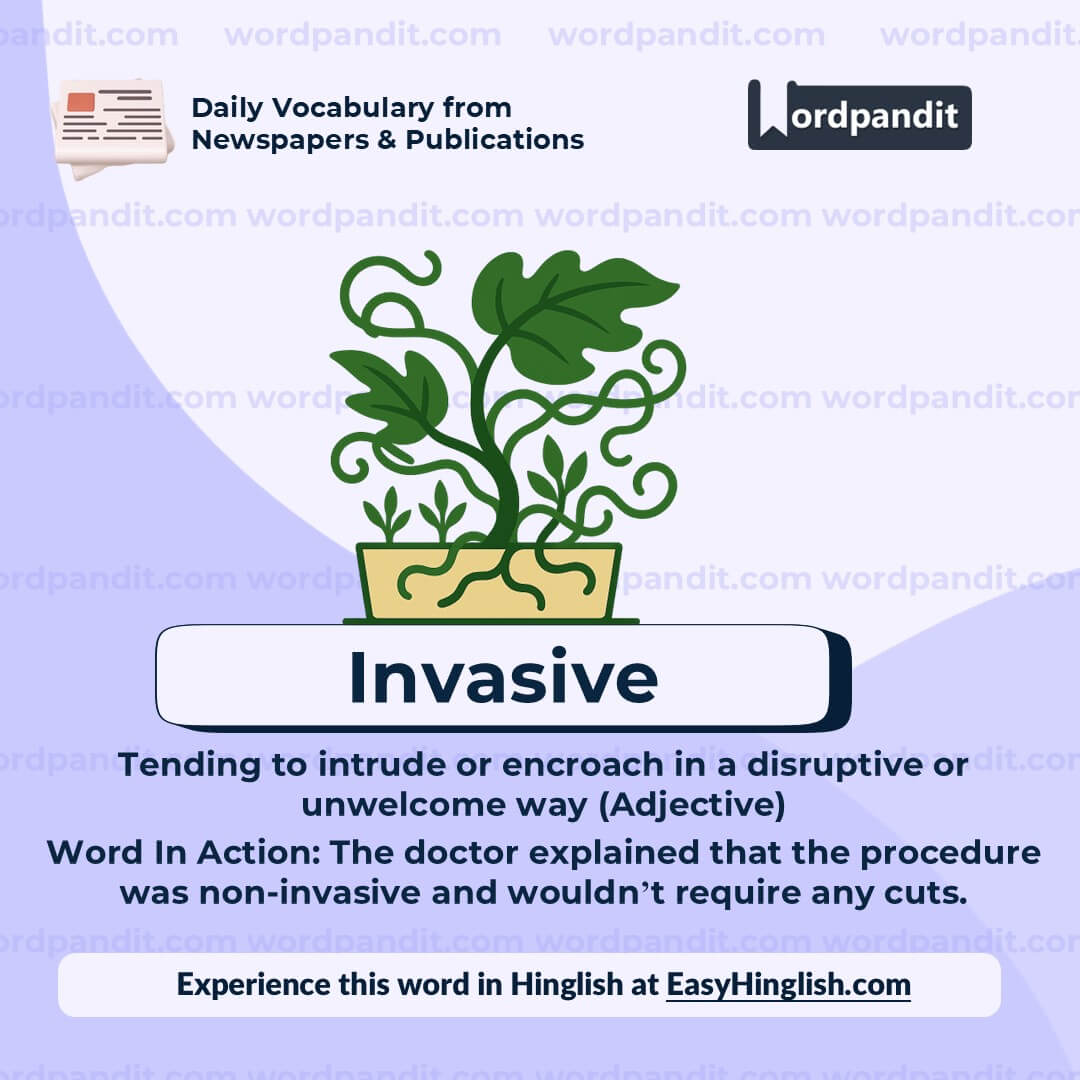
WORD-2: Invasive
Context:
"It’s spooky. Weird. Invasive. Has it happened to you? There you are chatting with friends and family about a specific subject and your mobile phone begins to show half a dozen ads for similar products. From holiday resorts to magical meds, airlines to real estate, you are under an audiovisual assault." - The Times of India
Explanatory Paragraph:
“Invasive” refers to something that intrudes or spreads in an unwelcome or harmful way. It is often used to describe actions, behaviors, or even species that enter spaces they shouldn’t, causing discomfort or disruption. In the quoted context, it conveys the sense of digital intrusion—how technology seems to breach personal privacy, making users feel uncomfortable or exposed by targeted advertising.
Meaning: Tending to intrude or encroach in a disruptive or unwelcome way (Adjective)
Pronunciation: in-VAY-siv
Difficulty Level: ⭐⭐⭐ Intermediate
Etymology: From Latin “invadere” meaning “to go into, attack, or intrude.”
Prashant Sir's Notes:
“Invasive” is a powerfully descriptive word. It applies to privacy, medical procedures, species, and even questions. If something makes you feel like your space—physical or mental—is being violated, it’s probably invasive.
Synonyms & Antonyms:
Synonyms: intrusive, encroaching, pushy, aggressive, unwelcome
Antonyms: respectful, nonintrusive, subtle, benign
Usage Examples:
- Many people consider constant digital tracking to be invasive.
- He asked such invasive questions that she felt deeply uncomfortable.
- Some medical tests are invasive and require minor surgery.
- The park is now overrun by invasive plant species from other regions.
Cultural Reference:
“Invasive species” like the water hyacinth or cane toad are often cited in environmental studies as examples of how non-native organisms can disrupt ecosystems. - Environmental Science Textbooks
Think About It:
In a connected world, how can we balance innovation with personal privacy and avoid being invasive?
Quick Activity:
Reflect on a time when someone or something felt invasive to you—digitally, socially, or physically. Write one sentence about why it felt that way.
Memory Tip:
Think of “invasive” as someone **invading** your personal space—pushing in where they don’t belong.
Real-World Application:
“Invasive” is frequently used in discussions around data privacy, environmental science, and health. Recognizing its nuance helps articulate concerns in formal and informal contexts about boundaries, whether physical or digital.
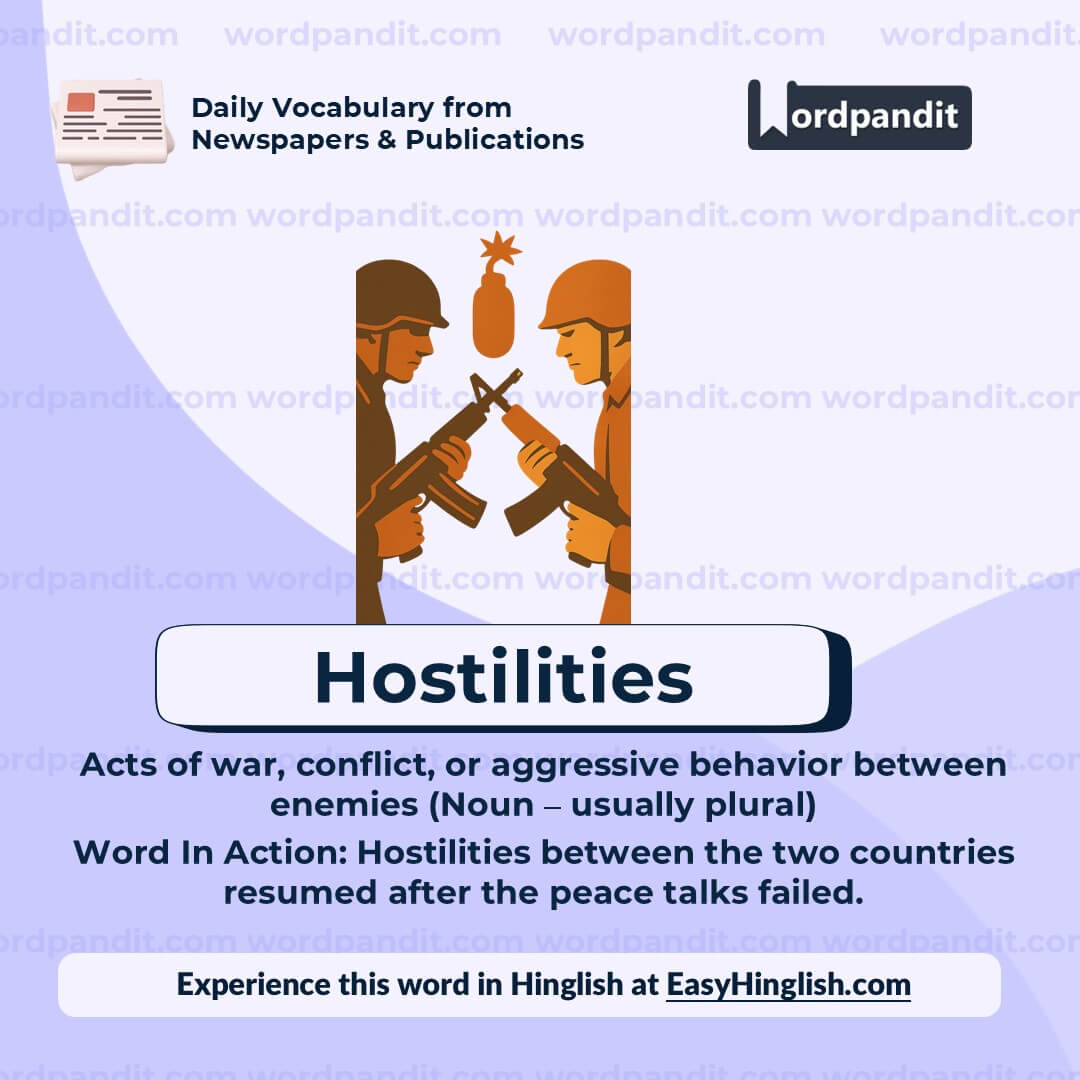
WORD-3: Hostilities
Context:
"Though on May 10, India and Pakistan reached a consensus for a ‘full and immediate ceasefire’ after four days of intense military engagements, the hostilities are not going to end in the near future." - The Times of India
Explanatory Paragraph:
“Hostilities” refers to acts of war or conflict between opposing groups or nations. It signifies violent actions, aggression, or open fighting, especially in a military context. In the sentence above, even though a ceasefire was declared, the word suggests that deeper tensions and the potential for violence remain. It’s a term frequently used in diplomatic, political, and historical discussions about war and peace.
Meaning: Acts of war, conflict, or aggressive behavior between enemies (Noun – usually plural)
Pronunciation: hos-TIL-ih-teez
Difficulty Level: ⭐⭐ Beginner
Etymology: From Latin hostis meaning “enemy” and Middle French hostilité. Used in English since the 15th century to describe acts of warfare or aggression.
Prashant Sir's Notes:
Remember, “hostilities” doesn’t just mean fighting—it implies deeper animosity and unresolved conflict. Even during peace talks, hostilities can linger under the surface. This word adds serious tone and weight to discussions about conflict.
Synonyms & Antonyms:
Synonyms: conflict, aggression, combat, warfare, animosity
Antonyms: peace, harmony, truce, calm, reconciliation
Usage Examples:
- Hostilities between the two nations resumed after the peace talks failed.
- The ceasefire helped reduce hostilities along the border.
- Hostilities erupted when the militia crossed into enemy territory.
- The negotiations aimed to end all forms of hostilities by the end of the month.
Cultural Reference:
During World War I, the term “hostilities” was officially used in documents like the Armistice of 1918 to mark the end of fighting between Allied and German forces.
Think About It:
Is it possible to truly end hostilities between nations without addressing the root causes of conflict?
Quick Activity:
Write two sentences: one using “hostilities” to describe a military situation, and another where it describes a social or personal conflict.
Memory Tip:
“Hostilities” sounds like “hostile”—so think of an enemy acting hostile or aggressive, especially in war. Easy link!
Real-World Application:
The word is widely used in news reporting, diplomatic discourse, and history lessons to describe both actual fighting and the tensions that lead to or follow it. Recognizing it helps decode global affairs accurately.
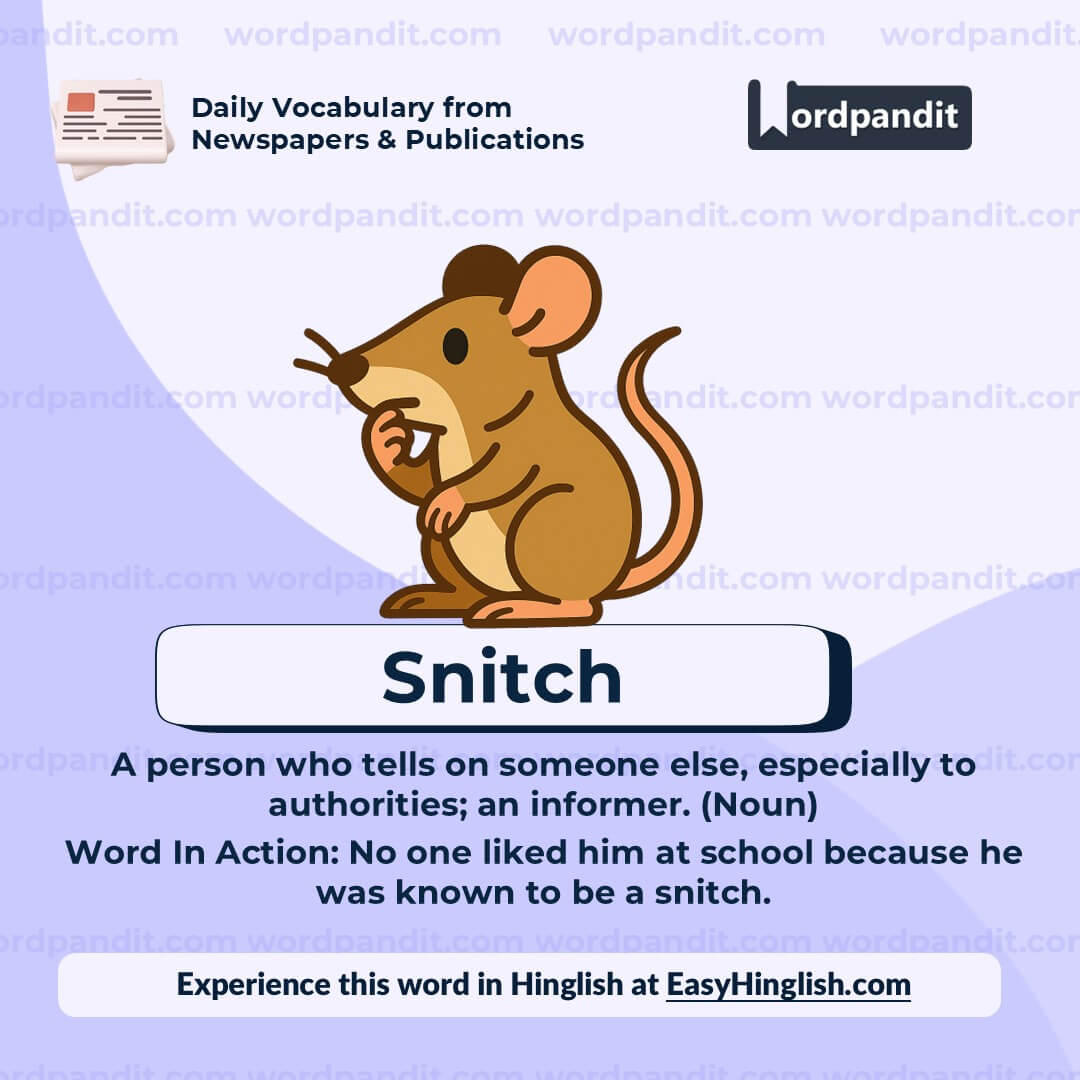
WORD-4: Snitch
Context:
"But, you sputter, my phone was off, closed, no juice, like who is the snitch in the room? How the heck did they figure out what we were talking about? For the first few times you tend to marvel at the ability of technology to win guessing games – wow. But after the novelty wears off, you begin to see it as an invasion of your privacy. If they can print-out your mind with a closed phone, what else do they know about you?" - The Times of India
Explanatory Paragraph:
“Snitch” is an informal and often derogatory term for someone who tells on others, usually by reporting their secrets or wrongdoings to authorities. Traditionally used in schoolyard or criminal contexts, it implies betrayal or disloyalty. In the quote, it’s used metaphorically and humorously—the author suspects that some hidden “snitch,” like a phone or app, is secretly relaying private conversations to advertisers or tech platforms, breaching personal privacy.
Meaning: A person who tells on someone else, especially to authorities; an informer. (Noun)
Pronunciation: snitch
Difficulty Level: ⭐⭐ Basic
Etymology: Origin unknown; possibly from British dialect “snitch” meaning “to nose” or “snatch.” In use since the 18th century.
Prashant Sir's Notes:
This is a street-style word that’s made its way into pop culture and tech commentary. While it literally refers to someone who tattles, it can also describe anything that secretly leaks information—like an app or device. Fun, edgy, and useful in casual writing!
Synonyms & Antonyms:
Synonyms: informer, tattletale, squealer, rat, whistleblower
Antonyms: loyalist, confidant, ally, protector
Usage Examples:
- No one wanted to be labeled the snitch in the group.
- The app acted like a digital snitch, sharing private data without consent.
- He snitched on his classmates and faced social backlash.
- In crime dramas, snitches often get special deals in exchange for information.
Cultural Reference:
“Snitches get stitches” is a phrase popularized in gangster culture, cautioning against betrayal. It's widely referenced in movies, TV shows, and hip-hop lyrics. - Urban Slang Culture
Think About It:
Is it always wrong to “snitch”? When does revealing the truth outweigh loyalty to a group or friend?
Quick Activity:
Imagine your phone is a “snitch.” Write a two-line ad warning people about it in a witty or creative way.
Memory Tip:
“Snitch” rhymes with “tattletale glitch”—think of a glitchy app that betrays your secrets without your knowing.
Real-World Application:
Used in casual speech and pop culture, “snitch” helps capture the idea of betrayal—whether by people or technology. In tech discussions, it humorously critiques how apps or devices may “leak” personal information.
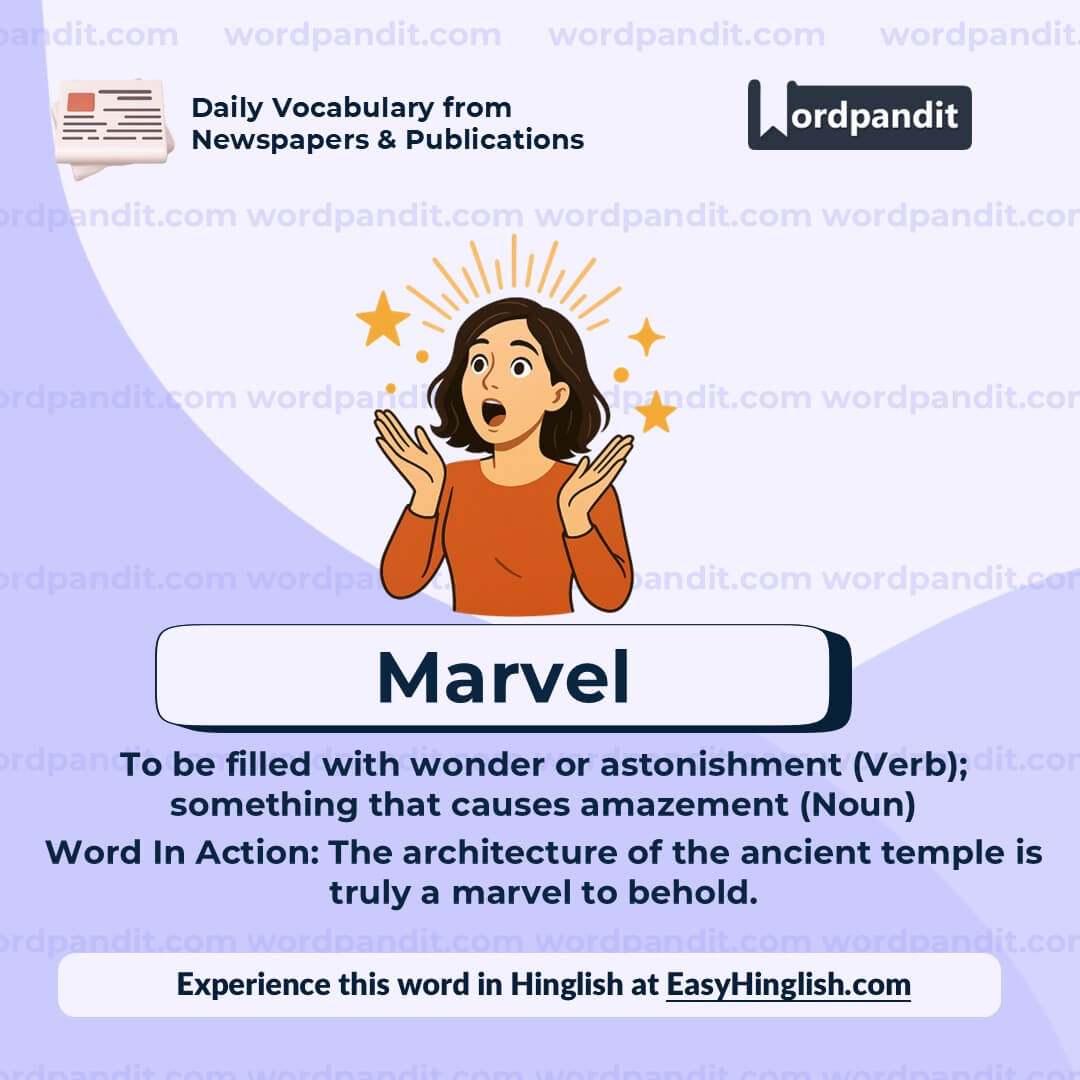
WORD-5: Marvel
Context:
"But, you sputter, my phone was off, closed, no juice, like who is the snitch in the room? How the heck did they figure out what we were talking about? For the first few times you tend to marvel at the ability of technology to win guessing games – wow. But after the novelty wears off, you begin to see it as an invasion of your privacy. If they can print-out your mind with a closed phone, what else do they know about you?" - The Times of India
Explanatory Paragraph:
“Marvel” is used to express a sense of wonder or amazement at something impressive or unexpected. It can function as both a noun and a verb. In the quote, the writer uses “marvel” to describe the initial reaction of awe at how accurately technology seems to “guess” what one is thinking or talking about—before that awe shifts to discomfort. It highlights how something can inspire admiration and suspicion at the same time.
Meaning: To be filled with wonder or astonishment (Verb); something that causes amazement (Noun)
Pronunciation: MAHR-vuhl
Difficulty Level: ⭐⭐ Basic
Etymology: From Old French *merveille*, meaning “a wonder,” derived from Latin *mirabilia*, “wonderful things.”
Prashant Sir's Notes:
“Marvel” is a great word for expressing admiration without exaggeration. It's more refined than “wow” but still captures wonder. Don't confuse it only with the superhero brand—its older and more poetic meaning is just as powerful!
Synonyms & Antonyms:
Synonyms: wonder, admire, be amazed, gape, awe
Antonyms: disregard, ignore, be unimpressed, scorn
Usage Examples:
- He marvelled at the beauty of the snow-covered mountains.
- We still marvel at the technological advances made in such a short time.
- The child looked up in marvel as the fireworks lit the sky.
- Tourists marvel at the engineering brilliance of the Taj Mahal.
Cultural Reference:
Marvel Comics, founded in 1939, became one of the most iconic comic book brands, introducing superheroes like Spider-Man, Iron Man, and the Avengers—characters that millions of fans “marvel” at to this day. - Pop Culture History
Think About It:
What was the last thing you truly marvelled at? What made it so extraordinary to you?
Quick Activity:
Write two sentences: one using “marvel” as a verb and another as a noun.
Memory Tip:
Think of “Marvel” superheroes—they make us marvel (wonder) at their power and courage.
Real-World Application:
“Marvel” is a versatile word in both formal and informal writing. Whether you're describing art, science, technology, or nature, it's ideal for conveying genuine amazement without sounding exaggerated.


