

Daily Vocabulary from Indian Newspapers and Publications
Welcome to Wordpandit’s Indian Vocabulary Hub
At Wordpandit, we understand the importance of staying rooted in the local context while expanding your language skills. This section focuses on enriching your vocabulary with words and phrases drawn from India’s leading newspapers and publications, ensuring you're learning vocabulary that is practical, relevant, and uniquely Indian.
Why Indian Sources Matter
We believe that the best way to master any language is by immersing yourself in local content. That’s why we carefully curate vocabulary from top Indian publications, including:
- The Hindu
- The Times of India
- The Economic Times
- Hindustan Times
- Live Mint
- The Indian Express
- And many others...
Stay Updated, Stay Relevant
With daily updates from Indian news sources, you’ll be consistently learning words that reflect the trends and shifts in Indian society and culture. Our focus is to provide vocabulary that enhances your understanding of the language in an Indian context.
How Wordpandit Supports Your Goals
Whether you’re preparing for exams, aiming to improve your professional communication, or simply want to stay connected with the latest Indian vocabulary, Wordpandit is here to guide you every step of the way.
Learn with a Practical Approach
Our interactive learning methodology includes real-world examples, engaging activities, and context-specific usage to ensure that every word becomes part of your active vocabulary.
Dive into Indian Vocabulary Today!

Why Choose Wordpandit?
Practical Learning: Focus on words you'll actually encounter in real-world reading, enhancing your comprehension and communication skills.
Diverse Content: From current affairs to scientific breakthroughs, our varied sources expose you to vocabulary across multiple domains.
Effortless Integration: Make Wordpandit a part of your daily routine. Just a few minutes each day can significantly boost your lexicon over time.
Your Path to Vocabulary Mastery
- Visit our Daily Vocabulary section regularly
- Explore new words and their usage in context
- Practice incorporating these words into your own writing and speech
- Track your progress as your vocabulary expands
Start Your Journey Today
Embark on your vocabulary enhancement journey with Wordpandit. By consistently engaging with our daily posts, you'll build a robust vocabulary that serves you well in academic, professional, and personal contexts.
Remember, a word a day keeps linguistic limitations at bay. Make Wordpandit your daily companion in the quest for vocabulary excellence!
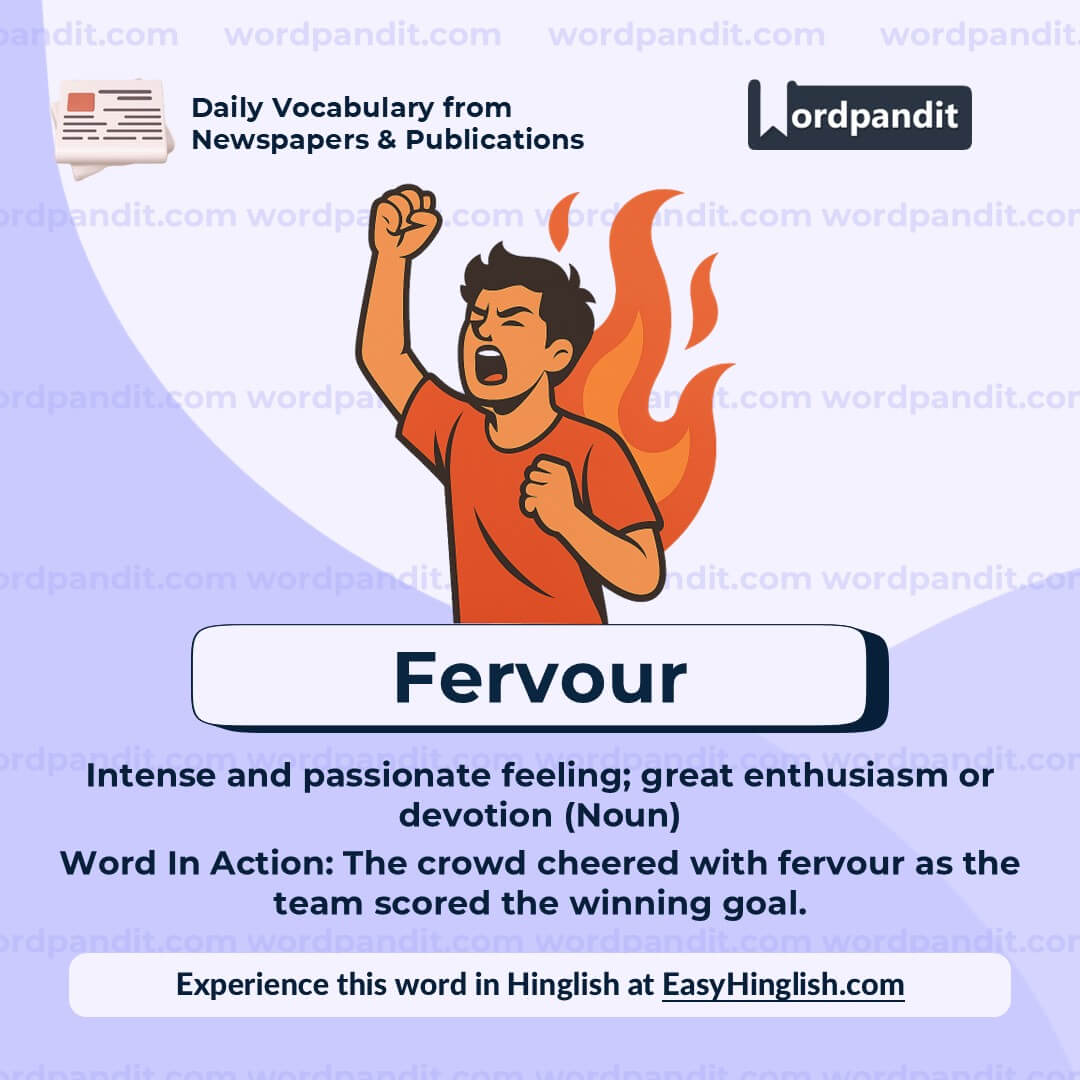
WORD-1: Fervour
Context:
"But that fervour seems to have been missing for Bitcoin in particular and crypto in general during 2023." - Live Mint
Explanatory Paragraph:
Fervour meaning in English is 'intense and passionate feeling or enthusiasm for something.' This word is used when describing strong emotional commitment, excitement, or zeal towards a cause, belief, or activity. How to use fervour effectively: it commonly appears in formal writing, news analysis, and competitive exam passages to describe passionate movements, religious devotion, patriotic feelings, or intense market enthusiasm in business contexts.
Meaning: Intense and passionate feeling; great enthusiasm or devotion (Noun)
Pronunciation: FUR-vur (British: FER-vur)
Difficulty Level: ⭐⭐⭐ Intermediate
Etymology: Fervour comes from Latin 'fervere' meaning 'to boil or glow,' through Old French 'fervour.' The word originally described physical heat and boiling, which evolved metaphorically to represent intense emotional heat and passionate intensity in feelings and beliefs.
Prashant Sir's Notes:
Many students confuse fervour with 'favour'—completely different words! The difference between fervour and enthusiasm is subtle: fervour carries a deeper, almost burning quality, while enthusiasm can be lighter. For CAT and GRE aspirants, fervour frequently appears in RC passages about social movements, religious contexts, or market sentiment. In Indian English newspapers, you'll often see "nationalist fervour," "religious fervour," or "electoral fervour" during political campaigns. Notice how fervour usage in sentences typically describes collective passion rather than individual preference—think cricket World Cup celebrations, not someone liking their morning coffee!
Synonyms & Antonyms:
Synonyms: passion, zeal, ardour, enthusiasm, intensity, eagerness, devotion, fervency, fire, warmth
Antonyms: apathy, indifference, coolness, detachment, dispassion, lethargy
Usage Examples:
- The nationalist fervour during India's Independence Day celebrations was evident in every street corner adorned with tricolour flags.
- Priya's fervour for social justice led her to quit her corporate job and start an NGO working with underprivileged children.
- The startup founder pitched his idea with such fervour that investors immediately recognized his genuine commitment to the mission.
- Cricket fans displayed unprecedented fervour when India won the World Cup, with celebrations continuing throughout the night in Mumbai.
Cultural Reference:
"The fervour with which millions of Indians celebrate festivals like Diwali and Holi reflects the deep cultural and spiritual connection that binds communities together across the nation." - Common observation in Indian cultural studies
Think About It:
Can fervour for a cause ever become counterproductive? When does passionate intensity cross the line into harmful fanaticism?
Quick Activity:
Identify three current events or movements in India where people are showing fervour. Write one sentence for each describing what they're passionate about and why.
Memory Tip:
Think of 'Fervour' as 'FER-FIRE'—imagine intense FIRE burning inside someone's heart when they care deeply about something. The 'ferv' sounds like 'fervent flames' of passion that cannot be extinguished easily.
Real-World Application:
Fervour is commonly used in newspaper editorials, political analysis, and business reports to describe intense public sentiment or market enthusiasm. Journalists use it when covering religious gatherings, political rallies, sporting events, or stock market trends. In academic essays and competitive exam answers, using fervour demonstrates sophisticated vocabulary when analyzing mass movements, cultural phenomena, or describing characters' intense motivations in literature passages.
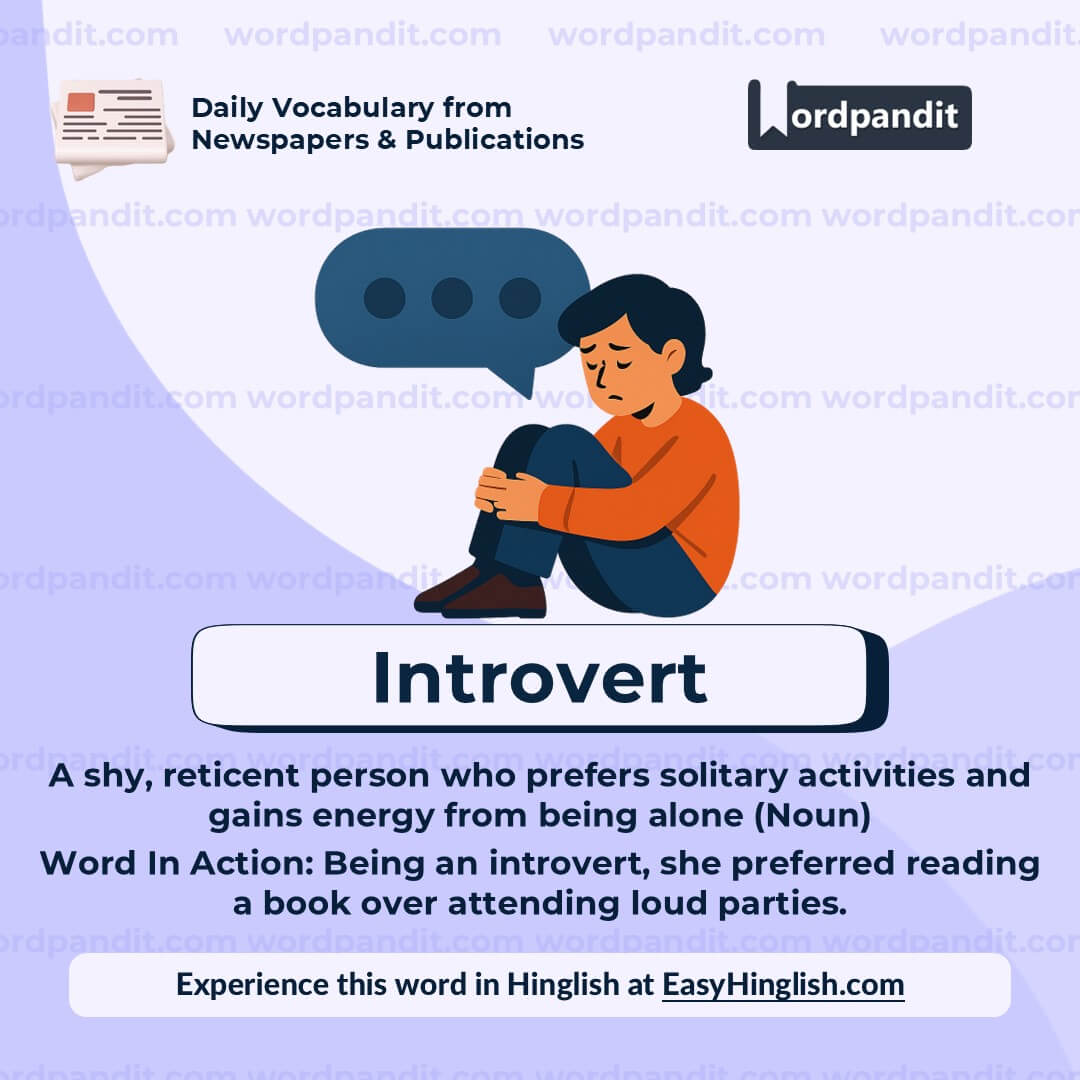
WORD-2: Introvert
Context:
"Otroverts are individuals who exhibit both introverted and extroverted tendencies depending on the context."
Explanatory Paragraph:
Introvert meaning in English is 'a person who prefers solitary activities and gets energized by spending time alone rather than in social settings.' This word is used when describing personality types and behavioral patterns in psychology and everyday conversation. How to use introvert correctly: it appears frequently in personality discussions, workplace communication, self-help literature, and competitive exam passages exploring human behavior and social dynamics.
Meaning: A shy, reticent person who prefers solitary activities and gains energy from being alone (Noun)
Pronunciation: IN-troh-vurt
Difficulty Level: ⭐⭐ Basic to Intermediate
Etymology: Introvert comes from Latin 'intro-' meaning 'inward' and 'vertere' meaning 'to turn.' The term was popularized in the early 20th century by psychologist Carl Jung, who used it to describe people whose psychological energy flows inward toward their inner world of thoughts and feelings rather than outward toward external social interaction.
Prashant Sir's Notes:
Students often ask: what is the difference between introvert and shy? Being an introvert is about energy management—introverts recharge alone and find social interaction draining—while shyness is about fear or anxiety in social situations. An introvert can be confident and social but still needs alone time. For UPSC and MBA aspirants, understanding introvert usage in organizational behavior contexts is crucial. In Indian workplace culture, there's often a bias toward extroverted behavior, but recognizing that introverts bring deep thinking and focused work styles is important. Remember: introvert is not a weakness—it's simply a different way of processing the world and managing energy.
Synonyms & Antonyms:
Synonyms: loner, homebody, solitary person, reserved individual, wallflower, recluse (extreme), contemplative person
Antonyms: extrovert, socialite, outgoing person, people person, gregarious individual, social butterfly
Usage Examples:
- Rahul, a natural introvert, declined the party invitation and instead spent his Saturday evening reading books at home.
- Many successful entrepreneurs are introverts who excel at strategic thinking and focused problem-solving rather than constant networking.
- The teacher recognized that Priya was an introvert and created opportunities for her to contribute through written assignments.
- As an introvert working in a Bangalore call center, Sneha found the constant social interaction exhausting and needed quiet evenings to recharge.
Cultural Reference:
"In the film 'Taare Zameen Par,' Ishaan displays introverted tendencies, finding comfort in his art and inner world rather than the loud, competitive classroom environment." - Analysis of character psychology in Indian cinema
Think About It:
Why does Indian society often celebrate extroverted behavior in schools and workplaces? How can we create more inclusive spaces that value both introverted and extroverted strengths?
Quick Activity:
List three famous introverts (they can be from any field—scientists, writers, actors, leaders) and identify one strength that their introverted nature might have contributed to their success.
Memory Tip:
Remember 'Introvert' as 'INTRO-INVERT'—think of someone turning INWARD (intro = inside, vert = turn). Imagine a person literally turning inward, away from a noisy party, to recharge their batteries in peaceful solitude.
Real-World Application:
Introvert is widely used in HR discussions, personality assessments, team-building workshops, and organizational psychology. Understanding this term is essential for effective workplace communication and self-awareness. In competitive exams like CAT and GRE, passages exploring personality psychology frequently use introvert to discuss behavioral patterns. Career counselors and managers use this vocabulary when discussing work styles, communication preferences, and optimal team composition in corporate settings.
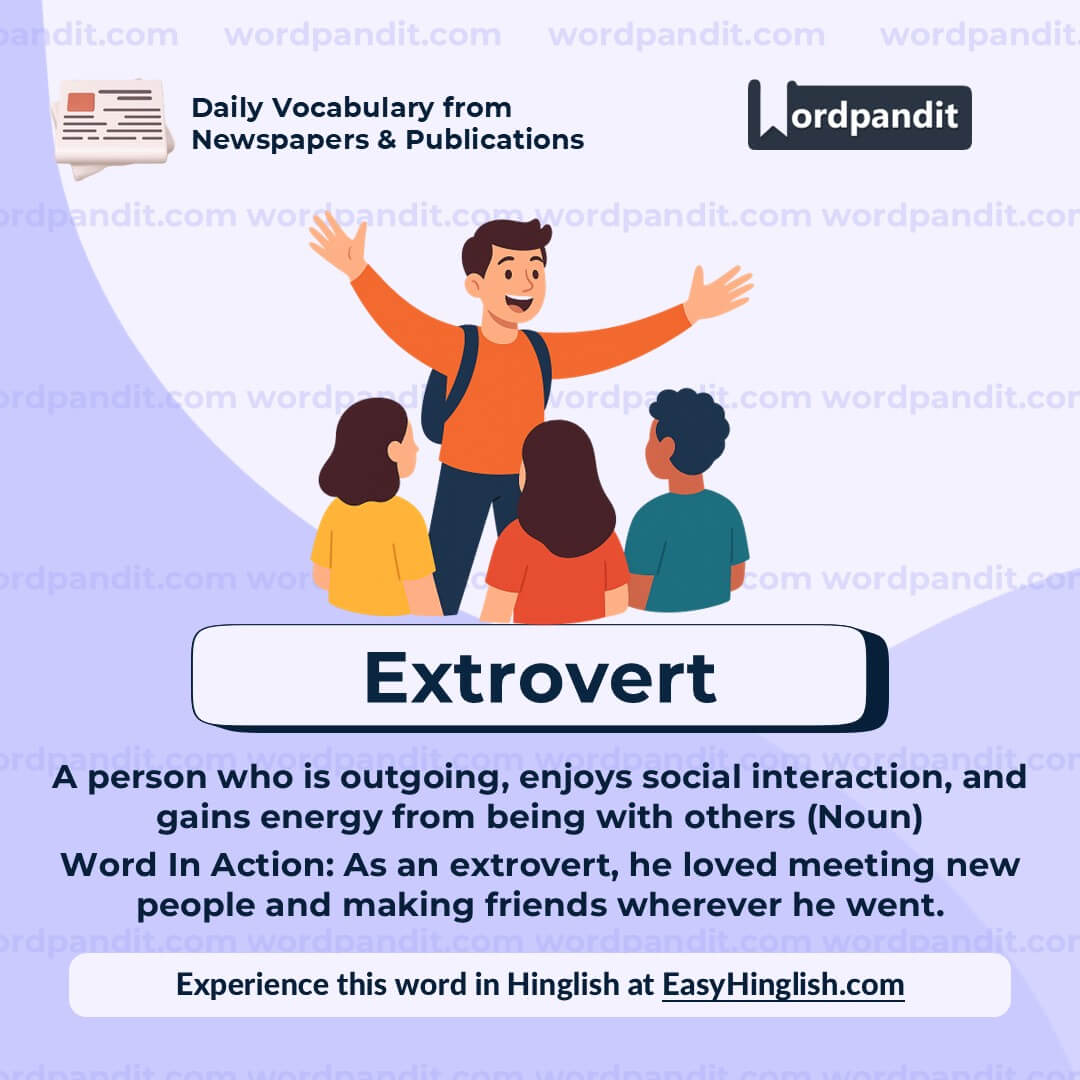
WORD-3: Extrovert
Context:
"Extroverts are individuals who exhibit both introverted and extroverted tendencies depending on the context."
Explanatory Paragraph:
Extrovert meaning in English is 'a person who is outgoing, sociable, and energized by interacting with others.' This word is used when describing someone who thrives in social situations and gains energy from being around people. How to use extrovert correctly is important for personality discussions, psychology contexts, and competitive exams like CAT, GRE, and UPSC where passages often explore human behavior and character traits in formal writing.
Meaning: A person who is outgoing, enjoys social interaction, and gains energy from being with others (Noun)
Pronunciation: EKS-troh-vurt
Difficulty Level: ⭐⭐ Basic to Intermediate
Etymology: Extrovert comes from the Latin 'extra' meaning 'outside' and 'vertere' meaning 'to turn.' The term was popularized by psychologist Carl Jung in the early 20th century to describe individuals whose energy and attention are directed outward toward people and activities. The word evolved from psychological terminology into everyday language to describe sociable, outgoing personalities.
Prashant Sir's Notes:
Many students confuse extrovert with 'outgoing'—while both describe social people, extrovert usage specifically refers to someone who gains energy from social interaction, not just someone who talks a lot. The difference between extrovert and introvert is crucial for CAT and GRE reading comprehension passages on psychology and personality types. For UPSC aspirants, understanding extrovert for essay writing helps when discussing leadership qualities and social dynamics. In Indian corporate culture, you'll often see job descriptions asking for 'extroverted candidates,' meaning they want people who thrive in team environments and client-facing roles. Remember, being an extrovert isn't about being loud—it's about where you get your energy from.
Synonyms & Antonyms:
Synonyms: outgoing person, socialite, people person, gregarious individual, sociable type, life of the party, social butterfly, friendly soul
Antonyms: introvert, loner, recluse, solitary person, hermit, wallflower
Usage Examples:
- As a natural extrovert, Priya volunteered to lead the client presentation while her introverted colleagues preferred backend research work.
- Rahul's extrovert personality made him perfect for the sales role, where networking and building relationships were essential daily activities.
- The psychology passage discussed how extroverts process information differently, preferring group discussions over solitary reflection when solving complex problems.
- My roommate is such an extrovert that she makes friends within minutes at any wedding or party we attend.
Cultural Reference:
"In Bollywood, characters like Bunny from 'Yeh Jawaani Hai Deewani' perfectly exemplify the extrovert personality—always seeking adventure, thriving in social settings, and energized by new experiences and people." - Popular culture observation
Think About It:
Does Indian society value extroverts more than introverts in professional settings, and how does this affect workplace culture and career advancement opportunities?
Quick Activity:
List three famous Indians (from any field—sports, cinema, politics, business) who you consider extroverts and explain what behaviors make you identify them as such.
Memory Tip:
Think of 'Extrovert' as 'EXTRA-OUT'—these people have EXTRA energy that comes OUT when they're around others. Imagine a mobile phone that charges when connected to people instead of a charger—that's an extrovert!
Real-World Application:
In job applications, HR reports, and personality assessments, 'extrovert' is commonly used to describe ideal candidates for client-facing roles, team leadership positions, and sales careers. Understanding whether you're an extrovert or introvert helps in career planning—extroverts typically excel in roles involving constant interaction like marketing, public relations, teaching, and event management in Indian corporate environments.
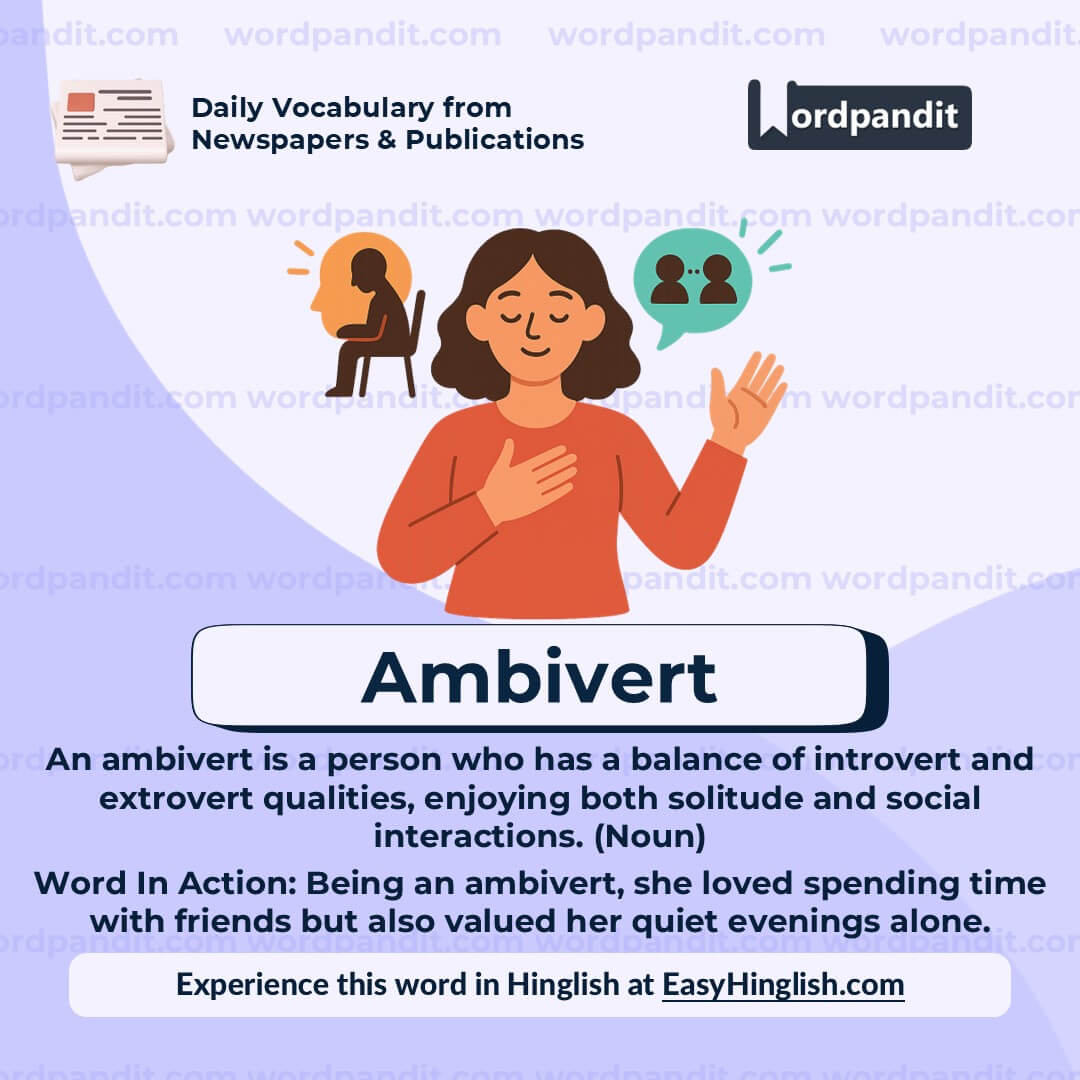
WORD-4: Ambivert
Context:
"Ambiverts are individuals who exhibit both introverted and extroverted tendencies depending on the context."
Explanatory Paragraph:
Ambivert meaning in English is 'a person who has a balance of both extroverted and introverted qualities, adapting their behavior based on the situation.' This word is used when describing someone who can be social and outgoing in some contexts but also enjoys solitude and quiet time. How to use ambivert is important in personality psychology, self-assessment discussions, and competitive exam passages for CAT, GRE, and UPSC that explore nuanced human behavior and adaptable character traits.
Meaning: An ambivert is a person who has a balance of introvert and extrovert qualities, enjoying both solitude and social interactions. (Noun)
Pronunciation: AM-bee-vurt
Difficulty Level: ⭐⭐⭐ Intermediate
Etymology: Ambivert combines the Latin prefix 'ambi-' meaning 'both' or 'on both sides' with 'vert' from 'vertere' meaning 'to turn.' The term was introduced in the 1920s by social scientists studying personality types, filling the gap between Carl Jung's extrovert and introvert classifications. It evolved to describe the majority of people who don't fit neatly into either extreme category.
Prashant Sir's Notes:
Many students confuse ambivert with someone who's just 'moody' or 'inconsistent,' but ambivert usage specifically describes balanced personality traits, not changing moods. The difference between ambivert and extrovert is crucial for GRE and CAT passages on psychology—ambiverts adapt their energy levels to situations, while extroverts consistently seek social stimulation. For UPSC essay writing, understanding that most people are actually ambiverts helps in discussing realistic leadership and social dynamics. Students often ask: what is the difference between ambivert and extrovert? The key is flexibility—ambiverts can be the life of the party at a wedding but also enjoy a quiet Sunday reading alone, while true extroverts always prefer company. In Indian workplace culture, ambiverts often make the best managers because they can network confidently but also work independently.
Synonyms & Antonyms:
Synonyms: balanced personality, middle-ground personality, flexible socializer, adaptable personality, situational extrovert, context-dependent personality
Antonyms: extreme extrovert, extreme introvert, consistently outgoing, consistently reclusive, fixed personality type
Usage Examples:
- Anjali is a true ambivert who enjoys leading client presentations during the week but prefers staying home with books on weekends.
- The HR assessment revealed that most successful entrepreneurs are ambiverts, comfortable networking at events yet focused during solitary strategic planning sessions.
- Research suggests that ambiverts make excellent salespeople because they can listen attentively like introverts and persuade enthusiastically like extroverts when needed.
- Rohan realized he was an ambivert when he enjoyed the Diwali party immensely but felt equally satisfied spending the next day alone.
Cultural Reference:
"Characters like Kabir from 'Dear Zindagi' represent the ambivert personality—capable of deep, meaningful one-on-one conversations but also comfortable in social therapeutic settings, adapting their energy to what the situation demands." - Contemporary Bollywood character analysis
Think About It:
Could being an ambivert actually be an advantage in modern Indian workplaces that demand both independent productivity and collaborative team engagement?
Quick Activity:
Reflect on your last week and identify two situations where you behaved like an extrovert and two where you acted like an introvert—this might reveal whether you're an ambivert.
Memory Tip:
Think of 'Ambivert' as 'AMBI-VERSATILE'—the prefix 'ambi' means 'both' (like ambidextrous means using both hands). Imagine a smartphone with both Wi-Fi and mobile data—it switches between connection types based on what works best. That's an ambivert!
Real-World Application:
In personality assessments, career counseling, and organizational behavior studies, 'ambivert' is commonly used to describe the majority of people who don't fit extreme personality categories. Understanding ambivert tendencies helps in Indian workplace settings where professionals need both collaborative team skills and independent project execution. This term frequently appears in HR reports, self-help literature, and management training materials focused on adaptive leadership styles.
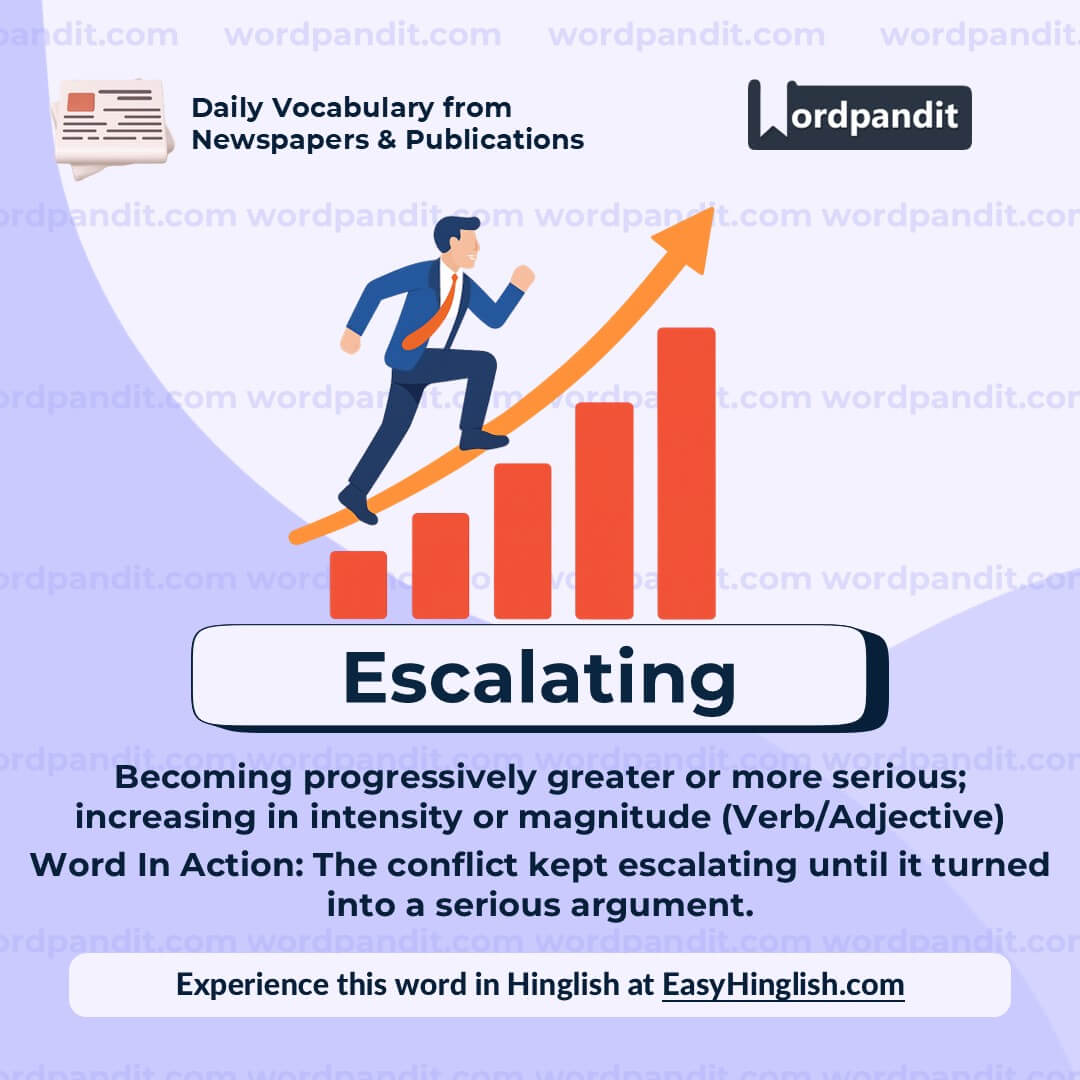
WORD-5: Escalating
Context:
"The rapidly escalating debt crisis in the Global South, while not a direct focus of the conference, cast a shadow over it." - Live Mint
Explanatory Paragraph:
Escalating meaning in English is 'increasing or intensifying in extent, volume, or severity, often rapidly.' This word is used when describing situations, conflicts, or problems that are becoming progressively worse or more intense over time. How to use escalating correctly is essential for understanding news articles, business reports, and competitive exam passages for CAT, GRE, and UPSC where economic crises, political tensions, and social issues are frequently discussed in formal writing.
Meaning: Becoming progressively greater or more serious; increasing in intensity or magnitude (Verb/Adjective)
Pronunciation: ES-kuh-lay-ting
Difficulty Level: ⭐⭐ Basic to Intermediate
Etymology: Escalating comes from the word 'escalate,' which derives from 'escalator'—the moving staircase invented in the early 1900s. The verb 'escalate' was coined in the 1920s, using the image of moving upward on an escalator to describe situations rising in intensity. During the Cold War era, the term became widely used in military and diplomatic contexts to describe tensions or conflicts increasing step-by-step, much like climbing an escalator.
Prashant Sir's Notes:
Many students confuse escalating with simply 'increasing'—while both mean growing, escalating usage specifically implies a worrying or concerning rise that often happens quickly. The difference between escalating and rising is that escalating carries negative connotations and suggests the situation is spiraling beyond control. For CAT and GRE aspirants, escalating frequently appears in reading comprehension passages about conflicts, crises, or problems where understanding the author's tone is critical. In Indian English newspapers like The Hindu and Indian Express, you'll constantly see phrases like 'escalating tensions,' 'escalating prices,' or 'escalating violence'—that pattern signals a situation demanding urgent attention. Students often ask: what is the difference between escalating and increasing? Remember, we say 'increasing population' but 'escalating conflict'—escalating implies danger or urgency.
Synonyms & Antonyms:
Synonyms: intensifying, worsening, mounting, spiraling, heightening, aggravating, accelerating, amplifying, mushrooming, snowballing
Antonyms: diminishing, decreasing, subsiding, declining, easing, de-escalating, lessening, abating
Usage Examples:
- The escalating pollution levels in Delhi forced authorities to implement emergency measures including odd-even vehicle restrictions and school closures.
- With food prices escalating rapidly across India, middle-class families struggled to maintain their monthly budgets and eating habits.
- The border dispute showed signs of escalating into a full-blown military confrontation unless diplomatic channels could establish dialogue immediately.
- Meera noticed her monthly electricity bills escalating every summer, forcing her to reconsider her air conditioning usage patterns.
Cultural Reference:
"In cricket commentary, you'll often hear 'the required run rate is escalating' during tense IPL chases, signaling that pressure is mounting on the batting team with each dot ball played." - Sports journalism observation
Think About It:
Why do conflicts and crises often follow an escalating pattern rather than jumping immediately to their worst point, and what does this tell us about opportunities for intervention?
Quick Activity:
Browse today's news headlines and identify three situations described as 'escalating'—notice how the word is used to create urgency and concern in reporting.
Memory Tip:
Think of 'Escalating' as 'ESCALATOR-TING'—imagine riding an escalator that keeps going up and up without stopping. Just like an escalator moves upward continuously, escalating situations keep getting worse step-by-step. Picture tensions riding an endless escalator to remember the meaning!
Real-World Application:
In news reporting, business analysis, and diplomatic communications, 'escalating' is commonly used to describe worsening situations requiring immediate attention—from escalating trade wars to escalating healthcare costs. Indian newspapers frequently use this term in headlines about border tensions, inflation, pollution crises, and political conflicts. For competitive exam essays and formal writing, escalating effectively signals that a problem is not static but dynamically worsening, making it crucial for describing urgent contemporary issues.


