

Daily Vocabulary from Indian Newspapers and Publications
Welcome to Wordpandit’s Indian Vocabulary Hub
At Wordpandit, we understand the importance of staying rooted in the local context while expanding your language skills. This section focuses on enriching your vocabulary with words and phrases drawn from India’s leading newspapers and publications, ensuring you're learning vocabulary that is practical, relevant, and uniquely Indian.
Why Indian Sources Matter
We believe that the best way to master any language is by immersing yourself in local content. That’s why we carefully curate vocabulary from top Indian publications, including:
- The Hindu
- The Times of India
- The Economic Times
- Hindustan Times
- Live Mint
- The Indian Express
- And many others...
Stay Updated, Stay Relevant
With daily updates from Indian news sources, you’ll be consistently learning words that reflect the trends and shifts in Indian society and culture. Our focus is to provide vocabulary that enhances your understanding of the language in an Indian context.
How Wordpandit Supports Your Goals
Whether you’re preparing for exams, aiming to improve your professional communication, or simply want to stay connected with the latest Indian vocabulary, Wordpandit is here to guide you every step of the way.
Learn with a Practical Approach
Our interactive learning methodology includes real-world examples, engaging activities, and context-specific usage to ensure that every word becomes part of your active vocabulary.
Dive into Indian Vocabulary Today!

Why Choose Wordpandit?
Practical Learning: Focus on words you'll actually encounter in real-world reading, enhancing your comprehension and communication skills.
Diverse Content: From current affairs to scientific breakthroughs, our varied sources expose you to vocabulary across multiple domains.
Effortless Integration: Make Wordpandit a part of your daily routine. Just a few minutes each day can significantly boost your lexicon over time.
Your Path to Vocabulary Mastery
- Visit our Daily Vocabulary section regularly
- Explore new words and their usage in context
- Practice incorporating these words into your own writing and speech
- Track your progress as your vocabulary expands
Start Your Journey Today
Embark on your vocabulary enhancement journey with Wordpandit. By consistently engaging with our daily posts, you'll build a robust vocabulary that serves you well in academic, professional, and personal contexts.
Remember, a word a day keeps linguistic limitations at bay. Make Wordpandit your daily companion in the quest for vocabulary excellence!

WORD-1: Potent
Context:
"Ahuja's prose resists ornament, leaning instead into a flat, affectless style that becomes most potent when describing the unfolding of social rupture and personal ruin." - The Wire
Explanatory Paragraph:
Potent meaning in English is 'having great power, influence, or effect.' This word is used when describing something that has strong impact or effectiveness, whether it's an argument, medicine, emotion, or piece of writing. Potent is commonly used in formal writing, news articles, and competitive exam passages to emphasize the strength or intensity of something's influence or capability. Understanding how to use potent correctly helps in expressing the degree of power or effectiveness in various contexts.
Meaning: Having great power, influence, or effect; strong and effective (Adjective)
Pronunciation: POH-tent
Difficulty Level: ⭐⭐ Basic to Intermediate
Etymology: Potent comes from Latin 'potens' meaning 'powerful' or 'able,' derived from 'posse' meaning 'to be able.' The word entered English in the 15th century, maintaining its core meaning of having great strength or influence. Over time, it expanded to describe anything from physical power to persuasive arguments and strong emotions.
Prashant Sir's Notes:
Many students confuse potent with potential—while both relate to power, potent means something is currently powerful, whereas potential means it has the possibility of becoming powerful. For CAT and GRE aspirants, potent frequently appears in reading comprehension passages when authors describe arguments, emotions, or literary techniques that have strong impact. The difference between potent and powerful is subtle but important: potent suggests concentrated effectiveness (like a potent medicine), while powerful implies broader strength. In Indian English newspapers, you'll often see potent used when describing political speeches, social movements, or economic policies that have significant influence on society.
Synonyms & Antonyms:
Synonyms: powerful, strong, effective, forceful, influential, compelling, vigorous, mighty, formidable, impactful
Antonyms: weak, ineffective, powerless, feeble, impotent, mild
Usage Examples:
- The Supreme Court's judgment proved potent enough to force immediate changes in the government's environmental policies across India.
- Priya's presentation was potent because she combined emotional storytelling with hard data, convincing the board to approve her startup funding.
- The farmer protests became a potent force in Indian politics, demonstrating the power of sustained grassroots movements.
- His grandmother's simple advice turned out to be the most potent remedy for his anxiety about the upcoming UPSC interview.
Cultural Reference:
"In cricket commentary, a bowler's potent spell can change the entire momentum of the match, just as Jasprit Bumrah's death overs have repeatedly proven devastating for opposing teams." - Sports journalism
Think About It:
What makes some arguments or messages more potent than others—is it the logic, the emotion, or the timing?
Quick Activity:
Think of three potent symbols in Indian culture (like the national flag, a political slogan, or a Bollywood dialogue) and write one sentence explaining why each one has such strong influence.
Memory Tip:
Think of 'Potent' as 'POT-of-ENT(ergy)'—imagine a pot filled with concentrated energy or power that has strong effects. Or remember: a potent medicine is one that POT-entially works ENTirely and effectively.
Real-World Application:
Potent is commonly used in journalism, academic writing, and business communication to describe arguments, strategies, or forces that have significant impact. Writers use it when analyzing political movements, evaluating marketing campaigns, discussing pharmaceutical effectiveness, or critiquing artistic works. In exam essays, using potent appropriately demonstrates sophisticated vocabulary and the ability to express degrees of effectiveness or influence precisely.
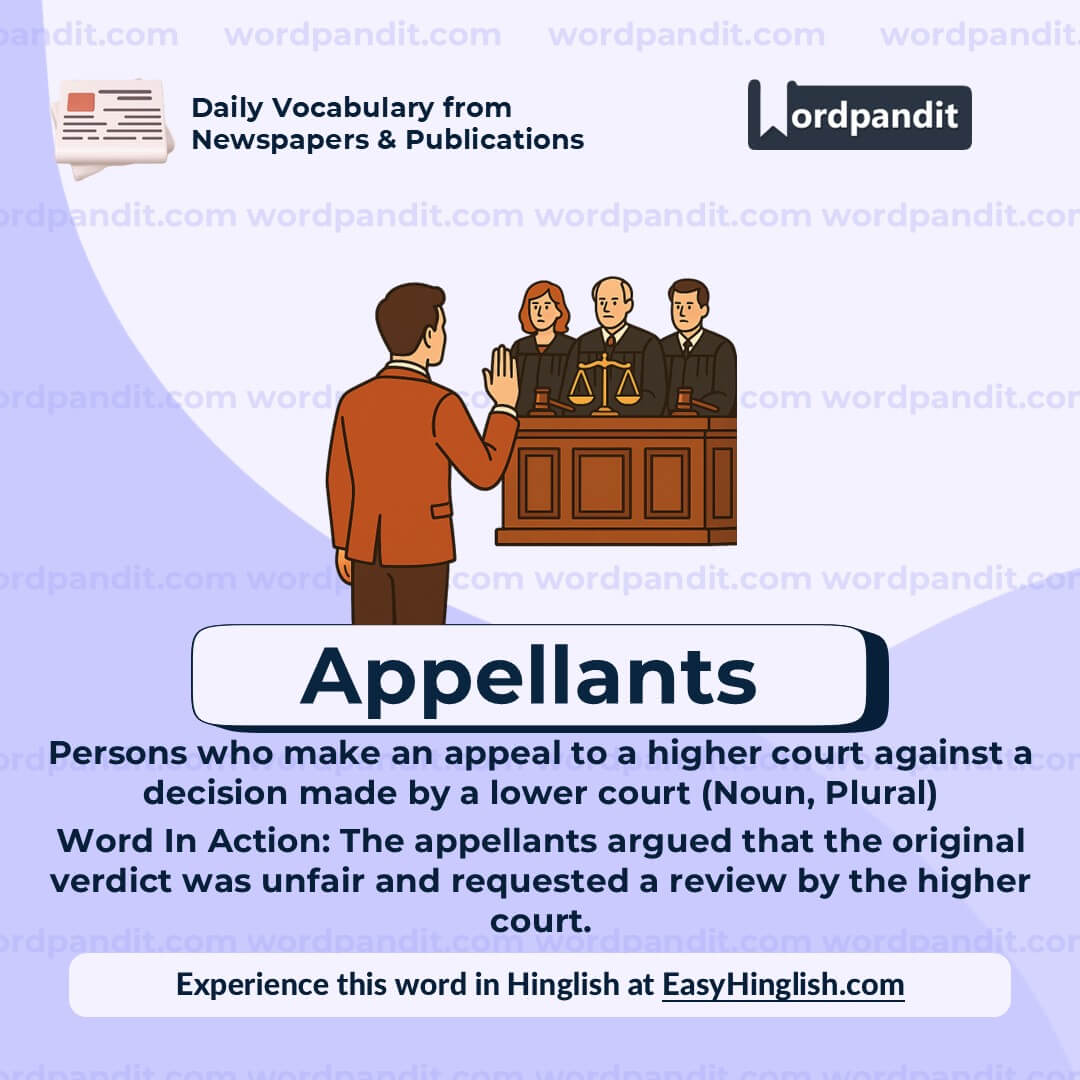
WORD-2: Appellants
Context:
"The Supreme Court bench also noted that five years have passed during which the appellants have been in jail." - The Wire
Explanatory Paragraph:
Appellants meaning in English is 'persons who appeal to a higher court to review a lower court's decision.' This word is used specifically in legal contexts when someone challenges a court ruling by taking their case to a superior court. Appellants is commonly used in news reports covering legal proceedings, Supreme Court judgments, and competitive exam passages dealing with judiciary topics. Understanding how to use appellants correctly is essential for anyone reading legal news or preparing for exams with current affairs components.
Meaning: Persons who make an appeal to a higher court against a decision made by a lower court (Noun, Plural)
Pronunciation: uh-PEL-unts
Difficulty Level: ⭐⭐⭐ Intermediate
Etymology: Appellants comes from Latin 'appellare' meaning 'to appeal to' or 'to call upon,' through Old French 'apeler.' The legal term developed in English law during the medieval period when court systems formalized the process of challenging decisions. The word specifically identifies the party initiating the appeal, distinguishing them from respondents who defend the original judgment.
Prashant Sir's Notes:
Many students confuse appellants with respondents—the difference between appellants and respondents is crucial in legal contexts. Appellants are those who file the appeal (challenging a decision), while respondents are those who respond to that appeal (defending the original decision). For UPSC aspirants, understanding appellants is essential since Indian legal system questions frequently appear in prelims and mains. In Indian newspapers like The Hindu and Indian Express, you'll see appellants used when covering Supreme Court and High Court cases. How to use appellants correctly: it's always about the party seeking to overturn or modify a previous court decision, not the original plaintiff or defendant.
Synonyms & Antonyms:
Synonyms: petitioners (in some contexts), challengers, applicants (in appeals), claimants
Antonyms: respondents, defendants (in original case), appellees
Usage Examples:
- The appellants argued before the Delhi High Court that their fundamental rights under Article 21 had been violated by the lower court's decision.
- After losing their case in the district court, the appellants filed a special leave petition in the Supreme Court seeking justice.
- The Supreme Court granted bail to the appellants, observing that their prolonged incarceration during the appeal process was unjust.
- Legal experts noted that the appellants had a strong case because the trial court had ignored crucial evidence during the original hearing.
Cultural Reference:
"In landmark cases like the Ayodhya dispute or the Article 370 abrogation challenge, multiple appellants approached the Supreme Court, making these some of the most watched legal battles in Indian history." - Legal journalism
Think About It:
Why is the right to appeal considered a cornerstone of justice in democratic societies like India?
Quick Activity:
Read today's newspaper and identify one Supreme Court or High Court case. Try to determine who the appellants are and what decision they're challenging.
Memory Tip:
Remember 'Appellants' as 'APPEAL-ants'—people who are making an APPEAL, like ants carrying their case up to a higher court. Think of them climbing the judicial ladder from lower to higher courts.
Real-World Application:
Appellants is a technical legal term frequently used in news reporting, legal documents, and judicial pronouncements. Journalists use it when covering court cases, particularly Supreme Court and High Court matters. For UPSC aspirants, this word appears regularly in current affairs, especially in questions related to the Indian judicial system, fundamental rights, and landmark judgments. Understanding appellants helps in comprehending legal news and analyzing the Indian justice delivery system.
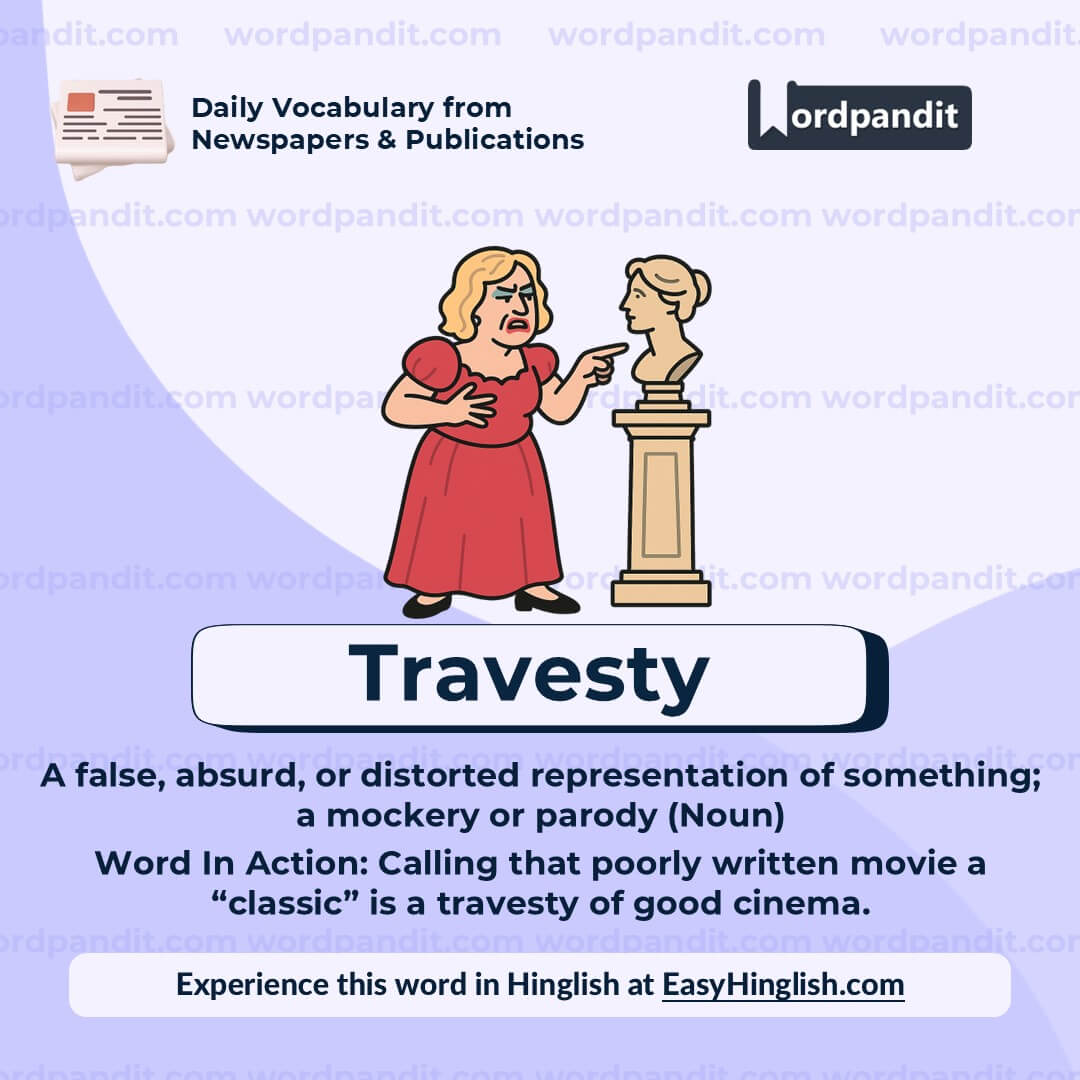
WORD-3: Travesty
Context:
"These activists' time in jail have been marked by multiple appeals and subsequent postponements and rejections by courts, in what rights defenders worldwide have decried as a travesty of justice." - The Wire
Explanatory Paragraph:
Travesty meaning in English is 'a false, absurd, or distorted representation of something, making a mockery of it.' This word is used when describing situations where something important has been so badly handled or misrepresented that it becomes ridiculous or offensive. Travesty is commonly used in formal writing, news articles, and competitive exam passages to express strong criticism of processes, systems, or representations that fail to honor what they claim to represent. Learning how to use travesty helps in expressing serious disappointment or condemnation effectively.
Meaning: A false, absurd, or distorted representation of something; a mockery or parody (Noun)
Pronunciation: TRAV-uh-stee
Difficulty Level: ⭐⭐⭐ Intermediate
Etymology: Travesty comes from French 'travesti' meaning 'disguised' or 'dressed in disguise,' which itself derives from Italian 'travestire'—'trans' (across) + 'vestire' (to dress). Originally used in the 17th century to describe literary parodies where serious works were treated comically, the word evolved to describe any grotesque misrepresentation. Today, it powerfully conveys the idea that something has been so distorted that it mocks what it was meant to be.
Prashant Sir's Notes:
Students often ask: what is the difference between travesty and tragedy? While tragedy refers to a serious disaster or sad event, travesty means something has been turned into a mockery or absurd imitation. For CAT and GRE aspirants, travesty frequently appears in critical essays and opinion pieces where authors condemn failures of systems or institutions. Travesty usage in sentences typically follows patterns like "travesty of justice," "travesty of democracy," or "travesty of the original idea"—it's always about distortion and mockery. In Indian English newspapers, you'll see travesty used when criticizing flawed investigations, delayed justice, or corrupted processes. The word carries strong disapproval, so use it when you want to express that something has completely failed to live up to its purpose.
Synonyms & Antonyms:
Synonyms: mockery, parody, caricature, distortion, perversion, farce, sham, misrepresentation, burlesque, grotesque imitation
Antonyms: faithful representation, accurate portrayal, genuine article, true reflection, proper implementation, fair treatment
Usage Examples:
- The investigation into the Mumbai building collapse was called a travesty by residents, as authorities ignored obvious corruption and safety violations.
- Many legal experts described the trial as a travesty of due process, with the accused denied basic rights like access to lawyers.
- Ravi felt the company's diversity initiative was a travesty when they hired only one woman for show while maintaining discriminatory practices.
- Critics argued that the Bollywood remake was a travesty of the original Tamil masterpiece, stripping away all its cultural authenticity.
Cultural Reference:
"When India lost the 2011 World Cup final spot due to a controversial umpiring decision, fans called it a travesty—though India ultimately won that tournament, making the earlier controversy fade into history." - Sports commentary reflecting how the term is used in Indian cricket discourse
Think About It:
When does a flawed system cross the line from being merely imperfect to becoming a complete travesty of what it was meant to achieve?
Quick Activity:
Think of a recent news event where something important was handled so poorly it became a mockery. Write two sentences explaining why you would call it a travesty.
Memory Tip:
Break 'Travesty' into 'TRAVEL +ESTY'—imagine traveling to see something important (like the Taj Mahal) but finding a cheap, ridiculous imitation instead. Or remember: TRA-VEST-Y sounds like "dressed VEST-ed wrong"—something dressed up or represented so badly it's a joke, connecting to its original meaning of disguise.
Real-World Application:
Travesty is commonly used in opinion pieces, legal commentary, social criticism, and formal complaints to express strong disapproval of how systems, processes, or representations have failed. Journalists use it when analyzing miscarriages of justice, political failures, or cultural distortions. In competitive exam essays, using travesty appropriately demonstrates advanced vocabulary and the ability to express measured outrage at serious failures. The word appears frequently in editorials discussing governance, justice systems, and institutional accountability in Indian newspapers.
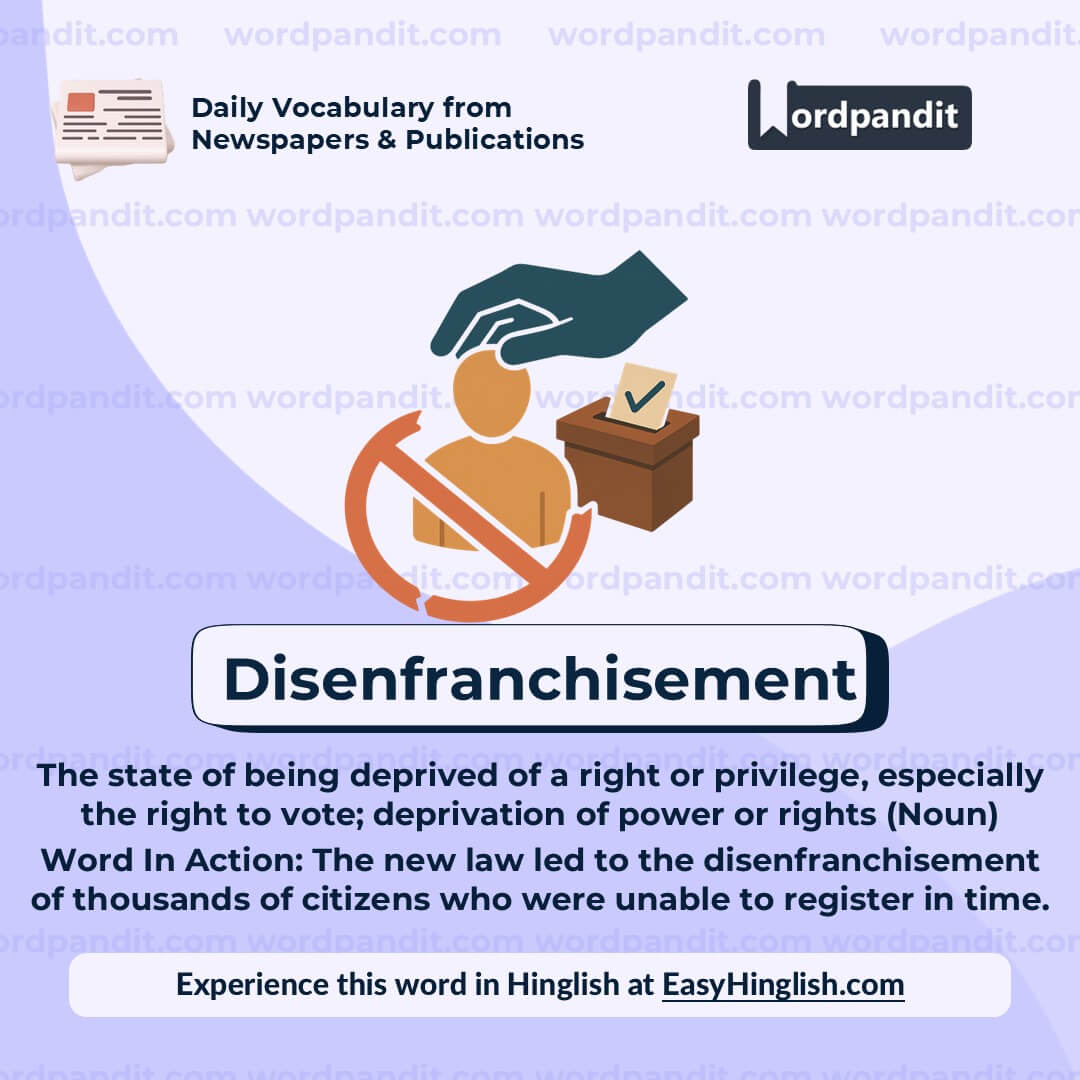
WORD-4: Disenfranchisement
Context:
"In essence, the SIR has disenfranchised close to 7% of the state's adult population in one sweep." - The Wire
Explanatory Paragraph:
Disenfranchisement meaning in English is 'the state of being deprived of a right or privilege, especially the right to vote.' This word is used when describing situations where people lose fundamental rights, particularly political or civil rights. Disenfranchisement is commonly used in formal writing, political analysis, and competitive exam passages dealing with democracy, governance, and social justice. Understanding how to use disenfranchisement is crucial for discussing issues of representation, equality, and citizen rights in any democratic society.
Meaning: The state of being deprived of a right or privilege, especially the right to vote; deprivation of power or rights (Noun)
Pronunciation: dis-en-FRAN-chize-ment
Difficulty Level: ⭐⭐⭐⭐ Advanced
Etymology: Disenfranchisement comes from the prefix 'dis-' (removal) + 'enfranchise' (to grant rights), which itself derives from Old French 'enfranchir' meaning 'to set free.' The word 'franchise' originally meant freedom or privilege, later specifically referring to the right to vote. Disenfranchisement emerged in English during the 19th century as voting rights became a central democratic concern, describing the act of taking away someone's voting rights or political power.
Prashant Sir's Notes:
Many students confuse disenfranchisement with discrimination—while discrimination is unfair treatment based on characteristics, disenfranchisement specifically means removing rights or political power. For UPSC aspirants, this word is critical as it appears frequently in polity, governance, and social justice topics. The difference between disenfranchisement and marginalization is that disenfranchisement refers to the formal removal of rights (like voting), while marginalization is broader social exclusion. In Indian newspapers, you'll see disenfranchisement used when discussing issues like electoral roll deletions, citizenship laws, or policies affecting tribal communities' rights. How to use disenfranchisement correctly: it typically follows patterns like "disenfranchisement of voters," "political disenfranchisement," or "economic disenfranchisement"—always indicating the removal or denial of fundamental rights or power.
Synonyms & Antonyms:
Synonyms: deprivation of rights, disempowerment, denial of voting rights, political exclusion, dispossession, marginalization (broader context)
Antonyms: enfranchisement, empowerment, inclusion, representation, granting of rights, political participation
Usage Examples:
- The controversial National Register of Citizens led to fears of mass disenfranchisement among minority communities in Assam who couldn't produce documentation.
- Civil rights activists argued that the strict voter ID requirements amounted to disenfranchisement of migrant workers in Delhi and Mumbai.
- Economic disenfranchisement often precedes political disenfranchisement, as Ambedkar noted when discussing the conditions of Dalits in pre-independence India.
- Priya's research paper examined how digital literacy gaps contribute to the disenfranchisement of rural populations from government schemes and services.
Cultural Reference:
"The struggle against disenfranchisement has been central to India's democratic journey, from the freedom movement's demand for universal suffrage to contemporary debates about citizenship and voting rights." - Political discourse on Indian democracy
Think About It:
In modern India, can economic and digital exclusion be considered forms of disenfranchisement even when people technically retain their voting rights?
Quick Activity:
List three groups in society who might face disenfranchisement in different forms—political, economic, or social—and write one sentence explaining how each group experiences this deprivation of rights.
Memory Tip:
Break 'Disenfranchisement' into 'DIS + EN + FRANCHISE + MENT'—think of 'franchise' as your voting power or rights, and 'DIS' means removal. So disenfranchisement is having your FRANCHISE (rights) DIS-connected or taken away. Imagine someone snatching your voting franchise away—that's disenfranchisement.
Real-World Application:
Disenfranchisement is extensively used in political science, legal commentary, policy analysis, and social justice discourse. Journalists use it when reporting on electoral reforms, citizenship debates, or systemic barriers to political participation. For UPSC mains essays and GS papers, understanding disenfranchisement is essential for discussing topics like electoral reforms, fundamental rights, social justice, and inclusive governance. The term appears frequently in discussions about the Indian Constitution, particularly concerning Articles 326 (universal adult franchise) and debates about protecting vulnerable communities' rights.
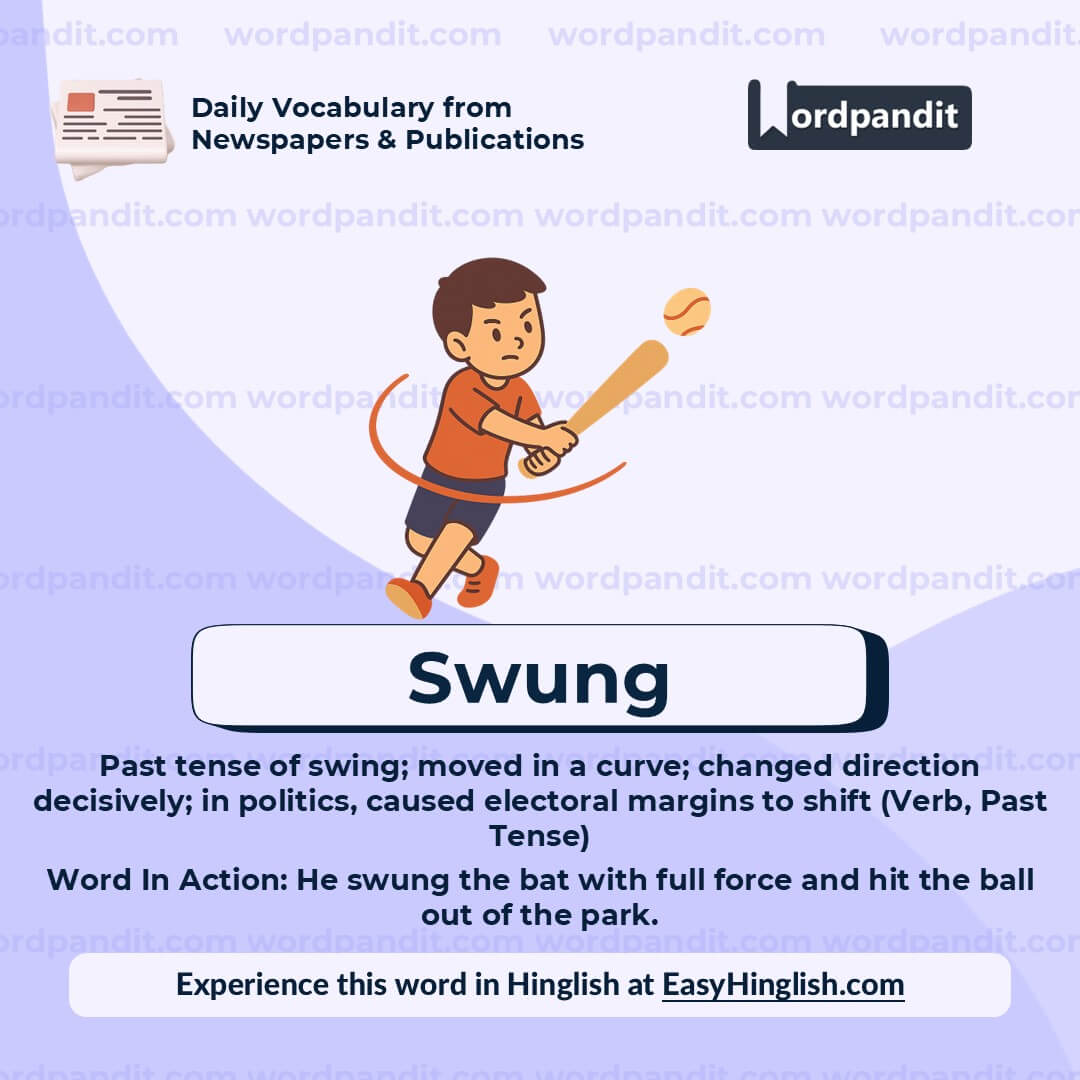
WORD-5: Swung
Context:
"Against this backdrop, the SIR's disproportionate removal of women from the rolls doesn't merely shrink numbers – it targets the very group that has historically turned out with strength, frequently swung margins, and shaped agendas." - The Wire
Explanatory Paragraph:
Swung meaning in English is 'moved or caused to move in a sweeping curve or changed direction decisively,' and in political contexts, it means 'caused election results to shift in a particular direction.' This word is used when describing significant changes, movements, or decisive shifts in situations, particularly in electoral politics where voter behavior determines outcomes. Swung is commonly used in news analysis, political commentary, and competitive exam passages discussing elections and public opinion. Understanding how to use swung helps in describing pivotal moments where momentum or direction changes dramatically.
Meaning: Past tense of swing; moved in a curve; changed direction decisively; in politics, caused electoral margins to shift (Verb, Past Tense)
Pronunciation: SWUNG
Difficulty Level: ⭐⭐ Basic to Intermediate
Etymology: Swung is the past tense of 'swing,' which comes from Old English 'swingan' meaning 'to beat, strike, or rush.' The word evolved through Middle English to describe circular or curved motion. In political usage, which emerged in American English during the 19th century, 'swing' came to describe how voting patterns shift from one party to another, with 'swing voters' being those who change their allegiance between elections. The physical motion metaphor perfectly captures how electoral outcomes pivot based on crucial voter groups.
Prashant Sir's Notes:
Many students wonder about the difference between swung and changed in political contexts—while both indicate alteration, swung specifically suggests a decisive, momentum-driven shift, like a pendulum moving from one side to another. For CAT and UPSC aspirants, understanding swung is essential because it frequently appears in political analysis and election coverage. How to use swung in political contexts: it typically follows patterns like "swung the election," "swung margins," or "voters who swung the verdict"—always indicating a group's decisive role in determining outcomes. In Indian newspapers during election season, you'll constantly see phrases like "Muslim votes swung the results in Uttar Pradesh" or "farmers swung the balance in Punjab." The word captures both the physical metaphor of movement and the political reality of decisive influence.
Synonyms & Antonyms:
Synonyms: shifted, tilted, turned, pivoted, changed direction, determined, decided, influenced decisively
Antonyms: remained steady, stayed constant, held firm, remained unchanged, stabilized
Usage Examples:
- The youth vote swung decisively toward the opposition in Delhi, turning what seemed like a certain victory into a surprise defeat.
- Analysts believe that middle-class women voters swung the Karnataka assembly elections by rejecting traditional caste-based politics and focusing on governance issues.
- In the 2019 Lok Sabha elections, several key constituencies in West Bengal swung to the BJP, marking a significant political realignment.
- Rohit's presentation swung the entire team's opinion on the project direction, convincing even the skeptical senior managers to support his innovative approach.
Cultural Reference:
"Just as Dhoni's bat swung at the last ball to win the 2011 World Cup, swing voters can decisively change political fortunes with their choices on election day." - Political commentary using cricket analogy common in Indian discourse
Think About It:
What makes certain voter groups powerful enough to swing elections while others remain politically marginalized despite their numbers?
Quick Activity:
Think of a recent election (local, state, or national) and write two sentences identifying which voter group swung the results and why their votes were decisive.
Memory Tip:
Think of 'Swung' as the sound and motion of a cricket bat—SWUNG!—hitting the ball to change the game's direction. Just as a powerful swing can change a match, swing voters or crucial groups can SWUNG elections by shifting their support. Visualize a pendulum swinging from one side to another—that's how political fortunes change when key groups swing their votes.
Real-World Application:
Swung is extensively used in political journalism, election analysis, sports commentary, and any context describing decisive shifts or changes. Political analysts use it when discussing electoral outcomes, particularly to highlight which demographic groups or regions determined the final result. For competitive exam aspirants, this word appears frequently in current affairs passages, political science discussions, and reading comprehension sections analyzing elections and public opinion. Understanding swung helps in grasping how power dynamics shift in democracies and how strategic voter groups exercise disproportionate influence on outcomes.


