

Daily Vocabulary from Indian Newspapers and Publications
Welcome to Wordpandit’s Indian Vocabulary Hub
At Wordpandit, we understand the importance of staying rooted in the local context while expanding your language skills. This section focuses on enriching your vocabulary with words and phrases drawn from India’s leading newspapers and publications, ensuring you're learning vocabulary that is practical, relevant, and uniquely Indian.
Why Indian Sources Matter
We believe that the best way to master any language is by immersing yourself in local content. That’s why we carefully curate vocabulary from top Indian publications, including:
- The Hindu
- The Times of India
- The Economic Times
- Hindustan Times
- Live Mint
- The Indian Express
- And many others...
Stay Updated, Stay Relevant
With daily updates from Indian news sources, you’ll be consistently learning words that reflect the trends and shifts in Indian society and culture. Our focus is to provide vocabulary that enhances your understanding of the language in an Indian context.
How Wordpandit Supports Your Goals
Whether you’re preparing for exams, aiming to improve your professional communication, or simply want to stay connected with the latest Indian vocabulary, Wordpandit is here to guide you every step of the way.
Learn with a Practical Approach
Our interactive learning methodology includes real-world examples, engaging activities, and context-specific usage to ensure that every word becomes part of your active vocabulary.
Dive into Indian Vocabulary Today!

Why Choose Wordpandit?
Practical Learning: Focus on words you'll actually encounter in real-world reading, enhancing your comprehension and communication skills.
Diverse Content: From current affairs to scientific breakthroughs, our varied sources expose you to vocabulary across multiple domains.
Effortless Integration: Make Wordpandit a part of your daily routine. Just a few minutes each day can significantly boost your lexicon over time.
Your Path to Vocabulary Mastery
- Visit our Daily Vocabulary section regularly
- Explore new words and their usage in context
- Practice incorporating these words into your own writing and speech
- Track your progress as your vocabulary expands
Start Your Journey Today
Embark on your vocabulary enhancement journey with Wordpandit. By consistently engaging with our daily posts, you'll build a robust vocabulary that serves you well in academic, professional, and personal contexts.
Remember, a word a day keeps linguistic limitations at bay. Make Wordpandit your daily companion in the quest for vocabulary excellence!
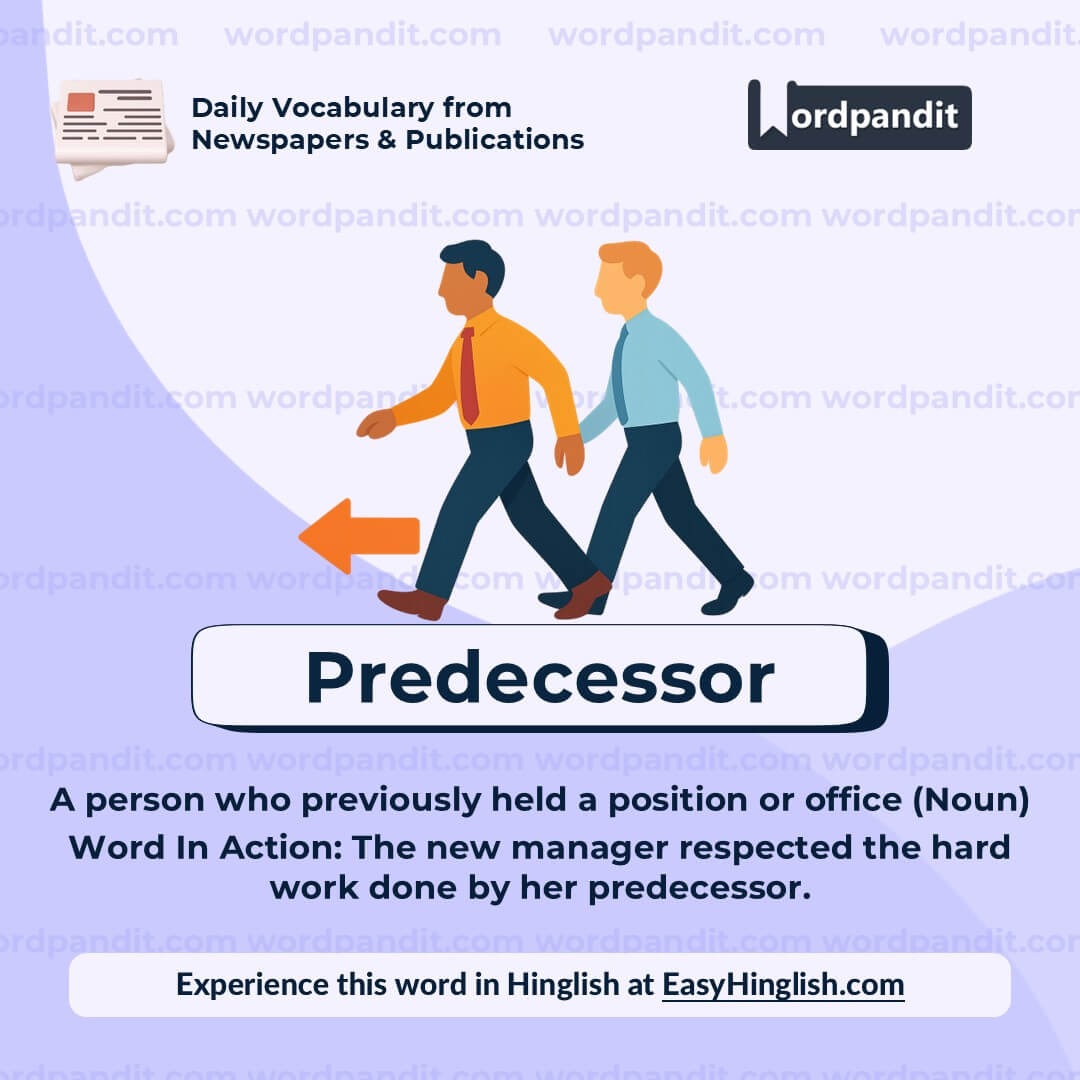
WORD-1: Predecessor
Context:
"In a year of elections around the world, here is one where the incumbent president calls his predecessor a Nazi." - Indian Express
Explanatory Paragraph:
The word "predecessor" refers to a person who held a job or position before someone else. In the context of leadership or professional roles, a predecessor is someone who occupied a specific position before the current person. For example, if a new CEO is appointed, the outgoing CEO is referred to as the predecessor. The word often appears in discussions of transitions in political, business, or social roles.
Meaning: A person who previously held a position or office (Noun)
Pronunciation: PREH-duh-sess-er
Difficulty Level: ⭐⭐ Basic
Etymology: From Latin "praedecessor" — 'prae' (before) + 'decessor' (retiring official), from 'decessus', past participle of 'decedere' (to depart)
Prashant Sir's Notes:
This is a commonly used word in politics and organizational discussions. Think of it as "the person who came before." Understanding this helps clarify timelines and sequences in leadership or events.
Synonyms & Antonyms:
Synonyms: forerunner, ancestor, precursor, antecedent
Antonyms: successor, heir, follower
Usage Examples:
- The new manager appreciated the groundwork laid by her predecessor.
- His policies were a sharp departure from those of his predecessor.
- Before taking over the company, she studied her predecessor’s leadership style carefully.
- The predecessor of the current president left behind a mixed legacy.
Cultural Reference:
"Barack Obama’s relationship with his predecessor George W. Bush was marked by political contrast but personal civility." - Historical retrospectives on U.S. presidencies
Think About It:
Why is it important for successors to study the actions and decisions of their predecessors?
Quick Activity:
List three positions (e.g., school principal, prime minister, captain of a team) and name their predecessors (real or hypothetical).
Memory Tip:
Think of “pre” as “before” and “decessor” as “the one who departed” — so, predecessor = the one who came before and left.
Real-World Application:
In job interviews or boardroom meetings, referencing your predecessor’s performance can help frame your own approach or changes. Understanding their decisions gives context to your current responsibilities.
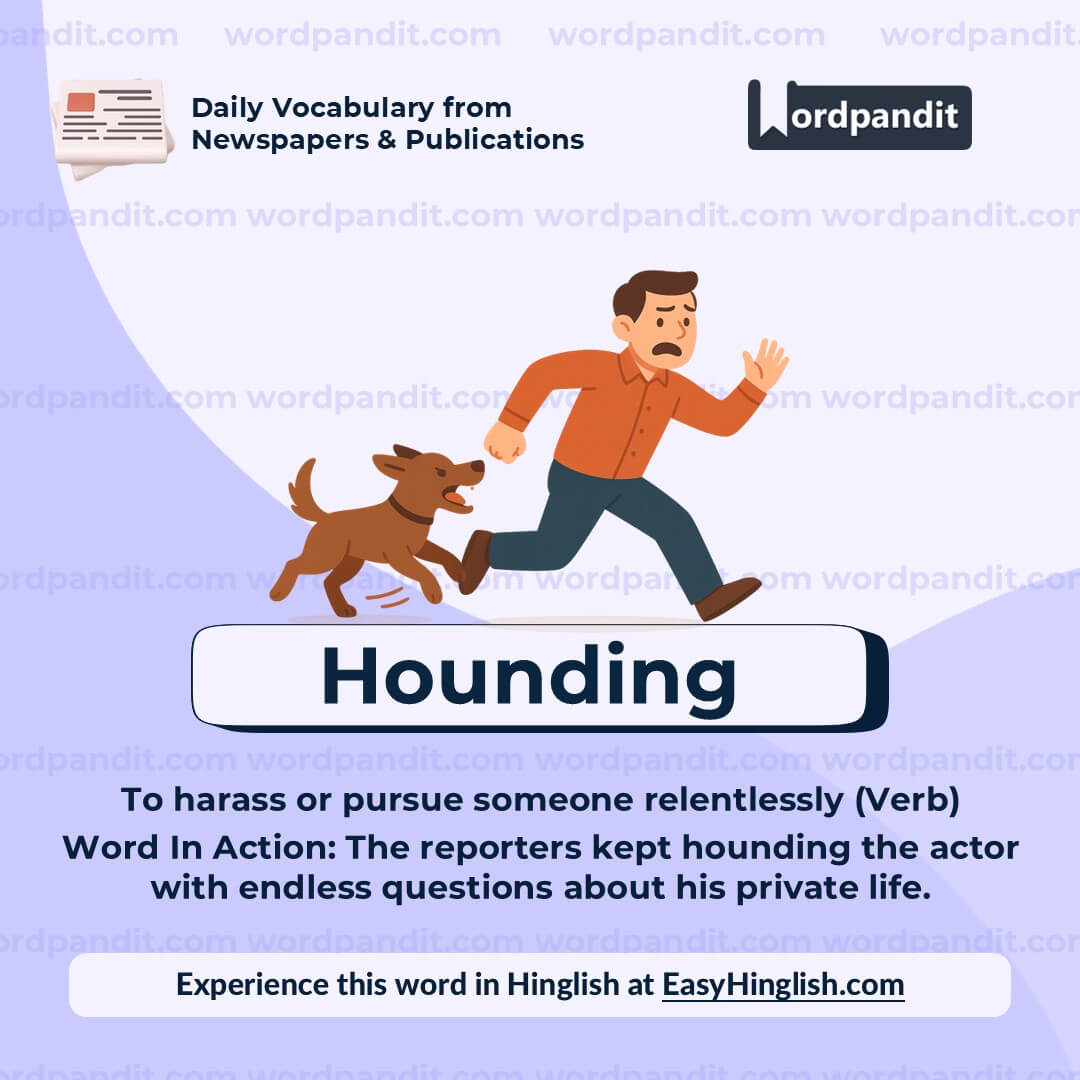
WORD-2: Hounding
Context:
"The current establishment is hounding the former president with a bunch of criminal cases." - Indian Express
Explanatory Paragraph:
"Hounding" refers to persistently harassing, chasing, or pressuring someone, often in a hostile or aggressive way. It implies that the person being targeted is being relentlessly pursued, much like a pack of hunting dogs chasing prey. In political or legal contexts, it suggests deliberate attempts to corner or discredit someone using repeated actions, such as launching multiple investigations or filing charges.
Meaning: To harass or pursue someone relentlessly (Verb)
Pronunciation: HOWN-ding
Difficulty Level: ⭐⭐⭐ Intermediate
Etymology: From Old English "hund" meaning "dog"; the verb sense comes from the idea of dogs chasing or hunting prey.
Prashant Sir's Notes:
Imagine a person being chased without respite — that’s what hounding implies. It’s often used when someone is being unfairly or excessively targeted, especially by media, authorities, or powerful individuals.
Synonyms & Antonyms:
Synonyms: harassing, persecuting, chasing, tormenting, pursuing
Antonyms: leaving alone, ignoring, supporting, protecting
Usage Examples:
- The paparazzi were hounding the celebrity wherever she went.
- Activists accused the government of hounding dissenters into silence.
- She felt hounded by constant emails and phone calls from her boss.
- They were hounding him about a mistake he made years ago.
Cultural Reference:
"Princess Diana famously complained about being hounded by the press, which ultimately played a tragic role in her life." - Public memory of media ethics debates
Think About It:
At what point does the pursuit of justice turn into the act of hounding? Where is the line between accountability and harassment?
Quick Activity:
Write a short dialogue where one character complains about being hounded. Use the word at least twice in context.
Memory Tip:
Picture a pack of “hounds” chasing a person without rest — to be hounded is to be relentlessly pursued like prey.
Real-World Application:
The term is often used in media and political commentary when individuals, especially public figures, are under continuous scrutiny or legal pressure. Recognizing the word helps in interpreting tone and bias in such discussions.
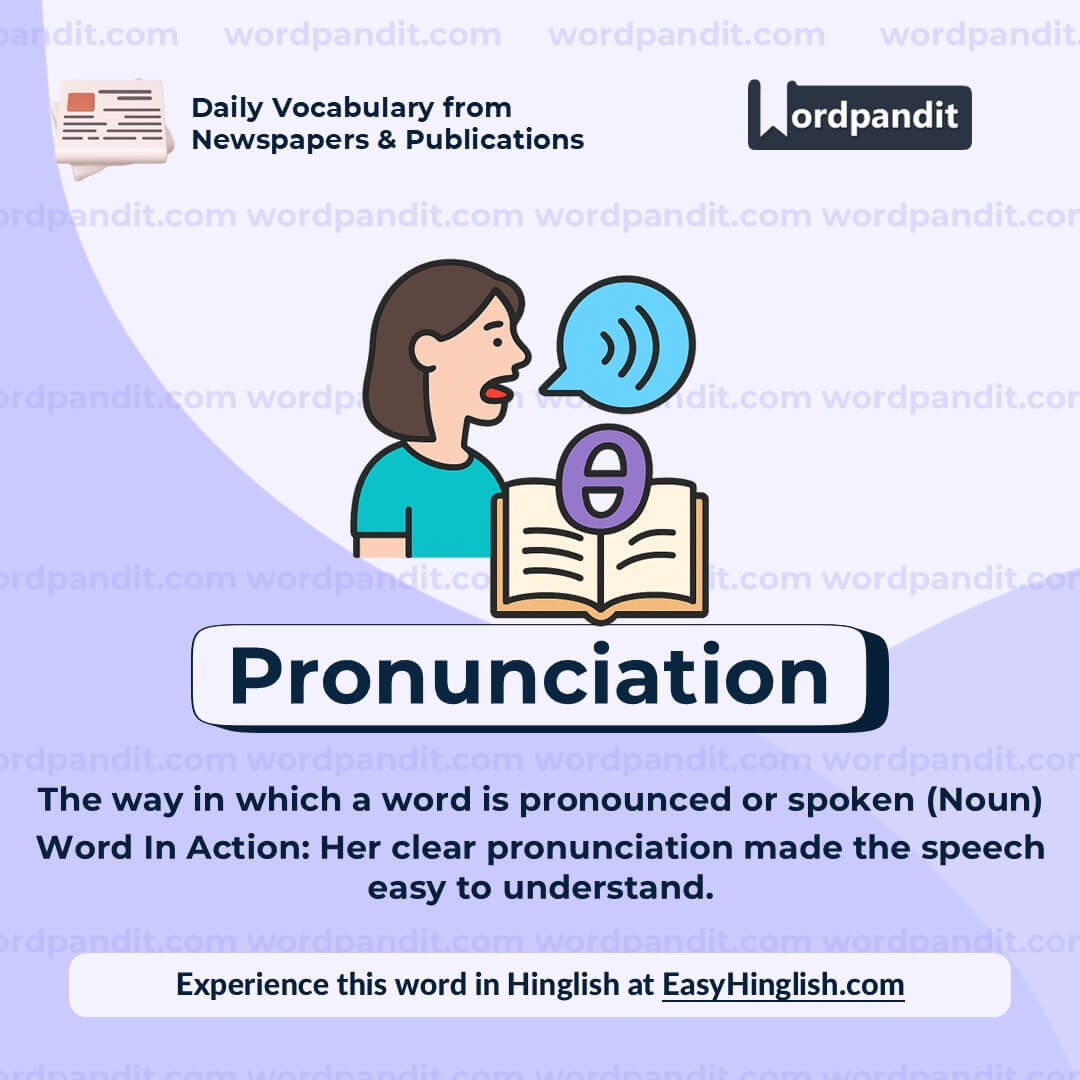
WORD-3: Pronunciation
Context:
"It was handpicked by the company’s founders for its lively ring and ease in pronunciation." - Times of India
Explanatory Paragraph:
"Pronunciation" refers to the way in which a word is spoken. It's not about how a word is spelled, but how it sounds when said aloud. This word is especially important in communication, language learning, and branding—because clarity in speech helps avoid misunderstandings. In the context provided, the ease of pronunciation is a valuable trait for a brand name, making it easier for people to remember and say.
Meaning: The way in which a word is pronounced or spoken (Noun)
Pronunciation: pruh-nun-see-AY-shun
Difficulty Level: ⭐⭐ Basic
Etymology: From Latin "pronuntiatio" meaning "act of speaking", from "pronuntiare" (to proclaim or declare)
Prashant Sir's Notes:
Important note: Many people mispronounce the word "pronunciation" itself as “pronounciation.” Remember, there's no “noun” in pronunciation — it’s about how you ‘pronounce’, not about a ‘noun’!
Synonyms & Antonyms:
Synonyms: articulation, enunciation, diction, speech
Antonyms: mispronunciation, mumbling, slurring
Usage Examples:
- Her pronunciation of French words was flawless.
- The teacher corrected his student’s pronunciation gently.
- This app helps users improve their pronunciation with real-time feedback.
- Pronunciation often varies between American and British English.
Cultural Reference:
"My Fair Lady," a classic musical, focuses on the transformation of Eliza Doolittle's pronunciation and speech to reflect high society standards.
Think About It:
Why do people often judge intelligence or professionalism based on pronunciation, and is that always fair?
Quick Activity:
Pick five difficult words (e.g., entrepreneur, genre, quinoa, epitome, niche) and practice saying them aloud correctly. Record and listen to your pronunciation.
Memory Tip:
Remember: It’s "pronunciation" — not “pronounciation.” Focus on the “nun” sound, not “noun.”
Real-World Application:
In job interviews, public speaking, or learning a new language, clear pronunciation boosts confidence and helps you communicate effectively. It’s also crucial for brand names and public image.
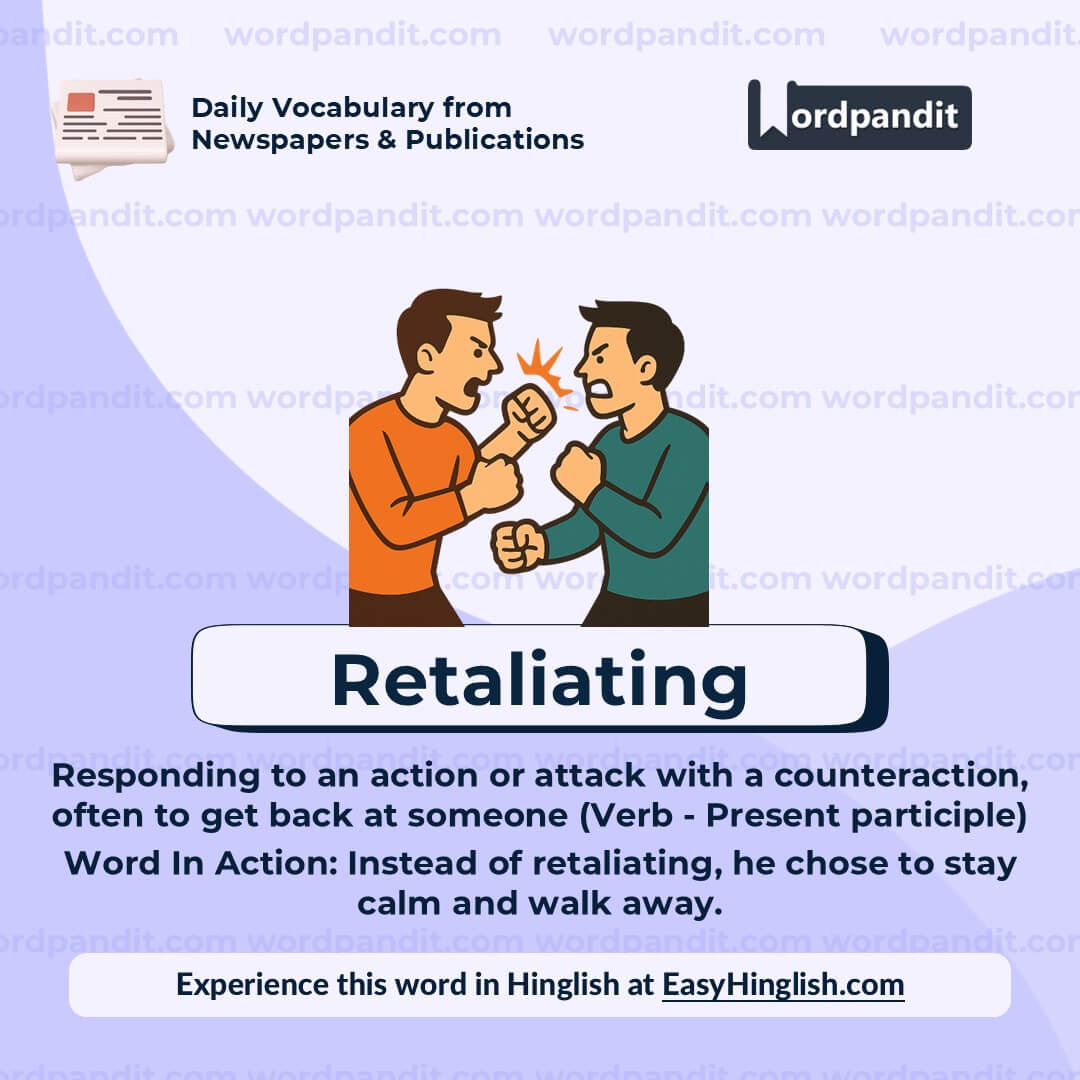
WORD-4: Retaliating
Context:
"The Opposition accuses the government of weaponising law to keep the popular former president off the ballot and is retaliating by preparing to impeach the president." - Indian Express
Explanatory Paragraph:
"Retaliating" means responding to a perceived wrong or injury by taking similar or opposing action. It carries a sense of revenge or counterattack. In political or personal situations, when one side takes an action seen as unfair or hostile, the other might retaliate — that is, fight back, often with equal force or severity. In this context, the opposition is not remaining passive but is actively pushing back through impeachment efforts.
Meaning: Responding to an action or attack with a counteraction, often to get back at someone (Verb - Present participle)
Pronunciation: reh-TAL-ee-ay-ting
Difficulty Level: ⭐⭐⭐ Intermediate
Etymology: From Latin "retaliare," meaning "to repay in kind" — from 're-' (back) + 'talio' (punishment in kind)
Prashant Sir's Notes:
Retaliation is action taken to strike back — but remember, it doesn’t always solve the root problem. This word is key in political, legal, and even personal conflict vocabulary. Think of it as tit for tat — not always wise, but very common in real-world power struggles.
Synonyms & Antonyms:
Synonyms: avenging, countering, fighting back, striking back, responding
Antonyms: forgiving, yielding, ignoring, tolerating, accepting
Usage Examples:
- She’s retaliating against the unfair treatment by filing a lawsuit.
- The country is retaliating with sanctions after being provoked by cyberattacks.
- Instead of retaliating with anger, he chose to walk away.
- The company is retaliating by suing the competitor for defamation.
Cultural Reference:
In superhero films like *The Avengers*, characters are often seen retaliating against villains — a central theme in the classic “hero vs. villain” narrative arc.
Think About It:
Is retaliation always justified, or does it sometimes escalate conflict unnecessarily? When should one respond, and when should one refrain?
Quick Activity:
Write two situations: one where retaliating is appropriate, and one where choosing peace would be a wiser option. Explain your reasoning.
Memory Tip:
“Re” means “back” and “taliate” sounds like “tally” — think of “tallying back” or giving back what you got.
Real-World Application:
This word is commonly used in news, especially when countries, political parties, or individuals respond to criticism or aggression. Understanding it helps you interpret motives behind actions in current affairs.
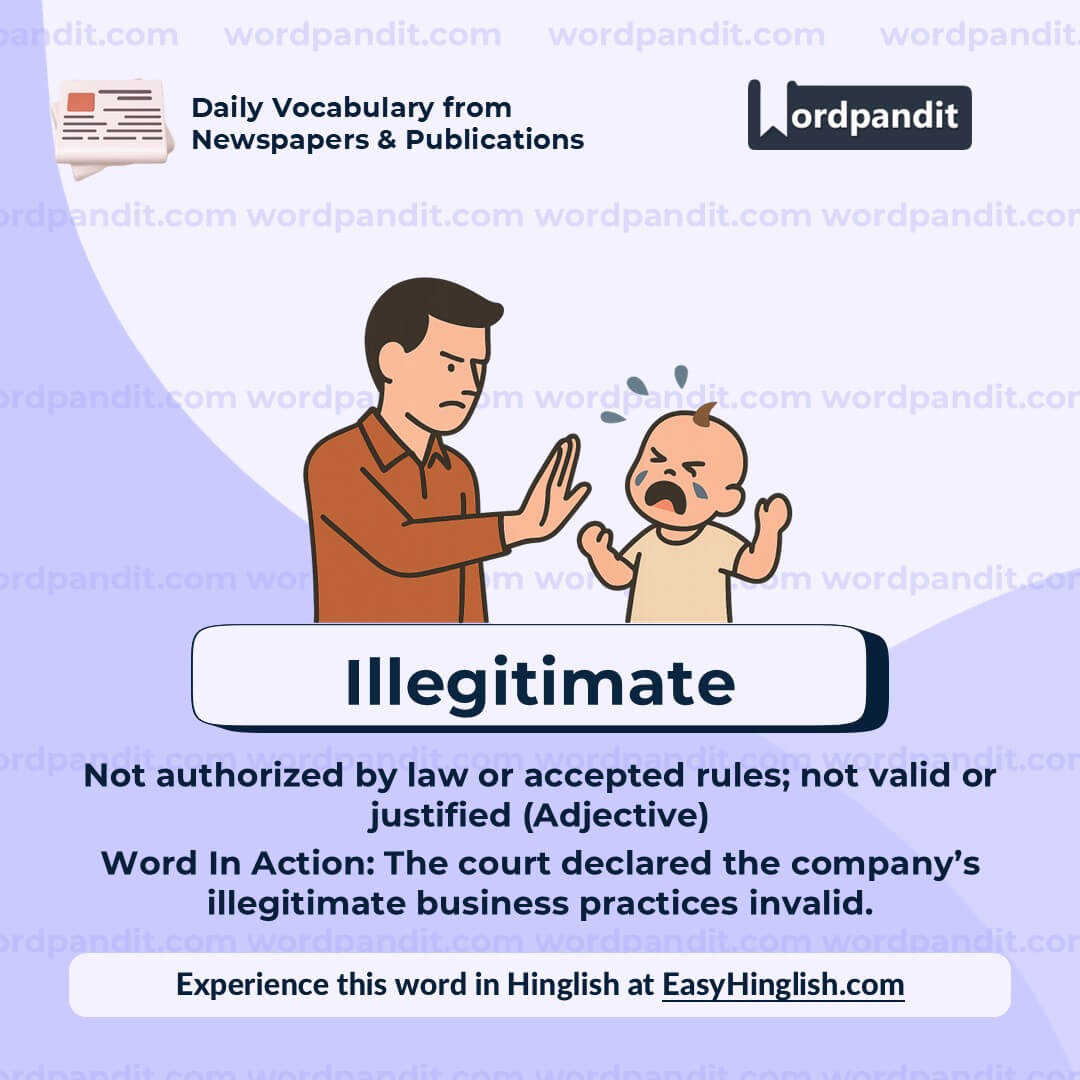
WORD-5: Illegitimate
Context:
"The top court has got into the act, but whatever its decision, a large section of the deeply polarised society will see it as illegitimate and politically motivated." - Indian Express
Explanatory Paragraph:
"Illegitimate" describes something that is not authorized, accepted, or in accordance with established rules, laws, or standards. It suggests a lack of legal, moral, or rightful standing. In this context, a court’s decision, even if legally correct, may be perceived as illegitimate by people who distrust the system or believe it was biased or influenced by political motives. The word is also used in broader contexts, such as describing illegitimate authority, claims, or even children born outside of a legally recognized marriage (though this latter usage is now outdated and avoided in respectful language).
Meaning: Not authorized by law or accepted rules; not valid or justified (Adjective)
Pronunciation: ill-eh-JIT-uh-mit
Difficulty Level: ⭐⭐⭐ Intermediate
Etymology: From Latin "illegitimus" — 'il-' (not) + 'legitimus' (lawful), from 'lex' (law)
Prashant Sir's Notes:
This word is often about perception. Something may be legally valid but still be viewed as illegitimate by the public. It’s powerful in political, legal, and ethical debates. Always question — is it illegitimate legally, morally, or simply in the eyes of some?
Synonyms & Antonyms:
Synonyms: unlawful, invalid, unauthorized, unrecognized, improper
Antonyms: legitimate, lawful, valid, authorized, justified
Usage Examples:
- The protesters called the new policy illegitimate and demanded its withdrawal.
- Many saw the sudden appointment as illegitimate due to the lack of transparency.
- History is filled with rulers who seized power through illegitimate means.
- Though the election was conducted legally, opponents branded it illegitimate.
Cultural Reference:
In Shakespeare’s *King Lear*, the character Edmund is referred to as an “illegitimate” son — a term that shaped much of his character’s bitterness and ambition. Today, this usage is seen as outdated and offensive.
Think About It:
Can something be legally legitimate but still morally illegitimate? How do perception and trust influence legitimacy?
Quick Activity:
List three modern-day scenarios (political, legal, social) where people might see something as illegitimate even if it is technically lawful. Discuss why perception matters.
Memory Tip:
Break it down: "il-" (not) + "legitimate" (lawful) = not lawful or not recognized. Easy to remember with the prefix trick!
Real-World Application:
This word is frequently used in political commentary, legal analysis, and media reporting to describe disputed authority, contested decisions, or perceived injustice. Understanding it helps you critically engage with such debates.


