

Daily Vocabulary from International Newspapers and Publications
Expand Your Vocabulary with Wordpandit’s Global Vocabulary Hub
At Wordpandit, we are committed to helping you develop a truly global vocabulary by drawing from some of the most respected international publications. This section is designed to keep you ahead of the curve by introducing you to words that define global conversations and trends.
The Power of Global Sources
To help you think and communicate on a global scale, we curate vocabulary from renowned international sources, such as:
- The New York Times
- The Washington Post
- BBC
- The Guardian
- The Economist
- Scientific American
- Psychology Today
- And many more...
Stay Global, Stay Competitive
Our daily updates from international publications ensure you are consistently exposed to new words that reflect global news and developments, making sure your vocabulary is not only current but also globally relevant.
Enhance Your Global Perspective
Whether you’re preparing for international exams, aiming to excel in global business communication, or want to enhance your language skills for personal growth, Wordpandit offers the resources you need to thrive in a global context.
Effective Learning, Global Reach
Our learning methodology combines global examples, memory aids, and interactive activities, allowing you to internalize new words effectively and apply them in real-world scenarios.
Begin Your Global Vocabulary Journey Now!

Why Choose Wordpandit?
Practical Learning: Focus on words you'll actually encounter in real-world reading, enhancing your comprehension and communication skills.
Diverse Content: From current affairs to scientific breakthroughs, our varied sources expose you to vocabulary across multiple domains.
Effortless Integration: Make Wordpandit a part of your daily routine. Just a few minutes each day can significantly boost your lexicon over time.
Your Path to Vocabulary Mastery
- Visit our Daily Vocabulary section regularly
- Explore new words and their usage in context
- Practice incorporating these words into your own writing and speech
- Track your progress as your vocabulary expands
Start Your Journey Today
Embark on your vocabulary enhancement journey with Wordpandit. By consistently engaging with our daily posts, you'll build a robust vocabulary that serves you well in academic, professional, and personal contexts.
Remember, a word a day keeps linguistic limitations at bay. Make Wordpandit your daily companion in the quest for vocabulary excellence!
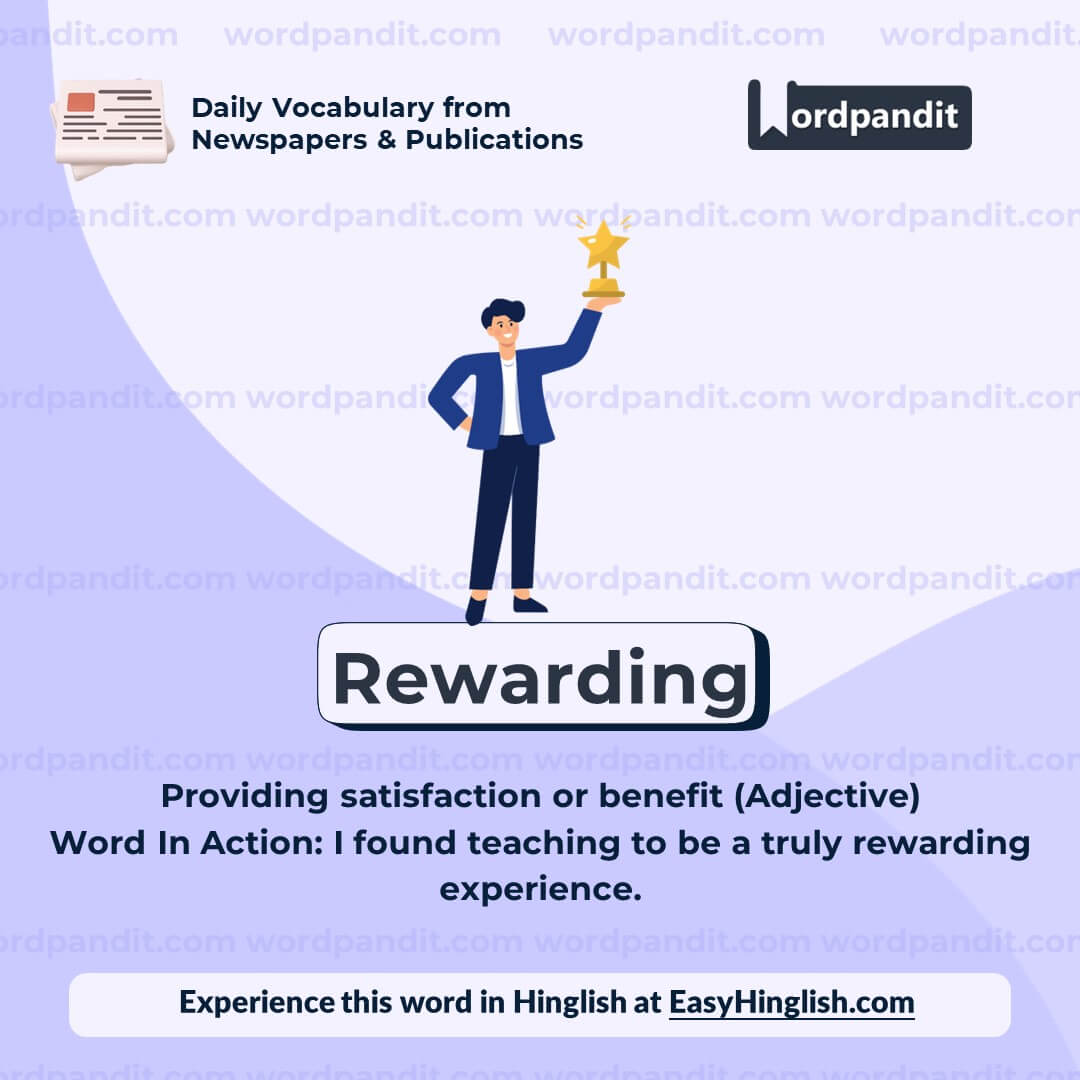
WORD-1: Rewarding
Context:
"And he told of brilliant scientific minds who might know a lot about the second law but were barely up to the task of reading Charles Dickens, let alone an 'esoteric, tangled and dubiously rewarding writer...like Rainer Maria Rilke.'" - Aeon
Explanatory Paragraph:
The word "rewarding" is often used to describe something that gives satisfaction, benefit, or pleasure as a result of effort or experience. In the context above, it's used somewhat negatively — suggesting that reading Rainer Maria Rilke may not provide enough intellectual or emotional return to justify the challenge. While typically positive, "rewarding" here is tempered with doubt, implying the outcome may not be worth the effort involved.
Meaning: Providing satisfaction, pleasure, or benefit, especially after effort (Adjective)
Pronunciation: ruh-WAWR-ding
Difficulty Level: ⭐⭐ Beginner
Etymology: Derived from the verb "reward," which traces back to Old North French *rewarder*, meaning "regard, consider, reward."
Prashant Sir's Notes:
This is a useful adjective for describing experiences or efforts that lead to positive outcomes—emotionally, intellectually, or materially. Be cautious, as it can also be used sarcastically or with skepticism, as in this context.
Synonyms & Antonyms:
Synonyms: fulfilling, satisfying, enriching, beneficial, gratifying
Antonyms: frustrating, disappointing, unfulfilling, fruitless, unproductive
Usage Examples:
- Volunteering at the animal shelter has been a deeply rewarding experience.
- Although difficult, the project turned out to be incredibly rewarding in the end.
- He questioned whether the late-night study sessions were truly rewarding.
- Parenting is one of the most challenging yet rewarding roles in life.
Cultural Reference:
"The pursuit of knowledge, though arduous, is among the most rewarding of human endeavors." - A paraphrased sentiment inspired by Carl Sagan
Think About It:
Can something still be considered rewarding even if it doesn't bring immediate pleasure or success?
Quick Activity:
List three activities you find rewarding and explain why they make you feel that way. Then share one activity you once thought would be rewarding but wasn’t.
Memory Tip:
Think of “rewarding” as giving you a “reward” — emotional, intellectual, or otherwise — for your effort or time.
Real-World Application:
“Rewarding” is commonly used in interviews or resumes to describe past job experiences or tasks: “My time managing that project was incredibly rewarding.” It reflects personal growth and accomplishment.
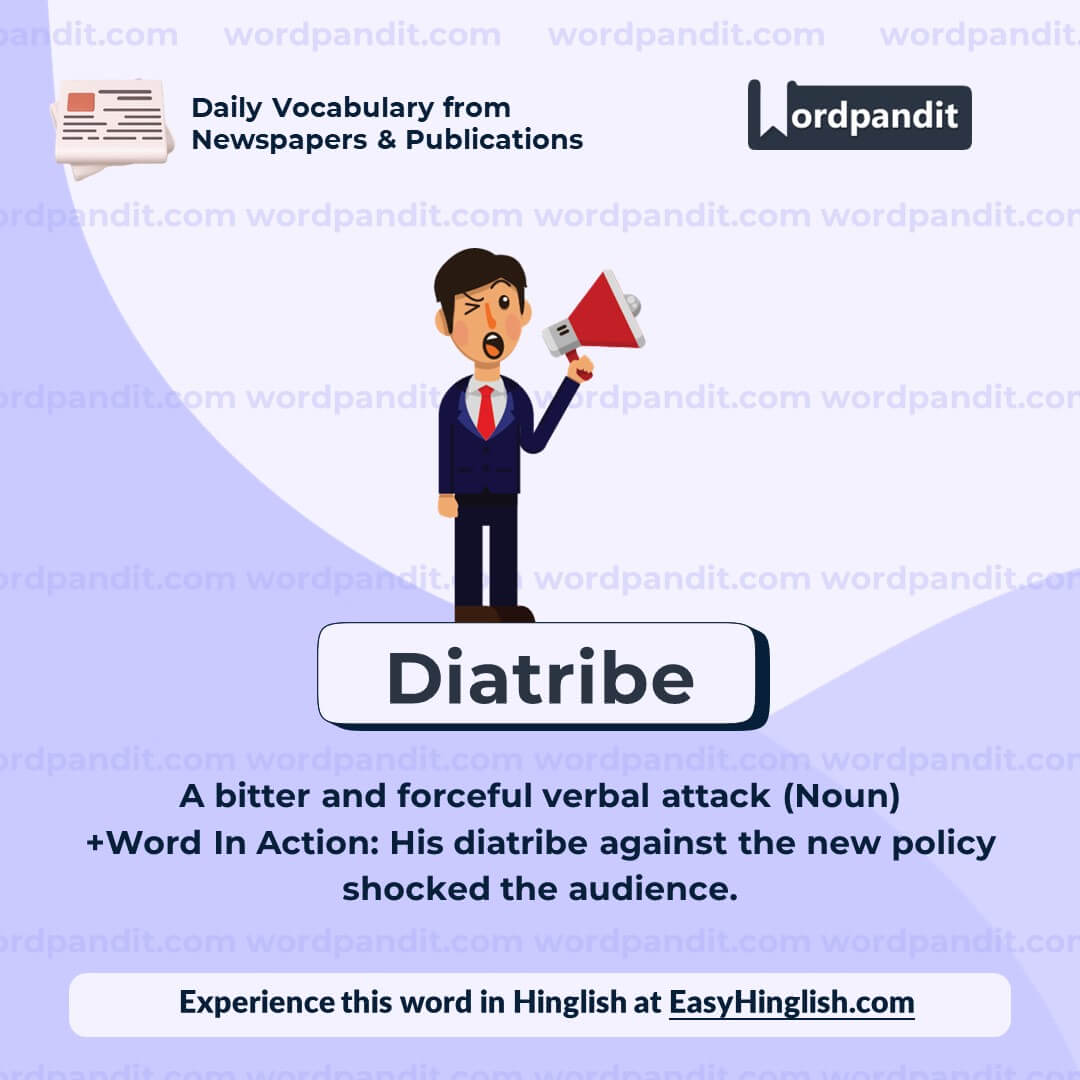
WORD-2: Diatribe
Sandarbh (Context):
"Sixty-plus years after Snow's diatribe, the rift has hardly narrowed." - Aeon
Vyakhya (Explanatory Paragraph):
"Diatribe" ek aisa shabd hai jo kisi teekhe, gusse bhare bol ya likhit attack ko describe karta hai — usually kisi vyakti, idea ya group ke khilaaf. Upar ke context mein, Snow ne koi aisi teekhi baat kahi thi jiska impact ab tak mehsoos ho raha hai. Yani, diatribe ek emotional aur intense tareeke se ki gayi criticism hoti hai — sirf calmly point rakhna nahi, balki full blast dena.
Arth (Meaning): Kadi, teekhi aur abusive tarah ki bol-chal ya likhit alochnatmak baat (Noun)
Uccharan (Pronunciation): DYE-uh-tribe
Kathinai Star (Difficulty Level): ⭐⭐⭐ Intermediate
Utpatti (Etymology): Greek word *diatribē* se aaya hai, jiska matlab tha "discussion" ya "debate", jo Latin aur French ke through evolve hokar ek critical aur lambe speech ke sense mein use hone laga.
Prashant Sir Ke Tathya (Prashant Sir's Notes):
"Diatribe" sirf ek simple criticism nahi hoti — yeh ek verbal assault hoti hai. Aksar politics, literature, ya media mein hoti hai jab koi gusse se bhara hua apna point aggressively rakhna chahta hai. Iska use thoughtfully karo, kyunki yeh strong word hai.
Samanarthi & Vipritarthi (Synonyms & Antonyms):
Samanarthi (Synonyms): tirade, rant, harangue, condemnation, broadside
Vipritarthi (Antonyms): praise, commendation, eulogy, tribute, compliment
Udaharan (Usage Examples):
- Press conference mein neta ne media ke khilaaf ek zabardast diatribe de diya.
- Uska blog review nahi, balki film industry ke khilaaf ek puri diatribe lag rahi thi.
Sanskritik Sandarbh (Cultural Reference):
"Hunter S. Thompson apne bold journalism ke liye mashhoor the, jisme factual reporting ke saath unki satirical diatribes bhi hoti thi — especially American politics aur culture ke against." - Literary Analysis
Sochiye (Think About It):
Kya diatribe kabhi productive ho sakti hai, ya uska aggressive tone uska message kamzor kar deta hai?
Chhoti Kriya (Quick Activity):
Do sentences likhiye: ek calm disagreement dikhata ho, aur doosra ek diatribe ho. Phir dono ke tone aur impact compare kariye.
Yaad Karne Ka Tarika (Memory Tip):
“Diatribe” yaad rakhne ke liye sochiye ek “tribe” of angry words jo bahar nikalna chahte hain — matlab, ek intense aur emotional attack.
Vastavik Jeevan Me Upyog (Real-World Application):
“Diatribe” aapko aksar editorials, political speeches ya social media rants mein milega. Jab aapko kisi ki intense aur harsh criticism describe karni ho, yeh word perfect hai.
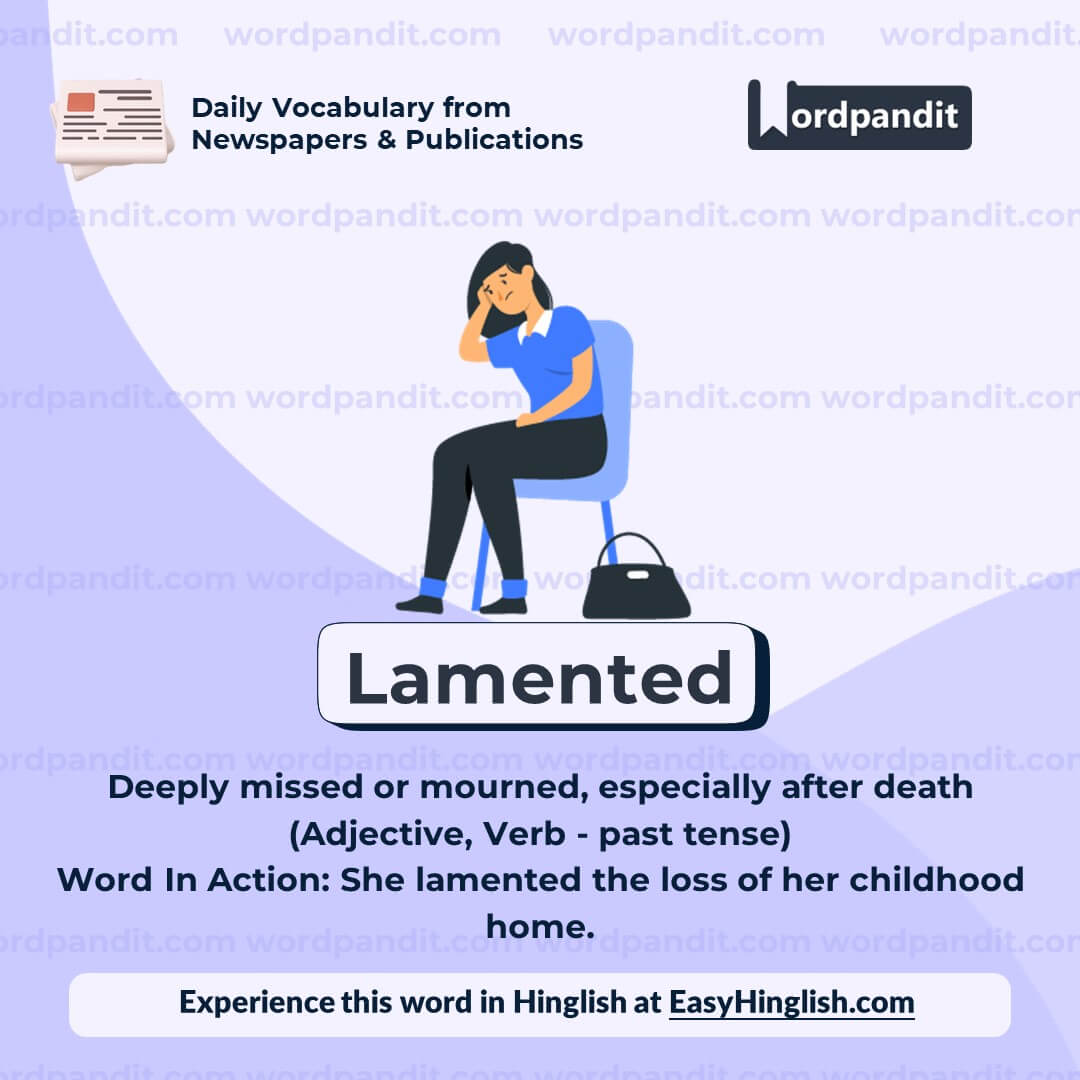
WORD-3: Lamented
Context:
“The Duchess is remembered as one of the great beauties of Ireland and is deeply lamented to this day.” - Aeon
Explanatory Paragraph:
"Lamented" refers to being deeply mourned or sorrowed, especially after death. In the sentence, it suggests that the Duchess is not only admired for her beauty and legacy, but also remembered with great sadness and emotional loss. This word evokes feelings of longing and respect for someone who is no longer present, often due to their positive impact or significance in life.
Meaning: Mourned or grieved for, especially after death (Adjective; also used as the past tense of the verb "lament")
Pronunciation: luh-MEN-tid
Difficulty Level: ⭐⭐ Beginner
Etymology: From Latin *lamentari*, meaning “to wail or mourn,” passing into Middle English through Old French *lamenter*.
Prashant Sir's Notes:
“Lamented” is often used to honor someone who has passed away, especially in formal or poetic language. It expresses both respect and sorrow. Be mindful: it's typically used with the deceased and not for general disappointment.
Synonyms & Antonyms:
Synonyms: mourned, grieved, sorrowed, bewailed, wept for
Antonyms: celebrated (in a different context), ignored, forgotten, overlooked
Usage Examples:
- The late professor is still deeply lamented by his former students.
- She lamented the loss of her childhood home after it was demolished.
- The soldier was a lamented hero in his hometown.
- In her speech, she lamented the decline of public libraries.
Cultural Reference:
"In Shakespeare’s plays, characters often lament the deaths of loved ones with poetic monologues, expressing the depth of their sorrow." - Literary Studies
Think About It:
What does it mean to be truly lamented after death—and how does one live a life that leaves such an impact?
Quick Activity:
Write a short tribute to someone (real or fictional) using the word “lamented” to describe their absence or legacy.
Memory Tip:
Think of “lamented” as “lament + end” — mourning someone whose life has ended.
Real-World Application:
You might see "lamented" in obituaries, tributes, or historical accounts to respectfully acknowledge someone's passing and the sadness felt by others.
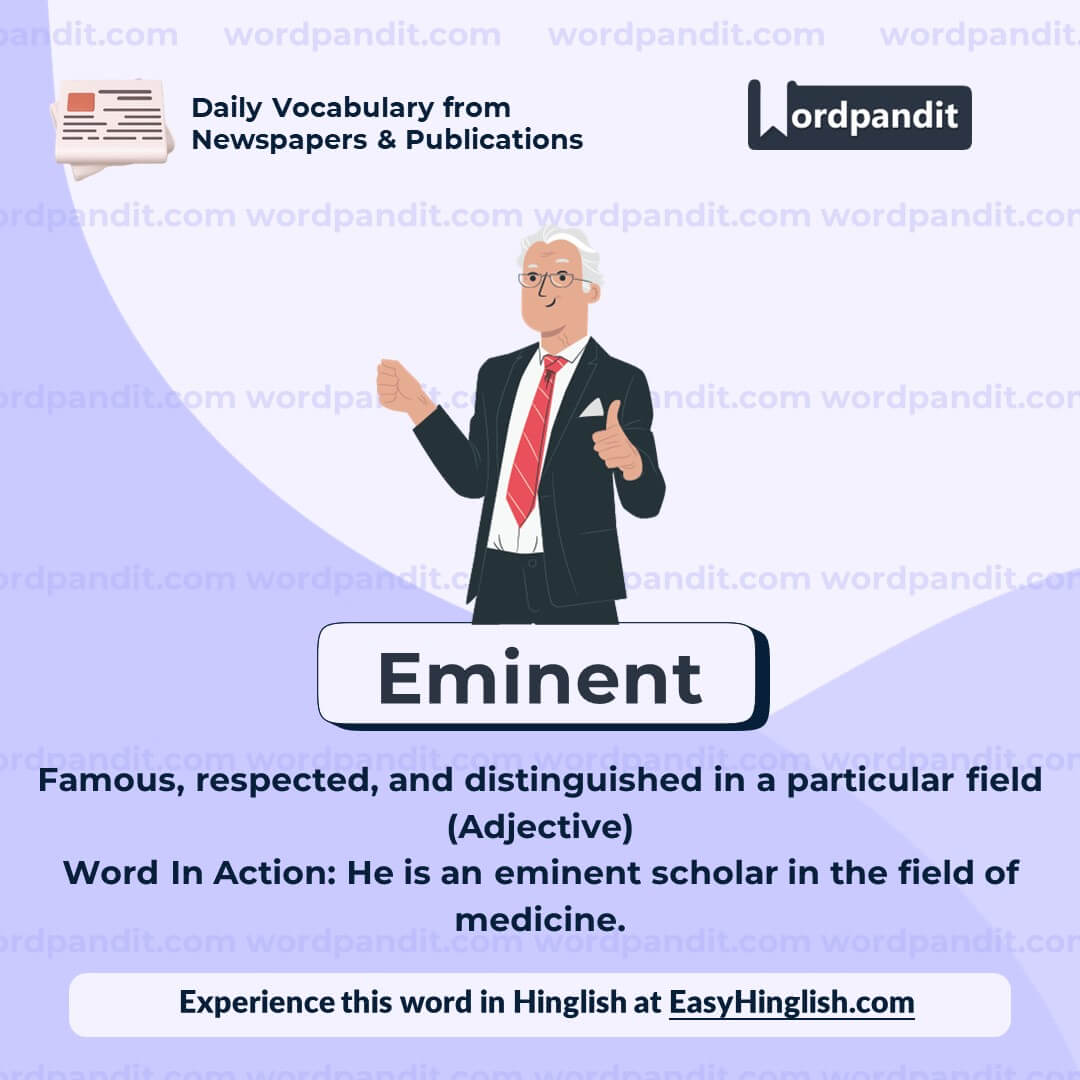
WORD-4: Eminent
Context:
"And he quoted eminent colleagues such as the Nobel laureate Steven Weinberg, Stephen Hawking and Neil deGrasse Tyson, who agreed that 'philosophy is dead' and that only the natural sciences could explain how the world works, not 'what you can deduce from your armchair'." - Aeon
Explanatory Paragraph:
"Eminent" is used to describe someone who is highly respected and distinguished in a particular profession or field. In the context above, it emphasizes the stature and recognition of scientists like Steven Weinberg, Stephen Hawking, and Neil deGrasse Tyson. The word carries a tone of admiration and authority, highlighting not just fame but also professional achievement and expertise.
Meaning: Famous and respected within a particular sphere or profession (Adjective)
Pronunciation: EM-uh-nuhnt
Difficulty Level: ⭐⭐ Beginner
Etymology: From Latin *eminentem*, meaning "standing out, projecting, distinguished," derived from *eminere* — "to stand out."
Prashant Sir's Notes:
This is a word of admiration. Use it to describe people who are leaders in their fields—like eminent scientists, authors, judges, or thinkers. It conveys respect and recognition, not just popularity.
Synonyms & Antonyms:
Synonyms: distinguished, renowned, respected, notable, prestigious
Antonyms: unknown, obscure, insignificant, unremarkable, ordinary
Usage Examples:
- She studied under an eminent professor of neuroscience at Harvard.
- The award was presented to an eminent leader in global healthcare.
- His father was an eminent lawyer who fought landmark cases.
- Several eminent historians attended the international conference.
Cultural Reference:
"The eminent physicist Richard Feynman was not only a Nobel Prize winner but also a brilliant teacher who made science accessible and exciting." - Scientific American
Think About It:
What qualities make someone truly eminent—fame, impact, innovation, or integrity?
Quick Activity:
Make a list of three eminent people from different fields (science, arts, politics). What contributions earned them this title?
Memory Tip:
“Eminent” sounds like “prominent”—both suggest someone who stands out in their field.
Real-World Application:
“Eminent” is often used in journalism, academic writing, and professional bios to show authority and prestige. For example, “Dr. Rao, an eminent cardiologist, spoke at the medical summit.”
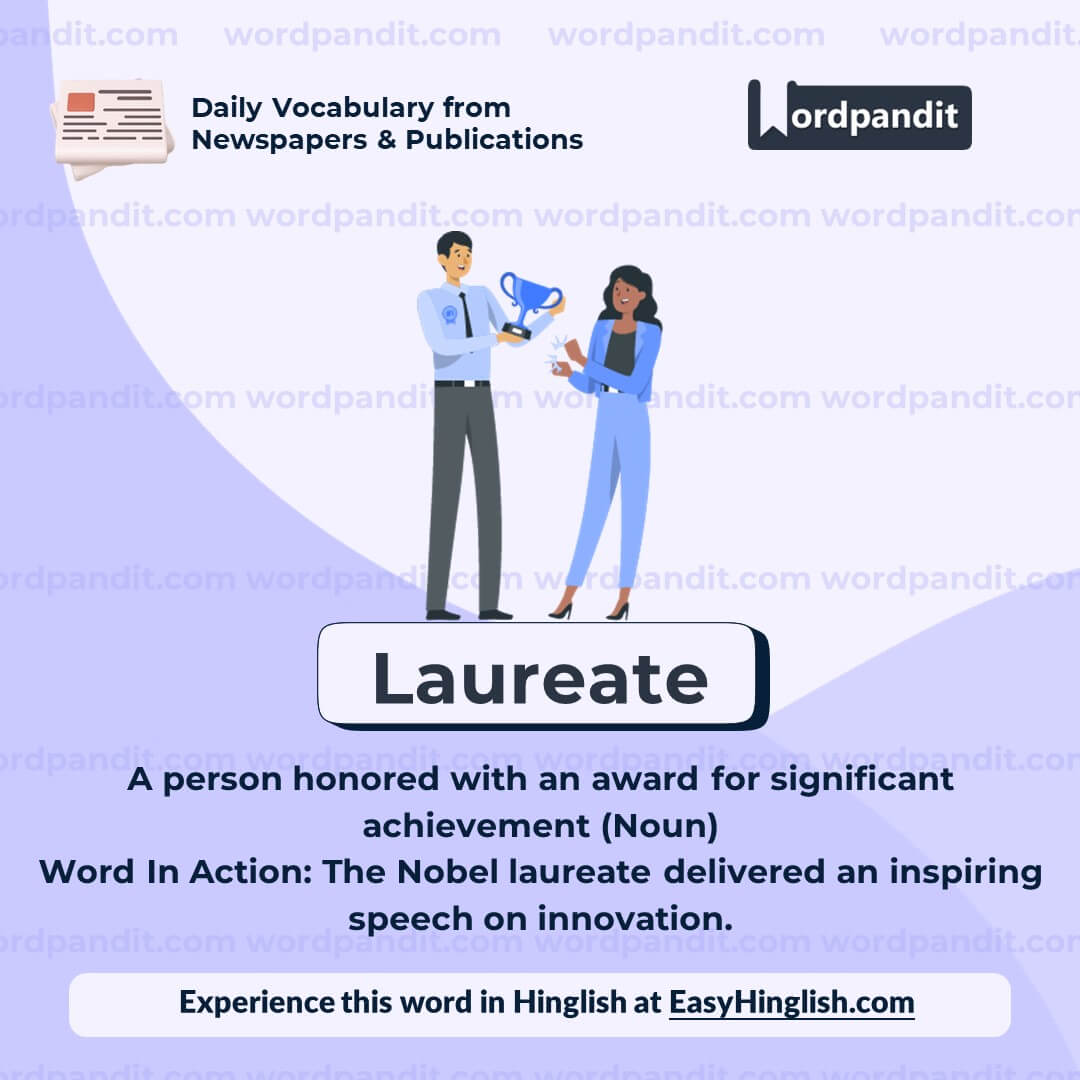
WORD-5: Laureate
Context:
"And he quoted eminent colleagues such as the Nobel laureate Steven Weinberg, Stephen Hawking and Neil deGrasse Tyson, who agreed that 'philosophy is dead' and that only the natural sciences could explain how the world works, not 'what you can deduce from your armchair'." - Aeon
Explanatory Paragraph:
The word "laureate" refers to a person who has been honored or awarded for outstanding achievements, especially in intellectual or creative fields. In this context, "Nobel laureate" refers to someone who has received the prestigious Nobel Prize. The word suggests not only excellence but also official recognition of one’s contributions to a discipline such as science, literature, or peace.
Meaning: A person honored with an award for outstanding achievement in a particular field (Noun)
Pronunciation: LOR-ee-uht
Difficulty Level: ⭐⭐ Beginner
Etymology: From Latin *laureatus*, meaning "crowned with laurel," a symbol of honor and victory in ancient Rome.
Prashant Sir's Notes:
"Laureate" is typically used in formal contexts to denote someone who has received a major award, such as the Nobel Prize or Poet Laureate title. It's associated with excellence and recognition on a national or global scale. Remember, the word itself doesn’t imply the field—so always pair it with the relevant title (e.g., Nobel laureate, poet laureate).
Synonyms & Antonyms:
Synonyms: award-winner, honoree, prizewinner, recipient
Antonyms: unknown, unrecognized, amateur, novice
Usage Examples:
- Malala Yousafzai became the youngest Nobel laureate at the age of 17.
- The poet laureate was invited to write a verse commemorating the national holiday.
- Many laureates use their platform to advocate for global causes.
- He was named a laureate for his groundbreaking work in cancer research.
Cultural Reference:
"Bob Dylan, awarded the Nobel Prize in Literature, became a controversial yet unforgettable laureate for blending poetic lyrics with music." - BBC Culture
Think About It:
Should laureates use their recognition as a platform to influence social or political change, or stay within their field of expertise?
Quick Activity:
Pick a Nobel laureate in any field. Write one sentence summarizing their contribution and why it was significant.
Memory Tip:
“Laureate” comes from “laurel” — remember those leafy crowns placed on the heads of champions in ancient times. A laureate is someone crowned with honor.
Real-World Application:
The term “laureate” is often used in academia, science, and literature to identify individuals whose work has earned them the highest honors, such as Nobel Prizes or national appointments like “Poet Laureate.”


