

Daily Vocabulary from International Newspapers and Publications
Expand Your Vocabulary with Wordpandit’s Global Vocabulary Hub
At Wordpandit, we are committed to helping you develop a truly global vocabulary by drawing from some of the most respected international publications. This section is designed to keep you ahead of the curve by introducing you to words that define global conversations and trends.
The Power of Global Sources
To help you think and communicate on a global scale, we curate vocabulary from renowned international sources, such as:
- The New York Times
- The Washington Post
- BBC
- The Guardian
- The Economist
- Scientific American
- Psychology Today
- And many more...
Stay Global, Stay Competitive
Our daily updates from international publications ensure you are consistently exposed to new words that reflect global news and developments, making sure your vocabulary is not only current but also globally relevant.
Enhance Your Global Perspective
Whether you’re preparing for international exams, aiming to excel in global business communication, or want to enhance your language skills for personal growth, Wordpandit offers the resources you need to thrive in a global context.
Effective Learning, Global Reach
Our learning methodology combines global examples, memory aids, and interactive activities, allowing you to internalize new words effectively and apply them in real-world scenarios.
Begin Your Global Vocabulary Journey Now!

Why Choose Wordpandit?
Practical Learning: Focus on words you'll actually encounter in real-world reading, enhancing your comprehension and communication skills.
Diverse Content: From current affairs to scientific breakthroughs, our varied sources expose you to vocabulary across multiple domains.
Effortless Integration: Make Wordpandit a part of your daily routine. Just a few minutes each day can significantly boost your lexicon over time.
Your Path to Vocabulary Mastery
- Visit our Daily Vocabulary section regularly
- Explore new words and their usage in context
- Practice incorporating these words into your own writing and speech
- Track your progress as your vocabulary expands
Start Your Journey Today
Embark on your vocabulary enhancement journey with Wordpandit. By consistently engaging with our daily posts, you'll build a robust vocabulary that serves you well in academic, professional, and personal contexts.
Remember, a word a day keeps linguistic limitations at bay. Make Wordpandit your daily companion in the quest for vocabulary excellence!
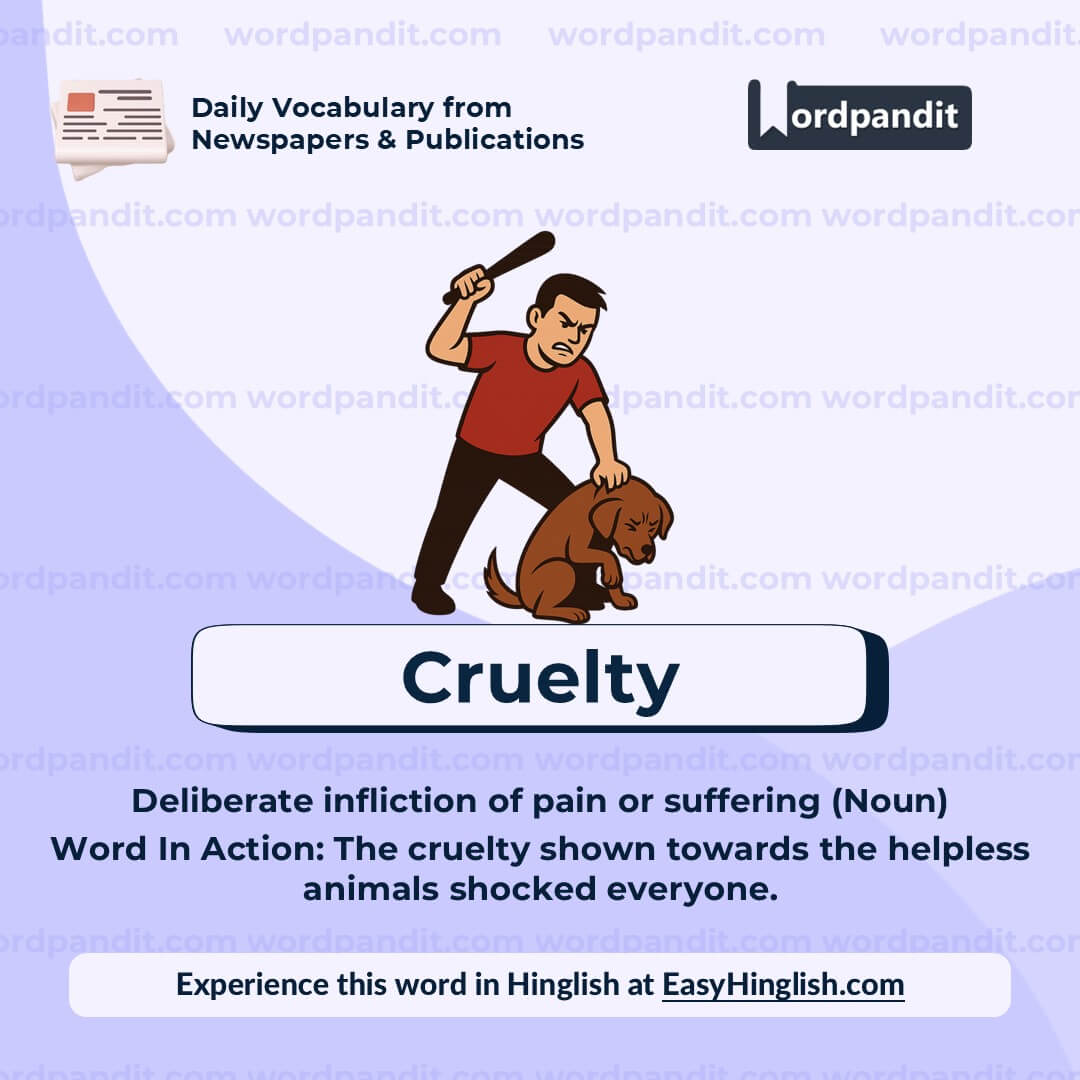
WORD-1: Cruelty
Context:
"As bad as the cruelty is the cynicism. The changing borders and independence movements of the postwar era produced millions of refugees." - New York Times
Explanatory Paragraph:
"Cruelty" refers to behavior that intentionally causes pain, suffering, or distress to others. It can be physical or emotional and is often associated with a lack of empathy or compassion. In the given context, the term highlights not just the suffering inflicted on refugees, but also the cold indifference or strategic manipulation surrounding their plight. The use of "cruelty" emphasizes the moral failure in how vulnerable populations were treated during geopolitical shifts.
Meaning: Deliberate infliction of pain or suffering (Noun)
Pronunciation: KROO-uhl-tee
Difficulty Level: ⭐⭐ Basic
Etymology: From Old French "crualté", from Latin "crudelitas", from "crudelis" meaning cruel.
Prashant Sir's Notes:
"Cruelty" is not just about visible violence—it's about any action or system that shows a disregard for human suffering. Keep in mind both personal and institutional forms of cruelty when interpreting the word.
Synonyms & Antonyms:
Synonyms: brutality, savagery, inhumanity, harshness, heartlessness
Antonyms: kindness, compassion, gentleness, mercy, humanity
Usage Examples:
- The cruelty shown to prisoners of war was condemned by international organizations.
- She couldn't understand the cruelty behind such a mean-spirited joke.
- Animal cruelty laws aim to protect creatures from needless suffering.
- History is filled with instances of cruelty disguised as justice.
Cultural Reference:
"The only thing necessary for the triumph of evil is for good men to do nothing." – often attributed to Edmund Burke. This quote underscores how cruelty can thrive when people remain indifferent.
Think About It:
Is cruelty more dangerous when it is subtle and institutional, rather than overt and violent?
Quick Activity:
List three examples of cruelty you’ve seen in literature or history. Identify whether they were physical, emotional, or systemic.
Memory Tip:
Think of "CRUEL" as the root—when someone is CRUEL, they show CRUEL-TY.
Real-World Application:
The word "cruelty" is widely used in human rights discussions, animal welfare campaigns, and moral philosophy debates. Understanding this word helps one interpret ethical arguments in real-world situations.
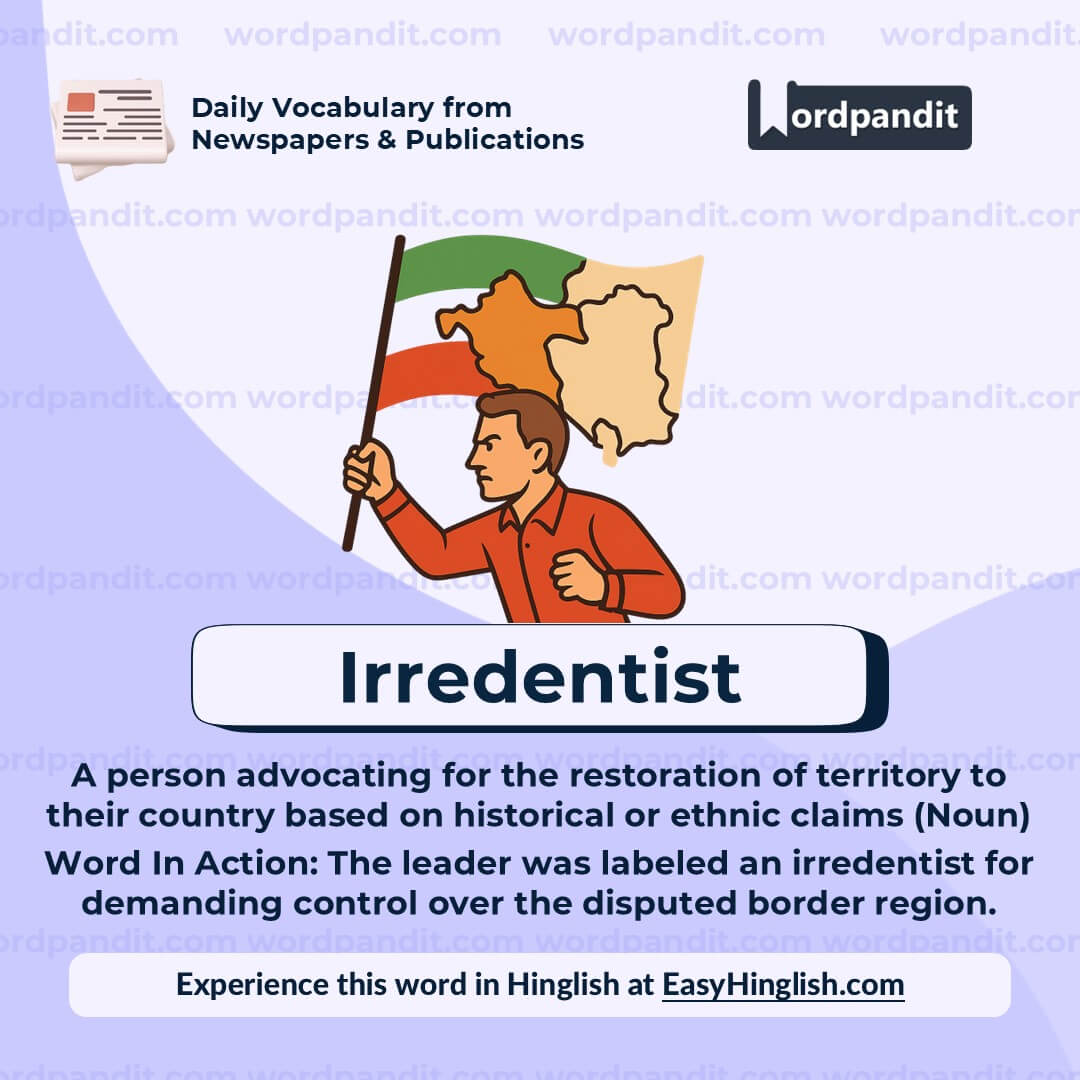
WORD-2: Irredentist
Context:
"Israel and preserving the irredentist fantasy that someday their descendants will exercise what they believe is their 'right of return,' effectively through the elimination of the Jewish state." - New York Times
Explanatory Paragraph:
The term "irredentist" refers to a person or political movement that seeks to reclaim territory they believe was wrongly taken or historically belongs to their nation or ethnic group. This belief often stems from historical, cultural, or ethnic claims and can drive conflict when groups push for the redrawing of borders or the reunification of lands. In the given context, "irredentist fantasy" implies a belief in reclaiming land based on ancestral or ideological claims, even at the expense of existing national boundaries or states.
Meaning: A person advocating for the restoration of territory to their country based on historical or ethnic claims (Noun)
Pronunciation: ih-ruh-DEN-tist
Difficulty Level: ⭐⭐⭐⭐ Advanced
Etymology: From Italian "irredentista", derived from "Italia irredenta" ("unredeemed Italy"), referring to 19th-century Italian efforts to reclaim lands under foreign control.
Prashant Sir's Notes:
This is a powerful political term often linked to nationalism, border disputes, or ancestral claims. It’s important in understanding geopolitical conflicts, especially where identity, history, and territorial claims intersect.
Synonyms & Antonyms:
Synonyms: nationalist, expansionist, revanchist, territorial claimant
Antonyms: internationalist, pacifist, integrationist
Usage Examples:
- The politician’s irredentist rhetoric sparked tensions with neighboring countries.
- Irredentist movements often rely on historical maps to justify their territorial demands.
- Scholars warn that irredentist ideologies can destabilize fragile peace agreements.
- Many view the conflict as being fueled by deep-seated irredentist ambitions on both sides.
Cultural Reference:
The term gained prominence in 19th-century Italy, where nationalists aimed to reunite all Italian-speaking regions under one flag—a movement known as "Italia Irredenta."
Think About It:
Can irredentist claims ever be justified in modern international law, or do they always threaten peace and stability?
Quick Activity:
Research a current or historical irredentist movement. Summarize its core claim in two lines and identify whether it led to conflict or resolution.
Memory Tip:
Think of “irredentist” as someone who says “I want it back!” — holding on to “unredeemed” land like a territorial debt.
Real-World Application:
Understanding "irredentist" helps analyze many geopolitical disputes—such as Russia’s claim over Crimea, China’s claims in the South China Sea, or historical tensions in the Balkans. It’s essential vocabulary for students of politics, history, and international relations.
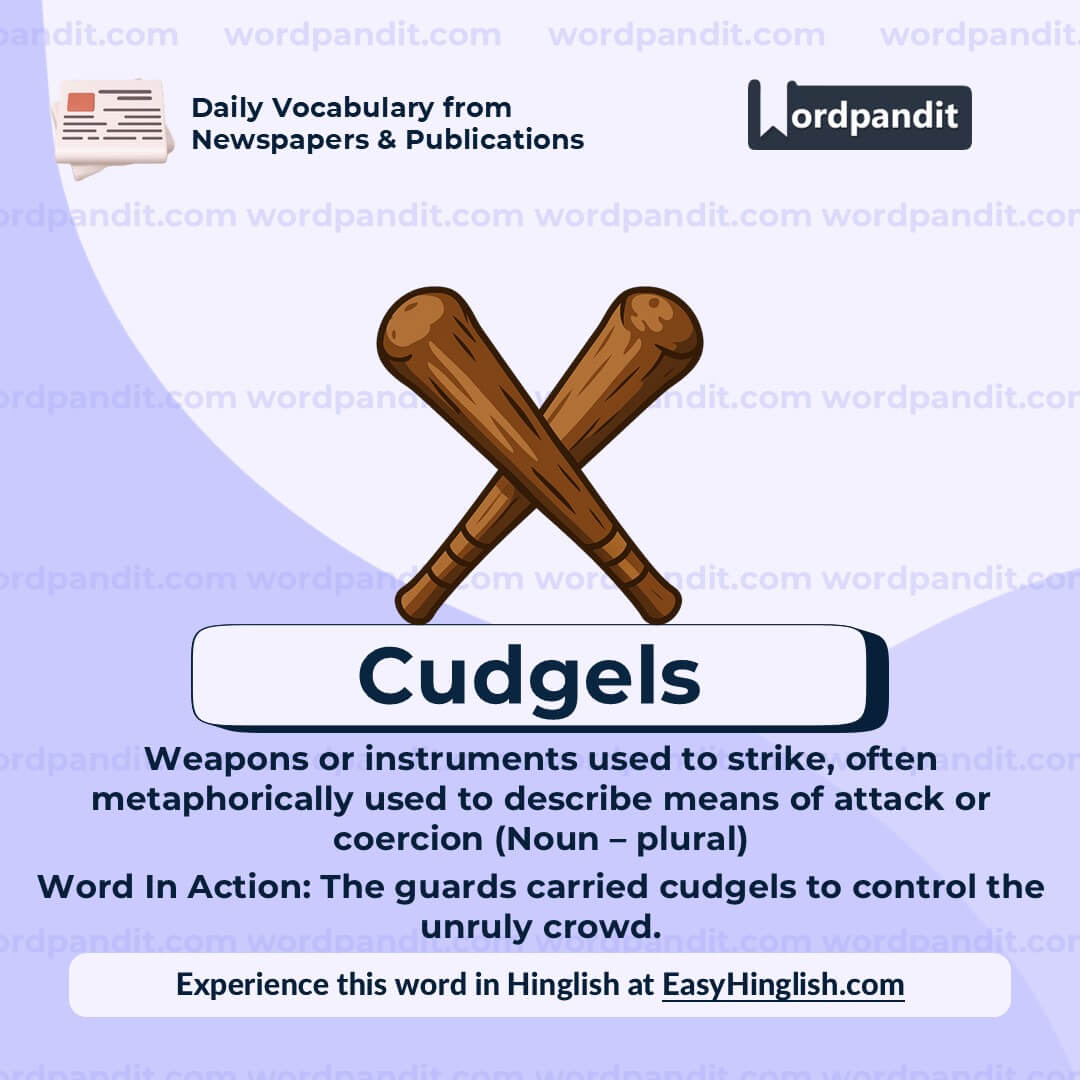
WORD-3: Cudgels
Context:
"They should not be cudgels in a never-ending struggle, subsidized from one aggrieved generation to the next by international largess." - New York Times
Explanatory Paragraph:
"Cudgels" originally refer to short, heavy clubs used as weapons. However, in the figurative sense—as used in the given sentence—they symbolize tools or arguments used to attack, pressure, or punish others. Here, the term suggests that historical grievances or emotional narratives are being used as weapons in an ongoing political or ideological battle, passed down from one generation to the next and financially supported by external sources.
Meaning: Weapons or instruments used to strike, often metaphorically used to describe means of attack or coercion (Noun – plural)
Pronunciation: KUH-juhlz
Difficulty Level: ⭐⭐⭐ Intermediate
Etymology: From Middle English "cuggel", related to Old English "cycgel", meaning a club or blunt weapon.
Prashant Sir's Notes:
Focus on the metaphorical use of "cudgel" here—it's not about physical violence, but about the symbolic use of history, anger, or arguments to hit back or keep a conflict alive.
Synonyms & Antonyms:
Synonyms: bludgeons, weapons, tools (figurative), battering instruments, instruments of attack
Antonyms: shields, defenses, supports, peace offerings
Usage Examples:
- He used past injustices as cudgels to discredit his opponents in every debate.
- The columnist argued that economic hardship should not become political cudgels during elections.
- They picked up rhetorical cudgels, fighting the new policy with passionate speeches.
- She refused to let her trauma become a cudgel against those who disagreed with her.
Cultural Reference:
In Shakespeare's time, a “cudgel” was a common weapon in duels and disputes. It later gained metaphorical meaning in literature and political writing, such as being used to describe verbal or ideological attacks.
Think About It:
When does using historical pain or injustice as a cudgel help a cause, and when does it risk perpetuating cycles of resentment?
Quick Activity:
Write two sentences: one using “cudgel” literally and one using it metaphorically. Compare the tone and impact of both uses.
Memory Tip:
Think: "Cudgel = Club = Clobber" — All start with 'C' and imply hitting hard. Even in speech or ideas!
Real-World Application:
"Cudgels" is often used in political and media commentary to describe how sensitive issues—like race, religion, or history—are wielded to attack opponents or control narratives. Understanding this term is key to decoding rhetorical strategies in debates and discussions.
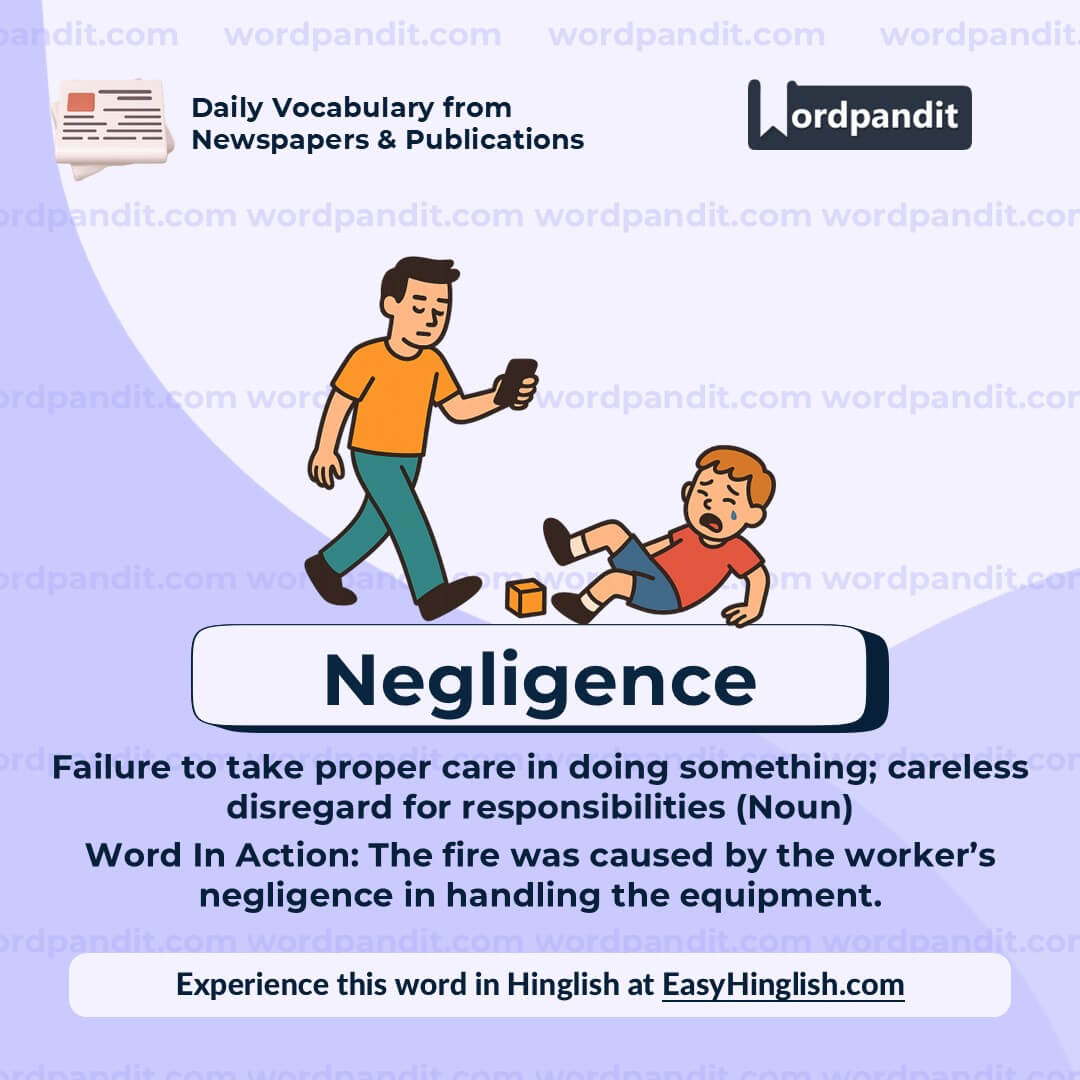
WORD-4: Negligence
Context:
"Gross negligence or quiet complicity — they need to resign now." - New York Times
Explanatory Paragraph:
"Negligence" refers to the failure to take proper care or to fulfill one’s responsibilities, often resulting in harm or damage. It doesn’t necessarily involve intentional wrongdoing but stems from carelessness, inattention, or disregard. In the given context, "gross negligence" implies an especially severe level of irresponsibility—so serious that it warrants resignation. It suggests that those in power either failed to act when they should have or were complicit through their silence and inaction.
Meaning: Failure to take proper care in doing something; careless disregard for responsibilities (Noun)
Pronunciation: NEH-glih-juhns
Difficulty Level: ⭐⭐ Basic
Etymology: From Latin "negligentia" meaning carelessness, derived from "neglegere" — to disregard or neglect.
Prashant Sir's Notes:
"Negligence" is often used in legal, professional, and moral discussions. Always understand the context—is it medical negligence, legal negligence, or just casual irresponsibility?
Synonyms & Antonyms:
Synonyms: carelessness, irresponsibility, oversight, inattention, disregard
Antonyms: diligence, attention, responsibility, caution, thoroughness
Usage Examples:
- The doctor was sued for medical negligence after a critical mistake during surgery.
- Negligence in maintaining the safety equipment led to a serious workplace accident.
- Her child’s school accused her of parental negligence for repeated absences.
- The bridge collapse was attributed to years of structural negligence.
Cultural Reference:
In legal dramas and real-world court cases, "gross negligence" often appears when professionals—like doctors or engineers—fail so badly in their duties that lives are put at risk. The term plays a central role in discussions around accountability.
Think About It:
Is negligence always unintentional, or can choosing to “look the other way” also count as a form of deliberate harm?
Quick Activity:
Think of a situation from history or current events where negligence had serious consequences. Write one sentence describing what went wrong.
Memory Tip:
Negligence = "Neglect" + "Ignorance" → When you neglect something and ignore your duty, you commit negligence.
Real-World Application:
"Negligence" is key in legal, corporate, and safety-related fields. Understanding this term is essential when reading contracts, discussing accountability, or interpreting public scandals and policy failures.
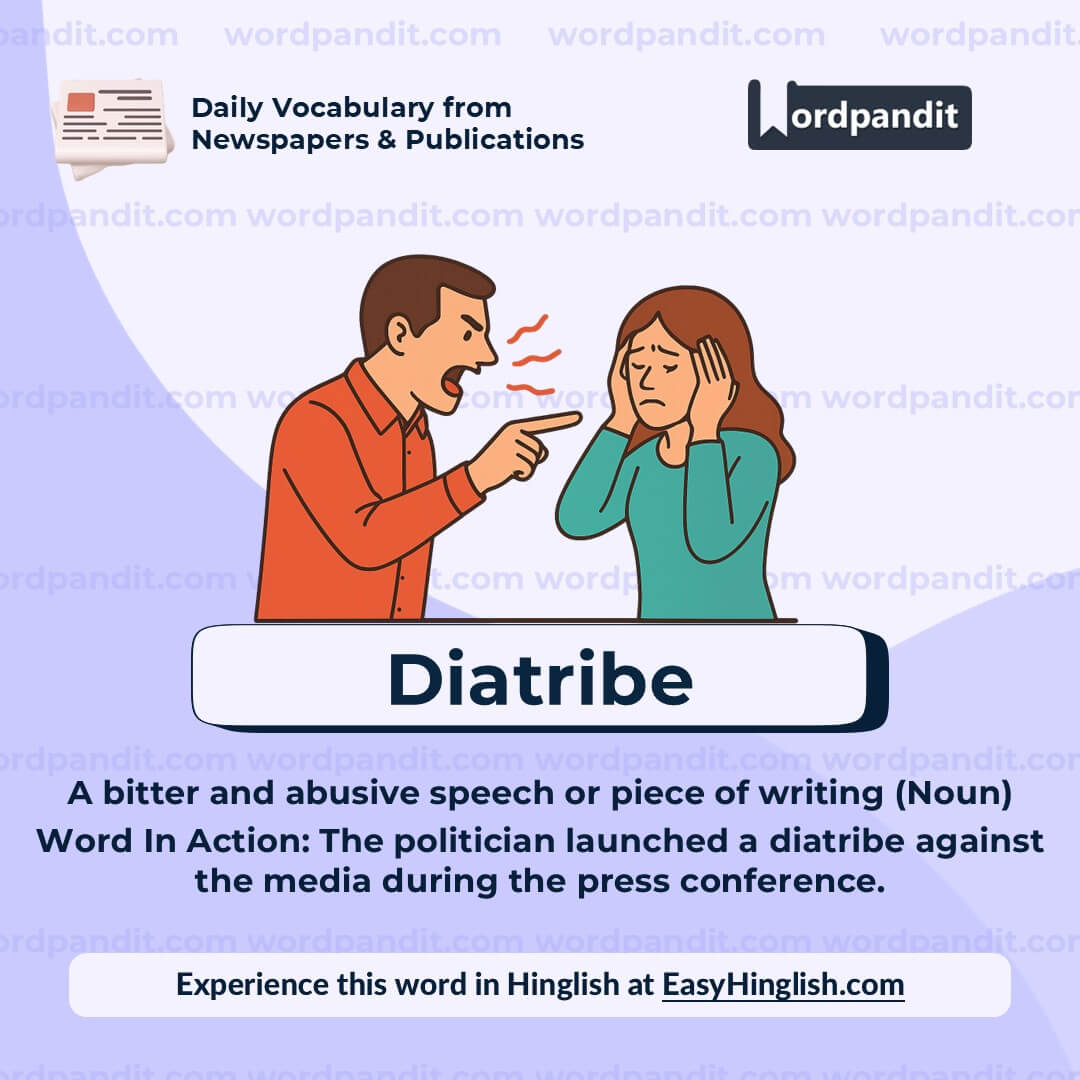
WORD-5: Diatribe
Context:
"An angry customer's harsh criticism directed at a store manager." - New York Times
Explanatory Paragraph:
"Diatribe" refers to a forceful and bitter verbal attack against someone or something. It is usually filled with anger, frustration, or criticism and is intended to express deep disapproval. In the given context, the angry customer's outburst toward the store manager is described as a diatribe, meaning it was more than just a complaint—it was a harsh, possibly prolonged, verbal assault filled with emotion.
Meaning: A bitter and abusive speech or piece of writing (Noun)
Pronunciation: DYE-uh-tryb
Difficulty Level: ⭐⭐⭐ Intermediate
Etymology: From Latin "diatriba", meaning learned discussion or discourse, originally from Greek "diatribē" meaning pastime or discourse, later evolving into a term for harsh critique.
Prashant Sir's Notes:
Think of a "diatribe" as a weapon made of words—sharp, aggressive, and aimed to criticize. It’s more intense than just a complaint or rant. In exams, recognize it as a negative word loaded with emotional intensity.
Synonyms & Antonyms:
Synonyms: tirade, rant, harangue, denunciation, invective
Antonyms: praise, compliment, commendation, endorsement
Usage Examples:
- The politician launched into a diatribe against the media during the press conference.
- Her diatribe about poor customer service left the staff speechless.
- Instead of offering solutions, the article turned into a lengthy diatribe against modern education.
- He was known for his late-night radio diatribes criticizing government policy.
Cultural Reference:
Famous stand-up comedians and talk show hosts often walk a fine line between humor and diatribe—when their monologues shift from satire to outright attack, they become examples of this word in action.
Think About It:
Does delivering a diatribe help change minds, or does it push people further away from understanding your point?
Quick Activity:
Write a short, two-sentence diatribe about something minor that annoys you (e.g., slow Wi-Fi or noisy neighbors). Then rewrite it as a polite suggestion. Notice the tone shift!
Memory Tip:
Diatribe = "Die + Tribe" → Imagine a tribe shouting so angrily it could make someone want to "die" — harsh verbal attack!
Real-World Application:
Knowing the word "diatribe" helps in analyzing political speeches, opinion articles, and social media rants. It’s a useful term in both academic and everyday discussions about communication and public discourse.


