

Daily Vocabulary from International Newspapers and Publications
Expand Your Vocabulary with Wordpandit’s Global Vocabulary Hub
At Wordpandit, we are committed to helping you develop a truly global vocabulary by drawing from some of the most respected international publications. This section is designed to keep you ahead of the curve by introducing you to words that define global conversations and trends.
The Power of Global Sources
To help you think and communicate on a global scale, we curate vocabulary from renowned international sources, such as:
- The New York Times
- The Washington Post
- BBC
- The Guardian
- The Economist
- Scientific American
- Psychology Today
- And many more...
Stay Global, Stay Competitive
Our daily updates from international publications ensure you are consistently exposed to new words that reflect global news and developments, making sure your vocabulary is not only current but also globally relevant.
Enhance Your Global Perspective
Whether you’re preparing for international exams, aiming to excel in global business communication, or want to enhance your language skills for personal growth, Wordpandit offers the resources you need to thrive in a global context.
Effective Learning, Global Reach
Our learning methodology combines global examples, memory aids, and interactive activities, allowing you to internalize new words effectively and apply them in real-world scenarios.
Begin Your Global Vocabulary Journey Now!

Why Choose Wordpandit?
Practical Learning: Focus on words you'll actually encounter in real-world reading, enhancing your comprehension and communication skills.
Diverse Content: From current affairs to scientific breakthroughs, our varied sources expose you to vocabulary across multiple domains.
Effortless Integration: Make Wordpandit a part of your daily routine. Just a few minutes each day can significantly boost your lexicon over time.
Your Path to Vocabulary Mastery
- Visit our Daily Vocabulary section regularly
- Explore new words and their usage in context
- Practice incorporating these words into your own writing and speech
- Track your progress as your vocabulary expands
Start Your Journey Today
Embark on your vocabulary enhancement journey with Wordpandit. By consistently engaging with our daily posts, you'll build a robust vocabulary that serves you well in academic, professional, and personal contexts.
Remember, a word a day keeps linguistic limitations at bay. Make Wordpandit your daily companion in the quest for vocabulary excellence!
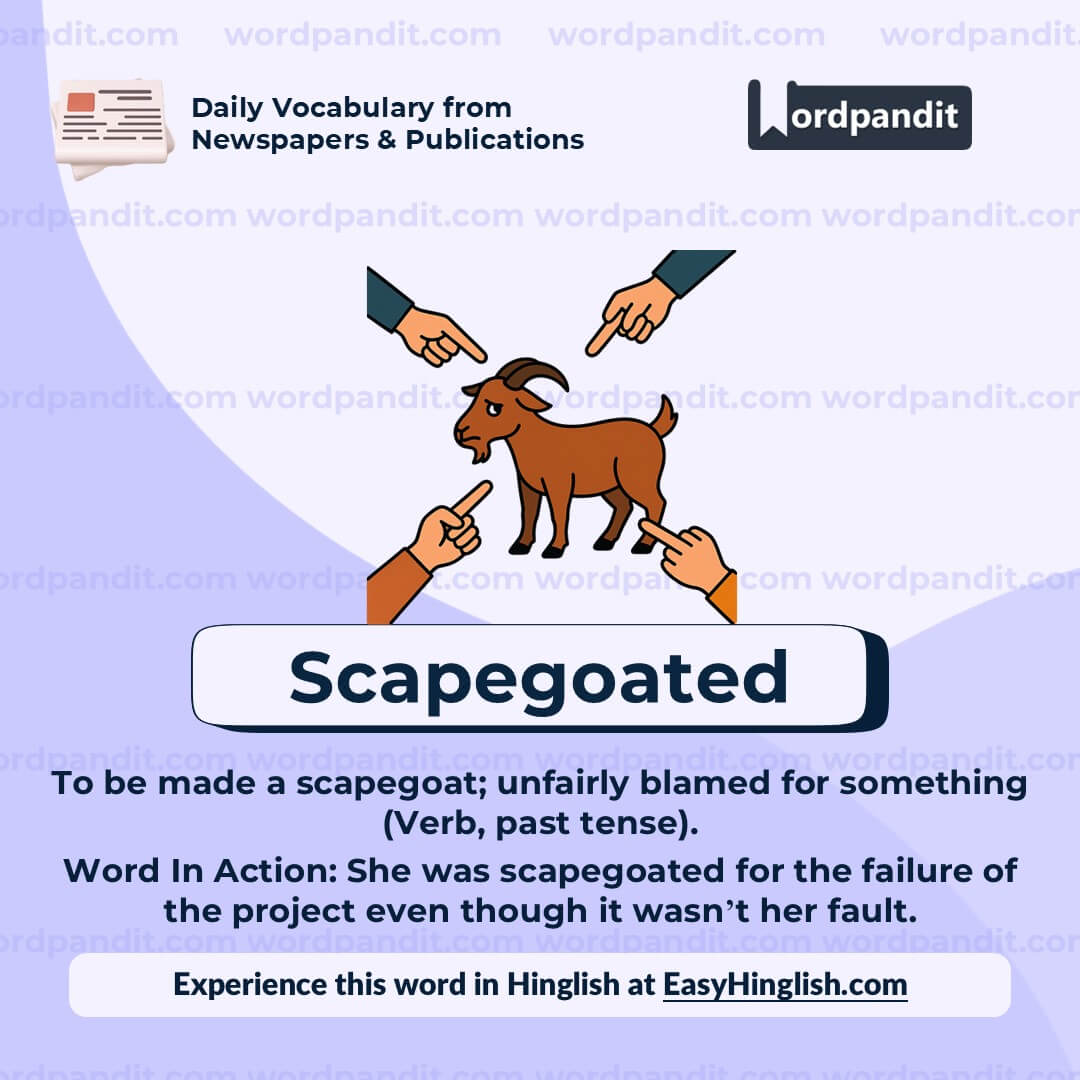
WORD-1: Scapegoated
Context:
"He felt scapegoated by the media for a mistake that many others had also made." - Aeon
Explanatory Paragraph:
To be scapegoated means to be unfairly blamed for something, often to protect others from facing responsibility. It usually happens when a group or authority singles out one person to take the blame, even though the fault lies with many or the situation is more complex. This word highlights how people or groups sometimes shift blame to make themselves look better or to avoid consequences.
Meaning: To be made a scapegoat; unfairly blamed for something (Verb, past tense).
Pronunciation: skayp-go-td
Difficulty Level: ⭐⭐ Moderate
Etymology: The term comes from the biblical practice in Leviticus where a goat was symbolically burdened with the sins of the people and then sent into the wilderness, literally becoming the "escape goat." Over time, the phrase shortened to "scapegoat" and evolved into a metaphor for unfair blame.
Prashant Sir's Notes:
This is a word strongly tied to blame and responsibility. Remember, to scapegoat someone is to single them out wrongly, not because they are guilty but because it is convenient to blame them.
Synonyms & Antonyms:
Synonyms: blamed, accused, victimized, targeted, condemned
Antonyms: absolved, exonerated, acquitted, vindicated
Usage Examples:
- The intern was scapegoated for the project’s failure, though the entire team had contributed to the mistakes.
- In times of crisis, minority groups are often scapegoated for problems they did not cause.
- The coach refused to let one player be scapegoated for the team’s loss.
- She felt scapegoated by her colleagues, who avoided admitting their own errors.
Cultural Reference:
"Throughout history, scapegoating has been a powerful tool—entire communities have been unfairly blamed for society’s struggles, from the witch trials of Salem to economic downturns in modern times." - Historical Commentary
Think About It:
Why do you think societies or groups often choose a scapegoat instead of accepting shared responsibility?
Quick Activity:
Write two short sentences: one where someone is genuinely at fault and another where someone is scapegoated unfairly. Compare the difference in responsibility.
Memory Tip:
Think of a goat running away carrying everyone’s sins—this "escape goat" idea will help you recall that scapegoating means unfairly blaming one person for the group’s problems.
Real-World Application:
The word “scapegoated” is often used in workplace dynamics, politics, and the media when one person or group is unfairly held responsible for larger issues. Recognizing scapegoating can help us think critically about fairness and accountability in society.
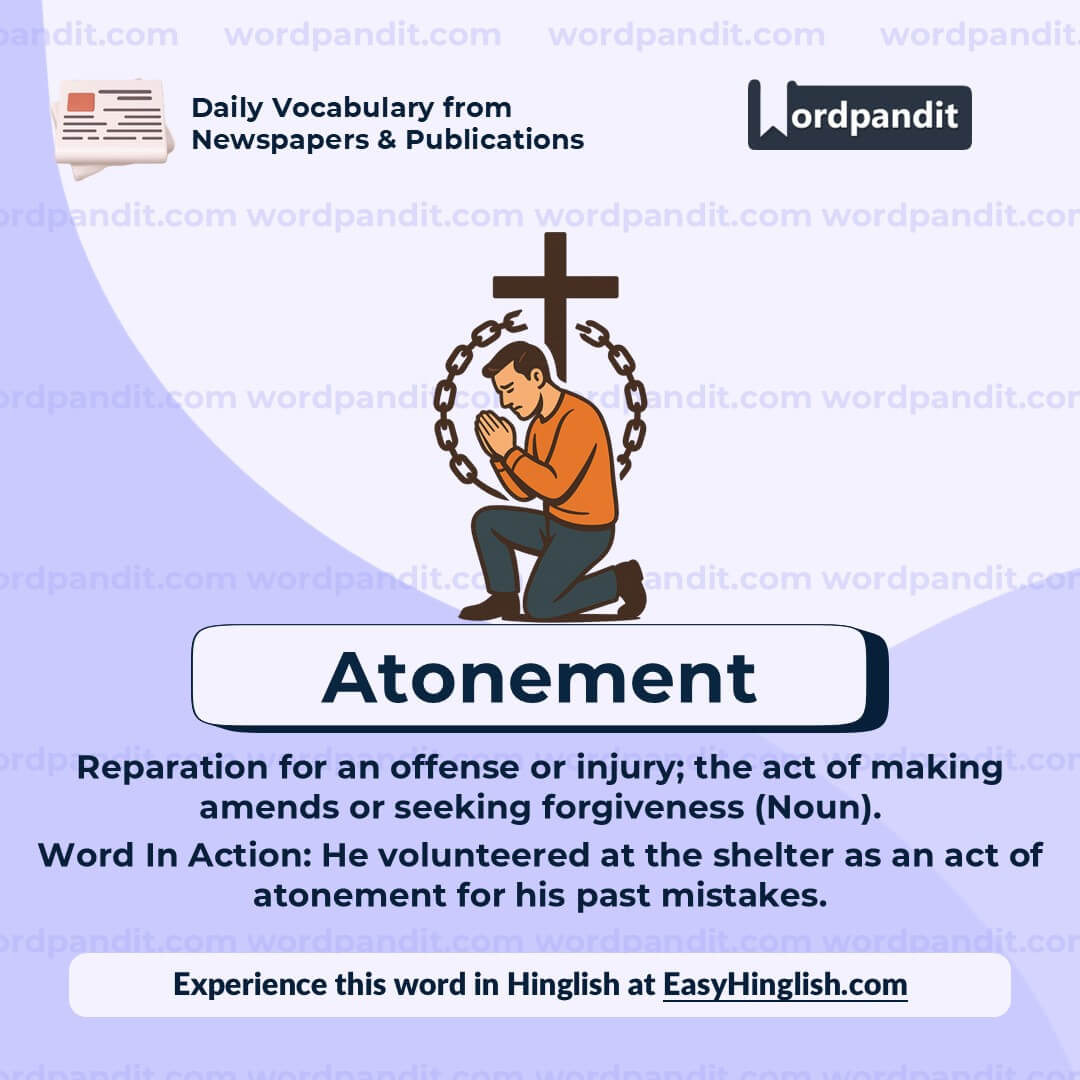
WORD-2: Atonement
Context:
"Atonement is about a young girl’s false accusation that shatters lives, and her lifelong attempt to seek forgiveness through storytelling." - New York Times
Explanatory Paragraph:
Atonement refers to making amends for a wrong, mistake, or sin. It involves taking responsibility and seeking forgiveness, often through actions, sacrifices, or sincere efforts to put things right. The word carries both a religious and everyday sense—whether it’s seeking reconciliation with God, or with people we’ve hurt, atonement is about healing relationships broken by guilt or wrongdoing.
Meaning: Reparation for an offense or injury; the act of making amends or seeking forgiveness (Noun).
Pronunciation: uh-tone-ment
Difficulty Level: ⭐⭐⭐ Intermediate to Advanced
Etymology: The word comes from Middle English “at onement,” meaning “being at one” or reconciliation. Over time, it evolved into a term used in both religious contexts (reconciliation with God) and secular contexts (making peace with others).
Prashant Sir's Notes:
Think of atonement as "at-one-ment"—the process of becoming one again after a break caused by wrongdoing. It’s not just about saying sorry; it’s about truly mending what was broken.
Synonyms & Antonyms:
Synonyms: reparation, amends, penance, redemption, reconciliation
Antonyms: offense, wrongdoing, guilt, estrangement
Usage Examples:
- He volunteered at the shelter as a form of atonement for his past mistakes.
- The nation sought atonement for historical injustices through public apologies and reparations.
- Her atonement came in the form of a heartfelt letter of apology.
- Religious rituals often symbolize atonement for sins and wrongdoings.
Cultural Reference:
In many faiths, such as Christianity and Judaism, atonement is central to spiritual life—for example, Yom Kippur is known as the “Day of Atonement” in Judaism, a time for reflection, repentance, and renewal.
Think About It:
Do you think true atonement is possible without forgiveness from the person who was wronged?
Quick Activity:
Write a sentence where someone seeks atonement in a personal situation (family or friendship) and another where atonement is sought in a larger social or historical context.
Memory Tip:
Break it down: “At-one-ment” → the state of becoming one again after conflict or wrongdoing. This makes it easy to recall that atonement is about reconciliation.
Real-World Application:
Atonement is a common theme in literature, religion, and justice. It shows up in personal life (apologies, making amends), in history (governments apologizing for past wrongs), and in spirituality (rituals for forgiveness). Understanding it helps in conversations about morality, justice, and healing.
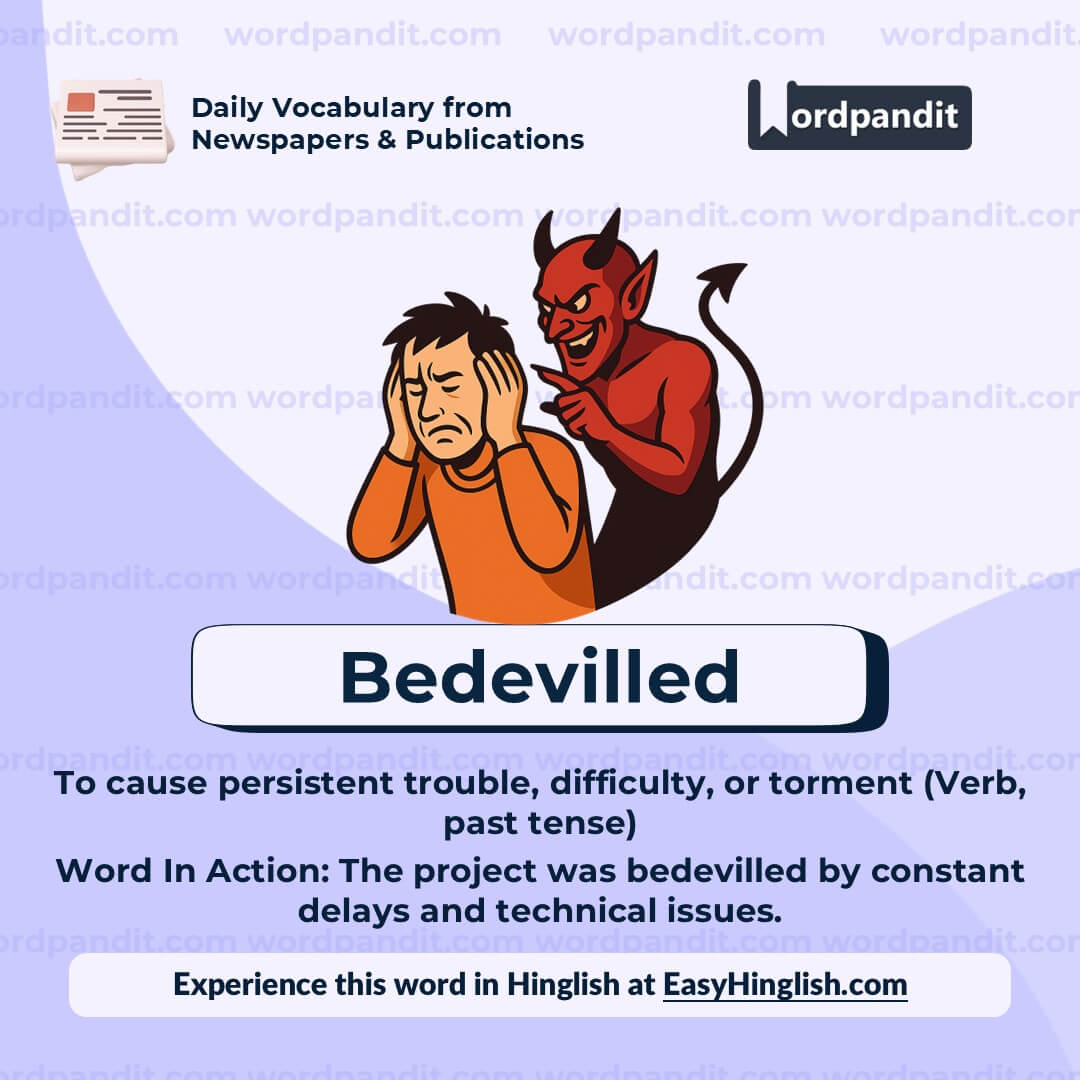
WORD-3: Bedevilled
Context:
"That same tendency – becoming over-attached to ideas that have only tenuous support – has also bedevilled research into the origins of life." - Aeon
Explanatory Paragraph:
Bedevilled means being constantly troubled, bothered, or plagued by something that creates difficulty. It carries a sense of being harassed or hindered by a problem, much like being “tormented by devils.” It’s often used to describe situations, projects, or people repeatedly affected by obstacles, confusion, or ongoing troubles.
Meaning: To cause persistent trouble, difficulty, or torment (Verb, past tense).
Pronunciation: buh-dev-uhld
Difficulty Level: ⭐⭐⭐ Intermediate
Etymology: From “devil,” with the prefix “be-” intensifying the action; originally meaning “to treat like a devil would”—to torment, harass, or trouble continuously. First recorded in the 16th century.
Prashant Sir's Notes:
Think of bedevilled as “troubled to no end.” Problems that don’t go away, but keep poking and nagging—like being haunted by little devils. It’s stronger than just “bothered.”
Synonyms & Antonyms:
Synonyms: plagued, tormented, harassed, troubled, beset
Antonyms: relieved, comforted, soothed, aided
Usage Examples:
- The project was bedevilled by constant delays and budget overruns.
- He felt bedevilled by doubts before making the final decision.
- Corruption has long bedevilled efforts to reform the system.
- Her health was bedevilled by recurring infections.
Cultural Reference:
In literature, Shakespeare often used imagery of devils and torment to show how characters were mentally or emotionally bedevilled by guilt, temptation, or ambition—like Macbeth haunted by his murderous deeds.
Think About It:
Do persistent problems “bedevil” us more because of the issues themselves, or because of how our minds dwell on them?
Quick Activity:
Write down one everyday issue that has “bedevilled” you recently (e.g., a slow internet connection, unfinished tasks). Then reframe it in a sentence using the word “bedevilled.”
Memory Tip:
Link “bedevilled” to “devil.” Just as devils cause endless torment in stories, bedevilled means endlessly troubled or harassed.
Real-World Application:
The term is often used in journalism and academic writing to describe persistent difficulties in projects, policies, or research. For example, “bureaucratic red tape has long bedevilled public healthcare reform.”
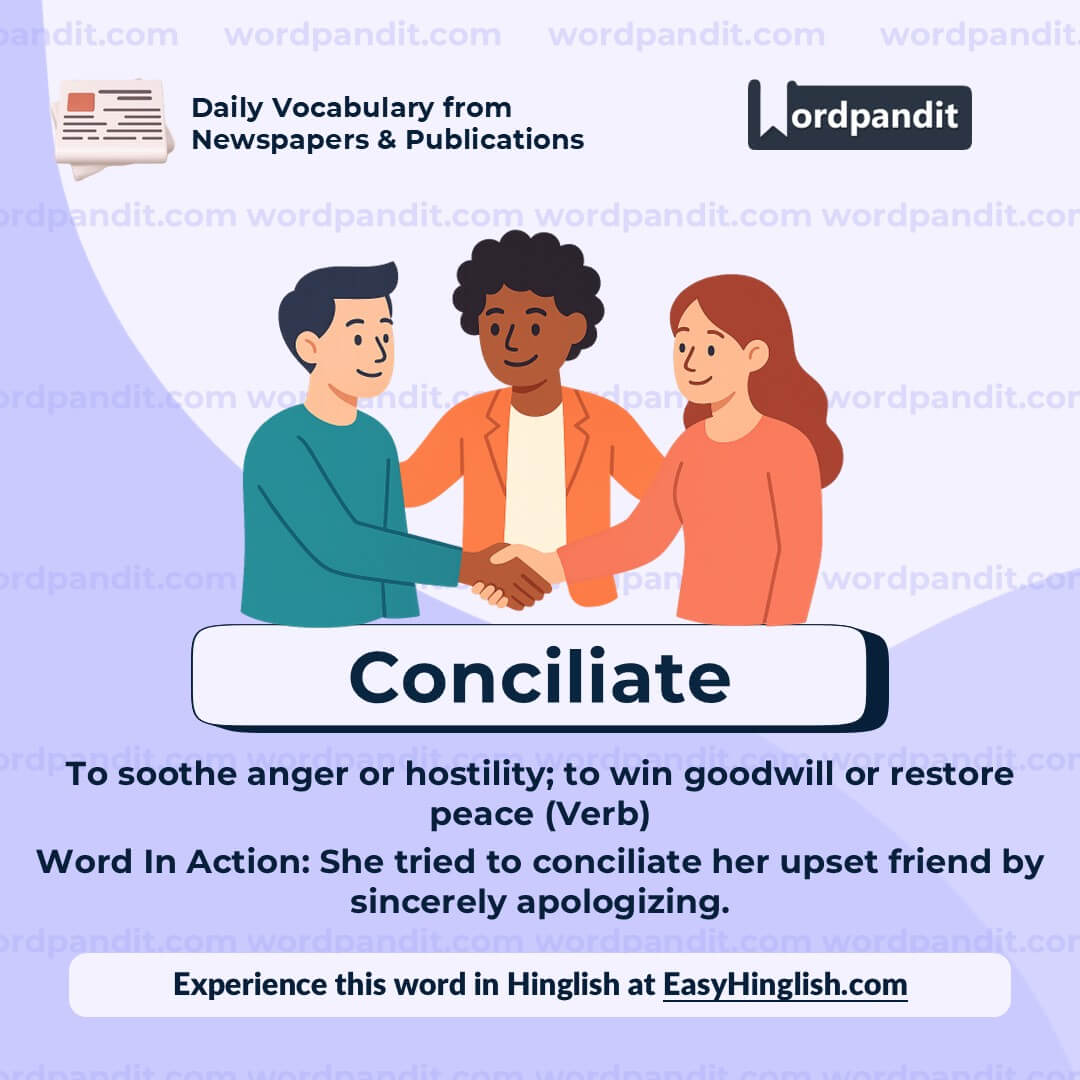
WORD-4: Conciliate
Context:
“In an effort to conciliate public anger after the fuel price hike, the government announced a series of subsidies aimed at easing the burden on middle-class families.” - Washington Post
Explanatory Paragraph:
Conciliate means to calm, soothe, or win over someone who is upset, angry, or hostile. It is often used in political, social, or personal contexts where actions or words are taken to reduce tension, rebuild trust, or prevent conflict. While it can mean reconciliation, it also carries the sense of pacifying someone through compromise or goodwill gestures.
Meaning: To soothe anger or hostility; to win goodwill or restore peace (Verb).
Pronunciation: kun-sil-ee-ate
Difficulty Level: ⭐⭐⭐ Intermediate to Advanced
Etymology: From Latin *conciliāre* meaning “to unite, bring together, win over,” derived from *concilium* (council or meeting). The word has long been tied to diplomacy and restoring harmony.
Prashant Sir's Notes:
Conciliate is about peace-making. Think of it as a soft skill word—how to calm people down, rebuild trust, or win back support when emotions are running high. A leader, diplomat, or even a friend often has to conciliate others.
Synonyms & Antonyms:
Synonyms: appease, pacify, placate, soothe, reconcile
Antonyms: provoke, irritate, antagonize, anger
Usage Examples:
- The manager tried to conciliate the employees by promising fairer policies.
- She spoke gently in an attempt to conciliate her upset friend.
- The peace talks aimed to conciliate long-standing hostilities between the two nations.
- A conciliatory gesture, such as an apology, can go a long way in mending relationships.
Cultural Reference:
Throughout history, great diplomats like Mahatma Gandhi and Nelson Mandela are often remembered for their ability to conciliate groups divided by anger, conflict, or injustice, transforming hostility into dialogue.
Think About It:
Do conciliatory gestures always lead to peace, or can they sometimes be mistaken for weakness?
Quick Activity:
Think of a time you saw someone conciliate another person (in school, family, or work). Write one sentence describing the action, using the word “conciliate.”
Memory Tip:
Conciliate sounds like “council.” Imagine a council meeting where leaders calm angry citizens with compromises—this will help you link the word to “soothing anger.”
Real-World Application:
Conciliate is frequently used in political speeches, corporate communication, and negotiations where leaders or managers must restore trust, calm public anger, or reduce hostility. It’s a powerful word in contexts of diplomacy, leadership, and conflict resolution.
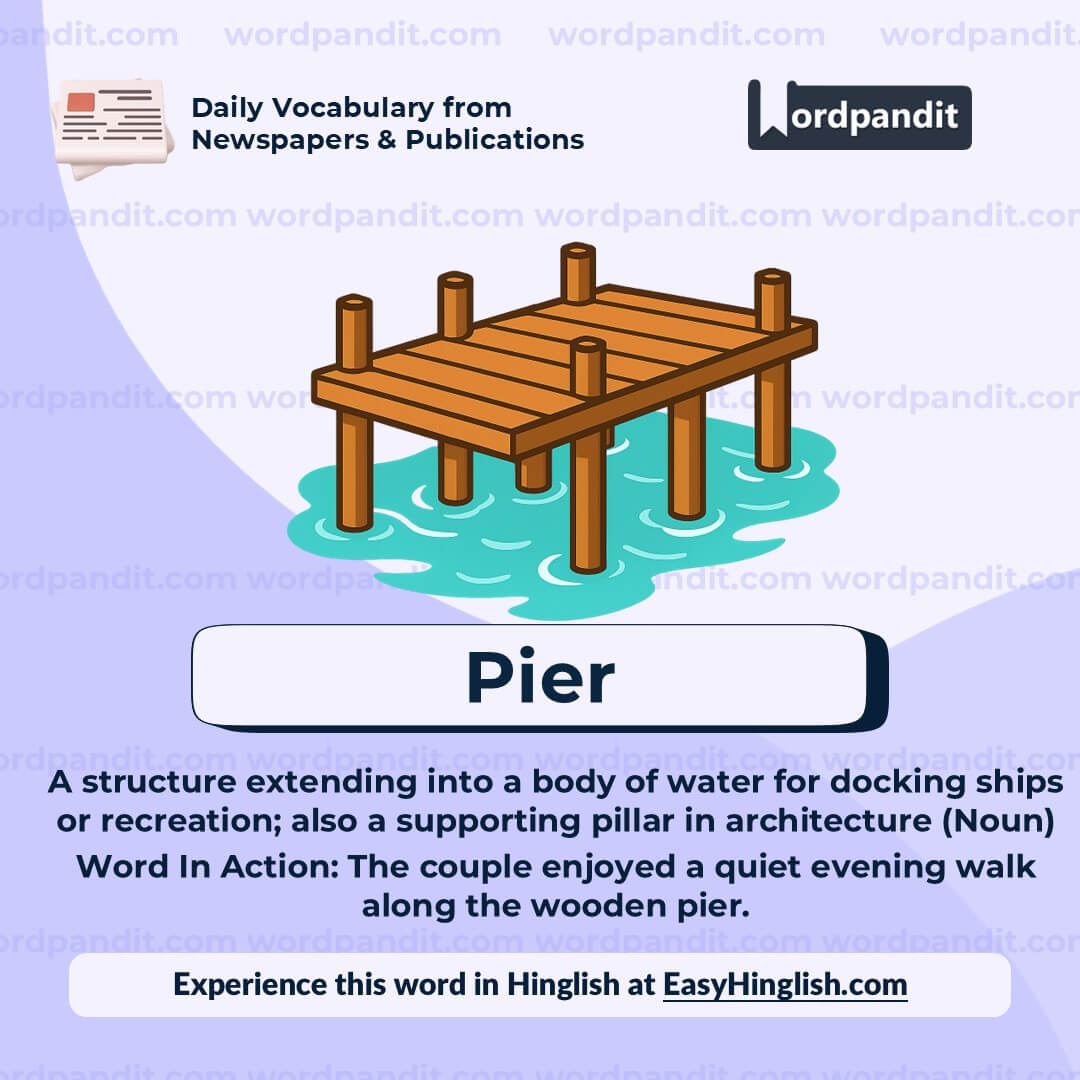
WORD-5: Pier
Context:
"The pier opened, earlier this month, after undergoing about £236,000 worth of works to make it safe for visitors again." - BBC
Explanatory Paragraph:
A pier is a long structure that extends into the water, usually the sea, and is built for ships to dock, load, or unload. Many piers are also designed as public walkways for fishing, leisure, and tourism. In another architectural sense, a pier can also mean a strong vertical support or pillar that holds up a bridge, arch, or building. The word captures both a functional and cultural role—practical for transport and trade, and recreational for people enjoying seaside life.
Meaning: A structure extending into a body of water for docking ships or recreation; also a supporting pillar in architecture (Noun).
Pronunciation: peer
Difficulty Level: ⭐ Basic
Etymology: From Old French *pier* (stone, rock), related to Latin *petra* (rock). The meaning shifted to describe stone or wooden structures extending into water, and later to architectural supports.
Prashant Sir's Notes:
A “pier” can be understood in two main ways—first, the seaside structure for docking ships or leisure, and second, as an architectural support. Remember, in both senses, it is something that “holds” or “extends” out.
Synonyms & Antonyms:
Synonyms: dock, jetty, wharf, quay, pillar, support
Antonyms: open sea, shoreline (in context of water structures)
Usage Examples:
- The children enjoyed walking along the pier to watch the boats come in.
- Fishermen lined the pier early in the morning, casting their nets.
- The bridge rested on sturdy concrete piers built deep into the riverbed.
- The storm damaged part of the wooden pier, making it unsafe for visitors.
Cultural Reference:
Piers are iconic in seaside towns around the world—famous ones include Brighton Pier in the UK and Santa Monica Pier in the US. They often symbolize leisure, entertainment, and coastal culture.
Think About It:
Why do you think piers have become cultural landmarks, not just functional structures for ships?
Quick Activity:
Draw a simple sketch of a pier either as a seaside walkway or as a supporting column under a bridge. Label it with the word “Pier.”
Memory Tip:
Think of “pier” as something you “peer” out from into the water—this link will help you remember it is a structure extending into the sea.
Real-World Application:
Piers are used globally for tourism (walkways, attractions), fishing, and shipping. In architecture, piers are vital supports in bridges, cathedrals, and large buildings—structures we interact with daily even if we don’t notice them.


