

Daily Vocabulary from International Newspapers and Publications
Expand Your Vocabulary with Wordpandit’s Global Vocabulary Hub
At Wordpandit, we are committed to helping you develop a truly global vocabulary by drawing from some of the most respected international publications. This section is designed to keep you ahead of the curve by introducing you to words that define global conversations and trends.
The Power of Global Sources
To help you think and communicate on a global scale, we curate vocabulary from renowned international sources, such as:
- The New York Times
- The Washington Post
- BBC
- The Guardian
- The Economist
- Scientific American
- Psychology Today
- And many more...
Stay Global, Stay Competitive
Our daily updates from international publications ensure you are consistently exposed to new words that reflect global news and developments, making sure your vocabulary is not only current but also globally relevant.
Enhance Your Global Perspective
Whether you’re preparing for international exams, aiming to excel in global business communication, or want to enhance your language skills for personal growth, Wordpandit offers the resources you need to thrive in a global context.
Effective Learning, Global Reach
Our learning methodology combines global examples, memory aids, and interactive activities, allowing you to internalize new words effectively and apply them in real-world scenarios.
Begin Your Global Vocabulary Journey Now!

Why Choose Wordpandit?
Practical Learning: Focus on words you'll actually encounter in real-world reading, enhancing your comprehension and communication skills.
Diverse Content: From current affairs to scientific breakthroughs, our varied sources expose you to vocabulary across multiple domains.
Effortless Integration: Make Wordpandit a part of your daily routine. Just a few minutes each day can significantly boost your lexicon over time.
Your Path to Vocabulary Mastery
- Visit our Daily Vocabulary section regularly
- Explore new words and their usage in context
- Practice incorporating these words into your own writing and speech
- Track your progress as your vocabulary expands
Start Your Journey Today
Embark on your vocabulary enhancement journey with Wordpandit. By consistently engaging with our daily posts, you'll build a robust vocabulary that serves you well in academic, professional, and personal contexts.
Remember, a word a day keeps linguistic limitations at bay. Make Wordpandit your daily companion in the quest for vocabulary excellence!
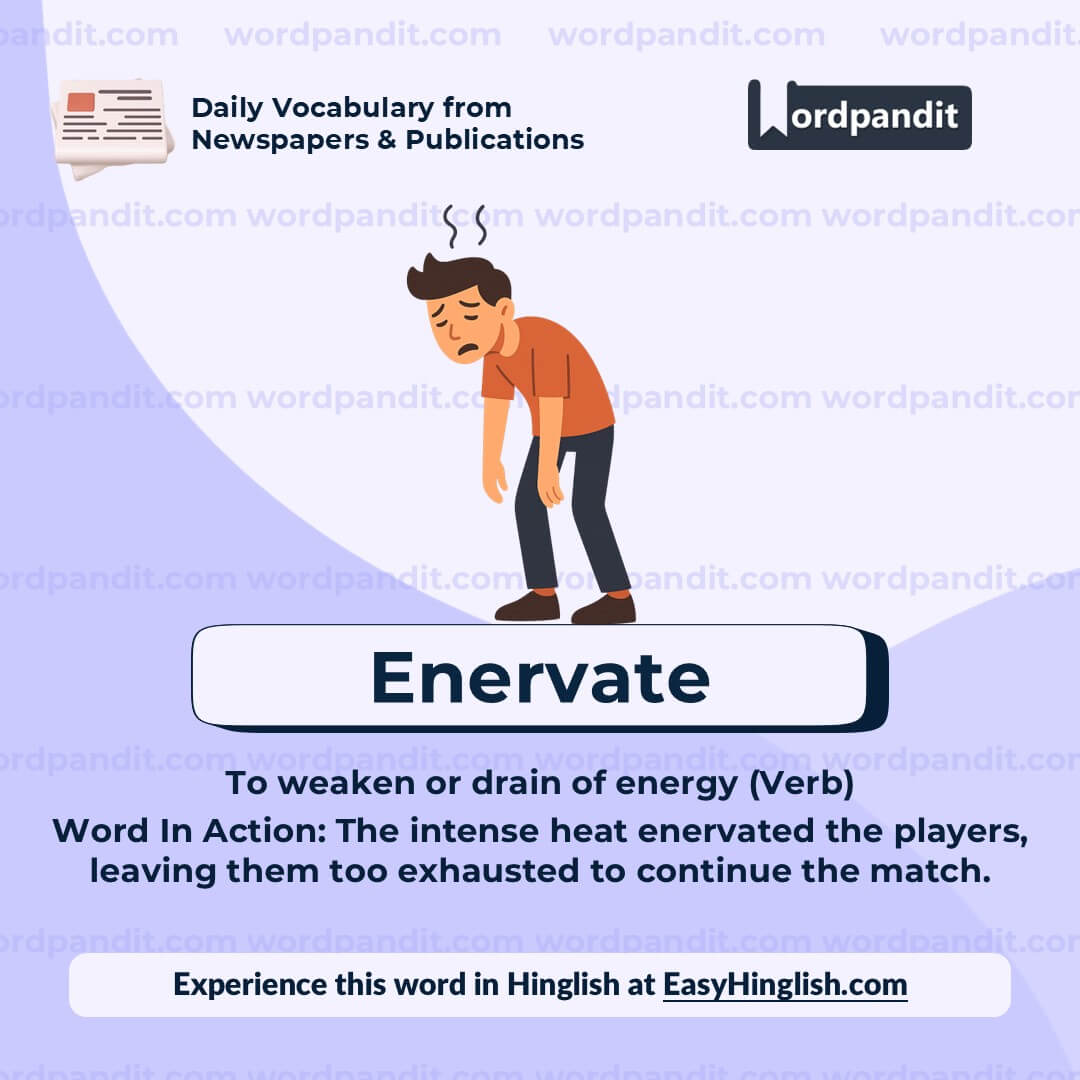
WORD-1: Enervate
Context:
"Amid escalating tensions and mounting logistical challenges, aid agencies warn that prolonged instability is beginning to enervate their staff — draining both their physical stamina and emotional resolve." - BBC
Explanatory Paragraph:
The word enervate means to weaken or drain someone of their energy, strength, or vitality. When something enervates a person, it saps their physical, mental, or emotional power, leaving them feeling exhausted or incapable of performing at their full capacity. Unlike energizing forces that strengthen, enervating forces slowly diminish resilience and stamina.
Meaning: To weaken or drain of energy (Verb)
Pronunciation: EN-er-vayt
Difficulty Level: ⭐⭐⭐⭐ Advanced
Etymology: From Latin enervatus (weakened), derived from ex- (out of) + nervus (sinew, nerve), literally meaning "to take the sinews out of" or "to weaken."
Prashant Sir's Notes:
Enervate is often confused with energize, but it actually means the opposite: to sap strength, not give it. Think of it as the slow draining of inner reserves. A crucial word for contexts of stress, fatigue, or decline in power.
Synonyms & Antonyms:
Synonyms: weaken, exhaust, sap, debilitate, drain, fatigue
Antonyms: energize, invigorate, strengthen, empower, fortify
Usage Examples:
- The endless meetings seemed to enervate the team, leaving them too drained to focus on creative work.
- A scorching sun can enervate even the most determined travelers on a desert trek.
- Constant criticism may enervate a student’s motivation to improve.
- The long war enervated the nation, wearing down both its resources and its morale.
Cultural Reference:
"Fatigue makes cowards of us all" — a quote often attributed to Vince Lombardi, captures how exhaustion can enervate even the strongest individuals. - Sports Motivation Context
Think About It:
How do modern workplaces or social media habits enervate people in subtle, unnoticed ways?
Quick Activity:
Fill in the blank: "The oppressive heat began to _______ the marathon runners, leaving them gasping for energy."
Memory Tip:
Think of “enervate” as the opposite of “energize.” Both sound similar, but enervate = “no nerves/strength left.”
Real-World Application:
Enervate is commonly used in discussions about burnout, prolonged stress, or situations that gradually deplete motivation—whether in workplaces, politics, or even physical endurance activities.
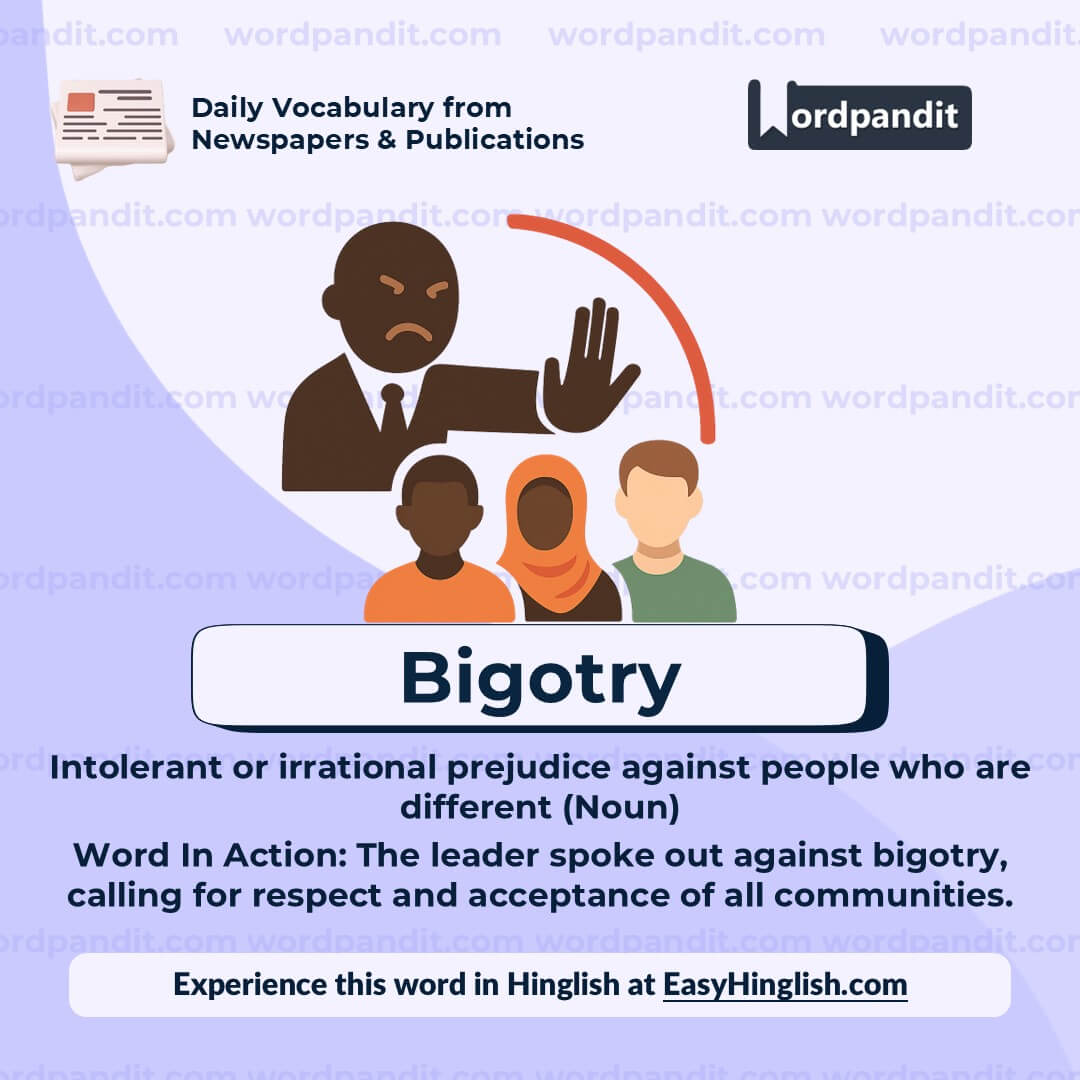
WORD-2: Bigotry
Context:
"This suggestion that bad teeth and talent, in particular, are mutually exclusive betrays our broad, unexamined bigotry toward those long known, tellingly, as ‘white trash.’" - Aeon
Explanatory Paragraph:
Bigotry refers to an unreasonable or stubborn intolerance toward people who are different, often based on race, religion, class, gender, or social background. A bigot refuses to accept differing views or identities, clinging to prejudices that lead to unfair judgment and discrimination. Unlike simple disagreement, bigotry is rooted in blind bias and hostility.
Meaning: Intolerant or irrational prejudice against people who are different (Noun)
Pronunciation: BIG-uh-tree
Difficulty Level: ⭐⭐⭐ Intermediate
Etymology: Originated in the mid-17th century, possibly from the French word bigot, which referred to someone excessively devoted to their own religious views, later expanded to mean narrow-minded intolerance in general.
Prashant Sir's Notes:
Bigotry is a powerful word to describe entrenched prejudice. It’s stronger than bias—it suggests hostility and intolerance that blinds judgment. Always connect it with social, cultural, or personal intolerance.
Synonyms & Antonyms:
Synonyms: prejudice, intolerance, bias, discrimination, narrow-mindedness
Antonyms: tolerance, acceptance, open-mindedness, fairness, impartiality
Usage Examples:
- The politician’s remarks revealed a deep-seated bigotry against minority communities.
- Bigotry often thrives in ignorance and fear of the unfamiliar.
- Challenging bigotry requires courage and a willingness to listen to others’ experiences.
- History shows us how unchecked bigotry can lead to injustice and violence.
Cultural Reference:
"Prejudice is a burden that confuses the past, threatens the future, and renders the present inaccessible." — Maya Angelou, reflecting the destructive nature of bigotry. - Literature Reference
Think About It:
How does bigotry often disguise itself as "tradition" or "common sense" in different societies?
Quick Activity:
Rewrite this sentence replacing the underlined word with "bigotry": "The coach’s intolerance toward players from different backgrounds damaged team unity."
Memory Tip:
Remember: Big + ot → A “big” intolerance toward “others” = Bigot/Bigotry.
Real-World Application:
Bigotry is often discussed in the context of racism, sexism, casteism, and other forms of systemic discrimination. Recognizing and naming bigotry is the first step toward creating inclusive environments in schools, workplaces, and communities.
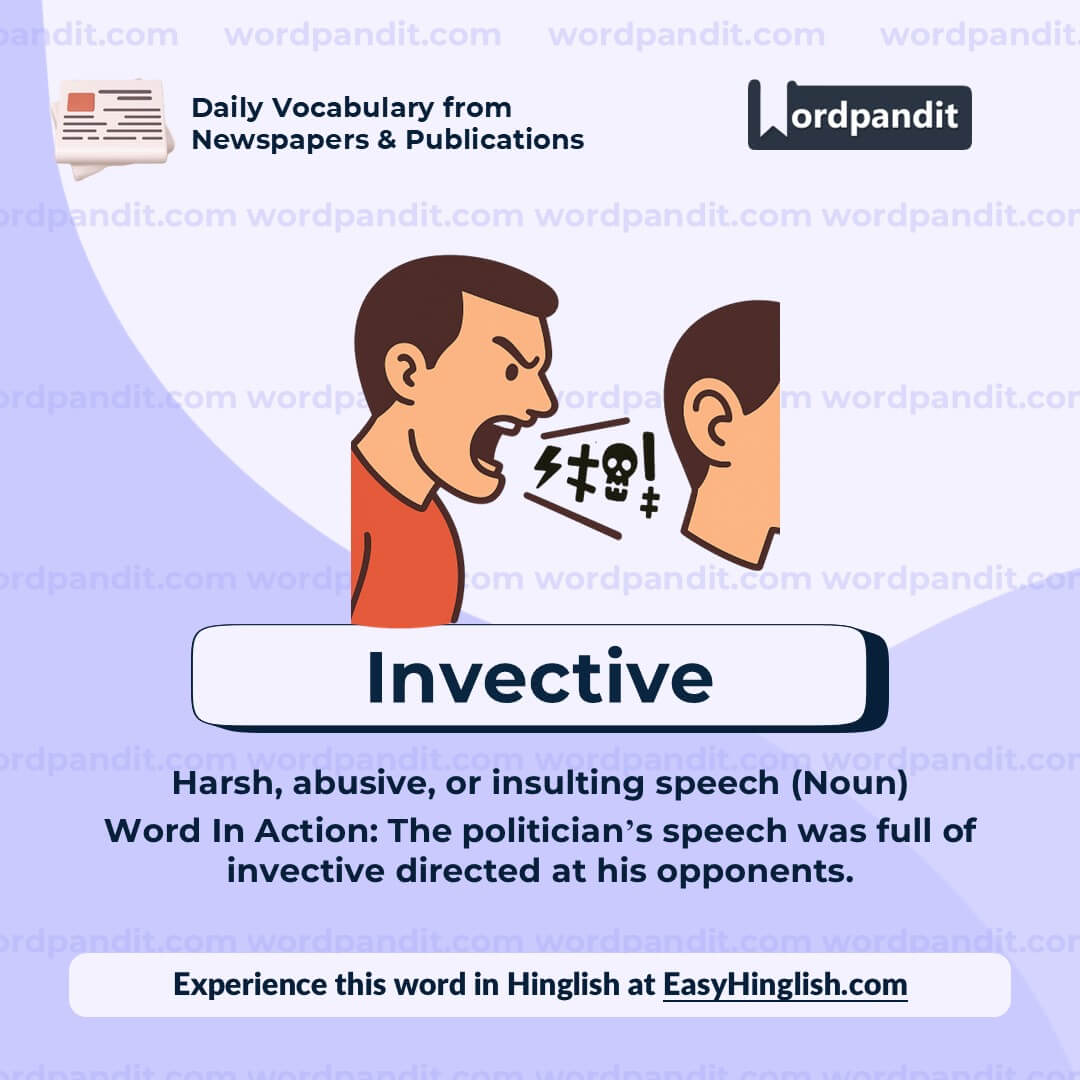
WORD-3: Invective
Context:
"Infuriated, Herbert launched a stream of invective at the lad who served him." - Aeon
Explanatory Paragraph:
Invective refers to harsh, abusive, or insulting language directed at someone. It is not just mild criticism—it is an intense verbal attack often marked by anger or contempt. People use invective to vent strong emotions, usually in a way that wounds or humiliates the target. The word often implies speech that is emotionally charged rather than calmly reasoned.
Meaning: Harsh, abusive, or insulting speech (Noun)
Pronunciation: in-VEK-tiv
Difficulty Level: ⭐⭐⭐⭐ Advanced
Etymology: From Latin invectivus meaning “abusive, censorious,” derived from invectus (to attack with words). First used in English around the 15th century.
Prashant Sir's Notes:
Invective is closely associated with verbal fury—think of it as words used as weapons. When someone explodes in rage with name-calling or insults, that’s invective. It’s common in heated arguments, political speeches, or even satirical writing.
Synonyms & Antonyms:
Synonyms: abuse, insult, vitriol, denunciation, slander, tirade
Antonyms: praise, compliment, flattery, commendation, acclaim
Usage Examples:
- The debate quickly descended into invective, with both candidates hurling personal insults instead of arguments.
- Social media can sometimes become a platform for invective rather than constructive dialogue.
- Shakespeare’s plays are filled with witty invective, showcasing creative insults rather than crude abuse.
- He ignored the invective directed at him and calmly continued his work.
Cultural Reference:
The Roman orator Cicero was famous for his Philippics, a series of speeches filled with invective against Mark Antony—an example of rhetoric used as a weapon in politics. - Historical Reference
Think About It:
Can invective ever be justified as a form of expression, or does it always cause more harm than good?
Quick Activity:
Choose the correct word: "Instead of debating the issue, he resorted to ________, attacking his opponent personally." (Options: logic, invective, reasoning)
Memory Tip:
Think: In-venom → invective is like venom in words, sharp and poisonous speech.
Real-World Application:
Invective often appears in politics, online arguments, and media commentary, where passions run high. Recognizing invective helps distinguish between constructive criticism and destructive attacks.
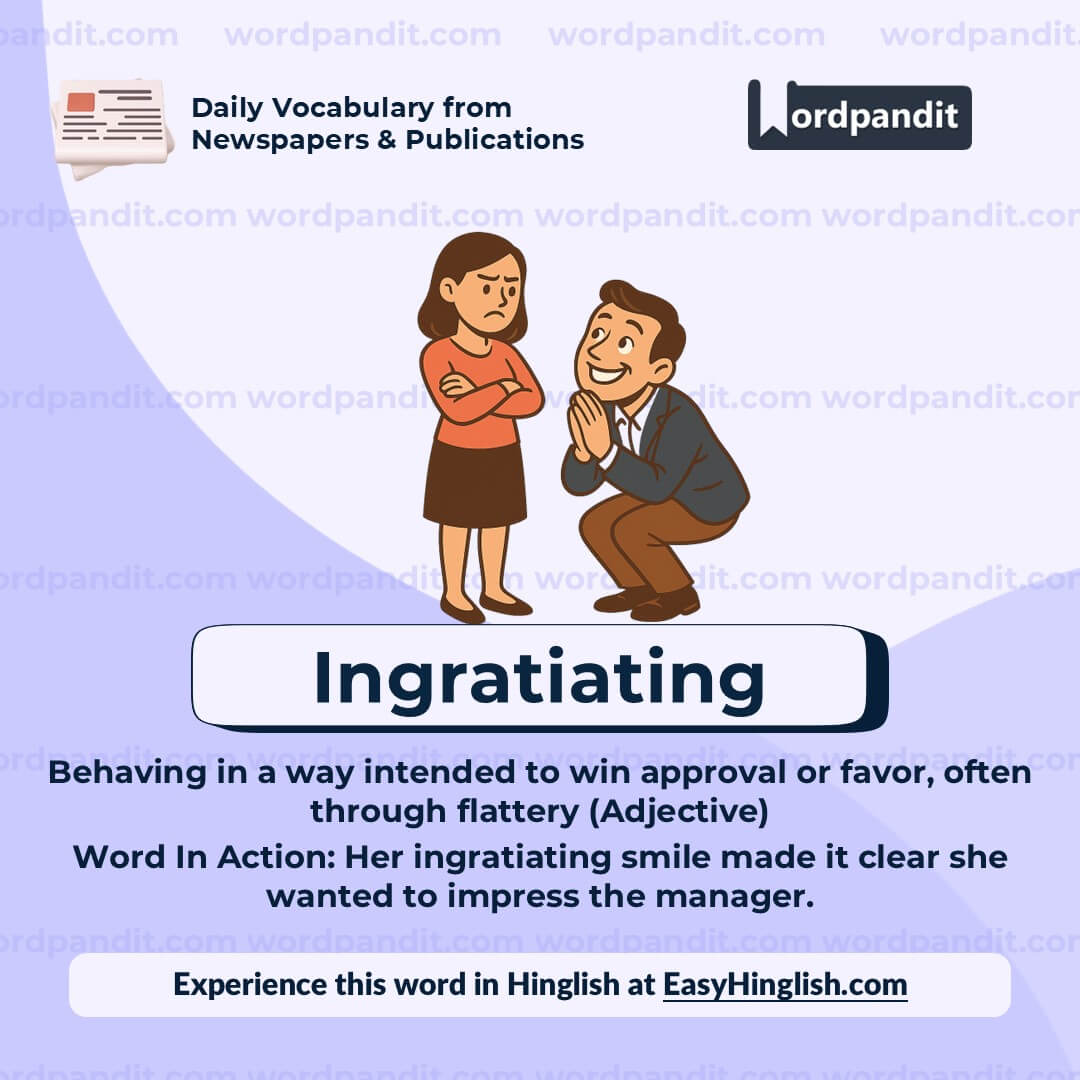
WORD-4: Ingratiating
Context:
"So Nachminovitch and her workers are unfailingly polite and ingratiating, even when confronting the obstinate, the ignorant, the hostile, the unapologetically inhumane." - New York Times
Explanatory Paragraph:
Ingratiating describes behavior intended to gain approval or favor, often by being excessively polite, flattering, or agreeable. While it can sometimes reflect genuine charm, the word often carries a slightly negative tone, suggesting insincerity or trying “too hard” to please others. It’s the kind of charm that may feel calculated rather than natural.
Meaning: Behaving in a way intended to win approval or favor, often through flattery (Adjective)
Pronunciation: in-GRAY-shee-ay-ting
Difficulty Level: ⭐⭐⭐ Intermediate
Etymology: From Latin ingratiari meaning "to bring oneself into favor," derived from in- (in) + gratia (favor, grace). Entered English in the early 17th century.
Prashant Sir's Notes:
Ingratiating is a "social survival" word—people may act ingratiatingly to win support, avoid conflict, or curry favor. Remember: it can feel charming or fake, depending on context. Look out for tone when interpreting this word.
Synonyms & Antonyms:
Synonyms: flattering, fawning, obsequious, charming, sycophantic
Antonyms: aloof, unfriendly, arrogant, indifferent, blunt
Usage Examples:
- The salesman’s ingratiating smile made customers feel welcome, though some found it insincere.
- She spoke in such an ingratiating tone that the teacher couldn’t help but give her extra attention.
- Politicians often adopt ingratiating gestures when addressing large crowds.
- His ingratiating manner masked a strong ambition to climb the corporate ladder.
Cultural Reference:
In Jane Austen’s Pride and Prejudice, Mr. Collins is often seen as ingratiating—his constant flattery and obsequious manners highlight how people sometimes use charm as a tool for social advancement. - Literary Reference
Think About It:
Is ingratiating behavior always manipulative, or can it sometimes be a genuine strategy for kindness and survival?
Quick Activity:
Fill in the blank: "The intern’s _______ behavior towards the manager won her quick promotions, though not everyone admired it."
Memory Tip:
Break it down: In + grace → to bring yourself “into grace” with someone = ingratiating.
Real-World Application:
Ingratiating behavior is common in workplaces, politics, and social networking—where people use flattery, politeness, or charm to gain allies, favors, or influence. Recognizing it can help you distinguish between genuine warmth and calculated courtesy.
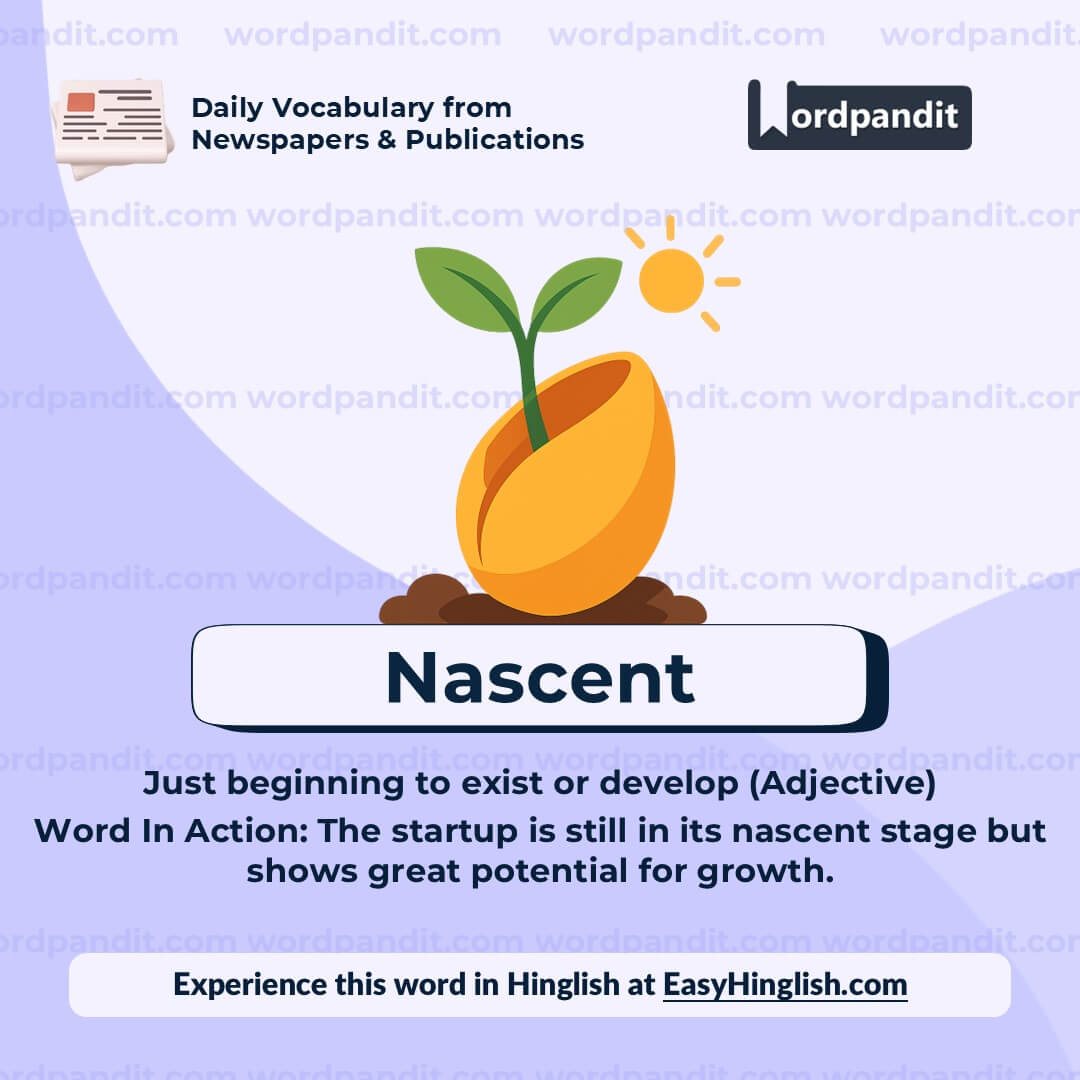
WORD-5: Nascent
Context:
"It seems clear that, if there was any nascent life on the young Earth, it was obliterated in the searing heat of the impact." - Aeon
Explanatory Paragraph:
Nascent describes something that is just beginning to develop or come into existence. It refers to an early stage when an idea, movement, or form of life is emerging but not yet fully developed. The word often conveys potential and growth, highlighting the fragile but promising beginnings of something new.
Meaning: Just beginning to exist or develop (Adjective)
Pronunciation: NAY-sent
Difficulty Level: ⭐⭐⭐ Intermediate
Etymology: From Latin nascentem, present participle of nasci meaning "to be born." Entered English in the early 17th century.
Prashant Sir's Notes:
Nascent is a powerful word to capture the freshness of beginnings—be it a movement, technology, or idea. It signals “new but growing.” Remember: it’s about potential rather than maturity.
Synonyms & Antonyms:
Synonyms: emerging, budding, developing, incipient, fledgling
Antonyms: mature, established, declining, fading, withering
Usage Examples:
- The nascent movement quickly gained popularity among young activists.
- Scientists are studying the nascent technology of quantum computing for future breakthroughs.
- Her nascent confidence began to shine after a few successful presentations.
- The company invested heavily in a nascent startup with promising ideas.
Cultural Reference:
The Renaissance, meaning "rebirth," can be viewed as a nascent period of modern European culture, where art, science, and humanism began to emerge after centuries of stagnation. - Historical Reference
Think About It:
What qualities help a nascent idea or movement survive long enough to become established?
Quick Activity:
Choose the correct word: "The scientist nurtured a _______ discovery that could revolutionize medicine." (Options: nascent, fading, obsolete)
Memory Tip:
Think of nascent as connected to "natal" or "nasal" (birth-related). Nascent = at the birth stage of development.
Real-World Application:
Nascent is widely used in discussions about technology, businesses, scientific research, and social movements—highlighting developments that are in their infancy but hold great potential for the future.


