

Daily Vocabulary from International Newspapers and Publications
Expand Your Vocabulary with Wordpandit’s Global Vocabulary Hub
At Wordpandit, we are committed to helping you develop a truly global vocabulary by drawing from some of the most respected international publications. This section is designed to keep you ahead of the curve by introducing you to words that define global conversations and trends.
The Power of Global Sources
To help you think and communicate on a global scale, we curate vocabulary from renowned international sources, such as:
- The New York Times
- The Washington Post
- BBC
- The Guardian
- The Economist
- Scientific American
- Psychology Today
- And many more...
Stay Global, Stay Competitive
Our daily updates from international publications ensure you are consistently exposed to new words that reflect global news and developments, making sure your vocabulary is not only current but also globally relevant.
Enhance Your Global Perspective
Whether you’re preparing for international exams, aiming to excel in global business communication, or want to enhance your language skills for personal growth, Wordpandit offers the resources you need to thrive in a global context.
Effective Learning, Global Reach
Our learning methodology combines global examples, memory aids, and interactive activities, allowing you to internalize new words effectively and apply them in real-world scenarios.
Begin Your Global Vocabulary Journey Now!
Why Choose Wordpandit?
Practical Learning: Focus on words you'll actually encounter in real-world reading, enhancing your comprehension and communication skills.
Diverse Content: From current affairs to scientific breakthroughs, our varied sources expose you to vocabulary across multiple domains.
Effortless Integration: Make Wordpandit a part of your daily routine. Just a few minutes each day can significantly boost your lexicon over time.
Your Path to Vocabulary Mastery
- Visit our Daily Vocabulary section regularly
- Explore new words and their usage in context
- Practice incorporating these words into your own writing and speech
- Track your progress as your vocabulary expands
Start Your Journey Today
Embark on your vocabulary enhancement journey with Wordpandit. By consistently engaging with our daily posts, you'll build a robust vocabulary that serves you well in academic, professional, and personal contexts.
Remember, a word a day keeps linguistic limitations at bay. Make Wordpandit your daily companion in the quest for vocabulary excellence!
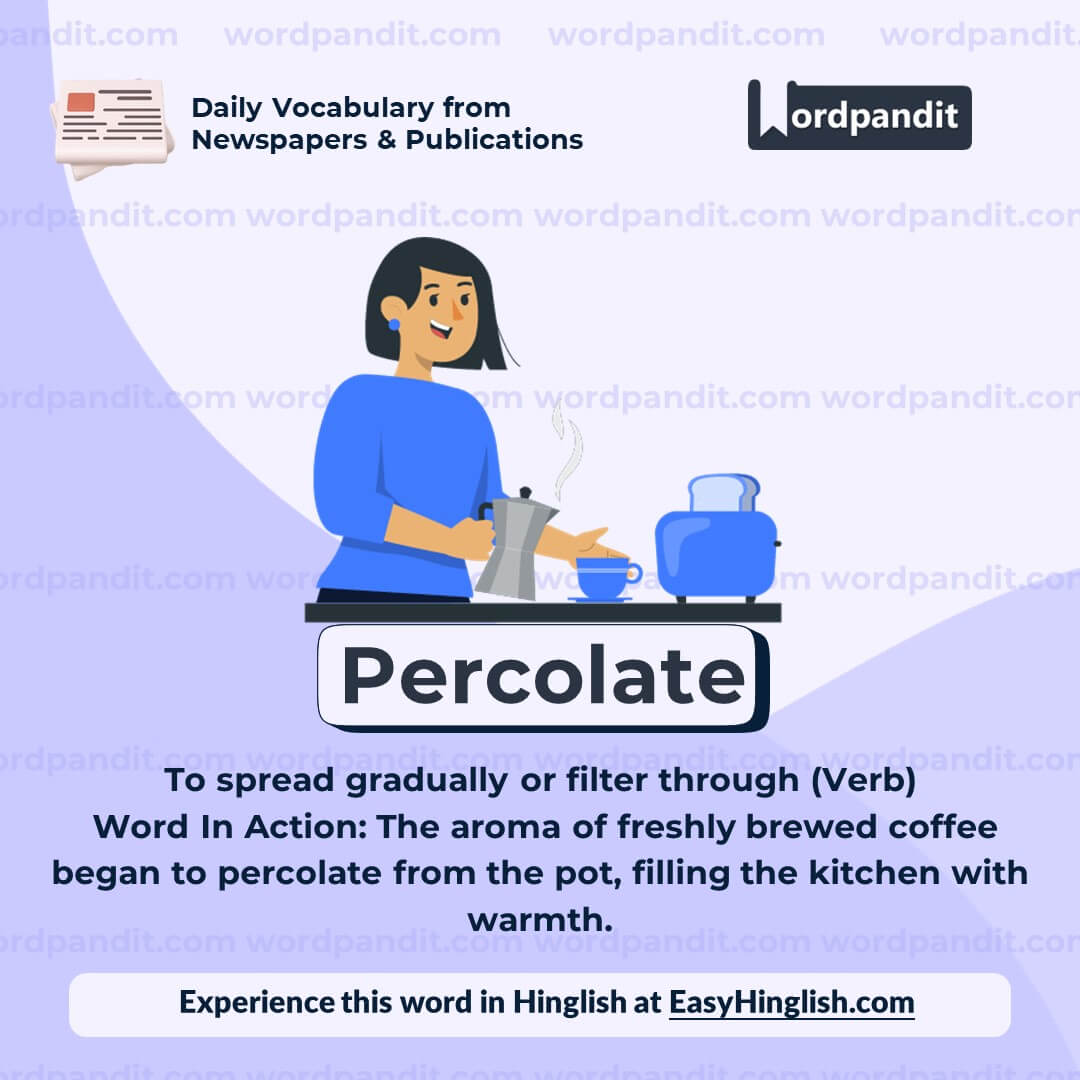
WORD-1: Percolate
Context:
"This Anglo-Japanified aesthetic quickly percolated from the gentry to society at large. At the St Louis World’s Fair in 1904, replicas of Japanese living spaces attracted raves from visitors, one of whom exclaimed that." - Aeon
Explanatory Paragraph:
“Percolate” refers to the slow spread or filtering of something—whether a liquid, idea, trend, or feeling—through a space or group. Originally used to describe the movement of liquids through porous materials (like coffee through a filter), the term is now commonly used metaphorically to describe how concepts, styles, or emotions gradually move from one group to another, especially from an elite or niche group to the broader public.
Meaning: To gradually spread or filter through a surface or group (Verb)
Pronunciation: PUR-kuh-layt
Difficulty Level: ⭐⭐⭐ Intermediate
Etymology: From Latin percolare, meaning "to strain through," from per- (through) + colare (to filter).
Prashant Sir's Notes:
Think of “percolate” both in its original coffee-making sense and its modern metaphorical sense. In vocabulary, we often see it used when describing how ideas, fashion, or culture slowly move from one layer of society to another. Pay attention to the direction of flow—from elite to mass or vice versa.
Synonyms & Antonyms:
Synonyms: filter, seep, trickle, infiltrate, diffuse, spread
Antonyms: stagnate, halt, block, contain
Usage Examples:
- New ideas from Silicon Valley often percolate into mainstream business practices within a few years.
- The smell of freshly brewed coffee began to percolate through the apartment.
- Excitement started to percolate through the crowd as the speaker approached the stage.
- Trends that begin in high fashion often percolate into streetwear and everyday styles.
Cultural Reference:
"In the 1960s, revolutionary ideals began to percolate through college campuses, eventually shaping national movements." - Paraphrased from U.S. cultural history textbooks
Think About It:
How do you think the speed at which ideas percolate through society has changed with the rise of social media?
Quick Activity:
Pick a recent trend or idea (e.g., eco-conscious living, AI tools) and write 2–3 sentences describing how it percolated through society from a niche audience to the mainstream.
Memory Tip:
Imagine coffee percolating in a coffee pot—slowly filtering through. Now apply that same image to ideas or styles slowly reaching everyone. “Percolate” = slowly spread or seep through.
Real-World Application:
“Percolate” is often used in journalism, academic writing, and business analysis to describe how a phenomenon, like a social movement or marketing trend, spreads gradually from a small group to the larger public.
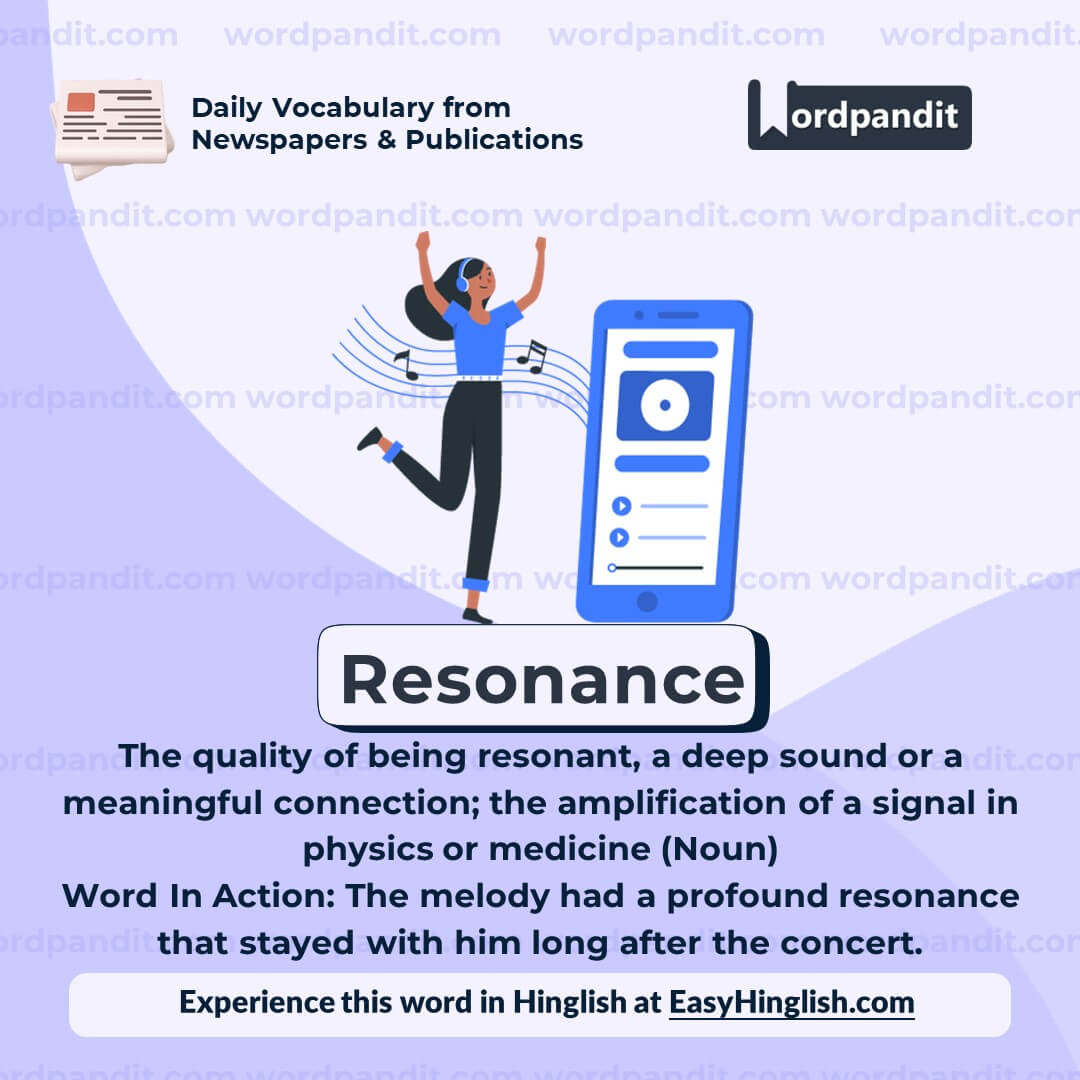
WORD-2: Resonance
Context:
"We then listened for an echo, a collective response to our call, to glean their magnetic resonance – a technique physicians used to image the soft tissue in our aqueous bodies." - Aeon
Explanatory Paragraph:
“Resonance” refers to the reinforcement or prolongation of sound by reflection or by the synchronous vibration of a neighboring object. Beyond its scientific meaning in physics and medicine (as in "magnetic resonance imaging" or MRI), the word also has metaphorical uses. It can describe something that evokes strong emotions, memories, or connections—something that "resonates" with us on a deeper level, creating a lasting impact or echo.
Meaning: The quality of a sound being deep, full, and reverberating; or the ability to evoke a strong emotional response or connection (Noun)
Pronunciation: REZ-uh-nuhns
Difficulty Level: ⭐⭐⭐ Intermediate
Etymology: From Latin resonantia, from resonare meaning "to resound" (re- 'again' + sonare 'to sound').
Prashant Sir's Notes:
Don’t limit “resonance” to its physics or medical meanings—look at how it's used metaphorically. Literature, art, and even ideas can have resonance when they emotionally or intellectually strike a chord. It’s a great word for describing depth and impact—whether in sound or meaning.
Synonyms & Antonyms:
Synonyms: reverberation, echo, impact, significance, vibration
Antonyms: silence, dissonance, discord, detachment
Usage Examples:
- The speaker’s words had a deep resonance with the audience, many of whom were moved to tears.
- The resonance of the cathedral’s bells could be heard for miles.
- Her artwork had a personal resonance that made it unforgettable.
- Doctors used magnetic resonance imaging to get a detailed view of the patient’s brain.
Cultural Reference:
"The phrase 'I have a dream' continues to have powerful resonance in American civil rights discourse." – Paraphrased from historical speeches
Think About It:
What types of experiences or messages tend to resonate most deeply with people across cultures and why?
Quick Activity:
Write down a quote, song lyric, or film moment that has strong emotional resonance for you. Briefly explain why it resonates with you.
Memory Tip:
Think of a “resonance chamber” in a guitar or violin—how it amplifies the sound. Similarly, when something has “resonance” emotionally or intellectually, it amplifies its impact in your mind or heart.
Real-World Application:
“Resonance” is frequently used in medicine (as in MRI scans), acoustics, music, and literature. In everyday conversation, it describes ideas or moments that strike a meaningful emotional chord with individuals or communities.
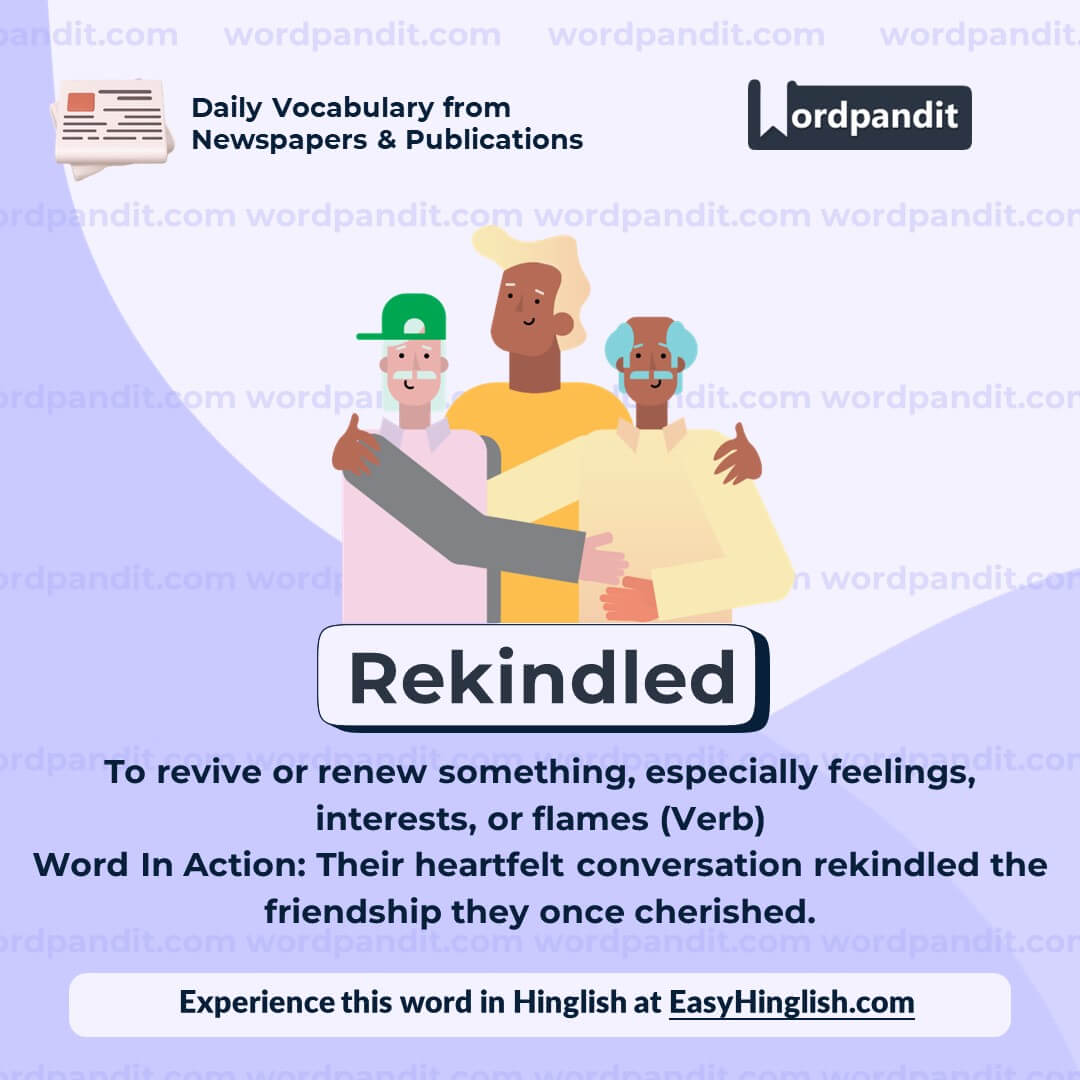
WORD-3: Rekindled
Context:
"After the end of the Second World War, the fascination rekindled, and history began to repeat. Japan was poor once again." - Aeon
Explanatory Paragraph:
“Rekindled” means to bring something back to life that had faded or died out—such as feelings, interest, or energy. The word originally refers to starting a fire again, but it’s often used metaphorically to describe reviving passion, curiosity, hope, or relationships. In the context above, it suggests that an earlier fascination with Japan, which may have dimmed over time, flared up again after the war.
Meaning: To revive or renew something that had been lost or forgotten, especially emotion or interest (Verb - past tense)
Pronunciation: ree-KIN-duld
Difficulty Level: ⭐⭐ Beginner
Etymology: From Middle English rekendlen, from re- (again) + kindlen (to kindle, start a fire)
Prashant Sir's Notes:
This is a powerful emotional word. We often use it to describe the return of feelings—such as love, enthusiasm, or inspiration—that seemed lost. It's especially useful in storytelling, history, and even personal development contexts.
Synonyms & Antonyms:
Synonyms: reignited, revived, renewed, restored, reawakened
Antonyms: extinguished, suppressed, ended, smothered
Usage Examples:
- The old photograph rekindled memories of their childhood summers.
- After years apart, they rekindled their friendship over coffee.
- The documentary rekindled public interest in the forgotten artist.
- His passion for music was rekindled when he attended a live concert.
Cultural Reference:
"The 1990s saw a rekindled interest in vinyl records as collectors embraced analog sound once more." – Cultural Trend Reports
Think About It:
What is something you once loved doing but stopped—and what might it take to rekindle that interest?
Quick Activity:
Write two sentences: one using “rekindled” in an emotional context and one in a historical or cultural context.
Memory Tip:
Break it down: “re-” means again, and “kindle” means to start a fire. So, “rekindled” literally means “lit again”—perfect for remembering its metaphorical meaning too!
Real-World Application:
“Rekindled” is often used in media headlines, personal essays, and relationship stories to describe renewed emotions or interests. It’s a word that captures emotional turning points or returns.
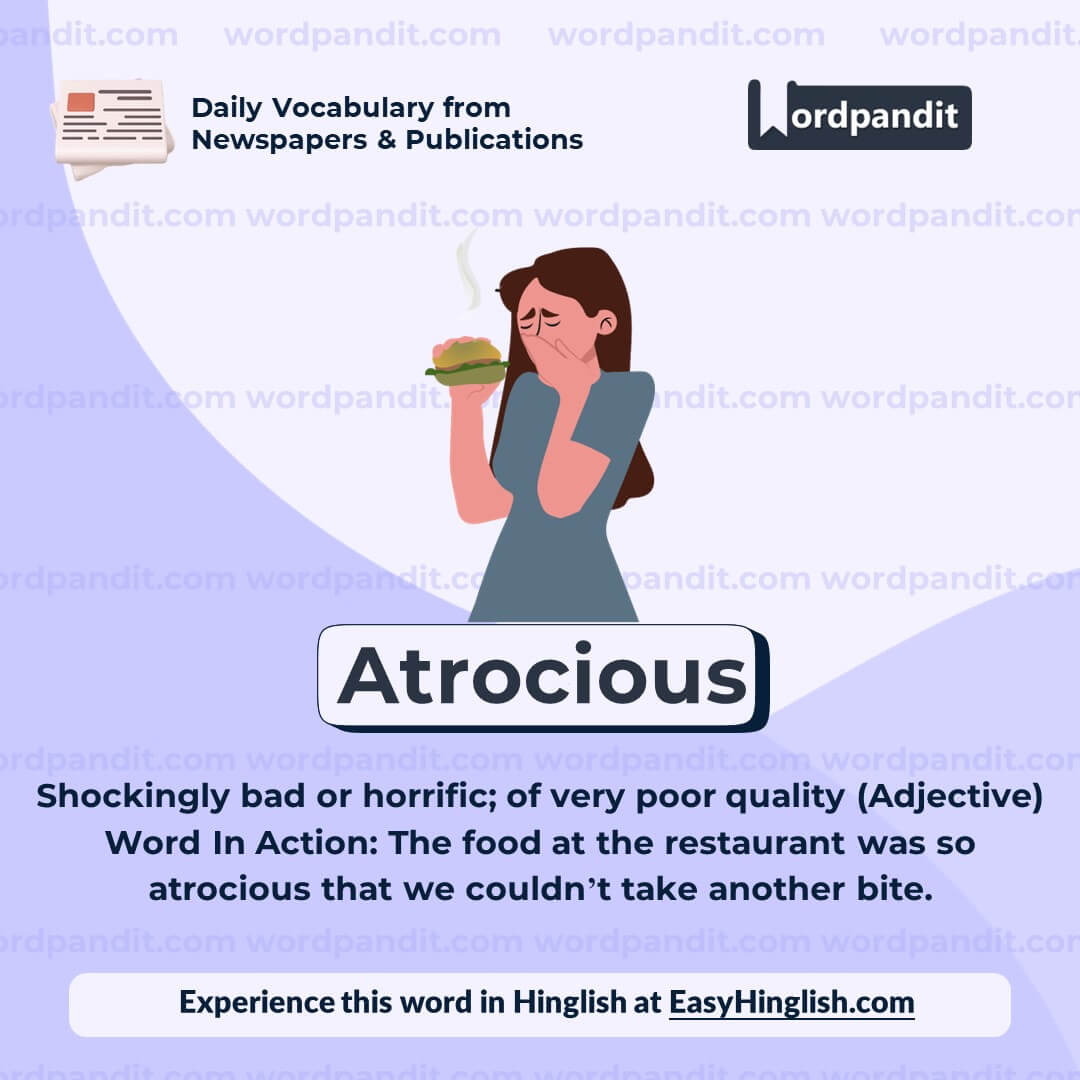
WORD-4: Atrocious
Context:
"Let those who wish to live in their cluttered Sears, Roebuck modern and atrocious bad taste we see so often,’ wrote an aficionado to The New York Times that year. ‘I’ll take the uncluttered.’" - Aeon
Explanatory Paragraph:
“Atrocious” is a strong adjective used to describe something extremely bad, appalling, or shockingly poor in quality. Originally used to describe brutal acts or crimes, the word has evolved in casual usage to criticize things like taste, performance, or behavior. In the given context, it refers to someone's intense dislike of certain modern interior design styles, which they view as offensively tasteless or hideous.
Meaning: Shockingly bad or unpleasant; horrifyingly wicked (Adjective)
Pronunciation: uh-TROH-shus
Difficulty Level: ⭐⭐⭐ Intermediate
Etymology: From Latin atrox meaning "fierce, cruel" + suffix -ious.
Prashant Sir's Notes:
Though “atrocious” once referred mostly to acts of violence or cruelty, today it's often used hyperbolically to describe very poor quality. Use it wisely—it adds emotional weight and should reflect genuine intensity. Perfect for writing with strong opinion or critique.
Synonyms & Antonyms:
Synonyms: appalling, dreadful, horrific, abominable, hideous
Antonyms: delightful, admirable, excellent, pleasing
Usage Examples:
- The singer’s atrocious performance drew boos from the audience.
- He was fired for his atrocious handling of customer complaints.
- The room was decorated in such atrocious colors that it hurt the eyes.
- The war crimes were described as absolutely atrocious by international observers.
Cultural Reference:
"Some of the fashion choices in early 2000s celebrity culture are now remembered for their truly atrocious sense of style." – Pop Culture Commentary
Think About It:
Can overuse of strong words like “atrocious” in everyday conversation reduce their impact when used to describe serious issues?
Quick Activity:
Write a short product review (2–3 lines) using the word “atrocious” to describe either the quality or experience of something—real or fictional.
Memory Tip:
Think of “atrocious” as a mix of “awful” and “ferocious”—it describes something so bad it practically attacks your senses!
Real-World Application:
“Atrocious” is widely used in media, reviews, and commentary to express strong disapproval—whether it’s about fashion, design, leadership, or performance. It's a word that communicates intensity and emotion instantly.
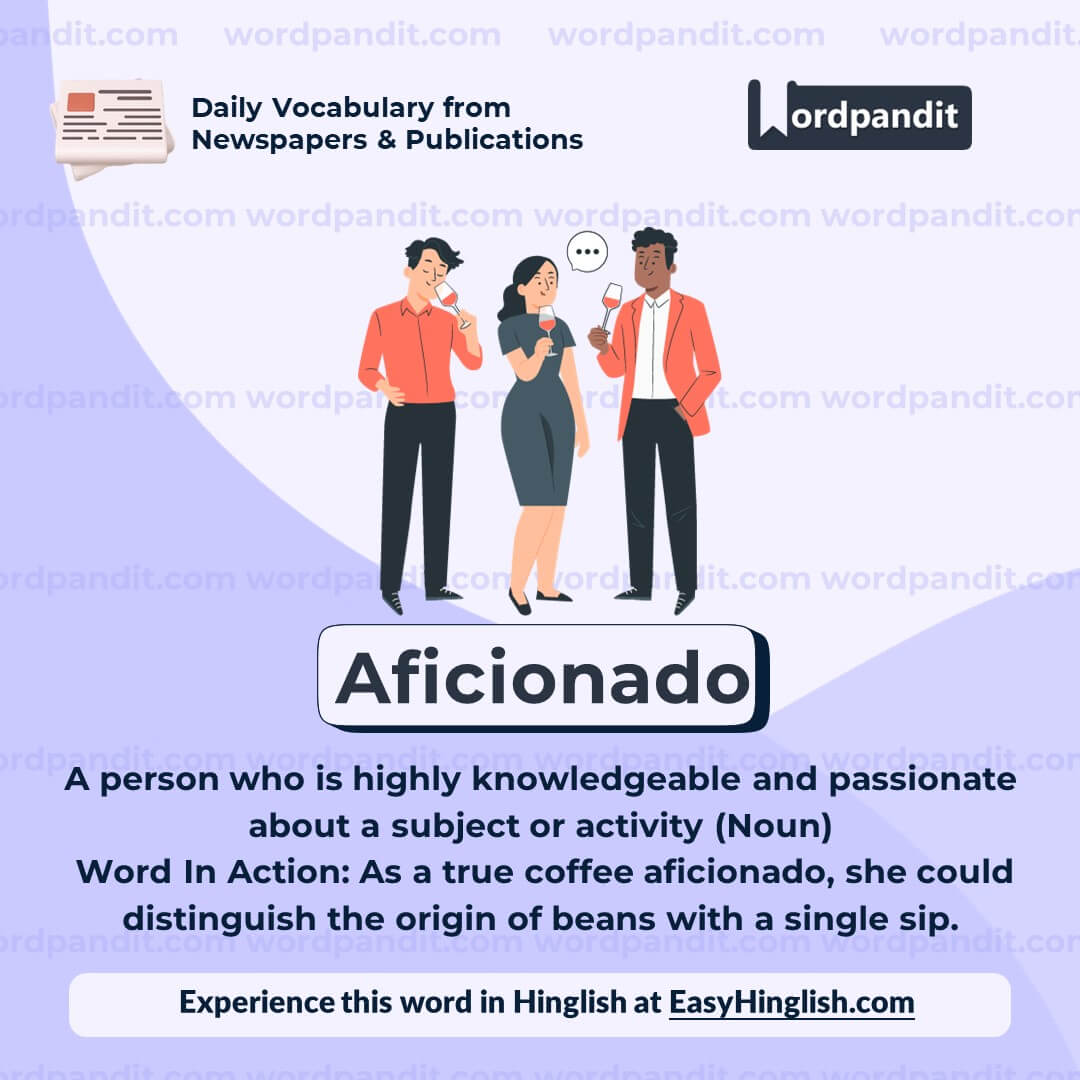
WORD-5: Aficionado
Context:
"Let those who wish to live in their cluttered Sears, Roebuck modern and atrocious bad taste we see so often,’ wrote an aficionado to The New York Times that year. ‘I’ll take the uncluttered.’" - Aeon
Explanatory Paragraph:
An “aficionado” is someone who is very passionate and knowledgeable about a particular subject or activity. This word is often used to describe enthusiasts who are deeply invested in hobbies, art, food, sports, or any niche interest. In the context above, the person writing to The New York Times is portrayed as someone who deeply appreciates minimalist design and has strong opinions about what constitutes good or bad taste—clearly an aficionado of aesthetics or interior design.
Meaning: A devoted fan or enthusiastic expert in a particular area (Noun)
Pronunciation: uh-fish-yuh-NAH-doh
Difficulty Level: ⭐⭐⭐ Intermediate
Etymology: From Spanish aficionado, meaning "fond of," from afición (affection or liking), ultimately from Latin afficere (to influence or affect).
Prashant Sir's Notes:
This word adds flair to your vocabulary when describing someone who’s more than just a casual fan. It carries a sense of expertise and refined taste. Use it when you want to signal seriousness about a passion—whether it's cinema, cuisine, or classic cars!
Synonyms & Antonyms:
Synonyms: enthusiast, connoisseur, devotee, fanatic, admirer
Antonyms: critic, detractor, indifferent person, disinterested party
Usage Examples:
- She's a true aficionado of Italian cinema and can name every Fellini film by heart.
- The coffee shop was started by a group of espresso aficionados looking to perfect their craft.
- As a jazz aficionado, he travels the world attending music festivals.
- Only a true wine aficionado could distinguish between those subtle flavor notes.
Cultural Reference:
"In Hemingway’s novels, especially in The Sun Also Rises, characters like Jake Barnes are portrayed as aficionados of bullfighting—a theme Hemingway himself was passionate about." – Literary Commentary
Think About It:
Is there a difference between being an aficionado and being obsessed? Where does the line between passion and excess lie?
Quick Activity:
List three things you're an aficionado of—or would like to become one. Write a sentence about why each one interests you.
Memory Tip:
Think of “aficionado” as someone so “affectionate” toward a topic that they become an expert. “Aficionado” = affectionate expert!
Real-World Application:
Use “aficionado” in resumes, personal bios, or conversations to describe deep knowledge in a subject—especially when it’s both a personal passion and an area of expertise. It's commonly used in media, culinary circles, art discussions, and niche communities.


