

Daily Vocabulary from International Newspapers and Publications
Expand Your Vocabulary with Wordpandit’s Global Vocabulary Hub
At Wordpandit, we are committed to helping you develop a truly global vocabulary by drawing from some of the most respected international publications. This section is designed to keep you ahead of the curve by introducing you to words that define global conversations and trends.
The Power of Global Sources
To help you think and communicate on a global scale, we curate vocabulary from renowned international sources, such as:
- The New York Times
- The Washington Post
- BBC
- The Guardian
- The Economist
- Scientific American
- Psychology Today
- And many more...
Stay Global, Stay Competitive
Our daily updates from international publications ensure you are consistently exposed to new words that reflect global news and developments, making sure your vocabulary is not only current but also globally relevant.
Enhance Your Global Perspective
Whether you’re preparing for international exams, aiming to excel in global business communication, or want to enhance your language skills for personal growth, Wordpandit offers the resources you need to thrive in a global context.
Effective Learning, Global Reach
Our learning methodology combines global examples, memory aids, and interactive activities, allowing you to internalize new words effectively and apply them in real-world scenarios.
Begin Your Global Vocabulary Journey Now!
Why Choose Wordpandit?
Practical Learning: Focus on words you'll actually encounter in real-world reading, enhancing your comprehension and communication skills.
Diverse Content: From current affairs to scientific breakthroughs, our varied sources expose you to vocabulary across multiple domains.
Effortless Integration: Make Wordpandit a part of your daily routine. Just a few minutes each day can significantly boost your lexicon over time.
Your Path to Vocabulary Mastery
- Visit our Daily Vocabulary section regularly
- Explore new words and their usage in context
- Practice incorporating these words into your own writing and speech
- Track your progress as your vocabulary expands
Start Your Journey Today
Embark on your vocabulary enhancement journey with Wordpandit. By consistently engaging with our daily posts, you'll build a robust vocabulary that serves you well in academic, professional, and personal contexts.
Remember, a word a day keeps linguistic limitations at bay. Make Wordpandit your daily companion in the quest for vocabulary excellence!
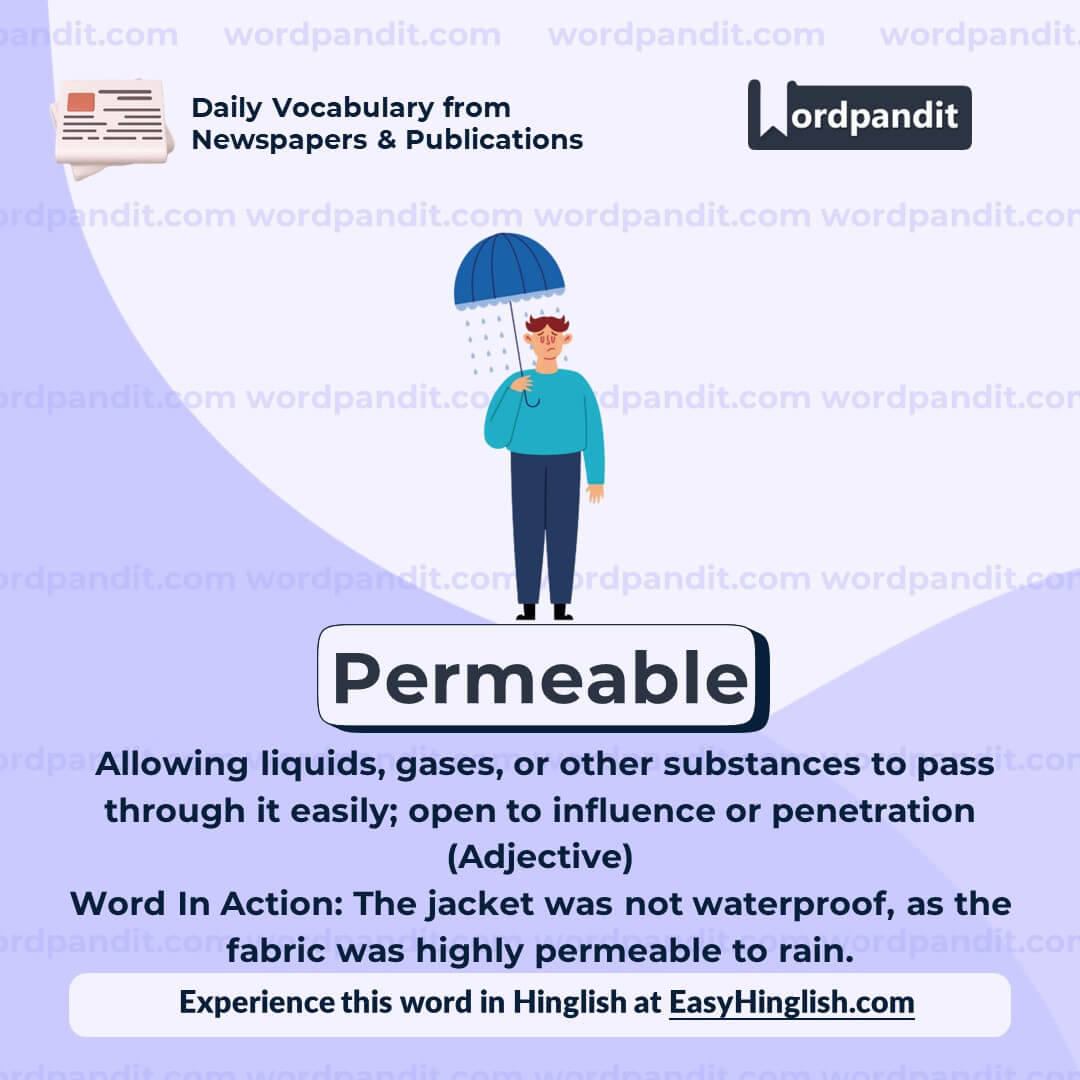
WORD-1: Permeable
Context:
"Described how new technologies and networks of connectivity had suddenly brought human communities closer together and made them permeable to an uncontrollable flow of people, ideas, goods and cultural practices, which all moved freely across the integrated markets of the world economy." - Aeon
Explanatory Paragraph:
"Permeable" describes something that allows substances, elements, or even abstract things like ideas to pass through it. In the context above, it metaphorically means that communities are open and receptive to influence and exchange due to connectivity and globalization. Just as a sponge allows water to pass through, permeable societies allow the flow of people, cultures, and innovations with fewer restrictions.
Meaning: Allowing materials or influences to pass through (Adjective)
Pronunciation: PUR-mee-uh-buhl
Difficulty Level: ⭐⭐ Beginner to Intermediate
Etymology: From Latin *permeabilis*, meaning "passable," from *per* (through) + *meare* (to pass or go).
Prashant Sir's Notes:
This word is both literal (as in science: permeable membranes) and metaphorical (as in ideas or borders being open). The root *per-* means "through"—a useful prefix to recognize across many English words!
Synonyms & Antonyms:
Synonyms: porous, penetrable, absorbent, open, accessible
Antonyms: impermeable, sealed, resistant, closed, impenetrable
Usage Examples:
- The fabric is highly permeable, allowing air to circulate freely.
- The country's borders became more permeable after signing the trade agreement.
- Social media has made our thoughts more permeable to external influences.
- Unlike traditional walls, this new material is permeable to sound.
Cultural Reference:
"The digital age has made the distinction between local and global increasingly permeable." - Paraphrased from discussions on globalization in The Economist
Think About It:
In what ways might being too permeable—whether as a person, society, or system—pose a risk?
Quick Activity:
List three things in your daily life that are literally permeable and three that are metaphorically permeable. Explain why.
Memory Tip:
Think: *Permeable* = *Permit* + *Able* → "Able to permit things through"
Real-World Application:
In environmental science, "permeable surfaces" like soil or gravel allow rainwater to soak into the ground, helping to prevent flooding. In social science, a "permeable society" is one that is open to migration and external cultural influences.
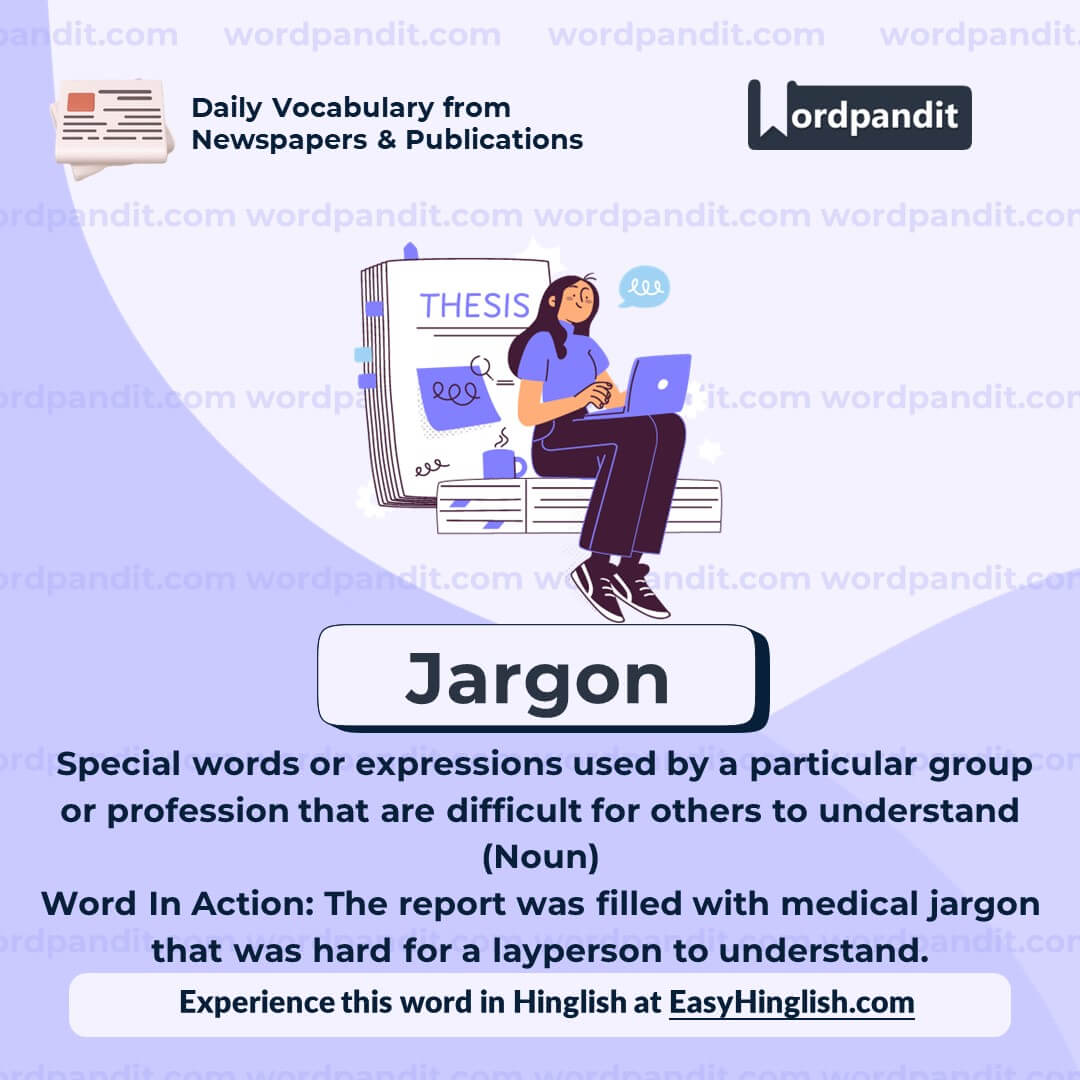
WORD-2: Jargon
Context:
"In the wake of this transformation, new jargon emerged, expressing new anxieties: the world had truly become the ‘global village’ that Marshall McLuhan anticipated in the 1960s." - Aeon
Explanatory Paragraph:
"Jargon" refers to the specialized language used by particular groups—often professionals or those within a specific field—which can be confusing or unclear to outsiders. In this context, it refers to the new technical or trendy terms that arose as people grappled with rapid global changes. These words may capture complex ideas but also risk alienating those not familiar with them.
Meaning: Specialized language used by a specific group or profession (Noun)
Pronunciation: JAHR-guhn
Difficulty Level: ⭐⭐ Beginner to Intermediate
Etymology: From Old French *jargon* meaning "a chattering", later evolving into "speech of a particular group".
Prashant Sir's Notes:
Be cautious with jargon—it can show expertise but also confuse readers or listeners. Good communication often requires translating jargon into plain language. If you’re reading a complex topic, identifying jargon is the first step to understanding it.
Synonyms & Antonyms:
Synonyms: lingo, terminology, argot, slang, idiom
Antonyms: plain language, everyday speech, layman’s terms
Usage Examples:
- The legal contract was filled with jargon that made it hard to understand.
- Tech jargon like "cloud computing" and "machine learning" is now part of everyday conversation.
- He avoided medical jargon so that the patient could understand the diagnosis clearly.
- Startup culture often invents its own jargon to sound innovative and exclusive.
Cultural Reference:
"Corporate jargon is one of the worst kinds of workplace pollution." – David Ogilvy (advertising legend, paraphrased from various interviews)
Think About It:
Can the overuse of jargon act as a barrier to inclusion and understanding in education or politics?
Quick Activity:
Choose a field you're interested in (e.g., sports, medicine, technology) and list five jargon terms from it. Then, try to explain each one in simple language.
Memory Tip:
Jargon sounds like “jar gone”—when jargon is used, it’s like clarity is gone (jar = brain, gone = confused)!
Real-World Application:
Understanding jargon is essential in fields like law, medicine, IT, and finance. However, professionals are often encouraged to simplify or decode jargon when communicating with clients, patients, or the general public to build trust and clarity.
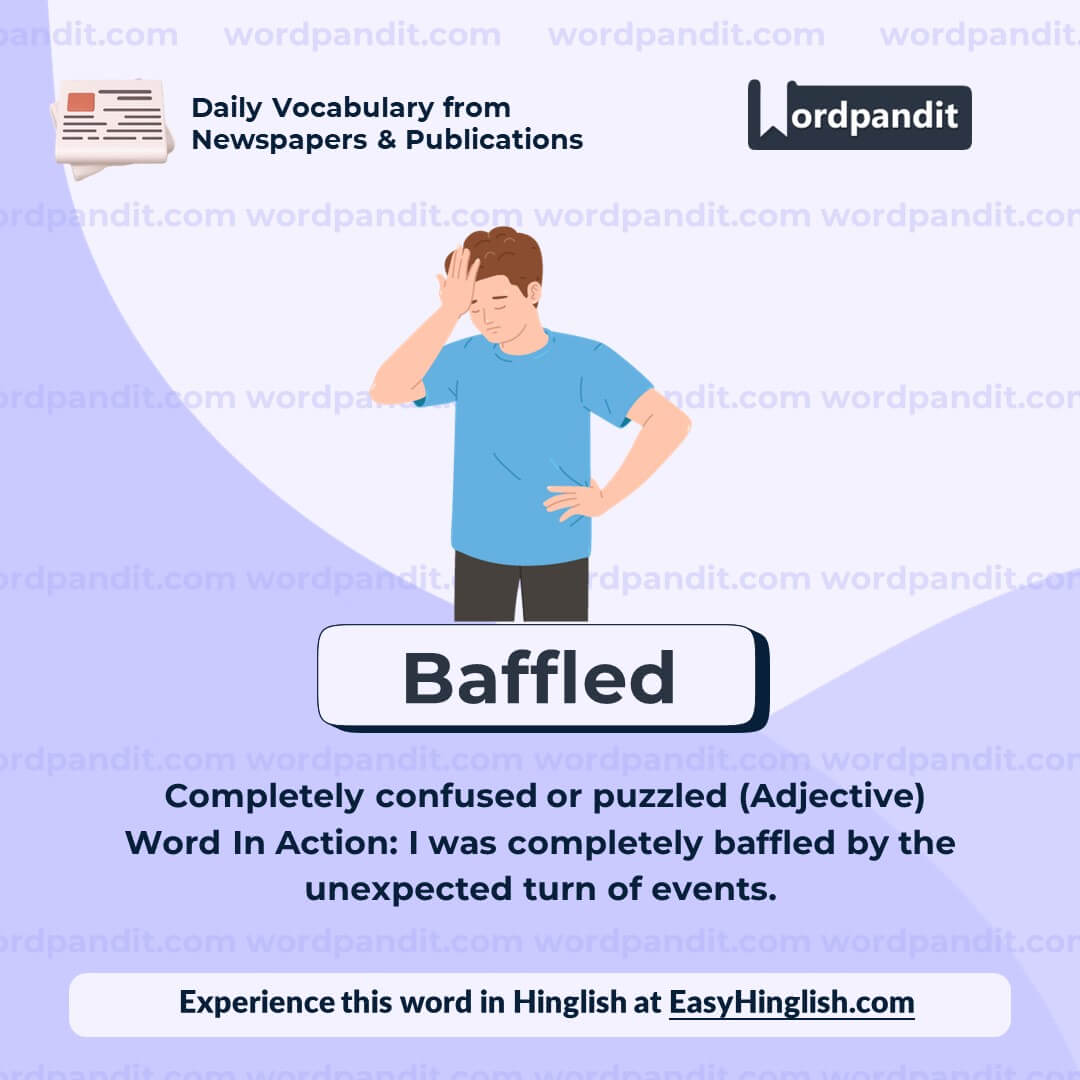
WORD-3: Baffled
Context:
"He looks baffled as she gestures to the orange, green and purple varieties of hummus on offer." - Aeon
Explanatory Paragraph:
"Baffled" is used to describe a state of confusion or bewilderment. When someone is baffled, they are unable to understand or make sense of something. In the sentence above, the man’s expression shows confusion or surprise at the unusual variety of hummus flavors, indicating that the situation is unexpected or difficult for him to comprehend.
Meaning: Confused or puzzled; unable to understand something (Adjective)
Pronunciation: BAF-uhld
Difficulty Level: ⭐ Beginner
Etymology: From the early 17th century, possibly from the Scottish word *bawchle*, meaning to disgrace or treat poorly; evolved into the modern sense of puzzlement.
Prashant Sir's Notes:
“Baffled” is a great word to express honest confusion—it captures that moment when something simply doesn’t make sense. It’s emotional yet simple. Use it when something totally throws you off!
Synonyms & Antonyms:
Synonyms: confused, perplexed, bewildered, puzzled, dazed
Antonyms: clear-headed, certain, understanding, aware
Usage Examples:
- She was baffled by the complex instructions on the machine.
- His reaction to the simple question left everyone baffled.
- I’m still baffled as to how the magician pulled off that trick!
- The scientist was baffled by the unexpected results of the experiment.
Cultural Reference:
"I'm baffled, I'm completely baffled," Sherlock Holmes mutters in various adaptations when a case takes a surprising turn—reminding us even geniuses get confused. - Inspired by the Sherlock Holmes series
Think About It:
Why do you think feeling baffled can sometimes lead to deeper learning or creativity?
Quick Activity:
Write about a moment when you felt completely baffled. What caused your confusion? How did you eventually figure it out—or did you?
Memory Tip:
Imagine someone standing in front of a locked safe, scratching their head—that’s a classic "baffled" look. Think: *Baffled by a box!*
Real-World Application:
The word "baffled" is commonly used in everyday situations—from being confused by a new app interface to not understanding someone’s unexpected behavior. It helps express confusion in a natural, relatable way.
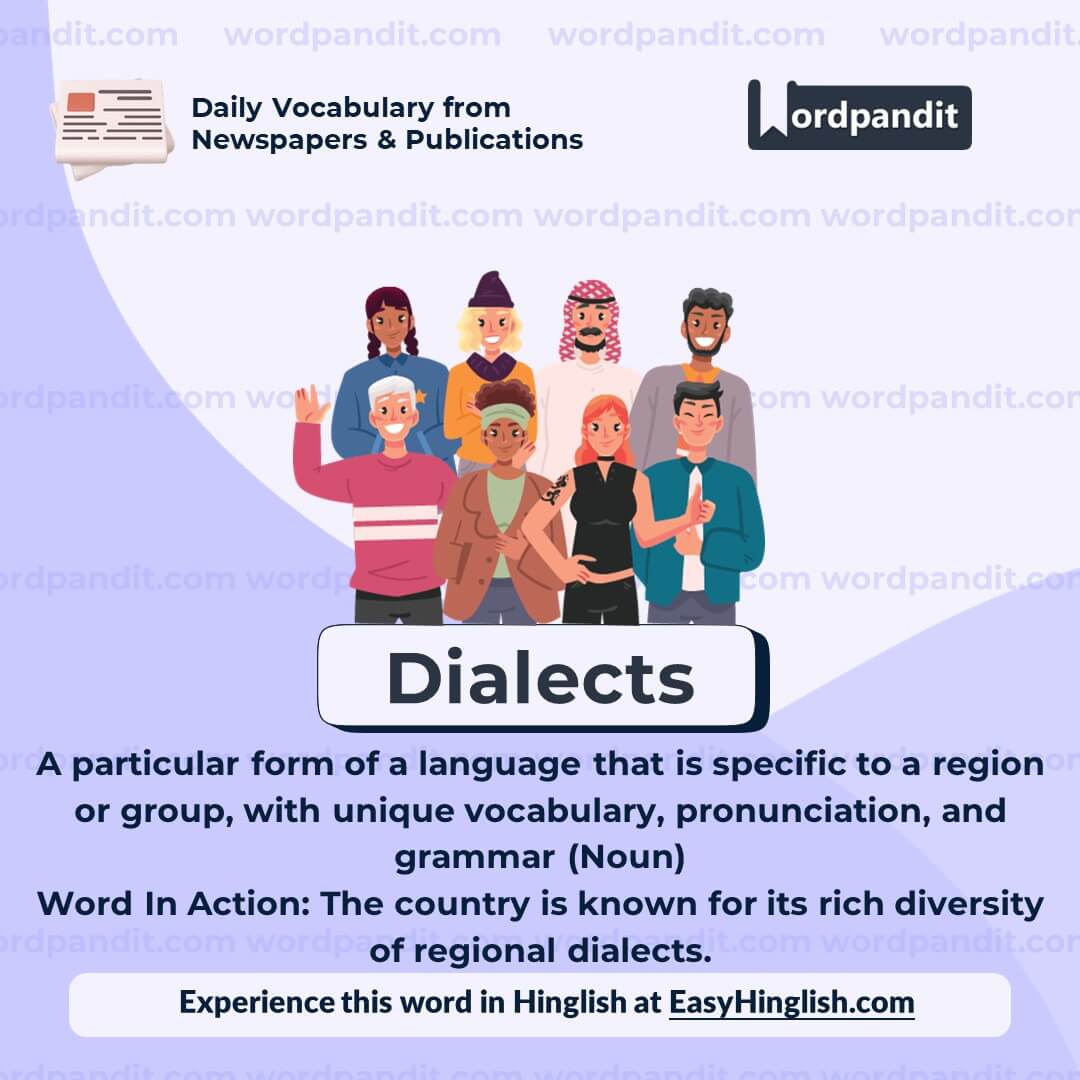
WORD-4: Dialects
Context:
"Back then, the people visiting the market would also have hailed from fewer and closer territories, most of them still speaking their regional dialects." - Aeon
Explanatory Paragraph:
"Dialects" refer to regional or social variations of a language. These variations can include different accents, vocabulary, and grammar rules. In the context above, it suggests that in earlier times, people came from nearby regions and spoke their local forms of the language, highlighting both cultural diversity and the less globalized nature of communication back then.
Meaning: Regional or social varieties of a language distinguished by pronunciation, vocabulary, and grammar (Noun, plural)
Pronunciation: DYE-uh-lekts
Difficulty Level: ⭐⭐ Beginner to Intermediate
Etymology: From Greek *dialektos*, meaning "discourse, language, dialect", from *dialegesthai* meaning "to converse."
Prashant Sir's Notes:
Dialects are more than just accents—they reflect the identity, history, and culture of a group. For language learners, recognizing dialects helps in understanding real-world usage beyond textbook language. Think of Hindi in Bihar versus Delhi—same base, different flavors.
Synonyms & Antonyms:
Synonyms: vernaculars, regional speech, local tongue, patois, idioms
Antonyms: standard language, formal language, lingua franca
Usage Examples:
- In Italy, people from different regions often speak distinct dialects along with standard Italian.
- The documentary showcased the dying dialects of indigenous tribes in the Amazon.
- She could understand the language, but the local dialect made conversation challenging.
- Many dialects contain words and expressions that aren’t found in the standard language.
Cultural Reference:
"A language is a dialect with an army and a navy." – Max Weinreich. This quote humorously emphasizes how power and politics often determine whether a speech form is considered a language or merely a dialect.
Think About It:
Should education systems encourage students to preserve their regional dialects alongside learning the standard language?
Quick Activity:
List three words or phrases from your local dialect. Try to translate them into standard language and explain the difference in tone or meaning.
Memory Tip:
Think: *Dial* + *ects* — like tuning a radio dial to different stations, dialects are different "stations" or forms of the same language!
Real-World Application:
In fields like linguistics, anthropology, and even marketing, understanding dialects helps professionals connect with people more authentically. For example, using the local dialect in an ad campaign can boost engagement in regional markets.
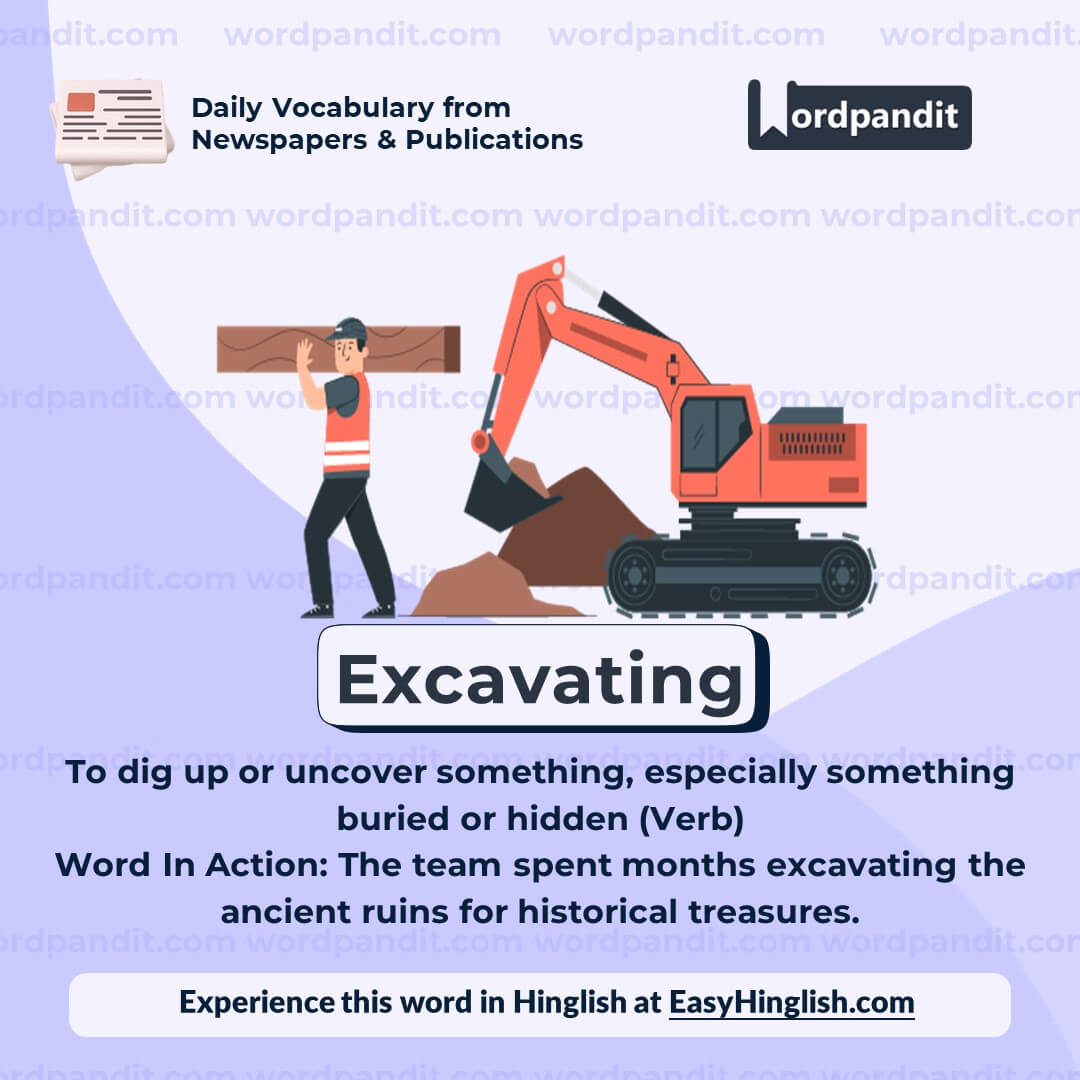
WORD-5: Excavating
Context:
"Excavating the sediments our predecessors left in our collective consciousness is not a task that we are naturally disposed to perform. It is an act of remembrance and self-understanding that can destabilise our identities because it counters the processes that endow them with authenticity." - Aeon
Explanatory Paragraph:
"Excavating" literally refers to digging up earth to uncover something buried, such as in archaeology. In the metaphorical sense used here, it means deeply exploring or uncovering the hidden layers of our collective memory or history. It suggests a process of bringing buried thoughts, ideas, or histories to light—often requiring effort and self-reflection. This kind of mental or emotional excavation can be uncomfortable because it challenges the stories we tell ourselves about who we are.
Meaning: To dig up or uncover something buried, especially through systematic effort (Verb – present participle/gerund)
Pronunciation: EX-kuh-vay-ting
Difficulty Level: ⭐⭐⭐ Intermediate
Etymology: From Latin *excavare* ("to hollow out"), from *ex-* ("out") + *cavare* ("to hollow")
Prashant Sir's Notes:
This is a classic metaphorical word—used in both history and psychology. Whether we excavate ancient ruins or hidden emotions, the core idea is the same: we are digging deep to bring the past to light. Watch for this word in academic, literary, and reflective writing.
Synonyms & Antonyms:
Synonyms: unearth, uncover, dig up, expose, reveal
Antonyms: bury, cover, conceal, hide, entomb
Usage Examples:
- The archaeologists spent months excavating the ancient city buried beneath the desert.
- Excavating old memories can be painful but often leads to healing.
- The team is excavating data from the hard drive to understand the breach.
- In therapy, she began excavating feelings she had buried for years.
Cultural Reference:
"Excavating memory is like digging into soft earth—each layer brings you closer to truth." – Inspired by the documentary *Nostalgia for the Light*, which explores memory and archaeology in Chile.
Think About It:
What personal beliefs or memories might you be ‘burying’—and what might change if you began excavating them?
Quick Activity:
Write a short paragraph beginning with: "While excavating my childhood memories, I discovered..." Try to go beyond surface-level events.
Memory Tip:
Think: *Ex* = out + *cave* = hollow → Excavating means “hollowing something out” to reveal what’s hidden inside.
Real-World Application:
Excavating is used in archaeology to discover historical artifacts and in psychology to explore repressed emotions or memories. It's also relevant in data recovery and historical research—any field where uncovering the past matters.


