

Daily Vocabulary from International Newspapers and Publications
Expand Your Vocabulary with Wordpandit’s Global Vocabulary Hub
At Wordpandit, we are committed to helping you develop a truly global vocabulary by drawing from some of the most respected international publications. This section is designed to keep you ahead of the curve by introducing you to words that define global conversations and trends.
The Power of Global Sources
To help you think and communicate on a global scale, we curate vocabulary from renowned international sources, such as:
- The New York Times
- The Washington Post
- BBC
- The Guardian
- The Economist
- Scientific American
- Psychology Today
- And many more...
Stay Global, Stay Competitive
Our daily updates from international publications ensure you are consistently exposed to new words that reflect global news and developments, making sure your vocabulary is not only current but also globally relevant.
Enhance Your Global Perspective
Whether you’re preparing for international exams, aiming to excel in global business communication, or want to enhance your language skills for personal growth, Wordpandit offers the resources you need to thrive in a global context.
Effective Learning, Global Reach
Our learning methodology combines global examples, memory aids, and interactive activities, allowing you to internalize new words effectively and apply them in real-world scenarios.
Begin Your Global Vocabulary Journey Now!
Why Choose Wordpandit?
Practical Learning: Focus on words you'll actually encounter in real-world reading, enhancing your comprehension and communication skills.
Diverse Content: From current affairs to scientific breakthroughs, our varied sources expose you to vocabulary across multiple domains.
Effortless Integration: Make Wordpandit a part of your daily routine. Just a few minutes each day can significantly boost your lexicon over time.
Your Path to Vocabulary Mastery
- Visit our Daily Vocabulary section regularly
- Explore new words and their usage in context
- Practice incorporating these words into your own writing and speech
- Track your progress as your vocabulary expands
Start Your Journey Today
Embark on your vocabulary enhancement journey with Wordpandit. By consistently engaging with our daily posts, you'll build a robust vocabulary that serves you well in academic, professional, and personal contexts.
Remember, a word a day keeps linguistic limitations at bay. Make Wordpandit your daily companion in the quest for vocabulary excellence!
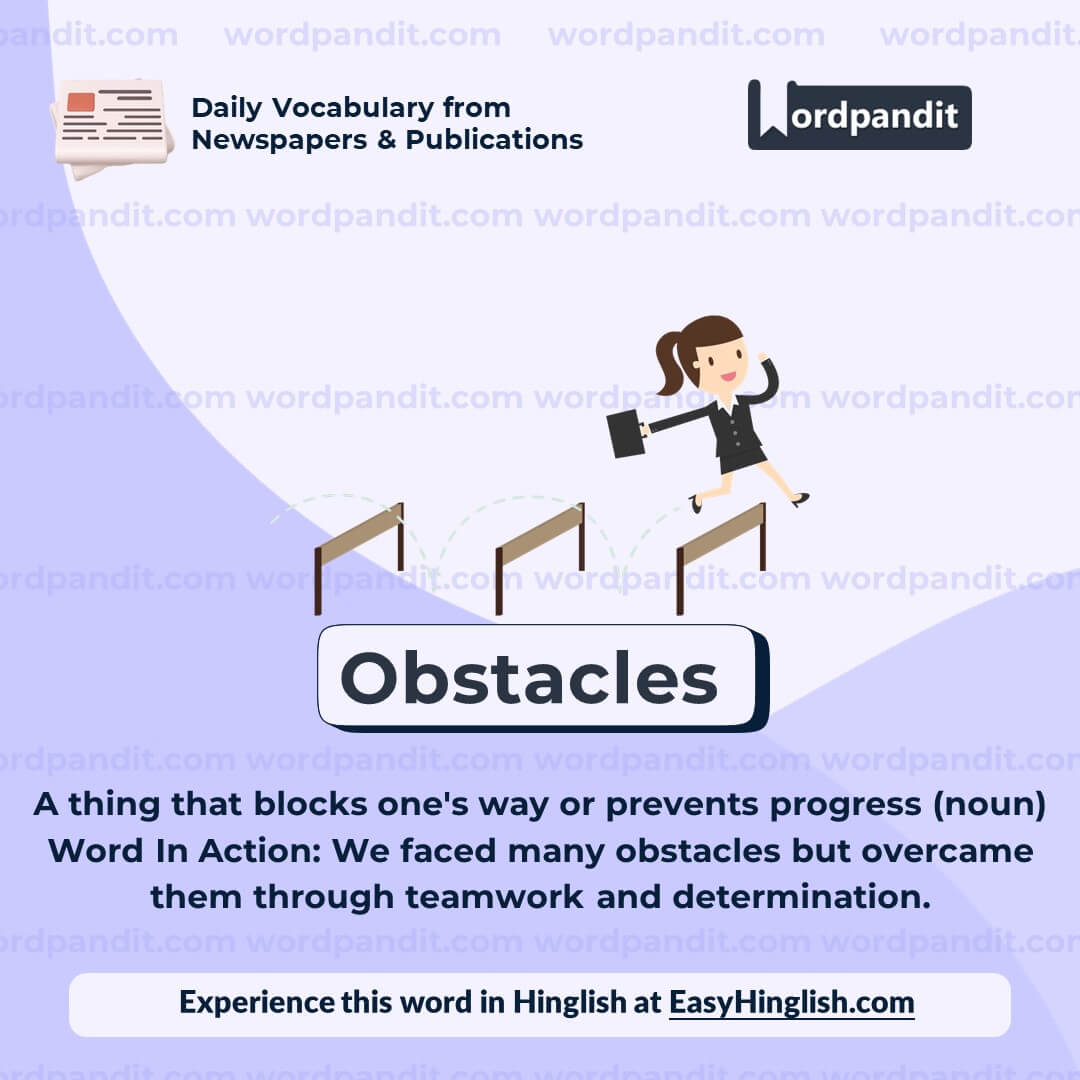
WORD-1: Obstacles
Context:
"The question is not whether Africa can develop – it is how to remove the obstacles blocking its progress." - Aljazeera
Explanatory Paragraph:
"Obstacles" refer to things that get in the way of progress, goals, or smooth functioning. These can be physical barriers like a fallen tree blocking a road, or abstract ones like poverty, lack of education, or bureaucracy that hinder development. In the given context, the word represents challenges Africa faces in its journey toward growth and prosperity. Understanding what these obstacles are is the first step toward overcoming them.
Meaning: Something that blocks or hinders progress (Noun)
Pronunciation: OB-stuh-kuhls
Difficulty Level: ⭐⭐ Basic
Etymology: From Old French "obstacle," derived from Latin "obstaculum," from "ob-" (against) + "stare" (to stand).
Prashant Sir's Notes:
Think of obstacles as roadblocks in life. They are not permanent; with effort and strategy, they can be bypassed or removed. In vocabulary and comprehension, this word often points to difficulties in various domains—social, personal, economic, or political.
Synonyms & Antonyms:
Synonyms: barrier, hurdle, impediment, block, hindrance
Antonyms: aid, assistance, support, advantage, facilitator
Usage Examples:
- Fear of failure is often the biggest obstacle to success.
- They faced many obstacles during the construction of the bridge.
- The committee is working to remove legal obstacles for small businesses.
- Emotional obstacles can sometimes be harder to overcome than physical ones.
Cultural Reference:
"A hero is an ordinary individual who finds the strength to persevere and endure in spite of overwhelming obstacles." - Christopher Reeve
Think About It:
What types of obstacles do you think are the hardest to overcome—external (like finances) or internal (like fear)—and why?
Quick Activity:
List three obstacles you’ve faced recently and write down one solution for each. Share with a friend and compare strategies.
Memory Tip:
Think of “obstacle” as something that makes you say “Oh! Stop!” — OB + STACLE = OB-structive thing you must tackle.
Real-World Application:
In business, identifying obstacles in a workflow or supply chain is crucial for increasing efficiency. In personal life, recognizing emotional or mental obstacles is key to self-growth and development.
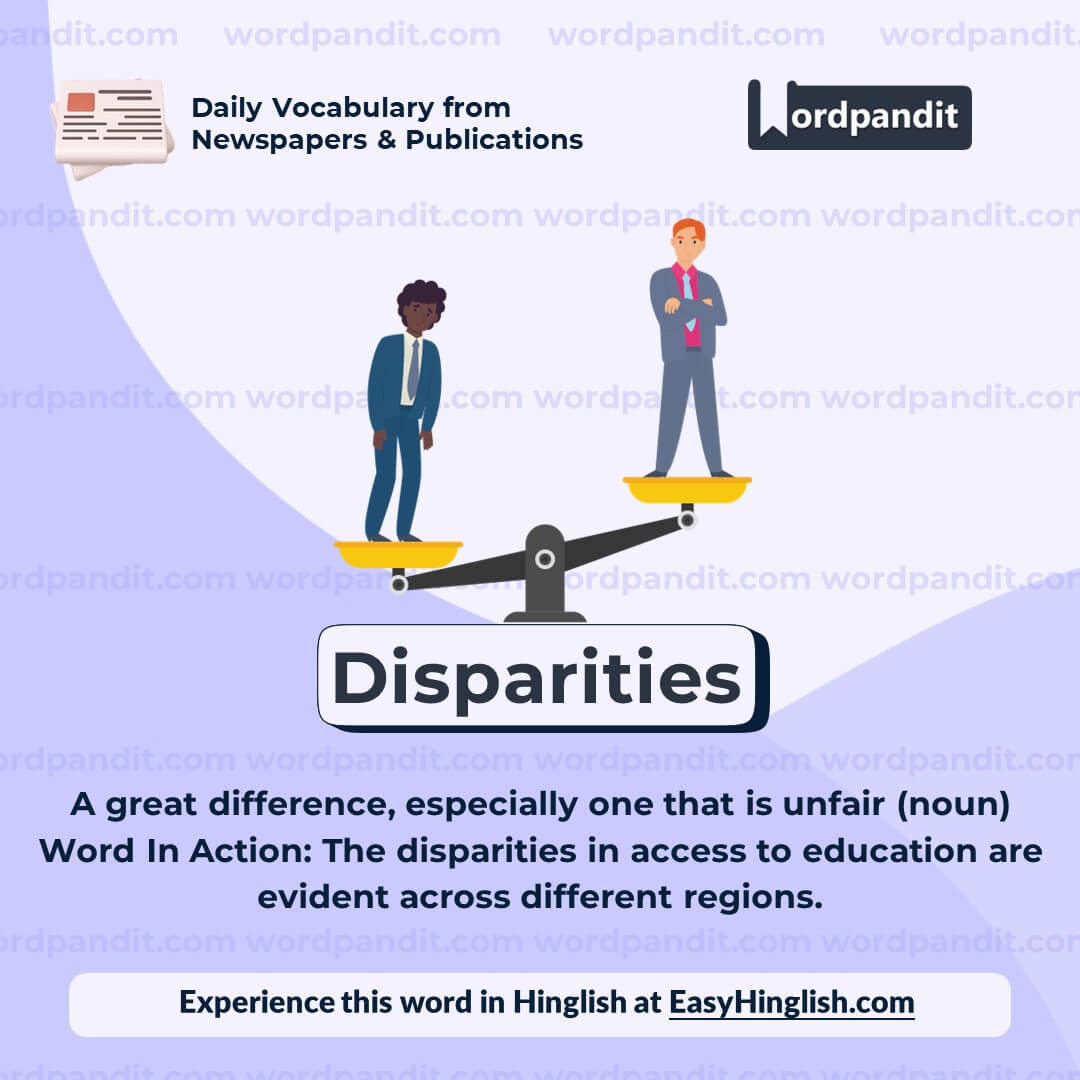
WORD-2: Disparities
Context:
"This must change. Similarly, our healthcare systems need targeted investment to reduce mortality rates and address stark health disparities across the continent." - Aljazeera
Explanatory Paragraph:
"Disparities" refer to significant differences or inequalities between two or more things, especially when those differences are unfair or unjust. In the context of healthcare, disparities often highlight how access to services, treatment quality, or health outcomes vary widely among different groups—based on income, geography, gender, or ethnicity. The word emphasizes gaps that need to be understood and addressed to create a more balanced system.
Meaning: Great differences, often implying inequality or imbalance (Noun – plural)
Pronunciation: dih-SPAIR-uh-teez
Difficulty Level: ⭐⭐⭐ Intermediate
Etymology: From Latin "disparitas," from "dispar" meaning "unequal" or "different."
Prashant Sir's Notes:
Use this word when talking about measurable differences—whether in income, access to education, healthcare, or opportunities. "Disparities" often carry a tone of concern or injustice, especially in academic or policy discussions.
Synonyms & Antonyms:
Synonyms: inequalities, imbalances, gaps, divergences, differences
Antonyms: equalities, similarities, uniformities, consistencies
Usage Examples:
- The report highlights income disparities between urban and rural areas.
- Gender disparities in education remain a challenge in many regions.
- Disparities in internet access have widened the digital divide during the pandemic.
- Efforts are underway to reduce racial health disparities through inclusive policy reform.
Cultural Reference:
"Of all the forms of inequality, injustice in health is the most shocking and inhuman." – Martin Luther King Jr.
Think About It:
Do you think all disparities are unjust, or are some simply the result of natural differences? Where should we draw the line?
Quick Activity:
Choose one type of disparity (economic, educational, health, etc.) and write a short paragraph explaining how it impacts people’s lives.
Memory Tip:
Think: “Dis-parities” = “Distant parallels” — two lines that should be equal but are far apart. That gap is a disparity.
Real-World Application:
In public policy, understanding disparities is essential for creating programs that ensure fair access to healthcare, education, and employment. Businesses also use disparity data to improve diversity and inclusion.
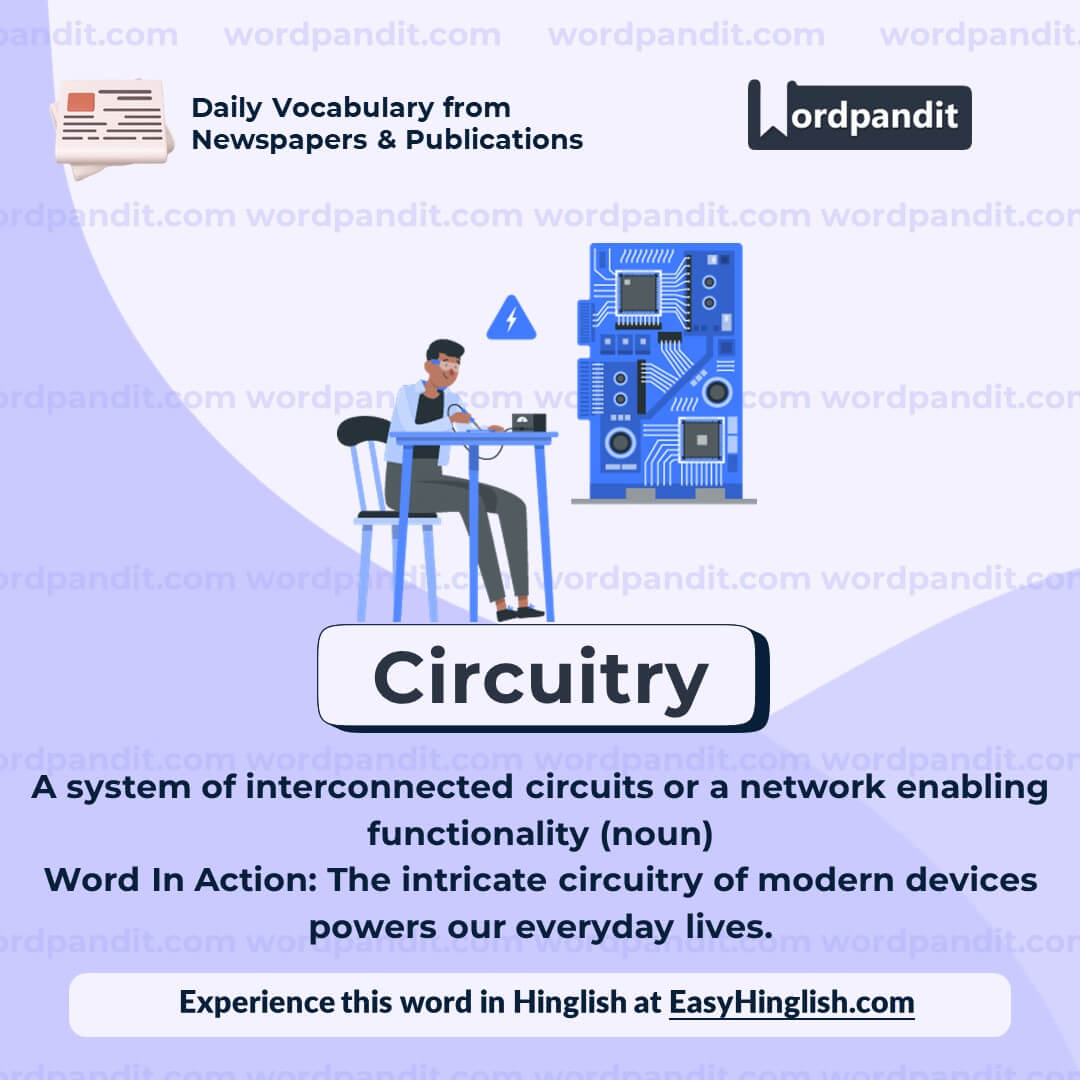
WORD-3: Circuitry
Context:
"Treaties are the circuitry that make relations between states function." - Aljazeera
Explanatory Paragraph:
"Circuitry" originally refers to the system of electric circuits that power electronic devices. In a broader or metaphorical sense, it describes the underlying system or network that enables something to work. In the provided sentence, "circuitry" is used metaphorically to suggest that treaties form the structured framework that enables smooth and functional international relations—just like how circuits enable the functioning of electronic devices.
Meaning: A system of electrical circuits or the interconnected parts that enable a system to work (Noun)
Pronunciation: SUR-kit-tree
Difficulty Level: ⭐⭐⭐ Intermediate
Etymology: From "circuit" + "-ry" (a suffix forming nouns that refer to a system or arrangement), first used in electrical engineering contexts in the 20th century.
Prashant Sir's Notes:
This word is commonly used in tech and engineering but can also appear in metaphorical contexts. Here, "circuitry" implies an interconnected system that enables relationships to function efficiently—whether in machines, governments, or organizations.
Synonyms & Antonyms:
Synonyms: network, system, wiring, configuration, mechanism
Antonyms: disconnection, breakdown, disorder, malfunction
Usage Examples:
- The phone’s internal circuitry was damaged after it was dropped in water.
- Modern robotics depends heavily on advanced circuitry and programming.
- The metaphorical use of “circuitry” helps explain how laws and agreements hold nations together.
- Brain circuitry plays a crucial role in emotional processing and memory.
Cultural Reference:
In neuroscience and pop science, the term “brain circuitry” is often used to describe how different parts of the brain communicate—popularized in discussions around mental health and neuroplasticity.
Think About It:
If international treaties are the "circuitry" of diplomacy, what happens when key components (agreements or norms) break down? Can the system still function?
Quick Activity:
Draw a simple diagram showing how a system—like a school or a government—relies on its own form of "circuitry" (rules, roles, communication). Label each part.
Memory Tip:
Think “circuitry” = “circuit + machinery” — a machine of tiny electric paths working together. If one fails, the whole system can break!
Real-World Application:
In electronics, understanding circuitry is essential for designing and repairing devices. In abstract contexts, recognizing the "circuitry" of organizations—how departments connect and operate—helps in managing efficient systems.
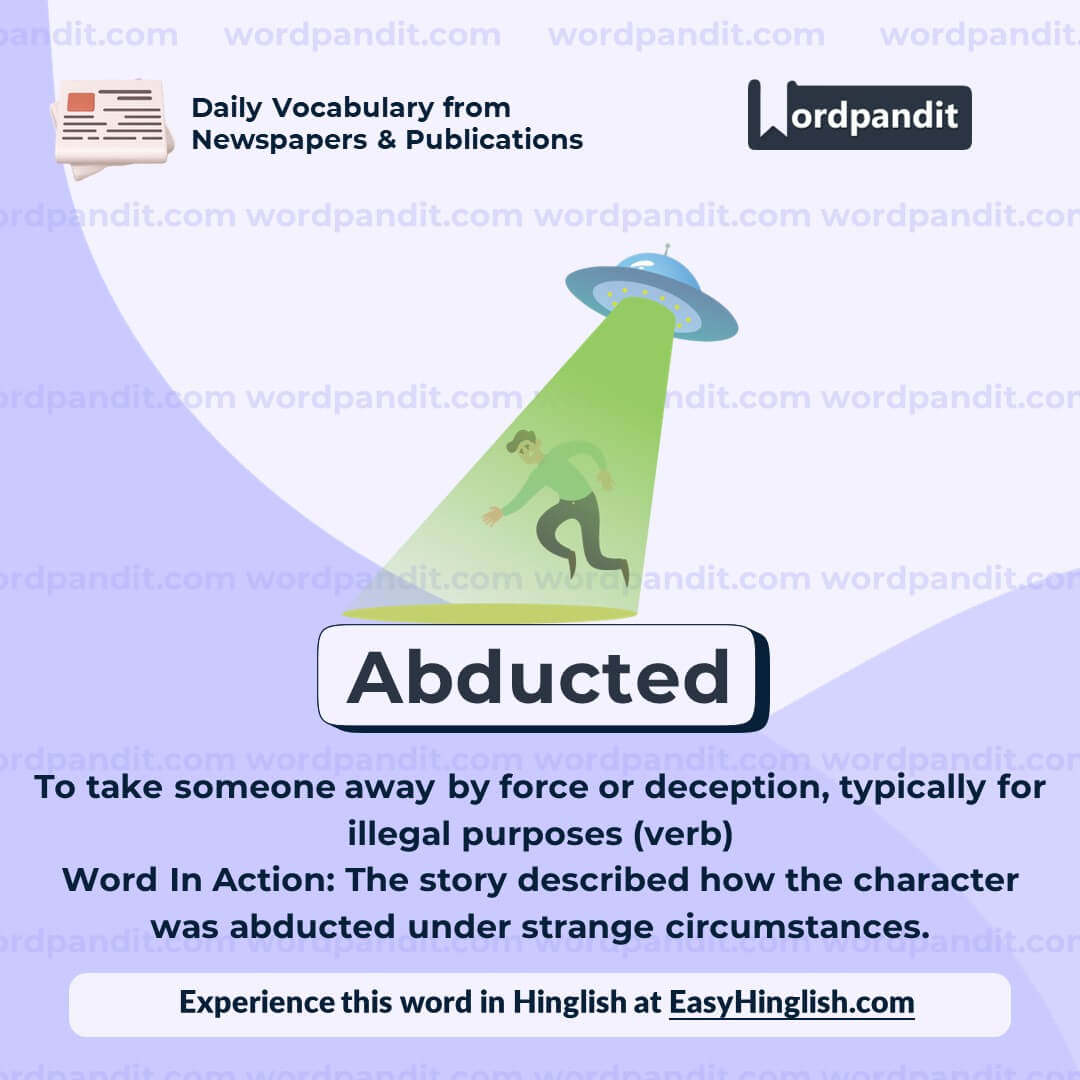
WORD-4: Abducted
Context:
"All those named by Hamas for the next exchange are female Israel Defense Forces (IDF) observation troops who were abducted in Nahal Oz during the group’s surprise attack on southern Israel on 7 October 2023, when their base was overrun." - The Guardian
Explanatory Paragraph:
"Abducted" refers to the act of forcibly taking someone away against their will, often involving secrecy or violence. It is commonly used in the context of kidnapping or hostage situations. In this sentence, the term describes the forcible capture of Israeli soldiers during a militant attack. The word often carries a sense of urgency, danger, and emotional distress, especially in situations involving conflict, crime, or terrorism.
Meaning: Taken away illegally or by force, especially to hold someone captive (Verb – past tense)
Pronunciation: ab-DUK-tid
Difficulty Level: ⭐⭐⭐ Intermediate
Etymology: From Latin "abducere" meaning "to lead away," from "ab-" (away) + "ducere" (to lead).
Prashant Sir's Notes:
This word is often used in the news when reporting kidnappings or conflict-related hostage situations. It can be used both in legal/criminal contexts and in broader social or political discussions. Remember: "abducted" implies force and lack of consent.
Synonyms & Antonyms:
Synonyms: kidnapped, seized, captured, snatched, taken
Antonyms: released, freed, liberated, rescued, returned
Usage Examples:
- The child was abducted from the playground in broad daylight.
- Authorities believe the journalist was abducted by rebel forces.
- She was abducted and held for ransom before being rescued.
- Movies often dramatize stories of people being abducted by aliens.
Cultural Reference:
The term "abducted by aliens" became widely popular in science fiction during the 20th century, featured in films like *Close Encounters of the Third Kind* and *The X-Files* TV series.
Think About It:
Why do you think the word "abducted" carries more emotional weight than simply saying "taken"? How does language affect our perception of events?
Quick Activity:
Write a short paragraph using the word “abducted” in a completely fictional context (e.g., fantasy, sci-fi, or mystery).
Memory Tip:
Think of “abducted” as someone being “led away abruptly”—AB (away) + DUCT (lead) = taken away suddenly.
Real-World Application:
The word "abducted" is frequently used in legal, journalistic, and military contexts to describe unlawful detentions or kidnappings. Understanding its meaning is important for interpreting global news and human rights reports accurately.
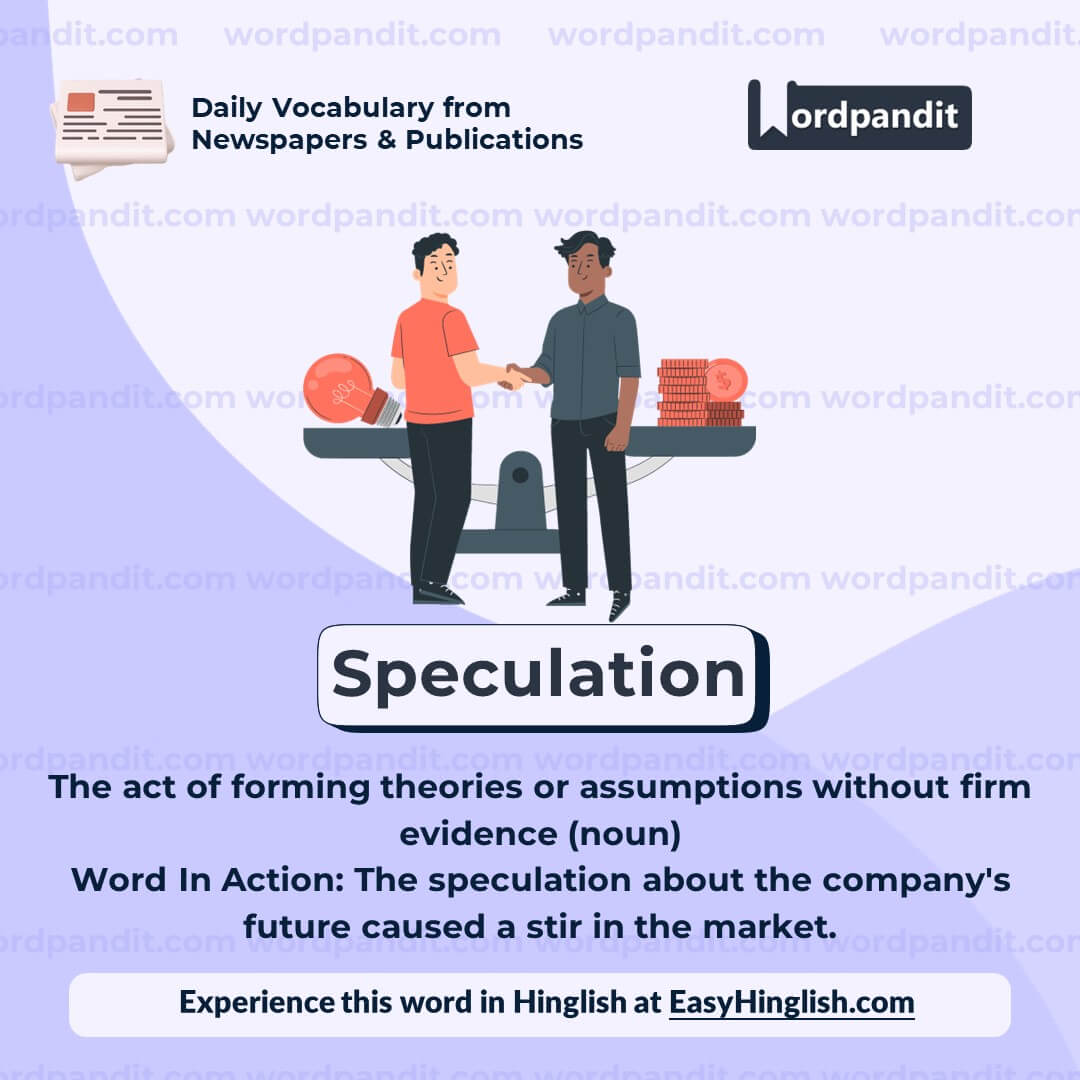
WORD-5: Speculation
Context:
"There has been speculation that Yehoud, who holds joint German and Israeli citizenship, is not being held by Hamas but by another militant faction, Palestinian Islamic Jihad." - The Guardian
Explanatory Paragraph:
"Speculation" refers to the act of forming opinions, guesses, or theories without having complete evidence or confirmation. It often arises in situations of uncertainty, especially when facts are unclear or developing. In this context, the word indicates that people are discussing or suspecting something about Yehoud’s situation, but no verified information has yet been confirmed. Speculation can drive conversation, media coverage, or public concern—but it can also lead to misinformation if not handled carefully.
Meaning: The act of forming a theory or guess without full evidence (Noun)
Pronunciation: spek-yuh-LAY-shun
Difficulty Level: ⭐⭐⭐ Intermediate
Etymology: From Latin "speculatio" meaning "contemplation" or "observation," derived from "speculari" (to observe or watch).
Prashant Sir's Notes:
“Speculation” is often used in media, finance, and politics. It reflects uncertainty and should be distinguished from fact. When you hear speculation in the news, think: is this confirmed, or just a theory? Always look for the source of the claim.
Synonyms & Antonyms:
Synonyms: guesswork, theory, supposition, assumption, conjecture
Antonyms: fact, certainty, confirmation, truth, evidence
Usage Examples:
- There is speculation that the company may launch a new product next month.
- Her sudden resignation led to wild speculation in the media.
- Stock market speculation can lead to both high profits and massive losses.
- The cause of the fire remains unknown, though there is speculation it was electrical.
Cultural Reference:
In financial history, the 2008 global recession was partly caused by excessive speculation in the housing market, where risky investments were made based on predicted—but unproven—returns.
Think About It:
How does speculation shape public opinion during a crisis, and what responsibilities do media and individuals have in preventing misinformation?
Quick Activity:
Write two short statements: one that is a speculation and one that is a fact. Compare them and explain how they are different.
Memory Tip:
Speculation sounds like “spectacles” — when you don’t see things clearly, you need glasses. Similarly, when you don’t have clear facts, you speculate!
Real-World Application:
Speculation is common in stock markets, media reporting, and political analysis. Understanding its meaning helps you think critically and separate fact from assumption in decision-making or news consumption.


