

Daily Vocabulary from International Newspapers and Publications
Expand Your Vocabulary with Wordpandit’s Global Vocabulary Hub
At Wordpandit, we are committed to helping you develop a truly global vocabulary by drawing from some of the most respected international publications. This section is designed to keep you ahead of the curve by introducing you to words that define global conversations and trends.
The Power of Global Sources
To help you think and communicate on a global scale, we curate vocabulary from renowned international sources, such as:
- The New York Times
- The Washington Post
- BBC
- The Guardian
- The Economist
- Scientific American
- Psychology Today
- And many more...
Stay Global, Stay Competitive
Our daily updates from international publications ensure you are consistently exposed to new words that reflect global news and developments, making sure your vocabulary is not only current but also globally relevant.
Enhance Your Global Perspective
Whether you’re preparing for international exams, aiming to excel in global business communication, or want to enhance your language skills for personal growth, Wordpandit offers the resources you need to thrive in a global context.
Effective Learning, Global Reach
Our learning methodology combines global examples, memory aids, and interactive activities, allowing you to internalize new words effectively and apply them in real-world scenarios.
Begin Your Global Vocabulary Journey Now!
Why Choose Wordpandit?
Practical Learning: Focus on words you'll actually encounter in real-world reading, enhancing your comprehension and communication skills.
Diverse Content: From current affairs to scientific breakthroughs, our varied sources expose you to vocabulary across multiple domains.
Effortless Integration: Make Wordpandit a part of your daily routine. Just a few minutes each day can significantly boost your lexicon over time.
Your Path to Vocabulary Mastery
- Visit our Daily Vocabulary section regularly
- Explore new words and their usage in context
- Practice incorporating these words into your own writing and speech
- Track your progress as your vocabulary expands
Start Your Journey Today
Embark on your vocabulary enhancement journey with Wordpandit. By consistently engaging with our daily posts, you'll build a robust vocabulary that serves you well in academic, professional, and personal contexts.
Remember, a word a day keeps linguistic limitations at bay. Make Wordpandit your daily companion in the quest for vocabulary excellence!
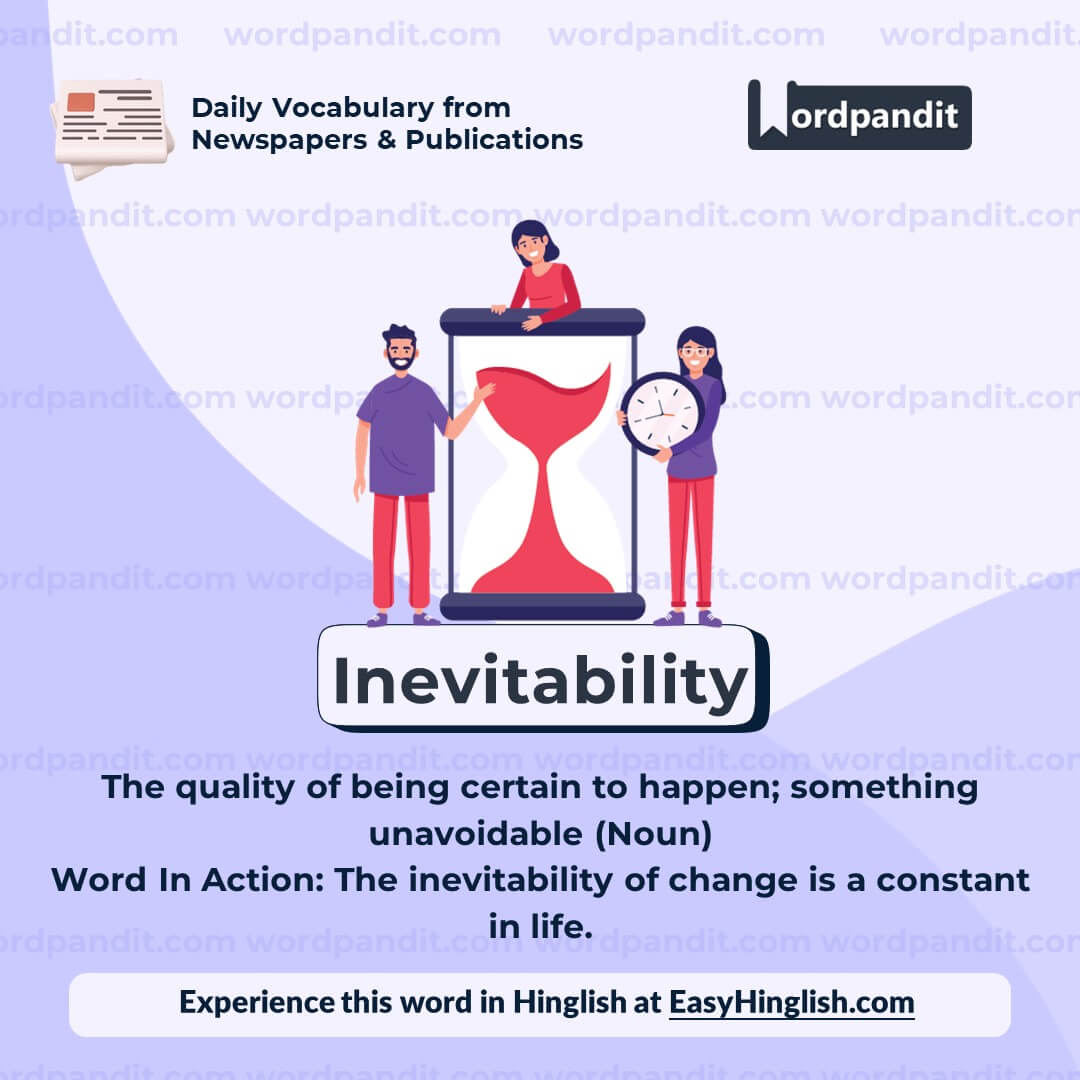
WORD-1: Inevitability
Context:
"The inevitability of technological advancement means that industries must adapt or risk becoming obsolete." - Harvard Business Review
Explanatory Paragraph:
"Inevitability" refers to something that is certain to happen and cannot be avoided or prevented. It captures the sense that an outcome is bound to occur, regardless of actions taken to stop or change it. This word often carries a serious tone and is used in discussions about fate, trends, consequences, or future events that seem guaranteed.
Meaning: The quality or state of being unavoidable or certain to happen (Noun)
Pronunciation: in-ev-ih-tuh-BILL-uh-tee
Difficulty Level: ⭐⭐⭐ Intermediate
Etymology: From Latin "inevitabilis" meaning "unavoidable", formed by the prefix "in-" (not) + "evitabilis" (avoidable).
Prashant Sir's Notes:
This word is commonly used when discussing outcomes or consequences that feel guaranteed. A strong vocabulary word for essays about change, progress, destiny, or even historical trends. Always pair it with events that seem inescapable due to logic, systems, or circumstances.
Synonyms & Antonyms:
Synonyms: certainty, surety, predictability, fate, predestination
Antonyms: uncertainty, chance, avoidability, unpredictability
Usage Examples:
- The inevitability of climate change demands immediate and sustained global action.
- Despite their efforts, the team felt the inevitability of defeat looming as the clock ran out.
- She accepted the inevitability of aging with grace and humor.
- Economists warn about the inevitability of a market correction after years of unchecked growth.
Cultural Reference:
"I am inevitable." – Thanos, *Avengers: Infinity War (2018)*. This iconic line captures the essence of the word by portraying a force that cannot be resisted or changed.
Think About It:
Is inevitability always negative, or can it offer comfort and clarity in uncertain times?
Quick Activity:
Write two sentences using "inevitability" — one about a personal experience (e.g., exam pressure) and one about a global issue (e.g., automation in jobs).
Memory Tip:
Break it down: "In-" (not) + "evitable" (avoidable) = Not avoidable = Inevitable. Add “-ity” to make it a noun — inevitability!
Real-World Application:
Professionals in business, tech, or politics often refer to the "inevitability" of trends — like digital transformation or demographic shifts — to frame decisions and prepare for the future.
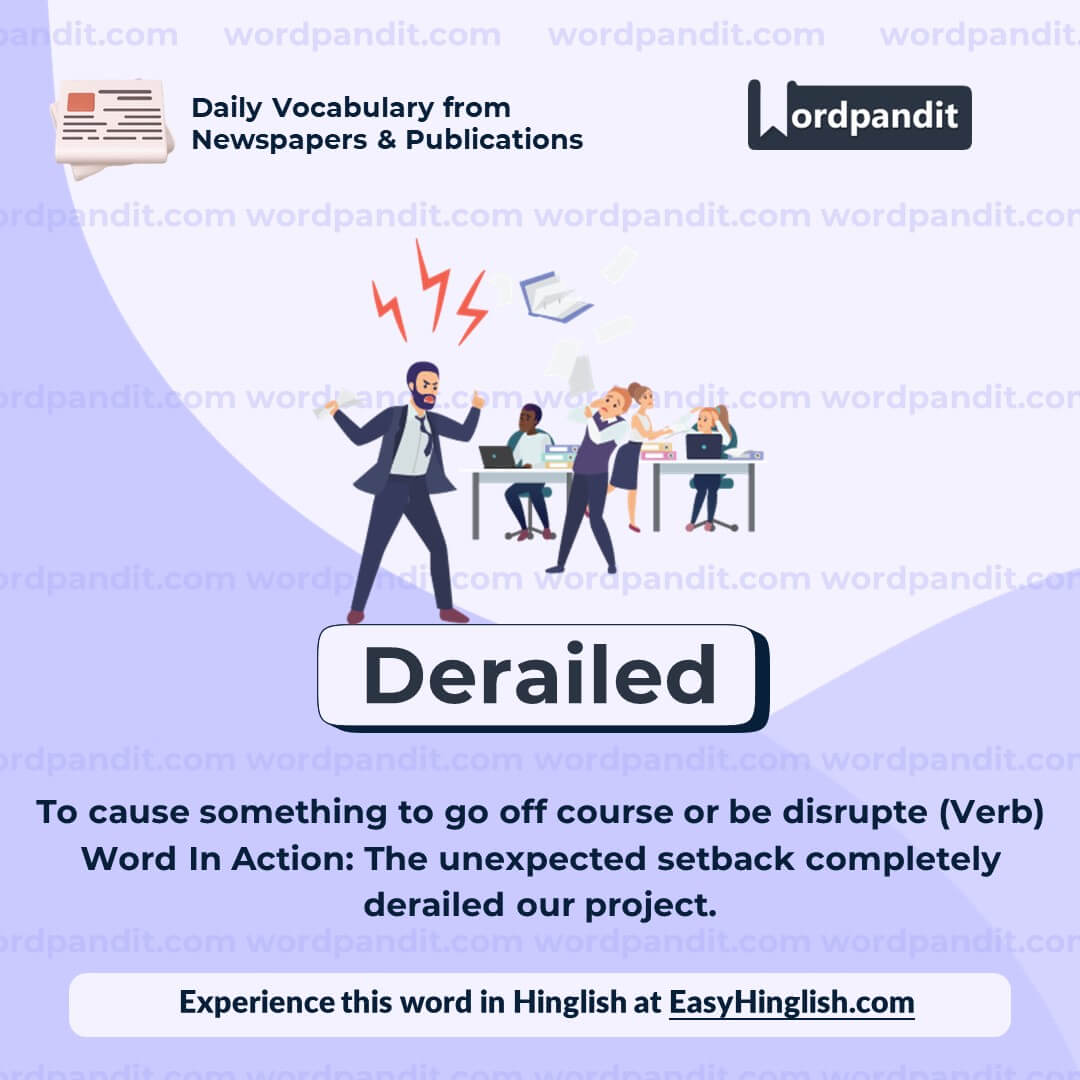
WORD-2: Derailed
Context:
"The company’s ambitious five-year plan was derailed by unexpected regulatory changes and a global supply chain crisis." - Forbes
Explanatory Paragraph:
"Derailed" is often used metaphorically to describe a plan, process, or situation that has gone off course or failed unexpectedly. Originally associated with trains literally coming off the tracks, the word is now widely used to express disruption or a breakdown in progress due to unforeseen events, errors, or interference.
Meaning: To cause something to go off track or fail; to disrupt progress (Verb – past tense)
Pronunciation: dee-RAYLD
Difficulty Level: ⭐⭐ Basic to Intermediate
Etymology: From the French word "dérailler" meaning "to go off the rails", formed from "de-" (off) + "raille" (rail).
Prashant Sir's Notes:
Think of plans or careers that are 'on track'. If something major interrupts that journey — a scandal, a disaster, or even a mistake — it’s ‘derailed’. Use this word for a strong image of loss of control or failure in motion.
Synonyms & Antonyms:
Synonyms: disrupted, obstructed, sidetracked, hindered, interrupted
Antonyms: continued, progressed, advanced, succeeded
Usage Examples:
- Her academic career was derailed by a prolonged illness during her final year.
- The political scandal completely derailed the candidate’s chances of winning the election.
- Heavy rains derailed the construction project, causing months of delay.
- The discussion was derailed by a heated argument between two participants.
Cultural Reference:
In journalism and media, "derailed" is frequently used in headlines: e.g., “Talks Derailed Over Border Dispute” — conveying sudden failure or breakdown in high-stakes negotiations.
Think About It:
What are some personal strategies you can use to recover when your goals get derailed?
Quick Activity:
List three events that could derail a long-term plan (e.g., job promotion, graduation, startup launch). Then write one sentence for each using the word “derailed.”
Memory Tip:
Think of a train going smoothly, then suddenly going off the rails — that vivid image is what “derailed” means. A plan or path that crashes unexpectedly!
Real-World Application:
In business, project management, and politics, "derailed" is used to describe initiatives that are thrown off course due to crises, budget cuts, or stakeholder conflicts.
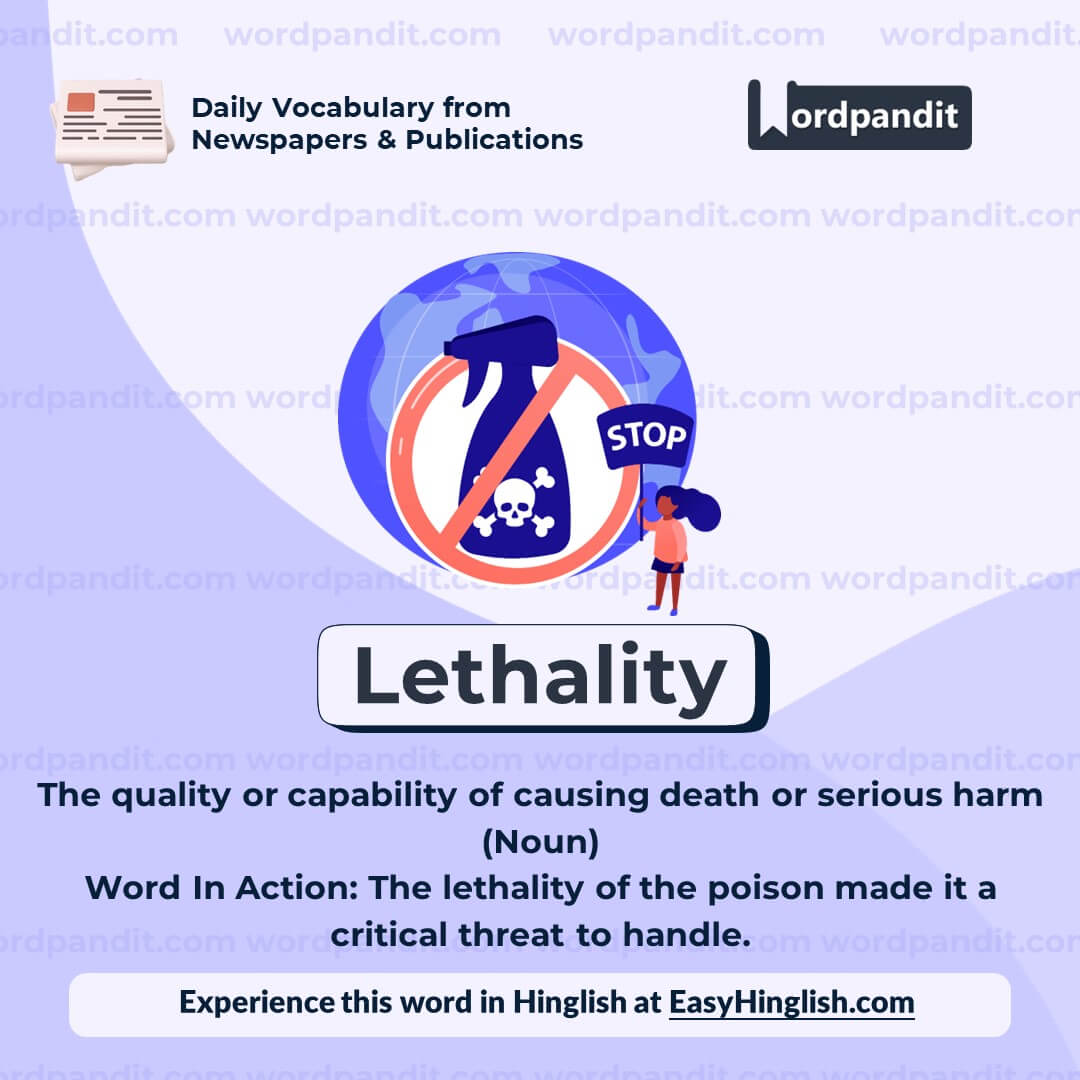
WORD-3: Lethality
Context:
"The virus’s high lethality raised global concerns and prompted urgent vaccine development efforts." - World Health Organization Report
Explanatory Paragraph:
"Lethality" refers to the ability of something—usually a disease, weapon, or action—to cause death. It measures how deadly or fatal something is. The word is commonly used in medical, military, and scientific contexts to assess risk and severity. A higher lethality means a greater chance of causing death.
Meaning: The capacity or ability to cause death (Noun)
Pronunciation: lee-THA-luh-tee
Difficulty Level: ⭐⭐⭐ Intermediate
Etymology: From Latin “letalis” meaning “deadly” + the suffix “-ity” forming a noun indicating a state or condition.
Prashant Sir's Notes:
This is a technical word that appears often in discussions about warfare, diseases, or high-risk technologies. It combines science and emotion — the seriousness of death wrapped in a single term. Be careful to use it in contexts that deal with real danger or seriousness.
Synonyms & Antonyms:
Synonyms: deadliness, fatality, destructiveness, mortal danger
Antonyms: harmlessness, safety, innocuousness
Usage Examples:
- Researchers are studying the lethality of the new strain to determine how dangerous it is to humans.
- The lethality of chemical weapons makes them a grave concern in global conflicts.
- Improved safety measures have reduced the lethality of car accidents over the past decade.
- The superhero’s mission was to neutralize threats without increasing the lethality of his methods.
Cultural Reference:
In military discussions, phrases like "increased weapon lethality" are common when referring to modern warfare, particularly in the context of drones, missiles, or advanced firearms.
Think About It:
Should the focus be more on reducing lethality or preventing harm altogether? How does our response change depending on the context?
Quick Activity:
Match the following scenarios to the correct level of lethality (High, Medium, Low): 1) Flu virus, 2) Nuclear bomb, 3) Pepper spray. Then explain your reasoning using the word “lethality.”
Memory Tip:
Think of “lethal” (deadly) + “-ity” (a condition or state) = the state of being deadly = lethality. Just like "electricity" is the state of being electric.
Real-World Application:
Lethality is used by scientists, healthcare workers, and military strategists to evaluate the risk posed by diseases, weapons, and other threats—especially during global crises or defense planning.
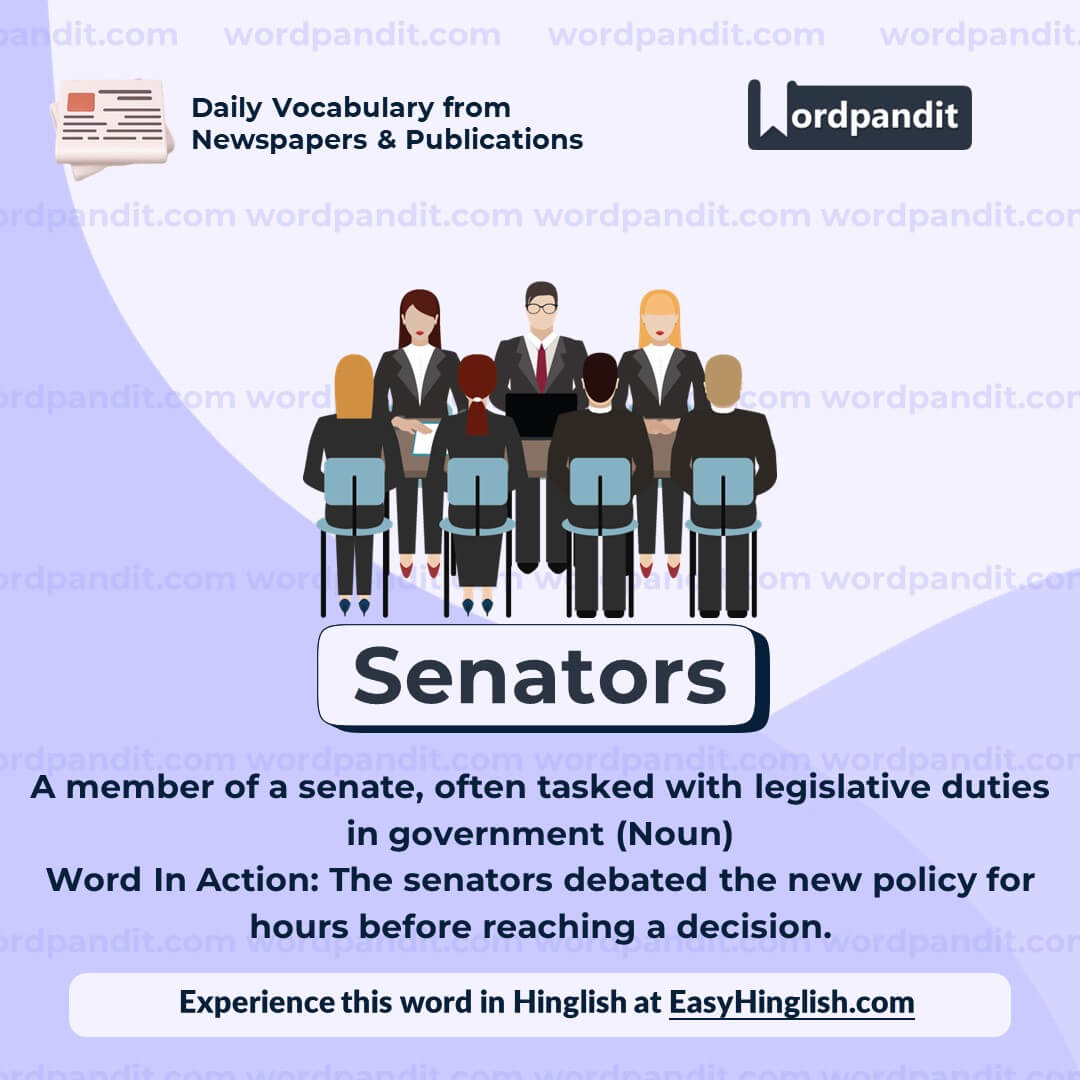
WORD-4: Senators
Context:
"Several senators voiced opposition to the proposed legislation, arguing that it undermines civil liberties." - The Washington Post
Explanatory Paragraph:
"Senators" are members of a senate, which is one of the two chambers in many bicameral legislative systems, such as in the United States. They are elected officials who represent their constituents, propose and vote on laws, and often play a key role in shaping national policy. Their decisions can affect a wide range of issues including education, health care, defense, and civil rights.
Meaning: Elected members of a legislative senate, typically involved in lawmaking at the national or regional level (Noun - plural)
Pronunciation: SEN-uh-terz
Difficulty Level: ⭐⭐ Basic
Etymology: From Latin “senator,” meaning “member of the senate,” derived from “senex” meaning “old man” — reflecting the idea of elders making wise decisions.
Prashant Sir's Notes:
Senators are lawmakers who typically serve in the upper house of a legislature. In India, they are similar to members of the Rajya Sabha; in the US, senators belong to the Senate. Knowing how senators function helps in understanding democratic processes and political news.
Synonyms & Antonyms:
Synonyms: legislators, lawmakers, parliamentarians, congress members
Antonyms: civilians, non-legislators, constituents
Usage Examples:
- The senators gathered for a late-night vote on the economic stimulus package.
- She became one of the youngest senators ever elected to the national parliament.
- Senators must balance the needs of their constituents with the goals of their political parties.
- The debate between the two senators highlighted sharp ideological differences.
Cultural Reference:
In the *Star Wars* universe, senators represent their planets in the Galactic Senate, echoing real-world legislative roles but in a science fiction setting — showing the timeless nature of political representation.
Think About It:
What qualities should we expect from senators to ensure they serve the public effectively and ethically?
Quick Activity:
List three current senators (from your country or globally), and briefly describe one issue each is known for supporting or opposing.
Memory Tip:
Think “senators” = senior lawmakers. The root “sen-” means old or wise — so senators are supposed to be wise decision-makers for the country.
Real-World Application:
Understanding what senators do helps in following political news, participating in elections, and engaging in civic life. They directly shape laws that affect healthcare, taxes, education, and civil rights.
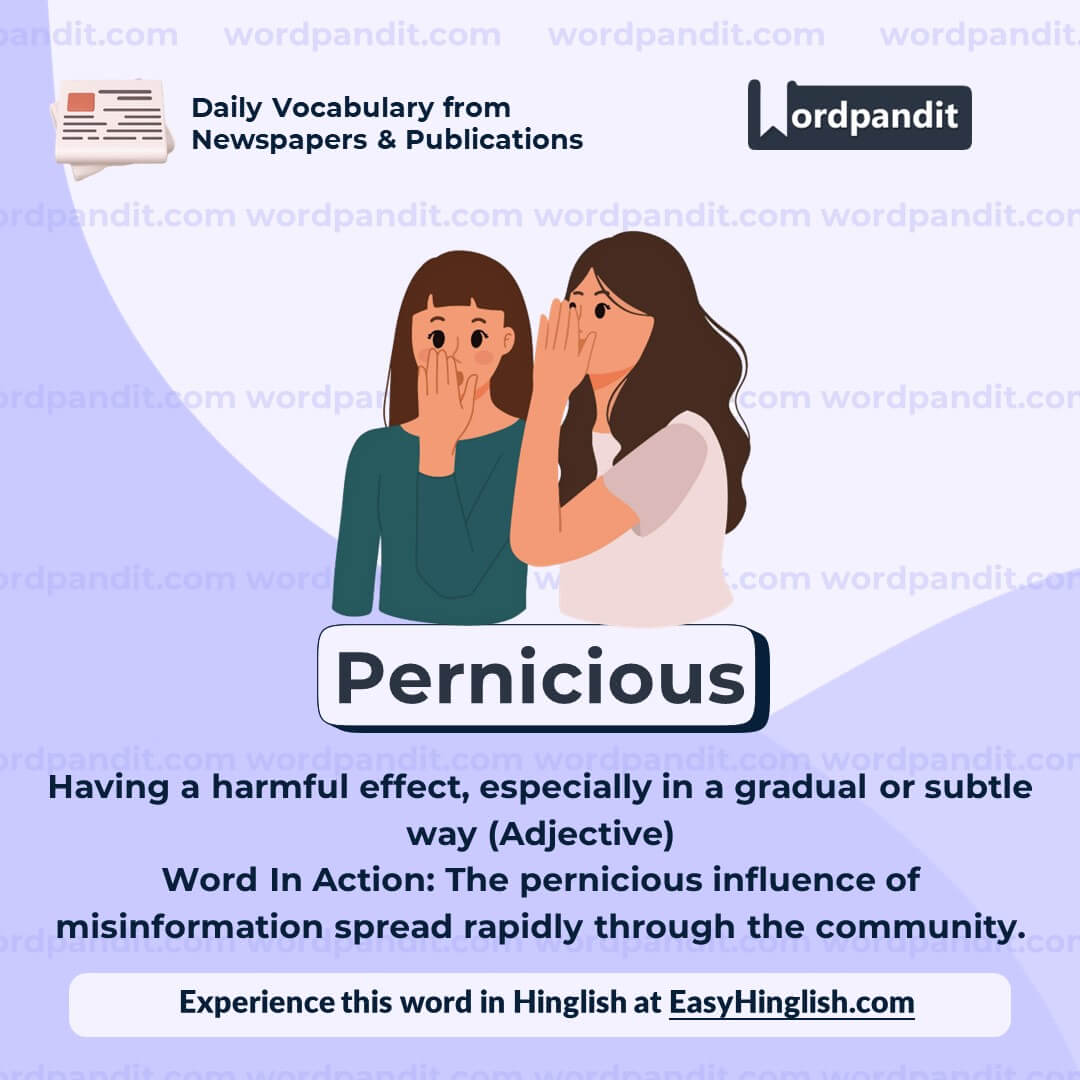
WORD-5: Pernicious
Context:
"The spread of misinformation has a pernicious effect on public trust in science and democratic institutions." - The Guardian
Explanatory Paragraph:
"Pernicious" describes something that is subtly but seriously harmful. It doesn't always cause immediate damage but instead gradually undermines or destroys. The word is often used in contexts like social trends, ideologies, habits, or diseases that appear minor at first but lead to significant consequences over time. Its tone is strong and cautionary.
Meaning: Causing great harm or damage, often in a gradual or hidden way (Adjective)
Pronunciation: per-NISH-us
Difficulty Level: ⭐⭐⭐⭐ Advanced
Etymology: From Latin “perniciosus,” from “pernicies” meaning “destruction” — from “per-” (completely) + “necis” (death).
Prashant Sir's Notes:
This is a powerful word that describes harm which is often hidden or indirect — like toxic relationships, biased media, or addictive behaviors. It’s great for analytical essays, especially when discussing psychological, social, or systemic issues.
Synonyms & Antonyms:
Synonyms: harmful, destructive, insidious, toxic, malignant
Antonyms: beneficial, helpful, wholesome, constructive
Usage Examples:
- Pernicious stereotypes can shape perceptions in ways that are deeply unfair and lasting.
- The long-term effects of air pollution are pernicious to both health and the environment.
- Unchecked power can have a pernicious influence on even the most ethical leaders.
- His pernicious advice led the team into unnecessary conflict and failure.
Cultural Reference:
In Shakespeare’s *Hamlet*, the ghost of King Hamlet calls his brother’s betrayal “O, most pernicious woman!”—reflecting the word’s long literary use to describe hidden evil or ruin.
Think About It:
Why are pernicious influences more dangerous than openly harmful ones? Can awareness alone protect us from them?
Quick Activity:
Identify one modern phenomenon (e.g., fast fashion, social media algorithms, etc.) and describe how it might have a pernicious impact on society using a sentence of your own.
Memory Tip:
Think “pernicious = permanently vicious” — something that’s quietly but permanently harmful.
Real-World Application:
The word "pernicious" is frequently used in journalism, public health, and social sciences to critique systems or behaviors that cause damage over time—like systemic racism, misinformation, or chronic stress.


