

Daily Vocabulary from International Newspapers and Publications
Expand Your Vocabulary with Wordpandit’s Global Vocabulary Hub
At Wordpandit, we are committed to helping you develop a truly global vocabulary by drawing from some of the most respected international publications. This section is designed to keep you ahead of the curve by introducing you to words that define global conversations and trends.
The Power of Global Sources
To help you think and communicate on a global scale, we curate vocabulary from renowned international sources, such as:
- The New York Times
- The Washington Post
- BBC
- The Guardian
- The Economist
- Scientific American
- Psychology Today
- And many more...
Stay Global, Stay Competitive
Our daily updates from international publications ensure you are consistently exposed to new words that reflect global news and developments, making sure your vocabulary is not only current but also globally relevant.
Enhance Your Global Perspective
Whether you’re preparing for international exams, aiming to excel in global business communication, or want to enhance your language skills for personal growth, Wordpandit offers the resources you need to thrive in a global context.
Effective Learning, Global Reach
Our learning methodology combines global examples, memory aids, and interactive activities, allowing you to internalize new words effectively and apply them in real-world scenarios.
Begin Your Global Vocabulary Journey Now!
Why Choose Wordpandit?
Practical Learning: Focus on words you'll actually encounter in real-world reading, enhancing your comprehension and communication skills.
Diverse Content: From current affairs to scientific breakthroughs, our varied sources expose you to vocabulary across multiple domains.
Effortless Integration: Make Wordpandit a part of your daily routine. Just a few minutes each day can significantly boost your lexicon over time.
Your Path to Vocabulary Mastery
- Visit our Daily Vocabulary section regularly
- Explore new words and their usage in context
- Practice incorporating these words into your own writing and speech
- Track your progress as your vocabulary expands
Start Your Journey Today
Embark on your vocabulary enhancement journey with Wordpandit. By consistently engaging with our daily posts, you'll build a robust vocabulary that serves you well in academic, professional, and personal contexts.
Remember, a word a day keeps linguistic limitations at bay. Make Wordpandit your daily companion in the quest for vocabulary excellence!
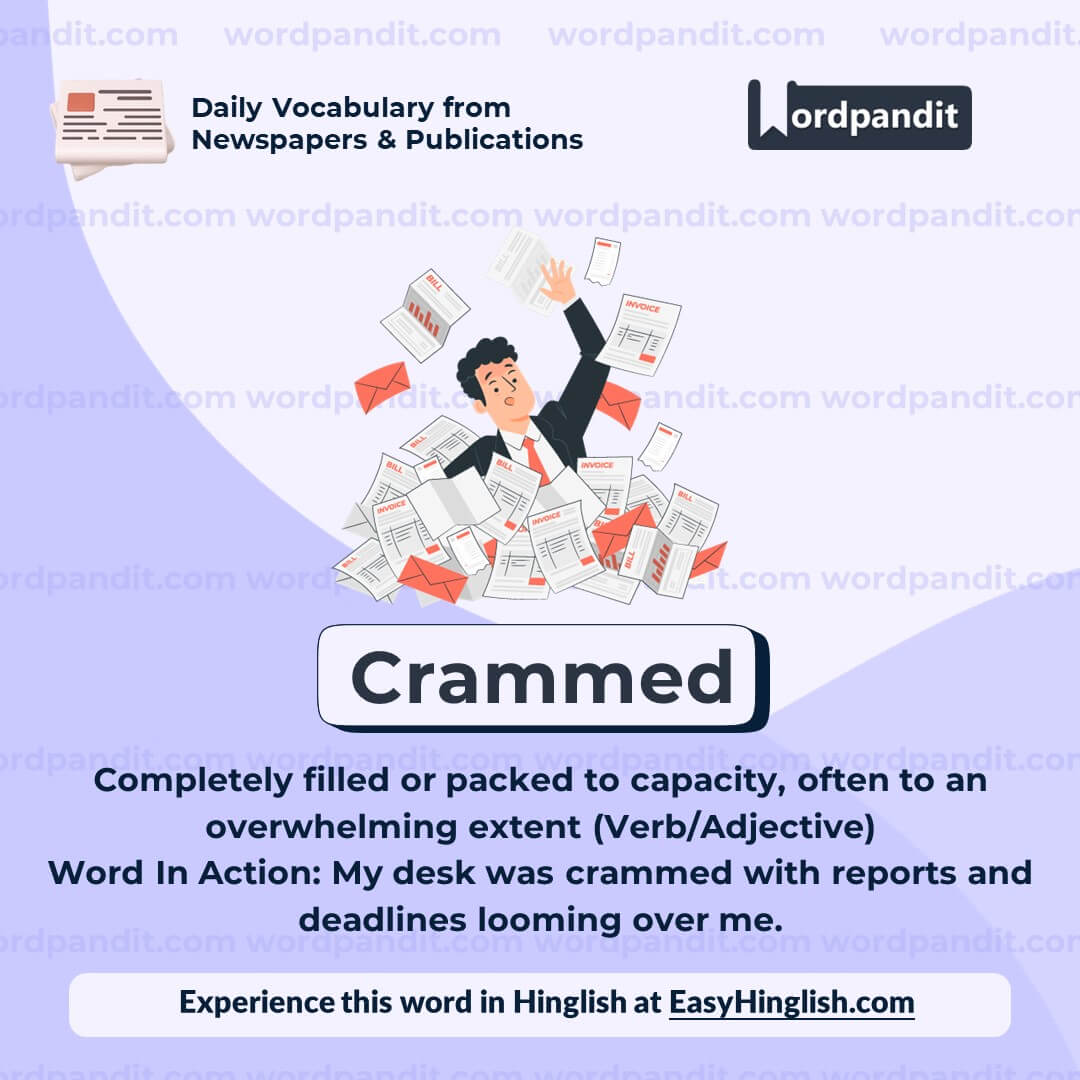
WORD-1: Crammed
Context:
"Lifestyles are a lot more ordinary,’ he explained. ‘We live in cozy wood-framed apartments or mini-condos crammed to the gills with things.’" - Aeon
Explanatory Paragraph:
The word "crammed" refers to being filled to capacity or overfilled, often to the point of discomfort or clutter. In this context, it vividly paints a picture of small living spaces that are stuffed with belongings, highlighting the modern tendency to accumulate more than we have room for. The term conveys a sense of tightness and lack of space, which may reflect both physical and psychological aspects of contemporary life.
Meaning: Completely filled or packed tightly (Verb/Adjective)
Pronunciation: kramd
Difficulty Level: ⭐ Beginner
Etymology: From Middle English "crammen," derived from Old English "crammian," meaning to stuff or press tightly.
Prashant Sir's Notes:
This is a common everyday word with powerful imagery. Visualize a suitcase packed so tightly that it's hard to zip—this helps in remembering how "crammed" emphasizes fullness and lack of space.
Synonyms & Antonyms:
Synonyms: packed, stuffed, jammed, overloaded, filled
Antonyms: empty, spacious, open, cleared
Usage Examples:
- The shelves were crammed with old photo albums and books.
- Students crammed for their final exams late into the night.
- The subway was crammed with commuters during rush hour.
- My backpack is crammed with snacks and supplies for the hike.
Cultural Reference:
"Crammed like sardines" is a common simile used in urban culture to describe overly crowded places such as subways or concerts.
Think About It:
What does our tendency to live in crammed spaces say about our consumer habits and sense of comfort?
Quick Activity:
Look around your room and list five items you might have crammed into a drawer or shelf. Now think about why you kept them. Do they serve a purpose?
Memory Tip:
Imagine trying to “cram” cookies into a full jar—there’s no more room, but you still try! That tightness is the essence of “crammed.”
Real-World Application:
“Crammed” is useful when describing physical spaces (like rooms, bags, or transport), but also in academic settings (cramming before exams), making it a versatile term in both casual and formal speech.
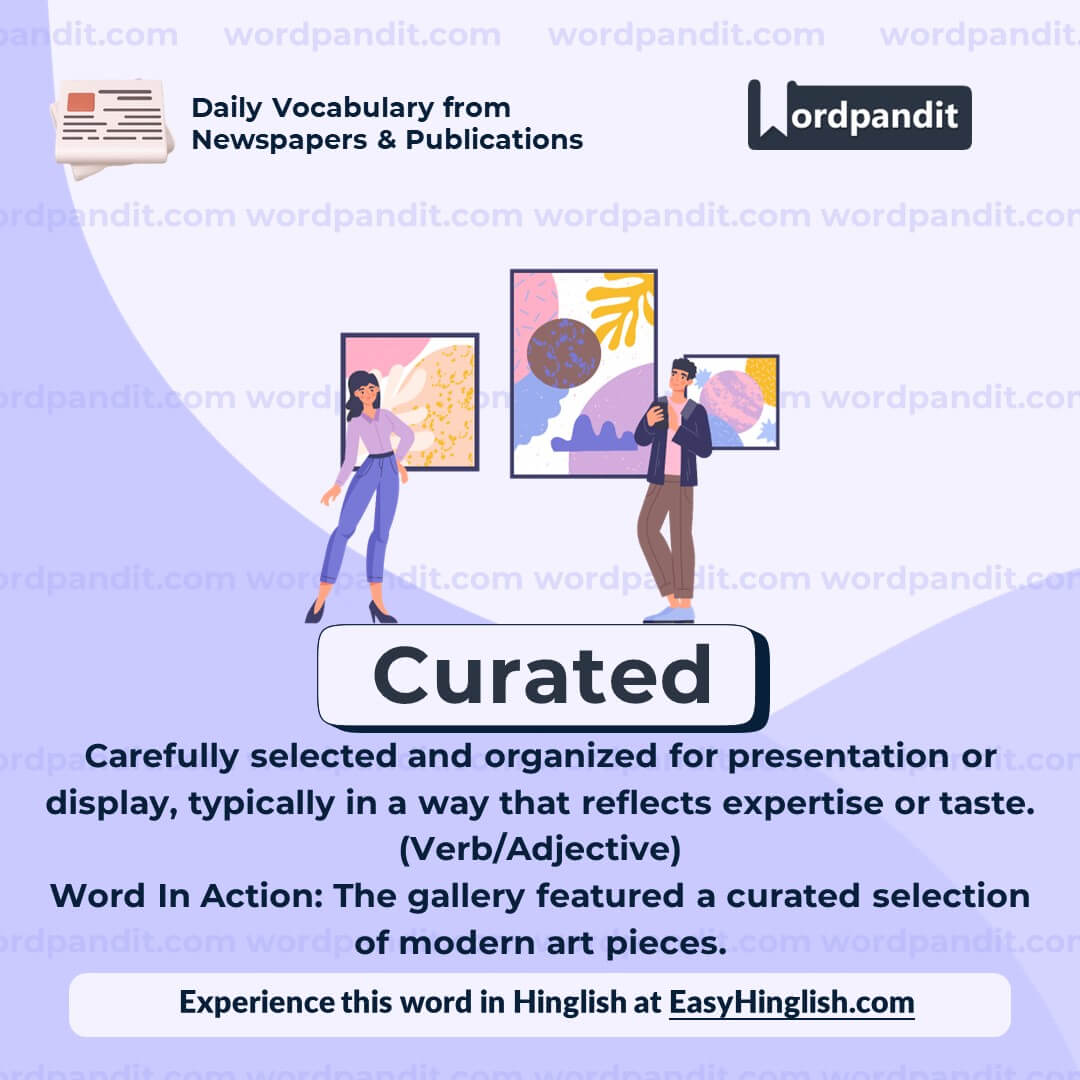
WORD-2: Curated
Context:
"You can see it in the global spread of meticulously curated Japanese cuisine, the deliberately unadorned concrete of modernist architects like Tadao Andō, and even through minimalist brands like Muji." - Aeon
Explanatory Paragraph:
The word "curated" refers to the process of carefully selecting, organizing, and presenting items with a specific theme, style, or purpose in mind. Originally used in the context of museum exhibits, the term now broadly applies to anything from playlists and art galleries to fashion, cuisine, and lifestyle experiences. In this sentence, "meticulously curated Japanese cuisine" implies that the food has been thoughtfully designed and presented to create a specific cultural and aesthetic experience.
Meaning: Carefully chosen, organized, and presented with intention (Verb - past participle or Adjective)
Pronunciation: KYOO-ray-ted
Difficulty Level: ⭐⭐ Intermediate
Etymology: From Latin "curare" meaning "to take care of," which gave rise to the English noun "curator" (a caretaker of a museum or collection).
Prashant Sir's Notes:
Think of "curated" as the opposite of random. It signals intention, refinement, and quality. Whether it’s a museum exhibition, a Netflix watchlist, or a dinner menu, when something is curated, it’s been thoughtfully assembled for effect.
Synonyms & Antonyms:
Synonyms: selected, organized, designed, arranged, refined
Antonyms: random, disorganized, haphazard, messy
Usage Examples:
- The gallery featured a curated collection of contemporary African art.
- She curated a playlist of soft instrumental tracks for her yoga sessions.
- His social media feed looks highly curated, with perfect lighting and color schemes.
- The store sells curated gift boxes filled with artisanal products.
Cultural Reference:
"Curated content" has become a buzzword in the digital age, used by influencers, marketers, and designers to emphasize the intentionality and branding behind what is shown or promoted.
Think About It:
In a world overwhelmed with choices, do we trust curated experiences more, or does curation limit our exposure to diversity and spontaneity?
Quick Activity:
Create your own curated list of 5 favorite books, songs, or foods. What theme ties them together?
Memory Tip:
Think of a “curator” in a museum—they carefully pick and present exhibits. So when something is “curated,” it’s been handpicked and arranged with care.
Real-World Application:
“Curated” is commonly used in art, media, lifestyle, and marketing. From curated shopping experiences to curated newsletters, the word adds value by implying taste and deliberation.
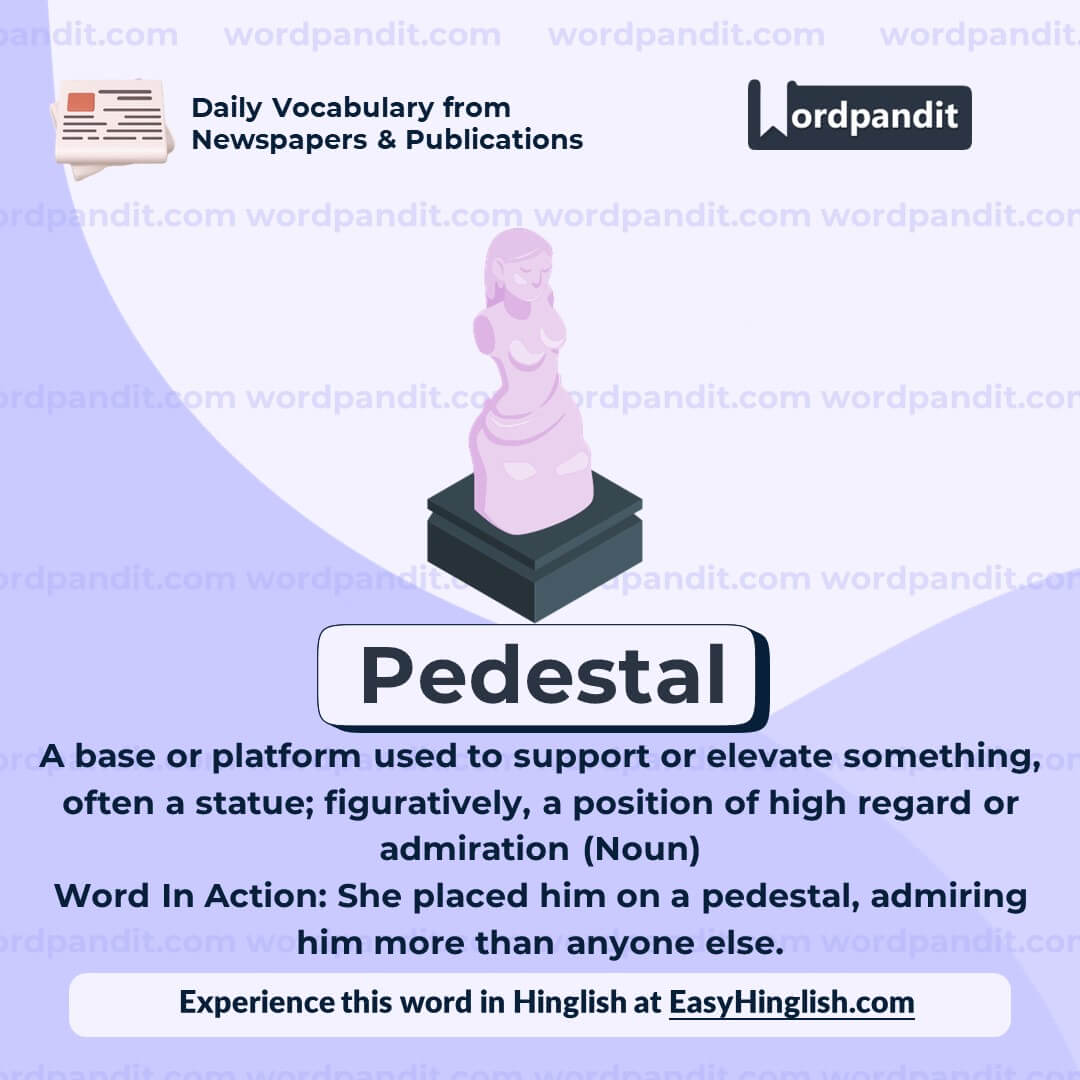
WORD-3: Pedestal
Context:
"The anxiety of achievement felt by many self-saboteurs is especially acute for addicts. Another interpretation of the job interview debacle is that the addict fears success. ‘If you succeed, then you come under threat – other people want to throw rocks at you; knock you off your pedestal,’ Segal said." - Aeon
Explanatory Paragraph:
In this context, "pedestal" is used metaphorically to describe a position of admiration, success, or high status. The idea of being “on a pedestal” implies that others look up to you, often idealizing or holding you to high expectations. However, this elevated status can also make someone a target for criticism or envy, leading to the fear of being "knocked off" or brought down. The word emphasizes the pressure and vulnerability that can accompany success or recognition.
Meaning: A base or foundation that supports something, often used metaphorically to mean a position of high status or admiration (Noun)
Pronunciation: PED-uh-stuhl
Difficulty Level: ⭐⭐ Intermediate
Etymology: From French "piédestal," from Italian "piedestallo," literally meaning "foot of a stall or base."
Prashant Sir's Notes:
“Pedestal” is more than a physical platform—it’s a psychological and social metaphor. To "put someone on a pedestal" is to idealize them, often unrealistically. Be cautious, as this often leads to disappointment or backlash when they show human flaws.
Synonyms & Antonyms:
Synonyms: platform, base, stand, foundation, position of honor
Antonyms: obscurity, low status, anonymity
Usage Examples:
- The statue stood proudly on a marble pedestal in the town square.
- She was placed on a pedestal by her fans, but the pressure eventually overwhelmed her.
- Success can be isolating when you're put on a pedestal and expected to be perfect.
- He knocked his rival off the pedestal with a stunning performance.
Cultural Reference:
The phrase "putting someone on a pedestal" is frequently used in literature and pop culture to describe idolization—seen in celebrity culture, romantic relationships, and hero worship, often leading to eventual disillusionment.
Think About It:
Why do we tend to elevate people to pedestals, and what happens when they inevitably fall short of our expectations?
Quick Activity:
Write down the name of a person you admire. Now list three reasons why they might not want to be placed on a pedestal. How does this change your view of admiration?
Memory Tip:
Imagine a person standing on a “pedestal” being admired by a crowd. The word itself sounds like “place to stand”—a raised spot to be seen or praised.
Real-World Application:
"Pedestal" is used in architecture, art, and everyday language to describe fame, status, or admiration. Understanding its metaphorical use helps in analyzing media, relationships, and leadership dynamics.
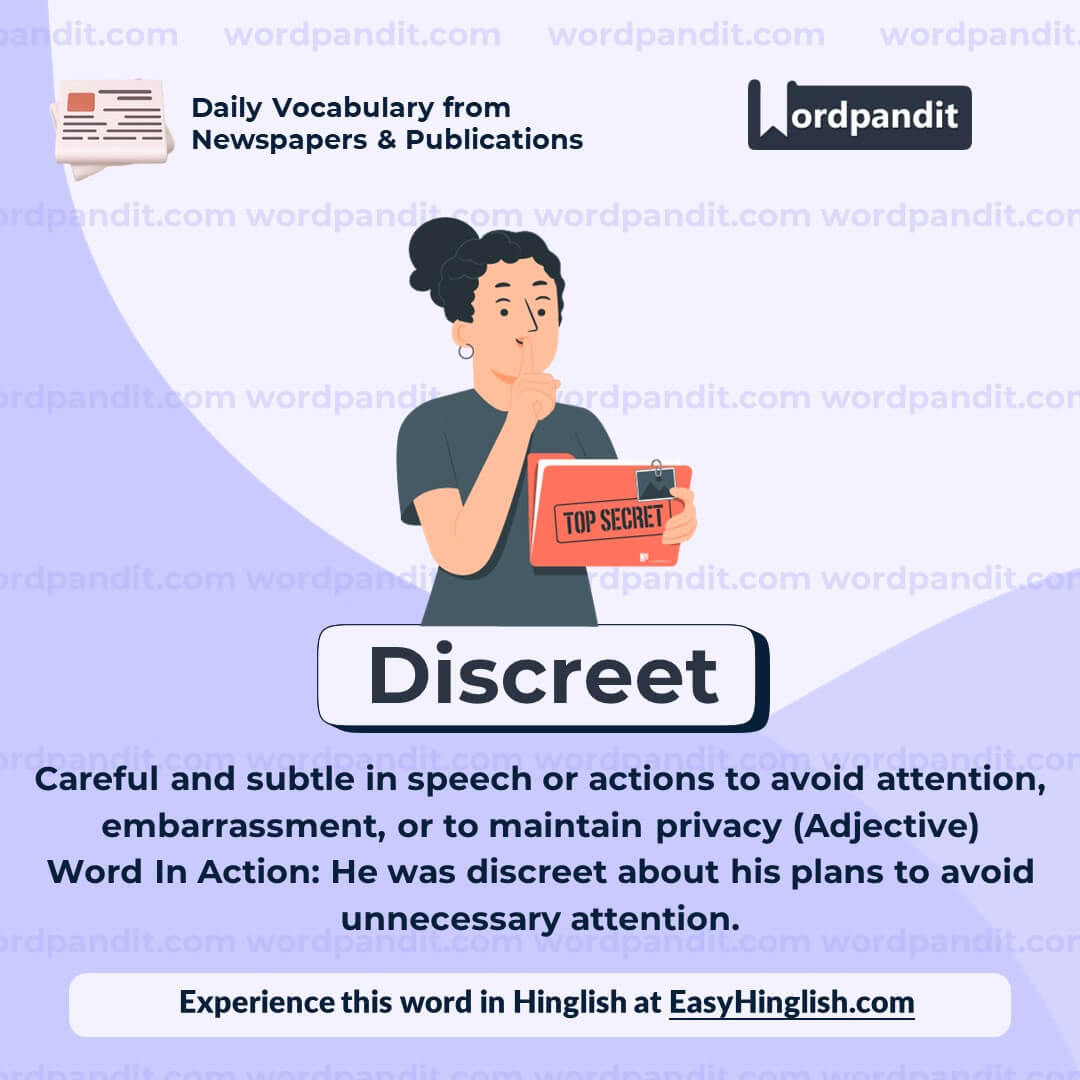
WORD-4: Discreet
Context:
"Suppose, in a way, the reason that’s a kind of joke is because the slippage between one state and the other is so discreet: it’s not like you would ever know." - Aeon
Explanatory Paragraph:
"Discreet" refers to something that is subtle, careful, or unobtrusive—often done in a way that avoids attention or maintains privacy. In the context of this quote, the transition or "slippage" between two states (likely psychological or emotional) is so slight and tactful that it goes unnoticed. The speaker is emphasizing how imperceptible and understated the change is, making it almost invisible to observers.
Meaning: Careful and subtle in speech or action, especially to avoid causing offense or to gain an advantage (Adjective)
Pronunciation: dis-KREET
Difficulty Level: ⭐⭐⭐ Intermediate
Etymology: From Latin "discretus" meaning “separated, distinct,” through Old French "discret," originally related to discernment and judgment.
Prashant Sir's Notes:
“Discreet” is often confused with “discrete” (which means separate or distinct). Remember, when you are “discreet,” you are being tactful or careful—especially with information or actions. Think of it as acting with quiet intelligence.
Synonyms & Antonyms:
Synonyms: subtle, careful, tactful, unobtrusive, prudent
Antonyms: obvious, indiscreet, noticeable, loud, blatant
Usage Examples:
- The detective made a discreet exit from the crime scene.
- Please be discreet when discussing personal matters at work.
- She gave him a discreet nod from across the room.
- The couple had a discreet wedding with only close family in attendance.
Cultural Reference:
In classic British spy fiction—like the James Bond series—agents are praised for being “discreet” in their operations: always alert, never flashy.
Think About It:
In a world that values transparency, is there still a place for being discreet? When does discretion become secrecy?
Quick Activity:
Write down two situations in life or work where being discreet is important. What are the consequences of not being discreet in those situations?
Memory Tip:
Think: “Discreet people keep secrets neat.” This rhyme helps you recall that discreet means subtle, careful, and low-key.
Real-World Application:
Being discreet is crucial in professional environments, especially in roles involving confidential information—like HR, law, medicine, or counseling. It also matters in personal relationships where trust is key.
WORD-5: Unadorned
Context:
"You can see it in the global spread of meticulously curated Japanese cuisine, the deliberately unadorned concrete of modernist architects like Tadao Andō, and even through minimalist brands like Muji." - Aeon
Explanatory Paragraph:
"Unadorned" describes something that is plain, simple, or lacking decorative elements. In this context, it highlights the aesthetic choice of modernist architects like Tadao Andō to embrace raw materials—such as concrete—without embellishments. This simplicity is deliberate, reflecting a minimalist philosophy that values purity, form, and function over ornamentation. The term is often used to celebrate understated beauty and authenticity.
Meaning: Plain and without decoration or embellishment (Adjective)
Pronunciation: un-uh-DORND
Difficulty Level: ⭐⭐ Intermediate
Etymology: From Latin "adornare" meaning “to decorate,” with the prefix "un-" indicating the absence of adornment.
Prashant Sir's Notes:
“Unadorned” doesn’t mean unattractive—it often signals elegance through restraint. It’s a favorite in design, literature, and speech where minimalism is preferred over flourish or excess.
Synonyms & Antonyms:
Synonyms: plain, simple, austere, bare, minimalist
Antonyms: decorated, embellished, ornate, elaborate, fancy
Usage Examples:
- The room was unadorned but had a quiet elegance.
- She wore an unadorned white dress to the ceremony.
- His speech was powerful in its unadorned honesty.
- The architecture of the house is deliberately unadorned to highlight natural materials.
Cultural Reference:
In Japanese aesthetics, the concept of “wabi-sabi” celebrates the beauty of simplicity and imperfection—often reflected in unadorned materials like natural wood or raw concrete.
Think About It:
In a world drawn to sparkle and spectacle, why might someone choose the unadorned path? Is simplicity always less powerful than decoration?
Quick Activity:
Look at your study desk or workspace. Identify one object that is “unadorned.” Now, consider why it appeals to you or why it doesn't. What does it say about your taste?
Memory Tip:
Break it into “un” (not) + “adorned” (decorated) = “not decorated.” Easy to remember as the opposite of “adorned.”
Real-World Application:
“Unadorned” is commonly used in design, architecture, fashion, and writing. It’s useful when describing minimalist spaces, straightforward prose, or honest, unfiltered expression.


