

Daily Vocabulary from International Newspapers and Publications
Expand Your Vocabulary with Wordpandit’s Global Vocabulary Hub
At Wordpandit, we are committed to helping you develop a truly global vocabulary by drawing from some of the most respected international publications. This section is designed to keep you ahead of the curve by introducing you to words that define global conversations and trends.
The Power of Global Sources
To help you think and communicate on a global scale, we curate vocabulary from renowned international sources, such as:
- The New York Times
- The Washington Post
- BBC
- The Guardian
- The Economist
- Scientific American
- Psychology Today
- And many more...
Stay Global, Stay Competitive
Our daily updates from international publications ensure you are consistently exposed to new words that reflect global news and developments, making sure your vocabulary is not only current but also globally relevant.
Enhance Your Global Perspective
Whether you’re preparing for international exams, aiming to excel in global business communication, or want to enhance your language skills for personal growth, Wordpandit offers the resources you need to thrive in a global context.
Effective Learning, Global Reach
Our learning methodology combines global examples, memory aids, and interactive activities, allowing you to internalize new words effectively and apply them in real-world scenarios.
Begin Your Global Vocabulary Journey Now!

Why Choose Wordpandit?
Practical Learning: Focus on words you'll actually encounter in real-world reading, enhancing your comprehension and communication skills.
Diverse Content: From current affairs to scientific breakthroughs, our varied sources expose you to vocabulary across multiple domains.
Effortless Integration: Make Wordpandit a part of your daily routine. Just a few minutes each day can significantly boost your lexicon over time.
Your Path to Vocabulary Mastery
- Visit our Daily Vocabulary section regularly
- Explore new words and their usage in context
- Practice incorporating these words into your own writing and speech
- Track your progress as your vocabulary expands
Start Your Journey Today
Embark on your vocabulary enhancement journey with Wordpandit. By consistently engaging with our daily posts, you'll build a robust vocabulary that serves you well in academic, professional, and personal contexts.
Remember, a word a day keeps linguistic limitations at bay. Make Wordpandit your daily companion in the quest for vocabulary excellence!
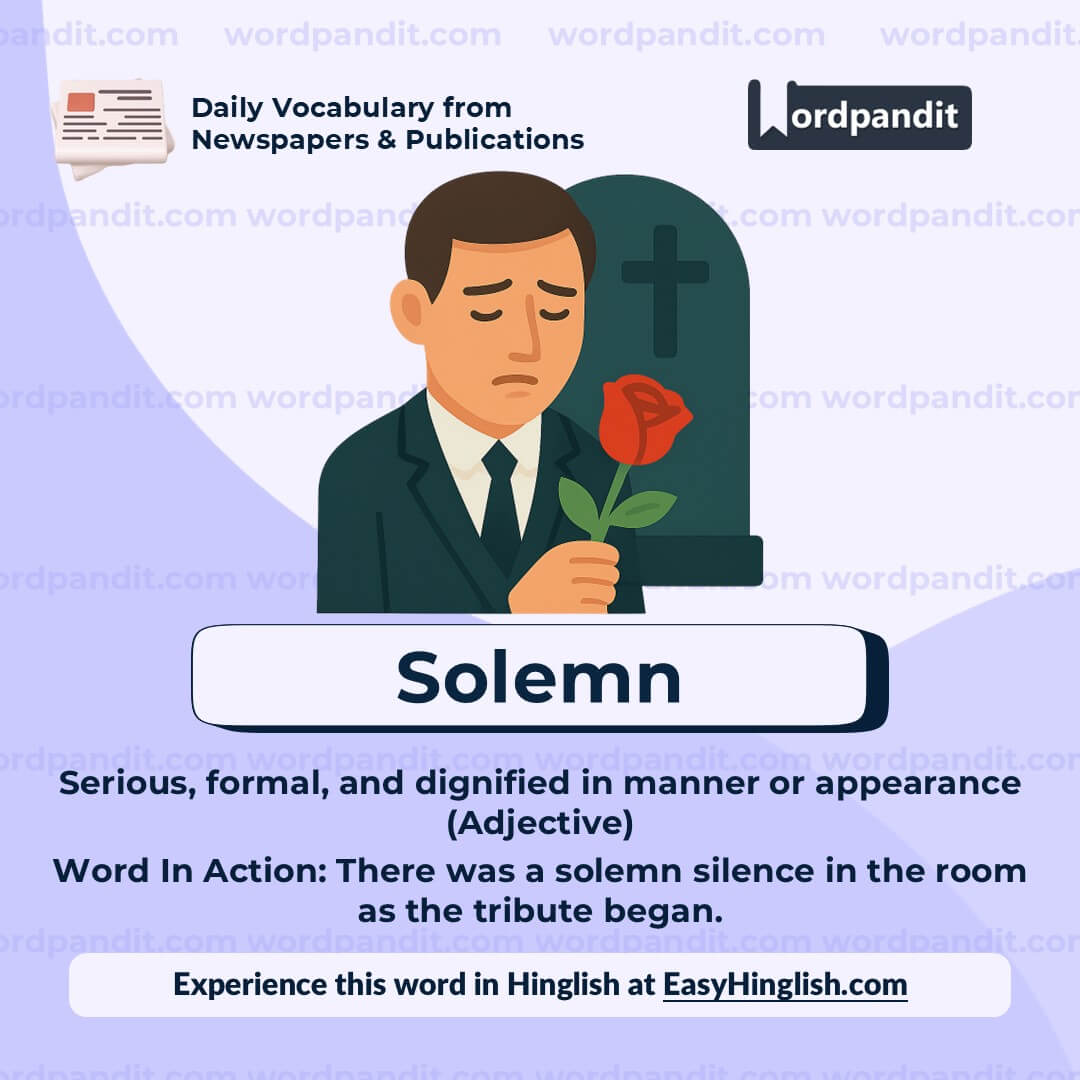
WORD-1: Solemn
Context:
"While most good Catholics spent the early days of this week in solemn contemplation, praying that the church’s new leader would be a person of character and someone who could unite us in these tense, ungodly times, the rest of us were on X cackling at our screens and reposting chimney memes." - The Guardian
Explanatory Paragraph:
"Solemn" refers to a mood or tone that is serious, reflective, and often tinged with respect or reverence. It's the kind of atmosphere you find during important religious rituals, memorial services, or moments of deep thought. In the context above, it highlights the quiet, devout behavior of some individuals, contrasting it with the humor and light-heartedness of others.
Meaning: Serious, formal, and dignified in manner or appearance (Adjective)
Pronunciation: SAH-lum
Difficulty Level: ⭐⭐ Basic
Etymology: Derived from Old French *solempne*, from Latin *sollemnis*, meaning "customary, religiously ceremonial".
Prashant Sir's Notes:
Think of "solemn" as the mood at a funeral or in a courtroom. It’s not just serious, but respectfully serious. Avoid using it to describe everyday seriousness—reserve it for more weighty or ceremonial moments.
Synonyms & Antonyms:
Synonyms: serious, grave, somber, dignified, reverent
Antonyms: cheerful, frivolous, jovial, lighthearted, silly
Usage Examples:
- The judge delivered the sentence in a solemn tone that silenced the entire courtroom.
- They held a solemn ceremony to commemorate the fallen soldiers.
- Her solemn expression told us that something tragic had occurred.
- During the national anthem, the crowd stood solemn and still.
Cultural Reference:
"With malice toward none; with charity for all; with firmness in the right..." — Abraham Lincoln’s Second Inaugural Address is a perfect example of solemn rhetoric during a deeply divided time in history. - Public Domain
Think About It:
Why do you think societies reserve solemnity for certain events or moments? What purpose does a solemn atmosphere serve in our collective behavior?
Quick Activity:
List three events or places where a solemn atmosphere is expected. Then, describe how people's behavior changes in those settings.
Memory Tip:
Think of a "solemn vow" — serious promises are always made with a serious face. Link "solemn" with the image of a vow taken in a church or courtroom.
Real-World Application:
Understanding and using "solemn" helps in formal writing, especially when describing events like ceremonies, speeches, or serious occasions. It also enhances empathetic communication when discussing sensitive topics.
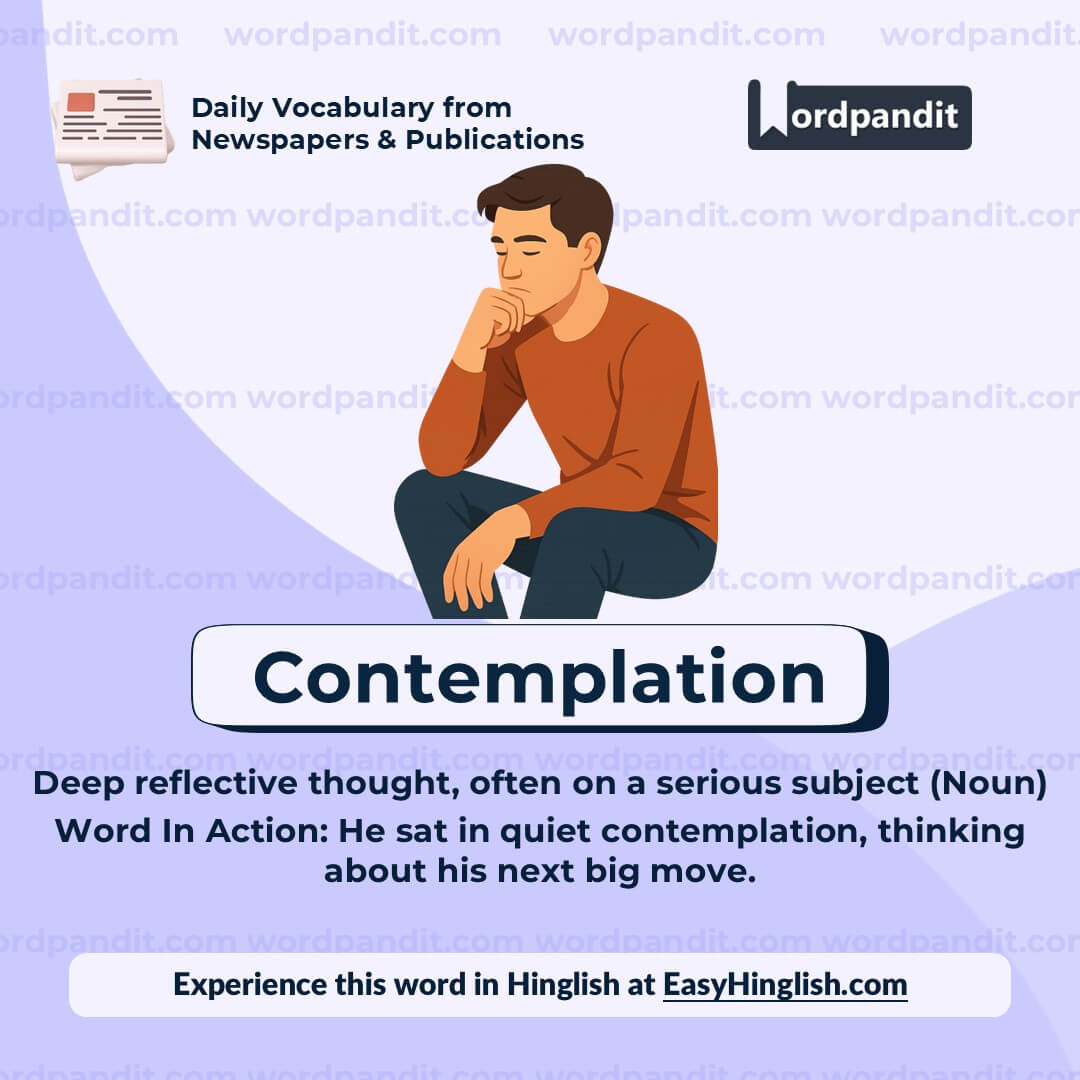
WORD-2: Contemplation
Context:
"While most good Catholics spent the early days of this week in solemn contemplation, praying that the church’s new leader would be a person of character and someone who could unite us in these tense, ungodly times, the rest of us were on X cackling at our screens and reposting chimney memes." - The Guardian
Explanatory Paragraph:
"Contemplation" refers to the act of deep, focused thinking or reflection. It often involves quiet time spent considering something serious, philosophical, or spiritual. In the sentence above, it refers to Catholics engaging in thoughtful and possibly prayerful reflection during a significant religious moment, contrasting with others who were being humorous and lighthearted online.
Meaning: Deep reflective thought, often on a serious subject (Noun)
Pronunciation: kon-tem-PLAY-shun
Difficulty Level: ⭐⭐ Basic
Etymology: From Latin *contemplatio*, from *contemplari* meaning "to gaze attentively, observe, consider".
Prashant Sir's Notes:
“Contemplation” isn’t just thinking—it’s focused, often quiet and prolonged reflection. It can be spiritual (like prayer), intellectual (philosophical thought), or even emotional (pondering life decisions).
Synonyms & Antonyms:
Synonyms: reflection, meditation, pondering, musing, introspection
Antonyms: impulsiveness, distraction, inattention, disregard
Usage Examples:
- After hearing the news, she sat in silent contemplation for hours.
- The monks spend much of their day in prayer and contemplation.
- His face took on a look of deep contemplation as he considered the offer.
- Contemplation of nature often brings a sense of peace and clarity.
Cultural Reference:
In many Eastern philosophies, such as Buddhism and Hinduism, contemplation is a key spiritual practice, used to attain mindfulness and enlightenment. - Adapted from religious studies literature
Think About It:
When was the last time you truly engaged in contemplation? What kind of thoughts or questions occupied your mind during that time?
Quick Activity:
Take five minutes to sit quietly and think about a personal goal or life decision. Then write down what thoughts came to your mind during this brief contemplation.
Memory Tip:
Think of "temple" inside "contemplation" — it’s a quiet place for serious thought or prayer. Let that image anchor the meaning for you.
Real-World Application:
Practicing contemplation can improve decision-making, emotional regulation, and mindfulness. It’s a key component in both leadership and personal growth routines.

WORD-3: Cackling
Context:
"While most good Catholics spent the early days of this week in solemn contemplation, praying that the church’s new leader would be a person of character and someone who could unite us in these tense, ungodly times, the rest of us were on X cackling at our screens and reposting chimney memes." - The Guardian
Explanatory Paragraph:
"Cackling" refers to loud, harsh, or high-pitched laughter, often associated with mocking, amusement, or even wicked delight. It's not just regular laughing — it’s exaggerated, sometimes disruptive or sneering in tone. In the sentence, it paints a vivid contrast: while some were engaged in thoughtful prayer, others were gleefully laughing at irreverent internet humor.
Meaning: Laughing in a loud, harsh way (Verb - present participle)
Pronunciation: KAK-ling
Difficulty Level: ⭐⭐ Basic
Etymology: From Middle English *cakelen*, imitative of the sound of a hen, later used to describe shrill laughter.
Prashant Sir's Notes:
Think of "cackling" as the kind of laugh that turns heads — not necessarily pleasant. It can sound like a witch’s laugh in a cartoon or someone losing it over a really ridiculous meme. Tone matters here — it often suggests a bit of mockery.
Synonyms & Antonyms:
Synonyms: chuckling, snickering, guffawing, giggling, shrieking
Antonyms: weeping, sobbing, murmuring, whispering, silence
Usage Examples:
- The children were cackling with glee as they watched the clown perform.
- She burst into cackling laughter at the absurdity of the situation.
- The villains in cartoons are often shown cackling in an evil voice.
- He couldn't stop cackling at the meme his friend sent him.
Cultural Reference:
In popular culture, witches are famously portrayed as cackling — think of the Wicked Witch of the West in *The Wizard of Oz*, laughing wildly as she flies off on her broomstick. - Public Domain
Think About It:
Do different types of laughter (like cackling, giggling, or chuckling) reveal something about a person's mood or intentions? Why do we instinctively react to certain types of laughter?
Quick Activity:
Watch a short clip from a movie or show where someone is cackling. Write a few lines describing how the tone of the laugh affects the mood of the scene.
Memory Tip:
Think “cackle = crackle” — like the crackling sound of a fire, cackling laughter is sharp, loud, and sometimes a bit scary!
Real-World Application:
Recognizing the nuances of words like “cackling” helps with tone analysis in literature, media, or social contexts — it's especially useful for writers, actors, and language learners seeking emotional depth in language.
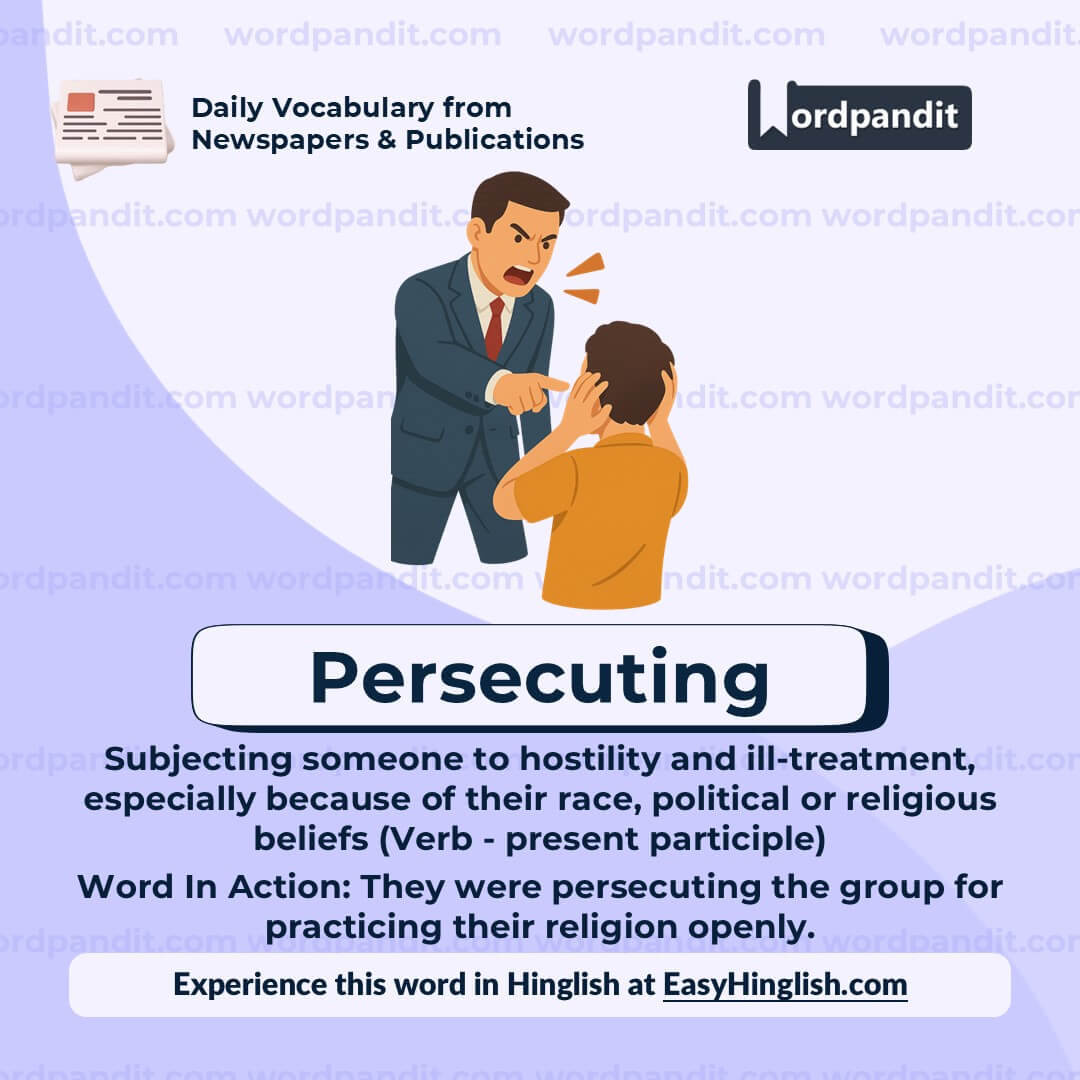
WORD-4: Persecuting
Context:
"Since taking office in January, United States President Donald Trump has undertaken policy after policy that has shocked Americans and the world. From launching an immigration crackdown and persecuting legal residents sympathetic to the Palestinian people to dismantling diversity and inclusion programmes and assaulting higher education and free speech, Trump has fully embraced far-right agendas." - Aljazeera
Explanatory Paragraph:
"Persecuting" refers to the act of harassing, oppressing, or mistreating individuals—often due to their race, religion, political beliefs, or identity. It usually involves sustained hostility or unjust treatment. In this context, the word underscores the idea that certain groups were being unfairly targeted or punished because of their sympathies or beliefs, aligning the action with aggressive or prejudiced political behavior.
Meaning: Subjecting someone to hostility and ill-treatment, especially because of their race, political or religious beliefs (Verb - present participle)
Pronunciation: PUR-suh-kyoo-ting
Difficulty Level: ⭐⭐⭐ Intermediate
Etymology: From Latin *persecutus*, past participle of *persequi*, meaning "to pursue persistently or oppressively".
Prashant Sir's Notes:
"Persecuting" is a strong, emotionally charged word. It is not used lightly and implies systematic or repeated mistreatment, often tied to prejudice or discrimination. Think of it in historical, legal, or human rights contexts.
Synonyms & Antonyms:
Synonyms: oppressing, tormenting, harassing, victimizing, discriminating
Antonyms: protecting, defending, tolerating, accepting, respecting
Usage Examples:
- Throughout history, countless groups have suffered for their beliefs, with regimes persecuting them brutally.
- He was accused of persecuting minority communities during his term in office.
- The activist fled the country after being persecuted for her political stance.
- Persecuting people based on religion is a violation of international human rights law.
Cultural Reference:
The persecution of Jews during the Holocaust is one of the most widely studied and condemned atrocities in history. Millions were systematically persecuted under Nazi rule. - Public Domain
Think About It:
What are the modern-day forms of persecution that often go unnoticed or unchallenged? How can societies recognize and prevent them?
Quick Activity:
Research a current or historical instance of persecution. Write a short paragraph on what triggered it and how the affected group responded or resisted.
Memory Tip:
Think of “persecute” as someone “pursuing” you relentlessly with the intent to harm — both words share the same Latin root *persequi*.
Real-World Application:
Understanding the term "persecuting" is essential in discussions about social justice, international law, refugee rights, and civil liberties. It enables clearer communication around issues of fairness and human dignity.
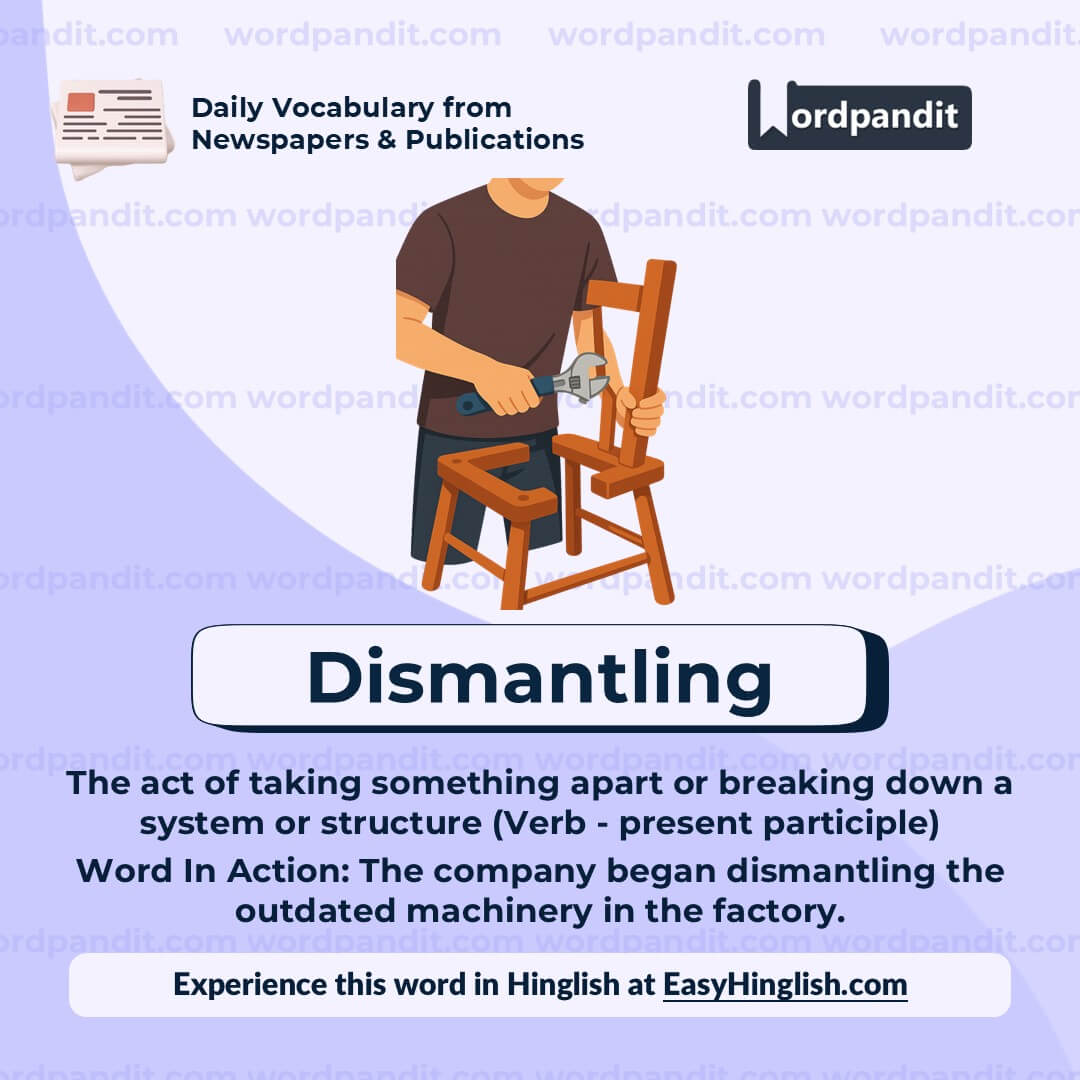
WORD-5: Dismantling
Context:
"Since taking office in January, United States President Donald Trump has undertaken policy after policy that has shocked Americans and the world. From launching an immigration crackdown and persecuting legal residents sympathetic to the Palestinian people to dismantling diversity and inclusion programmes and assaulting higher education and free speech, Trump has fully embraced far-right agendas." - Aljazeera
Explanatory Paragraph:
"Dismantling" refers to the process of taking something apart or breaking it down, usually piece by piece. It can be used literally (like dismantling a machine) or metaphorically (as in breaking down a policy, institution, or system). In this context, it means the deliberate removal or deactivation of diversity and inclusion programs by political decision, portraying it as a reversal or undoing of previous progress.
Meaning: The act of taking something apart or breaking down a system or structure (Verb - present participle)
Pronunciation: dis-MAN-tling
Difficulty Level: ⭐⭐⭐ Intermediate
Etymology: From Old French *desmanteler*, meaning "to strip of covering", from Latin *mantellum* meaning "cloak". Originally referred to removing protective barriers.
Prashant Sir's Notes:
“Dismantling” is often used in political and social discussions to describe systematically undoing or taking apart institutions, systems, or laws. It conveys both a methodical process and a possible regression or dismantling of progress.
Synonyms & Antonyms:
Synonyms: deconstructing, disassembling, breaking down, demolishing, undoing
Antonyms: assembling, constructing, establishing, organizing, building
Usage Examples:
- The government is dismantling outdated laws to make way for reform.
- The activists accused the regime of dismantling democratic institutions.
- Technicians are dismantling the old equipment to replace it with newer models.
- Dismantling systemic racism requires persistent effort and deep structural changes.
Cultural Reference:
The dismantling of apartheid in South Africa during the early 1990s marked the end of an era of legalized racial segregation and the beginning of a democratic transition. - Public Record
Think About It:
Can dismantling an outdated or harmful system be seen as a form of progress, even if it disrupts the status quo?
Quick Activity:
Pick a social or political issue you care about. Identify one institution or policy related to it that people debate dismantling. Write two sentences: one in support and one in opposition.
Memory Tip:
Think of “dismantling” as removing the “mantle” or outer structure of something — you’re peeling it apart until it’s no longer standing.
Real-World Application:
The word “dismantling” is key in legal, political, and organizational discussions. Understanding it helps in grasping debates around reform, civil rights, and systemic change.


