

Daily Vocabulary from International Newspapers and Publications
Expand Your Vocabulary with Wordpandit’s Global Vocabulary Hub
At Wordpandit, we are committed to helping you develop a truly global vocabulary by drawing from some of the most respected international publications. This section is designed to keep you ahead of the curve by introducing you to words that define global conversations and trends.
The Power of Global Sources
To help you think and communicate on a global scale, we curate vocabulary from renowned international sources, such as:
- The New York Times
- The Washington Post
- BBC
- The Guardian
- The Economist
- Scientific American
- Psychology Today
- And many more...
Stay Global, Stay Competitive
Our daily updates from international publications ensure you are consistently exposed to new words that reflect global news and developments, making sure your vocabulary is not only current but also globally relevant.
Enhance Your Global Perspective
Whether you’re preparing for international exams, aiming to excel in global business communication, or want to enhance your language skills for personal growth, Wordpandit offers the resources you need to thrive in a global context.
Effective Learning, Global Reach
Our learning methodology combines global examples, memory aids, and interactive activities, allowing you to internalize new words effectively and apply them in real-world scenarios.
Begin Your Global Vocabulary Journey Now!

Why Choose Wordpandit?
Practical Learning: Focus on words you'll actually encounter in real-world reading, enhancing your comprehension and communication skills.
Diverse Content: From current affairs to scientific breakthroughs, our varied sources expose you to vocabulary across multiple domains.
Effortless Integration: Make Wordpandit a part of your daily routine. Just a few minutes each day can significantly boost your lexicon over time.
Your Path to Vocabulary Mastery
- Visit our Daily Vocabulary section regularly
- Explore new words and their usage in context
- Practice incorporating these words into your own writing and speech
- Track your progress as your vocabulary expands
Start Your Journey Today
Embark on your vocabulary enhancement journey with Wordpandit. By consistently engaging with our daily posts, you'll build a robust vocabulary that serves you well in academic, professional, and personal contexts.
Remember, a word a day keeps linguistic limitations at bay. Make Wordpandit your daily companion in the quest for vocabulary excellence!

WORD-1: Metaphorical
Context:
"You’ve been deceived by the campaign for assisted dying. It has told you who the proposed law is for: people on their metaphorical deathbeds, no hope in sight, desperate to spare themselves and their loved ones the experience of an agonising death." - The Guardian
Explanatory Paragraph:
The word “metaphorical” refers to something that is symbolic or representative rather than literal. When someone says "metaphorical deathbed," they are not talking about an actual bed or imminent death, but rather a condition that feels as final or tragic. In literature and speech, metaphorical language helps express complex or emotional ideas by comparing them to more familiar or vivid images.
Meaning: Representing something abstract or symbolic; not literal (Adjective)
Pronunciation: meh-tuh-FOH-ruh-kl
Difficulty Level: ⭐⭐ Beginner to Intermediate
Etymology: From Greek "metaphora" meaning “a transfer,” based on “meta” (over, across) + “pherein” (to carry).
Prashant Sir's Notes:
One of the most commonly misunderstood aspects of language is the difference between literal and metaphorical expressions. Recognizing metaphorical usage can greatly enhance comprehension and emotional depth, especially in editorials and persuasive writing.
Synonyms & Antonyms:
Synonyms: symbolic, figurative, allegorical, emblematic
Antonyms: literal, factual, explicit, realistic
Usage Examples:
- The phrase “time is a thief” is a metaphorical way of saying that time takes things away from us.
- He used metaphorical language to express his emotional turmoil.
- In her speech, she described her journey as a metaphorical mountain climb.
- The novel is rich in metaphorical imagery that deepens the reader's understanding of the protagonist's struggles.
Cultural Reference:
"All the world’s a stage, and all the men and women merely players." - William Shakespeare, using a metaphorical view of life in *As You Like It*
Think About It:
How does using metaphorical language change the way we interpret complex issues like death, love, or justice?
Quick Activity:
List three metaphorical phrases you’ve heard recently (e.g., “walking on thin ice”) and explain what they really mean.
Memory Tip:
Think of “metaphorical” as “meta + for real” — it’s not for real; it’s symbolic or imaginative.
Real-World Application:
Metaphorical language is often used in speeches, literature, journalism, and even advertising to make messages more powerful and emotionally resonant. Learning to identify and use such language can enhance both your comprehension and expression.
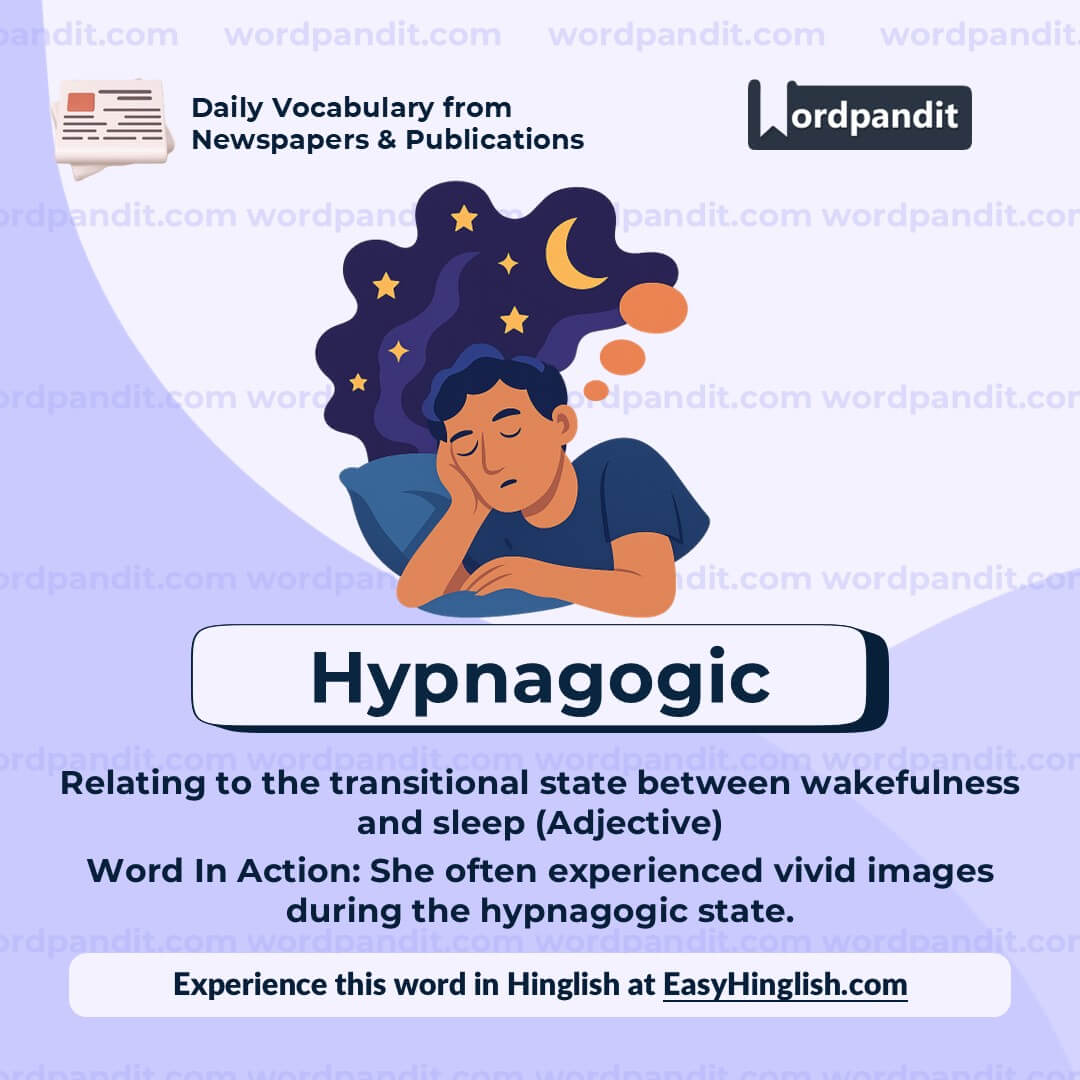
WORD-2: Hypnagogic
Context:
"Delphine Oudiette, the chief researcher, noted that, '…some of the dreams that have inspired great discoveries could be hypnagogic experiences (the transitional state [N1] of consciousness between wakefulness and sleep) rather than night dreams [N2 sleep])." - Psychology Today
Explanatory Paragraph:
“Hypnagogic” describes the unique and often surreal mental state that occurs just as a person is falling asleep. This transitional phase between wakefulness and sleep can involve vivid imagery, sounds, or fragmented thoughts. It’s a fertile zone for creativity and has been linked to artistic inspiration and scientific insight. Unlike dreams in deeper sleep stages, hypnagogic experiences occur in the lightest phase of sleep (N1), making them easier to remember and sometimes consciously observed.
Meaning: Relating to the transitional state between wakefulness and sleep (Adjective)
Pronunciation: hip-nuh-GOJ-ik
Difficulty Level: ⭐⭐⭐⭐ Advanced
Etymology: From French "hypnagogique," derived from Greek "hypnos" (sleep) + "agogos" (leading), meaning “leading to sleep.”
Prashant Sir's Notes:
This is a gem of a word for psychology lovers. "Hypnagogic" captures those weird yet insightful images or thoughts we sometimes get just before drifting off. If you’ve ever felt like you were falling while falling asleep, that’s hypnagogia in action.
Synonyms & Antonyms:
Synonyms: pre-sleep, transitional, dreamlike, hallucinatory
Antonyms: fully awake, alert, conscious
Usage Examples:
- She often has hypnagogic visions that inspire her artwork.
- Scientists study hypnagogic imagery to understand creativity and consciousness.
- During his hypnagogic state, he heard music that wasn’t really playing.
- Hypnagogic experiences can feel as vivid as actual dreams but occur before deep sleep sets in.
Cultural Reference:
"Thomas Edison reportedly held steel balls in his hands to catch himself dozing off and capture the creative ideas emerging from his hypnagogic state." - Anecdote in *Sleep: A Very Short Introduction* by Steven W. Lockley and Russell G. Foster
Think About It:
Can consciously tapping into the hypnagogic state help unlock more creative thinking or solve complex problems?
Quick Activity:
Tonight, pay attention to your thoughts and images as you begin to fall asleep. Jot down anything unusual or creative you notice in a notebook right by your bed.
Memory Tip:
Break it down: “hypno” (sleep) + “gogic” (going) = going into sleep. Think of “hypnagogic” as the gateway to dreams.
Real-World Application:
Understanding hypnagogic states is essential for neuroscientists, psychologists, and artists alike. It can aid in creative brainstorming, therapeutic visualization, and even early detection of sleep disorders.
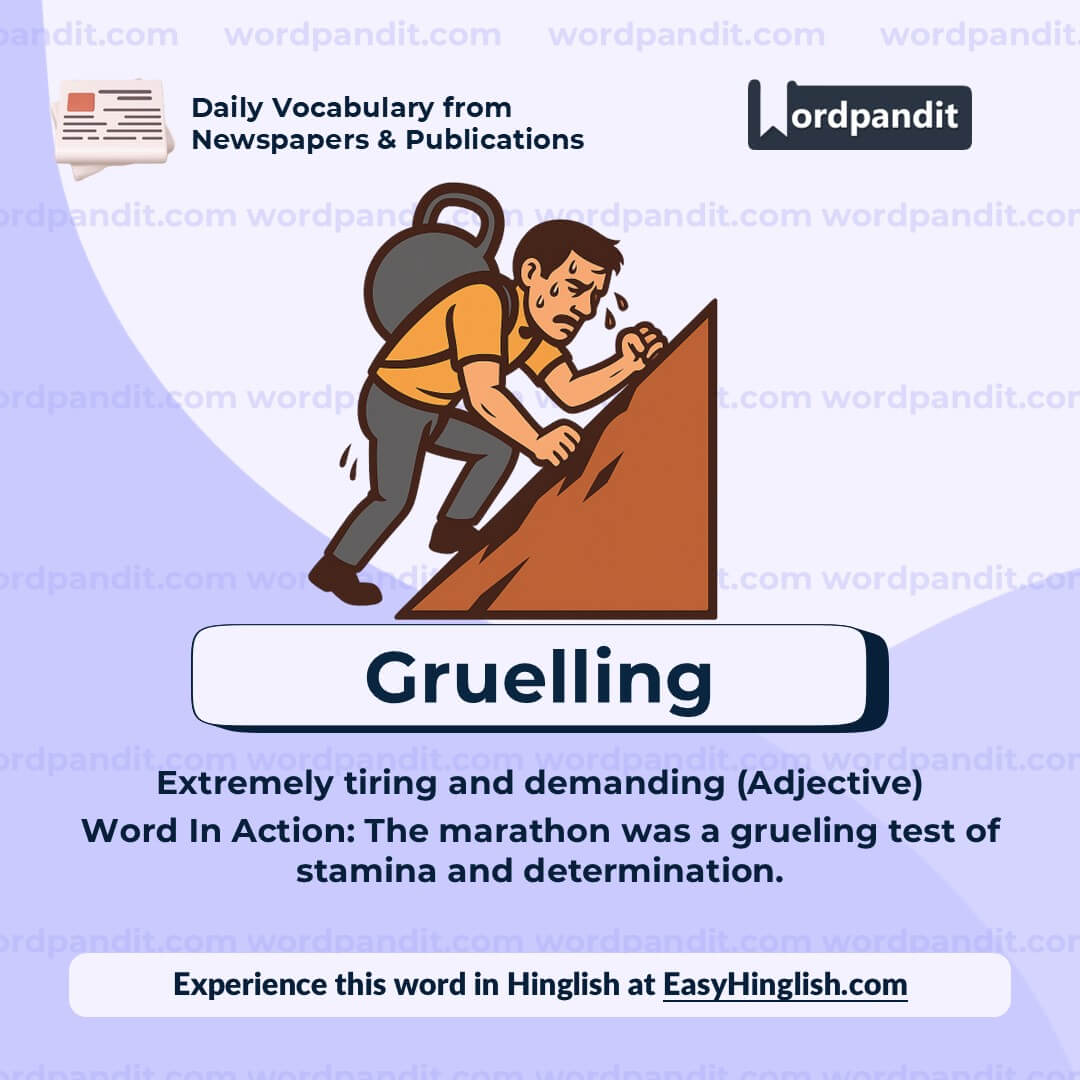
WORD-3: Gruelling
Context:
"Did you know that the fraud level for Pip remains less than 1% and that 46% of applications are refused – with a shocking 70% of those refusals that go to appeal being overturned. It’s a gruelling system to navigate." - The Guardian
Explanatory Paragraph:
“Gruelling” refers to something extremely tiring, demanding, or exhausting, often both physically and mentally. A gruelling process tests one’s endurance and strength, pushing people to their limits. In the context of systems like disability benefits, it suggests a bureaucratic ordeal that requires sustained effort, patience, and resilience, often leaving people drained and overwhelmed.
Meaning: Extremely tiring and demanding (Adjective)
Pronunciation: GROO-ling
Difficulty Level: ⭐⭐ Intermediate
Etymology: From "gruel," which originally referred to a thin soup, metaphorically extended to mean exhausting effort as early as the 19th century in English.
Prashant Sir's Notes:
“Gruelling” is a great adjective to describe anything that feels like a test of your limits—be it exams, treks, or bureaucratic processes. Use this word when you want to highlight just how demanding or punishing an experience is.
Synonyms & Antonyms:
Synonyms: exhausting, punishing, demanding, strenuous, arduous
Antonyms: easy, effortless, gentle, relaxing
Usage Examples:
- The athlete trained for months to prepare for the gruelling marathon.
- She went through a gruelling interview process to land the job.
- Climbing the mountain was a gruelling but rewarding experience.
- Filing an appeal under that system can be a long and gruelling ordeal.
Cultural Reference:
"The reality show was known for its gruelling challenges that tested both mental and physical stamina." - Referencing *Survivor*, a popular endurance-based reality show
Think About It:
What systems or experiences in your life have felt unnecessarily gruelling, and what made them that way?
Quick Activity:
Write a short paragraph about a gruelling experience you or someone you know has had. Try to use at least two synonyms and one antonym in your paragraph.
Memory Tip:
Think of “gruelling” as something so hard it turns you into “gruel”—completely drained, like mush.
Real-World Application:
Describing processes like legal appeals, competitive exams, or long-distance travel as “gruelling” helps convey the seriousness of the effort involved. It’s a word that adds emotional weight to narratives of struggle and endurance.
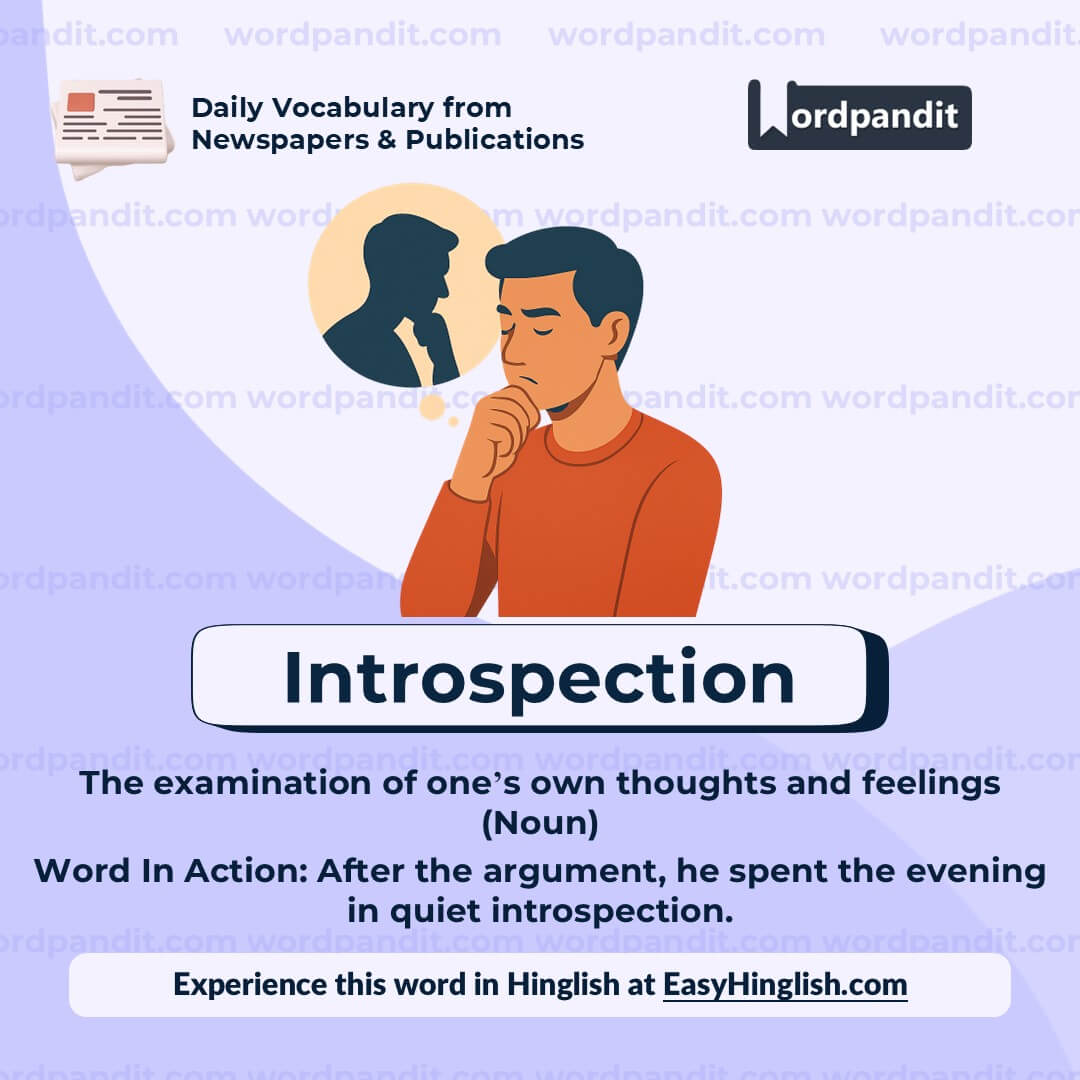
WORD-4: Introspection
Context:
"Moments of solitude — quiet pauses throughout our day when we reflect, wonder, or just be — are becoming rare. The impulse to fill every idle moment with a scroll or a swipe leaves little room for introspection. Yet, solitude is where self-awareness grows. It's where we process emotions, regulate stress, and generate creativity." - Psychology Today
Explanatory Paragraph:
“Introspection” refers to the act of looking inward — mentally examining one's thoughts, emotions, and motives. It is a quiet and reflective process that helps individuals understand themselves better, gain self-awareness, and regulate their behavior. In an age of constant stimulation, true introspection is becoming increasingly rare, even though it plays a crucial role in emotional intelligence and personal growth.
Meaning: The examination of one’s own thoughts and feelings (Noun)
Pronunciation: in-truh-SPEK-shun
Difficulty Level: ⭐⭐ Intermediate
Etymology: From Latin “introspicere” meaning “to look within,” combining “intro-” (inward) and “specere” (to look).
Prashant Sir's Notes:
This is one of my personal favorites — a powerful word in the self-growth toolkit. “Introspection” is not just about thinking, but about honest reflection. It’s the habit that builds character and clarity. Make time for it!
Synonyms & Antonyms:
Synonyms: self-examination, reflection, contemplation, self-analysis
Antonyms: distraction, obliviousness, extroversion
Usage Examples:
- Through introspection, she realized her stress was rooted in fear of failure.
- Journaling can be a valuable tool for daily introspection.
- After the argument, he took some time for introspection to understand his reaction.
- Mindfulness encourages both awareness and introspection.
Cultural Reference:
"An unexamined life is not worth living." - Socrates, emphasizing the value of introspection in philosophy and human life
Think About It:
How often do you pause to reflect on your own thoughts and feelings? What do you usually discover when you do?
Quick Activity:
Take five quiet minutes. Write down three things you felt today and one reason why you think you felt each emotion. Reflect on any patterns you notice.
Memory Tip:
Break it down: “Intro” (inward) + “spection” (look) = looking inside. Imagine a mirror inside your mind!
Real-World Application:
Introspection is essential in therapy, leadership, creative writing, and decision-making. Whether journaling, meditating, or reflecting during a walk, building this habit strengthens your emotional intelligence and sense of direction.
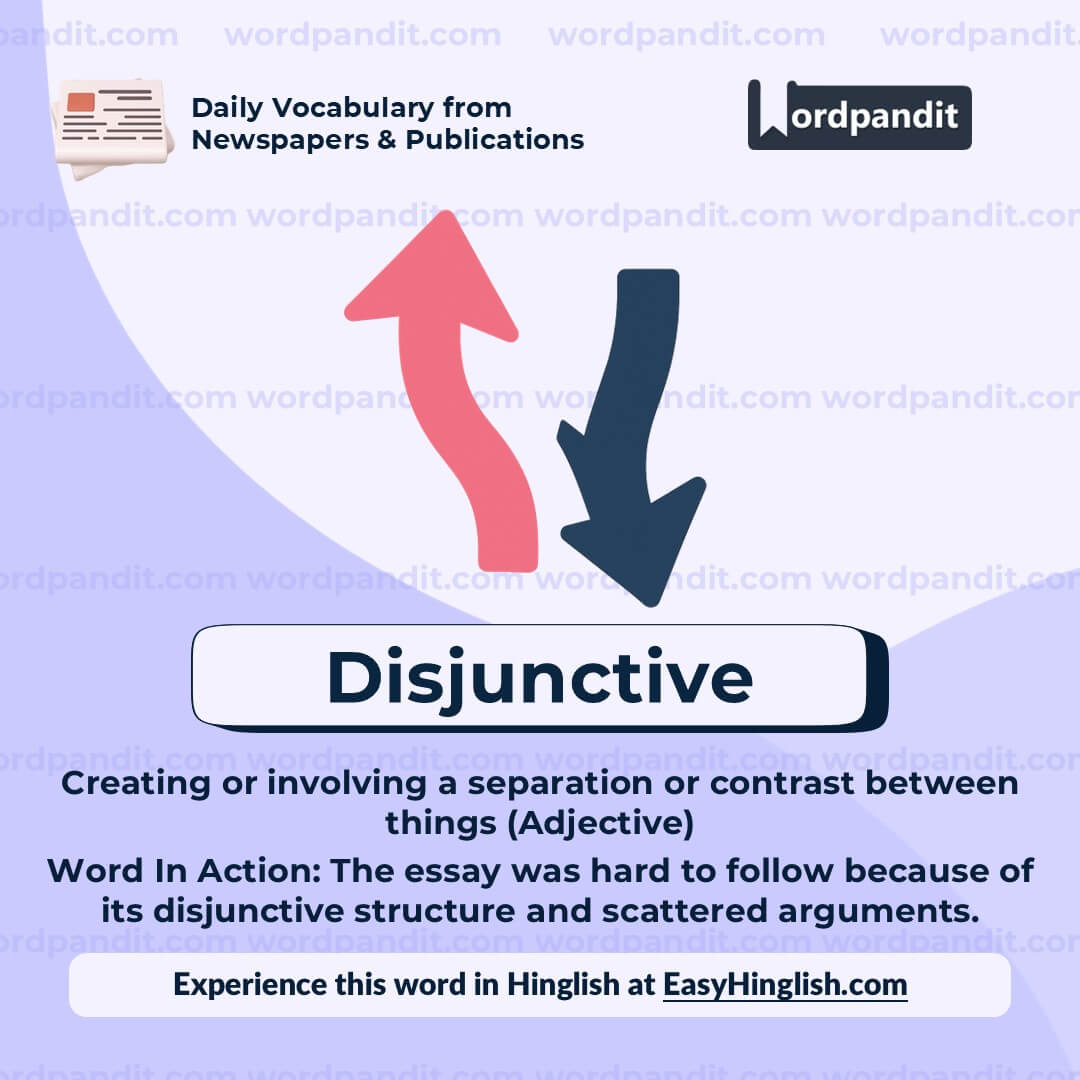
WORD-5: Disjunctive
Context:
"Judged by any yardstick, Charles III’s visit to Canada was an audaciously disjunctive event. The idea that a vibrant democracy such as Canada, with a highly sophisticated sense of its own complex identity, might summon an elderly hereditary monarch from across the ocean to provide a focal point for its resistance to Donald Trump’s existential threat takes some believing." - The Guardian
Explanatory Paragraph:
“Disjunctive” describes something that separates, divides, or creates a stark contrast between things that might otherwise be expected to connect or align. It often implies a sense of disconnection, mismatch, or lack of coherence. In the quoted context, the author uses “disjunctive” to highlight the jarring, somewhat contradictory nature of the British monarch's symbolic role in a modern Canadian political landscape — an action seemingly out of sync with the nation's contemporary identity.
Meaning: Creating or involving a separation or contrast between things (Adjective)
Pronunciation: dis-JUNK-tiv
Difficulty Level: ⭐⭐⭐ Advanced
Etymology: From Latin "disjunctivus," derived from "disjungere" meaning “to disjoin or separate.”
Prashant Sir's Notes:
This is a fantastic high-level word for expressing contrast, irony, or contradiction in ideas, actions, or themes. Writers love using “disjunctive” to signal when things don’t quite fit together — use it to add sophistication to your arguments or essays!
Synonyms & Antonyms:
Synonyms: disconnected, contradictory, divergent, mismatched
Antonyms: connected, unified, harmonious, cohesive
Usage Examples:
- The disjunctive nature of the speech confused the audience, as it jumped from topic to topic.
- There’s something disjunctive about using royal symbolism in a democratic protest.
- Her essay was praised for its bold yet disjunctive structure that challenged conventional logic.
- The novel’s disjunctive narrative reflects the fractured psyche of its protagonist.
Cultural Reference:
"The disjunctive visual language of Picasso’s cubism broke with centuries of representational art, offering multiple perspectives at once." - Art History Interpretation
Think About It:
Can a disjunctive approach — one that defies logical or cultural expectations — sometimes be more powerful than one that is cohesive?
Quick Activity:
List two situations from politics, art, or your personal life that felt “disjunctive.” Explain why they seemed contradictory or out of place.
Memory Tip:
Think: “Dis-” means apart and “junct” relates to joining (like “junction”). So, “disjunctive” = pulled apart, not joined.
Real-World Application:
Use “disjunctive” to describe situations in which logic, tone, or action doesn’t align with expectation — especially in analysis, commentary, and academic writing. It’s particularly useful in critiquing art, politics, or communication strategies.


