

Daily Vocabulary from International Newspapers and Publications
Expand Your Vocabulary with Wordpandit’s Global Vocabulary Hub
At Wordpandit, we are committed to helping you develop a truly global vocabulary by drawing from some of the most respected international publications. This section is designed to keep you ahead of the curve by introducing you to words that define global conversations and trends.
The Power of Global Sources
To help you think and communicate on a global scale, we curate vocabulary from renowned international sources, such as:
- The New York Times
- The Washington Post
- BBC
- The Guardian
- The Economist
- Scientific American
- Psychology Today
- And many more...
Stay Global, Stay Competitive
Our daily updates from international publications ensure you are consistently exposed to new words that reflect global news and developments, making sure your vocabulary is not only current but also globally relevant.
Enhance Your Global Perspective
Whether you’re preparing for international exams, aiming to excel in global business communication, or want to enhance your language skills for personal growth, Wordpandit offers the resources you need to thrive in a global context.
Effective Learning, Global Reach
Our learning methodology combines global examples, memory aids, and interactive activities, allowing you to internalize new words effectively and apply them in real-world scenarios.
Begin Your Global Vocabulary Journey Now!

Why Choose Wordpandit?
Practical Learning: Focus on words you'll actually encounter in real-world reading, enhancing your comprehension and communication skills.
Diverse Content: From current affairs to scientific breakthroughs, our varied sources expose you to vocabulary across multiple domains.
Effortless Integration: Make Wordpandit a part of your daily routine. Just a few minutes each day can significantly boost your lexicon over time.
Your Path to Vocabulary Mastery
- Visit our Daily Vocabulary section regularly
- Explore new words and their usage in context
- Practice incorporating these words into your own writing and speech
- Track your progress as your vocabulary expands
Start Your Journey Today
Embark on your vocabulary enhancement journey with Wordpandit. By consistently engaging with our daily posts, you'll build a robust vocabulary that serves you well in academic, professional, and personal contexts.
Remember, a word a day keeps linguistic limitations at bay. Make Wordpandit your daily companion in the quest for vocabulary excellence!
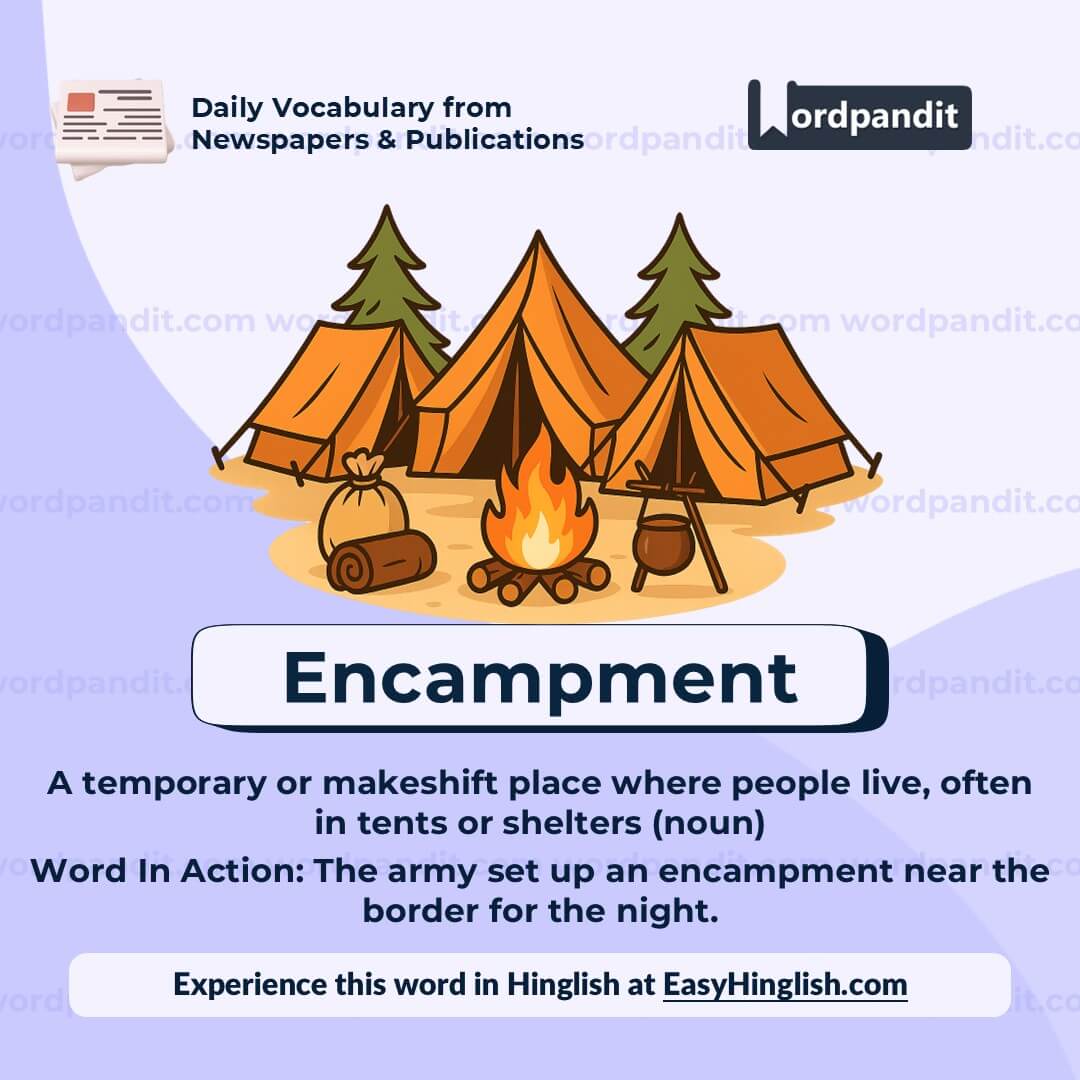
WORD-1: Encampment
Context:
"The unhoused draw scant attention from the city, unless a headline-grabbing incident involving an encampment comes into view." - Washington Post
Explanatory Paragraph:
The word "encampment" refers to a place where people have set up temporary shelters, usually in tents or makeshift housing. It is often associated with military camps or, in modern urban contexts, with groups of unhoused individuals living together in informal, outdoor settlements. These areas may attract public or governmental attention, especially when they grow large or create visible social issues.
Meaning: A temporary or makeshift place where people live, often in tents or shelters (noun)
Pronunciation: en-KAMP-ment
Difficulty Level: ⭐⭐ Basic
Etymology: From French "encampement," stemming from "encamper" meaning "to camp."
Prashant Sir's Notes:
Pay attention to the urban usage of "encampment"—it's frequently found in discussions on homelessness and urban policy. It's not just a military term anymore. The social and political context often shapes its use.
Synonyms & Antonyms:
Synonyms: campsite, bivouac, settlement, tent city, shelter area
Antonyms: permanent housing, residence, estate, building, homestead
Usage Examples:
- The hikers set up an encampment near the river to rest overnight.
- The police cleared the downtown encampment after multiple complaints from residents.
- During the war, the soldiers created a temporary encampment in the forest.
- Public opinion is divided on how the city should respond to homeless encampments.
Cultural Reference:
"The Hoovervilles of the Great Depression were makeshift encampments built by homeless people during economic hardship." - History Textbooks
Think About It:
What do the rise of urban encampments say about society’s priorities and the systems meant to support vulnerable populations?
Quick Activity:
Write a short paragraph using the word "encampment" in a modern urban context and in a historical or military context. Compare the tone and connotation in both uses.
Memory Tip:
Think of "encampment" as a place where people "camp en masse" — a group camping out together, often temporarily.
Real-World Application:
"Encampment" is commonly used in news reports and city planning discussions about homelessness, refugee crises, and disaster response, where temporary shelters are involved.
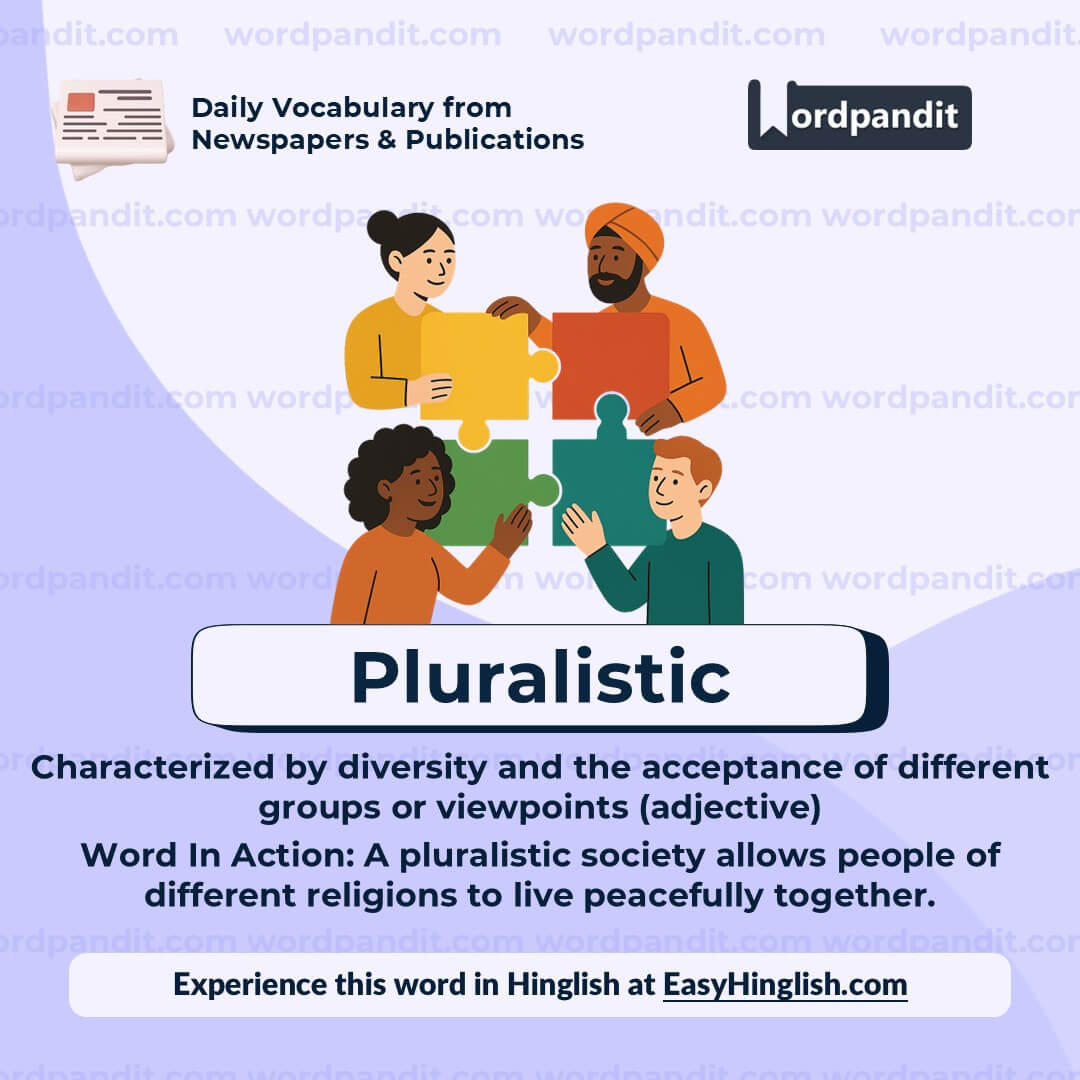
WORD-2: Pluralistic
Context:
"A positive-sum society is a more pluralistic and tolerant society because all its members are encouraged to pioneer their own specialty." - New York Times
Explanatory Paragraph:
"Pluralistic" describes a society or system that values and accommodates a diversity of ideas, beliefs, cultures, or identities. In a pluralistic society, different groups coexist respectfully without a single viewpoint dominating others. It emphasizes inclusion, mutual respect, and the coexistence of differences, whether in religion, ethnicity, political opinion, or social values.
Meaning: Characterized by diversity and the acceptance of different groups or viewpoints (adjective)
Pronunciation: ploo-ruh-LIS-tik
Difficulty Level: ⭐⭐⭐ Intermediate
Etymology: From "pluralism," derived from Latin "pluralis" meaning "more than one."
Prashant Sir's Notes:
“Pluralistic” is key in understanding democratic ideals and modern social philosophy. It is often used in academic, political, and cultural discussions to indicate openness to diversity and recognition of multiple valid perspectives.
Synonyms & Antonyms:
Synonyms: diverse, inclusive, multicultural, open-minded, tolerant
Antonyms: monolithic, intolerant, exclusive, uniform, dogmatic
Usage Examples:
- The university fosters a pluralistic environment where students from all backgrounds feel welcome.
- Pluralistic democracies depend on freedom of speech and respect for differing opinions.
- Her novel captures the spirit of a pluralistic society through its diverse characters and viewpoints.
- Some critics argue that a truly pluralistic society must go beyond tolerance and ensure equity.
Cultural Reference:
"The United States has often been described as a pluralistic society, shaped by waves of immigrants from all over the world." - Sociology Textbook
Think About It:
Can a society be truly pluralistic if economic inequality prevents some voices from being heard equally?
Quick Activity:
List five features of a pluralistic classroom or workplace. Reflect on how each one contributes to inclusion and productivity.
Memory Tip:
Think: “Plural” = “Many” → “Pluralistic” means accepting many people, cultures, or ideas.
Real-World Application:
The word "pluralistic" is frequently used in debates on multiculturalism, educational policies, global ethics, and political systems that emphasize diversity and democratic engagement.
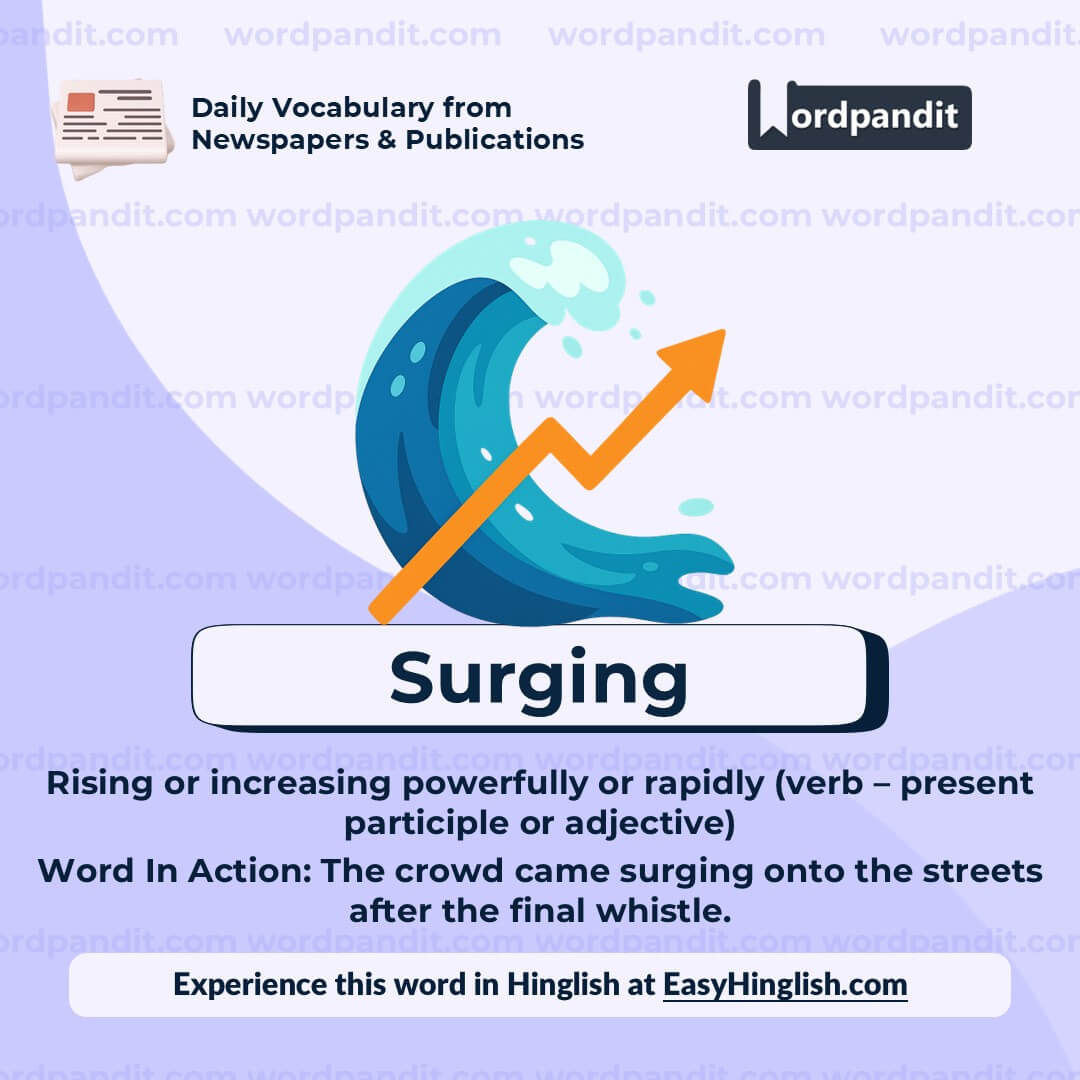
WORD-3: Surging
Context:
"Zero-sum thinking is surging on the left as well." - New York Times
Explanatory Paragraph:
The word "surging" refers to a rapid or sudden increase in intensity, quantity, or force. It’s commonly used to describe waves, emotions, or trends that rise powerfully and quickly. In this context, "surging" implies that the idea of zero-sum thinking is quickly gaining traction or popularity among a political group. It suggests momentum and a strong upward movement in attention or support.
Meaning: Rising or increasing powerfully or rapidly (verb – present participle or adjective)
Pronunciation: SUR-jing
Difficulty Level: ⭐⭐ Basic
Etymology: From Latin “surgere” meaning “to rise”
Prashant Sir's Notes:
"Surging" is a dynamic word—often used in news media, sports commentary, and economics. It's useful when describing sudden momentum, whether it's an idea, a movement, or even an emotion. Pay attention to its tone: it implies energy and growth.
Synonyms & Antonyms:
Synonyms: increasing, climbing, rising, soaring, escalating
Antonyms: declining, falling, subsiding, waning, diminishing
Usage Examples:
- Support for the policy is surging across various demographic groups.
- Electric car sales are surging due to environmental concerns and government incentives.
- Fear was surging through the crowd as the storm approached.
- Streaming platforms saw surging user numbers during the pandemic lockdowns.
Cultural Reference:
"Bitcoin prices are surging again, prompting debates about regulation and financial bubbles." - Financial Times
Think About It:
What are some reasons that make ideas or social movements surge so quickly in today’s digital age?
Quick Activity:
List three recent trends or ideas that you’ve seen surging in popularity. Use each in a sentence.
Memory Tip:
Imagine a wave surging forward—fast, strong, and rising high. "Surging" captures that same force in ideas, actions, or numbers.
Real-World Application:
"Surging" is frequently used in journalism, stock market analysis, health data reporting, and social commentary to describe rapid changes or rising trends.
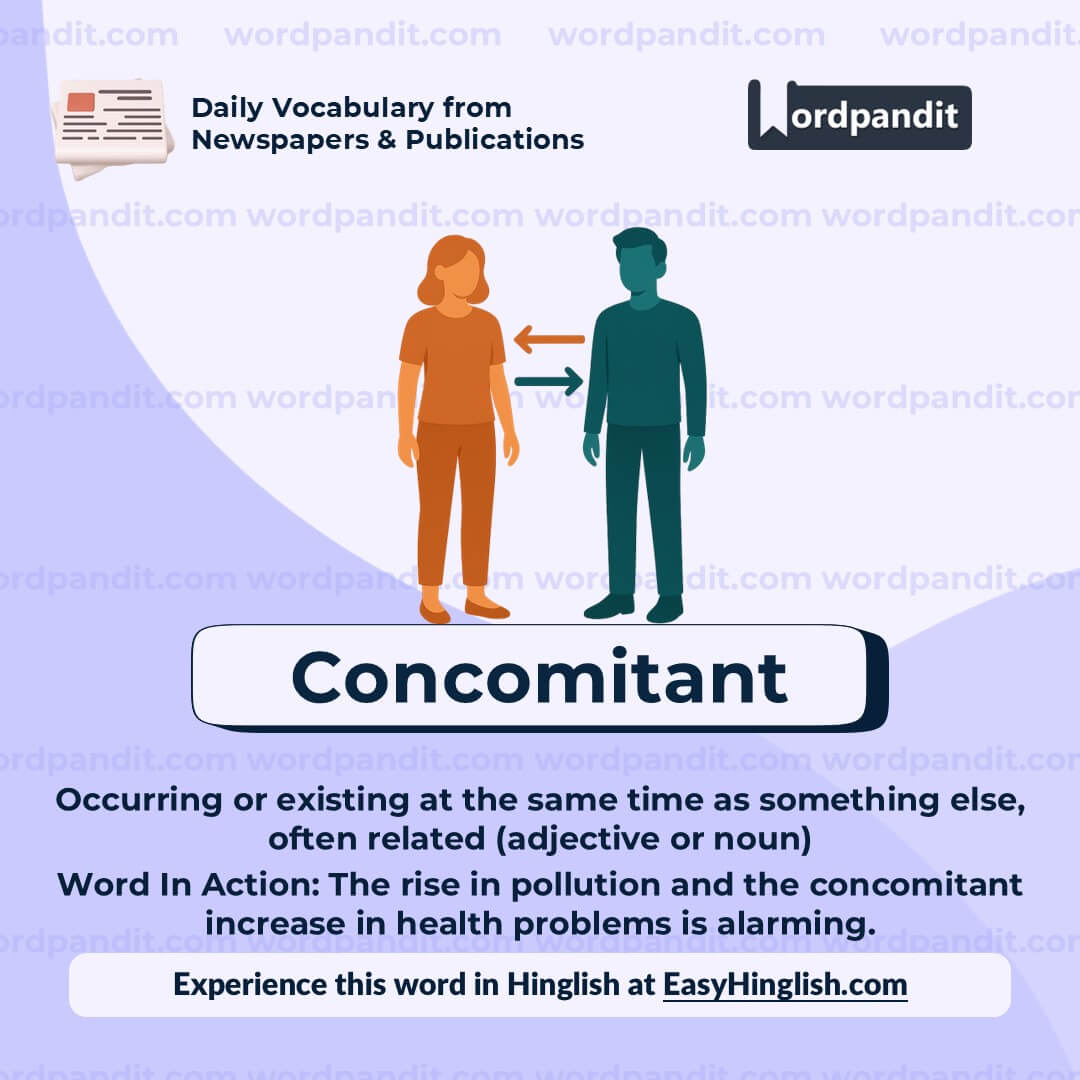
WORD-4: Concomitant
Context:
"This disillusion led to a concomitant rise in global populism." - New York Times
Explanatory Paragraph:
"Concomitant" refers to something that happens at the same time as something else, especially when the two are connected. It’s often used to describe events or changes that accompany each other—either as causes, consequences, or parallel developments. In the sentence, the word suggests that the rise in populism occurred alongside the feeling of disillusionment, implying a linked or simultaneous progression.
Meaning: Occurring or existing at the same time as something else, often related (adjective or noun)
Pronunciation: kuhn-KOM-uh-tuhnt
Difficulty Level: ⭐⭐⭐⭐ Advanced
Etymology: From Latin “concomitari,” meaning “to accompany”
Prashant Sir's Notes:
A high-level academic word—very useful in essays or analytical writing. When describing trends, causes, or effects, "concomitant" offers precision. Think of it as a sophisticated way to say "along with" or "accompanying."
Synonyms & Antonyms:
Synonyms: accompanying, associated, coinciding, concurrent, simultaneous
Antonyms: unrelated, independent, separate, disconnected
Usage Examples:
- Economic growth often brings a concomitant increase in environmental pressure.
- The rise of artificial intelligence has led to concomitant concerns about data privacy.
- With fame comes the concomitant pressure of public scrutiny.
- She experienced a boost in confidence and a concomitant improvement in performance.
Cultural Reference:
"The Industrial Revolution and its concomitant urbanization transformed 19th-century Europe." - History Lectures
Think About It:
Can positive and negative developments occur as concomitants of the same event? What does this reveal about complex systems?
Quick Activity:
Think of a major global trend (e.g., climate change, social media). Identify one concomitant effect and explain the connection in two sentences.
Memory Tip:
Break it down: “con-” (with) + “comitant” (like committee—things that go together). So, something that goes *with* something else = concomitant.
Real-World Application:
"Concomitant" is often used in academic writing, medical reports, legal arguments, and policy analysis to indicate co-occurring events or consequences with nuanced relationships.
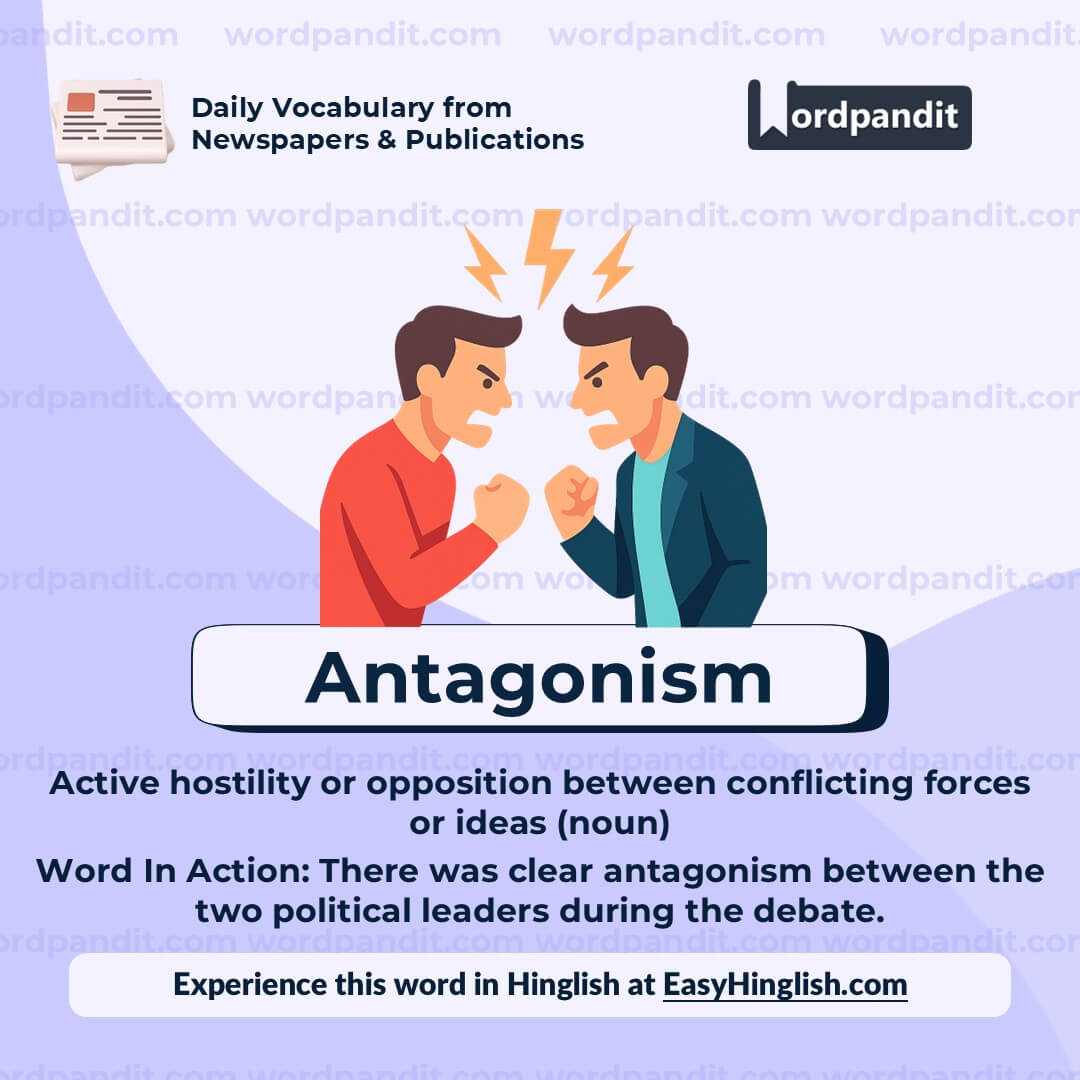
WORD-5: Antagonism
Context:
"In this kind of society, life is not about conquest and domination but regulated competition and voluntary exchange. Not about antagonism but interdependence." - New York Times
Explanatory Paragraph:
"Antagonism" refers to active hostility or opposition between people, groups, or ideas. It often implies deep-rooted conflict or resistance, whether emotional, political, or ideological. In this context, the author contrasts antagonism—associated with conflict and struggle—with interdependence, which implies cooperation and mutual benefit. The term helps capture the shift from a confrontational worldview to one based on collaboration.
Meaning: Active hostility or opposition between conflicting forces or ideas (noun)
Pronunciation: an-TAG-uh-niz-um
Difficulty Level: ⭐⭐⭐ Intermediate
Etymology: From Greek “antagonizesthai” meaning “to struggle against”
Prashant Sir's Notes:
Think of antagonism not just as open hatred but also subtle, ongoing resistance—between rivals, political ideologies, or even characters in literature. It’s a useful word when analyzing relationships in essays or debates.
Synonyms & Antonyms:
Synonyms: hostility, opposition, conflict, enmity, friction
Antonyms: harmony, cooperation, alliance, friendship, rapport
Usage Examples:
- There has long been antagonism between the two neighboring countries.
- The politician’s comments sparked antagonism among different community groups.
- The film portrays the deep antagonism between tradition and progress.
- Without communication, small disagreements can escalate into lasting antagonism.
Cultural Reference:
"In classic literature, the antagonist creates the antagonism that drives the story's central conflict." - Literary Studies 101
Think About It:
Is antagonism always harmful, or can it sometimes fuel positive change by challenging dominant ideas?
Quick Activity:
Write a short dialogue between two characters expressing antagonism toward each other. Then rewrite the same dialogue with a cooperative tone.
Memory Tip:
Think: "Antagonist" = the opposing character in a story. So "antagonism" = the conflict or tension they bring.
Real-World Application:
"Antagonism" is often used in politics, international relations, psychology, and literary analysis to describe tensions or opposition between entities, beliefs, or people.


