

Daily Vocabulary from International Newspapers and Publications
Expand Your Vocabulary with Wordpandit’s Global Vocabulary Hub
At Wordpandit, we are committed to helping you develop a truly global vocabulary by drawing from some of the most respected international publications. This section is designed to keep you ahead of the curve by introducing you to words that define global conversations and trends.
The Power of Global Sources
To help you think and communicate on a global scale, we curate vocabulary from renowned international sources, such as:
- The New York Times
- The Washington Post
- BBC
- The Guardian
- The Economist
- Scientific American
- Psychology Today
- And many more...
Stay Global, Stay Competitive
Our daily updates from international publications ensure you are consistently exposed to new words that reflect global news and developments, making sure your vocabulary is not only current but also globally relevant.
Enhance Your Global Perspective
Whether you’re preparing for international exams, aiming to excel in global business communication, or want to enhance your language skills for personal growth, Wordpandit offers the resources you need to thrive in a global context.
Effective Learning, Global Reach
Our learning methodology combines global examples, memory aids, and interactive activities, allowing you to internalize new words effectively and apply them in real-world scenarios.
Begin Your Global Vocabulary Journey Now!

Why Choose Wordpandit?
Practical Learning: Focus on words you'll actually encounter in real-world reading, enhancing your comprehension and communication skills.
Diverse Content: From current affairs to scientific breakthroughs, our varied sources expose you to vocabulary across multiple domains.
Effortless Integration: Make Wordpandit a part of your daily routine. Just a few minutes each day can significantly boost your lexicon over time.
Your Path to Vocabulary Mastery
- Visit our Daily Vocabulary section regularly
- Explore new words and their usage in context
- Practice incorporating these words into your own writing and speech
- Track your progress as your vocabulary expands
Start Your Journey Today
Embark on your vocabulary enhancement journey with Wordpandit. By consistently engaging with our daily posts, you'll build a robust vocabulary that serves you well in academic, professional, and personal contexts.
Remember, a word a day keeps linguistic limitations at bay. Make Wordpandit your daily companion in the quest for vocabulary excellence!
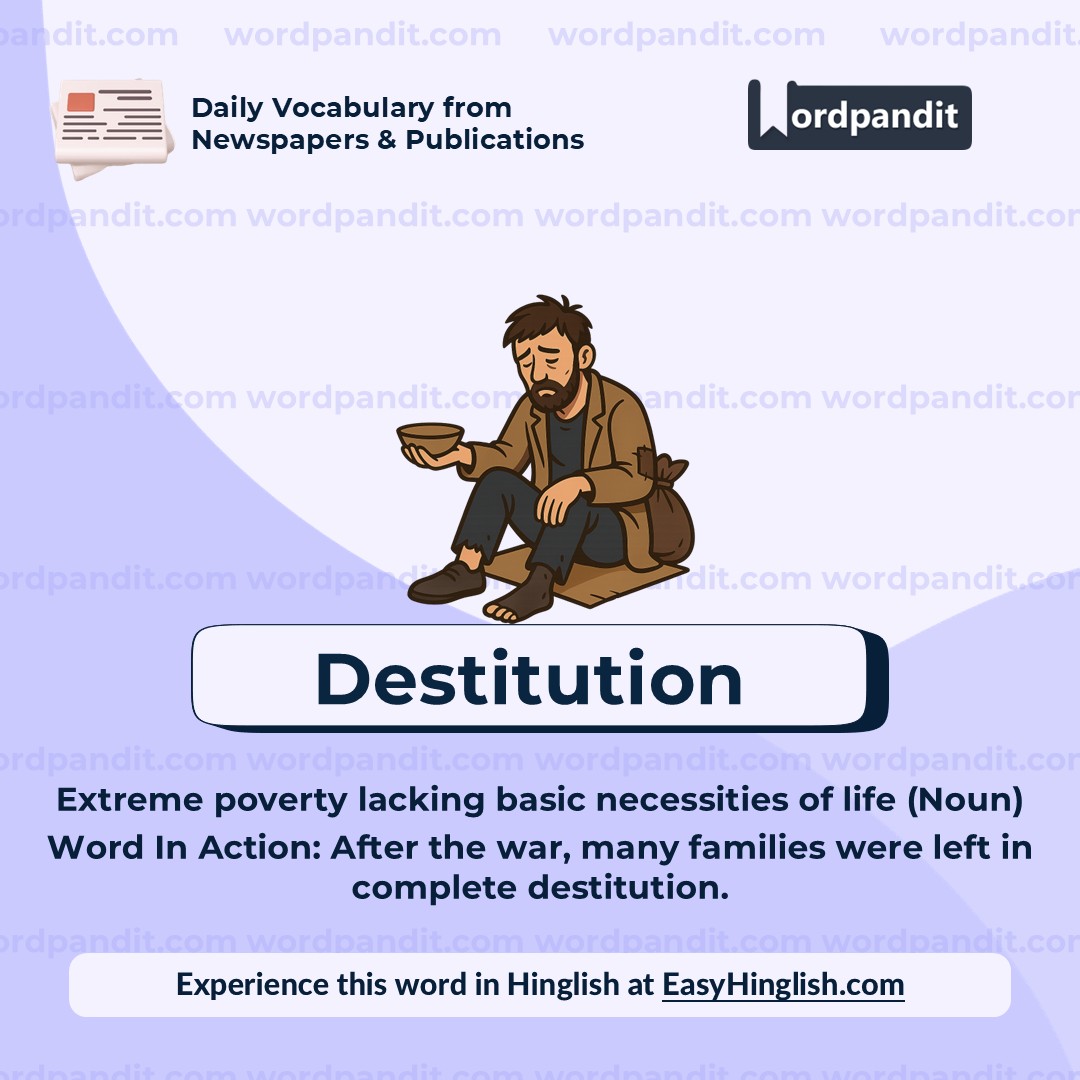
WORD-1: Destitution
Context:
"Moreover, destitution is an urgent problem because every moment it continues does grave and irreversible harm that will persist for decades and can even be transmitted to future generations." - New Indian Express
Explanatory Paragraph:
Destitution meaning in English is extreme poverty where a person lacks basic necessities like food, shelter, and clothing. This word is used when describing the most severe form of poverty, beyond just being poor—it indicates complete deprivation and helplessness. Destitution is commonly used in formal writing, government reports, NGO publications, and competitive exam passages related to social issues and economic development.
Meaning: Extreme poverty lacking basic necessities of life (Noun)
Pronunciation: des-ti-TOO-shun
Difficulty Level: ⭐⭐⭐ Intermediate
Etymology: Destitution comes from Latin 'destitutus' meaning 'forsaken or abandoned,' from 'de-' (away) and 'statuere' (to place). The word evolved through Old French to English in the 15th century, carrying the sense of being placed away from resources and support, leaving someone in a state of complete abandonment and poverty.
Prashant Sir's Notes:
Many students confuse destitution with poverty—while poverty means lacking sufficient money, destitution usage specifically indicates absolute deprivation where survival itself is threatened. What is the difference between destitution and poverty? Poverty can be relative and have degrees, but destitution is the extreme end where people cannot meet even basic survival needs. For UPSC and CAT aspirants, destitution frequently appears in passages about social policy, economic inequality, and development challenges. In Indian newspapers, you'll often see destitution used when discussing migrant workers, farmer crises, or urban homelessness—contexts where the severity needs emphasis beyond just saying "poor."
Synonyms & Antonyms:
Synonyms: extreme poverty, penury, indigence, impoverishment, privation, beggary, pauperism, deprivation, want, neediness
Antonyms: wealth, prosperity, affluence, abundance, opulence, plenty
Usage Examples:
- The pandemic pushed millions of daily wage workers into destitution, forcing families to skip meals and sleep on pavements.
- Ramesh's organization works to rescue children from destitution by providing education, food, and shelter to street children in Mumbai.
- The drought in Maharashtra left thousands of farmers facing destitution, unable to repay loans or feed their families.
- After her husband's death, Savita faced near destitution until a self-help group helped her start a small tailoring business.
Cultural Reference:
"The true measure of any society can be found in how it treats its most vulnerable members facing destitution." - Adaptation of Mahatma Gandhi's philosophy on poverty and social justice
Think About It:
In a country with rapid economic growth, why do pockets of severe destitution still persist, and what systemic changes could break the cycle?
Quick Activity:
Write two sentences describing how education and skill development programs can help lift families out of destitution in rural India.
Memory Tip:
Think of destitution as "DESI-TUTION" where 'desi' reminds you of our country, and imagine the most severe poverty scenario—when someone has absolutely nothing left, not even 'tuition' money for their children's basic education. This extreme lack defines destitution.
Real-World Application:
In government reports, NGO proposals, and UPSC essay papers, destitution is used to emphasize the most critical poverty interventions needed. Journalists use it in investigative reports on economic crises, and policy analysts use it to distinguish emergency relief situations from general poverty alleviation programs, signaling that immediate humanitarian intervention is required.
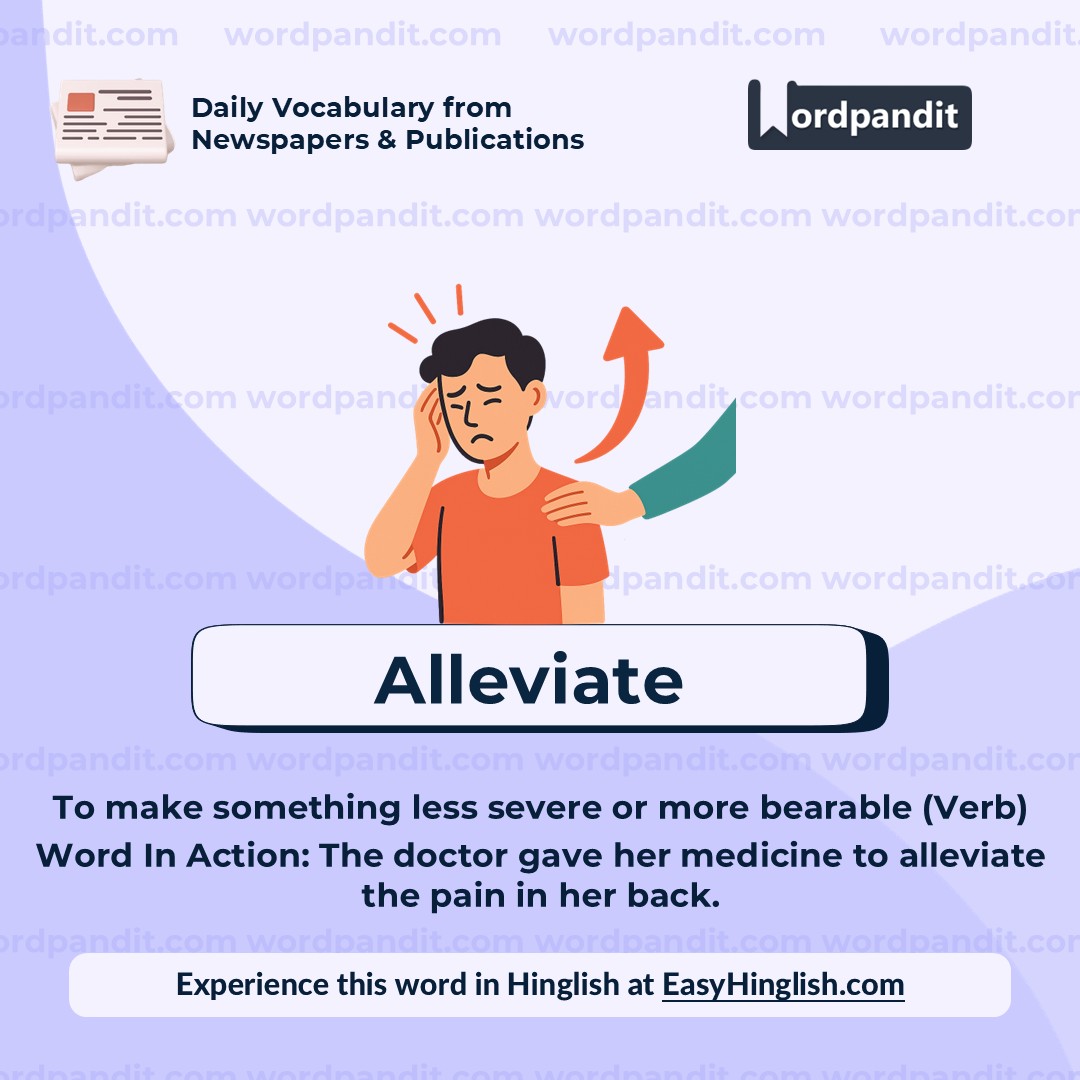
WORD-2: Alleviate
Context:
"The government announced several measures to alleviate the suffering of flood-affected families in Kerala and provide them with immediate relief." - New Indian Express
Explanatory Paragraph:
Alleviate meaning in English is to make something less severe, painful, or difficult without removing it completely. This word is used when describing actions that reduce suffering, problems, or pain, though they may not solve the issue entirely. Alleviate is commonly used in formal writing, medical contexts, government policy discussions, and competitive exam passages to indicate partial but meaningful relief from difficult situations.
Meaning: To make something less severe or more bearable (Verb)
Pronunciation: uh-LEE-vee-ayt
Difficulty Level: ⭐⭐ Basic to Intermediate
Etymology: Alleviate comes from Late Latin 'alleviatus,' past participle of 'alleviare' meaning 'to lighten,' from 'ad-' (to) and 'levis' (light). The word entered English in the 15th century, carrying the metaphorical sense of making a burden lighter rather than removing it completely, which remains its core meaning today.
Prashant Sir's Notes:
Students often ask: what is the difference between alleviate and solve? This distinction is crucial for CAT and GRE Reading Comprehension—alleviate means reducing the severity of a problem without eliminating it, while solve means completely resolving it. How to use alleviate correctly: it typically pairs with words like pain, suffering, poverty, or problems, and implies temporary or partial relief. For UPSC aspirants, alleviate frequently appears in passages about welfare schemes and policy measures. In Indian English newspapers, you'll see phrases like "alleviate farmers' distress" or "alleviate traffic congestion"—notice it's about reducing, not ending, the problem completely.
Synonyms & Antonyms:
Synonyms: relieve, ease, reduce, lessen, mitigate, diminish, lighten, moderate, assuage, soothe
Antonyms: worsen, aggravate, intensify, increase, exacerbate, heighten
Usage Examples:
- The new metro line will help alleviate Bangalore's traffic congestion, though complete solutions require much broader infrastructure development.
- Dr. Sharma prescribed medication to alleviate Priya's chronic back pain while she undergoes physiotherapy for long-term recovery.
- The loan waiver scheme aims to alleviate the financial burden on small farmers struggling with mounting debt after consecutive droughts.
- Listening to music and practicing yoga can alleviate stress during exam preparation, making the pressure more manageable for students.
Cultural Reference:
"Like Tendulkar's steady innings that alleviates team pressure without guaranteeing victory, good policies reduce problems without promising instant solutions." - Common metaphor in Indian policy discussions
Think About It:
Why do governments often focus on alleviating poverty rather than eliminating it, and what does this reveal about the complexity of social problems?
Quick Activity:
Write two sentences about practical steps students can take to alleviate exam anxiety without completely eliminating the natural nervousness before important tests.
Memory Tip:
Break 'Alleviate' into "A-LEVITATE"—imagine making a heavy burden levitate slightly upward, making it lighter and easier to bear. You're lifting the weight but not removing it completely, which is exactly what alleviate means.
Real-World Application:
In medical reports, business proposals, and government policy documents, alleviate is used to describe realistic interventions that reduce severity rather than claiming complete solutions. News editors use it to accurately describe relief measures, while essay writers in competitive exams use it to show nuanced understanding that problems often require gradual reduction rather than instant elimination.
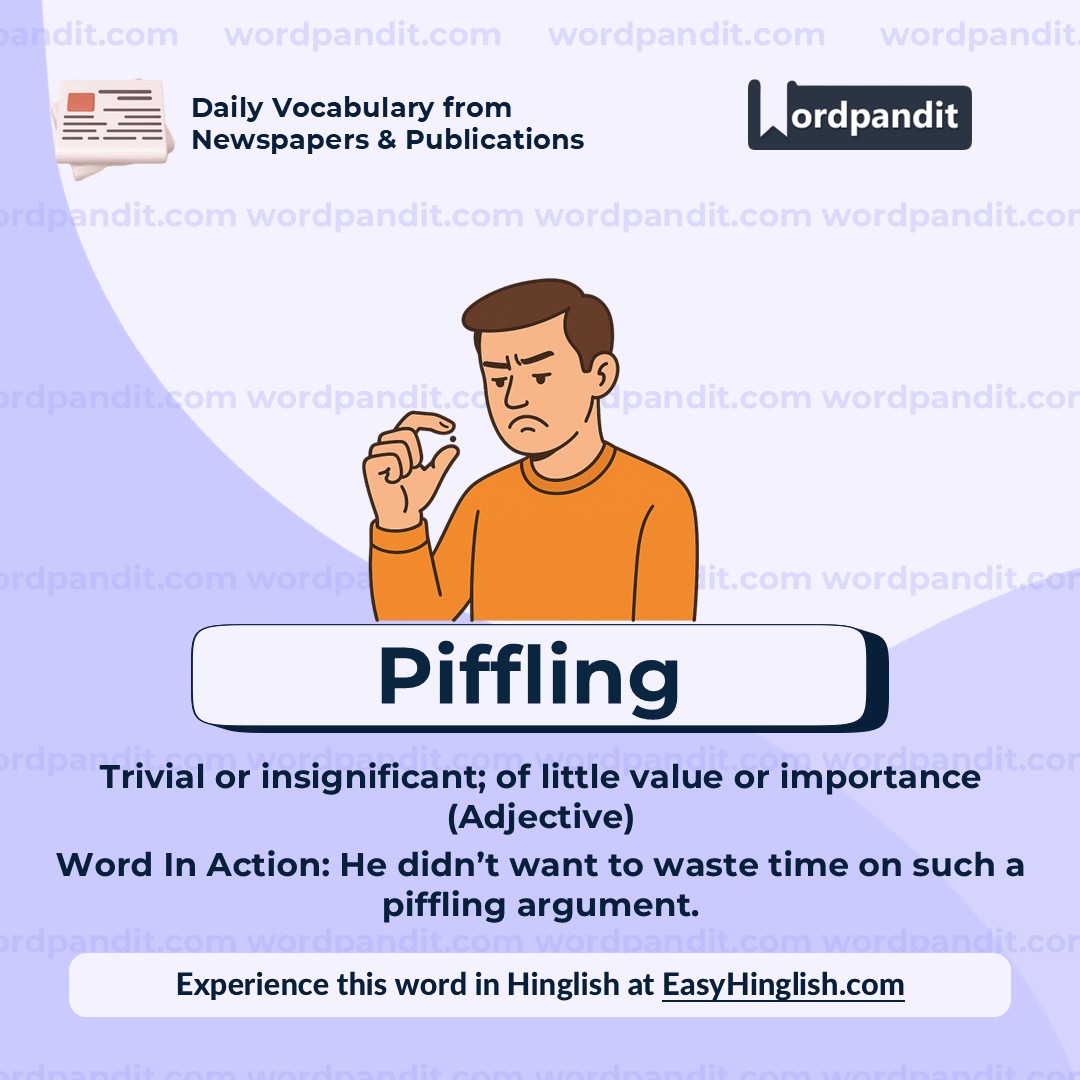
WORD-3: Piffling
Context:
"But the other side of that fact is that in the global context, $3 is a trivial piffling amount of money, and the average destitute person's shortfall from that threshold is even smaller." - New Indian Express
Explanatory Paragraph:
Piffling meaning in English is trivial, insignificant, or very small in amount or importance. This word is used when dismissing something as unimportant or too minor to deserve serious attention. Piffling is commonly used in formal writing, editorial columns, and competitive exam passages to emphasize how negligible or worthless something is, often in comparison to larger issues or amounts.
Meaning: Trivial or insignificant; of little value or importance (Adjective)
Pronunciation: PIF-ling
Difficulty Level: ⭐⭐⭐ Intermediate
Etymology: Piffling likely derives from 'piffle,' a British colloquial term from the mid-19th century meaning 'nonsense' or 'rubbish,' possibly from an imitative sound suggesting something insubstantial. The '-ing' form created an adjective to describe anything trifling or worthless, and it gained usage in British English before spreading to Indian English through colonial influence.
Prashant Sir's Notes:
Many students confuse piffling with petty—while both describe something small, piffling usage specifically emphasizes worthlessness or insignificance in a dismissive way. The difference between piffling and minor is that piffling carries contempt or scorn, suggesting something is laughably small. For CAT and GRE aspirants, piffling frequently appears in argumentative passages where authors dismiss opposing viewpoints or trivialize certain concerns. In Indian English newspapers, you'll see phrases like "piffling amount," "piffling concerns," or "piffling objections"—the word signals the writer thinks something deserves no serious consideration. How to use piffling correctly: it typically describes amounts, concerns, or objections that the speaker considers beneath notice.
Synonyms & Antonyms:
Synonyms: trivial, insignificant, trifling, negligible, petty, inconsequential, minor, paltry, measly, worthless
Antonyms: significant, substantial, important, considerable, major, meaningful
Usage Examples:
- The company offered a piffling salary increase of just two percent, which failed to keep pace with inflation or employee expectations.
- Critics dismissed the opposition's objections as piffling complaints that ignored the larger benefits of the infrastructure project for millions of citizens.
- Compared to the multi-crore scam, the accounting discrepancy of five thousand rupees seemed like a piffling matter to investigating officers.
- Rohan felt insulted when his manager described his innovative proposal as a piffling idea not worth discussing in the meeting.
Cultural Reference:
"In the climactic courtroom scene, the lawyer dismissed the evidence as 'piffling details' that distracted from the real truth—a phrase that became a popular meme." - Reference to courtroom dramas in Indian web series
Think About It:
What seems piffling to wealthy individuals or nations might be life-changing for those in poverty—how does perspective shape what we consider insignificant?
Quick Activity:
Write two sentences contrasting something that appears piffling from one perspective but significant from another, using examples from daily life or current affairs.
Memory Tip:
Think of 'Piffling' as the sound "PIFF"—like air escaping a balloon, making a tiny insignificant sound. When something is piffling, it's as inconsequential as that little "piff" sound, hardly worth noticing or taking seriously.
Real-World Application:
In opinion pieces, economic analyses, and debate contexts, piffling is used to dismiss arguments or amounts as unworthy of serious consideration. Editorial writers use it to criticize inadequate policy responses, while business analysts use it to describe negligible market movements or token gestures. In competitive exam essays, using piffling demonstrates sophisticated vocabulary for expressing dismissive judgment about minor concerns versus major issues.
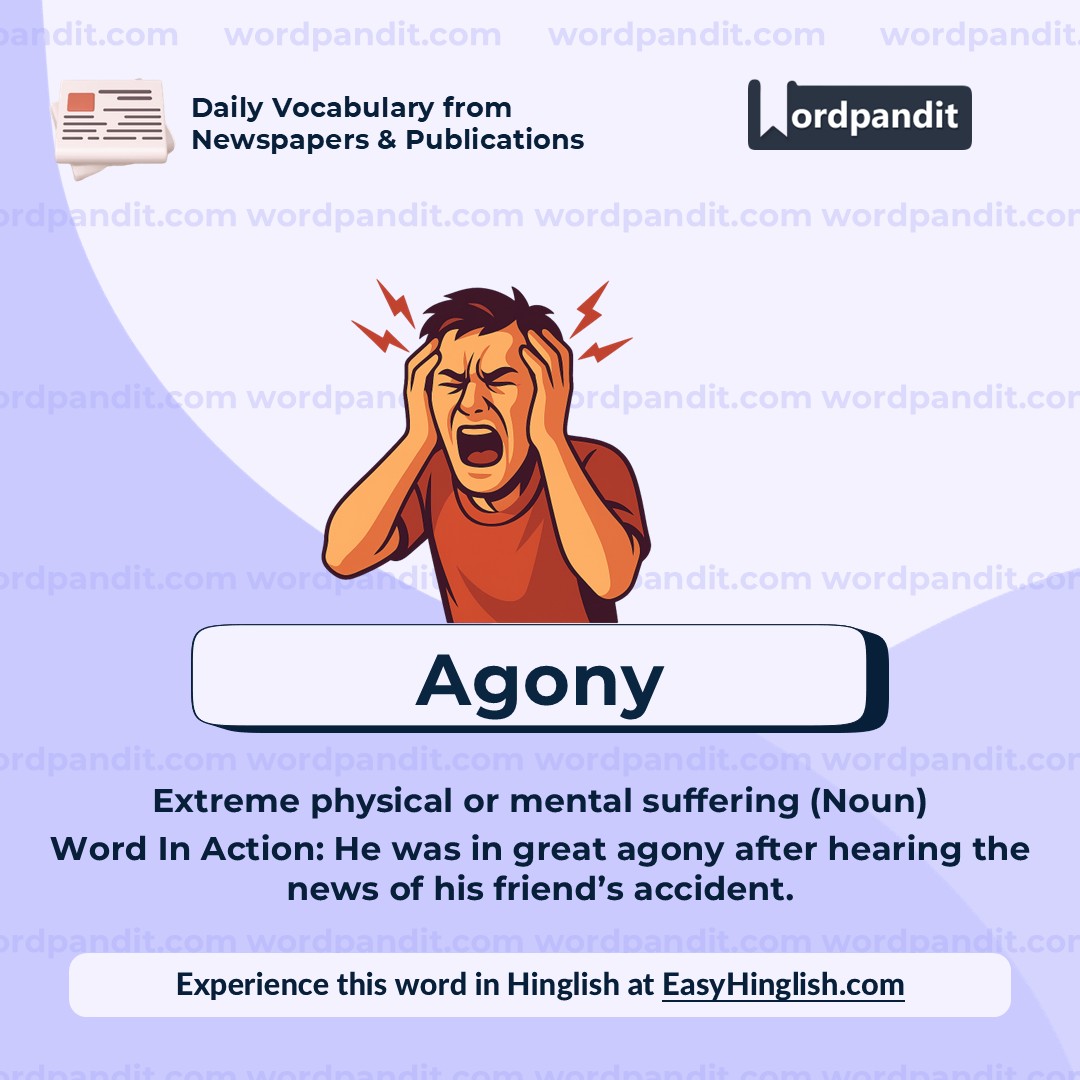
WORD-4: Agony
Context:
"This is not a lament for the past. It is a call to action for the present. Gaza's agony is not a mysterious tragedy; it is a test of what humanity has learned from the twentieth century's most searing crimes." - The Times of India
Explanatory Paragraph:
Agony meaning in English is extreme physical or mental suffering and pain. This word is used when describing the most intense forms of distress, whether bodily pain or deep emotional torment. Agony is commonly used in formal writing, literature, news reports about crises, and competitive exam passages to convey the severity of suffering that goes beyond ordinary discomfort or sadness.
Meaning: Extreme physical or mental suffering (Noun)
Pronunciation: AG-uh-nee
Difficulty Level: ⭐⭐ Basic to Intermediate
Etymology: Agony comes from Greek 'agonia' meaning 'a struggle for victory' or 'contest,' derived from 'agon' (assembly, contest). In ancient Greece, it referred to the struggle of athletes in competition. The word evolved through Latin 'agonia' into Middle English, gradually shifting from physical struggle to encompass extreme mental and physical suffering, reflecting life's ultimate contests against pain and death.
Prashant Sir's Notes:
Students often ask: what is the difference between agony and pain? While pain can be mild or moderate, agony usage specifically indicates extreme, unbearable suffering. Many students confuse agony with suffering—agony is the most intense degree of suffering, reserved for describing truly excruciating experiences. For CAT, GRE, and UPSC aspirants, agony frequently appears in passages about humanitarian crises, war, disease, or personal tragedy. How to use agony correctly: it's rarely used for minor discomforts; saying "the agony of a headache" would be dramatic exaggeration, while "the agony of losing a child" is appropriate. In Indian newspapers, you'll see agony used when describing farmer suicides, natural disaster victims, or conflict zones—contexts demanding the strongest word for suffering.
Synonyms & Antonyms:
Synonyms: torment, anguish, torture, suffering, distress, misery, pain, affliction, tribulation, woe
Antonyms: pleasure, comfort, relief, ease, joy, bliss, contentment
Usage Examples:
- The families of the trapped miners waited in agony for three days, hoping desperately for news of their loved ones' rescue.
- After losing the World Cup final on the last ball, the Indian cricket team sat in visible agony, unable to comprehend their defeat.
- Meera watched in agony as her small business collapsed during the lockdown despite years of hard work and sacrifice.
- The patient writhed in agony until the doctors administered strong painkillers to relieve his post-surgical discomfort.
Cultural Reference:
"In the film Taare Zameen Par, the scene showing Ishaan's agony at being misunderstood and separated from his family moved audiences to tears nationwide." - Reference to Aamir Khan's portrayal of childhood suffering
Think About It:
Why does witnessing others' agony often compel people to take action, while statistics about distant suffering leave them unmoved?
Quick Activity:
Write two sentences describing a situation of genuine agony without being overly dramatic, showing the difference between ordinary discomfort and true extreme suffering.
Memory Tip:
Think of 'Agony' as "A-GO-KNEE"—imagine pain so extreme that it makes you go down on your knees, unable to stand. When you're in agony, the suffering is so intense it physically brings you down, capturing the word's meaning of extreme pain.
Real-World Application:
In journalism covering disasters, conflicts, or tragedies, agony is used to convey the severity of human suffering to readers. Medical professionals use it in patient histories to distinguish extreme pain from routine discomfort. In literary essays and UPSC descriptive papers, agony effectively captures profound emotional or physical torment. Writers use it sparingly because overuse diminishes its impact—reserve it for truly extreme situations to maintain its powerful effect.
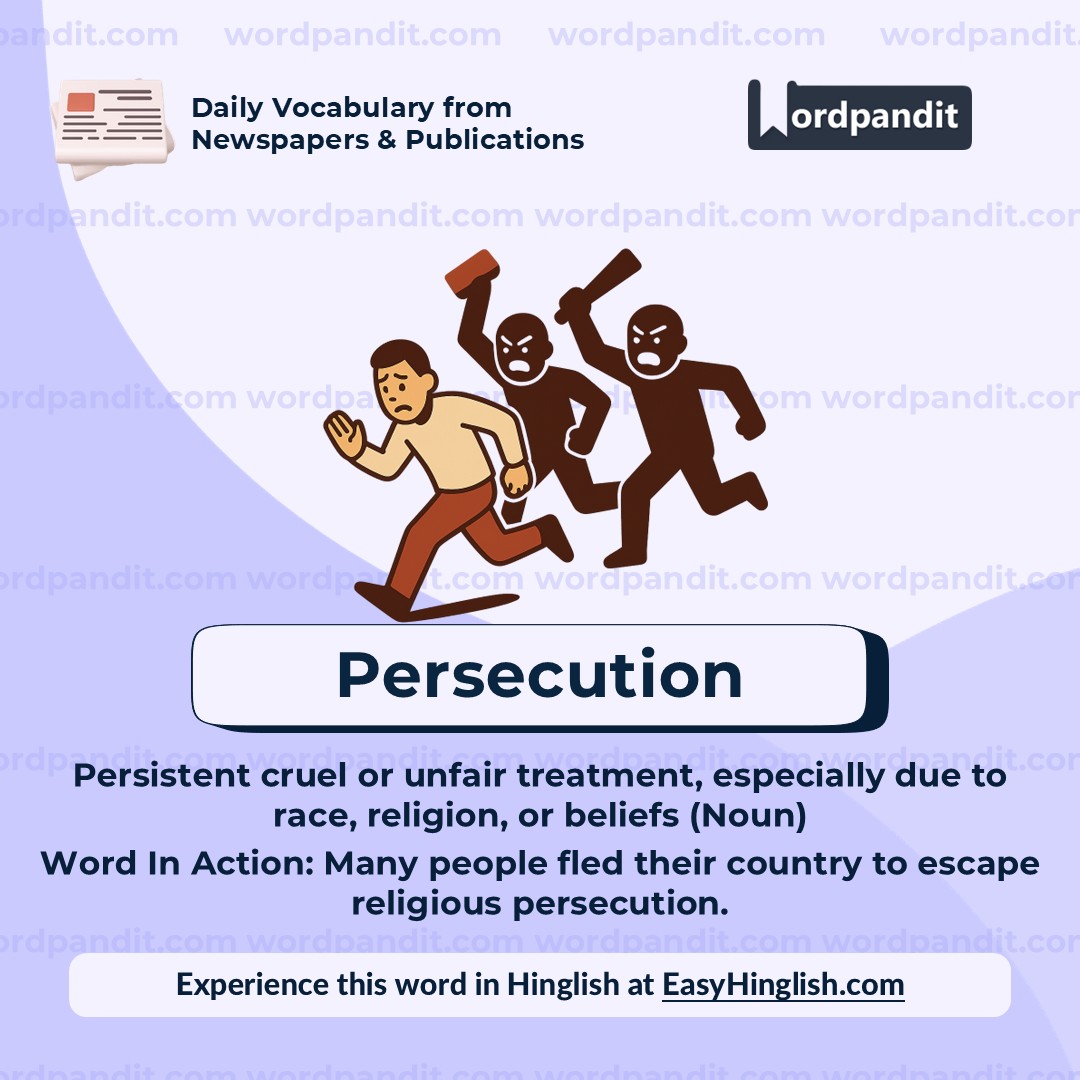
WORD-5: Persecution
Context:
"Catholic persecution had forced him to leave France, now Protestant intransigence drove him from Geneva." - The Times of India
Explanatory Paragraph:
Persecution meaning in English is systematic mistreatment or harassment of an individual or group, especially because of their race, religion, political beliefs, or identity. This word is used when describing organized oppression that goes beyond isolated incidents to become a pattern of hostility. Persecution is commonly used in formal writing, history texts, human rights discussions, and competitive exam passages related to religious freedom, social justice, and historical conflicts.
Meaning: Persistent cruel or unfair treatment, especially due to race, religion, or beliefs (Noun)
Pronunciation: pur-si-KYOO-shun
Difficulty Level: ⭐⭐⭐ Intermediate
Etymology: Persecution comes from Latin 'persecutio,' from 'persequi' meaning 'to pursue relentlessly,' combining 'per-' (thoroughly) and 'sequi' (to follow). The word entered English through Old French in the 14th century, originally describing religious harassment. Its meaning reflects the relentless, pursuing nature of systematic oppression—victims are followed, hunted, and given no escape from mistreatment.
Prashant Sir's Notes:
Many students confuse persecution with discrimination—the difference between persecution and discrimination is crucial for understanding intensity. Discrimination involves unfair treatment, but persecution usage specifically indicates systematic, ongoing harassment often backed by authority or violence. What is the difference between persecution and oppression? Persecution targets specific groups for who they are, while oppression is broader suppression of rights. For UPSC and GRE aspirants, persecution frequently appears in passages about historical injustices, refugee crises, and human rights violations. How to use persecution correctly: it requires a pattern of mistreatment, not single incidents—one unfair act is discrimination, but systematic targeting is persecution. In Indian English newspapers, you'll see persecution used when discussing religious minorities, political dissidents, or ethnic groups facing organized hostility.
Synonyms & Antonyms:
Synonyms: oppression, harassment, victimization, mistreatment, torment, abuse, discrimination, tyranny, subjugation, intimidation
Antonyms: protection, support, tolerance, acceptance, freedom, respect, kindness
Usage Examples:
- The Rohingya refugees fled Myanmar to escape religious persecution that destroyed their villages and threatened their lives.
- During the Emergency period, many journalists faced persecution for criticizing the government, with several being arrested and newspapers censored.
- Historian Ramachandra Guha documented how political persecution of dissidents has occurred across different regimes in independent India's history.
- The Supreme Court granted asylum to the applicant after finding credible evidence of persecution based on his political activism in his home country.
Cultural Reference:
"Like Saadat Hasan Manto fleeing persecution during Partition, countless artists and writers have sought refuge from systematic harassment throughout history." - Common reference in discussions of artistic freedom and religious violence
Think About It:
Why does persecution often intensify when minority groups begin to assert their rights and demand equality rather than diminishing over time?
Quick Activity:
Write two sentences distinguishing between a single act of discrimination and systematic persecution, using examples from history or current affairs to illustrate the difference.
Memory Tip:
Break 'Persecution' into "PER-SECU-TION"—think "PER" (thoroughly) + "SECU" (pursue/follow, like "sequel"). Imagine someone being followed and pursued thoroughly, relentlessly, everywhere they go. This captures persecution's meaning of systematic, ongoing harassment with no escape.
Real-World Application:
In legal documents concerning asylum cases and refugee status, persecution is a technical term requiring proof of systematic mistreatment. International relations analysts use it when discussing human rights violations and humanitarian crises. In UPSC essays on secularism, minority rights, or historical movements, persecution effectively describes organized oppression. News editors carefully distinguish between isolated incidents of violence and systematic persecution to accurately convey the severity and organized nature of human rights abuses.


